|
시장보고서
상품코드
2079863
선박 리스 시장 규모, 점유율, 성장 분석 : 선박 유형별, 리스 형태별, 리스 제공자 종류별, 최종사용자별, 지역별 - 업계 예측(2026-2033년)Ship Leasing Market Size, Share, and Growth Analysis, By Vessel Type (Container Ships, Bulk Carriers), By Lease Type (Bareboat Charter, Time Charter), By Lessor Type, By End-User, By Region - Industry Forecast 2026-2033 |
||||||

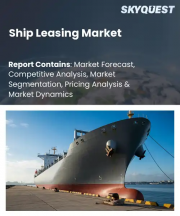
세계의 선박 리스 시장 규모는 2024년에 185억 2,000만 달러로 평가되었으며, 2025년 194억 7,000만 달러에서 2033년까지 288억 5,000만 달러로 확대되어 예측 기간(2026-2033년) 동안 CAGR 5.12%로 성장할 것으로 전망됩니다.
세계 선박 리스 시장은 선박 구매 자금을 조달할 수 없는 기업에 대해 정기 용선 계약이나 벌크선 용선 계약을 통해 선박을 제공하고 있습니다. 이 시장은 해운 화물 시장의 주기성에 대한 전략적 해결책으로 부상하고 있으며, 운송업체들이 감가상각 위험을 감수하지 않고도 운송 능력을 확대할 수 있게 해줍니다. 리스 수요의 초기 급증은 신조선 공급이 제한적인 상황에서 컨테이너 수요가 증가함에 따라 촉진되었습니다. 선박 리스를 통해 기업은 효율적인 선박으로 선단을 현대화하고, 더욱 엄격해진 환경 규제에 대응할 수 있게 됩니다. 규제상의 압박 또한 최첨단 선박에 대한 수요를 더욱 자극하여 리스 활동을 활성화시키는 한편, 지속가능성에 초점을 맞춘 투자를 유치하고 있습니다. 또한, 아시아에서는 디지털 리스 시장이 부상하고 있으며, 계약 협상을 원활하게 하고 중규모 해운사도 시장에 진입할 수 있게 됨으로써 시장의 성장을 뒷받침하고 있습니다.
세계 선박 리스 시장의 성장요인
세계 선박 리스 시장의 주요 성장 촉진요인은 세계 무역의 확대에 따라 효율적이고 유연한 해상 물류 솔루션에 대한 수요가 증가하고 있다는 점입니다. 경제가 성장하고 국제 무역이 활성화되는 가운데, 해운 업계는 경쟁력 있는 운임을 유지하면서 선단의 운영 효율을 최적화해야 한다는 압박에 직면해 있습니다. 리스는 선박을 전액 구매하는 대신, 운항사에게 비용 대비 효과가 높은 선택지가 되어, 시장 변동에 신속하게 대응하고 새로운 기회를 활용할 수 있게 해줍니다. 지속가능성에 대한 관심이 높아지고 친환경 선박 도입이 확대되는 가운데, 운항 사업자들은 막대한 초기 투자 없이 선단을 현대화하고자 하고 있어 선박 리스의 매력은 더욱 커지고 있습니다.
세계 선박 리스 시장의 제약요인
세계 선박 리스 업계에서 시장을 억제하는 주요 요인 중 하나는 해운 업계에 적용되는 규제 및 규정 준수 기준의 변동입니다. 국제적인 지침과 각국의 법률이 변화함에 따라, 선박 리스 회사는 선단의 규정 준수를 확보하는 데 따르는 운영상의 부담과 비용 증가에 직면할 가능성이 있으며, 이는 투자를 저해하고 성장을 방해할 우려가 있습니다. 또한, 배출량 감축 및 지속가능성 증진을 목적으로 한 환경 규제로 인해 기존 선박에 대해 고액의 업그레이드나 개조가 필요할 가능성이 있습니다. 이러한 과제는 구매와 비교했을 때 리스의 매력에 영향을 미치며, 경쟁 환경 속에서 시장 확대를 제한하고 리스 회사의 수익성에 부정적인 영향을 미칠 가능성이 있습니다.
세계 선박 리스 시장의 동향
이해관계자들이 사업 운영에 있어 지속가능성을 우선시하는 가운데, 전 세계 선박 리스 시장은 그린 파이낸스의 기세에 힘입어 점점 더 성장하고 있습니다. 선주들은 현재 엄격한 환경·사회·지배구조(ESG) 기준을 충족하는 선박을 요구하고 있으며, 리스 회사들은 이러한 고려 사항을 모든 리스 계약에 반영하도록 압박받고 있습니다. 이러한 변화로 인해 금융 기관들은 저탄소 사업을 우선시하게 되었으며, 그 결과 연료 효율성을 높이 평가하는 유연한 리스 조건이 마련되고 있습니다. 그 결과, 운항사는 첨단 에너지 효율 기술을 도입하고, 상세한 보고를 통해 투명성을 높임으로써 자금 제공자들의 신뢰를 더욱 공고히 하고 있습니다. 전반적으로, 시장에서는 전 세계 지속가능성 목표에 발맞춰 보다 친환경적인 선단을 구축하기 위한 대규모 자본 이동이 진행되고 있습니다.
자주 묻는 질문
목차
소개
조사 방법
주요 요약
시장 역학과 전망
주요 시장 인사이트
세계의 선박 리스 시장 규모 : 선박 유형별
세계의 선박 리스 시장 규모 : 리스 형태별
세계의 선박 리스 시장 규모 : 리스 제공자 종류별
세계의 선박 리스 시장 규모 : 최종사용자별
세계의 선박 리스 시장 규모 : 지역별
경쟁 정보
주요 기업 개요
결론과 제안
KSM 26.07.13Global Ship Leasing Market size was valued at USD 18.52 Billion in 2024 and is poised to grow from USD 19.47 Billion in 2025 to USD 28.85 Billion by 2033, growing at a CAGR of 5.12% during the forecast period (2026-2033).
The global ship leasing market serves companies unable to finance ship purchases by providing vessels through time or bareboat charters. This market has emerged as a strategic solution to the cyclicality of maritime freight, enabling carriers to expand capacity without incurring depreciation risks. The initial surge in leasing was fueled by rising demand for containers against a backdrop of limited new ship supply. Ship leasing empowers companies to modernize fleets with efficient vessels, aligning with stricter environmental mandates. Regulatory pressures further stimulate demand for modern ships, enhancing leasing activity and attracting investment focused on sustainability. Additionally, digital lease markets are emerging in Asia, facilitating contract negotiations and enabling mid-sized shippers to engage, propelling market growth.
Top-down and bottom-up approaches were used to estimate and validate the size of the Global Ship Leasing market and to estimate the size of various other dependent submarkets. The research methodology used to estimate the market size includes the following details: The key players in the market were identified through secondary research, and their market shares in the respective regions were determined through primary and secondary research. This entire procedure includes the study of the annual and financial reports of the top market players and extensive interviews for key insights from industry leaders such as CEOs, VPs, directors, and marketing executives. All percentage shares split, and breakdowns were determined using secondary sources and verified through Primary sources. All possible parameters that affect the markets covered in this research study have been accounted for, viewed in extensive detail, verified through primary research, and analyzed to get the final quantitative and qualitative data.
Global Ship Leasing Market Segments Analysis
Global ship leasing market is segmented by vessel type, lease type, lessor type, end-user and region. Based on vessel type, the market is segmented into Container Ships, Bulk Carriers, Tankers and LNG Carriers. Based on lease type, the market is segmented into Bareboat Charter, Time Charter and Voyage Charter. Based on lessor type, the market is segmented into Banks & Financial Institutions, Specialist Ship Lessors and Shipowners. Based on end-users, the market is segmented into Shipping Companies, Commodity Traders, and Energy Companies. Based on the region, the market is segmented into North America, Europe, Asia Pacific, Latin America and Middle East & Africa.
Driver of the Global Ship Leasing Market
A key market driver for the Global Ship Leasing Market is the increasing demand for efficient and flexible maritime logistics solutions amid global trade growth. As economies expand and international trade flourishes, shipping industries are under pressure to maintain competitive shipping rates while optimizing fleet performance. Leasing offers operators a cost-effective alternative to purchasing vessels outright, enabling them to adapt swiftly to market fluctuations and capitalize on emerging opportunities. The rising trend towards sustainability and the adoption of eco-friendly vessels further enhances the appeal of ship leasing, as operators seek to modernize fleets without incurring substantial upfront capital expenditures.
Restraints in the Global Ship Leasing Market
One significant market restraint for the global ship leasing sector is the fluctuating regulations and compliance standards imposed on the maritime industry. As international guidelines and local laws evolve, ship lessors may face increased operational burdens and costs associated with ensuring fleet compliance, which can deter investment and inhibit growth. Additionally, environmental regulations aimed at reducing emissions and promoting sustainability can lead to the need for costly upgrades or modifications to existing vessels. These challenges can impact the attractiveness of leasing versus purchasing, potentially limiting market expansion and affecting profitability for leasing companies in a competitive environment.
Market Trends of the Global Ship Leasing Market
The Global Ship Leasing market is increasingly driven by the momentum of green financing, as stakeholders prioritize sustainability in their operations. Shipowners are now demanding vessels that meet stringent Environmental, Social, and Governance (ESG) criteria, pushing lessors to incorporate these considerations into all leasing contracts. This shift is prompting financiers to favor low-carbon ventures, resulting in flexible leasing conditions that reward fuel efficiency. As a result, operators are adopting advanced, energy-efficient technologies, enhancing transparency through detailed reporting, and instilling greater confidence among financiers. Overall, the market is witnessing a significant capital transition towards greener fleets, aligning with global sustainability goals.
Table of Contents
Introduction
- Objectives of the Study
- Market Definition & Scope
Research Methodology
- Research Process
- Secondary & Primary Data Methods
- Market Size Estimation Methods
Executive Summary
- Global Market Outlook
- Key Market Highlights
- Segmental Overview
- Competition Overview
Market Dynamics & Outlook
- Macro-Economic Indicators
- Drivers & Opportunities
- Restraints & Challenges
- Supply Side Trends
- Demand Side Trends
- Porters Analysis & Impact
- Competitive Rivalry
- Threat of Substitute
- Bargaining Power of Buyers
- Threat of New Entrants
- Bargaining Power of Suppliers
Key Market Insights
- Key Success Factors
- Market Impacting Factors
- Top Investment Pockets
- Ecosystem Mapping
- Market Attractiveness Index 2025
- PESTEL Analysis
- Regulatory Landscape
Global Ship Leasing Market Size by Vessel Type & CAGR (2026-2033)
- Market Overview
- Container Ships
- Bulk Carriers
- Tankers
- LNG Carriers
Global Ship Leasing Market Size by Lease Type & CAGR (2026-2033)
- Market Overview
- Bareboat Charter
- Time Charter
- Voyage Charter
Global Ship Leasing Market Size by Lessor Type & CAGR (2026-2033)
- Market Overview
- Banks & Financial Institutions
- Specialist Ship Lessors
- Shipowners
Global Ship Leasing Market Size by End-User & CAGR (2026-2033)
- Market Overview
- Shipping Companies
- Commodity Traders
- Energy Companies
Global Ship Leasing Market Size & CAGR (2026-2033)
- North America (Vessel Type, Lease Type, Lessor Type, End-User)
- US
- Canada
- Europe (Vessel Type, Lease Type, Lessor Type, End-User)
- Germany
- Spain
- France
- UK
- Italy
- Rest of Europe
- Asia Pacific (Vessel Type, Lease Type, Lessor Type, End-User)
- China
- India
- Japan
- South Korea
- Rest of Asia-Pacific
- Latin America (Vessel Type, Lease Type, Lessor Type, End-User)
- Mexico
- Brazil
- Rest of Latin America
- Middle East & Africa (Vessel Type, Lease Type, Lessor Type, End-User)
- GCC Countries
- South Africa
- Rest of Middle East & Africa
Competitive Intelligence
- Top 5 Player Comparison
- Market Positioning of Key Players, 2025
- Strategies Adopted by Key Market Players
- Recent Developments in the Market
- Company Market Share Analysis, 2025
- Company Profiles of All Key Players
- Company Details
- Product Portfolio Analysis
- Company's Segmental Share Analysis
- Revenue Y-O-Y Comparison (2023-2025)
Key Company Profiles
- Seaspan Corporation
- Company Overview
- Business Segment Overview
- Financial Updates
- Key Developments
- Atlas Corp. (Seaspan)
- Company Overview
- Business Segment Overview
- Financial Updates
- Key Developments
- Global Indemnity Group
- Company Overview
- Business Segment Overview
- Financial Updates
- Key Developments
- Danaos Corporation
- Company Overview
- Business Segment Overview
- Financial Updates
- Key Developments
- Costamare Inc.
- Company Overview
- Business Segment Overview
- Financial Updates
- Key Developments
- Navios Maritime Holdings
- Company Overview
- Business Segment Overview
- Financial Updates
- Key Developments
- COSCO Shipping
- Company Overview
- Business Segment Overview
- Financial Updates
- Key Developments
- China Merchants Bank Leasing
- Company Overview
- Business Segment Overview
- Financial Updates
- Key Developments
- ICBC Financial Leasing
- Company Overview
- Business Segment Overview
- Financial Updates
- Key Developments
- BOC Aviation (Bank of China)
- Company Overview
- Business Segment Overview
- Financial Updates
- Key Developments
- Minsheng Financial Leasing
- Company Overview
- Business Segment Overview
- Financial Updates
- Key Developments
- Huarong Financial Leasing
- Company Overview
- Business Segment Overview
- Financial Updates
- Key Developments
- China Development Bank
- Company Overview
- Business Segment Overview
- Financial Updates
- Key Developments
- Export-Import Bank of Korea
- Company Overview
- Business Segment Overview
- Financial Updates
- Key Developments
- DVB Bank (DZ Bank)
- Company Overview
- Business Segment Overview
- Financial Updates
- Key Developments
- Norddeutsche Landesbank
- Company Overview
- Business Segment Overview
- Financial Updates
- Key Developments
- Aegean Marine Petroleum
- Company Overview
- Business Segment Overview
- Financial Updates
- Key Developments
- Frontline Ltd.
- Company Overview
- Business Segment Overview
- Financial Updates
- Key Developments
- Euronav NV
- Company Overview
- Business Segment Overview
- Financial Updates
- Key Developments
- Star Bulk Carriers
- Company Overview
- Business Segment Overview
- Financial Updates
- Key Developments