|
시장보고서
상품코드
2080079
이소트레티노인 제제 시장 규모, 점유율 및 성장 분석 : 제형별, 용량별, 적응증별, 유통경로별, 최종사용자별, 지역별 - 업계 예측(2026-2033년)Isotretinoin Drugs Market Size, Share, and Growth Analysis, By Formulation (Oral Capsules, Topical Gel), By Dosage, By Indication, By Distribution, By End-User, By Region - Industry Forecast 2026-2033 |
||||||

세계의 이소트레티노인 제제 시장 규모는 2024년에 15억 2,000만 달러로 평가되며, 2025년 16억 1,000만 달러에서 2033년까지 25억 2,000만 달러로 확대하며, 예측 기간(2026-2033년)에 CAGR 5.81%로 성장할 것으로 전망되고 있습니다.
주로 청소년의 약 5%에게 영향을 미치는 중증 결절성 여드름 치료에 사용되는 처방약으로 구성된 전 세계 이소트레티노인 제제 시장은 눈에 띄는 성장세를 보이고 있습니다. 이소트레티노인은 피지선의 기능에 특이적으로 작용하여 염증을 완화하고 흉터 형성을 방지함으로써, 장기간에 걸친 항생제 치료를 대체할 수 있는 근본적인 치료 옵션을 제공합니다. 피부과 의사들 사이에서 인지도가 높아지고 적극적인 마케팅 전략이 펼쳐지면서, 도입률이 급증하고 시장 매출이 크게 증가하고 있습니다. 이러한 성장을 이끄는 두드러진 요인 중 하나는 25-40세 성인의 여드름 유병률 증가입니다. 이 연령대에서는 증상이 오래 지속될 경우, 일반의약품에서 피부과 의사가 처방하는 이소트레티노인으로 전환하는 추세가 확산되고 있습니다. 또한 항생제 내성의 증가로 인해 이소트레티노인의 조기 투여나 투여 기간 단축이 권장되고 있습니다. 동남아시아의 규제 변경으로 인해 제네릭 의약품의 승인 절차가 신속화되고 있으며, 이는 시장에 진입하는 기업에게 환자 접근성을 높이고 매출을 확대할 수 있는 큰 기회가 되고 있습니다.
세계 이소트레티노인 제제 시장의 성장 요인
모든 연령대에서 중등도에서 중증의 여드름 유병률이 증가하고 있는 점은, 특히 기존의 치료법으로는 효과가 충분하지 않은 경우, 결정적인 치료 옵션으로서 이소트레티노인의 사용을 크게 지원하고 있습니다. 피부과 의사들은 흉터가 남기 어렵고 심리사회적 영향도 줄어드는 경향이 있으므로 치료가 어려운 병변에 대해 이 약물을 권장하는 경우가 많습니다. 이러한 추세가 강화됨에 따라 환자층이 확대되고, 브랜드 제품 및 제네릭 이소트레티노인 제제에 대한 수요가 증가할 것으로 예상됩니다. 그 결과, 각 기업은 생산 능력과 유통 네트워크 강화에 적극적인 태도를 보이고 있으며, 이는 시장의 성장을 더욱 촉진할 것입니다. 또한 환자의 삶의 질(QOL)에 미치는 긍정적인 영향으로 인해 보험사들이 보험 적용 범위를 확대하는 움직임이 촉진되어, 시장 진입이 더욱 용이해질 가능성이 있습니다.
세계 이소트레티노인 제제 시장의 제약 요인
이소트레티노인 제제 세계 시장은 보건 당국의 엄격한 규제 제한으로 인해 큰 난관에 직면해 있습니다. 이러한 규제에는 대개 임신 검사 의무화, 피임 조치 요건, 그리고 포괄적인 환자 등록 프로그램이 포함됩니다. 이러한 절차는 의료 서비스 제공자나 약국에게 번거로운 일이며, 치료 시작이 지연되거나 의료진이 이러한 약물을 처방하는 데 소극적으로 변하는 원인이 될 수 있습니다. 또한 환자는 편의상의 문제나 태아의 건강에 대한 위험에 대한 우려로 인해 치료를 중단하기로 선택하기도 합니다. 그 결과, 복잡한 규정 준수 절차가 걸림돌이 되어, 결국 시장에서 이소트레티노인의 총 처방량을 제한하게 됩니다.
세계 이소트레티노인 제제 시장의 동향
전 세계 이소트레티노인 제제 시장은 유전자 검사 및 첨단 영상 진단 기술의 발전에 힘입어, 맞춤형 피부과 치료로 점점 더 전환되고 있습니다. 이러한 추세에 따라 피부과 전문의는 각 환자의 피부 생물학적 특성에 맞춰 이소트레티노인 치료를 조정하고, 치료 효과를 예측하며, 부작용을 완화할 수 있게 되었습니다. 처방 의사의 신뢰와 환자의 수용도가 높아짐에 따라 기존에는 비교적 경미한 치료법이 사용되던 중등도 여드름 사례에서도 이소트레티노인이 조기에 도입되고 있습니다. 맞춤형 투여 계획과 보조적인 피부 관리 습관이 치료 성과를 높이는 한편, 동반 진단이 이러한 진화하는 시장 상황에서 중요한 역할을 담당하기 시작하면서, 이를 통해 제약사는 정밀 의학에 대한 관심이 높아지는 시장에서 타사와의 차별화를 꾀할 수 있게 되었습니다.
자주 묻는 질문
목차
서론
조사 방법
개요
시장 역학과 전망
주요 시장 인사이트
세계의 이소트레티노인 제제 시장 규모 : 제제별
세계의 이소트레티노인 제제 시장 규모 : 투여량별
세계의 이소트레티노인 제제 시장 규모 : 적응증별
세계의 이소트레티노인 제제 시장 규모 : 유통별
세계의 이소트레티노인 제제 시장 규모 : 최종사용자별
세계의 이소트레티노인 제제 시장 규모 : 지역별
경쟁 정보
주요 기업 개요
결론과 제안
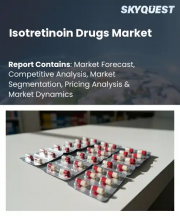
KSA 26.07.10Global Isotretinoin Drugs Market size was valued at USD 1.52 Billion in 2024 and is poised to grow from USD 1.61 Billion in 2025 to USD 2.52 Billion by 2033, growing at a CAGR of 5.81% during the forecast period (2026-2033).
The global isotretinoin drugs market, composed of prescription medications primarily used to treat severe nodular acne affecting about 5% of adolescents, showcases notable growth. Isotretinoin uniquely targets sebaceous gland activity, mitigates inflammation, and prevents scarring, offering a curative alternative to long-term antibiotics. With heightened awareness among dermatologists and proactive marketing strategies, adoption rates have surged, significantly increasing market revenues. A notable factor driving this growth is the escalating prevalence of acne in adults aged 25-40, who transition from over-the-counter products to dermatologist-prescribed isotretinoin for more persistent conditions. Additionally, the rise in antibiotic resistance encourages earlier and shorter courses of isotretinoin use. Regulatory changes in Southeast Asia expedite generic approvals, presenting substantial opportunities for market participants to enhance patient access and expand revenue.
Top-down and bottom-up approaches were used to estimate and validate the size of the Global Isotretinoin Drugs market and to estimate the size of various other dependent submarkets. The research methodology used to estimate the market size includes the following details: The key players in the market were identified through secondary research, and their market shares in the respective regions were determined through primary and secondary research. This entire procedure includes the study of the annual and financial reports of the top market players and extensive interviews for key insights from industry leaders such as CEOs, VPs, directors, and marketing executives. All percentage shares split, and breakdowns were determined using secondary sources and verified through Primary sources. All possible parameters that affect the markets covered in this research study have been accounted for, viewed in extensive detail, verified through primary research, and analyzed to get the final quantitative and qualitative data.
Global Isotretinoin Drugs Market Segments Analysis
Global isotretinoin drugs market is segmented by formulation, dosage, indication, distribution, end-user and region. Based on formulation, the market is segmented into Oral Capsules and Topical Gel. Based on dosage, the market is segmented into Low Dose (0.1-0.5 mg/kg/day) and Standard Dose (0.5-1 mg/kg/day). Based on indication, the market is segmented into Severe Cystic Acne and Moderate Acne. Based on distribution, the market is segmented into Retail Pharmacies (IPLEDGE), Hospital Pharmacies and Online (Telehealth). Based on end-user, the market is segmented into Dermatology Clinics and Hospitals. Based on region, the market is segmented into North America, Europe, Asia Pacific, Latin America and Middle East & Africa.
Driver of the Global Isotretinoin Drugs Market
The rising prevalence of moderate to severe acne among individuals of all ages is significantly boosting the utilization of isotretinoin as a definitive treatment option, especially when traditional therapies fall short. Dermatologists often recommend this medication for persistent lesions, as it tends to result in fewer scars and reduced psychosocial effects. This growing trend is expected to expand the patient base, increasing the demand for both branded and generic isotretinoin formulations. Consequently, companies are motivated to enhance their manufacturing capabilities and distribution networks, which will further stimulate market growth. Additionally, the positive impact on patients' quality of life may encourage insurance providers to expand their coverage, facilitating greater market accessibility.
Restraints in the Global Isotretinoin Drugs Market
The global market for isotretinoin drugs faces significant challenges due to stringent regulatory restrictions imposed by health authorities. These regulations often include mandatory pregnancy testing, contraception requirements, and comprehensive patient enrollment programs. Such protocols can be cumbersome for healthcare providers and pharmacies, leading to potential delays in treatment initiation and a reluctance among practitioners to prescribe these medications. Furthermore, patients may opt to discontinue their treatment due to convenience or apprehension regarding risks to fetal health. As a result, the complex compliance processes create barriers that ultimately restrict the overall volume of isotretinoin dispensed in the market.
Market Trends of the Global Isotretinoin Drugs Market
The Global Isotretinoin Drugs market is increasingly shifting towards personalized dermatology therapies, driven by advancements in genetic testing and high-tech imaging. This trend empowers dermatologists to tailor isotretinoin treatment according to individual skin biology, predicting responses and reducing side effects. As prescriber confidence and patient acceptance rise, isotretinoin is being deployed earlier in cases of moderate acne, traditionally reserved for milder treatments. Individualized dosing regimens and supportive skin care routines enhance therapeutic outcomes, while companion diagnostics emerge as key players in this evolving landscape, allowing manufacturers to distinguish themselves in an increasingly precision medicine-focused market.
Table of Contents
Introduction
- Objectives of the Study
- Market Definition & Scope
Research Methodology
- Research Process
- Secondary & Primary Data Methods
- Market Size Estimation Methods
Executive Summary
- Global Market Outlook
- Key Market Highlights
- Segmental Overview
- Competition Overview
Market Dynamics & Outlook
- Macro-Economic Indicators
- Drivers & Opportunities
- Restraints & Challenges
- Supply Side Trends
- Demand Side Trends
- Porters Analysis & Impact
- Competitive Rivalry
- Threat of Substitute
- Bargaining Power of Buyers
- Threat of New Entrants
- Bargaining Power of Suppliers
Key Market Insights
- Key Success Factors
- Market Impacting Factors
- Top Investment Pockets
- Ecosystem Mapping
- Market Attractiveness Index 2025
- PESTEL Analysis
- Regulatory Landscape
Global Isotretinoin Drugs Market Size by Formulation & CAGR (2026-2033)
- Market Overview
- Oral Capsules
- Topical Gel
Global Isotretinoin Drugs Market Size by Dosage & CAGR (2026-2033)
- Market Overview
- Low Dose (0.1-0.5 mg/kg/day)
- Standard Dose (0.5-1 mg/kg/day)
Global Isotretinoin Drugs Market Size by Indication & CAGR (2026-2033)
- Market Overview
- Severe Cystic Acne
- Moderate Acne
Global Isotretinoin Drugs Market Size by Distribution & CAGR (2026-2033)
- Market Overview
- Retail Pharmacies (IPLEDGE)
- Hospital Pharmacies
- Online (Telehealth)
Global Isotretinoin Drugs Market Size by End-User & CAGR (2026-2033)
- Market Overview
- Dermatology Clinics
- Hospitals
Global Isotretinoin Drugs Market Size & CAGR (2026-2033)
- North America (Formulation, Dosage, Indication, Distribution, End-User)
- US
- Canada
- Europe (Formulation, Dosage, Indication, Distribution, End-User)
- Germany
- Spain
- France
- UK
- Italy
- Rest of Europe
- Asia Pacific (Formulation, Dosage, Indication, Distribution, End-User)
- China
- India
- Japan
- South Korea
- Rest of Asia-Pacific
- Latin America (Formulation, Dosage, Indication, Distribution, End-User)
- Mexico
- Brazil
- Rest of Latin America
- Middle East & Africa (Formulation, Dosage, Indication, Distribution, End-User)
- GCC Countries
- South Africa
- Rest of Middle East & Africa
Competitive Intelligence
- Top 5 Player Comparison
- Market Positioning of Key Players, 2025
- Strategies Adopted by Key Market Players
- Recent Developments in the Market
- Company Market Share Analysis, 2025
- Company Profiles of All Key Players
- Company Details
- Product Portfolio Analysis
- Company's Segmental Share Analysis
- Revenue Y-O-Y Comparison (2023-2025)
Key Company Profiles
- Roche (Accutane - historical brand)
- Company Overview
- Business Segment Overview
- Financial Updates
- Key Developments
- Claravis (Teva)
- Company Overview
- Business Segment Overview
- Financial Updates
- Key Developments
- Amnesteem (Mylan)
- Company Overview
- Business Segment Overview
- Financial Updates
- Key Developments
- Sotret (Ranbaxy/Sun Pharma)
- Company Overview
- Business Segment Overview
- Financial Updates
- Key Developments
- Myorisan (Mayne Pharma)
- Company Overview
- Business Segment Overview
- Financial Updates
- Key Developments
- Absorica (Sun Pharmaceutical)
- Company Overview
- Business Segment Overview
- Financial Updates
- Key Developments
- Zenatane (Dermalogix/Lannett)
- Company Overview
- Business Segment Overview
- Financial Updates
- Key Developments
- Aknenormin (Almirall)
- Company Overview
- Business Segment Overview
- Financial Updates
- Key Developments
- Roaccutane (Roche - EU)
- Company Overview
- Business Segment Overview
- Financial Updates
- Key Developments
- Sun Pharmaceutical
- Company Overview
- Business Segment Overview
- Financial Updates
- Key Developments
- Teva Pharmaceutical
- Company Overview
- Business Segment Overview
- Financial Updates
- Key Developments
- Dr. Reddy's Laboratories
- Company Overview
- Business Segment Overview
- Financial Updates
- Key Developments
- Amneal Pharmaceuticals
- Company Overview
- Business Segment Overview
- Financial Updates
- Key Developments
- Cipla Ltd.
- Company Overview
- Business Segment Overview
- Financial Updates
- Key Developments
- Glenmark Pharmaceuticals
- Company Overview
- Business Segment Overview
- Financial Updates
- Key Developments
- Almirall SA
- Company Overview
- Business Segment Overview
- Financial Updates
- Key Developments
- LEO Pharma
- Company Overview
- Business Segment Overview
- Financial Updates
- Key Developments
- Galderma SA
- Company Overview
- Business Segment Overview
- Financial Updates
- Key Developments
- Cassiopea SpA
- Company Overview
- Business Segment Overview
- Financial Updates
- Key Developments
- Hovione
- Company Overview
- Business Segment Overview
- Financial Updates
- Key Developments