|
시장보고서
상품코드
2091203
스캐폴드 프리 3D 세포 배양 시장 규모, 점유율, 성장 분석 : 제품 유형별, 임상 응용 분야별, 최종 이용 산업별, 지역별 - 업계 예측(2026-2033년)Scaffold-Free 3D Cell Culture Market Size, Share, and Growth Analysis, By Product Technology Type, By Application Clinical Area, By End-Use Industry, By Region - Industry Forecast 2026-2033 |
||||||

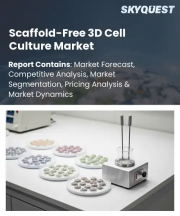
세계의 스캐폴드 프리 3D 세포 배양 시장 규모는 2024년에 4억 2,560만 달러로 평가되었으며, 2025년 4억 8,859만 달러에서 2033년까지 14억 7,394만 달러로 확대되어 예측 기간(2026-2033년) 동안 CAGR 14.8%로 성장할 것으로 전망됩니다.
스캐폴드 프리 3D 세포 배양 시장은 인간 조직과 매우 유사한 체외 모델에 대한 수요가 증가함에 따라 성장하고 있으며, 이를 통해 약물의 효능 예측 정확도가 향상되는 동시에 동물 실험에 대한 의존도가 낮아지고 있습니다. 이 접근법에서는 인공 매트릭스를 사용하지 않고, 스페로이드나 오가노이드와 같은 자기 조직화 세포 집합체를 형성합니다. 연구 센터의 방법론에서 상용 플랫폼으로의 진화는 물론, 제약 업계의 막대한 투자 덕분에 중개 연구 분야에서 그 역할이 확고해졌습니다. 또한, 맞춤형 의료와 첨단 선별 검사의 융합을 통해 효율적인 질병 모델에 대한 자금 지원이 확대되고 있으며, 기술 도입이 가속화되고 있습니다. 자동화와 AI의 혁신은 스페로이드 제작 방식을 혁신적으로 변화시켰으며, 독성학, 재생의학, 화장품 분야에서의 응용에 있어 더 높은 효율성과 범용성을 실현하고 있습니다. 한편, 규제 측면에서의 지원은 새로운 수익원을 개척하고 협력을 촉진하고 있습니다.
세계 스캐폴드 프리 3D 세포 배양 시장의 성장요인
세계 스캐폴드 프리 3D 세포 배양 시장의 주요 성장 촉진요인 중 하나는 혁신적인 의약품 개발 및 맞춤형 의료에 대한 수요 증가입니다. 연구자들이 생체 내 조건을 재현할 수 있는 보다 정확한 모델을 모색하는 가운데, 스캐폴드 프리 시스템은 뛰어난 세포 간 상호작용을 제공함으로써 약물 반응 및 독성 평가의 예측 정확도를 높이고 있습니다. 또한, 이러한 시스템은 이종 세포 집단의 증식을 가능하게 하며, 기존의 2차원 배양보다 더 효과적으로 조직 구조를 모방합니다. 이처럼, 생리학적으로 더 타당한 모델로의 전환이 비스듬대 없는 기술에 대한 투자와 발전을 촉진하고 있으며, 이는 학술 및 산업 연구 현장에서의 도입 확대로 이어지고 있습니다.
세계 스캐폴드 프리 3D 세포 배양 시장의 제약요인
세계 스캐폴드 프리 3D 세포 배양 시장의 주요 제약요인 중 하나는 첨단 기술 및 장비에 따른 높은 비용입니다. 전용 장비, 시약, 인프라에 필요한 초기 투자는 소규모 연구 기관이나 스타트업 기업에게 큰 장벽이 되어, 스캐폴드 프리 기술의 도입을 제한할 가능성이 있습니다. 또한, 스캐폴드 프리 3D 세포 배양에 수반되는 프로토콜의 복잡성은 기존의 2D 배양법에 익숙한 연구자들을 주저하게 만들어 도입 속도를 늦출 우려가 있습니다. 이러한 재정적 및 운영상의 장벽은 스캐폴드 프리 세포 배양 솔루션 시장의 성장과 혁신을 저해할 가능성이 있습니다.
세계 스캐폴드 프리 3D 세포 배양 시장의 동향
세계 스캐폴드 프리 3D 세포 배양 시장에서는 첨단 오가노이드 기술의 통합을 향한 뚜렷한 추세가 나타나고 있으며, 이는 조직 구조의 재현성을 높여 질병 모델링 및 맞춤형 의료 접근 방식의 개선을 촉진하고 있습니다. 이러한 진화하는 상황에 따라 기존 동물 모델에 대한 의존도가 낮아지고 있으며, 이는 개발 기간 단축과 체외(in vitro) 실험 결과에 대한 규제 당국의 승인 확대로 이어지고 있습니다. 생명공학 기업과 학술 기관 간의 협력이 확대되면서, 오가노이드를 효율적으로 생성하고 유지하기 위한 통합 워크플로우 솔루션 구축이 촉진되고 있습니다. 그 결과, 다양한 치료 분야에서 적응성이 높고 사용하기 편리한 스캐폴드 불필요 배양 시스템에 대한 수요가 급증하고 있으며, 이는 전 세계적인 중개 연구 개발 활동을 크게 촉진하고 있습니다.
자주 묻는 질문
목차
소개
조사 방법
주요 요약
시장 역학과 전망
주요 시장 인사이트
세계의 스캐폴드 프리 3D 세포 배양 시장 규모 : 제품 기술 유형별
세계의 스캐폴드 프리 3D 세포 배양 시장 규모 : 임상 응용 분야별
세계의 스캐폴드 프리 3D 세포 배양 시장 규모 : 최종 이용 산업별
세계의 스캐폴드 프리 3D 세포 배양 시장 규모 : 지역별
경쟁 정보
주요 기업 개요
결론과 제안
KSM 26.07.22Global Scaffold-Free 3D Cell Culture Market size was valued at USD 425.6 Million in 2024 and is poised to grow from USD 488.59 Million in 2025 to USD 1473.94 Million by 2033, growing at a CAGR of 14.8% during the forecast period (2026-2033).
The scaffold-free 3D cell culture market is driven by the increasing demand for in vitro models that closely resemble human tissue, enhancing drug efficacy predictions while reducing reliance on animal testing. This approach involves self-assembling cell aggregates like spheroids and organoids without artificial matrices. The evolution from research-focused techniques to commercial platforms, alongside significant investments from the pharmaceutical sector, has solidified its role in translational research. Additionally, the intersection of personalized medicine and advanced screening is accelerating technology adoption as efficient disease models attract further funding. Innovations in automation and AI are transforming spheroid production, facilitating higher efficiency and versatility across applications in toxicology, regenerative medicine, and cosmetics, while regulatory support is unlocking new revenue streams and fostering collaboration.
Top-down and bottom-up approaches were used to estimate and validate the size of the Global Scaffold-Free 3D Cell Culture market and to estimate the size of various other dependent submarkets. The research methodology used to estimate the market size includes the following details: The key players in the market were identified through secondary research, and their market shares in the respective regions were determined through primary and secondary research. This entire procedure includes the study of the annual and financial reports of the top market players and extensive interviews for key insights from industry leaders such as CEOs, VPs, directors, and marketing executives. All percentage shares split, and breakdowns were determined using secondary sources and verified through Primary sources. All possible parameters that affect the markets covered in this research study have been accounted for, viewed in extensive detail, verified through primary research, and analyzed to get the final quantitative and qualitative data.
Global Scaffold-Free 3D Cell Culture Market Segments Analysis
Global scaffold-free 3d cell culture market is segmented by product technology type, application clinical area, end-use industry and region. Based on product technology type, the market is segmented into Low-Attachment Spheroid Microplates, Hanging Drop Plates Assemblies, Bioreactor Culture Systems and Magnetic Levitation Systems. Based on application clinical area, the market is segmented into Oncology Research, Stem Cell & Regenerative Medicine and Toxicology & Drug Screening. Based on end-use industry, the market is segmented into Biotechnology & Pharmaceutical Industry, Academic & Research Institutes and Contract Research Organizations. Based on region, the market is segmented into North America, Europe, Asia Pacific, Latin America and Middle East & Africa.
Driver of the Global Scaffold-Free 3D Cell Culture Market
One of the key market drivers for the global scaffold-free 3D cell culture market is the increasing demand for innovative drug development and personalized medicine. As researchers seek more accurate models that replicate in vivo conditions, scaffold-free systems offer superior cellular interactions, enhancing the predictability of drug responses and toxicity assessments. Additionally, these systems enable the growth of heterogeneous cell populations and mimic tissue architecture more effectively than traditional 2D cultures. This shift towards more physiologically relevant models is driving investments and advancements in scaffold-free technologies, leading to greater adoption in academic and industrial research settings.
Restraints in the Global Scaffold-Free 3D Cell Culture Market
One key market restraint for the Global Scaffold-Free 3D Cell Culture Market is the high cost associated with advanced technologies and equipment. The initial investment required for specialized tools, reagents, and infrastructure can be a significant barrier for smaller research institutions and startups, limiting their ability to adopt scaffold-free techniques. Additionally, the complexity of the protocols involved in scaffold-free 3D cell culture may deter researchers who are accustomed to traditional 2D culture methods, leading to a slower rate of adoption. This financial and operational hurdle could impede market growth and innovation in scaffold-free cell culture solutions.
Market Trends of the Global Scaffold-Free 3D Cell Culture Market
The global scaffold-free 3D cell culture market is witnessing a notable trend towards the integration of advanced organoid technologies, enhancing the fidelity of tissue architecture and fostering improved disease modeling and personalized medicine approaches. This evolving landscape reduces dependence on traditional animal models, leading to accelerated development timelines and increased regulatory acceptance for in vitro results. Collaborations between biotech firms and academic institutions are proliferating, encouraging the creation of integrated workflow solutions for efficient organoid generation and maintenance. As a result, demand for adaptable and user-friendly scaffold-free culture systems is surging across various therapeutic areas, significantly propelling global translational research and development efforts.
Table of Contents
Introduction
- Objectives of the Study
- Market Definition & Scope
Research Methodology
- Research Process
- Secondary & Primary Data Methods
- Market Size Estimation Methods
Executive Summary
- Global Market Outlook
- Key Market Highlights
- Segmental Overview
- Competition Overview
Market Dynamics & Outlook
- Macro-Economic Indicators
- Drivers & Opportunities
- Restraints & Challenges
- Supply Side Trends
- Demand Side Trends
- Porters Analysis & Impact
- Competitive Rivalry
- Threat of Substitute
- Bargaining Power of Buyers
- Threat of New Entrants
- Bargaining Power of Suppliers
Key Market Insights
- Key Success Factors
- Market Impacting Factors
- Top Investment Pockets
- Ecosystem Mapping
- Market Attractiveness Index 2025
- PESTEL Analysis
- Regulatory Landscape
Global Scaffold-Free 3D Cell Culture Market Size by Product Technology Type & CAGR (2026-2033)
- Market Overview
- Low-Attachment Spheroid Microplates
- Hanging Drop Plates Assemblies
- Bioreactor Culture Systems
- Rotating Bioreactors
- Perfusion Bioreactors
- Magnetic Levitation Systems
Global Scaffold-Free 3D Cell Culture Market Size by Application Clinical Area & CAGR (2026-2033)
- Market Overview
- Oncology Research
- Stem Cell & Regenerative Medicine
- Toxicology & Drug Screening
Global Scaffold-Free 3D Cell Culture Market Size by End-Use Industry & CAGR (2026-2033)
- Market Overview
- Biotechnology & Pharmaceutical Industry
- Academic & Research Institutes
- Contract Research Organizations
Global Scaffold-Free 3D Cell Culture Market Size & CAGR (2026-2033)
- North America (Product Technology Type, Application Clinical Area, End-Use Industry)
- US
- Canada
- Europe (Product Technology Type, Application Clinical Area, End-Use Industry)
- Germany
- Spain
- France
- UK
- Italy
- Rest of Europe
- Asia Pacific (Product Technology Type, Application Clinical Area, End-Use Industry)
- China
- India
- Japan
- South Korea
- Rest of Asia-Pacific
- Latin America (Product Technology Type, Application Clinical Area, End-Use Industry)
- Mexico
- Brazil
- Rest of Latin America
- Middle East & Africa (Product Technology Type, Application Clinical Area, End-Use Industry)
- GCC Countries
- South Africa
- Rest of Middle East & Africa
Competitive Intelligence
- Top 5 Player Comparison
- Market Positioning of Key Players, 2025
- Strategies Adopted by Key Market Players
- Recent Developments in the Market
- Company Market Share Analysis, 2025
- Company Profiles of All Key Players
- Company Details
- Product Portfolio Analysis
- Company's Segmental Share Analysis
- Revenue Y-O-Y Comparison (2023-2025)
Key Company Profiles
- Thermo Fisher Scientific
- Company Overview
- Business Segment Overview
- Financial Updates
- Key Developments
- Corning Incorporated
- Company Overview
- Business Segment Overview
- Financial Updates
- Key Developments
- Merck KGaA
- Company Overview
- Business Segment Overview
- Financial Updates
- Key Developments
- Lonza Group
- Company Overview
- Business Segment Overview
- Financial Updates
- Key Developments
- InSphero AG
- Company Overview
- Business Segment Overview
- Financial Updates
- Key Developments
- Promocell GmbH
- Company Overview
- Business Segment Overview
- Financial Updates
- Key Developments
- Reprocell
- Company Overview
- Business Segment Overview
- Financial Updates
- Key Developments
- Synthecon
- Company Overview
- Business Segment Overview
- Financial Updates
- Key Developments
- 3D Biomatrix
- Company Overview
- Business Segment Overview
- Financial Updates
- Key Developments
- Organovo Holdings
- Company Overview
- Business Segment Overview
- Financial Updates
- Key Developments
- MIMETAS
- Company Overview
- Business Segment Overview
- Financial Updates
- Key Developments
- Emulate Inc
- Company Overview
- Business Segment Overview
- Financial Updates
- Key Developments
- TissUse GmbH
- Company Overview
- Business Segment Overview
- Financial Updates
- Key Developments
- CN Bio Innovations
- Company Overview
- Business Segment Overview
- Financial Updates
- Key Developments
- Incuvers
- Company Overview
- Business Segment Overview
- Financial Updates
- Key Developments
- Microislands
- Company Overview
- Business Segment Overview
- Financial Updates
- Key Developments
- Lena Biosciences
- Company Overview
- Business Segment Overview
- Financial Updates
- Key Developments
- Kirkstall Ltd
- Company Overview
- Business Segment Overview
- Financial Updates
- Key Developments
- Cellular Dynamics International
- Company Overview
- Business Segment Overview
- Financial Updates
- Key Developments
- Amsbio
- Company Overview
- Business Segment Overview
- Financial Updates
- Key Developments