|
시장보고서
상품코드
2091928
이식형 펄스 발생기 시장 규모, 점유율 및 성장 분석 : 제품 유형별, 충전 방식별, 용도별, 최종사용자별, 지역별 - 업계 예측(2026-2033년)Implantable Pulse Generator Market Size, Share, and Growth Analysis, By Product Type, By Charging Type, By Application, By End User, By Region - Industry Forecast 2026-2033 |
||||||

세계의 이식형 펄스 제너레이터(IPG) 시장 규모는 2024년에 1,381억 9,000만 달러로 평가되며, 2025년 1,531억 1,000만 달러에서 2033년까지 3,478억 달러로 확대하며, 예측 기간(2026-2033년)에 CAGR 10.8%로 성장할 것으로 전망되고 있습니다.
전 세계 이식형 펄스 발생기(IPG) 시장은 원격 프로그래밍 및 데이터 분석에 대한 수요 증가에 힘입어, IPG를 커넥티드 치료 시스템으로 전환함으로써 인상적인 성장을 달성하고 있습니다. 블루투스 저에너지(BLE) 모듈과 클라우드 대시보드의 통합을 통해 의사는 추가 수술 없이도 자극 매개변수를 조정할 수 있게 되어, 환자 모니터링이 강화되고 병원 방문 횟수가 줄어듭니다. 이러한 변화는 치료 비용을 절감할 뿐만 아니라, 보험사가 이러한 모델에 대한 보상 의지를 높이는 결과로 이어지고 있습니다. 또한 AI를 활용한 자동화를 통해 기기의 설계 및 생산이 개선되고 있습니다. 기계학습 알고리즘을 통해 전극 구성이 최적화되었으며, 로봇을 활용한 조립 라인이 제조 효율을 높이고 있습니다. 클라우드 서비스가 예측 분석을 위한 텔레메트리 데이터를 수집함으로써, 임상의는 원격으로 치료를 조정할 수 있게 되었고, 이를 통해 성과가 향상되며, 맞춤형 치료 계획을 지원하는 지속적인 피드백 사이클이 형성되어, 첨단이고 신뢰할 수 있는 제품으로 가는 길이 열리고 있습니다.
전 세계 내장형 펄스 발생기 시장은 제품 유형, 충전 방식, 용도, 최종사용자 및 지역별로 분류됩니다. 제품 유형에 따라 시장 세분화에서는 기능적 전기 자극(FES) 기기, 척수 자극(SCS) 기기, 심부 뇌 자극(DBS) 기기, 미주신경 자극(VNS) 기기, 천골신경 자극(SNS) 기기 및 심장용 IPG로 분류됩니다. 충전 방식에 따라 시장 세분화에서는 '충전식'과 '비충전식(1차 전지)'으로 분류됩니다. 용도별로는 만성 통증 관리, 부정맥, 신경질환, 요실금 및 변실금, 그리고 위장 질환으로 분류됩니다. 최종사용자별로는 병원, 외래 수술 센터, 전문 클리닉, 재택 간호 및 원격 모니터링으로 구분됩니다. 지역별로는 북미, 유럽, 아시아태평양, 라틴아메리카, 중동 및 아프리카로 구분됩니다.
전 세계 내장형 펄스 발생기 시장의 성장 요인
만성 통증 유병률이 증가함에 따라 의료진은 더욱 효과적이고 신뢰할 수 있는 치료 방안을 모색하고 있습니다. 이식형 펄스 발생기는 표적에 맞춘 신경조절이 가능하며, 오피오이드 의존성을 대폭 줄일 수 있다는 점에서 유망한 대안으로 주목받고 있습니다. 임상의들은 이러한 기기들이 증상 관리를 유지하면서 환자의 삶의 질(QOL)을 향상시킬 수 있다고 인식하고 있으며, 이로 인해 병원의 조달 활동이 강화되고 있습니다. 다직종 팀의 이러한 관심 증가는 임상 현장에서의 도입을 촉진하고, 시장 전체의 확대에 기여하고 있습니다. 또한 원격 프로그래밍 기능을 통해 환자의 치료 순응도가 향상되고 데이터 수집이 간소화됨에 따라 의료진은 이러한 기기를 보조적인 선택지로 취급하기보다는 표준 치료 프로토콜에 포함시키고 있습니다.
전 세계 내장형 펄스 발생기 시장의 제약 요인
전 세계 이식형 펄스 발생기 시장은 주로 이러한 장치와 관련된 막대한 초기 비용으로 인해 심각한 제약에 직면해 있습니다. 이러한 재정적 부담에는 기기 구입 비용뿐만 아니라 관련 수술 비용도 포함되어 있으며, 자원이 제한된 환경에서 운영되는 의료 시설의 경우 특히 큰 과제가 될 수 있습니다. 예산이 부족한 상황에서 관리자는 초기 투자 비용이 적게 드는 대체요법을 선택할 가능성이 있으며, 그 결과 첨단 기술의 도입이 지연될 수 있습니다. 또한 각 지역의 환급 방침을 둘러싼 불확실성이 문제를 더욱 심각하게 만들고 있으며, 이는 의료 제공자들이 구매를 주저하게 만드는 원인이 되고 있습니다. 그 결과, 구매 결정이 지연되거나 단계적인 업그레이드가 우선시되는 경우가 많아, 결국 시장 확대를 저해하는 요인이 되고 있습니다.
전 세계 이식형 펄스 발생기 시장의 동향
전 세계 이식형 펄스 발생기 시장에서는 기기의 소형화에 힘입어 혁신적인 추세가 나타나고 있습니다. 마이크로전자공학 및 고밀도 배터리 기술의 발전으로 인해 더욱 소형화되고 경량화된 펄스 발생기의 개발이 가능해졌으며, 이로 인해 다양한 전문 분야의 임상의들이 이를 적극적으로 도입하고 있습니다. 이러한 발전은 환자의 편안함을 높이고 수술의 복잡성을 줄일 뿐만 아니라, 이식에 적합한 해부학적 부위의 범위를 확대하고 있습니다. 그 결과, 특히 신경내과 및 순환기내과 의료진 사이에서 이러한 혁신 기술의 도입이 확대되면서 임상 성과 향상으로 이어지고 있습니다. 이러한 첨단 기기의 수용과 적용이 확대됨에 따라 세계 의료 시장의 수요가 증가하고 있으며, 치료에 대한 접근성과 이용 확대가 촉진되고 있습니다.
자주 묻는 질문
목차
서론
조사 방법
개요
시장 역학과 전망
주요 시장 인사이트
세계의 이식형 펄스 발생기 시장 규모 : 제품 유형별
세계의 이식형 펄스 발생기 시장 규모 : 충전 방식별
세계의 이식형 펄스 발생기 시장 규모 : 용도별
세계의 이식형 펄스 발생기 시장 규모 : 최종사용자별
세계의 이식형 펄스 발생기 시장 규모 : 지역별
경쟁 정보
주요 기업 개요
결론과 제안
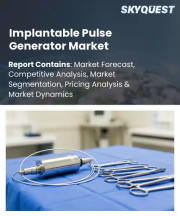
KSA 26.07.22Global Implantable Pulse Generator Market size was valued at USD 138.19 Billion in 2024 and is poised to grow from USD 153.11 Billion in 2025 to USD 347.8 Billion by 2033, growing at a CAGR of 10.8% during the forecast period (2026-2033).
The global implantable pulse generator (IPG) market is experiencing significant growth driven by the rising demand for remote programming and data analytics, transforming IPGs into connected therapeutic systems. The integration of Bluetooth Low Energy modules and cloud dashboards allows physicians to adjust stimulation parameters without additional surgeries, enhancing patient monitoring and reducing hospital visits. This shift not only lowers treatment costs but also increases payers' willingness to reimburse these models. Additionally, AI-driven automation is enhancing device design and production, with machine learning algorithms improving electrode configurations and robotic assembly lines accelerating manufacturing efficiency. As cloud services gather telemetry for predictive analytics, clinicians can adjust therapies remotely, creating a continuous feedback cycle that enhances performance and supports customized treatment plans, paving the way for advanced, reliable products.
Top-down and bottom-up approaches were used to estimate and validate the size of the Global Implantable Pulse Generator market and to estimate the size of various other dependent submarkets. The research methodology used to estimate the market size includes the following details: The key players in the market were identified through secondary research, and their market shares in the respective regions were determined through primary and secondary research. This entire procedure includes the study of the annual and financial reports of the top market players and extensive interviews for key insights from industry leaders such as CEOs, VPs, directors, and marketing executives. All percentage shares split, and breakdowns were determined using secondary sources and verified through Primary sources. All possible parameters that affect the markets covered in this research study have been accounted for, viewed in extensive detail, verified through primary research, and analyzed to get the final quantitative and qualitative data.
Global Implantable Pulse Generator Market Segments Analysis
The global implantable pulse generator market is segmented by product type, charging type, application, end user and region. Based on product type, the market is segmented into Functional Electrical Stimulation (FES) Devices, Spinal Cord Stimulation (SCS) Devices, Deep Brain Stimulation (DBS) Devices, Vagus Nerve Stimulation (VNS) Devices, Sacral Nerve Stimulation (SNS) Devices and Cardiac IPGs. Based on charging type, the market is segmented into Rechargeable and Non-Rechargeable (Primary Cell). Based on application, the market is segmented into Chronic Pain Management, Cardiac Arrhythmia, Neurological Disorders, Urinary & Fecal Incontinence and Gastrointestinal Disorders. Based on end user, the market is segmented into Hospitals, Ambulatory Surgical Centers, Specialty Clinics and Home Care & Remote Monitoring. Based on region, the market is segmented into North America, Europe, Asia Pacific, Latin America and Middle East & Africa.
Driver of the Global Implantable Pulse Generator Market
The increasing prevalence of chronic pain has driven healthcare providers to seek more effective and reliable treatment solutions. Implantable pulse generators have emerged as a promising option due to their ability to provide targeted neuromodulation, significantly reducing reliance on opioids. Clinicians recognize that these devices can enhance patients' daily quality of life while maintaining symptom management, prompting hospitals to intensify their procurement efforts. This growing interest from multidisciplinary teams aids in clinical adoption and contributes to overall market expansion. Additionally, the capability for remote programming facilitates patient adherence and simplifies data collection, encouraging healthcare providers to integrate these devices into standard treatment protocols rather than relegating them to secondary options.
Restraints in the Global Implantable Pulse Generator Market
The global market for implantable pulse generators faces significant restraints, primarily stemming from the substantial initial costs associated with these devices. The financial burden includes not only the procurement of the devices but also the associated surgical expenses, which can be particularly challenging for healthcare facilities operating in resource-limited environments. As budgets tighten, administrators may opt for alternative therapies that require less upfront investment, leading to a slower adoption of advanced technologies. Additionally, uncertainty surrounding reimbursement policies across various regions further compounds the issue, causing providers to hesitate in committing to purchases. This often results in delayed buying decisions and a preference for incremental upgrades, ultimately hindering market expansion.
Market Trends of the Global Implantable Pulse Generator Market
The Global Implantable Pulse Generator market is witnessing a transformative trend driven by the miniaturization of devices. Advances in microelectronics and high-density battery technologies have enabled the development of smaller and lighter pulse generators, enhancing clinician adoption across various specialties. This evolution not only increases patient comfort and reduces surgical complexities but also expands the range of anatomical locations suitable for implantation. As a result, more healthcare professionals, particularly in neurology and cardiology, are embracing these innovations, leading to improved clinical outcomes. The growing acceptance and application of these advanced devices are generating heightened demand in global healthcare markets, facilitating broader therapeutic access and usage.
Table of Contents
Introduction
- Objectives of the Study
- Market Definition & Scope
Research Methodology
- Research Process
- Secondary & Primary Data Methods
- Market Size Estimation Methods
Executive Summary
- Global Market Outlook
- Key Market Highlights
- Segmental Overview
- Competition Overview
Market Dynamics & Outlook
- Macro-Economic Indicators
- Drivers & Opportunities
- Restraints & Challenges
- Supply Side Trends
- Demand Side Trends
- Porters Analysis & Impact
- Competitive Rivalry
- Threat of Substitute
- Bargaining Power of Buyers
- Threat of New Entrants
- Bargaining Power of Suppliers
Key Market Insights
- Key Success Factors
- Market Impacting Factors
- Top Investment Pockets
- Ecosystem Mapping
- Market Attractiveness Index 2025
- PESTEL Analysis
- Regulatory Landscape
Global Implantable Pulse Generator Market Size by Product Type & CAGR (2026-2033)
- Market Overview
- Functional Electrical Stimulation (FES) Devices
- Spinal Cord Stimulation (SCS) Devices
- Deep Brain Stimulation (DBS) Devices
- Vagus Nerve Stimulation (VNS) Devices
- Sacral Nerve Stimulation (SNS) Devices
- Cardiac IPGs
Global Implantable Pulse Generator Market Size by Charging Type & CAGR (2026-2033)
- Market Overview
- Rechargeable
- Non-Rechargeable (Primary Cell)
Global Implantable Pulse Generator Market Size by Application & CAGR (2026-2033)
- Market Overview
- Chronic Pain Management
- Cardiac Arrhythmia
- Neurological Disorders
- Urinary & Fecal Incontinence
- Gastrointestinal Disorders
Global Implantable Pulse Generator Market Size by End User & CAGR (2026-2033)
- Market Overview
- Hospitals
- Ambulatory Surgical Centers
- Specialty Clinics
- Home Care & Remote Monitoring
Global Implantable Pulse Generator Market Size & CAGR (2026-2033)
- North America (Product Type, Charging Type, Application, End User)
- US
- Canada
- Europe (Product Type, Charging Type, Application, End User)
- Germany
- Spain
- France
- UK
- Italy
- Rest of Europe
- Asia Pacific (Product Type, Charging Type, Application, End User)
- China
- India
- Japan
- South Korea
- Rest of Asia-Pacific
- Latin America (Product Type, Charging Type, Application, End User)
- Mexico
- Brazil
- Rest of Latin America
- Middle East & Africa (Product Type, Charging Type, Application, End User)
- GCC Countries
- South Africa
- Rest of Middle East & Africa
Competitive Intelligence
- Top 5 Player Comparison
- Market Positioning of Key Players, 2025
- Strategies Adopted by Key Market Players
- Recent Developments in the Market
- Company Market Share Analysis, 2025
- Company Profiles of All Key Players
- Company Details
- Product Portfolio Analysis
- Company's Segmental Share Analysis
- Revenue Y-O-Y Comparison (2023-2025)
Key Company Profiles
- Medtronic plc
- Company Overview
- Business Segment Overview
- Financial Updates
- Key Developments
- Boston Scientific Corporation
- Company Overview
- Business Segment Overview
- Financial Updates
- Key Developments
- Abbott Laboratories
- Company Overview
- Business Segment Overview
- Financial Updates
- Key Developments
- Nevro Corporation
- Company Overview
- Business Segment Overview
- Financial Updates
- Key Developments
- LivaNova plc
- Company Overview
- Business Segment Overview
- Financial Updates
- Key Developments
- Axonics Inc.
- Company Overview
- Business Segment Overview
- Financial Updates
- Key Developments
- Biotronik SE & Co. KG
- Company Overview
- Business Segment Overview
- Financial Updates
- Key Developments
- Cochlear Limited
- Company Overview
- Business Segment Overview
- Financial Updates
- Key Developments
- Neuropace Inc.
- Company Overview
- Business Segment Overview
- Financial Updates
- Key Developments
- Electrocore Inc.
- Company Overview
- Business Segment Overview
- Financial Updates
- Key Developments
- Synapse Biomedical Inc.
- Company Overview
- Business Segment Overview
- Financial Updates
- Key Developments
- NeuroPace Inc.
- Company Overview
- Business Segment Overview
- Financial Updates
- Key Developments
- Integer Holdings Corporation
- Company Overview
- Business Segment Overview
- Financial Updates
- Key Developments
- Cyberonics (LivaNova)
- Company Overview
- Business Segment Overview
- Financial Updates
- Key Developments
- Nalu Medical Inc.
- Company Overview
- Business Segment Overview
- Financial Updates
- Key Developments
- BioControl Medical Ltd.
- Company Overview
- Business Segment Overview
- Financial Updates
- Key Developments
- Salem Abraham Capital Management
- Company Overview
- Business Segment Overview
- Financial Updates
- Key Developments
- EBR Systems Inc.
- Company Overview
- Business Segment Overview
- Financial Updates
- Key Developments
- Stimwave Technologies Inc.
- Company Overview
- Business Segment Overview
- Financial Updates
- Key Developments
- Galvani Bioelectronics Ltd.
- Company Overview
- Business Segment Overview
- Financial Updates
- Key Developments