|
시장보고서
상품코드
1878923
비안정 멀티바이브레이터 시장 : 세계 산업 규모, 점유율, 동향, 기회, 예측 - 용도별, 유형별, 용도별, 지역별, 경쟁별(2020-2030년)Astable Multivibrator Market - Global Industry Size, Share, Trends, Opportunity, and Forecast, Segmented By End-Use, By Type, By Application, By Region, By Competition, 2020-2030F |
||||||

세계의 비안정 멀티바이브레이터 시장은 2024년에 25억 8,000만 달러로 평가되었으며, 2030년까지 CAGR 7.20%로 성장하여 39억 2,000만 달러에 달할 것으로 예측됩니다.
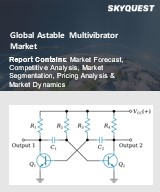
비안정 멀티바이브레이터는 외부 트리거 신호가 필요 없이 자유발진 발진기 역할을 하며, 비정현파 출력 파형(보통 사각파 또는 직사각파)을 지속적으로 생성하는 전자회로입니다. 이러한 장치 시장은 주로 정밀한 타이밍 회로를 필요로 하는 산업 자동화의 확대, 통신 인프라의 신호 생성 수요 증가, 소비자 전자제품에 대한 통합의 진전 등의 요인에 의해 주도되고 있습니다.
| 시장 개요 | |
|---|---|
| 예측 기간 | 2026-2030년 |
| 시장 규모 : 2024년 | 25억 8,000만 달러 |
| 시장 규모 : 2030년 | 39억 2,000만 달러 |
| CAGR : 2025-2030년 | 7.2% |
| 가장 빠르게 성장하는 부문 | 이미터 결합형 비안정 멀티바이브레이터 |
| 최대 시장 | 아시아태평양 |
주요 시장 촉진요인
주요 시장 동향
자주 묻는 질문
목차
제1장 개요
제2장 조사 방법
제3장 주요 요약
제4장 고객의 소리
제5장 세계의 비안정 멀티바이브레이터 시장 전망
- 시장 규모 및 예측
- 금액별
- 시장 점유율과 예측
- 최종 용도별(산업용, 기타)
- 유형별(콜렉터 결합형 비안정 멀티바이브레이터, 이미터 결합형 비안정 멀티바이브레이터)
- 용도별(발진기, 모르스 신호 발생기, 펄스 위치 변조기, 아마추어 무선 장비, 타이머, RFID 시스템, FSK 발생기, 기타)
- 지역별
- 기업별(2024)
- 시장 맵
제6장 북미의 비안정 멀티바이브레이터 시장 전망
- 시장 규모 및 예측
- 시장 점유율과 예측
- 북미 : 국가별 분석
- 미국
- 캐나다
- 멕시코
제7장 유럽의 비안정 멀티바이브레이터 시장 전망
- 시장 규모 및 예측
- 시장 점유율과 예측
- 유럽 : 국가별 분석
- 독일
- 프랑스
- 영국
- 이탈리아
- 스페인
제8장 아시아태평양의 비안정 멀티바이브레이터 시장 전망
- 시장 규모 및 예측
- 시장 점유율과 예측
- 아시아태평양 : 국가별 분석
- 중국
- 인도
- 일본
- 한국
- 호주
제9장 중동 및 아프리카의 비안정 멀티바이브레이터 시장 전망
- 시장 규모 및 예측
- 시장 점유율과 예측
- 중동 및 아프리카 : 국가별 분석
- 사우디아라비아
- 아랍에미리트
- 남아프리카공화국
제10장 남미의 비안정 멀티바이브레이터 시장 전망
- 시장 규모 및 예측
- 시장 점유율과 예측
- 남미 : 국가별 분석
- 브라질
- 콜롬비아
- 아르헨티나
제11장 시장 역학
- 성장 촉진요인
- 과제
제12장 시장 동향과 발전
- 인수합병
- 제품 출시
- 최근 동향
제13장 세계의 비안정 멀티바이브레이터 시장 : SWOT 분석
제14장 Porter's Five Forces 분석
- 업계내 경쟁
- 신규 참여의 가능성
- 공급업체의 능력
- 고객의 능력
- 대체품의 위협
제15장 경쟁 구도
- TDK Corporation
- Murata Manufacturing Co., Ltd.
- Bourns, Inc.
- Coilcraft Inc.
- Vishay Intertechnology, Inc.
- Taiyo Yuden Co., Ltd.
- Samsung Electro-Mechanics Co., Ltd.
- KYOCERA AVX Components Corporation
- NXP Semiconductors N.V.
- STMicroelectronics N.V.
제16장 전략적 제안
제17장 조사 회사 소개 및 면책사항
KSM 25.12.15The Global Astable Multivibrator Market, valued at USD 2.58 Billion in 2024, is projected to experience a CAGR of 7.20% to reach USD 3.92 Billion by 2030. An astable multivibrator is an electronic circuit that functions as a free-running oscillator, continuously generating a non-sinusoidal output waveform, typically a square or rectangular wave, without requiring an external trigger signal. The market for these devices is primarily driven by their fundamental role in various electronic systems, including the expansion of industrial automation requiring precise timing circuits, the growing demand from communication infrastructure for signal generation, and the increasing integration into consumer electronics.
| Market Overview | |
|---|---|
| Forecast Period | 2026-2030 |
| Market Size 2024 | USD 2.58 Billion |
| Market Size 2030 | USD 3.92 Billion |
| CAGR 2025-2030 | 7.2% |
| Fastest Growing Segment | Emitter-Coupled Astable Multivibrator |
| Largest Market | Asia Pacific |
Key Market Drivers
The expanding landscape of consumer electronics and Internet of Things devices significantly influences the global astable multivibrator market by fueling demand for compact, cost-effective, and reliable timing circuits. Astable multivibrators serve as fundamental building blocks in numerous consumer gadgets and smart home appliances, providing essential clock signals for microcontrollers, data communication, and sensor interfacing. As these devices become more ubiquitous, the need for precise and stable oscillation in a miniaturized form intensifies. This is evident in future technology investments; according to the 6G Smart Networks and Services Industry Association, in January 2025, 16 new Research and Innovation projects, specifically targeting advancements in IoT, devices, and software, commenced as part of Call 3 of the SNS JU. This ongoing research and development directly translates into future product cycles requiring continuous supply of foundational timing components.
Key Market Trends
The integration of power management directly into astable multivibrator solutions represents a pivotal trend for enhancing energy efficiency in electronic systems. This development addresses the critical need for optimized power consumption, which extends battery life in portable devices and reduces heat generation within compact designs. By incorporating features such as voltage regulators, power-down modes, and efficient biasing circuits onto the multivibrator chip, manufacturers are creating more autonomous and less energy-intensive timing components. According to the WSTS Q2 2025 Forecast Update, Analog components, a category that includes power management ICs, experienced moderate growth of 4 percent in the first half of 2025, highlighting ongoing demand for efficient solutions. Analog Devices, for instance, offers its AD4130 Ultra Low Power 24-Bit Sigma-Delta ADC, which features a fully integrated analog front end with an on-chip oscillator and an ultra-low current consumption of 32µA in continuous conversion mode, making it suitable for low bandwidth battery-operated applications.
Key Market Players
- TDK Corporation
- Murata Manufacturing Co., Ltd.
- Bourns, Inc.
- Coilcraft Inc.
- Vishay Intertechnology, Inc.
- Taiyo Yuden Co., Ltd.
- Samsung Electro-Mechanics Co., Ltd.
- KYOCERA AVX Components Corporation
- NXP Semiconductors N.V.
- STMicroelectronics N.V.
Report Scope:
In this report, the Global Astable Multivibrator Market has been segmented into the following categories, in addition to the industry trends which have also been detailed below:
Astable Multivibrator Market, By End-Use:
- Industrial
- Others
Astable Multivibrator Market, By Type:
- Collector-Coupled Astable Multivibrator
- Emitter-Coupled Astable Multivibrator
Astable Multivibrator Market, By Application:
- Oscillator
- Morse Code Generators
- Pulse Position Modulator
- Amateur Radio Equipment
- Timers RFID system
- FSK generator
- Others
Astable Multivibrator Market, By Region:
- North America
- United States
- Canada
- Mexico
- Europe
- France
- United Kingdom
- Italy
- Germany
- Spain
- Asia Pacific
- China
- India
- Japan
- Australia
- South Korea
- South America
- Brazil
- Argentina
- Colombia
- Middle East & Africa
- South Africa
- Saudi Arabia
- UAE
Competitive Landscape
Company Profiles: Detailed analysis of the major companies presents in the Global Astable Multivibrator Market.
Available Customizations:
Global Astable Multivibrator Market report with the given market data, TechSci Research offers customizations according to a company's specific needs. The following customization options are available for the report:
Company Information
- Detailed analysis and profiling of additional market players (up to five).
Table of Contents
1. Product Overview
- 1.1. Market Definition
- 1.2. Scope of the Market
- 1.2.1. Markets Covered
- 1.2.2. Years Considered for Study
- 1.2.3. Key Market Segmentations
2. Research Methodology
- 2.1. Objective of the Study
- 2.2. Baseline Methodology
- 2.3. Key Industry Partners
- 2.4. Major Association and Secondary Sources
- 2.5. Forecasting Methodology
- 2.6. Data Triangulation & Validation
- 2.7. Assumptions and Limitations
3. Executive Summary
- 3.1. Overview of the Market
- 3.2. Overview of Key Market Segmentations
- 3.3. Overview of Key Market Players
- 3.4. Overview of Key Regions/Countries
- 3.5. Overview of Market Drivers, Challenges, Trends
4. Voice of Customer
5. Global Astable Multivibrator Market Outlook
- 5.1. Market Size & Forecast
- 5.1.1. By Value
- 5.2. Market Share & Forecast
- 5.2.1. By End-Use (Industrial, Others)
- 5.2.2. By Type (Collector-Coupled Astable Multivibrator, Emitter-Coupled Astable Multivibrator)
- 5.2.3. By Application (Oscillator, Morse Code Generators, Pulse Position Modulator, Amateur Radio Equipment, Timers RFID system, FSK generator, Others)
- 5.2.4. By Region
- 5.2.5. By Company (2024)
- 5.3. Market Map
6. North America Astable Multivibrator Market Outlook
- 6.1. Market Size & Forecast
- 6.1.1. By Value
- 6.2. Market Share & Forecast
- 6.2.1. By End-Use
- 6.2.2. By Type
- 6.2.3. By Application
- 6.2.4. By Country
- 6.3. North America: Country Analysis
- 6.3.1. United States Astable Multivibrator Market Outlook
- 6.3.1.1. Market Size & Forecast
- 6.3.1.1.1. By Value
- 6.3.1.2. Market Share & Forecast
- 6.3.1.2.1. By End-Use
- 6.3.1.2.2. By Type
- 6.3.1.2.3. By Application
- 6.3.1.1. Market Size & Forecast
- 6.3.2. Canada Astable Multivibrator Market Outlook
- 6.3.2.1. Market Size & Forecast
- 6.3.2.1.1. By Value
- 6.3.2.2. Market Share & Forecast
- 6.3.2.2.1. By End-Use
- 6.3.2.2.2. By Type
- 6.3.2.2.3. By Application
- 6.3.2.1. Market Size & Forecast
- 6.3.3. Mexico Astable Multivibrator Market Outlook
- 6.3.3.1. Market Size & Forecast
- 6.3.3.1.1. By Value
- 6.3.3.2. Market Share & Forecast
- 6.3.3.2.1. By End-Use
- 6.3.3.2.2. By Type
- 6.3.3.2.3. By Application
- 6.3.3.1. Market Size & Forecast
- 6.3.1. United States Astable Multivibrator Market Outlook
7. Europe Astable Multivibrator Market Outlook
- 7.1. Market Size & Forecast
- 7.1.1. By Value
- 7.2. Market Share & Forecast
- 7.2.1. By End-Use
- 7.2.2. By Type
- 7.2.3. By Application
- 7.2.4. By Country
- 7.3. Europe: Country Analysis
- 7.3.1. Germany Astable Multivibrator Market Outlook
- 7.3.1.1. Market Size & Forecast
- 7.3.1.1.1. By Value
- 7.3.1.2. Market Share & Forecast
- 7.3.1.2.1. By End-Use
- 7.3.1.2.2. By Type
- 7.3.1.2.3. By Application
- 7.3.1.1. Market Size & Forecast
- 7.3.2. France Astable Multivibrator Market Outlook
- 7.3.2.1. Market Size & Forecast
- 7.3.2.1.1. By Value
- 7.3.2.2. Market Share & Forecast
- 7.3.2.2.1. By End-Use
- 7.3.2.2.2. By Type
- 7.3.2.2.3. By Application
- 7.3.2.1. Market Size & Forecast
- 7.3.3. United Kingdom Astable Multivibrator Market Outlook
- 7.3.3.1. Market Size & Forecast
- 7.3.3.1.1. By Value
- 7.3.3.2. Market Share & Forecast
- 7.3.3.2.1. By End-Use
- 7.3.3.2.2. By Type
- 7.3.3.2.3. By Application
- 7.3.3.1. Market Size & Forecast
- 7.3.4. Italy Astable Multivibrator Market Outlook
- 7.3.4.1. Market Size & Forecast
- 7.3.4.1.1. By Value
- 7.3.4.2. Market Share & Forecast
- 7.3.4.2.1. By End-Use
- 7.3.4.2.2. By Type
- 7.3.4.2.3. By Application
- 7.3.4.1. Market Size & Forecast
- 7.3.5. Spain Astable Multivibrator Market Outlook
- 7.3.5.1. Market Size & Forecast
- 7.3.5.1.1. By Value
- 7.3.5.2. Market Share & Forecast
- 7.3.5.2.1. By End-Use
- 7.3.5.2.2. By Type
- 7.3.5.2.3. By Application
- 7.3.5.1. Market Size & Forecast
- 7.3.1. Germany Astable Multivibrator Market Outlook
8. Asia Pacific Astable Multivibrator Market Outlook
- 8.1. Market Size & Forecast
- 8.1.1. By Value
- 8.2. Market Share & Forecast
- 8.2.1. By End-Use
- 8.2.2. By Type
- 8.2.3. By Application
- 8.2.4. By Country
- 8.3. Asia Pacific: Country Analysis
- 8.3.1. China Astable Multivibrator Market Outlook
- 8.3.1.1. Market Size & Forecast
- 8.3.1.1.1. By Value
- 8.3.1.2. Market Share & Forecast
- 8.3.1.2.1. By End-Use
- 8.3.1.2.2. By Type
- 8.3.1.2.3. By Application
- 8.3.1.1. Market Size & Forecast
- 8.3.2. India Astable Multivibrator Market Outlook
- 8.3.2.1. Market Size & Forecast
- 8.3.2.1.1. By Value
- 8.3.2.2. Market Share & Forecast
- 8.3.2.2.1. By End-Use
- 8.3.2.2.2. By Type
- 8.3.2.2.3. By Application
- 8.3.2.1. Market Size & Forecast
- 8.3.3. Japan Astable Multivibrator Market Outlook
- 8.3.3.1. Market Size & Forecast
- 8.3.3.1.1. By Value
- 8.3.3.2. Market Share & Forecast
- 8.3.3.2.1. By End-Use
- 8.3.3.2.2. By Type
- 8.3.3.2.3. By Application
- 8.3.3.1. Market Size & Forecast
- 8.3.4. South Korea Astable Multivibrator Market Outlook
- 8.3.4.1. Market Size & Forecast
- 8.3.4.1.1. By Value
- 8.3.4.2. Market Share & Forecast
- 8.3.4.2.1. By End-Use
- 8.3.4.2.2. By Type
- 8.3.4.2.3. By Application
- 8.3.4.1. Market Size & Forecast
- 8.3.5. Australia Astable Multivibrator Market Outlook
- 8.3.5.1. Market Size & Forecast
- 8.3.5.1.1. By Value
- 8.3.5.2. Market Share & Forecast
- 8.3.5.2.1. By End-Use
- 8.3.5.2.2. By Type
- 8.3.5.2.3. By Application
- 8.3.5.1. Market Size & Forecast
- 8.3.1. China Astable Multivibrator Market Outlook
9. Middle East & Africa Astable Multivibrator Market Outlook
- 9.1. Market Size & Forecast
- 9.1.1. By Value
- 9.2. Market Share & Forecast
- 9.2.1. By End-Use
- 9.2.2. By Type
- 9.2.3. By Application
- 9.2.4. By Country
- 9.3. Middle East & Africa: Country Analysis
- 9.3.1. Saudi Arabia Astable Multivibrator Market Outlook
- 9.3.1.1. Market Size & Forecast
- 9.3.1.1.1. By Value
- 9.3.1.2. Market Share & Forecast
- 9.3.1.2.1. By End-Use
- 9.3.1.2.2. By Type
- 9.3.1.2.3. By Application
- 9.3.1.1. Market Size & Forecast
- 9.3.2. UAE Astable Multivibrator Market Outlook
- 9.3.2.1. Market Size & Forecast
- 9.3.2.1.1. By Value
- 9.3.2.2. Market Share & Forecast
- 9.3.2.2.1. By End-Use
- 9.3.2.2.2. By Type
- 9.3.2.2.3. By Application
- 9.3.2.1. Market Size & Forecast
- 9.3.3. South Africa Astable Multivibrator Market Outlook
- 9.3.3.1. Market Size & Forecast
- 9.3.3.1.1. By Value
- 9.3.3.2. Market Share & Forecast
- 9.3.3.2.1. By End-Use
- 9.3.3.2.2. By Type
- 9.3.3.2.3. By Application
- 9.3.3.1. Market Size & Forecast
- 9.3.1. Saudi Arabia Astable Multivibrator Market Outlook
10. South America Astable Multivibrator Market Outlook
- 10.1. Market Size & Forecast
- 10.1.1. By Value
- 10.2. Market Share & Forecast
- 10.2.1. By End-Use
- 10.2.2. By Type
- 10.2.3. By Application
- 10.2.4. By Country
- 10.3. South America: Country Analysis
- 10.3.1. Brazil Astable Multivibrator Market Outlook
- 10.3.1.1. Market Size & Forecast
- 10.3.1.1.1. By Value
- 10.3.1.2. Market Share & Forecast
- 10.3.1.2.1. By End-Use
- 10.3.1.2.2. By Type
- 10.3.1.2.3. By Application
- 10.3.1.1. Market Size & Forecast
- 10.3.2. Colombia Astable Multivibrator Market Outlook
- 10.3.2.1. Market Size & Forecast
- 10.3.2.1.1. By Value
- 10.3.2.2. Market Share & Forecast
- 10.3.2.2.1. By End-Use
- 10.3.2.2.2. By Type
- 10.3.2.2.3. By Application
- 10.3.2.1. Market Size & Forecast
- 10.3.3. Argentina Astable Multivibrator Market Outlook
- 10.3.3.1. Market Size & Forecast
- 10.3.3.1.1. By Value
- 10.3.3.2. Market Share & Forecast
- 10.3.3.2.1. By End-Use
- 10.3.3.2.2. By Type
- 10.3.3.2.3. By Application
- 10.3.3.1. Market Size & Forecast
- 10.3.1. Brazil Astable Multivibrator Market Outlook
11. Market Dynamics
- 11.1. Drivers
- 11.2. Challenges
12. Market Trends & Developments
- 12.1. Merger & Acquisition (If Any)
- 12.2. Product Launches (If Any)
- 12.3. Recent Developments
13. Global Astable Multivibrator Market: SWOT Analysis
14. Porter's Five Forces Analysis
- 14.1. Competition in the Industry
- 14.2. Potential of New Entrants
- 14.3. Power of Suppliers
- 14.4. Power of Customers
- 14.5. Threat of Substitute Products
15. Competitive Landscape
- 15.1. TDK Corporation
- 15.1.1. Business Overview
- 15.1.2. Products & Services
- 15.1.3. Recent Developments
- 15.1.4. Key Personnel
- 15.1.5. SWOT Analysis
- 15.2. Murata Manufacturing Co., Ltd.
- 15.3. Bourns, Inc.
- 15.4. Coilcraft Inc.
- 15.5. Vishay Intertechnology, Inc.
- 15.6. Taiyo Yuden Co., Ltd.
- 15.7. Samsung Electro-Mechanics Co., Ltd.
- 15.8. KYOCERA AVX Components Corporation
- 15.9. NXP Semiconductors N.V.
- 15.10. STMicroelectronics N.V.