|
시장보고서
상품코드
2102010
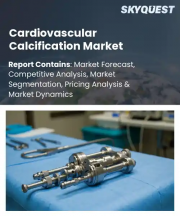
심혈관 석회화 시장 규모, 점유율, 성장 분석 : 종류별, 진단별, 치료별, 적응증별, 최종사용자별, 지역별 - 업계 예측(2026-2033년)Cardiovascular Calcification Market Size, Share, and Growth Analysis, By Type, By Diagnosis, By Treatment, By Indication, By End User, By Region - Industry Forecast 2026-2033 |
||||||

세계의 심혈관 석회화 시장 규모는 2024년에 13억 8,000만 달러로 평가되었으며, 2025년 14억 6,000만 달러에서 2033년까지 65억 2,000만 달러로 확대되어 예측 기간(2026-2033년) 동안 CAGR 5.9%로 성장할 것으로 전망됩니다.
세계 심혈관 석회화 시장은 심부전, 뇌졸중, 말초동맥질환과 관련이 있으며, 의료비 지출을 대폭 증가시키는 동맥 석회화를 치료하기 위한 다양한 진단, 치료 및 의료기기 제품을 포괄합니다. 이 시장은 진단 영상 기술의 발전에 따라 성장하고 있으며, 이를 통해 정확한 관상동맥 칼슘 점수를 산출할 수 있게 되어 제약사들이 칼슘 침착에 대한 표적 치료제를 개발하는 계기가 되고 있습니다. 최근의 성장은 규제 당국의 승인을 바탕으로 이루어지고 있으며, 이는 보험 적용을 촉진하고 병원이 CT 및 PET 스캔과 같은 첨단 영상 진단 기술에 투자할 수 있는 동기를 부여하고 있습니다. 이러한 변화로 인해 심장 질환 위험이 있는 환자의 위험도 계층화가 가능해졌으며, 의료기기 제조사와 AI 기업 간의 혁신적인 구독 모델을 위한 협력이 촉진되고 있습니다. 또한, 미네랄 대사 치료의 경우 병용요법에 대한 임상시험에서 유망한 결과가 도출됨에 따라 투자가 집중되고 있습니다.
세계 심혈관 석회화 시장의 성장요인
세계 심혈관 석회화 시장의 주요 성장 요인 중 하나는 전 세계적인 건강 문제로 대두되고 있는 심혈관질환의 유병률 증가입니다. 비만, 당뇨병, 고혈압 등의 위험 인자 발생률 증가는 심혈관 석회화 관리를 목적으로 한 첨단 진단·치료 솔루션에 대한 수요 확대에 기여하고 있습니다. 또한, 조기 발견과 조기 개입의 중요성에 대한 인식이 높아지는 데 더해, 영상 진단 기술 및 치료법의 기술적 진보가 시장 성장을 뒷받침하고 있습니다. 더 나은 치료 결과 추구와 효과적인 관리 전략의 필요성도 이 분야의 투자와 혁신을 촉진하고 있습니다.
세계 심혈관 석회화 시장의 제약요인
세계 심혈관 석회화 시장의 주요 제약요인 중 하나는 첨단 진단 및 치료 기술에 수반되는 고비용입니다. 이러한 시술에 따르는 경제적 부담으로 인해 의료 서비스 제공자가 최신 장비나 치료법에 대한 투자를 주저하게 되어, 환자가 필요한 의료 서비스를 받을 기회가 제한될 수 있습니다. 또한, 지역별로 상이한 보험 환급 정책으로 인해, 특히 저소득 시장에서 치료 접근성의 격차가 발생할 가능성이 있습니다. 이러한 경제적 장벽은 심혈관 석회화 질환의 진단 및 치료 부족으로 이어지며, 궁극적으로 이해관계자들이 비록 고가이긴 하지만 첨단 치료법보다는 비용 대비 효과가 높은 해결책을 우선시하게 되어 시장 성장과 혁신을 저해할 우려가 있습니다.
세계 심혈관 석회화 시장 동향
세계 심혈관 석회화 시장은 듀얼 에너지 CT 및 PET-MRI와 같은 정밀 영상 진단 기술의 눈부신 발전에 힘입어 뚜렷한 상승 추세를 보이고 있습니다. 이러한 혁신을 통해 임상의가 미세 석회화를 탐지하는 능력이 향상되었으며, 위험도 계층화 및 맞춤형 치료 전략 수립이 촉진되고 있습니다. 그 결과, 제약사들은 개발 노력을 영상 진단에 기반한 치료 성과와 연계하여, 궁극적으로 치료법을 보다 효과적으로 최적화하고 있습니다. 병원 측은 환자 치료의 질을 높이기 위해 이러한 첨단 영상 진단 장비에 대한 투자를 확대하고 있는 반면, 보험사는 조기 진단 및 침습적 시술 감소로 인한 장기적인 비용 절감을 기대하고 있습니다. 이처럼 기술, 의료 서비스 제공, 경제적 효율성이 융합되면서 심혈관 석회화 분야는 새로운 양상을 띠고 있습니다.
자주 묻는 질문
목차
소개
조사 방법
주요 요약
시장 역학과 전망
주요 시장 인사이트
세계의 심혈관 석회화 시장 규모 : 종류별
세계의 심혈관 석회화 시장 규모 : 진단별
세계의 심혈관 석회화 시장 규모 : 치료별
세계의 심혈관 석회화 시장 규모 : 적응증별
세계의 심혈관 석회화 시장 규모 : 최종사용자별
세계의 심혈관 석회화 시장 규모 : 지역별
경쟁 정보
주요 기업 개요
결론과 제안
KSM 26.08.03Global Cardiovascular Calcification Market size was valued at USD 1.38 Billion in 2024 and is poised to grow from USD 1.46 Billion in 2025 to USD 6.52 Billion by 2033, growing at a CAGR of 5.9% during the forecast period (2026-2033).
The global cardiovascular calcification market encompasses a range of diagnostic, therapeutic, and medical device products aimed at addressing arterial calcification, a condition linked to heart failure, stroke, and peripheral arterial disease, which significantly increases healthcare expenditures. The market has evolved with advancements in diagnostic imaging technologies, enabling precise coronary calcium scoring and prompting pharmaceutical companies to create targeted treatments for calcium deposition. Recent growth is fueled by regulatory approvals, encouraging insurance coverage that incentivizes hospitals to invest in advanced imaging techniques like CT and PET scans. This shift enables risk stratification for patients at risk of cardiac issues, fostering collaborations between device manufacturers and AI companies for innovative subscription models, while mineral metabolism treatments garner investments due to promising clinical trial results for combination therapies.
Top-down and bottom-up approaches were used to estimate and validate the size of the Global Cardiovascular Calcification market and to estimate the size of various other dependent submarkets. The research methodology used to estimate the market size includes the following details: The key players in the market were identified through secondary research, and their market shares in the respective regions were determined through primary and secondary research. This entire procedure includes the study of the annual and financial reports of the top market players and extensive interviews for key insights from industry leaders such as CEOs, VPs, directors, and marketing executives. All percentage shares split, and breakdowns were determined using secondary sources and verified through Primary sources. All possible parameters that affect the markets covered in this research study have been accounted for, viewed in extensive detail, verified through primary research, and analyzed to get the final quantitative and qualitative data.
Global Cardiovascular Calcification Market Segments Analysis
Global cardiovascular calcification market is segmented by type, diagnosis, treatment, indication, end user and region. Based on type, the market is segmented into Intimal Calcification, Medial Calcification and Valvular Calcification. Based on diagnosis, the market is segmented into Imaging Modalities and Laboratory & Biomarker Testing. Based on treatment, the market is segmented into Pharmacological Therapy, Interventional Procedures and Supportive & Risk Factor Management. Based on indication, the market is segmented into Coronary Artery Calcification, Aortic Valve Calcification, Peripheral Arterial Calcification, Carotid Artery Calcification and Others. Based on end user, the market is segmented into Hospitals, Specialty Cardiology Centers, Diagnostic Imaging Centers and Ambulatory Surgical Centers. Based on region, the market is segmented into North America, Europe, Asia Pacific, Latin America and Middle East & Africa.
Driver of the Global Cardiovascular Calcification Market
One key market driver for the global cardiovascular calcification market is the rising prevalence of cardiovascular diseases, which has become a significant health concern worldwide. The increasing incidence of risk factors such as obesity, diabetes, and hypertension contributes to the growing demand for advanced diagnostic and therapeutic solutions aimed at managing cardiovascular calcification. Furthermore, heightened awareness about the importance of early detection and intervention, alongside technological advancements in imaging techniques and treatment modalities, is propelling market growth. The pursuit of better patient outcomes and the need for effective management strategies also drive investments and innovations in this sector.
Restraints in the Global Cardiovascular Calcification Market
One significant market restraint for the global cardiovascular calcification market is the high cost associated with advanced diagnostic and treatment technologies. The financial burden of these procedures can deter healthcare providers from investing in the latest equipment and therapies, limiting patient access to necessary care. Additionally, varying reimbursement policies across regions can create disparities in treatment availability, particularly in lower-income markets. This economic barrier may lead to underdiagnosis and undertreatment of cardiovascular calcification conditions, ultimately hindering market growth and innovation as stakeholders prioritize more cost-effective solutions over advanced, albeit expensive, options.
Market Trends of the Global Cardiovascular Calcification Market
The Global Cardiovascular Calcification market is experiencing a notable upward trend, driven by significant advancements in precision imaging technologies such as dual energy CT and PET MRI. These innovations enhance clinicians' ability to detect micro-calcifications, facilitating improved risk stratification and personalized treatment strategies. Consequently, pharmaceutical companies are aligning their development efforts with imaging-driven outcomes, ultimately tailoring therapies more effectively. Hospitals are increasingly investing in these sophisticated imaging machines to advance patient care, while insurers anticipate long-term cost reductions from early diagnoses and fewer invasive procedures. This convergence of technology, healthcare delivery, and economic efficiency is reshaping the cardiovascular calcification landscape.
Table of Contents
Introduction
- Objectives of the Study
- Market Definition & Scope
Research Methodology
- Research Process
- Secondary & Primary Data Methods
- Market Size Estimation Methods
Executive Summary
- Global Market Outlook
- Key Market Highlights
- Segmental Overview
- Competition Overview
Market Dynamics & Outlook
- Macro-Economic Indicators
- Drivers & Opportunities
- Restraints & Challenges
- Supply Side Trends
- Demand Side Trends
- Porters Analysis & Impact
- Competitive Rivalry
- Threat of Substitute
- Bargaining Power of Buyers
- Threat of New Entrants
- Bargaining Power of Suppliers
Key Market Insights
- Key Success Factors
- Market Impacting Factors
- Top Investment Pockets
- Ecosystem Mapping
- Market Attractiveness Index 2025
- PESTEL Analysis
- Regulatory Landscape
Global Cardiovascular Calcification Market Size by Type & CAGR (2026-2033)
- Market Overview
- Intimal Calcification
- Medial Calcification
- Valvular Calcification
Global Cardiovascular Calcification Market Size by Diagnosis & CAGR (2026-2033)
- Market Overview
- Imaging Modalities
- Computed Tomography (CT)
- Echocardiography
- Magnetic Resonance Imaging (MRI)
- Others
- Laboratory & Biomarker Testing
Global Cardiovascular Calcification Market Size by Treatment & CAGR (2026-2033)
- Market Overview
- Pharmacological Therapy
- Interventional Procedures
- Transcatheter Interventions
- Surgical Interventions
- Supportive & Risk Factor Management
Global Cardiovascular Calcification Market Size by Indication & CAGR (2026-2033)
- Market Overview
- Coronary Artery Calcification
- Aortic Valve Calcification
- Peripheral Arterial Calcification
- Carotid Artery Calcification
- Others
Global Cardiovascular Calcification Market Size by End User & CAGR (2026-2033)
- Market Overview
- Hospitals
- Specialty Cardiology Centers
- Diagnostic Imaging Centers
- Ambulatory Surgical Centers
Global Cardiovascular Calcification Market Size & CAGR (2026-2033)
- North America (Type, Diagnosis, Treatment, Indication, End User)
- US
- Canada
- Europe (Type, Diagnosis, Treatment, Indication, End User)
- Germany
- Spain
- France
- UK
- Italy
- Rest of Europe
- Asia Pacific (Type, Diagnosis, Treatment, Indication, End User)
- China
- India
- Japan
- South Korea
- Rest of Asia-Pacific
- Latin America (Type, Diagnosis, Treatment, Indication, End User)
- Mexico
- Brazil
- Rest of Latin America
- Middle East & Africa (Type, Diagnosis, Treatment, Indication, End User)
- GCC Countries
- South Africa
- Rest of Middle East & Africa
Competitive Intelligence
- Top 5 Player Comparison
- Market Positioning of Key Players, 2025
- Strategies Adopted by Key Market Players
- Recent Developments in the Market
- Company Market Share Analysis, 2025
- Company Profiles of All Key Players
- Company Details
- Product Portfolio Analysis
- Company's Segmental Share Analysis
- Revenue Y-O-Y Comparison (2023-2025)
Key Company Profiles
- Shockwave Medical Inc
- Company Overview
- Business Segment Overview
- Financial Updates
- Key Developments
- Abbott Laboratories
- Company Overview
- Business Segment Overview
- Financial Updates
- Key Developments
- Medtronic plc
- Company Overview
- Business Segment Overview
- Financial Updates
- Key Developments
- Boston Scientific Corporation
- Company Overview
- Business Segment Overview
- Financial Updates
- Key Developments
- Terumo Corporation
- Company Overview
- Business Segment Overview
- Financial Updates
- Key Developments
- Sanofi SA
- Company Overview
- Business Segment Overview
- Financial Updates
- Key Developments
- Novartis AG
- Company Overview
- Business Segment Overview
- Financial Updates
- Key Developments
- Pfizer Inc
- Company Overview
- Business Segment Overview
- Financial Updates
- Key Developments
- AstraZeneca plc
- Company Overview
- Business Segment Overview
- Financial Updates
- Key Developments
- Merck & Co Inc
- Company Overview
- Business Segment Overview
- Financial Updates
- Key Developments
- Bristol Myers Squibb Company
- Company Overview
- Business Segment Overview
- Financial Updates
- Key Developments
- GlaxoSmithKline plc
- Company Overview
- Business Segment Overview
- Financial Updates
- Key Developments
- Amgen Inc
- Company Overview
- Business Segment Overview
- Financial Updates
- Key Developments
- Bayer AG
- Company Overview
- Business Segment Overview
- Financial Updates
- Key Developments
- Boehringer Ingelheim International GmbH
- Company Overview
- Business Segment Overview
- Financial Updates
- Key Developments
- Inozyme Pharma Inc
- Company Overview
- Business Segment Overview
- Financial Updates
- Key Developments
- Sanifit Therapeutics SA
- Company Overview
- Business Segment Overview
- Financial Updates
- Key Developments
- Cardialen Inc
- Company Overview
- Business Segment Overview
- Financial Updates
- Key Developments
- Vascular Pathways
- Company Overview
- Business Segment Overview
- Financial Updates
- Key Developments
- Calcimed
- Company Overview
- Business Segment Overview
- Financial Updates
- Key Developments