
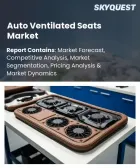
|
시장보고서
상품코드
2102269
자동차용 통풍 시트 시장 규모, 점유율, 성장 분석 : 유형별, 차종별, 구동 방식별, 판매 채널별, 시트 소재별, 환기 기술별, 지역별 - 업계 예측(2026-2033년)Auto Ventilated Seats Market Size, Share, and Growth Analysis, By Type, By Vehicle Type, By Propulsion Type, By Sales Channel, By Seat Material, By Ventilation Technology, By Region - Industry Forecast 2026-2033 |
||||||

세계의 자동차용 통풍 시트 시장 규모는 2024년에 81억 4,000만 달러로 평가되었으며, 2025년 86억 9,000만 달러에서 2033년까지 147억 2,000만 달러로 확대되어 예측 기간(2026-2033년) 동안 CAGR 6.8%로 성장할 것으로 전망됩니다.
세계 자동차용 통풍 시트 시장은 특히 극한 기상 조건 하에서 차량 내 쾌적성 향상에 대한 수요가 증가함에 따라 눈부신 성장을 이루고 있습니다. 소비자들이 차량 내에서 프리미엄급 경험을 점점 더 추구하는 가운데, 각 제조사들은 에너지 효율을 최적화하기 위해 전기자동차(EV)에 첨단 공조 제어 시스템을 탑재하고 있습니다. 전력 소비를 최소화하는 경량 환기 모듈은 배터리 주행 거리를 저해하지 않으면서도 쾌적성을 유지할 수 있어, 기존 차량 및 전기자동차 양쪽 부문에서 성장 기회를 제공하고 있습니다. 또한, 설계 및 제조 공정에 AI를 활용한 자동화를 도입함으로써 정밀도가 향상되고 결함이 감소하는 동시에 생산 일정이 단축되고 있습니다. 이러한 기술적 진보는 쾌적성을 높일 뿐만 아니라 스마트 캐빈 솔루션 분야의 지속적인 혁신을 촉진하여, 고급차 시장과 일반차 시장 모두에서 수요를 견인하고 있습니다.
세계 자동차용 통풍 시트 시장은 유형, 차종, 구동 방식, 판매 채널, 시트 소재, 통풍 기술 및 지역별로 구분됩니다. 유형별로는 전면 통풍 시트와 후면 통풍 시트로 분류됩니다. 차종별로는 승용차, 소형 상용차(LCV), 대형 상용차(HCV)로 분류됩니다. 구동 방식별로는 내연기관차, 전기자동차(EV), 하이브리드차(HEV/PHEV)로 분류됩니다. 판매 채널에 따라 시장은 OEM(순정 부품 제조사)과 애프터마켓으로 구분됩니다. 시트 소재에 따라 시장은 천연 가죽, 합성 가죽, 직물로 구분됩니다. 환기 기술에 따라 시장은 팬식 환기, 열전식 환기, 기타로 구분됩니다. 지역에 따라 시장은 북미, 유럽, 아시아태평양, 라틴아메리카, 중동 및 아프리카로 구분됩니다.
세계 자동차용 통풍 시트 시장의 성장요인
승객들의 차량 내 쾌적성 향상에 대한 수요가 높아짐에 따라, 자동차 제조사들은 통풍 시트 기술을 기본 사양 또는 옵션으로 채택하고 있습니다. 이러한 추세로 인해 제품 라인업이 확대되고, 프리미엄 부문과 중급 부문 모두에서 수요가 증가하고 있습니다. 이를 통해 고급스러움과 쾌적함을 통한 브랜드 차별화가 촉진되어 고객 충성도 향상으로 이어지고 있습니다. 이러한 발전은 개인화된 차량 내 경험을 추구하는 현대의 요구와 부합하며, 자동차 제조사들은 신모델 개발 및 애프터마켓 사후 개조 분야에서 온도 조절 기능이 탑재된 시트 솔루션에 주력하고 있습니다. 이러한 전략적 전환은 시장에 대한 접근성을 종합적으로 확대하여 자동차 부문의 지속적인 성장을 뒷받침하고 있습니다.
세계 자동차용 통풍 시트 시장의 제약요인
세계 자동차용 통풍 시트 시장은 성장을 저해하는 몇 가지 중대한 과제에 직면해 있습니다. 이러한 시트의 조립 공정은 복잡하고 고품질 소재가 필요하기 때문에 표준 시트 커버링에 비해 생산 비용이 높습니다. 이러한 가격 상승은 특히 합리적인 가격이 구매 결정의 중요한 요소가 되는 시장에서 가격에 민감한 소비자를 멀어지게 할 가능성이 있습니다. 그 결과, 제조사들은 통풍 시트를 주로 프리미엄 모델이나 옵션으로 제공하는 경우가 많아, 시장 내 광범위한 보급이 제한되고 있습니다. 또한, 전용 금형과 엄격한 품질 관리가 필요하기 때문에 설비 투자가 늘어나, 중소 제조사들은 이익률을 훼손하지 않고 통풍 시트를 도입하기 어렵습니다.
세계 자동차용 통풍 시트 시장 동향
세계 자동차용 통풍 시트 시장에서는 승객의 쾌적성 맞춤화와 에너지 효율에 대한 수요 증가를 배경으로, 스마트한 공조 통합으로의 전환이 진행되고 있습니다. 각 자동차 제조사들은 통기성 시트를 차량 내 온도 센서, 탑승자의 선호도, 예측 기상 데이터와 연동하는 첨단 공조 제어 시스템을 적극적으로 도입하고 있습니다. 이러한 혁신적인 접근 방식 덕분에 최적의 기류를 위한 실시간 조절 기능이 강화되어, 쾌적성 향상과 에너지 소비 절감으로 이어지고 있습니다. 제조사들과 소프트웨어 기업 간의 제휴도 증가하고 있어, 차량의 수명주기 전반에 걸쳐 시트 성능을 지속적으로 향상시키는 OTA(Over-the-Air) 업데이트가 가능해졌습니다. 이러한 추세는 브랜드 충성도를 높일 뿐만 아니라, 경쟁이 치열해지는 시장에서 프리미엄 제품을 차별화하는 요인이 되고 있습니다.
자주 묻는 질문
목차
소개
조사 방법
주요 요약
시장 역학과 전망
주요 시장 인사이트
세계의 자동차용 통풍 시트 시장 규모 : 유형별
세계의 자동차용 통풍 시트 시장 규모 : 차종별
세계의 자동차용 통풍 시트 시장 규모 : 구동 방식별
세계의 자동차용 통풍 시트 시장 규모 : 판매 채널별
세계의 자동차용 통풍 시트 시장 규모 : 시트 소재별
세계의 자동차용 통풍 시트 시장 규모 : 환기 기술별
세계의 자동차용 통풍 시트 시장 규모 : 지역별
경쟁 정보
주요 기업 개요
결론과 제안
KSM 26.08.05Global Auto Ventilated Seats Market size was valued at USD 8.14 Billion in 2024 and is poised to grow from USD 8.69 Billion in 2025 to USD 14.72 Billion by 2033, growing at a CAGR of 6.8% during the forecast period (2026-2033).
The global auto ventilated seats market is witnessing significant growth due to the rising demand for enhanced cabin comfort, especially in extreme weather conditions. As consumers increasingly seek premium in-car experiences, manufacturers are integrating advanced climate control systems into electric vehicles (EVs) to optimize energy efficiency. Lightweight ventilation modules that minimize power draw are becoming crucial as they maintain comfort without compromising battery range, presenting opportunities for growth across both traditional and electric vehicle segments. Furthermore, the incorporation of AI-driven automation in design and manufacturing processes enhances precision, reduces defects, and accelerates production timelines. This technological advancement not only elevates comfort but also fosters ongoing innovation in smart cabin solutions, driving demand across luxury and mainstream automotive markets alike.
Top-down and bottom-up approaches were used to estimate and validate the size of the Global Auto Ventilated Seats market and to estimate the size of various other dependent submarkets. The research methodology used to estimate the market size includes the following details: The key players in the market were identified through secondary research, and their market shares in the respective regions were determined through primary and secondary research. This entire procedure includes the study of the annual and financial reports of the top market players and extensive interviews for key insights from industry leaders such as CEOs, VPs, directors, and marketing executives. All percentage shares split, and breakdowns were determined using secondary sources and verified through Primary sources. All possible parameters that affect the markets covered in this research study have been accounted for, viewed in extensive detail, verified through primary research, and analyzed to get the final quantitative and qualitative data.
Global Auto Ventilated Seats Market Segments Analysis
The global auto ventilated seats market is segmented by type, vehicle type, propulsion type, sales channel, seat material, ventilation technology and region. Based on type, the market is segmented into Front Ventilated Seats and Rear Ventilated Seats. Based on vehicle type, the market is segmented into Passenger Cars, Light Commercial Vehicles (LCVs) and Heavy Commercial Vehicles (HCVs). Based on propulsion type, the market is segmented into Internal Combustion Engine (ICE) Vehicles, Electric Vehicles (EVs) and Hybrid Vehicles (HEVs/PHEVs). Based on sales channel, the market is segmented into Original Equipment Manufacturer (OEM) and Aftermarket. Based on seat material, the market is segmented into Leather, Synthetic Leather and Fabric. Based on ventilation technology, the market is segmented into Fan-Based Ventilation, Thermoelectric Ventilation and Others. Based on region, the market is segmented into North America, Europe, Asia Pacific, Latin America and Middle East & Africa.
Driver of the Global Auto Ventilated Seats Market
The demand for enhanced cabin comfort among passengers is driving vehicle manufacturers to incorporate ventilated seat technologies, either as standard features or optional upgrades. This trend expands product offerings and boosts demand across both premium and mid-range segments, fostering brand differentiation and enhancing customer loyalty through a sense of luxury and well-being. These advancements align with contemporary desires for personalized in-vehicle experiences, prompting automakers to focus on climate-controlled seating solutions in the development of new models and aftermarket retrofitting. This strategic shift collectively enhances market reach and sustains ongoing growth within the automotive sector.
Restraints in the Global Auto Ventilated Seats Market
The Global Auto Ventilated Seats market faces several significant challenges that impede its growth. The assembly process for these seats is complex and relies on high-quality materials, which leads to increased production costs compared to standard upholstery. This price elevation can deter cost-sensitive consumers, especially in markets where affordability is a key factor in purchasing decisions. Consequently, manufacturers often offer ventilated seats primarily in premium models or as optional additions, restricting broader market penetration. Additionally, the need for specialized tooling and rigorous quality control drives up capital investment, making it difficult for smaller manufacturers to incorporate ventilated seating without impacting their profit margins.
Market Trends of the Global Auto Ventilated Seats Market
The Global Auto Ventilated Seats market is experiencing a shift towards smart climate integration, driven by the increasing demand for personalized passenger comfort and energy efficiency. Automakers are actively incorporating advanced climate control systems that synchronize ventilated seats with cabin temperature sensors, occupant preferences, and predictive weather data. This innovative approach enhances real-time adjustments for optimal airflow, resulting in improved comfort and reduced energy consumption. Collaborations between manufacturers and software companies are on the rise, facilitating over-the-air updates that continually enhance seat performance throughout the vehicle's lifespan. This trend not only boosts brand loyalty but also distinguishes premium offerings in an increasingly competitive market.
Table of Contents
Introduction
- Objectives of the Study
- Market Definition & Scope
Research Methodology
- Research Process
- Secondary & Primary Data Methods
- Market Size Estimation Methods
Executive Summary
- Global Market Outlook
- Key Market Highlights
- Segmental Overview
- Competition Overview
Market Dynamics & Outlook
- Macro-Economic Indicators
- Drivers & Opportunities
- Restraints & Challenges
- Supply Side Trends
- Demand Side Trends
- Porters Analysis & Impact
- Competitive Rivalry
- Threat of Substitute
- Bargaining Power of Buyers
- Threat of New Entrants
- Bargaining Power of Suppliers
Key Market Insights
- Key Success Factors
- Market Impacting Factors
- Top Investment Pockets
- Ecosystem Mapping
- Market Attractiveness Index 2025
- PESTEL Analysis
- Regulatory Landscape
Global Auto Ventilated Seats Market Size by Type & CAGR (2026-2033)
- Market Overview
- Front Ventilated Seats
- Rear Ventilated Seats
Global Auto Ventilated Seats Market Size by Vehicle Type & CAGR (2026-2033)
- Market Overview
- Passenger Cars
- Light Commercial Vehicles (LCVs)
- Heavy Commercial Vehicles (HCVs)
Global Auto Ventilated Seats Market Size by Propulsion Type & CAGR (2026-2033)
- Market Overview
- Internal Combustion Engine (ICE) Vehicles
- Electric Vehicles (EVs)
- Hybrid Vehicles (HEVs/PHEVs)
Global Auto Ventilated Seats Market Size by Sales Channel & CAGR (2026-2033)
- Market Overview
- Original Equipment Manufacturer (OEM)
- Aftermarket
Global Auto Ventilated Seats Market Size by Seat Material & CAGR (2026-2033)
- Market Overview
- Leather
- Synthetic Leather
- Fabric
Global Auto Ventilated Seats Market Size by Ventilation Technology & CAGR (2026-2033)
- Market Overview
- Fan-Based Ventilation
- Thermoelectric Ventilation
- Others
Global Auto Ventilated Seats Market Size & CAGR (2026-2033)
- North America (Type, Vehicle Type, Propulsion Type, Sales Channel, Seat Material, Ventilation Technology)
- US
- Canada
- Europe (Type, Vehicle Type, Propulsion Type, Sales Channel, Seat Material, Ventilation Technology)
- Germany
- Spain
- France
- UK
- Italy
- Rest of Europe
- Asia Pacific (Type, Vehicle Type, Propulsion Type, Sales Channel, Seat Material, Ventilation Technology)
- China
- India
- Japan
- South Korea
- Rest of Asia-Pacific
- Latin America (Type, Vehicle Type, Propulsion Type, Sales Channel, Seat Material, Ventilation Technology)
- Mexico
- Brazil
- Rest of Latin America
- Middle East & Africa (Type, Vehicle Type, Propulsion Type, Sales Channel, Seat Material, Ventilation Technology)
- GCC Countries
- South Africa
- Rest of Middle East & Africa
Competitive Intelligence
- Top 5 Player Comparison
- Market Positioning of Key Players, 2025
- Strategies Adopted by Key Market Players
- Recent Developments in the Market
- Company Market Share Analysis, 2025
- Company Profiles of All Key Players
- Company Details
- Product Portfolio Analysis
- Company's Segmental Share Analysis
- Revenue Y-O-Y Comparison (2023-2025)
Key Company Profiles
- Adient plc
- Company Overview
- Business Segment Overview
- Financial Updates
- Key Developments
- Lear Corporation
- Company Overview
- Business Segment Overview
- Financial Updates
- Key Developments
- Faurecia SE
- Company Overview
- Business Segment Overview
- Financial Updates
- Key Developments
- Magna International Inc
- Company Overview
- Business Segment Overview
- Financial Updates
- Key Developments
- Toyota Boshoku Corporation
- Company Overview
- Business Segment Overview
- Financial Updates
- Key Developments
- Gentherm Incorporated
- Company Overview
- Business Segment Overview
- Financial Updates
- Key Developments
- TS Tech Co Ltd
- Company Overview
- Business Segment Overview
- Financial Updates
- Key Developments
- Tachi-S Co Ltd
- Company Overview
- Business Segment Overview
- Financial Updates
- Key Developments
- Yanfeng Automotive Interiors
- Company Overview
- Business Segment Overview
- Financial Updates
- Key Developments
- Grammer AG
- Company Overview
- Business Segment Overview
- Financial Updates
- Key Developments
- Kongsberg Automotive ASA
- Company Overview
- Business Segment Overview
- Financial Updates
- Key Developments
- Broser
- Company Overview
- Business Segment Overview
- Financial Updates
- Key Developments
- Broader Automotive
- Company Overview
- Business Segment Overview
- Financial Updates
- Key Developments
- Ningbo Huaxiang Electronic Co Ltd
- Company Overview
- Business Segment Overview
- Financial Updates
- Key Developments
- Martur Fompak International
- Company Overview
- Business Segment Overview
- Financial Updates
- Key Developments
- Recticel NV
- Company Overview
- Business Segment Overview
- Financial Updates
- Key Developments
- Fehrer GmbH
- Company Overview
- Business Segment Overview
- Financial Updates
- Key Developments
- Imasen Electric Industrial Co Ltd
- Company Overview
- Business Segment Overview
- Financial Updates
- Key Developments
- NHK Spring Co Ltd
- Company Overview
- Business Segment Overview
- Financial Updates
- Key Developments
- Delta Kogyo Co Ltd
- Company Overview
- Business Segment Overview
- Financial Updates
- Key Developments


