
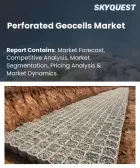
|
시장보고서
상품코드
2119989
천공 지오셀 시장 규모, 점유율 및 성장 분석 : 소재별, 셀 높이별, 용도별, 최종사용자별, 천공 유형별, 지역별 - 업계 예측(2026-2033년)Perforated Geocells Market Size, Share, and Growth Analysis, By Material (HDPE, Polypropylene), By Cell Height (Up to 100 mm, 101-200 mm), By Application, By End User, By Perforation Type, By Region - Industry Forecast 2026-2033 |
||||||

세계의 천공 지오셀 시장 규모는 2024년에 14억 2,000만 달러로 평가되며, 2025년 15억 2,000만 달러에서 2033년까지 26억 6,000만 달러로 확대할 전망이며, 예측 기간(2026-2033년)에 CAGR 7.2%로 성장할 것으로 전망되고 있습니다.
전 세계 천공 지오셀 시장은 하중 지지 능력 향상, 토공량 감소, 침식 방지 등을 실현하는 지속가능한 건설 솔루션에 대한 수요 증가에 힘입어 성장하고 있습니다. 다양한 재료를 충전할 수 있는 이 폴리머 기반의 3차원 벌집 구조는 특히 도로나 성토 용도에서 인프라의 내구성을 대폭 향상시킨다는 큰 이점을 제공합니다. 이 기술은 군사 용도에서 민간 건설로 전환되어, 기후 변화 문제에 대응하기 위해 설계된 도시 개발 프로젝트 등에서 활용되고 있습니다. 천공 지오셀은 우수 관리를 촉진하고 주요 도시의 수로를 효과적으로 보강할 수 있게 할 뿐만 아니라, 풍력 터빈 기초 등 재생 가능 에너지 분야의 노력도 지원하고 있습니다. 이러한 다용도성 덕분에 천공 지오셀은 현대 건설 실무에서 인프라 수요와 환경적 지속가능성 모두를 충족하는 데 중요한 역할을 하고 있습니다.
전 세계 천공 지오셀 시장의 성장 요인
도로, 철도, 도시 배수 시스템 등의 인프라 프로젝트에 대한 투자 확대에 따라 효과적인 지반 보강 기술에 대한 수요가 크게 증가하고 있습니다. 이에 따라 시공의 용이성과 내구성을 높이 평가하는 엔지니어들 사이에서 천공 지오셀의 채택이 확대되고 있습니다. 이러한 지오셀의 모듈식 설계 덕분에 다양한 지형에서 신속한 설치가 가능해져, 공사 기간과 비용을 대폭 절감할 수 있습니다. 또한 천공 지오셀은 구조적 강도를 높이는 동시에 지속가능성을 촉진하기 위한 실용적인 대안으로 자리 잡고 있습니다. 그 결과, 이러한 지오셀이 다양한 토목 및 건설 프로젝트에서 더욱 광범위하게 활용됨에 따라 이러한 추세가 시장 확장을 주도하고 있습니다.
전 세계 천공 지오셀 시장의 제약 요인
전 세계 천공 지오셀 시장은 주로 천공 지오셀 시트 및 관련 부속품 구매에 필요한 막대한 초기 투자로 인해 큰 제약에 직면해 있습니다. 이러한 재정적 부담은 특히 프로젝트 자금 조달이 제한된 지역에서 예산을 중시하는 개발업자들의 도입을 저해할 수 있습니다. 또한 기존 대체 제품에 비해 비용이 높기 때문에 잠재적 사용자들이 적절한 경제적 타당성을 확립할 때까지 이러한 제품을 채택하는 것을 주저할 수 있습니다. 이러한 주저함은 규모의 경제가 작용하지 않아 비용 절감이 더욱 어려워지는 소규모 프로젝트에서 종종 증폭되며, 업계내 채택 및 도입 지연을 장기화하는 요인이 되고 있습니다.
전 세계 천공 지오셀 시장의 동향
전 세계 천공 지오셀 시장에서는 정부 기관 및 건설 업계의 친환경 건축 기법에 대한 관심이 높아지는 것을 배경으로, 지속가능한 인프라 통합을 향한 뚜렷한 동향이 나타나고 있습니다. 규제 및 정책에서 침식 방지, 효과적인 배수 시스템, 식생 개선이 우선시됨에 따라 재활용 가능한 폴리머로 제조된 천공 지오셀에 대한 수요는 계속해서 증가하고 있습니다. 모듈식 설계 덕분에 고속도로, 철도, 우수 관리 시스템 등 다양한 용도에 쉽게 설치할 수 있습니다. 이러한 친환경적인 변화는 이해관계자의 구매 결정에 영향을 미칠 뿐만 아니라, 지속가능한 건설 목표를 달성하기 위한 핵심 요소로서 업계가 천공 지오셀 기술을 채택하는 방향으로 나아가도록 촉진하고 있습니다.
자주 묻는 질문
목차
서론
조사 방법
개요
시장 역학과 전망
주요 시장 인사이트
세계의 천공 지오셀 시장 규모 : 소재별
세계의 천공 지오셀 시장 규모 : 셀 높이별
세계의 천공 지오셀 시장 규모 : 용도별
세계의 천공 지오셀 시장 규모 : 최종사용자별
세계의 천공 지오셀 시장 규모 : 천공 유형별
세계의 천공 지오셀 시장 규모 : 지역별
경쟁 정보
주요 기업 개요
결론과 제안
KSA 26.08.31Global Perforated Geocells Market size was valued at USD 1.42 Billion in 2024 and is poised to grow from USD 1.52 Billion in 2025 to USD 2.66 Billion by 2033, growing at a CAGR of 7.2% during the forecast period (2026-2033).
The global perforated geocells market is driven by the growing need for sustainable construction solutions that enhance load-bearing capabilities, reduce earthwork, and combat erosion. These polymer-based, three-dimensional honeycomb structures, which can be filled with various materials, offer significant benefits for infrastructure longevity, particularly in road and embankment applications. The technology has transitioned from military use to civilian construction, finding applications in urban development projects designed to address climate change challenges. Perforated geocells facilitate stormwater management, enabling effective canal fortification in major cities while supporting initiatives in the renewable energy sector, such as wind turbine foundations. This versatility positions perforated geocells as a key player in addressing both infrastructural needs and environmental sustainability in modern construction practices.
Top-down and bottom-up approaches were used to estimate and validate the size of the Global Perforated Geocells market and to estimate the size of various other dependent submarkets. The research methodology used to estimate the market size includes the following details: The key players in the market were identified through secondary research, and their market shares in the respective regions were determined through primary and secondary research. This entire procedure includes the study of the annual and financial reports of the top market players and extensive interviews for key insights from industry leaders such as CEOs, VPs, directors, and marketing executives. All percentage shares split, and breakdowns were determined using secondary sources and verified through Primary sources. All possible parameters that affect the markets covered in this research study have been accounted for, viewed in extensive detail, verified through primary research, and analyzed to get the final quantitative and qualitative data.
Global Perforated Geocells Market Segments Analysis
Global perforated geocells market is segmented by material, cell height, application, end user, perforation type and region. Based on material, the market is segmented into HDPE, Polypropylene and Polyester. Based on cell height, the market is segmented into Up to 100 mm, 101-200 mm and Above 200 mm. Based on application, the market is segmented into Slope Protection, Load Support, Channel Protection and Retaining Walls. Based on end user, the market is segmented into Road Construction, Railways, Mining and Landscaping. Based on perforation type, the market is segmented into Standard Perforated and High-Flow Perforated. Based on region, the market is segmented into North America, Europe, Asia Pacific, Latin America and Middle East & Africa.
Driver of the Global Perforated Geocells Market
The growing investment in infrastructure projects, such as roadways, railroads, and urban drainage systems, creates a substantial demand for effective soil reinforcement technologies. This has led to the increasing adoption of perforated geocells by engineers, who appreciate their ease of installation and durability. The modular design of these geocells allows for rapid deployment across diverse terrains, significantly reducing construction time and costs. Furthermore, perforated geocells represent a practical choice for enhancing structural strength while promoting sustainability. Consequently, this trend is driving market expansion as these geocells find broader applications in various engineering and construction projects.
Restraints in the Global Perforated Geocells Market
The global perforated geocells market faces significant restraints primarily due to the substantial initial investment required for purchasing perforated geocell sheets and their associated fittings. This financial burden can deter budget-conscious developers, particularly in regions where project financing is limited. Moreover, the elevated expenses relative to conventional alternatives may prevent potential users from embracing these products until they can establish a suitable financial rationale. This hesitancy is often amplified in smaller projects, where the absence of economies of scale further hampers cost reduction, leading to prolonged delays in adoption and implementation within the industry.
Market Trends of the Global Perforated Geocells Market
The Global Perforated Geocells market is experiencing a significant trend towards sustainable infrastructure integration, driven by the increasing focus on environmentally friendly building practices by government agencies and the construction sector. As regulations and initiatives prioritize erosion control, effective drainage systems, and enhancement of vegetation, the demand for perforated geocells-constructed from recyclable polymers-continues to rise. Their modular design facilitates installation across various applications, including highways, railways, and stormwater management systems. This eco-conscious shift not only influences purchasing decisions among stakeholders but also pushes the industry towards embracing perforated geocell technology as a pivotal component in achieving sustainable construction goals.
Table of Contents
Introduction
- Objectives of the Study
- Market Definition & Scope
Research Methodology
- Research Process
- Secondary & Primary Data Methods
- Market Size Estimation Methods
Executive Summary
- Global Market Outlook
- Key Market Highlights
- Segmental Overview
- Competition Overview
Market Dynamics & Outlook
- Macro-Economic Indicators
- Drivers & Opportunities
- Restraints & Challenges
- Supply Side Trends
- Demand Side Trends
- Porters Analysis & Impact
- Competitive Rivalry
- Threat of Substitute
- Bargaining Power of Buyers
- Threat of New Entrants
- Bargaining Power of Suppliers
Key Market Insights
- Key Success Factors
- Market Impacting Factors
- Top Investment Pockets
- Ecosystem Mapping
- Market Attractiveness Index 2025
- PESTEL Analysis
- Regulatory Landscape
Global Perforated Geocells Market Size by Material & CAGR (2026-2033)
- Market Overview
- HDPE
- Polypropylene
- Polyester
Global Perforated Geocells Market Size by Cell Height & CAGR (2026-2033)
- Market Overview
- Up to 100 mm
- 101-200 mm
- Above 200 mm
Global Perforated Geocells Market Size by Application & CAGR (2026-2033)
- Market Overview
- Slope Protection
- Load Support
- Channel Protection
- Retaining Walls
Global Perforated Geocells Market Size by End User & CAGR (2026-2033)
- Market Overview
- Road Construction
- Railways
- Mining
- Landscaping
Global Perforated Geocells Market Size by Perforation Type & CAGR (2026-2033)
- Market Overview
- Standard Perforated
- High-Flow Perforated
Global Perforated Geocells Market Size & CAGR (2026-2033)
- North America (Material, Cell Height, Application, End User, Perforation Type)
- US
- Canada
- Europe (Material, Cell Height, Application, End User, Perforation Type)
- Germany
- Spain
- France
- UK
- Italy
- Rest of Europe
- Asia Pacific (Material, Cell Height, Application, End User, Perforation Type)
- China
- India
- Japan
- South Korea
- Rest of Asia-Pacific
- Latin America (Material, Cell Height, Application, End User, Perforation Type)
- Mexico
- Brazil
- Rest of Latin America
- Middle East & Africa (Material, Cell Height, Application, End User, Perforation Type)
- GCC Countries
- South Africa
- Rest of Middle East & Africa
Competitive Intelligence
- Top 5 Player Comparison
- Market Positioning of Key Players, 2025
- Strategies Adopted by Key Market Players
- Recent Developments in the Market
- Company Market Share Analysis, 2025
- Company Profiles of All Key Players
- Company Details
- Product Portfolio Analysis
- Company's Segmental Share Analysis
- Revenue Y-O-Y Comparison (2023-2025)
Key Company Profiles
- Presto Geosystems
- Company Overview
- Business Segment Overview
- Financial Updates
- Key Developments
- Strata Systems, Inc.
- Company Overview
- Business Segment Overview
- Financial Updates
- Key Developments
- PRS Geo-Technologies Ltd.
- Company Overview
- Business Segment Overview
- Financial Updates
- Key Developments
- Geo Products, LLC
- Company Overview
- Business Segment Overview
- Financial Updates
- Key Developments
- Terram Geosynthetics Pvt. Ltd.
- Company Overview
- Business Segment Overview
- Financial Updates
- Key Developments
- TMP Geosynthetics
- Company Overview
- Business Segment Overview
- Financial Updates
- Key Developments
- Shandong Hengrui Geotextile Co., Ltd.
- Company Overview
- Business Segment Overview
- Financial Updates
- Key Developments
- Taian Modern Plastic Co., Ltd.
- Company Overview
- Business Segment Overview
- Financial Updates
- Key Developments
- Maccaferri S.p.A.
- Company Overview
- Business Segment Overview
- Financial Updates
- Key Developments
- Officine Maccaferri S.p.A.
- Company Overview
- Business Segment Overview
- Financial Updates
- Key Developments
- HUESKER Synthetic GmbH
- Company Overview
- Business Segment Overview
- Financial Updates
- Key Developments
- Tensar International Corporation
- Company Overview
- Business Segment Overview
- Financial Updates
- Key Developments
- NAUE GmbH & Co. KG
- Company Overview
- Business Segment Overview
- Financial Updates
- Key Developments
- ACE Geosynthetics
- Company Overview
- Business Segment Overview
- Financial Updates
- Key Developments
- Polyfabrics Australasia Pty Ltd.
- Company Overview
- Business Segment Overview
- Financial Updates
- Key Developments
- GeoCHEM, Inc.
- Company Overview
- Business Segment Overview
- Financial Updates
- Key Developments
- Titan Environmental Containment Ltd.
- Company Overview
- Business Segment Overview
- Financial Updates
- Key Developments
- Shandong Dageng Group Co., Ltd.
- Company Overview
- Business Segment Overview
- Financial Updates
- Key Developments
- Shandong Tongjia New Material Co., Ltd.
- Company Overview
- Business Segment Overview
- Financial Updates
- Key Developments
- Hongxiang New Geo-Material Co., Ltd.
- Company Overview
- Business Segment Overview
- Financial Updates
- Key Developments


