|
시장보고서
상품코드
2120166
풍력발전용 모노파일 시장 규모, 점유율, 성장 분석 : 모노파일 종류별, 수심별, 기초 직경별, 용도별, 최종사용자별, 지역별 - 업계 예측(2026-2033년)Wind Monopiles Market Size, Share, and Growth Analysis, By Monopile Type (Standard Monopiles, XL Monopiles), By Water Depth, By Foundation Diameter, By Application, By End User, By Region - Industry Forecast 2026-2033 |
||||||

세계의 풍력발전용 모노파일 시장 규모는 2024년에 6억 2,430만 달러로 평가되며, 2025년 6억 5,926만 달러에서 2033년까지 10억 1,946만 달러로 확대되어, 예측 기간(2026-2033년) 동안 CAGR 5.6%로 성장할 것으로 전망됩니다.
세계 풍력발전용 모노파일 시장에서는 재생에너지 추진에 필수적인 해상 풍력 터빈의 철골 기초가 점점 더 중요시되고 있습니다. 저탄소 전력 수요가 증가하는 가운데, 각국 정부와 전력 회사는 더 대규모의 해상 풍력발전소에 대한 투자를 추진하고 있습니다. 시장 성장을 뒷받침하는 중요한 요인 중 하나는 발전 용량의 증가이며, 이는 더 대형 터빈으로의 전환에 따른 더 깊고 견고한 기초의 필요성이라는 동향과 밀접하게 관련되어 있습니다. OEM 각사가 12-15MW급 유닛으로 전환함에 따라, 모노파일 공급업체는 말뚝의 직경과 매설 길이를 확대해야 하며, 이는 철강 수요를 견인하고 고강도 합금 개발을 촉진하고 있습니다. AI를 활용한 자동화 혁신을 통해 설계, 제조, 물류가 최적화되어 폐기물을 최소화하면서 모노파일의 치수를 정밀하게 결정할 수 있게 되었습니다. 이러한 기술의 통합을 통해 효율성이 확보되고 프로젝트 공기가 단축됨과 동시에, 수심이 더 깊은 해역이나 더 대규모의 기초를 갖춘 해상 풍력발전의 확장이 뒷받침되고 있습니다.
세계 풍력용 모노파일 시장은 모노파일의 종류, 수심, 기초 직경, 용도, 최종사용자 및 지역별로 세분화되어 있습니다. 모노파일의 종류에 따라 시장은 ‘표준 모노파일’, ‘XL 모노파일’, ‘전환부(트랜지션 피스)가 있는 모노파일’, ‘기타’로 구분됩니다. 수심에 따라 시장은 ‘얕은 해역’, ‘과도 해역’, ‘깊은 해역’, ‘기타’로 구분됩니다. 기초 직경에 따른 시장 세분화는 ‘8m 이하’, ‘8-10m’, ‘10m 초과’, 그리고 ‘기타’로 이루어집니다. 용도에 따라 시장 세분화는 ‘해상 풍력발전소’, ‘연안 풍력발전소’, ‘실증 프로젝트’ 및 ‘기타’로 나뉩니다. 최종사용자별로 시장 세분화는 ‘풍력발전소 개발사’, ‘EPC 시공사’, ‘해상 설치 업체’ 및 ‘기타’로 나뉩니다. 지역별로는 북미, 유럽, 아시아태평양, 라틴아메리카, 중동 및 아프리카로 구분됩니다.
세계 풍력 모노파일 시장의 성장요인
세계 풍력 모노파일 시장의 주요 성장 촉진요인은 재생에너지원에 대한 수요 증가이며, 특히 이산화탄소 배출량 감축과 에너지 안보 강화를 목표로 하는 국가들에서 두드러집니다. 각국 정부가 풍력발전 프로젝트를 지원하기 위한 정책과 우대 조치를 시행함에 따라 해상 풍력발전소 건설이 탄력을 받고 있습니다. 이러한 시설의 주요 기초 형태인 모노파일은 높은 비용 대비 효과와 다양한 해저 조건에 대한 적응성으로 인해 수요가 증가하고 있습니다. 지속가능한 에너지 솔루션에 대한 관심이 높아지는 데다 기술 및 공학의 발전까지 더해지면서, 풍력발전용 모노파일 시장의 확대가 촉진되고 있습니다.
세계 풍력 모노파일 시장의 제약요인
세계 풍력 모노파일 시장의 주요 제약요인은 제조 및 설치에 막대한 설비 투자가 필요하다는 점입니다. 모노파일 제조에는 첨단 기술과 대량의 원자재가 필요하며, 이는 비용 상승으로 이어지고 있습니다. 또한, 이러한 대형 구조물을 해상 설치 장소까지 운송할 때 발생하는 물류상의 문제로 인해 운영비가 증가하고 있습니다. 게다가 주요 연안 시장 주변에서 적절한 제조 시설의 이용이 제한되어 있는 점도 이러한 비용 문제를 더욱 심각하게 만들고 있습니다. 이러한 재정적 장벽은 특히 재생에너지 인프라가 충분히 구축되지 않았고, 정부의 우대 조치나 재정 지원이 미흡한 지역에서 신규 진입을 저해하고 시장 확대를 제한하는 요인이 될 수 있습니다.
세계 풍력 모노파일 시장의 동향
세계 풍력용 모노파일 시장은 해상 풍력발전소의 급속한 확장에 힘입어, 송전망과의 통합 능력 향상이 요구된다는 뚜렷한 동향을 보이고 있습니다. 전력 사업자들은 송전망과의 원활한 연결을 우선시하고 있으며, 이에 따라 더 대형의 터빈 플랫폼 및 첨단 기초 모니터링 시스템과의 호환성을 높인 모노파일 개발이 진행되고 있습니다. 디지털 트윈과 표준화된 연결 프로토콜의 도입으로 부하 재현성이 향상되고 시운전 시간이 단축되고 있습니다. 이러한 계통연계에 대한 집중과 더불어, 재생에너지 도입을 촉진하는 규제적 인센티브가 더해지면서, 특히 신흥 시장에서 적응성이 높고 고성능인 모노파일 시스템의 성장이 촉진되고 있으며, 그 결과 재생에너지 분야의 프로젝트 신뢰성과 효율성이 향상되고 있습니다.
자주 묻는 질문
목차
소개
조사 방법
주요 요약
시장 역학과 전망
주요 시장 인사이트
세계의 풍력발전용 모노파일 시장 규모 : 모노파일 종류별
세계의 풍력발전용 모노파일 시장 규모 : 수심별
세계의 풍력발전용 모노파일 시장 규모 : 기초 직경별
세계의 풍력발전용 모노파일 시장 규모 : 용도별
세계의 풍력발전용 모노파일 시장 규모 : 최종사용자별
세계의 풍력발전용 모노파일 시장 규모 : 지역별
경쟁 정보
주요 기업 개요
결론과 제안
KSM 26.09.01Global Wind Monopiles Market size was valued at USD 624.3 Million in 2024 and is poised to grow from USD 659.26 Million in 2025 to USD 1019.46 Million by 2033, growing at a CAGR of 5.6% during the forecast period (2026-2033).
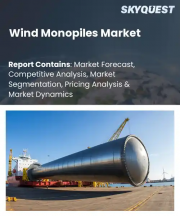
The global wind monopile market is increasingly prioritizing steel foundations for offshore wind turbines, essential for advancing renewable energy. The growing need for low-carbon electricity is prompting governments and utilities to invest in larger offshore farms. A significant factor boosting market growth is the rising capacity, which correlates with the trend toward larger turbines requiring deeper, stronger foundations. As original equipment manufacturers shift to 12- to 15-MW units, monopile suppliers must enhance pile diameters and embedment lengths, driving steel demand and advancing high-strength alloys. Innovations in AI-driven automation are optimizing design, manufacturing, and logistics, allowing for precise monopile sizing with minimal waste. This technological integration ensures efficiency, accelerates project timelines, and supports the expansion of offshore wind energy in deeper waters and larger foundations.
Top-down and bottom-up approaches were used to estimate and validate the size of the Global Wind Monopiles market and to estimate the size of various other dependent submarkets. The research methodology used to estimate the market size includes the following details: The key players in the market were identified through secondary research, and their market shares in the respective regions were determined through primary and secondary research. This entire procedure includes the study of the annual and financial reports of the top market players and extensive interviews for key insights from industry leaders such as CEOs, VPs, directors, and marketing executives. All percentage shares split, and breakdowns were determined using secondary sources and verified through Primary sources. All possible parameters that affect the markets covered in this research study have been accounted for, viewed in extensive detail, verified through primary research, and analyzed to get the final quantitative and qualitative data.
Global Wind Monopiles Market Segments Analysis
The global wind monopiles market is segmented by monopile type, water depth, foundation diameter, application, end user and region. Based on monopile type, the market is segmented into Standard Monopiles, XL Monopiles, Transition Piece Monopiles and Others. Based on water depth, the market is segmented into Shallow Water, Transitional Water, Deep Water and Others. Based on foundation diameter, the market is segmented into Up to 8 m, 8-10 m, Above 10 m and Others. Based on application, the market is segmented into Offshore Wind Farms, Nearshore Wind Farms, Demonstration Projects and Others. Based on end user, the market is segmented into Wind Farm Developers, EPC Contractors, Offshore Installation Companies and Others. Based on region, the market is segmented into North America, Europe, Asia Pacific, Latin America and Middle East & Africa.
Driver of the Global Wind Monopiles Market
A key market driver for the global wind monopiles market is the increasing demand for renewable energy sources, particularly among nations striving to reduce their carbon footprints and enhance energy security. As governments implement policies and incentives to support wind energy projects, the construction of offshore wind farms is gaining momentum. Monopiles, being the primary foundation type for these installations, are witnessing heightened demand due to their cost-effectiveness and suitability for a range of seabed conditions. This growing focus on sustainable energy solutions, along with advancements in technology and engineering, is propelling the expansion of the wind monopiles market.
Restraints in the Global Wind Monopiles Market
A significant market restraint for the global wind monopiles market is the high capital investment required for manufacturing and installation. The production of monopiles involves advanced technology and substantial raw materials, leading to elevated costs. Moreover, the logistical challenges associated with transporting these large structures to offshore sites increase operational expenses. Additionally, the limited availability of suitable manufacturing facilities near key coastal markets exacerbates these cost issues. This financial barrier can deter new entrants and restrict market expansion, particularly in regions with less established renewable energy infrastructure and where government incentives or financial support are not robust.
Market Trends of the Global Wind Monopiles Market
The Global Wind Monopiles market is experiencing a notable trend driven by the rapid expansion of offshore wind farms, necessitating improved grid integration capabilities. Utilities are prioritizing seamless grid connections, prompting the development of monopiles that are increasingly compatible with larger turbine platforms and advanced foundation monitoring systems. The integration of digital twins and standardized connection protocols enhances load replication and reduces commissioning times. This emphasis on grid readiness, along with regulatory incentives promoting renewable energy adoption, is stimulating growth in the adaptable high-performance monopile systems, particularly in emerging markets, thereby enhancing project reliability and efficiency in the renewable energy sector.
Table of Contents
Introduction
- Objectives of the Study
- Market Definition & Scope
Research Methodology
- Research Process
- Secondary & Primary Data Methods
- Market Size Estimation Methods
Executive Summary
- Global Market Outlook
- Key Market Highlights
- Segmental Overview
- Competition Overview
Market Dynamics & Outlook
- Macro-Economic Indicators
- Drivers & Opportunities
- Restraints & Challenges
- Supply Side Trends
- Demand Side Trends
- Porters Analysis & Impact
- Competitive Rivalry
- Threat of Substitute
- Bargaining Power of Buyers
- Threat of New Entrants
- Bargaining Power of Suppliers
Key Market Insights
- Key Success Factors
- Market Impacting Factors
- Top Investment Pockets
- Ecosystem Mapping
- Market Attractiveness Index 2025
- PESTEL Analysis
- Regulatory Landscape
Global Wind Monopiles Market Size by Monopile Type & CAGR (2026-2033)
- Market Overview
- Standard Monopiles
- XL Monopiles
- Transition Piece Monopiles
- Others
Global Wind Monopiles Market Size by Water Depth & CAGR (2026-2033)
- Market Overview
- Shallow Water
- Transitional Water
- Deep Water
- Others
Global Wind Monopiles Market Size by Foundation Diameter & CAGR (2026-2033)
- Market Overview
- Up to 8 m
- 8-10 m
- Above 10 m
- Others
Global Wind Monopiles Market Size by Application & CAGR (2026-2033)
- Market Overview
- Offshore Wind Farms
- Nearshore Wind Farms
- Demonstration Projects
- Others
Global Wind Monopiles Market Size by End User & CAGR (2026-2033)
- Market Overview
- Wind Farm Developers
- EPC Contractors
- Offshore Installation Companies
- Others
Global Wind Monopiles Market Size & CAGR (2026-2033)
- North America (Monopile Type, Water Depth, Foundation Diameter, Application, End User)
- US
- Canada
- Europe (Monopile Type, Water Depth, Foundation Diameter, Application, End User)
- Germany
- Spain
- France
- UK
- Italy
- Rest of Europe
- Asia Pacific (Monopile Type, Water Depth, Foundation Diameter, Application, End User)
- China
- India
- Japan
- South Korea
- Rest of Asia-Pacific
- Latin America (Monopile Type, Water Depth, Foundation Diameter, Application, End User)
- Mexico
- Brazil
- Rest of Latin America
- Middle East & Africa (Monopile Type, Water Depth, Foundation Diameter, Application, End User)
- GCC Countries
- South Africa
- Rest of Middle East & Africa
Competitive Intelligence
- Top 5 Player Comparison
- Market Positioning of Key Players, 2025
- Strategies Adopted by Key Market Players
- Recent Developments in the Market
- Company Market Share Analysis, 2025
- Company Profiles of All Key Players
- Company Details
- Product Portfolio Analysis
- Company's Segmental Share Analysis
- Revenue Y-O-Y Comparison (2023-2025)
Key Company Profiles
- Dillinger Group
- Company Overview
- Business Segment Overview
- Financial Updates
- Key Developments
- EEW Special Pipe Constructions GmbH
- Company Overview
- Business Segment Overview
- Financial Updates
- Key Developments
- Sif Holding N.V.
- Company Overview
- Business Segment Overview
- Financial Updates
- Key Developments
- CS Wind Corporation
- Company Overview
- Business Segment Overview
- Financial Updates
- Key Developments
- Steelwind Nordenham GmbH
- Company Overview
- Business Segment Overview
- Financial Updates
- Key Developments
- Bladt Industries A/S
- Company Overview
- Business Segment Overview
- Financial Updates
- Key Developments
- Navantia S.A.
- Company Overview
- Business Segment Overview
- Financial Updates
- Key Developments
- Haizea Wind Group
- Company Overview
- Business Segment Overview
- Financial Updates
- Key Developments
- SeAH Steel Holdings Corporation
- Company Overview
- Business Segment Overview
- Financial Updates
- Key Developments
- Welcon A/S
- Company Overview
- Business Segment Overview
- Financial Updates
- Key Developments
- Smulders Group
- Company Overview
- Business Segment Overview
- Financial Updates
- Key Developments
- Marmen Inc.
- Company Overview
- Business Segment Overview
- Financial Updates
- Key Developments
- Shanghai Taisheng Wind Power Equipment Co., Ltd.
- Company Overview
- Business Segment Overview
- Financial Updates
- Key Developments
- Zhuhai Guangtong Marine Engineering Co., Ltd.
- Company Overview
- Business Segment Overview
- Financial Updates
- Key Developments
- TPCO (Tianjin Pipe Corporation)
- Company Overview
- Business Segment Overview
- Financial Updates
- Key Developments
- Baosteel Co., Ltd.
- Company Overview
- Business Segment Overview
- Financial Updates
- Key Developments
- JFE Steel Corporation
- Company Overview
- Business Segment Overview
- Financial Updates
- Key Developments
- Nippon Steel Corporation
- Company Overview
- Business Segment Overview
- Financial Updates
- Key Developments
- Mitsui E&S Co., Ltd.
- Company Overview
- Business Segment Overview
- Financial Updates
- Key Developments
- Lamprell plc
- Company Overview
- Business Segment Overview
- Financial Updates
- Key Developments