
|
시장보고서
상품코드
2131089
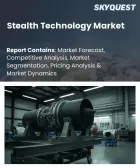
스텔스 기술 시장 규모, 점유율, 성장 분석 : 기술 유형별, 플랫폼별, 구성요소별, 최종사용자별, 용도별, 조달별, 지역별 - 산업 예측(2026-2033년)Stealth Technology Market Size, Share, and Growth Analysis, By Technology Type (Radar Stealth, Infrared Stealth), By Platform (Aircraft, Naval), By Component, By End User, By Application, By Procurement, By Region - Industry Forecast 2026-2033 |
||||||

세계의 스텔스 기술 시장 규모는 2024년에 189억 달러로 평가되며, 2025년 203억 7,000만 달러에서 2033년에는 371억 6,000만 달러로 확대될 전망이며, 예측 기간(2026-2033년) 동안 CAGR 7.8%로 성장할 것으로 전망됩니다.
스텔스 기술 시장은 주로 분쟁 지역에서 생존성이 높은 항공 플랫폼에 대한 수요 증가에 힘입어 성장하고 있습니다. 이러한 환경 하에서 각국 및 계약업체들은 임무 성공과 손실 감소를 위해 저가시성 능력이 필수적이라고 판단하고 있습니다. 이 시장에는 레이더파를 흡수하는 소재, 혁신적인 설계 기술, 그리고 다양한 탐지 기법에 의한 탐지를 최소화하는 통합 서비스가 포함됩니다. 이 분야는 냉전 초기 개발 단계에서 현대의 전투기로 진화함에 따라, 스텔스 기술에 대한 집중은 공군력에 있어 필수적인 요소가 되었습니다. 또한, 스텔스 능력이 무인 시스템에 통합됨에 따라 수요가 확대되고 있습니다. 각 제조사는 드론에 레이더 흡수성 복합재료와 열 마스킹 기능을 도입하여, 조종사를 위험에 빠뜨리지 않고도 심층 지역까지 임무를 수행할 수 있게 하고 있습니다. 이러한 관심의 증가는 조달 이니셔티브를 촉진하고, 신흥 경제국들의 투자를 유치하며, 세계 시장으로의 진출을 확대하고 있습니다.
세계 스텔스 기술 시장의 촉진요인
차세대 복합 합금 및 메타물질의 발전은 항공기 및 각종 플랫폼이 구조적 무결성을 유지하면서 레이더 반사 단면적을 줄일 수 있게 하여, 전 세계 스텔스 기술 시장에 큰 변화를 가져오고 있습니다. 이러한 혁신으로 인해 방위 관련 기업들은 스텔스 솔루션에 주력하게 되었으며, 그 결과 공·해·육 각 영역에서의 응용 가능성이 확대되고 있습니다. 가혹한 환경 하에서 생존성을 높이려는 각국이 이러한 기술에 대한 수요를 주도하고 있습니다. 또한, 대대적인 재설계가 필요 없이 이러한 소재를 기존 플랫폼에 원활하게 통합할 수 있어 조달 과정이 신속화되고, 이는 시장 성장에 기여하고 있습니다. 또한, 이러한 첨단 복합 소재는 유지보수 부담을 줄여주어 수명주기 효율을 향상시키므로, 예산을 중시하는 군대에게 스텔스 기능 업그레이드는 점점 더 매력적인 선택지가 되고 있습니다.
세계 스텔스 기술 시장의 제약요인
세계 스텔스 기술 시장은 레이더 흡수성 복합재료나 저관측성 코팅의 사용을 포함하는 스텔스 외장 제조에 수반되는 복잡한 제조 공정으로 인해 큰 과제에 직면해 있습니다. 이러한 공정에는 높은 정밀도, 전문적인 설비, 그리고 엄격한 품질 관리가 요구되며, 이 모든 요소가 생산 비용 상승으로 이어지고 있습니다. 이러한 비용 상승은 특히 첨단 기술 투자보다 기존 군사 능력 개발에 중점을 두는 경향이 있는 신흥 경제국에서 국방 예산에 부담을 줄 가능성이 있습니다. 그 결과, 방위 조달 프로그램의 지연이나 축소가 발생하여 수주량 감소로 이어지고, 시장 성장을 저해할 가능성이 있습니다. 이러한 재정적 장벽은 중소 규모의 계약업체들에게도 걸림돌이 되어 시장 진입을 제한할 뿐만 아니라, 가격 경쟁의 활성화를 저해하고 있습니다.
세계 스텔스 기술 시장의 동향
세계 스텔스 기술 시장에서는 조정 가능한 메타물질의 발전에 힘입어 혁신적인 동향이 나타나고 있습니다. 이러한 발전은 기존의 레이더 회피를 넘어선 스텔스 능력에 혁명을 일으키고 있습니다. 이러한 혁신적인 소재는 적외선 및 가시광선 스펙트럼에 걸친 전자기파의 전파를 제어하여, 플랫폼이 탐지 신호를 흡수하거나 재방향시킴으로써 다중 스펙트럼에 걸친 낮은 탐지성을 실현할 수 있게 합니다. 항공우주 및 방위 분야에서는 기체 설계에 이러한 소재를 통합하는 움직임이 점점 더 확산되고 있으며, 이는 효율성 향상, 유지보수 수요 감소, 그리고 궁극적으로는 임무 수행 시간 연장으로 이어지고 있습니다. 이러한 진화는 유인 항공기를 지원하는 것뿐만 아니라, 적대적인 환경에서 무인 시스템의 운용 가능성을 대폭 확대하고, 시각적 및 열적 탐지 위험을 최소화하고 있습니다.
자주 묻는 질문
목차
소개
조사 방법
주요 요약
시장 역학과 전망
주요 시장 인사이트
세계의 스텔스 기술 시장 규모 : 기술 유형별
세계의 스텔스 기술 시장 규모 : 플랫폼별
세계의 스텔스 기술 시장 규모 : 구성요소별
세계의 스텔스 기술 시장 규모 : 최종사용자별
세계의 스텔스 기술 시장 규모 : 용도별
세계의 스텔스 기술 시장 규모 : 조달별
세계의 스텔스 기술 시장 규모 : 지역별
경쟁 정보
주요 기업 개요
결론과 제안
KSM 26.09.30Global Stealth Technology Market size was valued at USD 18.9 Billion in 2024 and is poised to grow from USD 20.37 Billion in 2025 to USD 37.16 Billion by 2033, growing at a CAGR of 7.8% during the forecast period (2026-2033).
The stealth technology market is primarily driven by the increasing demand for survivable air platforms in contested environments, where nations and contractors view low-observable capabilities as essential for mission success and reduced attrition. The market encompasses radar-absorbing materials, innovative design techniques, and integrated services that minimize detection across various detection methods. As the sector evolved from early Cold War developments to modern fighter aircraft, the focus on stealth has become integral to air power. Moreover, the integration of stealth capabilities into unmanned systems is expanding demand, as manufacturers implement radar-absorbing composites and thermal-masking features in drones, facilitating deep missions without risking pilots. This growing interest fosters procurement initiatives, attracting investments from emerging economies and enhancing global market reach.
Top-down and bottom-up approaches were used to estimate and validate the size of the Global Stealth Technology market and to estimate the size of various other dependent submarkets. The research methodology used to estimate the market size includes the following details: The key players in the market were identified through secondary research, and their market shares in the respective regions were determined through primary and secondary research. This entire procedure includes the study of the annual and financial reports of the top market players and extensive interviews for key insights from industry leaders such as CEOs, VPs, directors, and marketing executives. All percentage shares split, and breakdowns were determined using secondary sources and verified through Primary sources. All possible parameters that affect the markets covered in this research study have been accounted for, viewed in extensive detail, verified through primary research, and analyzed to get the final quantitative and qualitative data.
Global Stealth Technology Market Segments Analysis
Global stealth technology market is segmented by technology type, platform, component, end user, application, procurement and region. Based on technology type, the market is segmented into Radar Stealth, Infrared Stealth, Acoustic Stealth and Others. Based on platform, the market is segmented into Aircraft, Naval, Land Vehicles and Others. Based on component, the market is segmented into Stealth Materials, Coatings, Structural Design and Others. Based on end user, the market is segmented into Defense and Homeland Security. Based on application, the market is segmented into Military Operations and Surveillance. Based on procurement, the market is segmented into New Programs and Retrofit. Based on region, the market is segmented into North America, Europe, Asia Pacific, Latin America and Middle East & Africa.
Driver of the Global Stealth Technology Market
The advancement of next-generation composite alloys and meta-materials is significantly transforming the Global Stealth Technology market by allowing aircraft and various platforms to reduce their radar cross-section while preserving structural integrity. This innovation prompts defense contractors to focus on stealth solutions, thereby expanding application possibilities across air, sea, and land domains. Nations seeking to enhance their survivability in challenging environments are driving demand for these technologies. Additionally, the seamless integration of these materials into existing platforms without the need for major redesigns speeds up procurement processes and contributes to market growth. Furthermore, the lower maintenance demands of these advanced composites enhance lifecycle efficiency, making stealth upgrades increasingly appealing to budget-conscious military forces.
Restraints in the Global Stealth Technology Market
The global Stealth Technology market faces significant challenges due to the complex manufacturing processes involved in producing stealth skins, including the use of radar-absorbent composites and low-observable coatings. These processes demand a high level of precision, specialized equipment, and rigorous quality control, all of which contribute to increased production costs. Such elevated expenses can strain defense budgets, particularly in emerging economies that tend to focus on developing conventional military capabilities rather than investing in advanced technologies. Consequently, defense procurement programs may experience delays or reductions, leading to a decrease in order volumes and hindering market growth. This financial hurdle also poses a barrier to smaller contractors, limiting their participation in the market and reducing competitive dynamics in pricing.
Market Trends of the Global Stealth Technology Market
The Global Stealth Technology market is witnessing a transformative trend driven by advancements in tunable metamaterials, which are revolutionizing stealth capabilities beyond conventional radar evasion. These innovative materials manipulate electromagnetic wave propagation across infrared and visible spectra, enabling platforms to achieve a multi-spectral low observable profile by absorbing or redirecting detection signatures. Aerospace and defense sectors are increasingly adopting these layers within airframe designs, enhancing efficiency, reducing maintenance needs, and ultimately bolstering mission endurance. This evolution not only supports manned aircraft but also significantly broadens operational possibilities for unmanned systems in contested environments, minimizing both visual and thermal detection risks.
Table of Contents
Introduction
- Objectives of the Study
- Market Definition & Scope
Research Methodology
- Research Process
- Secondary & Primary Data Methods
- Market Size Estimation Methods
Executive Summary
- Global Market Outlook
- Key Market Highlights
- Segmental Overview
- Competition Overview
Market Dynamics & Outlook
- Macro-Economic Indicators
- Drivers & Opportunities
- Restraints & Challenges
- Supply Side Trends
- Demand Side Trends
- Porters Analysis & Impact
- Competitive Rivalry
- Threat of Substitute
- Bargaining Power of Buyers
- Threat of New Entrants
- Bargaining Power of Suppliers
Key Market Insights
- Key Success Factors
- Market Impacting Factors
- Top Investment Pockets
- Ecosystem Mapping
- Market Attractiveness Index 2025
- PESTEL Analysis
- Regulatory Landscape
Global Stealth Technology Market Size by Technology Type & CAGR (2026-2033)
- Market Overview
- Radar Stealth
- Infrared Stealth
- Acoustic Stealth
- Others
Global Stealth Technology Market Size by Platform & CAGR (2026-2033)
- Market Overview
- Aircraft
- Naval
- Land Vehicles
- Others
Global Stealth Technology Market Size by Component & CAGR (2026-2033)
- Market Overview
- Stealth Materials
- Coatings
- Structural Design
- Others
Global Stealth Technology Market Size by End User & CAGR (2026-2033)
- Market Overview
- Defense
- Homeland Security
Global Stealth Technology Market Size by Application & CAGR (2026-2033)
- Market Overview
- Military Operations
- Surveillance
Global Stealth Technology Market Size by Procurement & CAGR (2026-2033)
- Market Overview
- New Programs
- Retrofit
Global Stealth Technology Market Size & CAGR (2026-2033)
- North America (Technology Type, Platform, Component, End User, Application, Procurement)
- US
- Canada
- Europe (Technology Type, Platform, Component, End User, Application, Procurement)
- Germany
- Spain
- France
- UK
- Italy
- Rest of Europe
- Asia Pacific (Technology Type, Platform, Component, End User, Application, Procurement)
- China
- India
- Japan
- South Korea
- Rest of Asia-Pacific
- Latin America (Technology Type, Platform, Component, End User, Application, Procurement)
- Mexico
- Brazil
- Rest of Latin America
- Middle East & Africa (Technology Type, Platform, Component, End User, Application, Procurement)
- GCC Countries
- South Africa
- Rest of Middle East & Africa
Competitive Intelligence
- Top 5 Player Comparison
- Market Positioning of Key Players, 2025
- Strategies Adopted by Key Market Players
- Recent Developments in the Market
- Company Market Share Analysis, 2025
- Company Profiles of All Key Players
- Company Details
- Product Portfolio Analysis
- Company's Segmental Share Analysis
- Revenue Y-O-Y Comparison (2023-2025)
Key Company Profiles
- Lockheed Martin Corporation
- Company Overview
- Business Segment Overview
- Financial Updates
- Key Developments
- Northrop Grumman Corporation
- Company Overview
- Business Segment Overview
- Financial Updates
- Key Developments
- RTX Corporation
- Company Overview
- Business Segment Overview
- Financial Updates
- Key Developments
- BAE Systems plc
- Company Overview
- Business Segment Overview
- Financial Updates
- Key Developments
- SAAB AB
- Company Overview
- Business Segment Overview
- Financial Updates
- Key Developments
- Thales Group
- Company Overview
- Business Segment Overview
- Financial Updates
- Key Developments
- Leonardo S.p.A.
- Company Overview
- Business Segment Overview
- Financial Updates
- Key Developments
- HENSOLDT AG
- Company Overview
- Business Segment Overview
- Financial Updates
- Key Developments
- Elbit Systems Ltd.
- Company Overview
- Business Segment Overview
- Financial Updates
- Key Developments
- General Dynamics Corporation
- Company Overview
- Business Segment Overview
- Financial Updates
- Key Developments
- L3Harris Technologies, Inc.
- Company Overview
- Business Segment Overview
- Financial Updates
- Key Developments
- Rheinmetall AG
- Company Overview
- Business Segment Overview
- Financial Updates
- Key Developments
- QinetiQ Group plc
- Company Overview
- Business Segment Overview
- Financial Updates
- Key Developments
- Boeing Company
- Company Overview
- Business Segment Overview
- Financial Updates
- Key Developments
- Airbus Defence and Space
- Company Overview
- Business Segment Overview
- Financial Updates
- Key Developments
- Kratos Defense & Security Solutions, Inc.
- Company Overview
- Business Segment Overview
- Financial Updates
- Key Developments
- Anduril Industries, Inc.
- Company Overview
- Business Segment Overview
- Financial Updates
- Key Developments
- Israel Aerospace Industries Ltd.
- Company Overview
- Business Segment Overview
- Financial Updates
- Key Developments
- MBDA
- Company Overview
- Business Segment Overview
- Financial Updates
- Key Developments
- Kongsberg Gruppen ASA
- Company Overview
- Business Segment Overview
- Financial Updates
- Key Developments


