
|
시장보고서
상품코드
2131596
구조용 호버크래프트 시장 규모, 점유율 및 성장 분석 : 제품 유형별, 추진 유형별, 용도별, 최종사용자별, 승객 정원별, 판매 채널별, 지역별 - 업계 예측(2026-2033년)Rescue Hovercrafts Market Size, Share, and Growth Analysis, By Product Type, By Propulsion Type, By Application, By End User, By Passenger Capacity, By Sales Channel, By Region - Industry Forecast 2026-2033 |
||||||

세계의 구조용 호버크래프트 시장 규모는 2024년에 2억 6,000만 달러로 평가되며, 2025년 2억 7,638만 달러에서 2033년까지 4억 5,059만 달러로 확대하며, 예측 기간(2026-2033년)에 CAGR 6.3%로 성장할 것으로 전망되고 있습니다.
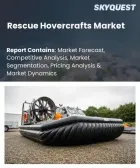
전 세계 구조용 호버크래프트 시장은 긴급 대응 분야에서 중요한 틈새 시장을 확립하고 있으며, 기존 선박으로는 대응할 수 없는 장소에서도 효과적으로 운용되고 있습니다. 물, 진흙, 얼음, 모래 등 다양한 지형을 이동할 수 있는 독자적인 능력 덕분에, 홍수가 자주 발생하는 지역, 재해 피해를 입은 섬들, 그리고 북극권에서의 임무 수행에 있으며, 필수적인 존재가 되고 있습니다. 기상 현상의 격화에 따라 피해자에게 신속하게 접근할 수 있는 효율적인 플랫폼이 각 기관에 요구되고 있으며, 이것이 수요를 견인하고 있습니다. 당초 군사 용도로 개발된 호버크래프트이지만, 현재는 민간 구조팀에도 채택되어 시장의 진화를 여실히 보여주고 있습니다. 연안 지역 및 재해에 대한 회복탄력성 관련 규제 요건이 조달을 지원하는 한편, 경량 소재와 전기 추진 기술의 발전으로 운영 비용이 절감되어 해양 산업계의 관심도 높아지고 있습니다. 또한 AI를 활용한 자동화로 호버크래프트의 능력이 향상되고, 항해 성능, 안전성 및 임무 전반의 효율성이 높아짐에 따라 특히 섬이 많은 지역을 중심으로 전 세계에서 비즈니스 기회가 확대되고 있습니다.
전 세계 구조용 호버크래프트 시장 촉진요인
구조용 호버크래프트에 대한 전 세계적 수요는 긴급 구조 기관들이 기존 인프라에 의존하지 않고 물, 진흙, 얼음 등 다양한 험난한 지형을 효과적으로 이동할 수 있는 자산에 점점 더 중점을 두고 있기 때문입니다. 이러한 호버크래프트는 뛰어난 기동성을 갖추고 있으며, 홍수가 자주 발생하는 지역, 연안 지역의 비상 사태, 그리고 외딴 지역에서 매우 귀중한 존재가 되고 있습니다. 이를 통해 신속한 대피와 필요한 물자의 적시 배송이 가능해집니다. 이러한 능력은 대응 시간을 최소화하고 생존율을 높이는 것을 목표로 하는 정부 및 인도주의 지원 단체의 목표를 지원하고 있으며, 그 결과 전용 구조 플랫폼에 대한 투자가 증가하고 있습니다. 그 결과, 시장 참여자들은 수요의 급증에 직면하고 있으며, 이는 주요 지역에서의 혁신과 유통 네트워크 확장을 촉진하고 있습니다.
전 세계 구조용 호버크래프트 시장의 제약 요인
전 세계 구조용 호버크래프트 시장은 성장을 저해하는 몇 가지 과제에 직면해 있습니다. 이러한 특수 선박에는 내구성이 뛰어난 선체나 복잡한 스커트 시스템 등 첨단 정밀 부품이 필요하며, 이로 인해 초기 비용이 크게 상승하고 있습니다. 또한 정기적인 점검, 유지보수 및 수리를 수행할 수 있는 훈련된 기술자를 확보해야 하는데, 이는 지속적인 비용 부담으로 이어지고 있습니다. 많은 공공 기관과 비정부 기구는 예산이 제한적인 경우가 많아 이러한 재정적 부담을 큰 부담으로 느끼고 있으며, 호버크래프트 함대를 구입하고 유지할 능력이 제한되어 있습니다. 그 결과, 조달 전략은 보다 전통적 선박 쪽으로 기울어지는 경향이 있으며, 이로 인해 시장 성장이 저해되고, 구조 활동에서 호버크래프트 기술의 광범위한 보급이 방해받고 있습니다.
세계 구조용 호버크래프트 시장의 동향
전 세계 구조용 호버크래프트 시장은 긴급 대응 기관의 수륙 양용 능력에 대한 수요 증가에 힘입어 뚜렷한 상승 추세를 보이고 있습니다. 이러한 기관들은 수역, 습지대, 빙결된 환경을 원활하게 이동할 수 있는 다목적 플랫폼을 우선시하고 있으며, 기존의 선박이나 도로 인프라에 의존하지 않고도 고립된 홍수 피해 지역에 효과적으로 도달할 수 있게 되었습니다. 각 제조사는 다양한 지형에 맞춘 선체 설계 및 파워트레인 구성의 혁신을 통해 이러한 수요에 대응하는 동시에, 환경 적응성에 초점을 맞춘 훈련 프로그램의 확충에도 힘쓰고 있습니다. 이러한 큰 변화는 그동안 서비스가 미치지 못했던 지역으로의 시장 확대로 이어질 뿐만 아니라, 호버크래프트가 재난 대응 차량군의 필수적인 구성 요소로서 확고한 입지를 다지는 결과로 이어지고 있습니다.
자주 묻는 질문
목차
서론
조사 방법
개요
시장 역학과 전망
주요 시장 인사이트
세계의 구조용 호버크래프트 시장 규모 : 제품 유형별
세계의 구조용 호버크래프트 시장 규모 : 추진 유형별
세계의 구조용 호버크래프트 시장 규모 : 용도별
세계의 구조용 호버크래프트 시장 규모 : 최종사용자별
세계의 구조용 호버크래프트 시장 규모 : 승객 정원별
세계의 구조용 호버크래프트 시장 규모 : 판매 채널별
세계의 구조용 호버크래프트 시장 규모 : 지역별
경쟁 정보
주요 기업 개요
결론과 제안
KSA 26.10.02Global Rescue Hovercrafts Market size was valued at USD 260.0 Million in 2024 and is poised to grow from USD 276.38 Million in 2025 to USD 450.59 Million by 2033, growing at a CAGR of 6.3% during the forecast period (2026-2033).
The global rescue hovercraft market has carved out a vital niche in emergency response, effectively operating where traditional boats cannot. Their unique ability to traverse diverse terrains such as water, mud, ice, and sand makes them essential for missions in flood-prone areas, disaster-hit islands, and arctic regions. Increasingly severe weather events are driving demand, as agencies require efficient platforms for swift victim access. Initially developed for military use, hovercraft have been adopted by civilian rescue teams, highlighting the market's evolution. Regulatory requirements for coastal and disaster resilience are steering procurement, while advancements in lightweight materials and electric propulsion lower operational costs, attracting offshore industries. Furthermore, AI-driven automation enhances hovercraft capabilities, improving navigation, safety, and overall mission effectiveness, creating expanding opportunities globally, especially in regions with numerous islands.
Top-down and bottom-up approaches were used to estimate and validate the size of the Global Rescue Hovercrafts market and to estimate the size of various other dependent submarkets. The research methodology used to estimate the market size includes the following details: The key players in the market were identified through secondary research, and their market shares in the respective regions were determined through primary and secondary research. This entire procedure includes the study of the annual and financial reports of the top market players and extensive interviews for key insights from industry leaders such as CEOs, VPs, directors, and marketing executives. All percentage shares split, and breakdowns were determined using secondary sources and verified through Primary sources. All possible parameters that affect the markets covered in this research study have been accounted for, viewed in extensive detail, verified through primary research, and analyzed to get the final quantitative and qualitative data.
Global Rescue Hovercrafts Market Segments Analysis
Global rescue hovercrafts market is segmented by product type, propulsion type, application, end user, passenger capacity, sales channel and region. Based on product type, the market is segmented into Small Rescue Hovercrafts, Medium Rescue Hovercrafts and Large Rescue Hovercrafts. Based on propulsion type, the market is segmented into Diesel Powered, Gasoline Powered and Hybrid Powered. Based on application, the market is segmented into Flood Rescue, Ice Rescue, Coastal Rescue and Others. Based on end user, the market is segmented into Coast Guard, Fire & Rescue Departments, Military and Others. Based on passenger capacity, the market is segmented into Up to 6 Persons, 7-12 Persons and Above 12 Persons. Based on sales channel, the market is segmented into Direct Sales and Government Procurement. Based on region, the market is segmented into North America, Europe, Asia Pacific, Latin America and Middle East & Africa.
Driver of the Global Rescue Hovercrafts Market
The global demand for rescue hovercrafts is driven by the increasing focus of emergency services on assets that can effectively navigate various challenging terrains such as water, mud, and ice without depending on traditional infrastructure. These hovercrafts offer exceptional mobility, making them invaluable in flood-prone areas, coastal emergencies, and remote locations, allowing for rapid evacuations and timely delivery of essential supplies. This capability supports governmental and humanitarian goals aimed at minimizing response times and enhancing survival rates, leading to increased investment in specialized rescue platforms. As a result, market players are witnessing a surge in demand, which encourages innovation and the expansion of distribution networks in critical regions.
Restraints in the Global Rescue Hovercrafts Market
The global market for rescue hovercrafts faces several challenges that impede its growth. These specialized crafts necessitate advanced components, including durable hulls and intricate skirt systems, which significantly increase their upfront costs. Moreover, the requirement for trained technicians to handle regular inspections, maintenance, and repairs adds to ongoing expenses. Many public agencies and non-governmental organizations, often operating with limited budgets, find these financial commitments restrictive, limiting their capacity to purchase and maintain hovercraft fleets. As a result, procurement strategies may lean towards more traditional vessels, thereby hindering market growth and decreasing the widespread acceptance of hovercraft technology for rescue operations.
Market Trends of the Global Rescue Hovercrafts Market
The Global Rescue Hovercrafts market is experiencing a notable upward trend driven by the increasing demand for amphibious capabilities among emergency response agencies. These agencies are prioritizing versatile platforms that can seamlessly navigate through water, marshland, and icy conditions, enabling them to effectively reach isolated, flood-affected communities without depending on traditional vessels or existing road infrastructure. Manufacturers are adapting to this demand by innovating hull designs and power-train configurations tailored for diverse terrains, while simultaneously enhancing training programs that focus on environmental adaptability. This significant shift not only expands the market's reach into previously underserved regions but also reinforces hovercrafts as essential components of disaster response fleets.
Table of Contents
Introduction
- Objectives of the Study
- Market Definition & Scope
Research Methodology
- Research Process
- Secondary & Primary Data Methods
- Market Size Estimation Methods
Executive Summary
- Global Market Outlook
- Key Market Highlights
- Segmental Overview
- Competition Overview
Market Dynamics & Outlook
- Macro-Economic Indicators
- Drivers & Opportunities
- Restraints & Challenges
- Supply Side Trends
- Demand Side Trends
- Porters Analysis & Impact
- Competitive Rivalry
- Threat of Substitute
- Bargaining Power of Buyers
- Threat of New Entrants
- Bargaining Power of Suppliers
Key Market Insights
- Key Success Factors
- Market Impacting Factors
- Top Investment Pockets
- Ecosystem Mapping
- Market Attractiveness Index 2025
- PESTEL Analysis
- Regulatory Landscape
Global Rescue Hovercrafts Market Size by Product Type & CAGR (2026-2033)
- Market Overview
- Small Rescue Hovercrafts
- Medium Rescue Hovercrafts
- Large Rescue Hovercrafts
Global Rescue Hovercrafts Market Size by Propulsion Type & CAGR (2026-2033)
- Market Overview
- Diesel Powered
- Gasoline Powered
- Hybrid Powered
Global Rescue Hovercrafts Market Size by Application & CAGR (2026-2033)
- Market Overview
- Flood Rescue
- Ice Rescue
- Coastal Rescue
- Others
Global Rescue Hovercrafts Market Size by End User & CAGR (2026-2033)
- Market Overview
- Coast Guard
- Fire & Rescue Departments
- Military
- Others
Global Rescue Hovercrafts Market Size by Passenger Capacity & CAGR (2026-2033)
- Market Overview
- Up to 6 Persons
- 7-12 Persons
- Above 12 Persons
Global Rescue Hovercrafts Market Size by Sales Channel & CAGR (2026-2033)
- Market Overview
- Direct Sales
- Government Procurement
Global Rescue Hovercrafts Market Size & CAGR (2026-2033)
- North America (Product Type, Propulsion Type, Application, End User, Passenger Capacity, Sales Channel)
- US
- Canada
- Europe (Product Type, Propulsion Type, Application, End User, Passenger Capacity, Sales Channel)
- Germany
- Spain
- France
- UK
- Italy
- Rest of Europe
- Asia Pacific (Product Type, Propulsion Type, Application, End User, Passenger Capacity, Sales Channel)
- China
- India
- Japan
- South Korea
- Rest of Asia-Pacific
- Latin America (Product Type, Propulsion Type, Application, End User, Passenger Capacity, Sales Channel)
- Mexico
- Brazil
- Rest of Latin America
- Middle East & Africa (Product Type, Propulsion Type, Application, End User, Passenger Capacity, Sales Channel)
- GCC Countries
- South Africa
- Rest of Middle East & Africa
Competitive Intelligence
- Top 5 Player Comparison
- Market Positioning of Key Players, 2025
- Strategies Adopted by Key Market Players
- Recent Developments in the Market
- Company Market Share Analysis, 2025
- Company Profiles of All Key Players
- Company Details
- Product Portfolio Analysis
- Company's Segmental Share Analysis
- Revenue Y-O-Y Comparison (2023-2025)
Key Company Profiles
- Griffon Hoverwork Ltd.
- Company Overview
- Business Segment Overview
- Financial Updates
- Key Developments
- Neoteric Hovercraft, Inc.
- Company Overview
- Business Segment Overview
- Financial Updates
- Key Developments
- The British Hovercraft Company Ltd.
- Company Overview
- Business Segment Overview
- Financial Updates
- Key Developments
- Hovertechnics LLC
- Company Overview
- Business Segment Overview
- Financial Updates
- Key Developments
- Universal Hovercraft
- Company Overview
- Business Segment Overview
- Financial Updates
- Key Developments
- Ivanoff Hovercraft AB
- Company Overview
- Business Segment Overview
- Financial Updates
- Key Developments
- Vanair Hovercraft
- Company Overview
- Business Segment Overview
- Financial Updates
- Key Developments
- Christy Hovercraft
- Company Overview
- Business Segment Overview
- Financial Updates
- Key Developments
- Hovertrans Solutions
- Company Overview
- Business Segment Overview
- Financial Updates
- Key Developments
- Mercier-Jones Hovercraft
- Company Overview
- Business Segment Overview
- Financial Updates
- Key Developments
- AirLift Hovercraft Pty Ltd.
- Company Overview
- Business Segment Overview
- Financial Updates
- Key Developments
- Hoverstream LLC
- Company Overview
- Business Segment Overview
- Financial Updates
- Key Developments
- Hov Pod Hovercraft
- Company Overview
- Business Segment Overview
- Financial Updates
- Key Developments
- Bill Baker Vehicles Ltd.
- Company Overview
- Business Segment Overview
- Financial Updates
- Key Developments
- Ocean Aero
- Company Overview
- Business Segment Overview
- Financial Updates
- Key Developments
- Textron Systems
- Company Overview
- Business Segment Overview
- Financial Updates
- Key Developments
- Almaz Shipbuilding Company
- Company Overview
- Business Segment Overview
- Financial Updates
- Key Developments
- Meyer Werft
- Company Overview
- Business Segment Overview
- Financial Updates
- Key Developments
- Hov Pod International
- Company Overview
- Business Segment Overview
- Financial Updates
- Key Developments
- Hovercraft d.o.o.
- Company Overview
- Business Segment Overview
- Financial Updates
- Key Developments


