|
시장보고서
상품코드
1938347
자동차용 파워 일렉트로닉스 시장 : 세계 산업 규모, 점유율, 동향, 기회, 예측 - 디바이스 유형별, 애플리케이션 유형별, 추진 유형별, 차종별, 지역별 및 경쟁(2021-2031년)Automotive Power Electronics Market - Global Industry Size, Share, Trends, Opportunity, and Forecast, Segmented By Device Type, By Application Type, By Propulsion Type, By Vehicle Type, By Region & Competition, 2021-2031F |
||||||

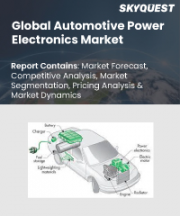
세계의 자동차용 파워 일렉트로닉스 시장은 2025년 116억 9,000만 달러에서 2031년까지 180억 5,000만 달러로 확대하며, CAGR 7.51%를 달성할 것으로 예측됩니다. 이러한 파워 일렉트로닉스는 차량용 충전기, DC-DC 컨버터, 인버터에서 중요한 요소로 작용하며, 차량내 전력 변환 및 제어에 필수적인 고체 소자로 구성되어 있습니다. 이 시장의 주요 촉진요인은 정부의 엄격한 배기가스 규제와 파워트레인의 에너지 효율 개선의 필요성에 의해 촉진되는 세계 자동차 전동화의 급속한 발전입니다. 이러한 전환은 고전압 부품에 대한 큰 수요를 창출하고 있습니다. 예를 들어 중국자동차산업협회(CAAM)의 보고서에 따르면 2024년 신에너지 자동차 판매량은 1,287만 대에 달하고, 전년 대비 35.5% 증가했습니다. 이는 전력 관리 기술의 활용 확대에 직접적으로 기여합니다.
| 시장 개요 | |
|---|---|
| 예측 기간 | 2027-2031 |
| 시장 규모 : 2025년 | 116억 9,000만 달러 |
| 시장 규모 : 2031년 | 180억 5,000만 달러 |
| CAGR : 2026-2031년 | 7.51% |
| 가장 빠르게 성장하는 부문 | 파워트레인 |
| 최대 시장 | 아시아태평양 |
이러한 성장에도 불구하고 업계는 기존 실리콘에 비해 실리콘 카바이드와 같은 와이드 밴드갭 재료의 높은 생산 비용에 대한 큰 장벽에 직면해 있습니다. 이러한 높은 재료비는 가격에 민감한 차량 카테고리에서의 보급을 제한하고, 지속적인 세계 확장에 필요한 광범위한 시장 침투를 방해할 수 있습니다.
시장 성장 촉진요인
전기자동차 및 하이브리드차의 급속한 세계 보급이 시장 성장의 주요 원동력이 되고 있으며, DC-DC 컨버터, 차량용 충전기, 인버터 생산량의 대폭적인 증가가 요구되고 있습니다. 이러한 모멘텀은 승용차에서 상업용 운송 부문으로 확대되고 있으며, 이로 인해 대형 파워 모듈에 대한 수요가 확대되고 있습니다. 국제에너지기구(IEA)가 2024년 4월 발표한 'Global EV Outlook 2024'에서 지적한 바와 같이, 세계 전기자동차 판매량은 2024년 1,700만 대에 달할 것으로 예상되어 구동계 부품에 대한 막대한 수요가 예상되고 있습니다. 이러한 급격한 증가로 인해 공급업체들은 신뢰할 수 있는 전력 관리 시스템을 위한 제조 역량을 강화해야 하는 상황에 직면해 있습니다. 또한 유럽자동차산업협회(ACEA)의 데이터에 따르면 2024년 상반기 EU 역내 충전식 트럭의 신규 등록 대수는 51.6% 증가하여 전기화가 확산되고 있음을 알 수 있습니다.
와이드 밴드갭 반도체, 특히 실리콘 카바이드(SiC)의 기술 발전은 800V 아키텍처로의 전환을 촉진하는 두 번째 주요 원동력으로 작용하고 있습니다. 이러한 소재는 실리콘보다 우수한 스위칭 효율을 제공하여 제조업체가 차량의 주행거리를 연장하고 충전 시간을 단축할 수 있습니다. 칩 제조업체들이 이러한 고부가가치 기판에 집중하는 가운데, 시장에 미치는 영향은 분명합니다. 예를 들어 온세미가 2024년 2월 발표한 '2023년 4분기 및 연간 실적'에서 2023년 실리콘 카바이드 매출은 전년 대비 4배 성장했다고 보고하여, 이러한 부품이 산업에서 빠르게 채택되고 있다는 것을 입증했습니다. 생산 수율 문제가 해결됨에 따라 고성능 전기 플랫폼에서 견인용 인버터에 SiC 모듈을 내장하는 것이 표준이 되고 있습니다.
시장이 해결해야 할 과제
실리콘 카바이드와 같은 와이드 밴드갭 재료와 관련된 제조 비용의 상승은 자동차 파워 일렉트로닉스 산업의 성장에 큰 장벽이 되고 있습니다. 이러한 재료는 효율성이 뛰어나지만, 표준 실리콘 대체품에 비해 제조 비용이 훨씬 더 높습니다. 이러한 비용 차이로 인해 공급업체는 컨버터와 인버터 가격을 높게 책정할 수밖에 없고, 그 결과 전기자동차의 소매가격이 상승하게 됩니다. 그 결과, 자동차 제조업체들은 대중 시장 부문에 진입할 수 있을 만큼 차량 가격을 낮추기 위해 고군분투하고 있으며, 사실상 이 기술을 프리미엄 모델에 한정할 수밖에 없는 상황입니다.
이러한 경제적 장벽은 지속적인 시장 확대에 필요한 보급을 제한하고 있습니다. 부품 비용으로 인해 차량 가격이 고공행진을 하게 되면 소비자의 관심이 꺾이거나 감소하는 경향이 있으며, 전력관리시스템의 수주 감소라는 파급효과를 낳게 됩니다. 유럽자동차산업협회(ACEA)에 따르면 2024년 8월 EU 역내 신규 배터리 전기자동차(BEV) 등록대수가 43.9% 감소했습니다. 이러한 차량 보급의 둔화는 비용 관련 문제가 전 세계 파워 일렉트로닉스 제조업체의 판매량과 매출 성장 잠재력을 직접적으로 억제하고 있는 현실을 보여줍니다.
시장 동향
부품을 통합 파워 일렉트로닉스 유닛으로 통합하는 추세는 공급망을 재구성하고 있습니다. 제조업체들이 개별 장치에서 통합형 'X-in-1' 시스템으로 전환하고 있는 가운데, DC-DC 컨버터, 차량용 충전기, 구동용 인버터를 하나의 소형 유닛에 물리적으로 통합하는 이 접근 방식은 고전압 케이블의 무게를 크게 줄이고 열 관리를 강화할 수 있습니다. 이러한 필수 기능을 통합함으로써 기업은 더 큰 크기의 배터리를 위한 섀시 공간을 최대화하고 총 부품 비용을 절감할 수 있습니다. 이러한 아키텍처로 시장 전환은 이러한 솔루션을 채택한 주요 공급업체들의 재무 결과에도 반영되어 있습니다. 2024년 10월 발표한 '2024년 3분기 실적 보고서'에서 볼그워너는 2024년 전체 eProduct 매출이 약 24억 달러에 달할 것으로 예상했으며, 이러한 성장은 주로 이러한 통합형 구동 모듈의 상업적 성공에 의해 주도될 것으로 예상하고 있습니다.
동시에, 모듈화 및 확장 가능한 전력 분배 시스템으로의 전환은 점점 더 복잡해지는 전기자동차 라인업의 복잡성을 해결하기 위한 중요한 전략이 되고 있습니다. 각 모델마다 전용 파워 일렉트로닉스를 개발하는 대신, OEM 업체들은 표준화된 유연한 플랫폼을 적극적으로 활용하고 있습니다. 이를 통해 이코노미 세단부터 상업용 트럭까지 다양한 성능 수준에 대응할 수 있습니다. 이 방식은 연구개발비용을 절감하면서 전동화 기술을 빠르게 전개할 수 있게 해줍니다. 이러한 확장 가능한 접근 방식에 대한 업계의 강력한 관심은 장기 주문 데이터에서도 확인할 수 있습니다. Vitesco Technologies는 2024년 3월 발표한 '2023년 연례 보고서'에서 총 수주 잔액이 약 580억 유로에 달하며, 그 중 대다수가 전동화 솔루션 관련이라고 밝혔습니다. 이는 업계가 적응성이 높은 고전압 아키텍처로 전환하고 있음을 보여줍니다.
자주 묻는 질문
목차
제1장 개요
제2장 조사 방법
제3장 개요
제4장 고객의 소리
제5장 세계의 자동차용 파워 일렉트로닉스 시장 전망
제6장 북미의 자동차용 파워 일렉트로닉스 시장 전망
제7장 유럽의 자동차용 파워 일렉트로닉스 시장 전망
제8장 아시아태평양의 자동차용 파워 일렉트로닉스 시장 전망
제9장 중동 및 아프리카의 자동차용 파워 일렉트로닉스 시장 전망
제10장 남미의 자동차용 파워 일렉트로닉스 시장 전망
제11장 시장 역학
제12장 시장 동향과 발전
제13장 세계의 자동차용 파워 일렉트로닉스 시장 : SWOT 분석
제14장 Porter's Five Forces 분석
제15장 경쟁 구도
제16장 전략적 제안
제17장 조사회사 소개·면책사항
KSA 26.03.03The Global Automotive Power Electronics Market is projected to expand from USD 11.69 Billion in 2025 to USD 18.05 Billion by 2031, achieving a CAGR of 7.51%. These power electronics consist of solid-state devices that are essential for converting and controlling electric power in vehicles, serving as vital elements in onboard chargers, DC-DC converters, and inverters. The market is primarily driven by the rapid global shift toward vehicle electrification, which is fueled by strict government emission mandates and the need for greater powertrain energy efficiency. This transition is creating significant demand for high-voltage components. For instance, the China Association of Automobile Manufacturers reported that new energy vehicle sales hit 12.87 million units in 2024, a 35.5% increase year-on-year that directly boosts the use of power management technologies.
| Market Overview | |
|---|---|
| Forecast Period | 2027-2031 |
| Market Size 2025 | USD 11.69 Billion |
| Market Size 2031 | USD 18.05 Billion |
| CAGR 2026-2031 | 7.51% |
| Fastest Growing Segment | Powertrain |
| Largest Market | Asia Pacific |
Despite this growth, the industry faces a major hurdle regarding the high production costs of wide-bandgap materials, such as Silicon Carbide, when compared to conventional silicon. These higher material costs can restrict widespread adoption in price-sensitive vehicle categories and impede the extensive market penetration needed for lasting global expansion.
Market Driver
The rapid global uptake of electric and hybrid vehicles serves as the main catalyst for market growth, requiring a significant increase in the production of DC-DC converters, onboard chargers, and inverters. This momentum is spreading from passenger vehicles to the commercial transport sector, thereby expanding the demand for heavy-duty power modules. As noted by the International Energy Agency (IEA) in its 'Global EV Outlook 2024' from April 2024, global electric car sales are expected to hit 17 million units in 2024, highlighting the substantial volume need for drivetrain parts. This surge compels suppliers to boost their manufacturing capabilities for reliable power management systems. Furthermore, data from the European Automobile Manufacturers' Association (ACEA) indicates that registrations of electrically chargeable trucks in the EU rose by 51.6% in the first half of 2024, demonstrating the growing reach of electrification.
Technological progress in wide-bandgap semiconductors, especially Silicon Carbide (SiC), acts as a second major driver by facilitating the move to 800V architectures. These materials provide better switching efficiency than silicon, enabling manufacturers to increase vehicle range and shorten charging times. The impact on the market is clear as chip producers shift focus to these high-value substrates. For example, Onsemi reported in its 'Fourth Quarter and Full Year 2023 Earnings' in February 2024 that its silicon carbide revenue grew fourfold year-over-year in 2023, confirming the swift industrial adoption of these components. As production yield issues are resolved, incorporating SiC modules into traction inverters is becoming the norm for high-performance electric platforms.
Market Challenge
The elevated manufacturing expenses linked to wide-bandgap materials like Silicon Carbide pose a significant barrier to the growth of the automotive power electronics industry. While these materials offer better efficiency, they are considerably more costly to produce than standard silicon alternatives. This cost gap compels suppliers to set higher prices for converters and inverters, which in turn raises the retail price of electric vehicles. Consequently, automakers struggle to lower vehicle costs sufficiently to enter mass-market segments, effectively restricting the technology to premium models.
This economic obstacle limits the widespread adoption necessary for sustained market expansion. If vehicle prices stay high because of component costs, consumer interest tends to plateau or drop, creating a ripple effect that reduces orders for power management systems. According to the European Automobile Manufacturers' Association, registrations of new battery electric vehicles in the EU fell by 43.9 percent in August 2024. This decline in vehicle adoption illustrates how cost-related difficulties directly suppress the potential for volume and revenue growth among power electronics manufacturers worldwide.
Market Trends
The trend of consolidating components into integrated power electronics units is reshaping the supply chain as manufacturers move from separate devices to unified "X-in-1" systems. This approach physically combines the DC-DC converter, onboard charger, and traction inverter into one compact unit, which greatly decreases the weight of high-voltage cabling and enhances thermal management. By integrating these essential functions, companies can maximize chassis space for larger batteries and reduce the total bill of materials. The market's shift toward this architecture is reflected in the financial results of major suppliers adopting these solutions. BorgWarner, in its 'Third Quarter 2024 Earnings Release' from October 2024, anticipates its full-year 2024 eProduct sales will hit roughly $2.4 billion, a growth driven largely by the commercial success of these integrated drive modules.
At the same time, the move toward modular and scalable power distribution systems is becoming a key strategy for handling the complexity of growing electric vehicle lineups. Rather than creating custom power electronics for each model, OEMs are increasingly utilizing standardized, flexible platforms that can be adapted across different performance levels, ranging from economy sedans to commercial trucks. This method enables the quick rollout of electrification technologies while cutting down on research and development costs. The industry's strong dedication to this scalable approach is evident in long-term order data. Vitesco Technologies stated in its 'Annual Report 2023' from March 2024 that it holds a total order backlog of approximately €58 billion, with over half related to electrification solutions, highlighting the sector's clear shift toward adaptable high-voltage architectures.
Key Market Players
- Infineon Technologies AG
- Texas Instruments Incorporated
- Renesas Electronics Corporation
- NXP Semiconductors
- STMicroelectronics
- Microsemi Corporation
- Vishay Intertechnology Inc.
- Semiconductor Components Industries LLC
- Toyota Industries Corporation
- Valeo Group
Report Scope
In this report, the Global Automotive Power Electronics Market has been segmented into the following categories, in addition to the industry trends which have also been detailed below:
Automotive Power Electronics Market, By Device Type
- Power IC
- Module
- Discrete
Automotive Power Electronics Market, By Application Type
- Body Electronics
- Safety and Security Electronics
- Powertrain
Automotive Power Electronics Market, By Propulsion Type
- IC Engine Vehicle
- Electric Vehicle
Automotive Power Electronics Market, By Vehicle Type
- Passenger Cars
- Commercial Vehicles
Automotive Power Electronics Market, By Region
- North America
- United States
- Canada
- Mexico
- Europe
- France
- United Kingdom
- Italy
- Germany
- Spain
- Asia Pacific
- China
- India
- Japan
- Australia
- South Korea
- South America
- Brazil
- Argentina
- Colombia
- Middle East & Africa
- South Africa
- Saudi Arabia
- UAE
Competitive Landscape
Company Profiles: Detailed analysis of the major companies present in the Global Automotive Power Electronics Market.
Available Customizations:
Global Automotive Power Electronics Market report with the given market data, TechSci Research offers customizations according to a company's specific needs. The following customization options are available for the report:
Company Information
- Detailed analysis and profiling of additional market players (up to five).
Table of Contents
1. Product Overview
- 1.1. Market Definition
- 1.2. Scope of the Market
- 1.2.1. Markets Covered
- 1.2.2. Years Considered for Study
- 1.2.3. Key Market Segmentations
2. Research Methodology
- 2.1. Objective of the Study
- 2.2. Baseline Methodology
- 2.3. Key Industry Partners
- 2.4. Major Association and Secondary Sources
- 2.5. Forecasting Methodology
- 2.6. Data Triangulation & Validation
- 2.7. Assumptions and Limitations
3. Executive Summary
- 3.1. Overview of the Market
- 3.2. Overview of Key Market Segmentations
- 3.3. Overview of Key Market Players
- 3.4. Overview of Key Regions/Countries
- 3.5. Overview of Market Drivers, Challenges, Trends
4. Voice of Customer
5. Global Automotive Power Electronics Market Outlook
- 5.1. Market Size & Forecast
- 5.1.1. By Value
- 5.2. Market Share & Forecast
- 5.2.1. By Device Type (Power IC, Module, Discrete)
- 5.2.2. By Application Type (Body Electronics, Safety and Security Electronics, Powertrain)
- 5.2.3. By Propulsion Type (IC Engine Vehicle, Electric Vehicle)
- 5.2.4. By Vehicle Type (Passenger Cars, Commercial Vehicles)
- 5.2.5. By Region
- 5.2.6. By Company (2025)
- 5.3. Market Map
6. North America Automotive Power Electronics Market Outlook
- 6.1. Market Size & Forecast
- 6.1.1. By Value
- 6.2. Market Share & Forecast
- 6.2.1. By Device Type
- 6.2.2. By Application Type
- 6.2.3. By Propulsion Type
- 6.2.4. By Vehicle Type
- 6.2.5. By Country
- 6.3. North America: Country Analysis
- 6.3.1. United States Automotive Power Electronics Market Outlook
- 6.3.1.1. Market Size & Forecast
- 6.3.1.1.1. By Value
- 6.3.1.2. Market Share & Forecast
- 6.3.1.2.1. By Device Type
- 6.3.1.2.2. By Application Type
- 6.3.1.2.3. By Propulsion Type
- 6.3.1.2.4. By Vehicle Type
- 6.3.1.1. Market Size & Forecast
- 6.3.2. Canada Automotive Power Electronics Market Outlook
- 6.3.2.1. Market Size & Forecast
- 6.3.2.1.1. By Value
- 6.3.2.2. Market Share & Forecast
- 6.3.2.2.1. By Device Type
- 6.3.2.2.2. By Application Type
- 6.3.2.2.3. By Propulsion Type
- 6.3.2.2.4. By Vehicle Type
- 6.3.2.1. Market Size & Forecast
- 6.3.3. Mexico Automotive Power Electronics Market Outlook
- 6.3.3.1. Market Size & Forecast
- 6.3.3.1.1. By Value
- 6.3.3.2. Market Share & Forecast
- 6.3.3.2.1. By Device Type
- 6.3.3.2.2. By Application Type
- 6.3.3.2.3. By Propulsion Type
- 6.3.3.2.4. By Vehicle Type
- 6.3.3.1. Market Size & Forecast
- 6.3.1. United States Automotive Power Electronics Market Outlook
7. Europe Automotive Power Electronics Market Outlook
- 7.1. Market Size & Forecast
- 7.1.1. By Value
- 7.2. Market Share & Forecast
- 7.2.1. By Device Type
- 7.2.2. By Application Type
- 7.2.3. By Propulsion Type
- 7.2.4. By Vehicle Type
- 7.2.5. By Country
- 7.3. Europe: Country Analysis
- 7.3.1. Germany Automotive Power Electronics Market Outlook
- 7.3.1.1. Market Size & Forecast
- 7.3.1.1.1. By Value
- 7.3.1.2. Market Share & Forecast
- 7.3.1.2.1. By Device Type
- 7.3.1.2.2. By Application Type
- 7.3.1.2.3. By Propulsion Type
- 7.3.1.2.4. By Vehicle Type
- 7.3.1.1. Market Size & Forecast
- 7.3.2. France Automotive Power Electronics Market Outlook
- 7.3.2.1. Market Size & Forecast
- 7.3.2.1.1. By Value
- 7.3.2.2. Market Share & Forecast
- 7.3.2.2.1. By Device Type
- 7.3.2.2.2. By Application Type
- 7.3.2.2.3. By Propulsion Type
- 7.3.2.2.4. By Vehicle Type
- 7.3.2.1. Market Size & Forecast
- 7.3.3. United Kingdom Automotive Power Electronics Market Outlook
- 7.3.3.1. Market Size & Forecast
- 7.3.3.1.1. By Value
- 7.3.3.2. Market Share & Forecast
- 7.3.3.2.1. By Device Type
- 7.3.3.2.2. By Application Type
- 7.3.3.2.3. By Propulsion Type
- 7.3.3.2.4. By Vehicle Type
- 7.3.3.1. Market Size & Forecast
- 7.3.4. Italy Automotive Power Electronics Market Outlook
- 7.3.4.1. Market Size & Forecast
- 7.3.4.1.1. By Value
- 7.3.4.2. Market Share & Forecast
- 7.3.4.2.1. By Device Type
- 7.3.4.2.2. By Application Type
- 7.3.4.2.3. By Propulsion Type
- 7.3.4.2.4. By Vehicle Type
- 7.3.4.1. Market Size & Forecast
- 7.3.5. Spain Automotive Power Electronics Market Outlook
- 7.3.5.1. Market Size & Forecast
- 7.3.5.1.1. By Value
- 7.3.5.2. Market Share & Forecast
- 7.3.5.2.1. By Device Type
- 7.3.5.2.2. By Application Type
- 7.3.5.2.3. By Propulsion Type
- 7.3.5.2.4. By Vehicle Type
- 7.3.5.1. Market Size & Forecast
- 7.3.1. Germany Automotive Power Electronics Market Outlook
8. Asia Pacific Automotive Power Electronics Market Outlook
- 8.1. Market Size & Forecast
- 8.1.1. By Value
- 8.2. Market Share & Forecast
- 8.2.1. By Device Type
- 8.2.2. By Application Type
- 8.2.3. By Propulsion Type
- 8.2.4. By Vehicle Type
- 8.2.5. By Country
- 8.3. Asia Pacific: Country Analysis
- 8.3.1. China Automotive Power Electronics Market Outlook
- 8.3.1.1. Market Size & Forecast
- 8.3.1.1.1. By Value
- 8.3.1.2. Market Share & Forecast
- 8.3.1.2.1. By Device Type
- 8.3.1.2.2. By Application Type
- 8.3.1.2.3. By Propulsion Type
- 8.3.1.2.4. By Vehicle Type
- 8.3.1.1. Market Size & Forecast
- 8.3.2. India Automotive Power Electronics Market Outlook
- 8.3.2.1. Market Size & Forecast
- 8.3.2.1.1. By Value
- 8.3.2.2. Market Share & Forecast
- 8.3.2.2.1. By Device Type
- 8.3.2.2.2. By Application Type
- 8.3.2.2.3. By Propulsion Type
- 8.3.2.2.4. By Vehicle Type
- 8.3.2.1. Market Size & Forecast
- 8.3.3. Japan Automotive Power Electronics Market Outlook
- 8.3.3.1. Market Size & Forecast
- 8.3.3.1.1. By Value
- 8.3.3.2. Market Share & Forecast
- 8.3.3.2.1. By Device Type
- 8.3.3.2.2. By Application Type
- 8.3.3.2.3. By Propulsion Type
- 8.3.3.2.4. By Vehicle Type
- 8.3.3.1. Market Size & Forecast
- 8.3.4. South Korea Automotive Power Electronics Market Outlook
- 8.3.4.1. Market Size & Forecast
- 8.3.4.1.1. By Value
- 8.3.4.2. Market Share & Forecast
- 8.3.4.2.1. By Device Type
- 8.3.4.2.2. By Application Type
- 8.3.4.2.3. By Propulsion Type
- 8.3.4.2.4. By Vehicle Type
- 8.3.4.1. Market Size & Forecast
- 8.3.5. Australia Automotive Power Electronics Market Outlook
- 8.3.5.1. Market Size & Forecast
- 8.3.5.1.1. By Value
- 8.3.5.2. Market Share & Forecast
- 8.3.5.2.1. By Device Type
- 8.3.5.2.2. By Application Type
- 8.3.5.2.3. By Propulsion Type
- 8.3.5.2.4. By Vehicle Type
- 8.3.5.1. Market Size & Forecast
- 8.3.1. China Automotive Power Electronics Market Outlook
9. Middle East & Africa Automotive Power Electronics Market Outlook
- 9.1. Market Size & Forecast
- 9.1.1. By Value
- 9.2. Market Share & Forecast
- 9.2.1. By Device Type
- 9.2.2. By Application Type
- 9.2.3. By Propulsion Type
- 9.2.4. By Vehicle Type
- 9.2.5. By Country
- 9.3. Middle East & Africa: Country Analysis
- 9.3.1. Saudi Arabia Automotive Power Electronics Market Outlook
- 9.3.1.1. Market Size & Forecast
- 9.3.1.1.1. By Value
- 9.3.1.2. Market Share & Forecast
- 9.3.1.2.1. By Device Type
- 9.3.1.2.2. By Application Type
- 9.3.1.2.3. By Propulsion Type
- 9.3.1.2.4. By Vehicle Type
- 9.3.1.1. Market Size & Forecast
- 9.3.2. UAE Automotive Power Electronics Market Outlook
- 9.3.2.1. Market Size & Forecast
- 9.3.2.1.1. By Value
- 9.3.2.2. Market Share & Forecast
- 9.3.2.2.1. By Device Type
- 9.3.2.2.2. By Application Type
- 9.3.2.2.3. By Propulsion Type
- 9.3.2.2.4. By Vehicle Type
- 9.3.2.1. Market Size & Forecast
- 9.3.3. South Africa Automotive Power Electronics Market Outlook
- 9.3.3.1. Market Size & Forecast
- 9.3.3.1.1. By Value
- 9.3.3.2. Market Share & Forecast
- 9.3.3.2.1. By Device Type
- 9.3.3.2.2. By Application Type
- 9.3.3.2.3. By Propulsion Type
- 9.3.3.2.4. By Vehicle Type
- 9.3.3.1. Market Size & Forecast
- 9.3.1. Saudi Arabia Automotive Power Electronics Market Outlook
10. South America Automotive Power Electronics Market Outlook
- 10.1. Market Size & Forecast
- 10.1.1. By Value
- 10.2. Market Share & Forecast
- 10.2.1. By Device Type
- 10.2.2. By Application Type
- 10.2.3. By Propulsion Type
- 10.2.4. By Vehicle Type
- 10.2.5. By Country
- 10.3. South America: Country Analysis
- 10.3.1. Brazil Automotive Power Electronics Market Outlook
- 10.3.1.1. Market Size & Forecast
- 10.3.1.1.1. By Value
- 10.3.1.2. Market Share & Forecast
- 10.3.1.2.1. By Device Type
- 10.3.1.2.2. By Application Type
- 10.3.1.2.3. By Propulsion Type
- 10.3.1.2.4. By Vehicle Type
- 10.3.1.1. Market Size & Forecast
- 10.3.2. Colombia Automotive Power Electronics Market Outlook
- 10.3.2.1. Market Size & Forecast
- 10.3.2.1.1. By Value
- 10.3.2.2. Market Share & Forecast
- 10.3.2.2.1. By Device Type
- 10.3.2.2.2. By Application Type
- 10.3.2.2.3. By Propulsion Type
- 10.3.2.2.4. By Vehicle Type
- 10.3.2.1. Market Size & Forecast
- 10.3.3. Argentina Automotive Power Electronics Market Outlook
- 10.3.3.1. Market Size & Forecast
- 10.3.3.1.1. By Value
- 10.3.3.2. Market Share & Forecast
- 10.3.3.2.1. By Device Type
- 10.3.3.2.2. By Application Type
- 10.3.3.2.3. By Propulsion Type
- 10.3.3.2.4. By Vehicle Type
- 10.3.3.1. Market Size & Forecast
- 10.3.1. Brazil Automotive Power Electronics Market Outlook
11. Market Dynamics
- 11.1. Drivers
- 11.2. Challenges
12. Market Trends & Developments
- 12.1. Merger & Acquisition (If Any)
- 12.2. Product Launches (If Any)
- 12.3. Recent Developments
13. Global Automotive Power Electronics Market: SWOT Analysis
14. Porter's Five Forces Analysis
- 14.1. Competition in the Industry
- 14.2. Potential of New Entrants
- 14.3. Power of Suppliers
- 14.4. Power of Customers
- 14.5. Threat of Substitute Products
15. Competitive Landscape
- 15.1. Infineon Technologies AG
- 15.1.1. Business Overview
- 15.1.2. Products & Services
- 15.1.3. Recent Developments
- 15.1.4. Key Personnel
- 15.1.5. SWOT Analysis
- 15.2. Texas Instruments Incorporated
- 15.3. Renesas Electronics Corporation
- 15.4. NXP Semiconductors
- 15.5. STMicroelectronics
- 15.6. Microsemi Corporation
- 15.7. Vishay Intertechnology Inc.
- 15.8. Semiconductor Components Industries LLC
- 15.9. Toyota Industries Corporation
- 15.10. Valeo Group