|
시장보고서
상품코드
1961363
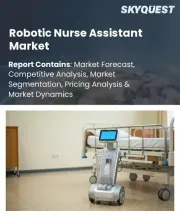
로봇 간호 조수 시장 : 세계 산업 규모, 점유율, 동향, 기회, 예측 - 제품 유형별, 최종사용자별, 지역별, 경쟁(2021-2031년)Robotic Nurse Assistant Market - Global Industry Size, Share, Trends, Opportunity & Forecast, Segmented By Product Type, By End-user, By Region & Competition, 2021-2031F |
||||||

세계의 로봇 간호 조수 시장은 2025년 11억 3,571만 달러에서 2031년까지 29억 5,688만 달러로 확대하며, CAGR 17.29%로 추이할 것으로 예측되고 있습니다.
이들 로봇 간호보조기는 자율형 또는 반자율형 전기기계 시스템으로, 의료진의 업무 부담 경감을 목적으로 후방 지원 업무 수행, 환자 모니터링, 신체적 지원 제공을 통해 의료진의 업무 부담을 경감시켜 줍니다. 이 시장을 촉진하는 주요 요인으로는 전 세계에서 자격을 갖춘 간호 인력의 심각한 부족과 급속한 고령화에 따른 장기요양 수요 증가를 들 수 있습니다. 모두 환자 안전 기준을 유지하기 위해서는 효율적인 인력 보강이 필수적입니다.
| 시장 개요 | |
|---|---|
| 예측 기간 | 2027-2031 |
| 시장 규모 : 2025년 | 11억 3,571만 달러 |
| 시장 규모 : 2031년 | 29억 5,688만 달러 |
| CAGR : 2026-2031년 | 17.29% |
| 가장 빠르게 성장하는 부문 | 자립 지원 로봇 |
| 최대 시장 | 북미 |
국제로봇연맹(IFR)에 따르면 의료 현장의 전문 업무용으로 설계된 의료용 로봇의 판매량은 2024년 91% 급증하여 약 1만 6,700대에 달할 것으로 예측됩니다. 이러한 강력한 성장에도 불구하고 시장은 이러한 시스템과 관련된 막대한 초기 자본 투자 및 복잡한 통합 비용과 관련하여 심각한 장벽에 직면해 있습니다. 이러한 재정적 장벽은 자원이 한정된 의료시설에서 도입을 방해하고 시장의 광범위한 확장을 제한할 수 있습니다.
시장 성장 촉진요인
세계에서 간호사의 심각한 인력 부족이 로봇 간호 보조원 도입을 촉진하는 주요 요인으로 작용하고 있으며, 의료 시스템은 비임상 업무의 자동화를 요구하고 있습니다. 환자 수와 가용 직원 수의 격차가 커지면서 병원에서는 약품 배송, 물품 운송 등 물류 업무를 자율 로봇에 맡기는 사례가 늘고 있으며, 이를 통해 인간 간호사는 복잡한 환자 치료에 집중할 수 있게 되었습니다. 이 위기의 심각성은 지난 5월 발표된 세계보건기구(WHO)의 보고서 '세계 간호의 현황 2025'에서 잘 드러나고 있습니다. 보고서는 전 세계에서 약 580만 명의 간호사가 만성적으로 부족한 현 상황을 지적하며, 업무 연속성 확보와 현직 직원의 소진을 줄이기 위해 로봇 지원을 시급히 도입할 것을 권고하고 있습니다.
동시에 전 세계 노인 인구 증가와 이에 따른 돌봄 수요 증가는 전례 없는 인구 통계학적 변화에 직면한 시설을 지원하기 위해 자동화된 돌봄 솔루션으로의 전환을 요구하고 있습니다. 고령화에 따른 질병 증가는 기존의 인력 배치 모델만으로는 유지될 수 없는 지속적인 모니터링과 신체적 지원의 필요성을 야기하고 있습니다. 세계보건기구(WHO)는 2025년 2월, 60세 이상 인구가 2030년까지 14억 명에 달할 것으로 예측했습니다. 이러한 압력에 대응하여 시장 채택이 가속화되고 있습니다. 지능형 로봇은 2025년 2월, 자사의 Moxi Fleet가 100만 건 이상의 배송을 완료하고, 57만 5천 시간 이상의 임상 직원 시간을 절약하여 로봇을 통한 업무 보조의 상업적 타당성을 입증했다고 보고했습니다.
시장이 해결해야 할 과제
로봇 간호 보조 시스템 도입에는 막대한 초기 투자와 복잡한 통합 비용이 수반되며, 이는 시장 보급의 큰 장벽으로 작용하고 있습니다. 이러한 자율 시스템은 하드웨어뿐만 아니라 필수 소프트웨어 생태계, 네트워크 인프라 업그레이드, 전문 인력 교육 프로그램 등 막대한 선행 투자가 필요합니다. 재정적으로 어려운 상황에서 운영되는 많은 의료기관의 경우, 단일 기술 도입에 막대한 자원을 투입하는 것은 재정적으로 현실적이지 않으며, 장기적인 자동화 전략보다 당장의 임상 물품 확보가 우선시 될 수밖에 없습니다.
결과적으로 이러한 재정적 부담은 고객 기반을 주로 부유한 민간 기관으로 제한하고, 자원이 부족한 공공 병원과 지방 의료 센터를 배제함으로써 시장의 성장 궤도를 둔화시키고 있습니다. 이러한 경제적 압박으로 인해 조달 주기가 눈에 띄게 느려지고 있으며, 2025년 미국 병원협회 조사에 따르면 의료 관리자의 94%가 지속적인 재정적 압박을 관리하기 위해 장비 업데이트를 지연시킬 것으로 예상했습니다. 이러한 자본 프로젝트의 광범위한 연기로 인해 로봇 제조업체는 가격 인하에 필요한 규모의 경제를 달성할 수 없었고, 높은 비용과 제한된 시장 침투의 순환이 계속되고 있습니다.
시장 동향
자율 이동 로봇(AMR)을 병원 물류 및 공급망 관리에 도입하려는 움직임이 의약품 및 임상 검체의 안전한 운송을 자동화하여 의료 업무를 변화시키고 있습니다. 이러한 자율 시스템은 병원 약국과 간호부서 간의 '라스트 마일' 배송 격차를 해소하기 위해 도입이 확대되고 있으며, 관리의 연속성(Chain of Custody)의 무결성을 보장하면서 임상 직원이 직접 환자 치료에 집중할 수 있도록 돕고 있습니다. 이러한 업무 혁신의 규모를 보여주는 사례로, 2025년 7월 'The Robot Report'지는 Diligent Robotics의 Moxi 로봇이 2025년 5월까지 병원 내에서 30만 건 이상의 약품 배송을 완료했다고 보도했습니다. 효율성과 업무 흐름의 병목현상을 해소하는 데 중요한 역할을 하고 있다고 강조했습니다.
동시에 예측 분석을 위한 인공지능(AI)과 머신러닝의 통합은 서비스 로봇의 인지 능력 향상을 위한 대규모 전략적 통합을 추진하고 있습니다. 이 거대 기술 기업은 적응형 학습 알고리즘을 사용하여 역동적인 병원 환경을 자율적으로 탐색하고 단순한 이송을 넘어 서비스 워크플로우를 예측하는 AI 기반 로봇 플랫폼에 많은 투자를 하고 있습니다. 이러한 스마트 솔루션화 추세를 상징하듯 LG전자는 2025년 1월 베어로보틱스 주식 30% 추가 취득 콜옵션을 행사해 총 지분율을 51%까지 끌어올려 차세대 자율주행 서비스 로봇 개발에 박차를 가할 것이라고 발표했습니다.
자주 묻는 질문
목차
제1장 개요
제2장 조사 방법
제3장 개요
제4장 고객의 소리
제5장 세계의 로봇 간호 조수 시장 전망
제6장 북미의 로봇 간호 조수 시장 전망
제7장 유럽의 로봇 간호 조수 시장 전망
제8장 아시아태평양의 로봇 간호 조수 시장 전망
제9장 중동 및 아프리카의 로봇 간호 조수 시장 전망
제10장 남미의 로봇 간호 조수 시장 전망
제11장 시장 역학
제12장 시장 동향과 발전
제13장 세계의 로봇 간호 조수 시장 : SWOT 분석
제14장 Porter's Five Forces 분석
제15장 경쟁 구도
제16장 전략적 제안
제17장 조사회사 소개·면책사항
KSA 26.03.20The Global Robotic Nurse Assistant Market is projected to expand from USD 1135.71 Million in 2025 to USD 2956.88 Million by 2031, reflecting a compound annual growth rate of 17.29%. These robotic nurse assistants are autonomous or semi-autonomous electromechanical systems intended to aid healthcare workers by performing logistical duties, monitoring patients, and providing physical support to alleviate staff workloads. The primary factors driving this market include the severe global shortage of qualified nursing professionals and the rising demand for long-term care driven by a rapidly aging population, both of which require efficient workforce augmentation to uphold patient safety standards.
| Market Overview | |
|---|---|
| Forecast Period | 2027-2031 |
| Market Size 2025 | USD 1135.71 Million |
| Market Size 2031 | USD 2956.88 Million |
| CAGR 2026-2031 | 17.29% |
| Fastest Growing Segment | Independence Support Robots |
| Largest Market | North America |
According to the International Federation of Robotics, sales of medical robots designed for these professional healthcare tasks surged by 91% to roughly 16,700 units in 2024. Despite this strong growth, the market encounters significant obstacles regarding the substantial initial capital investment and intricate integration costs associated with these systems. These financial hurdles can impede adoption in resource-limited healthcare facilities and restrict widespread market expansion.
Market Driver
The critical global shortage of qualified nursing professionals serves as the primary catalyst for adopting robotic nurse assistants, forcing healthcare systems to automate non-clinical workflows. As the disparity between patient volume and available staff grows, hospitals are increasingly utilizing autonomous robots to manage logistical tasks like medication delivery and supply transport, thereby allowing human nurses to focus on complex patient care. The gravity of this crisis is highlighted by the World Health Organization's 'State of the World's Nursing 2025' report from May 2025, which notes a persistent global shortage of approximately 5.8 million nurses, driving the urgent integration of robotic support to ensure operational continuity and reduce burnout among existing staff.
Simultaneously, the escalating global geriatric population and the associated demand for elderly care require a shift toward automated caregiving solutions to assist facilities dealing with unprecedented demographic changes. The rising prevalence of age-related conditions creates a need for continuous monitoring and physical support that traditional staffing models cannot sustain alone; the World Health Organization reported in February 2025 that the population aged 60 and older is expected to reach 1.4 billion by 2030. In response to these pressures, market adoption is accelerating, with Diligent Robotics reporting in February 2025 that its Moxi fleet completed over 1 million deliveries, saving clinical staff more than 575,000 hours and demonstrating the commercial viability of robotic augmentation.
Market Challenge
The substantial initial capital investment and complex integration costs required for robotic nurse assistants constitute a major barrier to widespread market adoption. These autonomous systems necessitate significant upfront expenditure not only for the hardware but also for essential software ecosystems, network infrastructure upgrades, and specialized staff training programs. For many healthcare facilities operating with tight financial margins, allocating such vast resources to a single technological implementation is often financially impractical, compelling them to prioritize immediate clinical supplies over long-term automation strategies.
Consequently, this financial strain slows the market's growth trajectory by restricting the customer base primarily to wealthy private institutions, while excluding resource-constrained public hospitals and rural care centers. This economic pressure leads to a noticeable deceleration in procurement cycles; according to the American Hospital Association in 2025, 94% of healthcare administrators expected to delay equipment upgrades to manage persistent financial strain. This broad postponement of capital projects prevents robotic manufacturers from achieving the economies of scale needed to lower prices, thereby maintaining a cycle of high costs and limited market penetration.
Market Trends
The adoption of Autonomous Mobile Robots (AMR) for hospital logistics and supply chain management is reshaping healthcare operations by automating the secure transport of medications and clinical specimens. These autonomous systems are increasingly being deployed to bridge the "last-mile" delivery gap between hospital pharmacies and nursing units, ensuring chain-of-custody integrity while allowing clinical staff to focus on direct patient care. Illustrating the scale of this operational shift, The Robot Report noted in July 2025 that Diligent Robotics' Moxi fleet had completed over 300,000 pharmacy deliveries within hospitals by May 2025, highlighting the vital role these robots play in streamlining critical supply chains and alleviating workflow bottlenecks.
Simultaneously, the integration of Artificial Intelligence and Machine Learning for predictive analytics is driving major strategic consolidations aimed at enhancing the cognitive capabilities of service robots. Tech giants are heavily investing in AI-driven robotics platforms that use adaptive learning algorithms to autonomously navigate dynamic hospital environments and predict service workflows beyond simple transport. Exemplifying this trend toward smarter solutions, LG Electronics announced in January 2025 that it exercised a call option to acquire an additional 30 percent stake in Bear Robotics, bringing its total ownership to 51 percent to accelerate the development of next-generation autonomous service robots.
Key Market Players
- Hstar Technologies Corporation
- Diligent Robotics Inc
- TOYOTA MOTOR CORPORATION
- RIKEN-SRK
- SoftBank Robotics Group
- Panasonic Corporation of North America
- Fraunhofer IPA
- Aethon, Inc
Report Scope
In this report, the Global Robotic Nurse Assistant Market has been segmented into the following categories, in addition to the industry trends which have also been detailed below:
Robotic Nurse Assistant Market, By Product Type
- Independence Support Robots
- Daily Care & Transportation Robots
- Pharma Automation Robots
- Others
Robotic Nurse Assistant Market, By End-user
- Hospitals & Clinics
- Senior Care Facilities
- Homecare Settings
- Others
Robotic Nurse Assistant Market, By Region
- North America
- United States
- Canada
- Mexico
- Europe
- France
- United Kingdom
- Italy
- Germany
- Spain
- Asia Pacific
- China
- India
- Japan
- Australia
- South Korea
- South America
- Brazil
- Argentina
- Colombia
- Middle East & Africa
- South Africa
- Saudi Arabia
- UAE
Competitive Landscape
Company Profiles: Detailed analysis of the major companies present in the Global Robotic Nurse Assistant Market.
Available Customizations:
Global Robotic Nurse Assistant Market report with the given market data, TechSci Research offers customizations according to a company's specific needs. The following customization options are available for the report:
Company Information
- Detailed analysis and profiling of additional market players (up to five).
Table of Contents
1. Product Overview
- 1.1. Market Definition
- 1.2. Scope of the Market
- 1.2.1. Markets Covered
- 1.2.2. Years Considered for Study
- 1.2.3. Key Market Segmentations
2. Research Methodology
- 2.1. Objective of the Study
- 2.2. Baseline Methodology
- 2.3. Key Industry Partners
- 2.4. Major Association and Secondary Sources
- 2.5. Forecasting Methodology
- 2.6. Data Triangulation & Validation
- 2.7. Assumptions and Limitations
3. Executive Summary
- 3.1. Overview of the Market
- 3.2. Overview of Key Market Segmentations
- 3.3. Overview of Key Market Players
- 3.4. Overview of Key Regions/Countries
- 3.5. Overview of Market Drivers, Challenges, Trends
4. Voice of Customer
5. Global Robotic Nurse Assistant Market Outlook
- 5.1. Market Size & Forecast
- 5.1.1. By Value
- 5.2. Market Share & Forecast
- 5.2.1. By Product Type (Independence Support Robots, Daily Care & Transportation Robots, Pharma Automation Robots, Others)
- 5.2.2. By End-user (Hospitals & Clinics, Senior Care Facilities, Homecare Settings, Others)
- 5.2.3. By Region
- 5.2.4. By Company (2025)
- 5.3. Market Map
6. North America Robotic Nurse Assistant Market Outlook
- 6.1. Market Size & Forecast
- 6.1.1. By Value
- 6.2. Market Share & Forecast
- 6.2.1. By Product Type
- 6.2.2. By End-user
- 6.2.3. By Country
- 6.3. North America: Country Analysis
- 6.3.1. United States Robotic Nurse Assistant Market Outlook
- 6.3.1.1. Market Size & Forecast
- 6.3.1.1.1. By Value
- 6.3.1.2. Market Share & Forecast
- 6.3.1.2.1. By Product Type
- 6.3.1.2.2. By End-user
- 6.3.1.1. Market Size & Forecast
- 6.3.2. Canada Robotic Nurse Assistant Market Outlook
- 6.3.2.1. Market Size & Forecast
- 6.3.2.1.1. By Value
- 6.3.2.2. Market Share & Forecast
- 6.3.2.2.1. By Product Type
- 6.3.2.2.2. By End-user
- 6.3.2.1. Market Size & Forecast
- 6.3.3. Mexico Robotic Nurse Assistant Market Outlook
- 6.3.3.1. Market Size & Forecast
- 6.3.3.1.1. By Value
- 6.3.3.2. Market Share & Forecast
- 6.3.3.2.1. By Product Type
- 6.3.3.2.2. By End-user
- 6.3.3.1. Market Size & Forecast
- 6.3.1. United States Robotic Nurse Assistant Market Outlook
7. Europe Robotic Nurse Assistant Market Outlook
- 7.1. Market Size & Forecast
- 7.1.1. By Value
- 7.2. Market Share & Forecast
- 7.2.1. By Product Type
- 7.2.2. By End-user
- 7.2.3. By Country
- 7.3. Europe: Country Analysis
- 7.3.1. Germany Robotic Nurse Assistant Market Outlook
- 7.3.1.1. Market Size & Forecast
- 7.3.1.1.1. By Value
- 7.3.1.2. Market Share & Forecast
- 7.3.1.2.1. By Product Type
- 7.3.1.2.2. By End-user
- 7.3.1.1. Market Size & Forecast
- 7.3.2. France Robotic Nurse Assistant Market Outlook
- 7.3.2.1. Market Size & Forecast
- 7.3.2.1.1. By Value
- 7.3.2.2. Market Share & Forecast
- 7.3.2.2.1. By Product Type
- 7.3.2.2.2. By End-user
- 7.3.2.1. Market Size & Forecast
- 7.3.3. United Kingdom Robotic Nurse Assistant Market Outlook
- 7.3.3.1. Market Size & Forecast
- 7.3.3.1.1. By Value
- 7.3.3.2. Market Share & Forecast
- 7.3.3.2.1. By Product Type
- 7.3.3.2.2. By End-user
- 7.3.3.1. Market Size & Forecast
- 7.3.4. Italy Robotic Nurse Assistant Market Outlook
- 7.3.4.1. Market Size & Forecast
- 7.3.4.1.1. By Value
- 7.3.4.2. Market Share & Forecast
- 7.3.4.2.1. By Product Type
- 7.3.4.2.2. By End-user
- 7.3.4.1. Market Size & Forecast
- 7.3.5. Spain Robotic Nurse Assistant Market Outlook
- 7.3.5.1. Market Size & Forecast
- 7.3.5.1.1. By Value
- 7.3.5.2. Market Share & Forecast
- 7.3.5.2.1. By Product Type
- 7.3.5.2.2. By End-user
- 7.3.5.1. Market Size & Forecast
- 7.3.1. Germany Robotic Nurse Assistant Market Outlook
8. Asia Pacific Robotic Nurse Assistant Market Outlook
- 8.1. Market Size & Forecast
- 8.1.1. By Value
- 8.2. Market Share & Forecast
- 8.2.1. By Product Type
- 8.2.2. By End-user
- 8.2.3. By Country
- 8.3. Asia Pacific: Country Analysis
- 8.3.1. China Robotic Nurse Assistant Market Outlook
- 8.3.1.1. Market Size & Forecast
- 8.3.1.1.1. By Value
- 8.3.1.2. Market Share & Forecast
- 8.3.1.2.1. By Product Type
- 8.3.1.2.2. By End-user
- 8.3.1.1. Market Size & Forecast
- 8.3.2. India Robotic Nurse Assistant Market Outlook
- 8.3.2.1. Market Size & Forecast
- 8.3.2.1.1. By Value
- 8.3.2.2. Market Share & Forecast
- 8.3.2.2.1. By Product Type
- 8.3.2.2.2. By End-user
- 8.3.2.1. Market Size & Forecast
- 8.3.3. Japan Robotic Nurse Assistant Market Outlook
- 8.3.3.1. Market Size & Forecast
- 8.3.3.1.1. By Value
- 8.3.3.2. Market Share & Forecast
- 8.3.3.2.1. By Product Type
- 8.3.3.2.2. By End-user
- 8.3.3.1. Market Size & Forecast
- 8.3.4. South Korea Robotic Nurse Assistant Market Outlook
- 8.3.4.1. Market Size & Forecast
- 8.3.4.1.1. By Value
- 8.3.4.2. Market Share & Forecast
- 8.3.4.2.1. By Product Type
- 8.3.4.2.2. By End-user
- 8.3.4.1. Market Size & Forecast
- 8.3.5. Australia Robotic Nurse Assistant Market Outlook
- 8.3.5.1. Market Size & Forecast
- 8.3.5.1.1. By Value
- 8.3.5.2. Market Share & Forecast
- 8.3.5.2.1. By Product Type
- 8.3.5.2.2. By End-user
- 8.3.5.1. Market Size & Forecast
- 8.3.1. China Robotic Nurse Assistant Market Outlook
9. Middle East & Africa Robotic Nurse Assistant Market Outlook
- 9.1. Market Size & Forecast
- 9.1.1. By Value
- 9.2. Market Share & Forecast
- 9.2.1. By Product Type
- 9.2.2. By End-user
- 9.2.3. By Country
- 9.3. Middle East & Africa: Country Analysis
- 9.3.1. Saudi Arabia Robotic Nurse Assistant Market Outlook
- 9.3.1.1. Market Size & Forecast
- 9.3.1.1.1. By Value
- 9.3.1.2. Market Share & Forecast
- 9.3.1.2.1. By Product Type
- 9.3.1.2.2. By End-user
- 9.3.1.1. Market Size & Forecast
- 9.3.2. UAE Robotic Nurse Assistant Market Outlook
- 9.3.2.1. Market Size & Forecast
- 9.3.2.1.1. By Value
- 9.3.2.2. Market Share & Forecast
- 9.3.2.2.1. By Product Type
- 9.3.2.2.2. By End-user
- 9.3.2.1. Market Size & Forecast
- 9.3.3. South Africa Robotic Nurse Assistant Market Outlook
- 9.3.3.1. Market Size & Forecast
- 9.3.3.1.1. By Value
- 9.3.3.2. Market Share & Forecast
- 9.3.3.2.1. By Product Type
- 9.3.3.2.2. By End-user
- 9.3.3.1. Market Size & Forecast
- 9.3.1. Saudi Arabia Robotic Nurse Assistant Market Outlook
10. South America Robotic Nurse Assistant Market Outlook
- 10.1. Market Size & Forecast
- 10.1.1. By Value
- 10.2. Market Share & Forecast
- 10.2.1. By Product Type
- 10.2.2. By End-user
- 10.2.3. By Country
- 10.3. South America: Country Analysis
- 10.3.1. Brazil Robotic Nurse Assistant Market Outlook
- 10.3.1.1. Market Size & Forecast
- 10.3.1.1.1. By Value
- 10.3.1.2. Market Share & Forecast
- 10.3.1.2.1. By Product Type
- 10.3.1.2.2. By End-user
- 10.3.1.1. Market Size & Forecast
- 10.3.2. Colombia Robotic Nurse Assistant Market Outlook
- 10.3.2.1. Market Size & Forecast
- 10.3.2.1.1. By Value
- 10.3.2.2. Market Share & Forecast
- 10.3.2.2.1. By Product Type
- 10.3.2.2.2. By End-user
- 10.3.2.1. Market Size & Forecast
- 10.3.3. Argentina Robotic Nurse Assistant Market Outlook
- 10.3.3.1. Market Size & Forecast
- 10.3.3.1.1. By Value
- 10.3.3.2. Market Share & Forecast
- 10.3.3.2.1. By Product Type
- 10.3.3.2.2. By End-user
- 10.3.3.1. Market Size & Forecast
- 10.3.1. Brazil Robotic Nurse Assistant Market Outlook
11. Market Dynamics
- 11.1. Drivers
- 11.2. Challenges
12. Market Trends & Developments
- 12.1. Merger & Acquisition (If Any)
- 12.2. Product Launches (If Any)
- 12.3. Recent Developments
13. Global Robotic Nurse Assistant Market: SWOT Analysis
14. Porter's Five Forces Analysis
- 14.1. Competition in the Industry
- 14.2. Potential of New Entrants
- 14.3. Power of Suppliers
- 14.4. Power of Customers
- 14.5. Threat of Substitute Products
15. Competitive Landscape
- 15.1. Hstar Technologies Corporation
- 15.1.1. Business Overview
- 15.1.2. Products & Services
- 15.1.3. Recent Developments
- 15.1.4. Key Personnel
- 15.1.5. SWOT Analysis
- 15.2. Diligent Robotics Inc
- 15.3. TOYOTA MOTOR CORPORATION
- 15.4. RIKEN-SRK
- 15.5. SoftBank Robotics Group
- 15.6. Panasonic Corporation of North America
- 15.7. Fraunhofer IPA
- 15.8. Aethon, Inc