|
시장보고서
상품코드
1971063
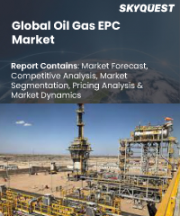
석유 및 가스 EPC 시장 - 세계 산업 규모, 점유율, 동향, 기회, 예측 : 서비스 유형, 장소, 최종사용자, 지역별&경쟁(2021-2031년)Oil and Gas EPC Market - Global Industry Size, Share, Trends, Opportunity, and Forecast, Segmented By Service Type (Engineering, Procurement), By Location (Onshore, Offshore), By End User (Upstream, Midstream), By Region & Competition, 2021-2031F |
||||||

세계의 석유 및 가스 EPC 시장은 2025년 507억 5,000만 달러에서 2031년까지 708억 2,000만 달러로 성장하고, CAGR 5.71%를 나타낼 것으로 예측됩니다.
이 시장은 전문 기업이 업스트림, 중류, 하류 각 부문에서 상세 설계, 자재 조달, 인프라 건설을 수행하는 계약 프레임워크를 포괄하고 있습니다. 이 분야의 성장은 주로 전 세계 에너지 소비량 증가와 노후화된 시설의 교체로 인한 운영 효율성 개선의 필요성에 의해 주도되고 있습니다. 또한, 에너지 안보에 대한 전략적 초점은 탐사 및 생산 분야에 대한 자본 투자를 가속화하여 엔드 투 엔드 프로젝트 실행 서비스에 대한 강력한 수요를 유지하고 있습니다.
| 시장 개요 | |
|---|---|
| 예측 기간 | 2027-2031년 |
| 시장 규모 : 2025년 | 507억 5,000만 달러 |
| 시장 규모 : 2031년 | 708억 2,000만 달러 |
| CAGR : 2026-2031년 | 5.71% |
| 가장 성장이 빠른 부문 | Upstream |
| 최대 시장 | 중동 및 아프리카 |
이러한 호재가 있는 반면, 지정학적, 경제적 불안정성으로 인해 시장은 큰 장벽에 직면해 있습니다. 이로 인해 원자재 가격의 변동이 발생하여 프로젝트 자금 조달이 복잡해지고 있습니다. 이러한 불확실성으로 인해 사업자들은 최종투자결정(FID)을 미루는 경우가 많으며, 이로 인해 향후 프로젝트 진행에 차질이 빚어지고 있습니다. 국제에너지기구(IEA)에 따르면, 2024년 전 세계 석유 및 가스 업스트림부문에 대한 투자액은 7% 증가하여 5,700억 달러에 달할 것으로 예측됩니다. 이 통계는 업계의 활발한 활동을 시사하지만, EPC 계약자는 프로젝트 일정과 수익률을 위협하는 변동이 심한 시장 환경과 엄격한 규제 요건을 적절히 관리해야 합니다.
시장 성장 촉진요인
세계 에너지 수요 증가로 인해 업스트림부문의 투자가 크게 증가하고 있으며, 이에 따라 새로운 매장량을 가동하기 위한 종합적인 엔지니어링, 조달 및 건설 서비스가 요구되고 있습니다. 성숙 유전의 생산량이 감소하는 가운데, 운영사들은 안정적인 공급을 위해 자본 집약적인 신규 프로젝트를 승인해야 하며, 이는 시설의 제조 및 설치에 대한 대규모 계약 체결로 이어지고 있습니다. 석유수출국기구(OPEC)가 2024년 9월 발표한 '세계 석유 전망 2050'에 따르면, 세계 석유 산업은 2050년까지 예상 소비량을 충족시키기 위해 누적 17조 4,000억 달러의 투자가 필요합니다. 이러한 막대한 장기적 자금 투입은 증가하는 에너지 수요 속에서 생산을 유지하는 데 필요한 인프라 개발에 있어 EPC 계약자의 필수적인 역할을 강조하고 있습니다.
또한, 액화천연가스(LNG) 인프라의 대규모 확장은 에너지 안보와 다각화를 보장하기 위한 지정학적 노력에 힘입어 주요 시장 촉매제 역할을 하고 있습니다. 이러한 움직임은 액화 플랜트 및 재기화 터미널 건설의 급증으로 이어져 복잡한 극저온 프로젝트에 정통한 전문 계약업체가 필요하게 되었습니다. 국제가스연맹(IGU)이 2024년 6월 발표한 'World LNG Report 2024'에 따르면, 2023년 세계 LNG 수용능력은 연간 6,970만 톤이 증가할 것으로 예상되며, 이는 10년 이상 연간 증가량 중 가장 큰 규모입니다. 이러한 기회의 규모를 보여주는 사례로, 사이펨은 2024년 카타르 에너지(Qatar Energy)로부터 약 40억 달러 규모의 전략적 해양 계약을 수주하여 현재 이 분야에 투입되고 있는 막대한 자본을 강조하고 있습니다.
시장의 과제
지정학적, 경제적 불안정성은 원자재 비용과 자본 조달에 극심한 변동성을 가져와 세계 석유 및 가스 EPC 시장의 주요 장벽으로 작용하고 있습니다. 이러한 예측 불가능성은 대규모 설계, 조달, 건설 계약에 필수적인 정확한 비용 예측을 복잡하게 만들고, 고정 가격 계약에서 예상치 못한 비용 초과 부담과 어려운 계약 재협상을 초래하는 경우가 많습니다. 철강, 특수 장비 등 공급망의 주요 구성요소 가격이 지역 분쟁이나 무역 마찰로 인해 크게 변동하는 경우, 장기 인프라 프로젝트의 재무적 타당성을 확보하기 어려워져 운영상 큰 마찰이 발생합니다.
또한, 이러한 불안정성은 에너지 사업자들에게 자본 유동성 유지를 압박하고, 최종투자결정(FID)을 연기하게 함으로써 시장 확대를 저해하는 요인으로 작용하고 있습니다. 이러한 지연은 세계 공급 수준을 유지하는 데 필수적인 프로젝트 파이프라인을 정체시킬 수 있습니다. 위험에 노출된 투자 규모는 엄청나다. 석유수출국기구(OPEC)에 따르면, 2024년 기준 세계 석유 부문은 수요 증가에 효과적으로 대응하기 위해 2050년까지 약 17조 4,000억 달러의 투자가 필요합니다. 그러나 지속적인 경제 변동성은 이러한 목표를 달성하는 데 필요한 꾸준한 자본 투입을 방해하고, 그 결과 해당 부문의 성장 잠재력을 제한하고 있습니다.
시장 동향
엄격한 탈탄소화 요구사항은 단순한 생산능력 확대 이상의 동력이 되고 있으며, 탄소 포집-이용-저장(CCUS) 인프라의 통합은 세계 석유 및 가스 EPC 시장을 변화시키는 결정적인 트렌드가 되고 있습니다. EPC 계약자는 기존 플랜트의 복잡한 개조 설계와 배출된 탄소를 수송하기 위한 광범위한 파이프라인 네트워크의 개발에서 점점 더 중요한 역할을 하고 있습니다. 이러한 전환에는 고압 CO2 관리 및 지질학적 저장 통합에 대한 전문 기술 지식이 필요하며, 이는 전통적인 탄화수소 프로젝트의 초점을 근본적으로 바꾸고 있습니다. 세계 CCS 연구소가 2024년 12월 발표한 '2024 CCS 세계 동향 보고서'에 따르면, 전 세계 탄소 포집 및 저장 시설의 파이프라인은 전년 대비 60% 증가한 628개에 달하며, 개발 및 가동 단계에 있는 프로젝트가 확대되고 있어 인프라 도입 속도가 눈에 띄게 빨라지고 있습니다. 눈에 띄게 빨라지고 있음을 알 수 있습니다.
동시에 업계에서는 화석연료 시장의 장기적인 변동성 리스크를 완화하기 위해 그린수소 및 재생에너지와의 하이브리드 시스템으로의 전략적 다각화를 추진하고 있습니다. 주요 계약업체들은 전해 장치 시설의 설계 및 건설, 업스트림 공정에 태양광 및 풍력에너지 도입을 통한 탄소 강도 감소를 사업모델에 도입하고 있습니다. 이러한 전환은 단순한 야망이 아니라 현실적이며, 자산의 미래성을 확보하려는 기존 사업자들의 대규모 자본 재분배에 의해 뒷받침되고 있습니다. 국제에너지기구(IEA)가 2024년 6월 발표한 'World Energy Investment 2024' 보고서에 따르면, 석유 및 가스 부문은 2023년 청정에너지 기술에 대한 자본 지출을 300억 달러로 확대하며, 프로젝트 조달 수요의 구체적인 구조적 변화를 보여줍니다. 구조적 변화를 보여주고 있습니다.
자주 묻는 질문
목차
제1장 개요
제2장 조사 방법
제3장 주요 요약
제4장 고객의 소리
제5장 세계의 석유 및 가스 EPC 시장 전망
제6장 북미의 석유 및 가스 EPC 시장 전망
제7장 유럽의 석유 및 가스 EPC 시장 전망
제8장 아시아태평양의 석유 및 가스 EPC 시장 전망
제9장 중동 및 아프리카의 석유 및 가스 EPC 시장 전망
제10장 남미의 석유 및 가스 EPC 시장 전망
제11장 시장 역학
제12장 시장 동향과 발전
제13장 세계의 석유 및 가스 EPC 시장 : SWOT 분석
제14장 Porter의 Five Forces 분석
제15장 경쟁 구도
제16장 전략적 제안
제17장 회사 소개 및 면책조항
LSH 26.03.20The Global Oil and Gas EPC Market is projected to expand from USD 50.75 Billion in 2025 to USD 70.82 Billion by 2031, reflecting a Compound Annual Growth Rate of 5.71%. This market encompasses contractual frameworks where specialized firms undertake detailed engineering, material procurement, and infrastructure construction across the upstream, midstream, and downstream segments. The sector's growth is primarily fuelled by escalating global energy consumption and the critical need to upgrade aging facilities to improve operational efficiency. Furthermore, a strategic focus on energy security has accelerated capital investment in exploration and production, thereby maintaining strong demand for end-to-end project execution services.
| Market Overview | |
|---|---|
| Forecast Period | 2027-2031 |
| Market Size 2025 | USD 50.75 Billion |
| Market Size 2031 | USD 70.82 Billion |
| CAGR 2026-2031 | 5.71% |
| Fastest Growing Segment | Upstream |
| Largest Market | Middle East & Africa |
Despite these positive indicators, the market faces substantial hurdles due to geopolitical and economic instability, which causes fluctuations in raw material prices and complicates project financing. This uncertainty frequently leads operators to postpone Final Investment Decisions, thereby interrupting the flow of upcoming projects. According to the International Energy Agency, global upstream oil and gas investment is anticipated to rise by 7% to USD 570 billion in 2024. While this statistic suggests vigorous industry activity, EPC contractors must successfully manage these volatile market conditions and strict regulatory requirements that threaten project schedules and profit margins.
Market Driver
Rising global energy demand is triggering a significant increase in upstream investments, which in turn necessitates comprehensive engineering, procurement, and construction services to operationalize new reserves. As production from mature fields dwindles, operators are forced to approve capital-intensive greenfield projects to guarantee stable supplies, leading to substantial contract awards for the fabrication and installation of facilities. According to the Organization of the Petroleum Exporting Countries' September 2024 'World Oil Outlook 2050', the global oil industry requires a cumulative investment of USD 17.4 trillion through 2050 to satisfy anticipated consumption. This substantial long-term financial commitment highlights the indispensable role of EPC contractors in developing the infrastructure necessary to maintain production amid increasing energy needs.
Additionally, the massive expansion of Liquefied Natural Gas infrastructure acts as a major market catalyst, propelled by geopolitical efforts to ensure energy security and diversification. This movement has sparked a surge in the construction of liquefaction trains and regasification terminals, demanding specialized contractors skilled in complex cryogenic projects. As stated in the International Gas Union's June 2024 'World LNG Report 2024', global LNG receiving capacity grew by 69.7 million tonnes per annum in 2023, representing the largest annual increase in over ten years. Demonstrating the scale of these opportunities, Saipem secured a strategic offshore contract from QatarEnergy in 2024 valued at roughly USD 4 billion, showcasing the immense capital currently being deployed within the sector.
Market Challenge
Geopolitical and economic instability serves as a major obstacle for the Global Oil and Gas EPC Market, chiefly by creating extreme volatility in raw material costs and capital financing. This unpredictability complicates the accurate cost forecasting essential for massive Engineering, Procurement, and Construction contracts, often resulting in contractors bearing unexpected cost overruns on fixed-price deals or engaging in difficult contract renegotiations. When the prices of crucial supply chain components, such as steel and specialized equipment, swing wildly due to regional conflicts or trade disputes, securing the financial feasibility of long-term infrastructure projects becomes arduous, leading to considerable operational friction.
Moreover, this instability stifles market expansion by forcing energy operators to delay Final Investment Decisions (FIDs) in an effort to conserve capital liquidity. These postponements arrest the project pipeline that is vital for sustaining global supply levels. The magnitude of the investment at risk is significant; according to the Organization of the Petroleum Exporting Countries, in 2024, the global oil sector requires cumulative investments of approximately USD 17.4 trillion through 2050 to effectively meet growing demand. However, enduring economic volatility deters the steady capital deployment required to achieve these targets, thereby limiting the sector's potential for growth.
Market Trends
The integration of Carbon Capture, Utilization, and Storage (CCUS) infrastructure has become a defining trend transforming the Global Oil and Gas EPC Market, spurred by strict decarbonization requirements rather than simple capacity growth. EPC contractors are increasingly responsible for engineering complex retrofits for existing plants and developing extensive pipeline networks to transport carbon emissions. This transition necessitates specialized technical knowledge in managing high-pressure CO2 and integrating geological storage, which fundamentally shifts the focus of conventional hydrocarbon projects. According to the Global CCS Institute's December 2024 '2024 Global Status of CCS Report', the global pipeline of carbon capture and storage facilities grew by 60% year-over-year to a total of 628 projects in various stages of development or operation, highlighting the speed at which this infrastructure is being adopted.
Concurrently, the industry is pursuing strategic diversification into green hydrogen and renewable energy hybrid systems to buffer against long-term volatility in fossil fuel markets. Leading contractors are adapting their business models to encompass the engineering and construction of electrolyzer facilities and the incorporation of solar or wind energy into upstream operations to lower carbon intensity. This shift is practical rather than merely ambitious, supported by significant capital redirection from traditional operators aiming to future-proof their holdings. As reported by the International Energy Agency in its June 2024 'World Energy Investment 2024' report, the oil and gas sector raised its capital expenditure on clean energy technologies to USD 30 billion in 2023, indicating a concrete structural change in project procurement needs.
Key Market Players
- Bechtel Corporation
- TechnipFMC plc
- McDermott International, Ltd
- Saipem S.p.A.
- Fluor Corporation
- Petrofac Limited
- Larsen & Toubro Limited
- Halliburton Energy Services, Inc
Report Scope
In this report, the Global Oil and Gas EPC Market has been segmented into the following categories, in addition to the industry trends which have also been detailed below:
Oil and Gas EPC Market, By Service Type
- Engineering
- Procurement
Oil and Gas EPC Market, By Location
- Onshore
- Offshore
Oil and Gas EPC Market, By End User
- Upstream
- Midstream
Oil and Gas EPC Market, By Region
- North America
- United States
- Canada
- Mexico
- Europe
- France
- United Kingdom
- Italy
- Germany
- Spain
- Asia Pacific
- China
- India
- Japan
- Australia
- South Korea
- South America
- Brazil
- Argentina
- Colombia
- Middle East & Africa
- South Africa
- Saudi Arabia
- UAE
Competitive Landscape
Company Profiles: Detailed analysis of the major companies present in the Global Oil and Gas EPC Market.
Available Customizations:
Global Oil and Gas EPC Market report with the given market data, TechSci Research offers customizations according to a company's specific needs. The following customization options are available for the report:
Company Information
- Detailed analysis and profiling of additional market players (up to five).
Table of Contents
1. Product Overview
- 1.1. Market Definition
- 1.2. Scope of the Market
- 1.2.1. Markets Covered
- 1.2.2. Years Considered for Study
- 1.2.3. Key Market Segmentations
2. Research Methodology
- 2.1. Objective of the Study
- 2.2. Baseline Methodology
- 2.3. Key Industry Partners
- 2.4. Major Association and Secondary Sources
- 2.5. Forecasting Methodology
- 2.6. Data Triangulation & Validation
- 2.7. Assumptions and Limitations
3. Executive Summary
- 3.1. Overview of the Market
- 3.2. Overview of Key Market Segmentations
- 3.3. Overview of Key Market Players
- 3.4. Overview of Key Regions/Countries
- 3.5. Overview of Market Drivers, Challenges, Trends
4. Voice of Customer
5. Global Oil and Gas EPC Market Outlook
- 5.1. Market Size & Forecast
- 5.1.1. By Value
- 5.2. Market Share & Forecast
- 5.2.1. By Service Type (Engineering, Procurement)
- 5.2.2. By Location (Onshore, Offshore)
- 5.2.3. By End User (Upstream, Midstream)
- 5.2.4. By Region
- 5.2.5. By Company (2025)
- 5.3. Market Map
6. North America Oil and Gas EPC Market Outlook
- 6.1. Market Size & Forecast
- 6.1.1. By Value
- 6.2. Market Share & Forecast
- 6.2.1. By Service Type
- 6.2.2. By Location
- 6.2.3. By End User
- 6.2.4. By Country
- 6.3. North America: Country Analysis
- 6.3.1. United States Oil and Gas EPC Market Outlook
- 6.3.1.1. Market Size & Forecast
- 6.3.1.1.1. By Value
- 6.3.1.2. Market Share & Forecast
- 6.3.1.2.1. By Service Type
- 6.3.1.2.2. By Location
- 6.3.1.2.3. By End User
- 6.3.1.1. Market Size & Forecast
- 6.3.2. Canada Oil and Gas EPC Market Outlook
- 6.3.2.1. Market Size & Forecast
- 6.3.2.1.1. By Value
- 6.3.2.2. Market Share & Forecast
- 6.3.2.2.1. By Service Type
- 6.3.2.2.2. By Location
- 6.3.2.2.3. By End User
- 6.3.2.1. Market Size & Forecast
- 6.3.3. Mexico Oil and Gas EPC Market Outlook
- 6.3.3.1. Market Size & Forecast
- 6.3.3.1.1. By Value
- 6.3.3.2. Market Share & Forecast
- 6.3.3.2.1. By Service Type
- 6.3.3.2.2. By Location
- 6.3.3.2.3. By End User
- 6.3.3.1. Market Size & Forecast
- 6.3.1. United States Oil and Gas EPC Market Outlook
7. Europe Oil and Gas EPC Market Outlook
- 7.1. Market Size & Forecast
- 7.1.1. By Value
- 7.2. Market Share & Forecast
- 7.2.1. By Service Type
- 7.2.2. By Location
- 7.2.3. By End User
- 7.2.4. By Country
- 7.3. Europe: Country Analysis
- 7.3.1. Germany Oil and Gas EPC Market Outlook
- 7.3.1.1. Market Size & Forecast
- 7.3.1.1.1. By Value
- 7.3.1.2. Market Share & Forecast
- 7.3.1.2.1. By Service Type
- 7.3.1.2.2. By Location
- 7.3.1.2.3. By End User
- 7.3.1.1. Market Size & Forecast
- 7.3.2. France Oil and Gas EPC Market Outlook
- 7.3.2.1. Market Size & Forecast
- 7.3.2.1.1. By Value
- 7.3.2.2. Market Share & Forecast
- 7.3.2.2.1. By Service Type
- 7.3.2.2.2. By Location
- 7.3.2.2.3. By End User
- 7.3.2.1. Market Size & Forecast
- 7.3.3. United Kingdom Oil and Gas EPC Market Outlook
- 7.3.3.1. Market Size & Forecast
- 7.3.3.1.1. By Value
- 7.3.3.2. Market Share & Forecast
- 7.3.3.2.1. By Service Type
- 7.3.3.2.2. By Location
- 7.3.3.2.3. By End User
- 7.3.3.1. Market Size & Forecast
- 7.3.4. Italy Oil and Gas EPC Market Outlook
- 7.3.4.1. Market Size & Forecast
- 7.3.4.1.1. By Value
- 7.3.4.2. Market Share & Forecast
- 7.3.4.2.1. By Service Type
- 7.3.4.2.2. By Location
- 7.3.4.2.3. By End User
- 7.3.4.1. Market Size & Forecast
- 7.3.5. Spain Oil and Gas EPC Market Outlook
- 7.3.5.1. Market Size & Forecast
- 7.3.5.1.1. By Value
- 7.3.5.2. Market Share & Forecast
- 7.3.5.2.1. By Service Type
- 7.3.5.2.2. By Location
- 7.3.5.2.3. By End User
- 7.3.5.1. Market Size & Forecast
- 7.3.1. Germany Oil and Gas EPC Market Outlook
8. Asia Pacific Oil and Gas EPC Market Outlook
- 8.1. Market Size & Forecast
- 8.1.1. By Value
- 8.2. Market Share & Forecast
- 8.2.1. By Service Type
- 8.2.2. By Location
- 8.2.3. By End User
- 8.2.4. By Country
- 8.3. Asia Pacific: Country Analysis
- 8.3.1. China Oil and Gas EPC Market Outlook
- 8.3.1.1. Market Size & Forecast
- 8.3.1.1.1. By Value
- 8.3.1.2. Market Share & Forecast
- 8.3.1.2.1. By Service Type
- 8.3.1.2.2. By Location
- 8.3.1.2.3. By End User
- 8.3.1.1. Market Size & Forecast
- 8.3.2. India Oil and Gas EPC Market Outlook
- 8.3.2.1. Market Size & Forecast
- 8.3.2.1.1. By Value
- 8.3.2.2. Market Share & Forecast
- 8.3.2.2.1. By Service Type
- 8.3.2.2.2. By Location
- 8.3.2.2.3. By End User
- 8.3.2.1. Market Size & Forecast
- 8.3.3. Japan Oil and Gas EPC Market Outlook
- 8.3.3.1. Market Size & Forecast
- 8.3.3.1.1. By Value
- 8.3.3.2. Market Share & Forecast
- 8.3.3.2.1. By Service Type
- 8.3.3.2.2. By Location
- 8.3.3.2.3. By End User
- 8.3.3.1. Market Size & Forecast
- 8.3.4. South Korea Oil and Gas EPC Market Outlook
- 8.3.4.1. Market Size & Forecast
- 8.3.4.1.1. By Value
- 8.3.4.2. Market Share & Forecast
- 8.3.4.2.1. By Service Type
- 8.3.4.2.2. By Location
- 8.3.4.2.3. By End User
- 8.3.4.1. Market Size & Forecast
- 8.3.5. Australia Oil and Gas EPC Market Outlook
- 8.3.5.1. Market Size & Forecast
- 8.3.5.1.1. By Value
- 8.3.5.2. Market Share & Forecast
- 8.3.5.2.1. By Service Type
- 8.3.5.2.2. By Location
- 8.3.5.2.3. By End User
- 8.3.5.1. Market Size & Forecast
- 8.3.1. China Oil and Gas EPC Market Outlook
9. Middle East & Africa Oil and Gas EPC Market Outlook
- 9.1. Market Size & Forecast
- 9.1.1. By Value
- 9.2. Market Share & Forecast
- 9.2.1. By Service Type
- 9.2.2. By Location
- 9.2.3. By End User
- 9.2.4. By Country
- 9.3. Middle East & Africa: Country Analysis
- 9.3.1. Saudi Arabia Oil and Gas EPC Market Outlook
- 9.3.1.1. Market Size & Forecast
- 9.3.1.1.1. By Value
- 9.3.1.2. Market Share & Forecast
- 9.3.1.2.1. By Service Type
- 9.3.1.2.2. By Location
- 9.3.1.2.3. By End User
- 9.3.1.1. Market Size & Forecast
- 9.3.2. UAE Oil and Gas EPC Market Outlook
- 9.3.2.1. Market Size & Forecast
- 9.3.2.1.1. By Value
- 9.3.2.2. Market Share & Forecast
- 9.3.2.2.1. By Service Type
- 9.3.2.2.2. By Location
- 9.3.2.2.3. By End User
- 9.3.2.1. Market Size & Forecast
- 9.3.3. South Africa Oil and Gas EPC Market Outlook
- 9.3.3.1. Market Size & Forecast
- 9.3.3.1.1. By Value
- 9.3.3.2. Market Share & Forecast
- 9.3.3.2.1. By Service Type
- 9.3.3.2.2. By Location
- 9.3.3.2.3. By End User
- 9.3.3.1. Market Size & Forecast
- 9.3.1. Saudi Arabia Oil and Gas EPC Market Outlook
10. South America Oil and Gas EPC Market Outlook
- 10.1. Market Size & Forecast
- 10.1.1. By Value
- 10.2. Market Share & Forecast
- 10.2.1. By Service Type
- 10.2.2. By Location
- 10.2.3. By End User
- 10.2.4. By Country
- 10.3. South America: Country Analysis
- 10.3.1. Brazil Oil and Gas EPC Market Outlook
- 10.3.1.1. Market Size & Forecast
- 10.3.1.1.1. By Value
- 10.3.1.2. Market Share & Forecast
- 10.3.1.2.1. By Service Type
- 10.3.1.2.2. By Location
- 10.3.1.2.3. By End User
- 10.3.1.1. Market Size & Forecast
- 10.3.2. Colombia Oil and Gas EPC Market Outlook
- 10.3.2.1. Market Size & Forecast
- 10.3.2.1.1. By Value
- 10.3.2.2. Market Share & Forecast
- 10.3.2.2.1. By Service Type
- 10.3.2.2.2. By Location
- 10.3.2.2.3. By End User
- 10.3.2.1. Market Size & Forecast
- 10.3.3. Argentina Oil and Gas EPC Market Outlook
- 10.3.3.1. Market Size & Forecast
- 10.3.3.1.1. By Value
- 10.3.3.2. Market Share & Forecast
- 10.3.3.2.1. By Service Type
- 10.3.3.2.2. By Location
- 10.3.3.2.3. By End User
- 10.3.3.1. Market Size & Forecast
- 10.3.1. Brazil Oil and Gas EPC Market Outlook
11. Market Dynamics
- 11.1. Drivers
- 11.2. Challenges
12. Market Trends & Developments
- 12.1. Merger & Acquisition (If Any)
- 12.2. Product Launches (If Any)
- 12.3. Recent Developments
13. Global Oil and Gas EPC Market: SWOT Analysis
14. Porter's Five Forces Analysis
- 14.1. Competition in the Industry
- 14.2. Potential of New Entrants
- 14.3. Power of Suppliers
- 14.4. Power of Customers
- 14.5. Threat of Substitute Products
15. Competitive Landscape
- 15.1. Bechtel Corporation
- 15.1.1. Business Overview
- 15.1.2. Products & Services
- 15.1.3. Recent Developments
- 15.1.4. Key Personnel
- 15.1.5. SWOT Analysis
- 15.2. TechnipFMC plc
- 15.3. McDermott International, Ltd
- 15.4. Saipem S.p.A.
- 15.5. Fluor Corporation
- 15.6. Petrofac Limited
- 15.7. Larsen & Toubro Limited
- 15.8. Halliburton Energy Services, Inc