|
시장보고서
상품코드
2030065
요도 카테터 시장 - 세계 산업 규모, 점유율, 동향, 기회, 예측 : 제품별, 용도별, 유형별, 최종사용자별, 지역별 및 경쟁(2021-2031년)Urinary Catheters Market - Global Industry Size, Share, Trends, Opportunity & Forecast, Segmented By Product, By Application, By Type, By End User, By Region & Competition, 2021-2031F |
||||||

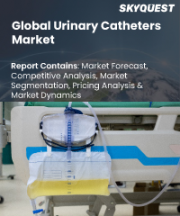
세계의 요도 카테터 시장은 2025년 59억 6,000만 달러에서 2031년까지 83억 7,000만 달러로 확대되어 CAGR 5.82%를 기록할 것으로 예측됩니다.
소변 배출을 돕기 위해 방광에 삽입되는 이 의료기기는 주로 요폐, 요실금 또는 수술 전후 방광 관리가 필요한 환자에게 사용됩니다. 시장 성장은 주로 비뇨기 질환의 발생 빈도 증가, 특히 고령 인구의 증가 추세와 함께 일시적 또는 장기적인 카테터 사용이 필요한 수술의 급증에 의해 주도되고 있습니다. 이러한 광범위한 수요를 뒷받침하듯, 국제요실금학회(ICS-EUS)가 2025년 9월 발표한 요약에 따르면 20세 이상 미국 여성의 63%가 요실금에 시달리고 있으며, 이는 약 7,950만 명이 신뢰할 수 있는 방광 관리 옵션이 필요하다는 것을 의미합니다. 필요하다고 지적하고 있습니다.
| 시장 개요 | |
|---|---|
| 예측 기간 | 2027-2031년 |
| 시장 규모 : 2025년 | 59억 6,000만 달러 |
| 시장 규모 : 2031년 | 83억 7,000만 달러 |
| CAGR : 2026-2031년 | 5.82% |
| 가장 성장이 현저한 부문 | 간헐적 카테터 |
| 최대 시장 | 북미 |
시장 성장의 원동력은 당뇨병, 척수손상 등 만성질환의 유병률 증가와 더불어 장기요양 및 재택의료 서비스에 대한 관심이 높아지고 있다는 점입니다. 그러나 카테터 관련 요로감염이라는 지속적인 문제는 여전히 시장 성장의 큰 장벽으로 작용하고 있으며, 전 세계 의료 네트워크에 막대한 임상적, 재정적 부담을 주고 있습니다.
시장 촉진요인
세계 요도 카테터 시장의 주요 촉진요인은 입원 및 수술 건수의 증가입니다. 응급 수술과 예정된 수술의 빈도가 증가함에 따라 단기 또는 장기적인 방광 배액이 필요한 경우가 증가하고 있으며, 이는 카테터 장치에 대한 수요를 직접적으로 증가시키고 있습니다. 이러한 수요를 뒷받침하듯, 2025년 9월 위츠대학이 란셋지를 인용해 발표한 보고서에 따르면, 전 세계적으로 연간 1억 6,000만 건의 수술 수요가 충족되지 않고 있으며, 수술 전, 수술 중, 수술 후 카테터 사용에 대한 필요성이 매우 크다고 지적하고 있습니다. 이러한 추세는 수술이 필요한 질환에 걸리기 쉬운 고령화 추세로 인해 더욱 증폭되고 있으며, 이에 따라 병원 방문 횟수가 증가하고 이에 따른 카테터 삽입에 대한 수요도 증가하고 있습니다.
동시에 카테터 설계 및 기술의 지속적인 개선으로 주요 임상적 문제를 완화하고 환자의 편안함을 개선하여 시장 성장을 촉진하고 있습니다. 제품 소재, 특수 코팅, 인체공학적 설계의 발전은 카테터 관련 요로 감염과 같은 합병증을 최소화하면서 사용자의 편안함을 극대화하여 보다 폭넓은 사용을 촉진하고 있습니다. 일례로, 콜로플라스트(Coloplast)가 2025년 11월에 발표한 2024/25 회계연도 결산 보고서에 따르면, 마이크로 홀 존 기술을 적용한 루자(Luja) 간헐적 카테터가 연속치료 부문에서 8%의 유기적 성장을 달성하는 데 중요한 역할을 한 것으로 나타났습니다. 이러한 지속적인 혁신의 성공은 주요 기업들의 견조한 실적에도 반영되고 있습니다. 예를 들어, BD의 비뇨기과 및 집중치료 부문은 지난 11월 발표된 2025년 결산에서 두 자릿수 성장을 기록했습니다.
시장의 과제
카테터 관련 요로감염증(CAUTI)의 확산은 전 세계 요도 카테터 시장 확대에 큰 걸림돌로 작용하고 있습니다. 이러한 합병증은 전 세계 의료 인프라에 심각한 임상적, 재정적 압박을 가하고 있으며, 시장 발전에 직접적인 병목현상이 되고 있습니다. CAUTI는 종종 장기 입원, 추가 진단 절차, 고가의 항생제 치료로 이어지기 때문에 첨단 또는 새로운 카테터 장비 조달에서 중요한 자금을 빼앗아 갑니다. 이러한 경제적 압박은 결국 조달 전략에 영향을 미쳐 표준 카테터 제품의 의료 시설에 대한 광범위한 도입을 제한하고 있습니다.
또한, CAUTI의 위험과 관련된 안전에 대한 우려는 특히 방광 관리를 위한 대체 수단이 존재하는 경우 의료진과 환자가 요도 카테터 사용을 꺼리게 만들어 전체 수요를 감소시킬 수 있습니다. 2025년 6월에 열린 감염 관리 및 역학 전문가 협회(APIC) 회의에서 강조된 바와 같이, 한 의료 시설은 2022년부터 2024년까지 CAUTI 발생률을 45% 감소시키는 데 성공했으며, 이는 이러한 문제를 통제하기 위해서는 막대한 자원과 헌신적인 노력이 필요하다는 것을 보여줍니다. 필요하다는 것을 보여주고 있습니다. 감염 예방에 대한 이러한 강조는 CAUTI가 기존 시장 성장에 얼마나 부정적인 영향을 미치는지 강조하고 있으며, 단순히 표준 카테터 판매를 촉진하는 것이 아니라 대체 관리 방법 및 감염 방지 설계에 대한 선호를 유도하고 있습니다.
시장 동향
세계 요도 카테터 시장을 형성하는 주요 동향 중 하나는 가정용 카테터 시스템의 사용 확대입니다. 이는 외래 진료 및 환자 중심의 의료 접근 방식으로의 광범위한 전환과 궤를 같이합니다. 이러한 움직임으로 인해 환자들은 기존의 의료 시설을 떠나서도 비뇨기 계통의 필요를 자율적으로 관리할 수 있게 되었으며, 그 결과 눈에 띄지 않고 사용하기 쉬운 카테터 장치에 대한 수요가 증가하고 있습니다. 컨바텍(ConvaTec)의 2025 회계연도(2026년 2월) 실적 보고서에 따르면, 컨비니언스케어 부문은 미국 내 판매량 증가와 셀프 관리 제품 라인업 확대에 힘입어 6.6%의 유기적 성장을 기록했다고 밝혔습니다. 이러한 성장은 임상 의료 시스템에 대한 부담을 줄이면서 실용적인 재택 솔루션을 원하는 소비자의 요구에 부응하기 위해 업계가 어떻게 진화하고 있는지를 잘 보여주고 있습니다.
동시에, 친수성 및 항균성 카테터 코팅의 개발은 사용자의 편안함을 개선하고 카테터 관련 요로 감염의 지속적인 문제를 해결하기 위해 중요한 트렌드로 부상하고 있습니다. 이러한 독특한 표면처리는 생체적합성을 높이고 세균 부착을 줄이는 데 필수적이며, 궁극적으로 카테터 삽입 기간을 연장하고 의료적 합병증을 줄일 수 있습니다. 콜로플라스트는 2025/26 회계연도 1분기(2026년 2월) 중간 결산 보고에서 요실금 관리 제품 매출이 전년 동기 대비 7%의 유기적 성장을 기록했다고 밝혔습니다. 이러한 실적 호조는 지속적인 디자인 개선, 특히 환자에게 보다 안전하고 편안한 경험을 제공하는 최첨단 코팅 기술을 통해 이러한 의료기기의 보급 촉진과 지속적인 사용을 촉진한 것이 주요 요인으로 작용했습니다.
자주 묻는 질문
목차
제1장 개요
제2장 조사 방법
제3장 주요 요약
제4장 고객의 소리
제5장 세계의 요도 카테터 시장 전망
제6장 북미의 요도 카테터 시장 전망
제7장 유럽의 요도 카테터 시장 전망
제8장 아시아태평양의 요도 카테터 시장 전망
제9장 중동 및 아프리카의 요도 카테터 시장 전망
제10장 남미의 요도 카테터 시장 전망
제11장 시장 역학
제12장 시장 동향과 발전
제13장 세계의 요도 카테터 시장 : SWOT 분석
제14장 Porter's Five Forces 분석
제15장 경쟁 구도
제16장 전략적 제안
제17장 조사 회사 소개 및 면책사항
KSM 26.05.22The Global market for urinary catheters is anticipated to expand from USD 5.96 billion in 2025 to USD 8.37 billion by 2031, progressing at a compound annual growth rate of 5.82%. These medical instruments, which are introduced into the bladder to aid in urine extraction, are mainly used for individuals dealing with urinary retention, incontinence, or perioperative bladder management needs. Market growth is primarily fueled by a rising frequency of urological ailments, especially within the growing elderly population, along with a surge in surgeries that require either temporary or prolonged catheter use. Highlighting this extensive need, a September 2025 abstract from the International Continence Society (ICS-EUS) noted that urinary incontinence affected 63% of American women aged 20 and older, translating to roughly 79.5 million individuals requiring reliable bladder care options.
| Market Overview | |
|---|---|
| Forecast Period | 2027-2031 |
| Market Size 2025 | USD 5.96 Billion |
| Market Size 2031 | USD 8.37 Billion |
| CAGR 2026-2031 | 5.82% |
| Fastest Growing Segment | Intermittent Catheters |
| Largest Market | North America |
Additional momentum for the market comes from the escalating rates of chronic diseases like diabetes and spinal cord traumas, coupled with a shifting focus toward long-term care and home-based health services. Nevertheless, the continuous issue of catheter-associated urinary tract infections continues to act as a major barrier to market growth, imposing considerable clinical and financial strains on healthcare networks worldwide.
Market Driver
A primary catalyst for the global urinary catheters market is the rising number of hospitalizations and surgical operations. A higher frequency of both emergency and elective surgeries frequently requires short-term or prolonged bladder drainage, which directly boosts the need for catheter devices. Highlighting this demand, a September 2025 Wits University publication citing The Lancet reported a global unmet surgical need of 160 million procedures annually, pointing to an immense necessity for catheter use before, during, and after surgeries. This momentum is additionally amplified by a globally aging demographic that is more susceptible to medical conditions requiring surgery, thereby increasing hospital visits and the corresponding demand for catheterization.
At the same time, continuous improvements in catheter engineering and technology are stimulating market growth by mitigating key clinical issues and boosting patient well-being. Progress in product materials, specialized coatings, and ergonomic designs help minimize complications like catheter-associated urinary tract infections while maximizing user comfort, promoting wider utilization. As an illustration, Coloplast's November 2025 financial report for FY 2024/25 indicated that its Luja intermittent catheter, which utilizes Micro-hole Zone Technology, played a key role in achieving an 8% organic growth in its Continence Care division. The success of such ongoing innovations is reflected in the strong financial outcomes of leading companies, such as BD, whose Urology & Critical Care division posted double-digit growth in its Fiscal 2025 year-end results released in November 2025.
Market Challenge
The prevalence of catheter-associated urinary tract infections (CAUTIs) represents a major obstacle to the expansion of the global urinary catheters market. These complications impose severe clinical and financial pressures on healthcare infrastructures worldwide, acting as a direct bottleneck to market progress. Because CAUTIs often result in prolonged hospitalizations, extra diagnostic procedures, and costly antibiotic therapies, they divert crucial funds away from the procurement of advanced or newer catheter devices. This elevated economic pressure ultimately affects procurement strategies and restricts the widespread integration of standard catheter products into healthcare facilities.
Additionally, safety anxieties linked to the threat of CAUTIs can create reluctance among medical professionals and patients to rely on urinary catheters, especially if alternative methods for bladder management are available, thereby diminishing overall demand. As highlighted during the June 2025 Association of Professionals in Infection Control and Epidemiology (APIC) Conference, a medical facility managed to decrease its CAUTI rates by 45% between 2022 and 2024, demonstrating the immense resources and dedication needed to control these issues. This heavy emphasis on infection prevention highlights how CAUTIs negatively restrict conventional market growth, steering preferences toward alternative management techniques and infection-resistant designs rather than merely boosting standard catheter sales.
Market Trends
A major trend shaping the global urinary catheters market is the rising utilization of home-based catheter systems, which aligns with a wider transition toward outpatient and patient-focused healthcare approaches. This movement gives patients more autonomy to handle their urological needs away from conventional medical facilities, consequently escalating the need for discreet and easy-to-use catheter devices. As noted in ConvaTec's February 2026 earnings report for the 2025 fiscal year, the company's Continence Care division saw a 6.6% organic growth, propelled by higher sales volumes in the United States and an expanded range of self-management products. Such growth underscores how the industry is evolving to meet consumer desires for practical at-home solutions while simultaneously reducing the strain on clinical healthcare systems.
At the same time, the development of hydrophilic and antimicrobial catheter coatings has emerged as a crucial market trend aimed at improving user comfort and tackling the ongoing issue of catheter-associated urinary tract infections. These unique surface treatments are essential for increasing biocompatibility and lowering bacterial attachment, ultimately allowing for longer catheter dwell times and fewer medical complications. In its February 2026 interim financial report for Q1 2025/26, Coloplast revealed a 7% organic increase in Continence Care sales. This positive performance is largely credited to persistent design enhancements, notably cutting-edge coating technologies that offer patients a safer, more comfortable experience, thereby encouraging wider adoption and sustained utilization of these medical devices.
Key Market Players
- Hollister Incorporated
- Medtronic PLC
- Boston Scientific Corporation
- BD
- Cook Medical
- Convatec Inc
- Teleflex Incorporated
- Coloplast Corp
- B. Braun SE
- Medline Industries
Report Scope
In this report, the Global Urinary Catheters Market has been segmented into the following categories, in addition to the industry trends which have also been detailed below:
Urinary Catheters Market , By Product
- Intermittent Catheters
- Foley/ Indwelling Catheters
- External Catheters
Urinary Catheters Market , By Application
- Benign Prostate Hyperplasia & Prostate Surgeries
- Urinary Incontinence
- Spinal Cord Injury
- Others
Urinary Catheters Market , By Type
- Coated Catheters
- Uncoated Catheters
Urinary Catheters Market , By End User
- Hospital
- Clinics
- Long-Term Care Facilities
- Others
Urinary Catheters Market , By Region
- North America
- United States
- Canada
- Mexico
- Europe
- France
- United Kingdom
- Italy
- Germany
- Spain
- Asia Pacific
- China
- India
- Japan
- Australia
- South Korea
- South America
- Brazil
- Argentina
- Colombia
- Middle East & Africa
- South Africa
- Saudi Arabia
- UAE
Competitive Landscape
Company Profiles: Detailed analysis of the major companies present in the Global Urinary Catheters Market .
Available Customizations:
Global Urinary Catheters Market report with the given market data, TechSci Research offers customizations according to a company's specific needs. The following customization options are available for the report:
Company Information
- Detailed analysis and profiling of additional market players (up to five).
Table of Contents
1. Product Overview
- 1.1. Market Definition
- 1.2. Scope of the Market
- 1.2.1. Markets Covered
- 1.2.2. Years Considered for Study
- 1.2.3. Key Market Segmentations
2. Research Methodology
- 2.1. Objective of the Study
- 2.2. Baseline Methodology
- 2.3. Key Industry Partners
- 2.4. Major Association and Secondary Sources
- 2.5. Forecasting Methodology
- 2.6. Data Triangulation & Validation
- 2.7. Assumptions and Limitations
3. Executive Summary
- 3.1. Overview of the Market
- 3.2. Overview of Key Market Segmentations
- 3.3. Overview of Key Market Players
- 3.4. Overview of Key Regions/Countries
- 3.5. Overview of Market Drivers, Challenges, Trends
4. Voice of Customer
5. Global Urinary Catheters Market Outlook
- 5.1. Market Size & Forecast
- 5.1.1. By Value
- 5.2. Market Share & Forecast
- 5.2.1. By Product (Intermittent Catheters, Foley/ Indwelling Catheters, External Catheters)
- 5.2.2. By Application (Benign Prostate Hyperplasia & Prostate Surgeries, Urinary Incontinence, Spinal Cord Injury, Others)
- 5.2.3. By Type (Coated Catheters, Uncoated Catheters)
- 5.2.4. By End User (Hospital, Clinics, Long-Term Care Facilities, Others)
- 5.2.5. By Region
- 5.2.6. By Company (2025)
- 5.3. Market Map
6. North America Urinary Catheters Market Outlook
- 6.1. Market Size & Forecast
- 6.1.1. By Value
- 6.2. Market Share & Forecast
- 6.2.1. By Product
- 6.2.2. By Application
- 6.2.3. By Type
- 6.2.4. By End User
- 6.2.5. By Country
- 6.3. North America: Country Analysis
- 6.3.1. United States Urinary Catheters Market Outlook
- 6.3.1.1. Market Size & Forecast
- 6.3.1.1.1. By Value
- 6.3.1.2. Market Share & Forecast
- 6.3.1.2.1. By Product
- 6.3.1.2.2. By Application
- 6.3.1.2.3. By Type
- 6.3.1.2.4. By End User
- 6.3.1.1. Market Size & Forecast
- 6.3.2. Canada Urinary Catheters Market Outlook
- 6.3.2.1. Market Size & Forecast
- 6.3.2.1.1. By Value
- 6.3.2.2. Market Share & Forecast
- 6.3.2.2.1. By Product
- 6.3.2.2.2. By Application
- 6.3.2.2.3. By Type
- 6.3.2.2.4. By End User
- 6.3.2.1. Market Size & Forecast
- 6.3.3. Mexico Urinary Catheters Market Outlook
- 6.3.3.1. Market Size & Forecast
- 6.3.3.1.1. By Value
- 6.3.3.2. Market Share & Forecast
- 6.3.3.2.1. By Product
- 6.3.3.2.2. By Application
- 6.3.3.2.3. By Type
- 6.3.3.2.4. By End User
- 6.3.3.1. Market Size & Forecast
- 6.3.1. United States Urinary Catheters Market Outlook
7. Europe Urinary Catheters Market Outlook
- 7.1. Market Size & Forecast
- 7.1.1. By Value
- 7.2. Market Share & Forecast
- 7.2.1. By Product
- 7.2.2. By Application
- 7.2.3. By Type
- 7.2.4. By End User
- 7.2.5. By Country
- 7.3. Europe: Country Analysis
- 7.3.1. Germany Urinary Catheters Market Outlook
- 7.3.1.1. Market Size & Forecast
- 7.3.1.1.1. By Value
- 7.3.1.2. Market Share & Forecast
- 7.3.1.2.1. By Product
- 7.3.1.2.2. By Application
- 7.3.1.2.3. By Type
- 7.3.1.2.4. By End User
- 7.3.1.1. Market Size & Forecast
- 7.3.2. France Urinary Catheters Market Outlook
- 7.3.2.1. Market Size & Forecast
- 7.3.2.1.1. By Value
- 7.3.2.2. Market Share & Forecast
- 7.3.2.2.1. By Product
- 7.3.2.2.2. By Application
- 7.3.2.2.3. By Type
- 7.3.2.2.4. By End User
- 7.3.2.1. Market Size & Forecast
- 7.3.3. United Kingdom Urinary Catheters Market Outlook
- 7.3.3.1. Market Size & Forecast
- 7.3.3.1.1. By Value
- 7.3.3.2. Market Share & Forecast
- 7.3.3.2.1. By Product
- 7.3.3.2.2. By Application
- 7.3.3.2.3. By Type
- 7.3.3.2.4. By End User
- 7.3.3.1. Market Size & Forecast
- 7.3.4. Italy Urinary Catheters Market Outlook
- 7.3.4.1. Market Size & Forecast
- 7.3.4.1.1. By Value
- 7.3.4.2. Market Share & Forecast
- 7.3.4.2.1. By Product
- 7.3.4.2.2. By Application
- 7.3.4.2.3. By Type
- 7.3.4.2.4. By End User
- 7.3.4.1. Market Size & Forecast
- 7.3.5. Spain Urinary Catheters Market Outlook
- 7.3.5.1. Market Size & Forecast
- 7.3.5.1.1. By Value
- 7.3.5.2. Market Share & Forecast
- 7.3.5.2.1. By Product
- 7.3.5.2.2. By Application
- 7.3.5.2.3. By Type
- 7.3.5.2.4. By End User
- 7.3.5.1. Market Size & Forecast
- 7.3.1. Germany Urinary Catheters Market Outlook
8. Asia Pacific Urinary Catheters Market Outlook
- 8.1. Market Size & Forecast
- 8.1.1. By Value
- 8.2. Market Share & Forecast
- 8.2.1. By Product
- 8.2.2. By Application
- 8.2.3. By Type
- 8.2.4. By End User
- 8.2.5. By Country
- 8.3. Asia Pacific: Country Analysis
- 8.3.1. China Urinary Catheters Market Outlook
- 8.3.1.1. Market Size & Forecast
- 8.3.1.1.1. By Value
- 8.3.1.2. Market Share & Forecast
- 8.3.1.2.1. By Product
- 8.3.1.2.2. By Application
- 8.3.1.2.3. By Type
- 8.3.1.2.4. By End User
- 8.3.1.1. Market Size & Forecast
- 8.3.2. India Urinary Catheters Market Outlook
- 8.3.2.1. Market Size & Forecast
- 8.3.2.1.1. By Value
- 8.3.2.2. Market Share & Forecast
- 8.3.2.2.1. By Product
- 8.3.2.2.2. By Application
- 8.3.2.2.3. By Type
- 8.3.2.2.4. By End User
- 8.3.2.1. Market Size & Forecast
- 8.3.3. Japan Urinary Catheters Market Outlook
- 8.3.3.1. Market Size & Forecast
- 8.3.3.1.1. By Value
- 8.3.3.2. Market Share & Forecast
- 8.3.3.2.1. By Product
- 8.3.3.2.2. By Application
- 8.3.3.2.3. By Type
- 8.3.3.2.4. By End User
- 8.3.3.1. Market Size & Forecast
- 8.3.4. South Korea Urinary Catheters Market Outlook
- 8.3.4.1. Market Size & Forecast
- 8.3.4.1.1. By Value
- 8.3.4.2. Market Share & Forecast
- 8.3.4.2.1. By Product
- 8.3.4.2.2. By Application
- 8.3.4.2.3. By Type
- 8.3.4.2.4. By End User
- 8.3.4.1. Market Size & Forecast
- 8.3.5. Australia Urinary Catheters Market Outlook
- 8.3.5.1. Market Size & Forecast
- 8.3.5.1.1. By Value
- 8.3.5.2. Market Share & Forecast
- 8.3.5.2.1. By Product
- 8.3.5.2.2. By Application
- 8.3.5.2.3. By Type
- 8.3.5.2.4. By End User
- 8.3.5.1. Market Size & Forecast
- 8.3.1. China Urinary Catheters Market Outlook
9. Middle East & Africa Urinary Catheters Market Outlook
- 9.1. Market Size & Forecast
- 9.1.1. By Value
- 9.2. Market Share & Forecast
- 9.2.1. By Product
- 9.2.2. By Application
- 9.2.3. By Type
- 9.2.4. By End User
- 9.2.5. By Country
- 9.3. Middle East & Africa: Country Analysis
- 9.3.1. Saudi Arabia Urinary Catheters Market Outlook
- 9.3.1.1. Market Size & Forecast
- 9.3.1.1.1. By Value
- 9.3.1.2. Market Share & Forecast
- 9.3.1.2.1. By Product
- 9.3.1.2.2. By Application
- 9.3.1.2.3. By Type
- 9.3.1.2.4. By End User
- 9.3.1.1. Market Size & Forecast
- 9.3.2. UAE Urinary Catheters Market Outlook
- 9.3.2.1. Market Size & Forecast
- 9.3.2.1.1. By Value
- 9.3.2.2. Market Share & Forecast
- 9.3.2.2.1. By Product
- 9.3.2.2.2. By Application
- 9.3.2.2.3. By Type
- 9.3.2.2.4. By End User
- 9.3.2.1. Market Size & Forecast
- 9.3.3. South Africa Urinary Catheters Market Outlook
- 9.3.3.1. Market Size & Forecast
- 9.3.3.1.1. By Value
- 9.3.3.2. Market Share & Forecast
- 9.3.3.2.1. By Product
- 9.3.3.2.2. By Application
- 9.3.3.2.3. By Type
- 9.3.3.2.4. By End User
- 9.3.3.1. Market Size & Forecast
- 9.3.1. Saudi Arabia Urinary Catheters Market Outlook
10. South America Urinary Catheters Market Outlook
- 10.1. Market Size & Forecast
- 10.1.1. By Value
- 10.2. Market Share & Forecast
- 10.2.1. By Product
- 10.2.2. By Application
- 10.2.3. By Type
- 10.2.4. By End User
- 10.2.5. By Country
- 10.3. South America: Country Analysis
- 10.3.1. Brazil Urinary Catheters Market Outlook
- 10.3.1.1. Market Size & Forecast
- 10.3.1.1.1. By Value
- 10.3.1.2. Market Share & Forecast
- 10.3.1.2.1. By Product
- 10.3.1.2.2. By Application
- 10.3.1.2.3. By Type
- 10.3.1.2.4. By End User
- 10.3.1.1. Market Size & Forecast
- 10.3.2. Colombia Urinary Catheters Market Outlook
- 10.3.2.1. Market Size & Forecast
- 10.3.2.1.1. By Value
- 10.3.2.2. Market Share & Forecast
- 10.3.2.2.1. By Product
- 10.3.2.2.2. By Application
- 10.3.2.2.3. By Type
- 10.3.2.2.4. By End User
- 10.3.2.1. Market Size & Forecast
- 10.3.3. Argentina Urinary Catheters Market Outlook
- 10.3.3.1. Market Size & Forecast
- 10.3.3.1.1. By Value
- 10.3.3.2. Market Share & Forecast
- 10.3.3.2.1. By Product
- 10.3.3.2.2. By Application
- 10.3.3.2.3. By Type
- 10.3.3.2.4. By End User
- 10.3.3.1. Market Size & Forecast
- 10.3.1. Brazil Urinary Catheters Market Outlook
11. Market Dynamics
- 11.1. Drivers
- 11.2. Challenges
12. Market Trends & Developments
- 12.1. Merger & Acquisition (If Any)
- 12.2. Product Launches (If Any)
- 12.3. Recent Developments
13. Global Urinary Catheters Market : SWOT Analysis
14. Porter's Five Forces Analysis
- 14.1. Competition in the Industry
- 14.2. Potential of New Entrants
- 14.3. Power of Suppliers
- 14.4. Power of Customers
- 14.5. Threat of Substitute Products
15. Competitive Landscape
- 15.1. Hollister Incorporated
- 15.1.1. Business Overview
- 15.1.2. Products & Services
- 15.1.3. Recent Developments
- 15.1.4. Key Personnel
- 15.1.5. SWOT Analysis
- 15.2. Medtronic PLC
- 15.3. Boston Scientific Corporation
- 15.4. BD
- 15.5. Cook Medical
- 15.6. Convatec Inc
- 15.7. Teleflex Incorporated
- 15.8. Coloplast Corp
- 15.9. B. Braun SE
- 15.10. Medline Industries