|
시장보고서
상품코드
2046480
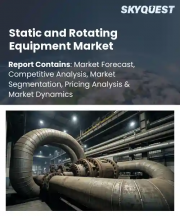
정적 및 회전 장비 시장 - 세계 산업 규모, 점유율, 동향, 기회, 예측 : 유형별, 용도별, 장소별, 지역별&경쟁(2021-2031년)Static and Rotating Equipment Market - Global Industry Size, Share, Trends, Opportunity, and Forecast, Segmented By Type, By Application, By Location, By Region & Competition, 2021-2031F |
||||||

세계의 정적 및 회전 장비 시장은 2025년 362억 7,000만 달러에서 2031년까지 516억 5,000만 달러로 확대되어 CAGR 6.07%를 기록할 것으로 예측됩니다. 이 시장은 열교환기, 보일러, 보일러, 압력용기, 밸브 등의 고정설비부터 터빈, 컴프레서, 펌프 등의 동적인 장비에 이르기까지 다양한 산업기계로 구성되어 있습니다. 주요 성장 요인으로는 신흥국의 급속한 산업화와 세계 에너지 수요 증가를 들 수 있으며, 이에 따라 석유 및 가스, 발전 분야에서 인프라의 대폭적인 확충이 요구되고 있습니다. 또한, 엄격한 환경 규제로 인해 노후화된 시설을 최신 에너지 절약 시스템으로 교체해야 할 필요성이 높아지면서 수요를 더욱 뒷받침하고 있습니다.
| 시장 개요 | |
|---|---|
| 예측 기간 | 2027-2031년 |
| 시장 규모 : 2025년 | 362억 7,000만 달러 |
| 시장 규모 : 2031년 | 516억 5,000만 달러 |
| CAGR : 2026-2031년 | 6.07% |
| 가장 성장이 현저한 부문 | Upstream 부문 |
| 최대 시장 | 북미 |
그러나 계속되는 지정학적 불안정성과 경제의 변동성으로 인해 시장 성장에 잠재적인 장벽이 존재합니다. 이로 인해 원자재 가격 변동과 설비투자 연기가 빈번하게 발생하고 있습니다. 이러한 불확실성은 제조업의 생산을 억제하고 중공업의 대규모 조달 능력을 제한할 수 있습니다. 예를 들어, VDMA의 보고서에 따르면, 2024년 전 세계적으로 약 3조 2,600억 유로 상당의 기계 및 장비가 생산되었는데, 이는 유로화로 환산하면 전년 대비 1.5% 감소한 수치입니다. 이러한 세계 생산량 감소는 이러한 경제적 문제가 기계 산업 전반에 미치는 악영향을 잘 보여주고 있습니다.
시장 성장 촉진요인
세계 에너지 수요와 발전 수요 증가는 정적 및 회전 장비 시장 구조를 근본적으로 변화시키고 있습니다. 각국이 지속가능한 에너지원으로의 전환을 추진하면서 안정적인 전력 공급을 확보하기 위해 발전기, 터빈, 변압기 조달량이 눈에 띄게 증가하고 있습니다. 이러한 추세는 특히 재생에너지 그리드 통합에서 두드러지며, 간헐적인 전력 부하를 관리하기 위해 종합적인 인프라 업데이트가 필요합니다. 2024년 6월 국제에너지기구(IEA)가 발표한 'World Energy Investment 2024' 보고서에 따르면, 2024년 세계 에너지 투자 규모는 처음으로 3조 달러를 넘어설 것으로 예상되며, 이 중 약 2조 달러가 청정에너지 기술에 투자될 것으로 전망하고 있습니다. 발전 시설을 위한 첨단 기계설비 도입을 직접적으로 촉진하고 있습니다.
동시에 석유 및 가스 업스트림 및 하류 사업의 성장이 시장 확대를 촉진하고 대형 압축기, 펌프 및 압력 용기에 대한 수요를 자극하고 있습니다. 탐사 사업에서는 복잡한 채굴 작업을 견딜 수 있는 내구성 높은 회전 장비가 필요한 반면, 다운스트림 정제 사업에서는 화학적 처리를 위한 정적 구성품이 필수적입니다. 2024년 9월에 발표된 OPEC의 'World Oil Outlook 2024'에 따르면, 미래 수요를 충족시키기 위해 세계 석유 부문은 2024년부터 2050년까지 총 17조 4,000억 달러의 투자가 필요합니다. 이러한 투자 사이클은 종종 석유화학 부문의 생산능력 확대와 연동되어 있습니다. 미국화학공업협회(ACC)의 '2024년 반기 현황 및 전망'에 따르면, 2024년 미국 화학산업의 설비투자가 2.3% 증가할 것으로 예상되며, 이러한 생산 체인에서 산업용 하드웨어가 차지하는 필수적인 역할이 부각되고 있습니다.
시장의 과제
계속되는 지정학적 불안정성과 경제의 변동성은 세계 정적 및 회전 장비 시장의 성장에 심각한 장애물이 되고 있습니다. 이러한 불확실성은 예측할 수 없는 원자재 가격 변동으로 인해 공급망에 혼란을 야기하고, 장기 제조 계약의 가격 책정 모델을 복잡하게 만들고 있습니다. 또한, 이러한 불안정성으로 인해 전력, 석유, 가스 부문의 주요 이해관계자들은 중요한 설비투자 결정을 연기하거나 중단할 수밖에 없는 상황에 처해 있습니다. 정적/회전식 장비는 막대한 선투자가 필요하기 때문에 인프라 개발에 대한 소극적인 태도는 압축기, 밸브, 펌프 제조업체의 수주량 감소와 직결됩니다.
이러한 투자에 대한 신중한 태도가 가져온 영향은 최근 업계 통계에 잘 나타나 있습니다. 2024년 VDMA의 데이터에 따르면, 기계공학 부문의 수주량은 전년 대비 8% 감소했습니다. 이러한 감소는 기업들이 자산 확대보다 유동성 유지를 우선시하는 가운데, 세계 조달 활동이 뚜렷하게 둔화되고 있음을 보여줍니다. 그 결과, 시장은 침체기에 접어들었고, 신규 프로젝트 부족으로 인해 전 세계 장비 공급업체들의 수익 기회가 제한되고 있습니다.
시장 동향
AI를 활용한 예지보전 전략의 도입은 고정자산과 회전자산의 운영 라이프사이클을 근본적으로 변화시키고 있습니다. 산업 운영자들은 머신러닝 알고리즘을 활용하여 온도, 진동, 압력 데이터를 실시간으로 모니터링하여 치명적인 고장을 예방하고 유지보수 일정을 최적화하는 데 점점 더 많은 노력을 기울이고 있습니다. 이러한 전환을 통해 업계는 사후 대응적 수리에서 예방적 자산 관리로 전환하여 중요한 발전소 및 정유시설의 예기치 않은 가동 중단 시간을 크게 줄이고 고가의 기계 수명을 연장하고 있습니다. 로크웰 오토메이션은 2024년 4월 '스마트 제조 현황 보고서'에서 제조업체의 83%가 2024년 중 생성형 AI를 업무에 도입할 것으로 전망하며, 산업 현장의 계산 지능이 빠르게 확산될 것으로 내다봤다.
동시에 탄소 포집 및 수소 이용에 대응하는 장비의 개발은 엄격한 탈탄소화 요구 사항에 의해 촉진된 중요한 기술적 진화를 상징합니다. 제조업체들은 수소 취성 및 고압 이산화탄소 주입과 같은 특정 과제를 견딜 수 있도록 터빈, 압축기 및 압력 용기를 재설계하고 있습니다. 이러한 추세는 새로운 그린 에너지 네트워크 내에서 효율성과 안전성을 보장하기 위해 특수 씰링 시스템 및 고급 합금 구성의 도입을 요구하고 있습니다. 2024년 9월에 발표된 수소위원회(Hydrogen Council)의 보고서 'Hydrogen Insights 2024'에 따르면, 2024년 최종 투자 결정(FID) 단계에 도달한 청정 수소 프로젝트에 대한 확정 투자 금액은 750억 달러에 달할 것으로 예측됩니다. 를 뒷받침할 막대한 자본이 있음을 강조하고 있습니다.
자주 묻는 질문
목차
제1장 개요
제2장 조사 방법
제3장 주요 요약
제4장 고객의 소리
제5장 세계의 정적 및 회전 장비 시장 전망
제6장 북미의 정적 및 회전 장비 시장 전망
제7장 유럽의 정적 및 회전 장비 시장 전망
제8장 아시아태평양의 정적 및 회전 장비 시장 전망
제9장 중동 및 아프리카의 정적 및 회전 장비 시장 전망
제10장 남미의 정적 및 회전 장비 시장 전망
제11장 시장 역학
제12장 시장 동향과 발전
제13장 세계의 정적 및 회전 장비 시장 : SWOT 분석
제14장 Porter의 Five Forces 분석
제15장 경쟁 구도
제16장 전략적 제안
제17장 회사 소개 및 면책조항
LSH 26.06.16The Global Static and Rotating Equipment Market is projected to expand from USD 36.27 Billion in 2025 to USD 51.65 Billion by 2031, registering a CAGR of 6.07%. This market comprises a diverse array of industrial machinery, categorized into stationary units like heat exchangers, boilers, pressure vessels, and valves, as well as dynamic apparatus such as turbines, compressors, and pumps. Key growth factors include rapid industrialization within emerging nations and escalating global energy requirements, which demand significant infrastructure enhancements in the oil and gas and power generation sectors. Additionally, stringent environmental regulations are driving the need to retrofit aging facilities with modern, energy-efficient systems, further sustaining demand.
| Market Overview | |
|---|---|
| Forecast Period | 2027-2031 |
| Market Size 2025 | USD 36.27 Billion |
| Market Size 2031 | USD 51.65 Billion |
| CAGR 2026-2031 | 6.07% |
| Fastest Growing Segment | Upstream |
| Largest Market | North America |
However, market growth faces potential hurdles due to ongoing geopolitical instability and economic volatility, which frequently cause fluctuations in raw material prices and postponements in capital investment. Such uncertainty can stifle manufacturing output and limit heavy industries' capacity for large-scale procurement. For instance, VDMA reported that machines and equipment worth approximately €3.26 trillion were manufactured globally in 2024, marking a 1.5 percent decline in euro terms from the previous year. This reduction in global production value underscores the negative influence of these economic challenges on the wider machinery sector.
Market Driver
Rising global energy needs and power generation demands are fundamentally transforming the static and rotating equipment landscape. As nations aim to ensure reliable electricity access while shifting toward sustainable energy sources, there is a marked increase in the procurement of generators, turbines, and transformers. This trend is especially prominent in the integration of renewable energy grids, necessitating comprehensive infrastructure updates to manage intermittent power loads. According to the International Energy Agency's (IEA) 'World Energy Investment 2024' report released in June 2024, global energy investment is anticipated to surpass USD 3 trillion for the first time in 2024, with roughly USD 2 trillion dedicated to clean energy technologies, directly fueling the deployment of advanced machinery for power facilities.
Concurrently, the growth of upstream and downstream oil and gas operations reinforces market expansion, spurring demand for heavy-duty compressors, pumps, and pressure vessels. Exploration initiatives require durable rotating equipment for complex extraction tasks, while downstream refining relies on static components for chemical processing. OPEC's 'World Oil Outlook 2024' from September 2024 indicates the global oil sector needs a cumulative investment of USD 17.4 trillion between 2024 and 2050 to satisfy future demand. This investment cycle often aligns with petrochemical sector capacity growth, where the American Chemistry Council's 'Mid-Year 2024 Situation & Outlook' projected a 2.3% rise in U.S. chemical industry capital spending in 2024, highlighting the essential role of industrial hardware in these production chains.
Market Challenge
Ongoing geopolitical instability and economic volatility pose significant obstacles to the growth of the Global Static and Rotating Equipment Market. These uncertainties disrupt supply chains by inducing unpredictable raw material price swings, thereby complicating pricing models for long-duration manufacturing agreements. Furthermore, such instability forces major stakeholders in the power, oil, and gas sectors to postpone or halt crucial capital investment decisions. Because static and rotating equipment necessitate substantial upfront expenditures, any reluctance regarding infrastructure development results directly in diminished order volumes for manufacturers of compressors, valves, and pumps.
The consequences of this hesitant investment environment are clearly reflected in recent industry statistics. As per VDMA data from 2024, incoming orders in the mechanical engineering sector fell by 8 percent in real terms compared to the previous year. This drop illustrates a distinct deceleration in global procurement activities as enterprises prioritize liquidity preservation over asset expansion. Consequently, the market is encountering a period of stagnation where a scarcity of new projects limits revenue opportunities for equipment suppliers around the world.
Market Trends
The adoption of AI-driven predictive maintenance strategies is radically changing the operational lifecycle of static and rotating assets. Industrial operators are increasingly utilizing machine learning algorithms to monitor temperature, vibration, and pressure data in real-time, which helps avert catastrophic failures and refine maintenance timetables. This transition shifts the industry from reactive repairs to prescriptive asset management, drastically lowering unplanned downtime in essential power plants and refineries while prolonging the lifespan of costly machinery. In its 'State of Smart Manufacturing Report' from April 2024, Rockwell Automation noted that 83% of manufacturers expected to incorporate generative AI into their operations in 2024, demonstrating the swift uptake of computational intelligence in industrial settings.
Simultaneously, the development of equipment compatible with carbon capture and hydrogen applications marks a vital technological evolution spurred by strict decarbonization requirements. Manufacturers are redesigning turbines, compressors, and pressure vessels to withstand specific challenges such as hydrogen embrittlement and high-pressure carbon dioxide injection. This trend requires the implementation of specialized sealing systems and advanced alloy compositions to guarantee efficiency and safety within emerging green energy networks. According to the Hydrogen Council's 'Hydrogen Insights 2024' report released in September 2024, committed investment in clean hydrogen projects reaching the final investment decision phase rose to USD 75 billion in 2024, highlighting the significant capital supporting this specialized infrastructure.
Key Market Players
- TechnipFMC plc
- Alfa Laval AB
- Atlas Copco AB
- Siemens AG
- Metso Outotec Oyj
- Sulzer Ltd.
- Pentair plc
- Flowserve Corporation
- Mitsubishi Heavy Industries, Ltd.
- Doosan Heavy Industries & Construction Co., Ltd.
Report Scope
In this report, the Global Static and Rotating Equipment Market has been segmented into the following categories, in addition to the industry trends which have also been detailed below:
Static and Rotating Equipment Market, By Type
- Static Equipment
- Rotating Equipment
Static and Rotating Equipment Market, By Application
- Upstream
- Midstream
- Downstream
Static and Rotating Equipment Market, By Location
- Onshore
- Offshore
Static and Rotating Equipment Market, By Region
- North America
- United States
- Canada
- Mexico
- Europe
- France
- United Kingdom
- Italy
- Germany
- Spain
- Asia Pacific
- China
- India
- Japan
- Australia
- South Korea
- South America
- Brazil
- Argentina
- Colombia
- Middle East & Africa
- South Africa
- Saudi Arabia
- UAE
Competitive Landscape
Company Profiles: Detailed analysis of the major companies present in the Global Static and Rotating Equipment Market.
Available Customizations:
Global Static and Rotating Equipment Market report with the given market data, TechSci Research offers customizations according to a company's specific needs. The following customization options are available for the report:
Company Information
- Detailed analysis and profiling of additional market players (up to five).
Table of Contents
1. Product Overview
- 1.1. Market Definition
- 1.2. Scope of the Market
- 1.2.1. Markets Covered
- 1.2.2. Years Considered for Study
- 1.2.3. Key Market Segmentations
2. Research Methodology
- 2.1. Objective of the Study
- 2.2. Baseline Methodology
- 2.3. Key Industry Partners
- 2.4. Major Association and Secondary Sources
- 2.5. Forecasting Methodology
- 2.6. Data Triangulation & Validation
- 2.7. Assumptions and Limitations
3. Executive Summary
- 3.1. Overview of the Market
- 3.2. Overview of Key Market Segmentations
- 3.3. Overview of Key Market Players
- 3.4. Overview of Key Regions/Countries
- 3.5. Overview of Market Drivers, Challenges, Trends
4. Voice of Customer
5. Global Static and Rotating Equipment Market Outlook
- 5.1. Market Size & Forecast
- 5.1.1. By Value
- 5.2. Market Share & Forecast
- 5.2.1. By Type (Static Equipment, Rotating Equipment)
- 5.2.2. By Application (Upstream, Midstream, Downstream)
- 5.2.3. By Location (Onshore, Offshore)
- 5.2.4. By Region
- 5.2.5. By Company (2025)
- 5.3. Market Map
6. North America Static and Rotating Equipment Market Outlook
- 6.1. Market Size & Forecast
- 6.1.1. By Value
- 6.2. Market Share & Forecast
- 6.2.1. By Type
- 6.2.2. By Application
- 6.2.3. By Location
- 6.2.4. By Country
- 6.3. North America: Country Analysis
- 6.3.1. United States Static and Rotating Equipment Market Outlook
- 6.3.1.1. Market Size & Forecast
- 6.3.1.1.1. By Value
- 6.3.1.2. Market Share & Forecast
- 6.3.1.2.1. By Type
- 6.3.1.2.2. By Application
- 6.3.1.2.3. By Location
- 6.3.1.1. Market Size & Forecast
- 6.3.2. Canada Static and Rotating Equipment Market Outlook
- 6.3.2.1. Market Size & Forecast
- 6.3.2.1.1. By Value
- 6.3.2.2. Market Share & Forecast
- 6.3.2.2.1. By Type
- 6.3.2.2.2. By Application
- 6.3.2.2.3. By Location
- 6.3.2.1. Market Size & Forecast
- 6.3.3. Mexico Static and Rotating Equipment Market Outlook
- 6.3.3.1. Market Size & Forecast
- 6.3.3.1.1. By Value
- 6.3.3.2. Market Share & Forecast
- 6.3.3.2.1. By Type
- 6.3.3.2.2. By Application
- 6.3.3.2.3. By Location
- 6.3.3.1. Market Size & Forecast
- 6.3.1. United States Static and Rotating Equipment Market Outlook
7. Europe Static and Rotating Equipment Market Outlook
- 7.1. Market Size & Forecast
- 7.1.1. By Value
- 7.2. Market Share & Forecast
- 7.2.1. By Type
- 7.2.2. By Application
- 7.2.3. By Location
- 7.2.4. By Country
- 7.3. Europe: Country Analysis
- 7.3.1. Germany Static and Rotating Equipment Market Outlook
- 7.3.1.1. Market Size & Forecast
- 7.3.1.1.1. By Value
- 7.3.1.2. Market Share & Forecast
- 7.3.1.2.1. By Type
- 7.3.1.2.2. By Application
- 7.3.1.2.3. By Location
- 7.3.1.1. Market Size & Forecast
- 7.3.2. France Static and Rotating Equipment Market Outlook
- 7.3.2.1. Market Size & Forecast
- 7.3.2.1.1. By Value
- 7.3.2.2. Market Share & Forecast
- 7.3.2.2.1. By Type
- 7.3.2.2.2. By Application
- 7.3.2.2.3. By Location
- 7.3.2.1. Market Size & Forecast
- 7.3.3. United Kingdom Static and Rotating Equipment Market Outlook
- 7.3.3.1. Market Size & Forecast
- 7.3.3.1.1. By Value
- 7.3.3.2. Market Share & Forecast
- 7.3.3.2.1. By Type
- 7.3.3.2.2. By Application
- 7.3.3.2.3. By Location
- 7.3.3.1. Market Size & Forecast
- 7.3.4. Italy Static and Rotating Equipment Market Outlook
- 7.3.4.1. Market Size & Forecast
- 7.3.4.1.1. By Value
- 7.3.4.2. Market Share & Forecast
- 7.3.4.2.1. By Type
- 7.3.4.2.2. By Application
- 7.3.4.2.3. By Location
- 7.3.4.1. Market Size & Forecast
- 7.3.5. Spain Static and Rotating Equipment Market Outlook
- 7.3.5.1. Market Size & Forecast
- 7.3.5.1.1. By Value
- 7.3.5.2. Market Share & Forecast
- 7.3.5.2.1. By Type
- 7.3.5.2.2. By Application
- 7.3.5.2.3. By Location
- 7.3.5.1. Market Size & Forecast
- 7.3.1. Germany Static and Rotating Equipment Market Outlook
8. Asia Pacific Static and Rotating Equipment Market Outlook
- 8.1. Market Size & Forecast
- 8.1.1. By Value
- 8.2. Market Share & Forecast
- 8.2.1. By Type
- 8.2.2. By Application
- 8.2.3. By Location
- 8.2.4. By Country
- 8.3. Asia Pacific: Country Analysis
- 8.3.1. China Static and Rotating Equipment Market Outlook
- 8.3.1.1. Market Size & Forecast
- 8.3.1.1.1. By Value
- 8.3.1.2. Market Share & Forecast
- 8.3.1.2.1. By Type
- 8.3.1.2.2. By Application
- 8.3.1.2.3. By Location
- 8.3.1.1. Market Size & Forecast
- 8.3.2. India Static and Rotating Equipment Market Outlook
- 8.3.2.1. Market Size & Forecast
- 8.3.2.1.1. By Value
- 8.3.2.2. Market Share & Forecast
- 8.3.2.2.1. By Type
- 8.3.2.2.2. By Application
- 8.3.2.2.3. By Location
- 8.3.2.1. Market Size & Forecast
- 8.3.3. Japan Static and Rotating Equipment Market Outlook
- 8.3.3.1. Market Size & Forecast
- 8.3.3.1.1. By Value
- 8.3.3.2. Market Share & Forecast
- 8.3.3.2.1. By Type
- 8.3.3.2.2. By Application
- 8.3.3.2.3. By Location
- 8.3.3.1. Market Size & Forecast
- 8.3.4. South Korea Static and Rotating Equipment Market Outlook
- 8.3.4.1. Market Size & Forecast
- 8.3.4.1.1. By Value
- 8.3.4.2. Market Share & Forecast
- 8.3.4.2.1. By Type
- 8.3.4.2.2. By Application
- 8.3.4.2.3. By Location
- 8.3.4.1. Market Size & Forecast
- 8.3.5. Australia Static and Rotating Equipment Market Outlook
- 8.3.5.1. Market Size & Forecast
- 8.3.5.1.1. By Value
- 8.3.5.2. Market Share & Forecast
- 8.3.5.2.1. By Type
- 8.3.5.2.2. By Application
- 8.3.5.2.3. By Location
- 8.3.5.1. Market Size & Forecast
- 8.3.1. China Static and Rotating Equipment Market Outlook
9. Middle East & Africa Static and Rotating Equipment Market Outlook
- 9.1. Market Size & Forecast
- 9.1.1. By Value
- 9.2. Market Share & Forecast
- 9.2.1. By Type
- 9.2.2. By Application
- 9.2.3. By Location
- 9.2.4. By Country
- 9.3. Middle East & Africa: Country Analysis
- 9.3.1. Saudi Arabia Static and Rotating Equipment Market Outlook
- 9.3.1.1. Market Size & Forecast
- 9.3.1.1.1. By Value
- 9.3.1.2. Market Share & Forecast
- 9.3.1.2.1. By Type
- 9.3.1.2.2. By Application
- 9.3.1.2.3. By Location
- 9.3.1.1. Market Size & Forecast
- 9.3.2. UAE Static and Rotating Equipment Market Outlook
- 9.3.2.1. Market Size & Forecast
- 9.3.2.1.1. By Value
- 9.3.2.2. Market Share & Forecast
- 9.3.2.2.1. By Type
- 9.3.2.2.2. By Application
- 9.3.2.2.3. By Location
- 9.3.2.1. Market Size & Forecast
- 9.3.3. South Africa Static and Rotating Equipment Market Outlook
- 9.3.3.1. Market Size & Forecast
- 9.3.3.1.1. By Value
- 9.3.3.2. Market Share & Forecast
- 9.3.3.2.1. By Type
- 9.3.3.2.2. By Application
- 9.3.3.2.3. By Location
- 9.3.3.1. Market Size & Forecast
- 9.3.1. Saudi Arabia Static and Rotating Equipment Market Outlook
10. South America Static and Rotating Equipment Market Outlook
- 10.1. Market Size & Forecast
- 10.1.1. By Value
- 10.2. Market Share & Forecast
- 10.2.1. By Type
- 10.2.2. By Application
- 10.2.3. By Location
- 10.2.4. By Country
- 10.3. South America: Country Analysis
- 10.3.1. Brazil Static and Rotating Equipment Market Outlook
- 10.3.1.1. Market Size & Forecast
- 10.3.1.1.1. By Value
- 10.3.1.2. Market Share & Forecast
- 10.3.1.2.1. By Type
- 10.3.1.2.2. By Application
- 10.3.1.2.3. By Location
- 10.3.1.1. Market Size & Forecast
- 10.3.2. Colombia Static and Rotating Equipment Market Outlook
- 10.3.2.1. Market Size & Forecast
- 10.3.2.1.1. By Value
- 10.3.2.2. Market Share & Forecast
- 10.3.2.2.1. By Type
- 10.3.2.2.2. By Application
- 10.3.2.2.3. By Location
- 10.3.2.1. Market Size & Forecast
- 10.3.3. Argentina Static and Rotating Equipment Market Outlook
- 10.3.3.1. Market Size & Forecast
- 10.3.3.1.1. By Value
- 10.3.3.2. Market Share & Forecast
- 10.3.3.2.1. By Type
- 10.3.3.2.2. By Application
- 10.3.3.2.3. By Location
- 10.3.3.1. Market Size & Forecast
- 10.3.1. Brazil Static and Rotating Equipment Market Outlook
11. Market Dynamics
- 11.1. Drivers
- 11.2. Challenges
12. Market Trends & Developments
- 12.1. Merger & Acquisition (If Any)
- 12.2. Product Launches (If Any)
- 12.3. Recent Developments
13. Global Static and Rotating Equipment Market: SWOT Analysis
14. Porter's Five Forces Analysis
- 14.1. Competition in the Industry
- 14.2. Potential of New Entrants
- 14.3. Power of Suppliers
- 14.4. Power of Customers
- 14.5. Threat of Substitute Products
15. Competitive Landscape
- 15.1. TechnipFMC plc
- 15.1.1. Business Overview
- 15.1.2. Products & Services
- 15.1.3. Recent Developments
- 15.1.4. Key Personnel
- 15.1.5. SWOT Analysis
- 15.2. Alfa Laval AB
- 15.3. Atlas Copco AB
- 15.4. Siemens AG
- 15.5. Metso Outotec Oyj
- 15.6. Sulzer Ltd.
- 15.7. Pentair plc
- 15.8. Flowserve Corporation
- 15.9. Mitsubishi Heavy Industries, Ltd.
- 15.10. Doosan Heavy Industries & Construction Co., Ltd.