|
시장보고서
상품코드
1736744
맘모그래피 시스템 시장(제품 유형별, 기술별, 최종사용자별, 지역별) : 예측(2026-2032년)Mammography Systems Market By Product Type, Technology, End User, & Region for 2026-2032 |
||||||

맘모그래피 시스템 시장 평가(2026-2032)
유방암 발병률 증가로 조기 발견 및 검진의 필요성에 대한 인식이 높아지면서 유방촬영 시스템 시장의 성장을 견인하고 있습니다. 정기적인 유방암 검진을 지원하는 정부의 이니셔티브와 의료 정책, 그리고 신흥국의 의료 인프라 확대가 시장 성장을 가속화하고 있습니다. 또한, 유방암 조기 발견의 이점에 대한 대중의 인식이 높아지면서 예방적 의료 관행이 확산되고 있는 것도 시장 성장에 크게 기여하고 있습니다. 맘모그래피 시스템 시장은 2024년 24억 8,000만 달러의 매출을 돌파하고 2032년에는 45억 6,000만 달러에 달할 것으로 추정됩니다.
유방암의 조기 발견과 환자 예후를 개선하기 위한 기술 발전으로 인해 이 시장은 크게 성장하고 있습니다. 디지털 맘모그래피는 기존의 필름 기반 시스템을 대체하여 우수한 화질과 낮은 방사선 피폭선량으로 대체하고 있습니다. 디지털 유방 토모신세시스(Digital Breast Tomosynthesis)라고도 불리는 3D 유방촬영술의 도입으로 다층 촬영이 가능해져 고농도 유선조직의 이상 징후를 더 잘 감지할 수 있게 되었습니다. 이 시장은 2026-2032년 연평균 복합 성장률(CAGR) 7.90%를 보일 것으로 예측됩니다.
맘모그래피 시스템 시장 정의/개요
맘모그래피 시스템은 주로 유방암을 발견하기 위해 유방 조직의 상세한 이미지를 촬영하는 데 사용되는 진단 도구입니다. 이 시스템은 저선량 엑스레이를 사용하여 유방의 이미지를 생성하여 의료 전문가가 조직의 이상이나 변화를 식별할 수 있도록 합니다. 이 시스템은 유방암을 조기에 발견하여 치료 성적을 크게 향상시키는 검진과 진단 모두에 필수적입니다.
이 기술은 병원, 진단센터, 전문 클리닉에서 널리 사용되고 있습니다. 검사에서 유방을 두 개의 판으로 끼워 압박하고 X선을 조직에 조사했습니다. 생성된 이미지는 종양이나 다른 이상 징후가 있는지 분석됩니다. 이 분야의 발전으로 디지털 맘모그래피와 3D 맘모그래피가 도입되어 화질과 정확도가 향상되었으며, 특히 유선 조직이 밀집된 경우 더욱 효과적입니다.
유방촬영 시스템의 미래는 인공지능(AI)의 통합과 영상처리 기술의 강화 등 기술적 진보에 초점을 맞출 것으로 예상되며, AI 알고리즘은 영상의학과 전문의가 조기 유방암을 보다 정확하게 감지할 수 있도록 개발되고 있습니다.
유방암 검진에서 유방촬영 시스템 수요 증가에 기술 발전과 정부의 이니셔티브는 어떻게 기여하고 있는가?
디지털 맘모그래피와 3D 맘모그래피의 개발 등 기술 발전으로 유방암 검진의 정확성과 효율성이 향상되었습니다. 디지털 맘모그래피는 기존 필름 기반 시스템에 비해 더 높은 화질과 낮은 방사선 피폭량을 제공하며, 3D 맘모그래피(디지털 유방 토모신시스)의 도입으로 다층 촬영이 가능해져 고농도 유선조직의 이상 징후를 더 잘 감지할 수 있게 되었습니다. 이러한 기술 혁신은 의료진과 환자 모두에게 더욱 효과적이고 매력적인 맘모그래피 시스템을 제공합니다.
정부 이니셔티브는 정기적인 검진을 장려하고 조기 암 발견을 위한 유방촬영술의 사용을 지원하는 가이드라인을 제공함으로써 중요한 역할을 하고 있습니다. 공중보건 프로그램에는 특히 의료서비스가 부족한 지역에서 유방촬영술의 접근성을 높이기 위한 자금과 자원이 포함되는 경우가 많습니다. 이러한 정책은 정기적인 검진을 장려하고, 조기 발견율을 높이며, 첨단 유방 촬영 기술에 대한 수요를 촉진합니다.
새로운 유방 촬영 기술을 도입할 때 의료 서비스 제공업체가 직면하는 장애물은 무엇이며, 이러한 과제는 환자 결과와 시스템 성능에 어떤 영향을 미치는가?
의료 서비스 제공업체는 새로운 유방 촬영 기술을 도입할 때 몇 가지 장애물에 직면하게 되는데, 3D 유방 조영술과 같은 첨단 맘모그래피 시스템은 구매, 설치 및 유지 보수에 많은 자금이 필요하기 때문에 고비용이 큰 문제입니다. 이러한 높은 비용은 특히 자금이 부족한 의료 환경이나 지방 의료 환경에서는 이러한 기술의 활용을 제한할 수 있습니다.
교육 및 전문 지식도 중요한 문제입니다. 새로운 기술은 정확한 사용과 결과 해석을 보장하기 위해 영상의학과 전문의와 기술자에게 추가 교육이 필요한 경우가 많습니다. 교육이 충분하지 않으면 성능이 최적화되지 않아 진단 정확도에 영향을 미칠 수 있습니다. 기존 시스템과의 통합도 문제입니다. 새로운 유방촬영 시스템은 전자건강기록(EHR), 영상진단 시스템 등 기존 의료 IT 인프라와의 호환성이 필요합니다. 통합 문제는 효과적인 환자 진료에 필수적인 원활한 워크플로우와 데이터 관리를 방해할 수 있습니다.
환자의 편안함과 접근성은 첨단 기술의 도입으로 인해 영향을 받을 수 있습니다. 새로운 시스템은 더 나은 영상 진단을 제공하지만, 환자의 편안함과 접근성에 영향을 미칠 수 있는 더 긴 시술이나 추가 절차가 필요할 수 있습니다.
목차
제1장 세계의 맘모그래피 시스템 시장 : 서론
- 시장 개요
- 분석 범위
- 전제조건
제2장 주요 요약
제3장 VERIFIED MARKET RESEARCH의 분석 방법
- 데이터 마이닝
- 밸리데이션
- 1차 자료
- 데이터 소스 리스트
제4장 세계의 맘모그래피 시스템 시장 전망
- 개요
- 시장 역학
- 성장 촉진요인
- 성장 억제요인
- 기회
- Porter's Five Forces 모델
- 밸류체인 분석
제5장 세계의 맘모그래피 시스템 시장 : 기술별
- 개요
- 스크린 필름 맘모그래피
- 디지털 맘모그래피
- 3D 맘모그래피
제6장 세계의 맘모그래피 시스템 시장 : 제품 유형별
- 개요
- 배경 조사 디지털 맘모그래피
- 아날로그 맘모그래피 시스템
- 유방 토모신테시스 시스템
제7장 세계의 맘모그래피 시스템 시장 : 최종사용자별
- 개요
- 병원
- 진단센터
- 전문 클리닉
제8장 세계의 맘모그래피 시스템 시장 : 지역별
- 개요
- 북미
- 미국
- 캐나다
- 멕시코
- 유럽
- 독일
- 영국
- 프랑스
- 기타 유럽
- 아시아태평양
- 중국
- 일본
- 인도
- 기타 아시아태평양
- 기타 지역(ROW)
- 라틴아메리카
- 중동 및 아프리카
제9장 세계의 맘모그래피 시스템 시장 경쟁 구도
- 개요
- 기업의 시장 순위
- 주요 발전 전략
제10장 기업 개요
- Philips N.V
- General Electric Company
- Analogic Corporation
- Carestream Health Inc.
- Fujifilm Holdings Corporation
- Delphinus Medical Technologies
- Hologic Inc
- Planmed Oy
- IMS Giotto S.P.A
- Konica Minolta Inc
제11장 기업 개요 : 부록
- 관련 분석
Mammography Systems Market Valuation - 2026-2032
The rising prevalence of breast cancer is increasing awareness and the need for early detection and screening, driving growth in the mammography systems market. Government initiatives and healthcare policies supporting routine mammograms, together with the expansion of healthcare infrastructure in emerging nations, have accelerated market growth. Furthermore, greater public awareness of the benefits of early breast cancer detection, as well as increased adoption of preventative healthcare practices, all contribute considerably to market growth. The mammography systems market is estimated to surpass a revenue of USD 2.48 Billion in 2024 and reach USD 4.56 Billion by 2032.
The market has experienced substantial growth, driven by technological advancements aimed at improving early breast cancer detection and patient outcomes. Digital mammography has largely replaced traditional film-based systems, offering superior image quality and reduced radiation exposure. The introduction of 3D mammography, also known as digital breast tomosynthesis, allows for multi-layered imaging, enhancing the detection of abnormalities in dense breast tissue. The market is anticipated to grow at a CAGR of 7.90% from 2026 to 2032.
Mammography Systems Market: Definition/ Overview
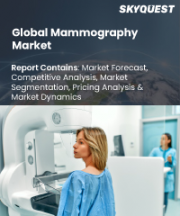
Mammography systems are diagnostic tools used to capture detailed images of breast tissue, primarily for the detection of breast cancer. These systems use low-dose X-rays to produce images of the breast, enabling healthcare professionals to identify abnormalities or changes in the tissue. The systems are essential in both screening and diagnostic procedures, where early detection of breast cancer significantly improves treatment outcomes.
The technology is widely employed in hospitals, diagnostic centers, and specialized clinics. During the procedure, the breast is compressed between two plates, and X-rays are passed through the tissue. The images produced are analyzed for signs of tumors or other irregularities. Advances in the field have introduced digital and 3D mammography, which offer improved image quality and accuracy, especially in dense breast tissue.
The future of mammography systems is anticipated to focus on further technological advancements, such as artificial intelligence (AI) integration and enhanced imaging techniques. AI algorithms are being developed to assist radiologists in detecting early-stage breast cancer with greater precision.
How Do Technological Advancements and Government Initiatives Contribute to the Increasing Demand for Mammography Systems in Breast Cancer Detection?
Technological advancements such as the development of digital mammography and 3D mammography have improved the accuracy and efficiency of breast cancer detection. Digital mammography offers higher image quality and lower radiation exposure compared to traditional film-based systems. The introduction of 3D mammography, or digital breast tomosynthesis, enables multi-layered imaging, which enhances the detection of abnormalities in dense breast tissue. These innovations have made mammography systems more effective and appealing for both healthcare providers and patients.
Government initiatives play a crucial role by promoting routine screening and providing guidelines that support the use of mammography for early cancer detection. Public health programs often include funding and resources to make mammography accessible, especially in underserved areas. Such policies encourage regular screenings, which increase early detection rates and drive demand for advanced mammography technologies.
What Obstacles do Healthcare Providers Encounter when Implementing New Mammography Technologies, and how do these Challenges Affect Patient Outcomes and System Performance?
Healthcare providers face several obstacles when implementing new mammography technologies, which can impact patient outcomes and system performance. High costs are a significant challenge, as advanced mammography systems, such as 3D mammography, require substantial financial investment for purchase, installation, and maintenance. This high cost can limit the availability of these technologies, particularly in underfunded or rural healthcare settings.
Training and expertise are also crucial issues. New technologies often necessitate additional training for radiologists and technicians to ensure accurate usage and interpretation of results. Insufficient training can lead to suboptimal performance and potentially affect diagnostic accuracy. Integration with existing systems poses another challenge. New mammography systems need to be compatible with existing healthcare IT infrastructure, including electronic health records (EHRs) and imaging systems. Integration issues can hinder the seamless workflow and data management essential for effective patient care.
Patient comfort and access can be affected by the introduction of advanced technologies. While new systems offer better imaging, they may also require longer procedures or additional steps that impact patient comfort and accessibility.
Category-Wise Acumens
What are the Key Advantages of Full-Field Digital Mammography over Analog Mammography Systems in Breast Cancer Detection?
Full-field mammography segment significantly dominates the mammography systems market. Full-field digital mammography (FFDM) provides significant advantages over Analog Mammography Systems in breast cancer detection. FFDM offers superior image quality with higher resolution and greater detail, enabling better visualization of small or subtle abnormalities. This enhanced clarity improves diagnostic accuracy. FFDM typically requires lower radiation doses, reducing patient exposure while still maintaining effective screening results. The faster image acquisition and processing times associated with digital systems enhance efficiency, reducing the time patients spend in imaging and allowing for quicker diagnosis.
The digital images can be easily manipulated, such as adjusting contrast and brightness, which assists radiologists in detecting and analyzing potential issues more effectively. These benefits collectively make FFDM a more advanced and effective tool for breast cancer detection compared to traditional analog mammography systems.
What Factors Influence the Choice of Mammography Systems in Diagnostic Centers Compared to Hospitals, and how do these Factors Affect their Implementation and Patient Outcomes?
The choice of mammography systems in diagnostic centers compared to hospitals is influenced by various factors affecting their implementation and patient outcomes. Cost and budget constraints often drive diagnostic centers to select cost-effective systems that provide a balance between quality and affordability. In contrast, hospitals with larger budgets might invest in the latest advanced technologies, such as 3D mammography systems, to offer comprehensive services. The volume of patients plays a role; hospitals, managing higher patient loads, may require high-capacity systems for efficiency, while diagnostic centers, which focus on specialized screenings, might choose high-resolution systems for detailed analysis.
Space and infrastructure are also considerations, with diagnostic centers opting for more compact or versatile systems due to limited space, whereas hospitals can accommodate larger systems and integrate them into extensive imaging departments. Finally, diagnostic centers may prioritize state-of-the-art technologies due to their specialization in mammography, while hospitals integrate mammography with a broader range of diagnostic modalities.
What Factors Contribute to North America's Leadership In the Mammography Systems Market, and how do these Factors Influence the Adoption of Advanced Technologies In the Region?
North America significantly dominates the mammography systems and it is expected to maintain throughout the forecast period driven by the United States, the largest economy in North America, which generates the majority of the market's revenue. High healthcare spending in countries like the United States and Canada supports the acquisition of advanced mammography systems and funds comprehensive screening programs. The region's well-established healthcare infrastructure, including state-of-the-art medical facilities, is well-equipped to integrate and utilize advanced technologies such as digital and 3D mammography.
Government initiatives also play a crucial role in robust public health campaigns and policies promoting early breast cancer detection driving demand for advanced systems. North America is a leader in technological innovation, being at the forefront of developing and implementing cutting-edge mammography technologies that enhance diagnostic accuracy and patient outcomes. These factors together ensure that North America remains a global leader in the mammography systems market, influencing both technology adoption and market expansion.
How is the Adoption of Mammography Systems Evolving in the Asia-Pacific Region?
The Asia-Pacific region is anticipated to experience the fastest growth in the mammography systems market during the forecast period driven by rapid economic growth in countries is leading to increased healthcare investment, which supports the procurement of advanced medical technologies, including mammography systems. The expansion of healthcare infrastructure and the development of new healthcare facilities are making sophisticated diagnostic tools more accessible. Government initiatives aimed at improving cancer screening and early detection, particularly in emerging economies, are also driving market growth. Public health campaigns and increased awareness about breast cancer are contributing to higher demand for mammography services.
The partnerships between international companies and local healthcare providers are facilitating the introduction and expansion of advanced mammography technologies in the region. These collaborative efforts help address disparities in access to quality screening services and support the implementation of digital and 3D mammography systems. The Asia-Pacific region is experiencing a notable increase in the adoption of mammography systems, driven by economic development, healthcare expansion, and a growing emphasis on early cancer detection.
Competitive Landscape
The competitive landscape of the Mammography Systems Market is dynamic and constantly evolving. New players are entering the market, and existing players are investing in research and development to maintain their competitive edge. The market is characterized by intense competition, rapid technological advancements, and a growing demand for innovative and efficient solutions.
The organizations are focusing on innovating their product line to serve the vast population in diverse regions. Some of the prominent players operating in the mammography systems market include:
- Philips N.V.
- General Electric Company
- Analogic Corporation
- Carestream Health, Inc.
- Planmed Oy
- Delphinus Medical Technologies
- Fujifilm Holdings Corporation
- Hologic, Inc.
- IMS Giotto S.P.A
- Konica Minolta Inc.
Latest Developments
- In April 2024, Hologic Inc. has announced its acquisition of Endomag, a breast care company, for $310 million. This acquisition aims to expand Hologic's breast surgery portfolio with Endomag's technologies, including the Magseed marker for magnetic tissue localization, Magtrace injectable for lymphatic tracing in breast cancer staging, and the Sentimag platform. These additions will enhance options for surgeons and radiologists, catering to the specific needs of patients undergoing critical breast cancer procedures.
- In December 2024, Lunit, a medical AI company, has agreed to acquire Volpara Health Technologies, based in New Zealand and known for its AI-powered software for early detection of breast cancer.
Mammography Systems Market, By Category
- Product Type:
- Full-Field Digital Mammography
- Analog Mammography Systems
- Breast Tomosynthesis Systems
- Technology:
- Screen-Film Mammography
- Digital Mammography
3D Mammography
- End-User:
- Hospitals
- Diagnostic Centers
- Specialty Clinics
- Region:
- North America
- Europe
- Asia-Pacific
- Latin America
- Middle East & Africa
TABLE OF CONTENTS
1 INTRODUCTION OF GLOBAL MAMMOGRAPHY SYSTEMS MARKET
- 1.1 Overview of the Market
- 1.2 Scope of Report
- 1.3 Assumptions
2 EXECUTIVE SUMMARY
3 RESEARCH METHODOLOGY OF VERIFIED MARKET RESEARCH
- 3.1 Data Mining
- 3.2 Validation
- 3.3 Primary Interviews
- 3.4 List of Data Sources
4 GLOBAL MAMMOGRAPHY SYSTEMS OUTLOOK
- 4.1 Overview
- 4.2 Market Dynamics
- 4.2.1 Drivers
- 4.2.2 Restraints
- 4.2.3 Opportunities
- 4.3 Porters Five Force Model
- 4.4 Value Chain Analysis
5 GLOBAL MAMMOGRAPHY SYSTEMS MARKET, BY TECHNOLOGY
- 5.1 Overview
- 5.2 Screen-Film Mammography
- 5.3 Digital Mammography
- 5.4 3D Mammography
6 GLOBAL MAMMOGRAPHY SYSTEMS MARKET, BY PRODUCT TYPE
- 6.1 Overview
- 6.2 Full-Field Digital Mammography
- 6.3 Analog Mammography Systems
- 6.4 Breast Tomosynthesis Systems
7 GLOBAL MAMMOGRAPHY SYSTEMS MARKET, BY END USER
- 7.1 Overview
- 7.2 Hospitals
- 7.3 Diagnostic Centers
- 7.4 Specialty Clinics
8 GLOBAL MAMMOGRAPHY SYSTEMS MARKET, BY GEOGRAPHY
- 8.1 Overview
- 8.2 North America
- 8.2.1 U.S.
- 8.2.2 Canada
- 8.2.3 Mexico
- 8.3 Europe
- 8.3.1 Germany
- 8.3.2 U.K.
- 8.3.3 France
- 8.3.4 Rest of Europe
- 8.4 Asia Pacific
- 8.4.1 China
- 8.4.2 Japan
- 8.4.3 India
- 8.4.4 Rest of Asia Pacific
- 8.5 Rest of the World
- 8.5.1 Latin America
- 8.5.2 Middle East and Africa
9 GLOBAL MAMMOGRAPHY SYSTEMS MARKET COMPETITIVE LANDSCAPE
- 9.1 Overview
- 9.2 Company Market Ranking
- 9.3 Key Development Strategies
10 COMPANY PROFILES
- 10.1 Philips N.V
- 10.1.1 Overview
- 10.1.2 Financial Performance
- 10.1.3 Product Outlook
- 10.1.4 Key Developments
- 10.2 General Electric Company
- 10.2.1 Overview
- 10.2.2 Financial Performance
- 10.2.3 Product Outlook
- 10.2.4 Key Developments
- 10.3 Analogic Corporation
- 10.3.1 Overview
- 10.3.2 Financial Performance
- 10.3.3 Product Outlook
- 10.3.4 Key Developments
- 10.4 Carestream Health Inc.
- 10.4.1 Overview
- 10.4.2 Financial Performance
- 10.4.3 Product Outlook
- 10.4.4 Key Developments
- 10.5 Fujifilm Holdings Corporation
- 10.5.1 Overview
- 10.5.2 Financial Performance
- 10.5.3 Product Outlook
- 10.5.4 Key Developments
- 10.6 Delphinus Medical Technologies
- 10.6.1 Overview
- 10.6.2 Financial Performance
- 10.6.3 Product Outlook
- 10.6.4 Key Developments
- 10.7 Hologic Inc
- 10.7.1 Overview
- 10.7.2 Financial Performance
- 10.7.3 Product Outlook
- 10.7.4 Key Developments
- 10.8 Planmed Oy
- 10.8.1 Overview
- 10.8.2 Financial Performance
- 10.8.3 Product Outlook
- 10.8.4 Key Developments
- 10.9 IMS Giotto S.P.A
- 10.9.1 Overview
- 10.9.2 Financial Performance
- 10.9.3 Product Outlook
- 10.9.4 Key Developments
- 10.10 Konica Minolta Inc
- 10.10.1 Overview
- 10.10.2 Financial Performance
- 10.10.3 Product Outlook
- 10.10.4 Key Developments
11 Appendix
- 11.1 Related Research