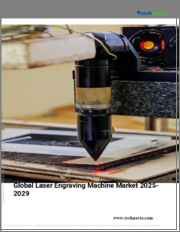
|
시장보고서
상품코드
2037888
3D 레이저 조각기 시장 : 규모, 레이저 유형별, 용도별, 최종 사용 산업별, 지역별 예측3D Laser Engraving Machine Market Size By Laser Type, By Application, By End-User Industry, By Geographic Scope and Forecast |
||||||

세계의 3D 레이저 조각기 시장 규모 및 예측
3D 레이저 조각기 시장 규모는 2025년에 12억 달러로 중요 수준에 이르렀고, 2027년부터 2033년까지 예측 기간 중 CAGR 10.5%로 견실한 성장이 전망되고 있습니다. 기업 전체에서의 정밀 제조나 커스터마이즈 용도 채택 확대로 방침이, 산업 분야 및 소비자 분야 3D 레이저 조각기 수요를 촉진 있어, 이것이 큰 성장 주요 촉진요인되고 있습니다. 시장 규모는 2033년까지 26억 달러에 이를 것으로 예측되며, 경제 정세 전체에 큰 재평가를 시사하고 있습니다.
3D 레이저 조각기 시장은 CAGR 10.5%로 확대되어 2033년 말까지 26억 달러에 달할 것으로 예측됩니다.
세계 3D 레이저 조각기 시장 개요
3D 레이저 조각기는 복잡한 3차원 표면을 고정밀도로 조각할 수 있는 레이저 기반 시스템과 관련된 산업 장비의 특정 분야를 지칭하는 분류 용어입니다. 이 용어는 성능을 주장하는 것이 아니라 범위를 정의하는 라벨 역할을 하며, 레이저 광원 유형, 기계 구성, 조각 깊이 능력 및 산업 응용 분야에서의 위치에 따라 포함되는 것과 제외되는 것이 무엇인지 알려주는 역할을 합니다.
시장 조사에서 3D 레이저 조각기는 정밀 마킹, 표면 처리, 제품 커스터마이징, 부품 식별 등 유사한 기능적 의도를 가진 장비를 분류하는 표준화 된 범주로 취급됩니다. 이러한 접근 방식은 데이터 수집, 벤치마킹 및 장기적인 비교에서 제조 부문, 재료 유형, 지역 산업 기반에 관계없이 동일한 기계 클래스를 참조할 수 있도록 보장합니다.
3D 레이저 조각기 시장은 단기적인 생산량 급증보다는 정확성, 재현성, 비접촉 가공을 중시하는 제조업의 꾸준한 수요로 형성되고 있습니다. 구매자는 자동차, 전자, 항공우주, 의료기기, 고급품 등의 분야에 집중되어 있으며, 구매 결정은 일시적인 비용 변동이 아닌 조각 정확도, 다양한 재료 대응, 자동화와의 통합, 장기적인 운영 효율성에 의해 좌우됩니다.
수요 패턴은 급격한 가격 변동보다는 설비 투자 주기, 산업 자동화 동향, 제품 맞춤화 요구 사항과 밀접한 관련이 있기 때문에 가격 책정에는 레이저 광원 기술, 출력 용량, 소프트웨어 통합 및 제조 품질이 반영됩니다. 단기적으로는 스마트 제조, 미세조각 용도, 경량 소재 가공, 인더스트리 4.0 생산 시스템과의 통합 등의 트렌드가 예상되며, 이는 장비 시장 포지셔닝과 장기적인 도입에 대한 신뢰감을 형성할 것으로 보입니다.
세계 3D 레이저 조각기 시장 성장 촉진요인
정밀 제조 및 커스터마이징에 대한 수요 증가: 제조업체들은 금속, 플라스틱, 세라믹, 복합재료에 대한 고정밀 마킹과 복잡한 표면 조각을 위해 3D 레이저 조각기 도입을 확대되고 있습니다. 경쟁이 치열한 산업에서 제품 차별화와 추적성이 중요시되는 가운데, 레이저 조각은 비접촉식 마킹을 통해 재료의 왜곡을 최소화하면서 비접촉식으로 영구적인 마킹을 가능하게 합니다. 복잡한 3D 형상을 조각할 수 있는 능력은 자동차 부품, 전자기기 케이스, 의료기기, 고급 제품 등 다양한 분야 수요를 뒷받침하고 있습니다.
산업 자동화 및 스마트 제조의 확대 : 자동화 생산 환경으로의 전환으로 인해 3D 레이저 조각 시스템과 로봇 공학 및 디지털 생산 라인과의 통합이 가속화되고 있습니다. 이 기계는 CAD(컴퓨터 지원 설계) 소프트웨어 및 산업용 제어 시스템과 원활하게 연동되어 수작업의 개입을 줄이면서 재현성 있는 고속 조각을 실현합니다. 공장이 인더스트리 4.0의 틀에서 운영을 현대화함에 따라 레이저 조각 장비는 지능형 제조 인프라의 핵심 요소로 점점 더 많이 인식되고 있습니다.
제품 식별 및 규제 준수에 대한 요구 증가: 항공우주, 의료기기, 자동차 등 산업 전반에 걸쳐 추적성 기준이 강화되면서 내구성과 변조 방지 기능을 갖춘 마킹 솔루션에 대한 수요가 증가하고 있습니다. 3D 레이저 조각기는 제품 표면에 직접 영구 일련번호, 바코드, QR 코드 및 부품 데이터를 부여하여 품질 및 안전 규정 준수를 보장합니다. 이러한 장기적인 식별 기능을 통해 규제가 엄격한 제조 환경에서 그 역할이 강화되고 있습니다.
측정 가능한 효율성 향상 및 산업 분야에서의 보급 확대: 산업용 레이저 가공의 도입은 지난 몇 년 동안 약 1/3 증가하여 레이저 기반 제조 도구에 대한 광범위한 수용을 반영하고 있습니다. 이와 함께, 자동 레이저 조각 시스템은 사이클 시간을 단축하고 유지 보수 요구 사항을 줄임으로써 기존의 기계식 조각 방법에 비해 약 20%의 생산성 향상을 달성했습니다. 이러한 측정 가능한 성능상의 이점은 설비투자 의사결정을 촉진하고, 세계 시장의 지속적인 성장을 뒷받침하고 있습니다.
세계 3D 레이저 조각기 시장 성장 억제요인
높은 초기 투자 비용: 3D 레이저 조각기는 고급 레이저 광원, 정밀 광학, 모션 제어 시스템 및 통합 소프트웨어를 갖추고 있기 때문에 많은 초기 투자가 필요합니다. 특히 투자 회수가 생산 규모와 장기 가동률에 따라 달라지는 중소 제조업체의 경우, 이 자본 비용은 장벽이 될 수 있습니다.
기술적 복잡성과 숙련된 인력의 필요성: 3D 레이저 조각 시스템의 운영 및 유지 보수에는 레이저 보정, 재료 적합성, 설계 소프트웨어에 대한 지식을 갖춘 숙련된 인력이 필요합니다. 숙련된 기술자의 부족은 시스템의 최적 활용을 제한하고, 다운타임의 위험을 증가시키며, 기술 교육 인프라가 제한된 지역에서는 도입이 지연될 수 있습니다.
재료의 적합성 및 공정의 한계: 레이저 조각은 다양한 재료를 지원하지만 반사율, 두께, 열 감도의 차이가 조각의 품질과 효율에 영향을 미칠 수 있습니다. 특정 특수 소재의 경우 특정 유형의 레이저 또는 추가 설정이 필요할 수 있으며, 이는 작동을 복잡하게 만들고 모든 제조 환경에서 범용 적용을 제한할 수 있습니다.
유지보수 비용 및 부품 마모: 레이저 광원, 렌즈, 냉각 시스템 및 구동 부품은 조각 정확도를 유지하기 위해 정기적인 유지보수 및 교체가 필요합니다. 시간이 지남에 따라 이러한 운영 비용은 총 소유 비용에 추가됩니다. 대량 생산 환경에서 사업을 영위하는 기업에게 유지보수로 인한 다운타임과 소모품 교체는 생산성과 비용 효율성에 영향을 미칠 수 있습니다.
목차
제1장 서론
제2장 조사 방법
제3장 주요 요약
제4장 시장 전망
제5장 레이저 유형별
제6장 용도별
제7장 최종 사용 산업별
제8장 지역별
제9장 경쟁 구도
제10장 기업 개요
JHS 26.05.22Global 3D Laser Engraving Machine Market Size and Forecast
Market capitalization in the 3D laser engraving machine market had hit a significant point of USD 1.2 Billion in 2025, with a strong 10.5 % CAGR during the forecast period from 2027 to 2033. A company-wide policy growing adoption of precision manufacturing and customization applications is driving demand for 3D laser engraving machines across industrial and consumer sectors runs as the strong main driving factor for great growth. The market is projected to reach a figure of USD 2.6 Billion 2033, indicating a significant reassessment of the entire economic landscape.
3D Laser Engraving Machine Market to grow at a CAGR of 10.5 % & reach US$ 2.6 Billion by the end of 2033
Global 3D Laser Engraving Machine Market Overview
3D laser engraving machine is a classification term used to designate a specific area of industrial equipment associated with laser-based systems capable of engraving complex three-dimensional surfaces with high precision. The term functions as a scope-defining label rather than a performance claim, indicating what is included and excluded based on laser source type, machine configuration, engraving depth capability, and industrial application positioning.
In market research, 3D laser engraving machines are treated as a standardized category that aligns equipment with similar functional intent such as precision marking, surface structuring, product customization, and component identification. This approach ensures that data collection, benchmarking, and long-term comparisons refer to the same machinery class across manufacturing sectors, material types, and regional industrial bases.
The 3D laser engraving machine market is shaped by steady demand from manufacturing industries where accuracy, repeatability, and non-contact processing matter more than short-term production spikes. Buyers are concentrated in sectors such as automotive, electronics, aerospace, medical devices, and luxury goods, with purchasing decisions influenced by engraving precision, compatibility with diverse materials, automation integration, and long-term operational efficiency rather than temporary cost fluctuations.
With demand patterns linked to capital investment cycles, industrial automation trends, and product customization requirements rather than rapid price volatility, pricing reflects laser source technology, power capacity, software integration, and build quality. Near-term activity is expected to follow trends in smart manufacturing, micro-engraving applications, lightweight material processing, and integration with Industry 4.0 production systems that shape equipment positioning and long-term adoption confidence.
Global 3D Laser Engraving Machine Market Drivers
The market drivers for the 3D laser engraving machine market can be influenced by various factors. These may include:
Rising Demand for Precision Manufacturing and Customization: Manufacturers are increasingly adopting 3D laser engraving machines to achieve high-precision marking and complex surface engraving across metals, plastics, ceramics, and composites. As product differentiation and traceability become critical in competitive industries, laser engraving offers permanent, non-contact marking with minimal material distortion. The ability to engrave intricate 3D geometries supports demand across automotive components, electronics housings, medical devices, and luxury goods.
Expansion of Industrial Automation and Smart Manufacturing: The shift toward automated production environments is accelerating the integration of 3D laser engraving systems with robotics and digital production lines. These machines can be seamlessly connected to computer-aided design software and industrial control systems, enabling repeatable, high-speed engraving with reduced manual intervention. As factories modernize operations under Industry 4.0 frameworks, laser engraving equipment is increasingly viewed as a core part of intelligent manufacturing infrastructure.
Growing Need for Product Identification and Regulatory Compliance: Stricter traceability standards across industries such as aerospace, medical devices, and automotive are driving demand for durable and tamper-resistant marking solutions. 3D laser engraving machines provide permanent serial numbers, barcodes, QR codes, and component data directly on product surfaces, ensuring compliance with quality and safety regulations. This long-term identification capability strengthens their role in regulated manufacturing environments.
Measurable Efficiency Gains and Expanding Industrial Adoption: Industrial laser processing adoption has increased by roughly one-third over the past few years, reflecting broader acceptance of laser-based manufacturing tools. In parallel, automated laser engraving systems have demonstrated productivity improvements of around 20 percent compared to conventional mechanical engraving methods, driven by faster cycle times and reduced maintenance requirements. These measurable performance benefits reinforce capital investment decisions and support sustained global market growth.
Global 3D Laser Engraving Machine Market Restraints
Several factors act as restraints or challenges for the 3D laser engraving machine market. these may include:
High Initial Capital Investment: 3D laser engraving machines require significant upfront investment due to advanced laser sources, precision optics, motion control systems, and integrated software. For small and medium-sized manufacturers, the capital cost can be a barrier, particularly when return on investment depends on production scale and long-term utilization rates.
Technical Complexity and Skilled Labor Requirements: Operating and maintaining 3D laser engraving systems requires trained personnel with knowledge of laser calibration, material compatibility, and design software. A shortage of skilled technicians can limit optimal system use, increase downtime risks, and slow adoption in regions with limited technical training infrastructure.
Material Compatibility and Process Limitations: Although laser engraving supports a wide range of materials, variations in reflectivity, thickness, and thermal sensitivity can affect engraving quality and efficiency. Certain specialized materials may require specific laser types or additional configuration, increasing operational complexity and limiting universal application across all manufacturing environments.
Maintenance Costs and Component Wear: Laser sources, lenses, cooling systems, and motion components require periodic maintenance and replacement to maintain engraving precision. Over time, these operational expenses add to the total cost of ownership. For companies operating in high-volume production settings, maintenance downtime and consumable replacement can impact productivity and cost efficiency.
Global 3D Laser Engraving Machine Market Segmentation Analysis
The Global 3D Laser Engraving Machine Market is segmented based on Laser Type, Application, End-User Industry, and Geography.
3D Laser Engraving Machine Market, By Laser Type
In the 3D laser engraving machine market, product demand is led by laser technologies that balance precision, material compatibility, and operational efficiency. Fiber laser engraving machines are widely used for high-speed marking on metals and industrial components. CO2 laser engraving machines remain popular for non-metal materials and detailed surface engraving. Diode laser engraving machines occupy a smaller but growing space, particularly in compact and entry-level applications. The market dynamics for each type are broken down as follows:
Fiber Laser Engraving Machines: Fiber laser engraving machines are dominating the market, as they offer high precision, durability, and energy efficiency for engraving metals and hard materials. Their ability to deliver permanent, high-contrast markings at fast cycle times supports adoption in automotive, aerospace, and electronics manufacturing. Strong compatibility with automated production lines and low maintenance requirements sustain repeat industrial investment and long-term demand.
CO2 Laser Engraving Machines: CO2 laser engraving machines are witnessing steady growth within the market, driven by their effectiveness in processing non-metal materials such as wood, glass, leather, plastics, and acrylics. These machines are widely used in signage, packaging, decorative applications, and product customization. Their versatility and relatively lower system cost compared to high-power fiber systems support consistent demand across small and medium manufacturing environments.
Diode Laser Engraving Machines: Diode laser engraving machines maintain a smaller but expanding presence, as compact design and affordability appeal to small workshops, educational institutions, and light-duty industrial users. While they typically offer lower power and engraving depth compared to fiber and CO2 systems, improvements in beam control and software integration are strengthening their usability. Demand persists in applications where portability, cost efficiency, and moderate engraving precision are prioritized over heavy industrial throughput.
3D Laser Engraving Machine Market, By Application
In the 3D laser engraving machine market, product demand is led by applications that balance precision, production efficiency, and surface versatility. Industrial engraving accounts for the largest share due to its role in component marking and traceability. Jewelry engraving attracts users seeking intricate detailing and customization capabilities. Signage and decorative engraving remains a stable segment, driven by branding and creative applications. The market dynamics for each application are broken down as follows:
Industrial Engraving: Industrial engraving is dominating the market, as manufacturers require permanent, high-precision marking for serial numbers, barcodes, logos, and compliance labeling. Automotive, aerospace, electronics, and medical device industries rely on 3D laser systems for durable and tamper-resistant surface engraving. Integration with automated production lines and quality control systems supports repeat equipment investment and sustained demand across high-volume manufacturing environments.
Jewelry Engraving: Jewelry engraving is witnessing substantial growth within the market, driven by increasing demand for personalized and intricate designs on precious metals and gemstones. 3D laser engraving enables fine detailing, minimal material wastage, and high repeatability, which are critical in luxury and custom jewelry production. The ability to create complex patterns and customized inscriptions strengthens adoption among premium brands and independent designers.
Signage & Decorative Engraving: Signage and decorative engraving maintains a stable presence, as businesses and creative industries use 3D laser systems for branding, promotional displays, interior decor, and customized products. These machines allow engraving on diverse materials such as acrylic, wood, glass, and coated metals. While production volumes may vary based on commercial activity, steady demand for customized visual elements supports consistent market participation in this segment.
3D Laser Engraving Machine Market, By End-User Industry
In the 3D laser engraving machine market, product demand is led by industries that require permanent marking, precision detailing, and traceability across complex components. Automotive applications account for a significant share due to large-scale production and compliance labeling needs. Electronics manufacturers rely on high-precision micro-engraving for compact components. Aerospace demands durable and regulation-compliant marking, while consumer goods industries use engraving for branding and customization. The market dynamics for each end-user industry are broken down as follows:
Automotive: The automotive industry is dominating the market, as manufacturers require permanent identification markings for engine parts, chassis components, and safety systems. 3D laser engraving supports high-speed, non-contact marking with strong durability under heat and mechanical stress. Integration into automated production lines and strict traceability standards sustain consistent equipment demand across global automotive facilities.
Electronics: The electronics industry is witnessing substantial growth within the market, driven by the need for precise and compact marking on circuit boards, connectors, and micro-components. 3D laser engraving enables high-resolution detailing without damaging sensitive materials. As electronic devices become smaller and more complex, the requirement for accurate and permanent component labeling continues to expand.
Aerospace: Aerospace maintains a strong and specialized presence in the market, as components require tamper-resistant and regulation-compliant identification. 3D laser engraving machines provide deep, high-contrast markings that withstand extreme environmental conditions. Stringent safety standards and long product life cycles support steady adoption in aircraft manufacturing and maintenance operations.
Consumer Goods: The consumer goods industry shows stable demand, as brands use 3D laser engraving for product personalization, logo marking, and decorative detailing. Applications span household items, tools, fashion accessories, and premium goods. The increasing trend toward customized and branded products supports ongoing investment in flexible engraving solutions within this segment.
3D Laser Engraving Machine Market, By Geography
the 3D laser engraving machine market, North America and Europe show stable demand supported by advanced manufacturing infrastructure and strong adoption of industrial automation technologies. Asia Pacific leads in both production capacity and new equipment installations, driven by expanding manufacturing bases and export-oriented industries. Latin America remains smaller but shows increasing interest in industrial modernization and product customization. The Middle East and Africa rely on gradual industrial diversification and infrastructure development, making investment capacity and technical expertise important across the region. The market dynamics for each region are broken down as follows:
North America: North America dominates the 3D laser engraving machine market, as high levels of industrial automation and strict traceability standards support consistent equipment usage. Manufacturers prioritize precision marking, regulatory compliance, and integration with smart production systems. Established aerospace, automotive, and electronics industries reinforce steady capital investment and long-term machine adoption.
Europe: Europe is witnessing substantial growth in the 3D laser engraving machine market, driven by strong demand for high-precision engineering and compliance-oriented marking solutions. Emphasis on sustainable manufacturing, advanced machinery, and quality control standards encourages adoption across automotive and industrial sectors. Technological innovation and strong export activity support steady regional expansion.
Asia Pacific: Asia Pacific is witnessing the fastest expansion in the 3D laser engraving machine market, as large-scale manufacturing hubs and cost-competitive production environments drive high installation volumes. Rapid industrialization, increasing electronics production, and rising demand for customized consumer products strengthen equipment demand. Government support for smart manufacturing and export growth further accelerates regional market development.
Latin America: Latin America is experiencing steady growth, as manufacturers gradually adopt advanced engraving systems to improve product identification and branding. Expanding automotive assembly, consumer goods production, and localized manufacturing initiatives are supporting new equipment demand. Investment remains selective, with preference for cost-effective and versatile engraving solutions.
Middle East and Africa: The Middle East and Africa are witnessing gradual growth in the 3D laser engraving machine market, supported by industrial diversification, infrastructure projects, and emerging manufacturing clusters. Adoption is primarily concentrated in specialized sectors such as aerospace maintenance, industrial equipment, and premium product branding. Capital expenditure capacity and availability of skilled operators influence the pace of regional market expansion.
Key Players
- The competitive landscape is increasingly determined by how well players adjust to new consumer values, even though it is still based on brand equity and scale. Even though market consolidation continues to change the strategic map, supply chain ethics, scientific innovation in comfort, and verifiable eco-credentials are now the main areas of strategic differentiation.
- Key Players Operating in the Global 3D Laser Engraving Machine Market
- TRUMPF GmbH
- Trotec Laser GmbH
- Epilog Laser
- Gravotech Group
- Universal Laser Systems, Inc.
- Market Outlook and Strategic Implications
- Growth momentum is remaining stable, while strategic focus is increasingly prioritizing compliance readiness, premiumization, and consumer trust reinforcement. Investment allocation is shifting toward scalable innovation and lifecycle value, as transparency, safety assurance, and access expansion are emerging as long-term competitive differentiators.
TABLE OF CONTENTS
1 INTRODUCTION
- 1.1 MARKET DEFINITION
- 1.2 MARKET SEGMENTATION
- 1.3 RESEARCH TIMELINES
- 1.4 ASSUMPTIONS
- 1.5 LIMITATIONS
2 RESEARCH METHODOLOGY
- 2.1 DATA MINING
- 2.2 SECONDARY RESEARCH
- 2.3 PRIMARY RESEARCH
- 2.4 SUBJECT MATTER EXPERT ADVICE
- 2.5 QUALITY CHECK
- 2.6 FINAL REVIEW
- 2.7 DATA TRIANGULATION
- 2.8 BOTTOM-UP APPROACH
- 2.9 TOP-DOWN APPROACH
- 2.10 RESEARCH FLOW
- 2.11 DATA SOURCES
3 EXECUTIVE SUMMARY
- 3.1 GLOBAL 3D LASER ENGRAVING MACHINE MARKET OVERVIEW
- 3.2 GLOBAL 3D LASER ENGRAVING MACHINE MARKET ESTIMATES AND FORECAST (USD BILLION)
- 3.3 GLOBAL 3D LASER ENGRAVING MACHINE MARKET ECOLOGY MAPPING
- 3.4 COMPETITIVE ANALYSIS: FUNNEL DIAGRAM
- 3.5 GLOBAL 3D LASER ENGRAVING MACHINE MARKET ABSOLUTE MARKET OPPORTUNITY
- 3.6 GLOBAL 3D LASER ENGRAVING MACHINE MARKET ATTRACTIVENESS ANALYSIS, BY REGION
- 3.7 GLOBAL 3D LASER ENGRAVING MACHINE MARKET ATTRACTIVENESS ANALYSIS, BY LASER TYPE
- 3.8 GLOBAL 3D LASER ENGRAVING MACHINE MARKET ATTRACTIVENESS ANALYSIS, BY APPLICATION
- 3.9 GLOBAL 3D LASER ENGRAVING MACHINE MARKET ATTRACTIVENESS ANALYSIS, BY END-USER INDUSTRY
- 3.10 GLOBAL 3D LASER ENGRAVING MACHINE MARKET GEOGRAPHICAL ANALYSIS (CAGR %)
- 3.11 GLOBAL 3D LASER ENGRAVING MACHINE MARKET, BY LASER TYPE (USD BILLION)
- 3.12 GLOBAL 3D LASER ENGRAVING MACHINE MARKET, BY APPLICATION (USD BILLION)
- 3.13 GLOBAL 3D LASER ENGRAVING MACHINE MARKET, BY END-USER INDUSTRY (USD BILLION)
- 3.14 GLOBAL 3D LASER ENGRAVING MACHINE MARKET, BY GEOGRAPHY (USD BILLION)
- 3.15 FUTURE MARKET OPPORTUNITIES
4 MARKET OUTLOOK
- 4.1 GLOBAL 3D LASER ENGRAVING MACHINE MARKET EVOLUTION
- 4.2 GLOBAL 3D LASER ENGRAVING MACHINE MARKET OUTLOOK
- 4.3 MARKET DRIVERS
- 4.4 MARKET RESTRAINTS
- 4.5 MARKET TRENDS
- 4.6 MARKET OPPORTUNITY
- 4.7 PORTER'S FIVE FORCES ANALYSIS
- 4.7.1 THREAT OF NEW ENTRANTS
- 4.7.2 BARGAINING POWER OF SUPPLIERS
- 4.7.3 BARGAINING POWER OF BUYERS
- 4.7.4 THREAT OF SUBSTITUTE GENDERS
- 4.7.5 COMPETITIVE RIVALRY OF EXISTING COMPETITORS
- 4.8 VALUE CHAIN ANALYSIS
- 4.9 PRICING ANALYSIS
- 4.10 MACROECONOMIC ANALYSIS
5 MARKET, BY LASER TYPE
- 5.1 OVERVIEW
- 5.2 GLOBAL 3D LASER ENGRAVING MACHINE MARKET: BASIS POINT SHARE (BPS) ANALYSIS, BY LASER TYPE
- 5.3 FIBER LASER ENGRAVING MACHINES
- 5.4 CO2 LASER ENGRAVING MACHINES
- 5.5 DIODE LASER ENGRAVING MACHINES
6 MARKET, BY APPLICATION
- 6.1 OVERVIEW
- 6.2 GLOBAL 3D LASER ENGRAVING MACHINE MARKET: BASIS POINT SHARE (BPS) ANALYSIS, BY APPLICATION
- 6.3 INDUSTRIAL ENGRAVING
- 6.4 JEWELRY ENGRAVING
- 6.5 SIGNAGE & DECORATIVE ENGRAVING
7 MARKET, BY END-USER INDUSTRY
- 7.1 OVERVIEW
- 7.2 GLOBAL 3D LASER ENGRAVING MACHINE MARKET: BASIS POINT SHARE (BPS) ANALYSIS, BY END-USER INDUSTRY
- 7.3 AUTOMOTIVE
- 7.4 ELECTRONICS
- 7.5 AEROSPACE
- 7.6 CONSUMER GOODS
8 MARKET, BY GEOGRAPHY
- 8.1 OVERVIEW
- 8.2 NORTH AMERICA
- 8.2.1 U.S.
- 8.2.2 CANADA
- 8.2.3 MEXICO
- 8.3 EUROPE
- 8.3.1 GERMANY
- 8.3.2 U.K.
- 8.3.3 FRANCE
- 8.3.4 ITALY
- 8.3.5 SPAIN
- 8.3.6 REST OF EUROPE
- 8.4 ASIA PACIFIC
- 8.4.1 CHINA
- 8.4.2 JAPAN
- 8.4.3 INDIA
- 8.4.4 REST OF ASIA PACIFIC
- 8.5 LATIN AMERICA
- 8.5.1 BRAZIL
- 8.5.2 ARGENTINA
- 8.5.3 REST OF LATIN AMERICA
- 8.6 MIDDLE EAST AND AFRICA
- 8.6.1 UAE
- 8.6.2 SAUDI ARABIA
- 8.6.3 SOUTH AFRICA
- 8.6.4 REST OF MIDDLE EAST AND AFRICA
9 COMPETITIVE LANDSCAPE
- 9.1 OVERVIEW
- 9.2 KEY DEVELOPMENT STRATEGIES
- 9.3 COMPANY REGIONAL FOOTPRINT
- 9.4 ACE MATRIX
- 9.4.1 ACTIVE
- 9.4.2 CUTTING EDGE
- 9.4.3 EMERGING
- 9.4.4 INNOVATORS
10 COMPANY PROFILES
- 10.1 OVERVIEW
- 10.2 TRUMPF GMBH
- 10.3 TROTEC LASER GMBH
- 10.4 EPILOG LASER
- 10.5 GRAVOTECH GROUP
- 10.6 UNIVERSAL LASER SYSTEMS, INC.