|
시장보고서
상품코드
2128695
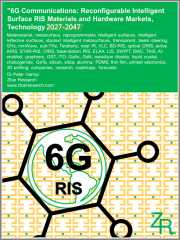
6G 통신 시장 : 재구성 가능한 지능형 표면(RIS) 소재 및 하드웨어 시장 및 기술 (2027-2047년)6G Communications: Reconfigurable Intelligent Surface RIS Materials and Hardware Markets, Technology 2027-2047 |
||||||

요약
무선 통신은 세대가 거듭될수록 더 높은 주파수의 도입 등을 통해 더 광범위한 이용 환경과 새롭게 필수적인 사용자 기능을 약속하고 있습니다. 2030년에 도입될 것으로 예상되는 6G에서는 이를 실현하기 위해 전파 경로상에 재구성 가능한 지능형 표면(RIS)을 광범위하게 배치해야 합니다. 본 보고서는 579페이지에 걸쳐 사업 기회 분석을 중심으로 한 조사 보고서이며, 11건의 SWOT 분석, 2027-2047년 24개 항목에 대한 예측 시나리오, 57건의 주요 결론을 통해 시장 기회를 상세히 해설하고 있습니다.

장황한 문장이 아닌, 명료한 인포그래픽으로 해설
본 보고서는 투자자부터 고부가가치 소재 제조업체, 디바이스 제조업체, 제품·시스템 통합업체, 시설 관리자에 이르기까지 가치 사슬에 관련된 모든 분을 대상으로 합니다. 또한 연구자, 규제 당국 및 기타 관계자들에게도 유용한 내용을 제공합니다. 구체적으로는 제휴 후보 및 인수 후보, 유망한 접근 방식, 모범 사례, 실패 사례에서 얻을 수 있는 교훈 등을 다루고 있습니다. 박사 학위 수준의 새로운 분석은 SWOT 분석, 비교 차트, 신규 인포그래픽, 로드맵, 예측, ‘Zhar Research Comment’로 표기된 섹션으로 제시됩니다. 이해하기 쉽도록 유망한 소재는 원형 차트로 우선순위를 표시하고, 본문에서는 빨간색으로 강조하고 있습니다. 중요 포인트는 녹색으로 표시되어 있습니다. 발전 속도가 빠른 분야인 만큼, 보고서는 지속적으로 업데이트되어 항상 최신 정보를 제공합니다. 이러한 독창적인 통찰력과 상세한 분석을 선제적으로 활용함으로써, 10억 달러 규모의 비즈니스를 창출할 가능성이 있습니다.
목차
제1장 요약 및 결론, 로드맵 및 예측 라인
- 본 보고서의 목적
- 조사 방법
- RIS의 배경
- 6G에 필요한 다양한 RIS
- 6G 통신 전반에 관한 10가지 주요 결론
- 인포그래픽 : 6G 시스템의 주요 목표 및 주요 하드웨어 시장 기회
- 6G RIS의 소재 및 부품 시장 기회에 관한 7가지 주요 결론
- 6G RIS의 비용 과제에 관한 7가지 주요 결론
- 6G RIS 및 리플렉터 어레이 제조 기술에 관한 6가지 주요 결론
- 8가지 SWOT 분석
- 5G 및 6G RIS 로드맵
- 6G RIS 및 리플렉터 어레이 시장 전망
- 6G RIS의 시장 규모
- 6G RIS의 연간 판매 면적
- 6G RIS의 평균 가격
- 6G RIS 시장 규모 : 능동형·반능동형 등 4가지 카테고리
- 6G RIS 판매 면적, 평균 패널 면적, 패널 판매 수량, 누적 설치 패널 총수
- 6G RIS 시장 규모 : 기지국 용도·전파 경로 용도
- 전 세계 RIS 하드웨어 시장의 지역별 점유율
- 세미패시브형 RIS, 액티브형 RIS, 비 6G용 THz 전자기기 시장
- 6G 완전 패시브형 메타물질 리플렉터 어레이 시장 규모
제2장 서론
- 개요
- RIS의 기능과 유용성 : 상세 해설
- 6G RIS와 관련된 표준화 기구 및 주요 이해관계자의 활동
- 6G 및 6G RIS의 목표 확대와 재검토, 스마트 무선 환경
- 복잡해지는 용어 체계
- 2025년까지의 산업·연구 동향 변화
- 고주파 대역에서의 도달 거리 향상: 전파 경로 엔지니어링
- 2025년까지의 기타 18건의 연구 진전 분석
- 6G 글로벌 아키텍처 제안 및 보완 시스템
제3장 궁극의 6G RIS 하드웨어 툴킷 : 비가시성, 대면적, 자가 전원 공급, 자가 학습, 자가 적응, 자가 복구, 자가 세척, 유비쿼터스, 자율형, 장수명, AI 지원, 동적 스펙트럼 공유 등
- 개요
- 비가시 RIS : 투명화 또는 눈에 띄지 않는 장소에 설치
- 대규모 지능형 표면(LIS) 및 초대규모 안테나 어레이(ELAA)에 대한 2025년 연구 : 대면적 RIS 포함
- 자가전력 공급형 RIS 및 제로 에너지 클라이언트 디바이스 구현
- 수명 연장 : 설치 후 유지보수를 최소화하는 자가 복구 소재
- RIS의 최적화, 자기 학습, 자기 적응, 자율화를 위한 AI·기계 학습 : 2025년까지의 진전
- 다중 모드·다중 주파수, 6G의 동적 스펙트럼 공유(DSS)와 RIS
제4장 Beyond Diagonal RIS (BD-RIS) 아키텍처를 통한 6G RIS의 제약 극복 : 2025년까지 급증할 기술 발전
- 정의, 물질적 과제, 적용성
- BD-RIS의 잠재적 이점
- BD-RIS 하드웨어의 과제
- 실용적인 구현 및 개선의 필요성
제5장 STAR RIS, ISAC, SWIPT를 포함한 다기능·멀티모드 RIS
- 2025년 조사, 산업 동향, 가능성에 대한 개요 및 검토
- 동시 투과형 및 반사형 STAR RIS
- 개요
- STAR-RIS 최적화
- STAR-RIS-ISAC 통합 감지 및 통신 시스템
- TAIS 투명 증폭 지능형 표면 및 SWIPT 능동형 STAR-RIS
- 에너지 하베스팅 및 적응형 전력 공급 기능을 갖춘 STAR-RIS
- STAR RIS SWOT 분석
- 개요
- 다기능 RIS : 고체 냉각 기능
- 통합 감지 및 통신 ISAC
- 시스템 보안을 보장하는 멀티모드 RIS : 반수동형 RIS와 능동형 RIS의 결합
제6장 기지국, UM-MIMO, 타워 인 더 스카이(HAPS), 기타 UAV RIS
- 개요
- UM-MIMO로의 발전
- RIS 지원·자가 전원 공급형 6G 초대규모 UM-MIMO 기지국 설계
- 매시브 MIMO 기지국용 RIS: 칭화대학교, 에머슨
- 스몰 셀 기지국으로서의 RIS
- 2025년의 RIS 지원 MIMO 및 기지국 관련 기타 주요 발전
- 위성 및 UAV가 6G RIS를 지원하고, 또한 RIS의 혜택을 받는 구조 : 2025년까지의 진전
- 2024년의 주요 진전
- 대형 성층권 HAPS용 RIS
제7장 RIS 튜닝용 하드웨어의 목표와 진전 : 2025년까지의 연구
- 개요
- RIS 튜닝 연구를 통해 얻은 인사이트 : 2025년 이전
- 개별 튜닝 부품의 발전에 대한 상세 분석
- 0.1-1THz 및 근적외선용 6G RIS에서 디스크리트 부품을 대체할 튜닝 소재의 우선순위
- 대형 RIS 및 기타 시장 격차
제8장 6G용 광무선통신(OWC) 및 ORIS : 2025년까지의 주요 발전
- RIS를 포함한 광무선통신(OWC)이 6G에 매력적인 추가 기술이 되는 이유
- 광 RIS(ORIS)의 잠재력과 과제 : SWOT 분석
- ORIS 구현 기법
- 장거리, 지하, 수중, 우주용 OWC·RIS : 2025년 이전의 연구 진전
- 단거리·실내 OWC 및 RIS : 2025년 이전의 연구 진전
- 6G용 광학 소재의 가능성
- 6G용 메타렌즈 : 2025년까지의 진전 포함
- 미러 어레이형 ORIS의 설계
제9장 6G용 형상 변화형 플렉시블 지능형 메타표면(FIM), 6G 하이퍼표면, 메타물질의 기초
- 개요
- 6G 관련 메타물질 연구에서 2025년까지의 주요 진전 평가
- 메타물질의 기초
- 메타서페이스의 기초
- 메타물질 전반의 장기 전망
- GHz, THz, 적외선, 광 영역 메타물질의 신흥 응용 분야
- 열 메타물질
- 메타물질 및 메타표면 전반에 대한 SWOT 분석
- 형상 변화형 플렉서블 지능형 메타서피스(FIM)의 기초 및 2025년까지의 연구
제10장 RIS 및 리플렉터 어레이의 제조, 검사, 시험, 비용 내역
- 박막·투명 전자공학의 최신 동향
- 디스크리트 기판, 적층 필름에서 스마트 소재의 완전한 통합으로의 전환 동향
- 플렉시블, 박막형, 2차원 에너지 하베스팅 및 센싱의 중요성
- 광 영역, 저 THz, 고 THz용 6G RIS에 따른 서로 다른 제조 기술
- 6G RIS의 검사·시험 : 2025년의 새로운 진전
- RIS 비용 분석
제11장 6G RIS 관련 기업 : 제품, 계획, 특허, Zhar Research의 평가
- 개요 및 특허 취득
- AGC (일본)
- Alcan Systems (독일)
- Alibaba (중국)
- Alphacore (미국)
- China Telecom, China Mobile, China Unicom, Huawei, ZTE, Lenovo, CICT (중국)과의 제휴
- Ericsson (스웨덴)
- Fractal Antenna Systems (미국)
- Greenerwave (프랑스)
- Huawei (중국)
- ITOCHU (일본)
- Kymeta Corp. (미국)
- Kyocera (일본)
- Metacept Systems (미국)
- Metawave (미국)
- NEC (일본)
- Nokia Finland와 LG Uplus (한국)
- NTT DoCoMo 및 NTT (일본)
- Orange (프랑스)
- Panasonic (일본)
- Pivotal Commware (미국)
- Qualcomm (미국)
- Samsung Electronic (한국)
- Sekisui (일본)
- SensorMetrix (미국)
- SK Telecom (한국)
- Sony (일본)
- Teraview (미국)
- Vivo Mobile Communications (중국)
- VTT (핀란드)
- ZTE (중국)
Summary
Successive generations of wireless communications promise wider availability and new, must-have user features, partly by adopting higher frequencies. To enable these, 6G, launching in 2030, must widely deploy Reconfigurable Intelligent Surfaces RIS in the propagation path. The new commercially-oriented, 579-page report, "6G Communications: Reconfigurable Intelligent Surface RIS Materials and Hardware Markets, Technology 2027-2047" details your opportunities, clarified with 11 SWOT appraisals, 24 forecast lines 2027-2047, 57 key conclusions.

Clear infograms not rambling text
The report is intended for all in the value chain from investors to added value materials companies, device manufacturers, product and system integrators, and facilities managers. Indeed, there is much to interest academics, regulators and other interested parties. For example, here you will find potential partners and acquisitions, winning approaches, best practice and lessons from failure. The new PhD level analysis is presented as SWOT appraisals, comparison charts, new infograms, roadmaps, forecasts and sections marked “Zhar Research Comment”. For easy understanding, successful materials are prioritised in pie charts and highlighted in red in the text. Key points are highlighted in green. The report is constantly updated so you only get the latest - essential because the progress is now rapid. Billion-dollar businesses can be created by those keeping ahead with this level of original insight and detail.
Deep coverage of the flood of new research
Vitally, there is deep coverage of the flood of new research and company activity through 2025 and 2026. It will assist those seeking opportunities for their existing materials and manufacturing expertise such as flexible and structural electronics, fine metals, conductive inks, graphene, activated carbon, silicon, silicas and liquid crystal, often wide-area. See future progress from GHz to THz and visible-light RIS and to sophisticated forms such as Transparent Amplifying Intelligent Surfaces TAIS and morphing RIS.
Two stages
6G will mostly launch in 2030 with minimal infrastructure expenditure, performance being improved by radical advances above the physical layer. However, later, many advanced forms of RIS will be essential to meet the original promises and reverse the decline in sales of client devices. Those promises include Tbps data rates, sub ms latency, native AI, native sensing and native precise positioning, ten times the client density of 5G, all sufficient to serve the ambitions of real-time brain-computer interfaces, superlative robotics, holographic communication, immersive extended reality XR and so much more. For these, we may widely deploy 0.1-0.3 THz, visible light communication and affordable RIS. This report therefore covers RIS at all likely frequencies from GHz to visible light and ways of limiting the RIS expenditure and improving paybacks by such things as 360-degree RIS, including as windows, multipurpose RIS and fully active RIS that doubles range and provides much better added value services. We also cover RIS technology in aerospace, underwater and underground, all essential if the poor geographical coverage of 5G is not to be repeated.
Report contents
The Executive Summary and Conclusions (74 pages) is self-sufficient for those with limited time. See the basics, conclusions, main SWOT appraisals, roadmaps and all forecasts. The Introduction (117 pages) presents the various RIS variants, objectives and trends emerging and how they support necessary 6G evolution. Learn how a 6G Phase Two will be essential to meet the original promises. Backing up the analysis, 60 research papers from 2026 are listed. Chapter 3. “Ultimate 6G RIS hardware toolkit: invisible, wide area, self-powered, self-learning, self-adaptive, self-healing, self-cleaning, ubiquitous, autonomous, everlasting, AI enabled, dynamic spectrum sharing, other” (38 pages), with other research advances through 2026, details these aspects. Chapter 4. “Beyond diagonal RIS architecture tackles 6G RIS limitations” (22 pages) explains this relatively-new aspect.
Affordable and acceptable RIS everywhere
To be affordable and acceptable. RIS must become more capable and disappear into the fabric of society. Chapter 5. “Multifunctional and multi-mode RIS including STAR RIS, ISAC, SWIPT with research through 2026” (54 pages) explains how this will be achieved, eventually including SWIPT providing enough power in the signal beam to interrogate unpowered 6G client devices such as Internet of Things nodes in billions.
RIS technology will enhance 6G base stations
RIS technology will enhance 6G base stations as their nature changes, and example being “Tower in the Sky”. Chapter 6. “Base station, UM-MIMO, Tower in the Sky HAPS and UAV RIS with research advances 2026” explains. Indeed, Unmanned Aerial Vehicles will both enhance and benefit from RIS-enabled 6G. Chapter 7. “RIS tuning hardware objectives and progress with research through 2026” (52 pages) concerns the formulation and patterning options for materials and components enabling the reconfigurable feature of RIS metasurfaces. The trend is from flip chip to structural electronics, with vanadium dioxide among the likely winners.
Optical and other advanced RIS
Given the inevitability of 6G progressing later to frequencies high enough to provide the ultimate benefits, visible light communication must become part of the mix. Indeed, only this has demonstrated Tbps data rates. Chapter 8. “Optical Wireless Communications ORIS for 6G: major progress through 2026” (61 pages) explains your opportunities arising. They cover indoor up to satellite optical systems. Chapter 9. “6G Morphing Flexible Intelligent Metasurfaces FIM, 6G hypersurfaces, metamaterial basics” (49 pages) covers other options that will appear later in the 2027-2047 timeframe. It also gives metamaterial basics for those that need them. The report closes with Chapter 10. “RIS and reflect-array manufacture, inspection, testing, cost breakdown”.
“6G Communications: Reconfigurable Intelligent Surface RIS Materials and Hardware Markets, Technology 2027-2047” is your essential handbook.
CAPTION: Recent research papers relevant to RIS at GHz and THz showing need for more experimental work as we approach commercialisation. Source: Zhar Research report, “6G Communications: Reconfigurable Intelligent Surface RIS Materials and Hardware Markets, Technology 2027-2047”.
Table of Contents
1. Executive summary and conclusions with roadmap and forecast lines 2026-2046
- 1.1 Purpose of this report
- 1.2 Methodology of this analysis
- 1.3 Background to RIS
- 1.3.1 Useful for 5G but essential for 6G
- 1.3.2 RIS Google and research paper trends, trending RIS topics through 2025
- 1.3.3 Dreams of RIS everywhere: infograms
- 1.4 Many types of RIS needed for 6G
- 1.5 Ten key conclusions concerning 6G Communications generally
- 1.6 Infogram: Primary 6G systems objectives with major hardware opportunities starred
- 1.7 Seven key conclusions concerning 6G RIS materials and component opportunities
- 1.8 Seven key conclusions concerning 6G RIS cost issues
- 1.9 Six key conclusions concerning 6G RIS and reflect-array manufacturing technology
- 1.10 Eight SWOT appraisals
- 1.10.1 6G RIS SWOT appraisal
- 1.10.2 SWOT appraisal of 6G adding sub-THz, THz, near infrared and visible frequencies
- 1.10.3 SWOT appraisal of BD-RIS for 6G
- 1.10.4 STAR-RIS SWOT appraisal
- 1.10.5 SWOT appraisal of 6G RIS for OWC
- 1.10.6 SWOT appraisal of visible light communication VLC
- 1.10.7 SWOT appraisal for metamaterials and metasurfaces generally
- 1.10.8 SWOT appraisal of morphing Flexible Intelligent Metasurfaces FIM
- 1.11 5G and 6G RIS roadmaps in four lines 2026-2046
- 1.12 6G RIS and reflect-array market forecasts 2026-2046
- 1.12.1 6G RIS value market 2027-2046 $ billion with explanation
- 1.12.2 6G RIS area sales yearly billion square meters 2027-2046 with explanation
- 1.12.3 Average 6G RIS price $/ square m. ex-factory including electronics 2028-2046 with explanation
- 1.12.4 6G RIS value market $ billion: active vs four semi-passive categories by frequency 2026-2046 with explanation
- 1.12.5 6G RIS area sales vs average panel area, panels sales number and total panels deployed cumulatively 2027-2046 with explanation
- 1.12.6 6G RIS value market, base station vs propagation path $ billion 2027-2046
- 1.12.7 Percentage share of global RIS hardware value market by four regions 2029-2046
- 1.12.8 Market for semi-passive vs active RIS 0.1-1THz vs non-6G THz electronics 2027-2046
- 1.12.9 6G fully passive metamaterial reflect-array market $ billion 2029-2046
- 1.13 Supporting information
- 1.13.1 Smartphone billion units sold globally 2024-2046 if 6G is successful
- 1.13.2 Market for 6G vs 5G base stations units millions yearly 2025-2046
- 1.13.3 Market for 6G base stations market value $bn if 6G successful 2029-2046
- 1.13.5 Location of primary 6G material and component activity worldwide 2026-2046
2. Introduction
- 2.1 Overview
- 2.1.1 Definitions and context
- 2.1.2 RIS operation modes, some key issues in providing planned 6G benefits
- 2.1.3 Important trend from moving parts to smart materials
- 2.1.4 Diverse functionalities and applications of RIS and allied intelligent metasurfaces
- 2.1.5 Examples of current approaches to RIS design and capability
- 2.1.6 Unique features of RIS vs traditional approaches and combinations through 2025
- 2.1.7 Transitional product towards RIS is liquid crystal phased array
- 2.1.8 RIS competing with traditional approaches
- 2.1.9 How 6G systems will mix and match many technologies in the propagation path
- 2.1.10 Active RIS becomes important: different envisaged potential and advances through 2025
- 2.2 RIS functionality and usefulness – a closer look
- 2.2.1 Improved spatial coverage and macro-diversity
- 2.2.2 Capacity enhancement, green communications and Internet of Things
- 2.2.3 Physical layer security, anti-jamming, and reliability enhancement
- 2.2.4 Enabling Large-Scale IoT Network Deployment
- 2.2.5 Wireless Sensing and Localization, HRIS, ISAC
- 2.2.6 RIS from the systems and security viewpoint with 2025 advances
- 2.3 Activities of standards bodies and influencers related to 6G RIS
- 2.4 Broadening vs retrenching 6G and 6G RIS objectives, smart radio environments
- 2.5 Terminology thicket
- 2.6 Changing industrial and research trends through 2025
- 2.6.1 Broadening theoretical studies useful but relative neglect of hardware is not
- 2.6.2 Backtracking on frequencies compromises capability at launch
- 2.6.3 2025 research focussed on broadly 5G frequencies: GHz and mmWave for 6G through 2025
- 2.6.4 0.1THz to 3THz 6G RIS research through 2025
- 2.7 Improving reach at the higher frequencies: trajectory engineering
- 2.8 Analysis of 18 other research advances through 2025
- 2.9 6G global architecture proposals, complementary systems
3. Ultimate 6G RIS hardware toolkit: invisible, wide area, self-powered, self-learning, self-adaptive, self-healing, self-cleaning, ubiquitous, autonomous, everlasting, AI enabled, dynamic spectrum sharing, other
- 3.1 Overview
- 3.1.1 Some options to make RIS more acceptable, deployable and useful
- 3.1.2 Synergistic combination of advanced physical and RIS properties
- 3.2 Invisible RIS – transparent or out of sight
- 3.2.1 Potential transparent RIS capabilities
- 3.2.2 Transparent 6G RIS in 2025-6: companies, universities, ambitions
- 3.2.3 Transparent reflect arrays: Sekisui and others
- 3.3 Large Intelligent Surfaces LIS and Extremely Large-scale Antenna Array ELAA 2025 research including wide area RIS
- 3.3.1 Definitions and benefits
- 3.3.2 Large Intelligent Surfaces LIS RIS enhancing security, range, error reduction
- 3.3.3 Advances in protective coatings for wide area energy harvesting and RIS in 2025
- 3.4 RIS will become self-powered and enable zero energy client devices
- 3.4.1 Overview
- 3.4.2 Maturity of primary ZED enabling technologies in 2025
- 3.4.3 Ranking of most popular 6G ZED compounds and carbon allotropes in research
- 3.4.4 Context of ZED: overlapping and adjacent technologies and examples of long-life energy independence
- 3.4.5 SWIPT, STIIPT, AmBC and CD-ZED objectives and latest progress
- 3.4.6 13 harvesting technologies for 6G ZED infrastructure and client devices 2026-2046
- 3.4.7 6G active RIS and UM MIMO base station power demands matched to energy harvesting options
- 3.4.8 SWOT appraisal of batteryless storage technologies for ZED RIS and more
- 3.4.9 SWOT appraisal of circuits and infrastructure that eliminate storage
- 3.5 Long life: self-healing materials for fit-and-forget
- 3.6 Artificial intelligence and machine learning for optimising, self-learning, self-adaptive , autonomous RIS: Progress through 2025
- 3.7 Multimode and multifrequency, dynamic spectrum sharing DSS 6G and its RIS
4. Beyond diagonal RIS architecture tackles 6G RIS limitations: Surge in advances through 2025
- 4.1 Definitions, material challenges, applicability
- 4.1.1 Significance
- 4.1.2 The simple description
- 4.1.3 SWOT appraisal of BD-RIS for 6G
- 4.1.4 Coverage in this chapter and your opportunities
- 4.2 Potential benefits of BD-RIS
- 4.3 BD-RIS hardware challenges
- 4.4 Practical implementations and requirement for improvement
- 4.4.1 The challenge
- 4.4.2 First practical demonstrations of BD-RIS claimed in 2025
- 4.4.3 Terrestrial BD-RIS progress through 2025: many other advances and appraisals
- 4.4.4 Improving RIS in non terrestrial networks NTN
5. Multifunctional and multi-mode RIS including STAR RIS, ISAC, SWIPT
- 5.1 Overview with review of 2025 research, industrial trends and possibilities
- 5.2 Simultaneous transmissive and reflective STAR RIS
- 5.2.1 Overview
- 5.2.2 STAR-RIS optimisation
- 5.2.3 STAR-RIS-ISAC integrated sensing and communication system
- 5.2.4 TAIS Transparent Amplifying Intelligent Surface and SWIPT active STAR-RIS
- 5.2.5 STAR-RIS with energy harvesting and adaptive power
- 5.2.6 STAR RIS SWOT appraisal
- 5.3 Other multifunctional and multi-mode RIS
- 5.3.1 Overview
- 5.3.2 Multifunctional RIS: solid-state cooling functionality
- 5.3.3 Integrated sensing and communication ISAC
- 5.3.4 Multimode RIS ensuring system security: combined semi-passive and active RIS
6. Base station, UM-MIMO, Tower in the Sky HAPS and other UAV RIS
- 6.1 Overview
- 6.2 Progress to UM-MIMO
- 6.3 RIS-enabled, self-powered ultra-massive 6G UM-MIMO base station design
- 6.4 RIS for massive MIMO base station: Tsinghua University, Emerson
- 6.5 RIS as small cell base station
- 6.6 Other important advances in RIS-enabled MIMO and base stations in 2025
- 6.7 How satellites and UAVs will aid and sometimes benefit from 6G RIS: advances through 2025
- 6.8 Important advances in 2024
- 6.9 Large stratospheric HAPS RIS
7. RIS tuning hardware objectives and progress with research through 2025
- 7.1 Overview
- 7.1.1 Primitive to advanced tuning
- 7.1.2 Tuning mechanisms in context
- 7.1.3 Examples of RIS external control stimuli used in research and trials
- 7.1.4 RIS tuning hardware options compared
- 7.1.5 Infogram: The Terahertz Gap demands different tuning materials and devices
- 7.2 Lessons from research carried out on RIS tuning: 2025 and earlier
- 7.2.1 Changing focus
- 7.2.2 Electrical and optical tuning and higher frequencies favoured
- 7.3 Detailed analysis of progress with discrete tuning components
- 7.3.1 General
- 7.3.2 Schottky diode RIS tuning vs other diodes
- 7.3.3 High-Electron Mobility Transistor HEMT RIS tuning
- 7.3.4 Less successful other options with reasons
- 7.4 Prioritisation of tuning materials replacing discretes for 6G RIS 0.1-1THz and NearIR
- 7.4.1 Winners on current evidence
- 7.4.2 Options for integrated tuning materials for higher frequency 6G
- 7.4.3 Vanadium dioxide: rationale and major progress through 2025, 2024
- 7.4.4 Chalcogenide phase change materials notably GST and GeTe
- 7.4.5 Graphene: rationale and major progress through 2025, 2024
- 7.4.6 Liquid crystal rationale and progress through 2025, 2024
- 7.5 Large RIS and other gaps in the market
8. Optical Wireless Communications ORIS for 6G: major progress through 2025
- 8.1 Why OWC including RIS at its frequencies is an attractive addition for 6G
- 8.1.1 Optical Wireless Communications OWC and subset Visible Light Communications VLC
- 8.1.2 The case for multi-frequency 6G Phase Two including optical “so one gets through”
- 8.1.3 Parameter comparison of Free Space Optical FSO with 3-300GHz communication
- 8.2 The potential and the challenges of Optical RIS ORIS with SWOT appraisals
- 8.2.1 Overview
- 8.2.2 ORIS benefits and the Distributed RIS DRIS option
- 8.2.3 ORIS challenges
- 8.2.4 SWOT appraisal of 6G RIS for OWC
- 8.2.5 SWOT appraisal of visible light communication
- 8.3 ORIS implementation procedures
- 8.4 Long range, underground, underwater and space OWC: RIS: research advances 2025 and earlier
- 8.4.1 General
- 8.4.2 RIS enhanced OWC vehicular networks and mobile environments
- 8.4.3 Hybrid RF-FSO RIS
- 8.4.4 Underwater UOWC systems
- 8.4.5 Underground OWC needing RIS
- 8.4.6 Laser stratospheric and space communications with RIS technology
- 8.5 Short range and indoor OWC and its RIS: research advances through 2025 and earlier
- 8.5.1 Indoors and short range in air
- 8.5.2 Leveraging other indoor and short-range outdoor systems such as LiFi with RIS
- 8.6 Potentially 6G optical materials
- 8.7 Metalenses for 6G including advances through 2025
- 8.8 Mirror array ORIS design
9. 6G Morphing Flexible Intelligent Metasurfaces FIM, 6G hypersurfaces, metamaterial basics
- 9.1 Overview
- 9.2 Appraisal of 6G-related metamaterial research major advances through 2025
- 9.2.1 New advances in metamaterial design
- 9.2.2 Hypersurfaces, stacked intelligent metasurfaces, swarms, bifunctional metasurfaces
- 9.2.3 Optimal metamaterial substrates and low loss, 6G glass TIRS
- 9.2.4 Optimal metamaterial substrates including transparent 6G glass
- 9.3 Metamaterial basics
- 9.3.1 The meta-atom and patterning options
- 9.3.2 Material and functional families
- 9.3.3 Metamaterial reflect-arrays for 5G and 6G Communications
- 9.3.4 Metamaterial patterns and materials
- 9.3.5 Six formats of communications metamaterial with examples
- 9.4 Metasurface basics
- 9.4.1 Metasurface design, operation and RIS
- 9.4.2 How metamaterial RIS hardware operates
- 9.4.3 RIS and reflect-array construction and potential capability
- 9.4.4 All dielectric and non-linear dielectric metasurfaces
- 9.5 The long-term picture of metamaterials overall
- 9.6 Emerging applications of GHz, THz, infrared and optical metamaterials
- 9.7 Thermal metamaterials
- 9.8 SWOT appraisal for metamaterials and metasurfaces generally
- 9.9 Morphing Flexible Intelligent Metasurfaces FIM basics and their research through 2025
- 9.9.1 Basics
- 9.9.2 FIM network topology and potential applications targetted
- 9.9.3 Many FIM research advances through 2025 assessed
- 9.9.4 SWOT appraisal of 6G FIM
10. RIS and reflect-array manufacture, inspection, testing, cost breakdown
- 10.1 Thin film and transparent electronics state-of-the-art
- 10.2 Trend from discrete boards, stacked films to full smart material integration
- 10.3 Importance of flexible, laminar and 2D energy harvesting and sensing
- 10.4 How manufacturing technologies differ for 6G RIS optical, low or high THz
- 10.4.1 Candidates: nano-imprinting, nano-lithography, lithography, gravure, inkjet, screen, flexo, spray, other
- 10.4.2 Special case: 3D printing with electron beam evaporation
- 10.4.3 Ultra-fast laser system
- 10.5 6G RIS inspection and testing: new advances in 2025
- 10.5.1 Testing challenges
- 10.5.2 Progress in RIS inspection in 2025
- 10.6 RIS cost analysis
- 10.6.1 General assessment
- 10.6.2 NEC and other costed case studies
- 10.6.3 Outdoor semi-passive and active RIS cost analysis at high areas of deployment
- 10.6.4 Indoor semi-passive RIS cost analysis at volume
11. 6G RIS companies : products, plans, patents, Zhar appraisals: 2025-6
- 11.1 Overview and patenting
- 11.1.1 Rapidly changing situation 2025-6
- 11.1.2 RIS patenting and literature trends
- 11.2 AGC Japan
- 11.3 Alcan Systems Germany
- 11.4 Alibaba China
- 11.5 Alphacore USA
- 11.6 China Telecom China Mobile, China Unicom, Huawei, ZTE, Lenovo, CICT China collaboration
- 11.7 Ericsson Sweden
- 11.8 Fractal Antenna Systems USA
- 11.9 Greenerwave France
- 11.10 Huawei China
- 11.11 ITOCHU Japan
- 11.12 Kymeta Corp. USA
- 11.13 Kyocera Japan
- 11.14 Metacept Systems USA
- 11.15 Metawave USA
- 11.16 NEC Japan
- 11.17 Nokia Finland with LG Uplus South Korea
- 11.18 NTT DoCoMo and NTTJapan
- 11.19 Orange France
- 11.20 Panasonic Japan
- 11.21 Pivotal Commware USA
- 11.22 Qualcomm USA
- 11.23 Samsung Electronic South Korea
- 11.24 Sekisui Japan
- 11.25 SensorMetrix USA
- 11.26 SK Telecom South Korea
- 11.27 Sony Japan
- 11.28 Teraview USA
- 11.29 Vivo Mobile Communications China
- 11.30 VTT Finland
- 11.31 ZTE China