|
시장보고서
상품코드
2019799
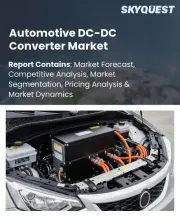
자동차 DC-DC 컨버터 시장 규모, 점유율, 성장 및 산업 분석 : 유형별, 용도별, 지역별 인사이트 및 예측(2026-2034년)Automotive DC-DC Converter Market Size, Share, Growth and Global Industry Analysis By Type & Application, Regional Insights and Forecast to 2026-2034 |
||||||

자동차 DC-DC 컨버터 시장의 성장 요인
세계의 자동차 DC-DC 컨버터 시장은 2025년에 47억 4,000만 달러로 평가되었고, 2026년에는 61억 1,000만 달러로 성장해, 2032년까지 521억 1,000만 달러에 이를 것으로 예측됩니다. 이것은 전기자동차와 하이브리드 자동차의 보급 확대에 주도된 견조한 성장 궤도를 보여줍니다. DC-DC 컨버터는 전기 에너지를 일시적으로 저장하고 직류(DC)를 한 전압 레벨에서 다른 전압 레벨로 변환하는 자동차에 필수적인 부품입니다. 이러한 컨버터는 자동차 전자 시스템에서 효율적인 전력 관리 및 전압 조정을 가능하게 하고, 서로 다른 전압 레벨에 걸친 장치의 원활한 동작을 실현합니다.
2025년, 아시아태평양 지역은 급속한 산업화, 전기차(EV) 보급 확대, 그리고 친환경 모빌리티를 장려하는 정부 인센티브에 힘입어 64.90%의 시장 점유율로 시장을 주도했습니다. 코로나19 팬데믹은 초기 공급망과 자동차 생산에 차질을 빚어 DC-DC 컨버터 수요에 일시적인 영향을 미쳤습니다. 그러나 차량 생산이 재개됨에 따라, 차량의 전기화 확대에 힘입어 시장은 반등할 전망입니다.
시장 동향
DC-DC 컨버터 기술의 상당한 발전이 시장 성장을 주도하고 있습니다. 양방향 에너지 흐름을 가능하게 하는 양방향 컨버터는 전기차 및 V2G(Vehicle-to-Grid) 애플리케이션에서 인기를 얻고 있습니다. 질화갈륨(GaN) 기반 전력 반도체가 이러한 컨버터에 통합되면서, 기존 실리콘 기반 컨버터에 비해 향상된 전력 밀도와 효율성, 소형화를 실현하고 있습니다.
AC/DC 충전과 DC-DC 변환 기능을 결합한 온보드 충전기와의 통합은 차량 아키텍처를 더욱 단순화하고, 시스템 복잡성을 줄이며, 충전 효율을 향상시킵니다. 또한, 최신 컨버터는 고전압 전기차 아키텍처를 지원하기 위해 더 높은 전압 수준을 처리할 수 있으며, 첨단 전력 관리 알고리즘은 에너지 변환을 최적화하고 전력 흐름을 동적으로 관리하여 시스템 성능을 향상시킵니다.
시장 성장 요인
전기차(EV)의 보급 확대가 시장 성장의 주된 동력입니다. 전 세계 정부는 배출가스 감축 정책, 세제 혜택, 보조금 및 환급 제도를 도입하여 전기차 보급을 촉진하고 있습니다. 리튬이온 배터리 비용의 감소와 성능 향상으로 인해 전기차는 내연기관 차량 대비 경쟁력이 높아졌습니다. 소비자들은 낮은 운영 비용, 조용한 주행, 환경적 이점 때문에 전기차에 매력을 느끼고 있습니다.
전기차의 고전압 전기 아키텍처는 효율적인 전력 분배 시스템을 필요로 하여, 첨단 DC-DC 컨버터에 대한 수요를 증가시키고 있습니다. 이러한 컨버터는 인포테인먼트, ADAS(첨단 운전자 보조 시스템), 전동화 파워트레인 등 보조 시스템 전반에 걸쳐 전력을 조절하는 데 필수적입니다. 결과적으로, 순수 전기차(BEV)와 하이브리드 차량의 보급 확대는 자동차용 DC-DC 컨버터 시장을 직접적으로 견인하고 있습니다.
억제요인
성장 잠재력에도 불구하고, 첨단 반도체 및 제어 시스템을 포함한 DC-DC 컨버터의 높은 비용은 도입을 제한할 수 있습니다. 규제 준수 및 차량별 전압 요구 사항은 복잡성을 더욱 가중시킵니다. 제조사들은 효율성을 유지하면서 다양한 차량 아키텍처를 충족하는 확장 가능하고 유연하며 비용 효율적인 컨버터를 설계해야 하며, 이는 시장 확장을 위한 핵심 과제로 남아 있습니다.
세분화 분석
유형별 : 2026년에는 절연형 부문이 86.12%의 시장 점유율을 차지하고 시장을 독점했습니다. 절연형 DC-DC 컨버터에는 변압기 또는 동등한 절연 부품이 포함되어 있어 입력과 출력 사이에 전기적 절연을 제공하여 안전성을 높이고 간섭을 줄이고 감전의 위험이 있는 전자 기기를 보호합니다. 비절연형 컨버터는 보다 간단하고 작고 비용 효율적이지만 전기 절연 기능이 없습니다.
용도별 : 2026년에는 승용차가 시장 점유율의 92.50%를 차지했습니다. 이는 중산계급 소득 증가, 환경 의식 증가, EV소유를 뒷받침하는 정부 인센티브가 요인입니다. 상용차의도, 저운용 코스트, 정숙성, 환경 규제에의 적합이라고 하는 이점으로부터, DC-DC 컨버터의 채택이 서서히 진행되고 있습니다.
차종별 : 2026년에는 에너지 효율이 높고 유지보수가 적고 배기가스 제로라는 장점으로 배터리형 전기자동차(BEV)가 75.64%의 점유율로 선두를 차지했습니다. PHEV는 장거리 주행의 유연성과 듀얼 전원의 이점으로 인해 여전히 중요한 위치를 차지하고 있습니다.
지역별 동향
- 아시아태평양 : 2025년 시장 규모는 30억 7,000만 달러로, 2026년에는 40억 3,000만 달러에 이를 것으로 예측됩니다. 중국, 일본, 인도가 주도역이 되고 있습니다. 성장은 정부 지원 정책, EV 인프라 확충 및 도시 지역 대기 오염에 대한 우려 증가에 의해 지원됩니다.
- 유럽 : 2025년 시장 규모는 10억 8,000만 달러로, 2026년에는 13억 6,000만 달러에 이를 것으로 예측됩니다. 독일, 영국, 프랑스에서는 보조금, 보조금 및 규제 우대 조치가 EV의 보급을 뒷받침하고 있습니다.
- 북미 : 2025년 시장 규모는 5억 달러였지만, 2026년에는 6억 1,000만 달러에 이를 것으로 예측됩니다. 이는 미국의 기술 연구개발(R&D)에 대한 투자와 충전 인프라의 확충이 주도하고 있습니다.
- 세계 기타 지역 : 2025년 시장 규모는 8,000만 달러로, 2026년에는 1억 달러에 이를 것으로 예측됩니다. 이는 개발도상지역의 EV의 보급 확대에 지지되고 있습니다.
목차
제1장 서론
제2장 주요 요약
제3장 시장 역학
- 시장 성장 촉진요인
- 시장 성장 억제요인
- 시장 기회
- 시장 동향
제4장 주요 고찰
- 합병, 인수 및 제휴
- Porter's Five Forces 분석
- 기술적 진전
- COVID-19의 영향
제5장 세계 자동차 DC-DC 컨버터 시장 분석, 인사이트 및 예측(2021-2034년)
- 주요 조사 결과 및 정의
- 시장 분석, 인사이트 및 예측 : 유형별
- 절연형
- 비절연형
- 시장 분석, 인사이트 및 예측 : 용도별
- 승용차
- 상용차
- 시장 분석, 인사이트 및 예측 : 차량 유형별
- BEV
- PHEV
- 시장 분석, 인사이트 및 예측 : 지역별
- 북미
- 유럽
- 아시아태평양
- 세계 기타 지역
제6장 북미의 자동차 DC-DC 컨버터 시장 분석, 인사이트 및 예측(2021-2034년)
- 국가별
- 미국
- 캐나다
- 멕시코
제7장 유럽의 자동차 DC-DC 컨버터 시장 분석, 인사이트 및 예측(2021-2034년)
- 국가별
- 독일
- 프랑스
- 영국
- 기타 유럽 국가
제8장 아시아태평양의 자동차 DC-DC 컨버터 시장 분석, 인사이트 및 예측(2021-2034년)
- 국가별
- 중국
- 인도
- 일본
- 한국
- 기타 아시아태평양 국가
제9장 세계 기타 지역의 자동차 DC-DC 컨버터 시장 분석, 인사이트 및 예측(2021-2034년)
제10장 경쟁 분석
- 주요 산업 동향
- 세계 시장 랭킹 분석(2025년)
- 경쟁 대시보드
- 주요 기업 비교 분석
- 기업 프로파일
- SHINDENGEN ELECTRIC MANUFACTURING CO., LTD.
- Robert Bosch GmbH
- RECOM Power GmbH
- Continental AG
- Infineon Technology AG
- Skyworks Solutions, Inc.
- Eaton Corporation plc
- Texas Instruments
- Vitesco Technologies GmbH
- STMicroelectronics
- BorgWarner Inc.
- Vicor Corporation
- TDK-Lambda Corporation
- Hella
- Toyota Industries Corporation
Growth Factors of automotive DC-DC converter Market
The global automotive DC-DC converter market was valued at USD 4.74 billion in 2025 and is projected to grow to USD 6.11 billion in 2026, reaching USD 52.11 billion by 2032, exhibiting a robust growth trajectory driven by the increasing adoption of electric and hybrid vehicles. DC-DC converters are critical automotive components that temporarily store electrical energy and convert Direct Current (DC) from one voltage level to another. These converters facilitate efficient power management and voltage regulation in automotive electronic systems, allowing smooth operation of devices across different voltage levels.
In 2025, Asia Pacific dominated the market with a market share of 64.90%, led by rapid industrialization, rising EV adoption, and government incentives promoting cleaner mobility. The COVID-19 pandemic initially disrupted the supply chain and automotive production, temporarily affecting the demand for DC-DC converters. However, as vehicle production resumes, the market is set to rebound due to increasing vehicle electrification.
Market Trends
Significant advancements in DC-DC converter technology are shaping market growth. Bidirectional converters, which allow energy flow in both directions, are gaining popularity in electric vehicles and Vehicle-to-Grid (V2G) applications. Gallium nitride-based power semiconductors are being integrated into these converters, offering improved power density, efficiency, and reduced size compared to traditional silicon-based converters.
Integration with onboard chargers that combine AC/DC charging and DC-DC conversion further simplifies vehicle architecture, reduces system complexity, and improves charging efficiency. Additionally, modern converters are capable of handling higher voltage levels to support high-voltage EV architectures, while advanced power management algorithms optimize energy conversion and dynamically manage power flow for better system performance.
Market Growth Factors
The increasing adoption of electric vehicles (EVs) is the primary driver of market growth. Governments worldwide are introducing emission-reduction policies, tax incentives, grants, and rebates, promoting EV adoption. Lithium-ion battery cost reductions and enhanced battery performance have made EVs more competitive with internal combustion engine vehicles. Consumers are attracted to EVs for their low operating costs, quiet operation, and environmental benefits.
High-voltage electrical architectures in EVs require efficient power distribution systems, increasing demand for advanced DC-DC converters. These converters are vital for regulating power across auxiliary systems such as infotainment, ADAS, and electrified powertrains. Consequently, the rising deployment of BEVs and hybrid vehicles directly fuels the automotive DC-DC converter market.
Restraining Factors
Despite growth potential, high costs of DC-DC converters, including advanced semiconductors and control systems, may limit adoption. Regulatory compliance and vehicle-specific voltage requirements further increase complexity. Manufacturers must design scalable, flexible, and cost-effective converters that meet diverse vehicle architectures while maintaining efficiency, which remains a key challenge for market expansion.
Segmentation Analysis
By Type: The isolated segment dominated the market in 2026 with 86.12% market share. Isolated DC-DC converters include a transformer or equivalent isolation component, providing galvanic isolation between input and output, enhancing safety, reducing interference, and protecting sensitive electronics. Non-isolated converters are simpler, smaller, and cost-effective but lack electrical isolation.
By Application: Passenger cars accounted for 92.50% market share in 2026, driven by rising middle-class income, eco-consciousness, and supportive government incentives for EV ownership. Commercial vehicles are gradually adopting DC-DC converters due to benefits such as low operating cost, quiet operation, and environmental compliance.
By Vehicle Type: Battery Electric Vehicles (BEVs) led with 75.64% share in 2026, owing to their energy efficiency, low maintenance, and zero tailpipe emissions. Plug-in Hybrid Electric Vehicles (PHEVs) remain relevant due to flexibility in long-range travel and dual power sources.
Regional Insights
- Asia Pacific: Valued at USD 3.07 billion in 2025, projected to reach USD 4.03 billion in 2026, led by China, Japan, and India. Growth is supported by favorable government policies, EV infrastructure expansion, and rising urban air pollution concerns.
- Europe: Valued at USD 1.08 billion in 2025, expected to reach USD 1.36 billion in 2026. Subsidies, grants, and regulatory incentives drive EV adoption in Germany, the UK, and France.
- North America: Market size was USD 0.50 billion in 2025, projected at USD 0.61 billion in 2026, driven by technological R&D investments and charging infrastructure expansion in the U.S.
- Rest of the World: Valued at USD 0.08 billion in 2025, projected at USD 0.1 billion in 2026, supported by emerging EV adoption in developing regions.
Competitive Landscape
Key players include Infineon Technologies AG, Texas Instruments, Shindengen Electric, Robert Bosch GmbH, Continental AG, Eaton Corporation, Vitesco Technologies, STMicroelectronics, BorgWarner, Vicor, TDK-Lambda, Hella, and Toyota Industries Corporation. Companies focus on product innovation, partnerships, and R&D to maintain a competitive edge.
Key Developments:
- February 2024: TI launched UCC33420-Q1 and 1.5W DC-DC converters, improving power density eightfold.
- December 2023: Infineon introduced TDA388xx series synchronous buck regulators for automotive and industrial applications.
- May 2023: RECOM expanded its distribution network by acquiring Midoriya Electric.
- May 2022: Eaton launched 48-volt DC-DC converters for diesel commercial vehicles.
Conclusion
The automotive DC-DC converter market is set for significant expansion from 2025 to 2032, driven by the rise of electric vehicles, high-voltage architectures, and advanced power management requirements. While cost and regulatory challenges exist, increasing EV adoption, government incentives, and technological advancements will sustain strong market growth globally.
Segmentation By Type
- Isolated
- Non-Isolated
By Application
- Passenger Cars
- Commercial Vehicles
By Vehicle Type
- BEV
- PHEV
By Geography
- North America (By Type, By Application, By Vehicle Type)
- U.S. (By Vehicle Type)
- Canada (By Vehicle Type)
- Mexico (By Vehicle Type)
- Europe (By Type, By Application, By Vehicle Type)
- Germany (By Vehicle Type)
- France (By Vehicle Type)
- U.K. (By Vehicle Type)
- Rest of Europe (By Vehicle Type)
- Asia Pacific (By Type, By Application, By Vehicle Type)
- China (By Vehicle Type)
- India (By Vehicle Type)
- Japan (By Vehicle Type)
- South Korea (By Vehicle Type)
- Rest of Asia Pacific (By Vehicle Type)
- Rest of the World (By Type, By Application, By Vehicle Type)
Table of Content
1. Introduction
- 1.1. Research Scope
- 1.2. Market Segmentation
- 1.3. Research Methodology
- 1.4. Definitions and Assumptions
2. Executive Summary
3. Market Dynamics
- 3.1. Market Drivers
- 3.2. Market Restraints
- 3.3. Market Opportunities
- 3.4. Market Trends
4. Key Insights
- 4.1. Mergers, Acquisitions and Partnerships
- 4.2. Porters Five Forces Analysis
- 4.3. Technological Developments
- 4.4. Impact of Covid-19
5. Global Automotive DC-DC Converter Market Analysis, Insights and Forecast, 2021-2034
- 5.1. Key Findings / Definitions
- 5.2. Market Analysis, Insights and Forecast - By Type
- 5.2.1. Isolated
- 5.2.2. Non-Isolated
- 5.3. Market Analysis, Insights and Forecast - By Application
- 5.3.1. Passenger Cars
- 5.3.2. Commercial Vehicles
- 5.4. Market Analysis, Insights and Forecast - By Vehicle Type
- 5.4.1. BEV
- 5.4.2. PHEV
- 5.5. Market Analysis, Insights and Forecast - By Region
- 5.5.1. North America
- 5.5.2. Europe
- 5.5.3. Asia pacific
- 5.5.4. Rest of the world
6. North America Automotive DC-DC Converter Market Analysis, Insights and Forecast, 2021-2034
- 6.1. Market Analysis, Insights and Forecast - By Type
- 6.1.1. Isolated
- 6.1.2. Non-Isolated
- 6.2. Market Analysis, Insights and Forecast - By Application
- 6.2.1. Passenger Cars
- 6.2.2. Commercial Vehicles
- 6.3. Market Analysis, Insights and Forecast - By Vehicle Type
- 6.3.1. BEV
- 6.3.2. PHEV
- 6.4. Market Analysis - By Country
- 6.4.1. The U.S.
- 6.4.1.1. Market Analysis, Insights and Forecast - By Vehicle Type
- 6.4.2. Canada
- 6.4.2.1. Market Analysis, Insights and Forecast - By Vehicle Type
- 6.4.3. Mexico
- 6.4.3.1. Market Analysis, Insights and Forecast - By Vehicle Type
- 6.4.1. The U.S.
7. Europe Automotive DC-DC Converter Market Analysis, Insights and Forecast, 2021-2034
- 7.1. Market Analysis, Insights and Forecast - By Type
- 7.1.1. Isolated
- 7.1.2. Non-Isolated
- 7.2. Market Analysis, Insights and Forecast - By Application
- 7.2.1. Passenger Cars
- 7.2.2. Commercial Vehicles
- 7.3. Market Analysis, Insights and Forecast - By Vehicle Type
- 7.3.1. BEV
- 7.3.2. PHEV
- 7.4. Market Analysis - By Country
- 7.4.1. Germany
- 7.4.1.1. Market Analysis, Insights and Forecast - By Vehicle Type
- 7.4.2. France
- 7.4.2.1. Market Analysis, Insights and Forecast - By Vehicle Type
- 7.4.3. UK
- 7.4.3.1. Market Analysis, Insights and Forecast - By Vehicle Type
- 7.4.4. Rest of Europe
- 7.4.4.1. Market Analysis, Insights and Forecast - By Vehicle Type
- 7.4.1. Germany
8. Asia Pacific Automotive DC-DC Converter Market Analysis, Insights and Forecast, 2021-2034
- 8.1. Market Analysis, Insights and Forecast - By Type
- 8.1.1. Isolated
- 8.1.2. Non-Isolated
- 8.2. Market Analysis, Insights and Forecast - By Application
- 8.2.1. Passenger Cars
- 8.2.2. Commercial Vehicles
- 8.3. Market Analysis, Insights and Forecast - By Vehicle Type
- 8.3.1. BEV
- 8.3.2. PHEV
- 8.4. Market Analysis - By Country
- 8.4.1. China
- 8.4.1.1. Market Analysis, Insights and Forecast - By Vehicle Type
- 8.4.2. India
- 8.4.2.1. Market Analysis, Insights and Forecast - By Vehicle Type
- 8.4.3. Japan
- 8.4.3.1. Market Analysis, Insights and Forecast - By Vehicle Type
- 8.4.4. South Korea
- 8.4.4.1. Market Analysis, Insights and Forecast - By Vehicle Type
- 8.4.5. Rest of Asia Pacific
- 8.4.5.1. Market Analysis, Insights and Forecast - By Vehicle Type
- 8.4.1. China
9. Rest of the World Automotive DC-DC Converter Market Analysis, Insights and Forecast, 2021-2034
- 9.1. Market Analysis, Insights and Forecast - By Type
- 9.1.1. Isolated
- 9.1.2. Non-Isolated
- 9.2. Market Analysis, Insights and Forecast - By Application
- 9.2.1. Passenger Cars
- 9.2.2. Commercial Vehicles
- 9.3. Market Analysis, Insights and Forecast - By Vehicle Type
- 9.3.1. BEV
- 9.3.2. PHEV
10. Competitive Analysis
- 10.1. Key Industry Developments
- 10.2. Global Market Ranking Analysis (2025)
- 10.3. Competition Dashboard
- 10.4. Comparative Analysis - Major Players
- 10.5. Company Profiles
- 10.5.1. SHINDENGEN ELECTRIC MANUFACTURING CO., LTD.
- 10.5.1.1. Overview
- 10.5.1.2. Products & services
- 10.5.1.3. SWOT analysis
- 10.5.1.4. Recent developments
- 10.5.1.5. strategies
- 10.5.1.6. financials (based on availability)
- 10.5.2. Robert Bosch GmbH
- 10.5.2.1. Overview
- 10.5.2.2. Products & services
- 10.5.2.3. SWOT analysis
- 10.5.2.4. Recent developments
- 10.5.2.5. strategies
- 10.5.2.6. financials (based on availability)
- 10.5.3. RECOM Power GmbH
- 10.5.3.1. Overview
- 10.5.3.2. Products & services
- 10.5.3.3. SWOT analysis
- 10.5.3.4. Recent developments
- 10.5.3.5. strategies
- 10.5.3.6. financials (based on availability)
- 10.5.4. Continental AG
- 10.5.4.1. Overview
- 10.5.4.2. Products & services
- 10.5.4.3. SWOT analysis
- 10.5.4.4. Recent developments
- 10.5.4.5. strategies
- 10.5.4.6. financials (based on availability)
- 10.5.5. Infineon Technology AG
- 10.5.5.1. Overview
- 10.5.5.2. Products & services
- 10.5.5.3. SWOT analysis
- 10.5.5.4. Recent developments
- 10.5.5.5. strategies
- 10.5.5.6. financials (based on availability)
- 10.5.6. Skyworks Solutions, Inc.
- 10.5.6.1. Overview
- 10.5.6.2. Products & services
- 10.5.6.3. SWOT analysis
- 10.5.6.4. Recent developments
- 10.5.6.5. strategies
- 10.5.6.6. financials (based on availability)
- 10.5.7. Eaton Corporation plc
- 10.5.7.1. Overview
- 10.5.7.2. Products & services
- 10.5.7.3. SWOT analysis
- 10.5.7.4. Recent developments
- 10.5.7.5. strategies
- 10.5.7.6. financials (based on availability)
- 10.5.8. Texas Instruments
- 10.5.8.1. Overview
- 10.5.8.2. Products & services
- 10.5.8.3. SWOT analysis
- 10.5.8.4. Recent developments
- 10.5.8.5. strategies
- 10.5.8.6. financials (based on availability)
- 10.5.9. Vitesco Technologies GmbH
- 10.5.9.1. Overview
- 10.5.9.2. Products & services
- 10.5.9.3. SWOT analysis
- 10.5.9.4. Recent developments
- 10.5.9.5. strategies
- 10.5.9.6. financials (based on availability)
- 10.5.10. STMicroelectronics
- 10.5.10.1. Overview
- 10.5.10.2. Products & services
- 10.5.10.3. SWOT analysis
- 10.5.10.4. Recent developments
- 10.5.10.5. strategies
- 10.5.10.6. financials (based on availability)
- 10.5.11. BorgWarner Inc.
- 10.5.11.1. Overview
- 10.5.11.2. Products & services
- 10.5.11.3. SWOT analysis
- 10.5.11.4. Recent developments
- 10.5.11.5. strategies
- 10.5.11.6. financials (based on availability)
- 10.5.12. Vicor Corporation
- 10.5.12.1. Overview
- 10.5.12.2. Products & services
- 10.5.12.3. SWOT analysis
- 10.5.12.4. Recent developments
- 10.5.12.5. strategies
- 10.5.12.6. financials (based on availability)
- 10.5.13. TDK-Lambda Corporation
- 10.5.13.1. Overview
- 10.5.13.2. Products & services
- 10.5.13.3. SWOT analysis
- 10.5.13.4. Recent developments
- 10.5.13.5. strategies
- 10.5.13.6. financials (based on availability)
- 10.5.14. Hella
- 10.5.14.1. Overview
- 10.5.14.2. Products & services
- 10.5.14.3. SWOT analysis
- 10.5.14.4. Recent developments
- 10.5.14.5. strategies
- 10.5.14.6. financials (based on availability)
- 10.5.15. Toyota Industries Corporation
- 10.5.15.1. Overview
- 10.5.15.2. Products & services
- 10.5.15.3. SWOT analysis
- 10.5.15.4. Recent developments
- 10.5.15.5. strategies
- 10.5.15.6. financials (based on availability)
- 10.5.1. SHINDENGEN ELECTRIC MANUFACTURING CO., LTD.