|
시장보고서
상품코드
2128007
식물 유래 보충제 시장 규모, 점유율, 성장, 세계 업계 분석, 지역별 동향 및 예측(2026-2034년)Botanical Supplements Market Size, Share, Growth, Global Industry Analysis, Regional Insights and Forecast to 2026-2034 |
||||||

식물 유래 건강기능식품 시장의 성장 요인
전 세계 식물 유래 건강기능식품 시장은 2025년에 600억 2,000만 달러 규모에 달하며, 2026년 662억 달러에서 2034년에는 1,434억 4,000만 달러로 성장하며, 예측 기간(2026-2034년) 동안 연평균 성장률(CAGR) 10.15%를 기록할 것으로 전망됩니다. 아시아태평양은 건강에 대한 의식의 향상, 가처분 소득 증가, 그리고 식물 유래 영양 제품에 대한 수요 확대에 힘입어 2025년에는 31.34%의 시장 점유율을 차지하며 세계 시장을 주도했습니다.
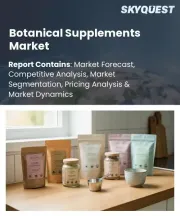
식물 유래 보충제란 허브, 향신료, 꽃, 잎 및 기타 식물 유래 성분을 사용하여 배합된 영양 보조 식품으로, 전반적인 건강 유지, 면역력 향상, 체중 관리, 뼈 건강, 소화기 건강 및 심혈관계 건강을 지원하는 제품입니다. 합성 성분에 대한 우려와 예방 의학에 대한 관심이 높아짐에 따라 소비자들은 점점 더 천연 유래의 헬스케어 솔루션으로 전환하고 있습니다. 지속적인 제품 혁신, 소매 및 E-Commerce 채널을 통한 접근성 향상, 그리고 식물 유래 성분 연구에 대한 투자 확대가 장기적인 시장 성장을 지원하고 있습니다.
시장 촉진요인
예방 의학 및 균형 잡힌 영양에 대한 의식의 향상는 식물성 건강기능식품 시장을 촉진하는 주요 요인 중 하나입니다. 선진국 및 신흥 경제권의 소비자들은 면역력 향상, 스트레스 완화, 관절 건강 유지, 체중 관리, 그리고 전반적인 건강 유지를 목적으로 식물성 건강기능식품을 점점 더 많이 섭취하고 있습니다. 정부의 건강 계몽 캠페인과 영양 결핍에 대한 교육 강화가 소비자들이 식물성 영양 보충제에 투자하도록 지원하고 있습니다.
또 다른 중요한 성장 요인은 의약품에서 식물성·허브 유래 대체품으로의 전환입니다. 소비자들 사이에서는 식물성 건강기능식품이 합성 제품보다 부작용이 적고, 장기적인 건강상 이점을 제공한다는 인식이 높아지고 있습니다. 이에 대응하여 각 기업은 유기농, 클린 라벨, 그리고 과학적으로 입증된 식물 유래 제제를 시장에 출시하고 있습니다. 2023년 3월, 노벨라(Novella)사는 고부가가치 식물 유래 미량영양소를 생산하기 위한 기술 플랫폼을 도입하여, 전 세계에서 영양 기능성 식품 원료에 대한 접근성을 높이는 데 기여했습니다.
시장 제약 요인
수요는 견고하지만, 시장은 몇 가지 과제에 직면해 있습니다. 식물 유래 보충제에는 많은 경우 유효 성분의 복잡한 혼합물이 포함되어 있으며, 그 효과는 식물 종, 재배 조건, 수확 방법, 추출 기술에 따라 달라집니다. 제품 품질의 일관성을 유지하는 것은 여전히 어려운 과제입니다.
또한 합성 대체품이나 화학적으로 조제된 보충제의 접근성이 계속해서 경쟁 요인으로 작용하고 있습니다. 표준화의 부족, 일관성 없는 임상적 근거, 그리고 식물성 성분의 효능 검증에 관한 규제상의 복잡성도 시장에서 더 광범위한 보급을 저해하는 요인이 될 수 있습니다.
시장 기회
식물성 성분의 추출 및 제형 기술 분야의 혁신은 제조업체에게 큰 기회를 제공하고 있습니다. 소비자들은 과학적 연구를 통해 입증된 천연 항산화제, 플라보노이드, 폴리페놀, 피토뉴트리언트를 함유한 제품을 점점 더 많이 찾고 있습니다.
클린 라벨, 비건, 비유전자변형, 유기농 보충제에 대한 수요 증가는 기업이 프리미엄 식물 유래 배합을 개발하도록 촉진하고 있습니다. 온라인 소매 채널의 확대와 약국 및 슈퍼마켓에서의 제품 접근성 향상으로 인해 예측 기간 중 시장 성장은 더욱 가속화될 것으로 예상됩니다.
시장 동향
식물성 보충제 시장에 영향을 미치는 주요 동향 중 하나는 기능성 영양 제품에 프리미엄 식물성 성분의 사용이 증가하고 있다는 점입니다. 소비자들은 아슈와간다, 커큐민, 녹차, 바코파, 보스웰리아 및 기타 건강 효능으로 알려진 식물 추출물을 함유한 제품을 적극적으로 찾고 있습니다.
각 제조사는 성분의 효능을 입증하기 위한 연구개발에 막대한 투자를 하는 한편, 혁신적인 풍미, 편리한 섭취 형태, 지속가능한 포장을 도입하고 있습니다. 맞춤형 영양 및 예방 의학의 인기가 높아짐에 따라 전 세계에서 식물성 보충제에 대한 수요가 더욱 증가하고 있습니다.
지역별 분석
아시아태평양은 2025년에 188억 1,000만 달러의 시장 규모를 기록하며 계속해서 최대 지역 시장으로 자리매김하며, 2026년에는 209억 달러에 달할 것으로 예상됩니다. 중국, 인도, 일본 및 동남아시아에서 높아지는 소비자 인식, 중산층의 확대, 그리고 제품 보급률의 상승이 계속해서 이 지역의 성장을 지원하고 있습니다. 중국, 일본, 인도는 시장 확대의 주요 원동력으로 남아 있습니다.
북미는 2025년에 181억 8,000만 달러를 차지하며, 2026년에는 199억 1,000만 달러에 달할 것으로 예측됩니다. 이는 비만율 상승, 예방 의료에 대한 지출 증가, 그리고 천연 영양 제품에 대한 소비자 선호도 증가에 힘입은 결과입니다.
유럽은 2025년에 141억 5,000만 달러의 시장 규모를 기록하고, 2026년에는 156억 5,000만 달러에 달할 것으로 예상됩니다. 영양 연구에 대한 지속적인 투자, 식물 유래 성분의 혁신, 그리고 건강한 영양을 장려하는 단체들의 지원이 이 지역의 수요를 지원하고 있습니다.
중동 및 아프리카 시장은 2025년에 29억 3,000만 달러에 달하며, 건강에 대한 의식의 향상와 식물 유래 영양 보충제의 접근성 확대를 배경으로 2026년에는 32억 달러로 성장할 것으로 예측됩니다.
목차
제1장 서론
제2장 개요
제3장 시장 역학
제4장 주요 인사이트
제5장 세계의 식물 유래 보충제 시장 분석, 인사이트, 예측, 2021-2034년
제6장 북미의 식물 유래 보충제 시장 분석, 인사이트, 예측, 2021-2034년
제7장 유럽의 식물 유래 보충제 시장 분석, 인사이트, 예측, 2021-2034년
제8장 아시아태평양의 식물 유래 보충제 시장 분석, 인사이트, 예측, 2021-2034년
제9장 남미의 식물 유래 보충제 시장 분석, 인사이트, 예측, 2021-2034년
제10장 중동 및 아프리카의 식물 유래 보충제 시장 분석, 인사이트, 예측, 2021-2034년
제11장 경쟁 매트릭스
제12장 기업 개요
KSA 26.09.15Growth Factors of botanical supplements Market
The global botanical supplements market was valued at USD 60.02 billion in 2025 and is projected to grow from USD 66.20 billion in 2026 to USD 143.44 billion by 2034, registering a CAGR of 10.15% during the forecast period (2026-2034). Asia Pacific dominated the global market with a 31.34% market share in 2025, driven by rising health awareness, increasing disposable incomes, and growing demand for plant-based nutritional products.
Botanical supplements are dietary products formulated using herbs, spices, flowers, leaves, and other plant-derived ingredients to support overall wellness, immunity, weight management, bone health, digestive health, and cardiovascular health. Consumers are increasingly shifting toward natural healthcare solutions due to concerns over synthetic ingredients and the growing preference for preventive healthcare. Continuous product innovation, increasing availability through retail and e-commerce channels, and growing investments in botanical ingredient research are supporting long-term market expansion.
Market Drivers
The rising awareness regarding preventive healthcare and balanced nutrition is one of the major factors driving the botanical supplements market. Consumers across developed and emerging economies are increasingly adopting botanical supplements to improve immunity, reduce stress, support joint health, manage weight, and maintain overall wellness. Government health campaigns and increasing education regarding nutritional deficiencies are encouraging consumers to invest in plant-based dietary supplements.
Another important growth driver is the shift from pharmaceutical products toward botanical and herbal alternatives. Consumers increasingly believe that botanical supplements provide long-term health benefits with fewer side effects than synthetic products. Companies are responding by introducing organic, clean-label, and scientifically validated botanical formulations. In March 2023, Novella introduced a technology platform to produce high-value botanical micronutrients, helping improve global access to nutraceutical ingredients.
Market Restraints
Despite strong demand, the market faces several challenges. Botanical supplements often contain complex mixtures of active compounds whose effectiveness varies depending on plant species, cultivation conditions, harvesting methods, and extraction technologies. Maintaining consistent product quality remains difficult.
In addition, the availability of synthetic alternatives and chemically formulated supplements continues to create competition. Limited standardization, inconsistent clinical evidence, and regulatory complexities regarding botanical ingredient validation may also restrict wider market adoption.
Market Opportunities
Innovation in botanical ingredient extraction and formulation technologies is creating significant opportunities for manufacturers. Consumers increasingly seek products containing natural antioxidants, flavonoids, polyphenols, and phytonutrients supported by scientific research.
Growing demand for clean-label, vegan, non-GMO, and organic supplements is encouraging companies to develop premium botanical formulations. Expansion of online retail channels and increasing product availability across pharmacies and supermarkets are expected to further accelerate market growth during the forecast period.
Market Trends
One of the major trends influencing the botanical supplements market is the increasing use of premium botanical ingredients in functional nutrition products. Consumers are actively seeking products containing ashwagandha, curcumin, green tea, bacopa, boswellia, and other plant extracts known for their health benefits.
Manufacturers are investing heavily in research and development to validate ingredient efficacy while introducing innovative flavors, convenient dosage formats, and sustainable packaging. The growing popularity of personalized nutrition and preventive healthcare continues to strengthen demand for botanical supplements worldwide.
Segment Analysis
Based on form, tablets remain the leading segment due to their affordability, convenient dosage, long shelf life, and ease of transportation. Capsules, powders, liquids, and other delivery formats continue gaining popularity among consumers seeking personalized supplementation.
By source, the spices segment dominates the market owing to rising utilization of botanical extracts such as turmeric, ginger, ashwagandha, green tea, and curcumin across dietary supplements, nutraceuticals, cosmetics, and functional foods.
Based on functionality, the energy & weight management segment holds the largest market share due to increasing obesity concerns, rising fitness awareness, and growing demand for sports nutrition products. Bone & joint health, immunity, gastrointestinal health, anti-cancer formulations, and general wellness supplements continue to witness healthy demand.
By distribution channel, pharmacies and drug stores account for the largest market share with nearly 40% in 2025, supported by consumer trust, medical recommendations, and convenient product accessibility. Online retail continues to expand rapidly as consumers increasingly purchase health supplements through digital platforms.
Regional Analysis
Asia Pacific remained the largest regional market with a valuation of USD 18.81 billion in 2025 and is expected to reach USD 20.90 billion in 2026. Strong consumer awareness, expanding middle-class populations, and increasing product penetration across China, India, Japan, and Southeast Asia continue to support regional growth. China, Japan, and India remain key contributors to market expansion.
North America accounted for USD 18.18 billion in 2025 and is projected to reach USD 19.91 billion in 2026, supported by rising obesity rates, increasing preventive healthcare spending, and growing consumer preference for natural nutritional products.
Europe generated USD 14.15 billion in 2025 and is expected to reach USD 15.65 billion in 2026. Continued investments in nutritional research, innovation in botanical ingredients, and support from organizations promoting healthy nutrition are strengthening regional demand.
The Middle East & Africa market reached USD 2.93 billion in 2025 and is projected to grow to USD 3.20 billion in 2026, driven by rising health awareness and expanding availability of botanical dietary supplements.
Competitive Landscape
The global botanical supplements market remains moderately consolidated with leading companies focusing on capacity expansion, acquisitions, product innovation, and premium botanical formulations. Major industry participants include Dabur India, NBTY Inc., BASF SE, Ricola AG, Procter and Gamble, Nutraceutical International Company, The Himalaya Drug Company, Glanbia Nutritionals, Botanicalife International of America, Inc., and Proganiq.
Recent industry developments include Groupe Berkem launching its Biombalance gut health ingredient range in 2023, Kerry acquiring Natreon to strengthen its botanical ingredient portfolio, and Lemme introducing a new range of vegan botanical supplements in the U.S. market.
Conclusion
The global botanical supplements market is expected to witness strong growth through 2034, supported by rising health consciousness, increasing demand for plant-based nutrition, expanding preventive healthcare adoption, and continuous innovation in botanical ingredients. Growing consumer preference for clean-label, natural, and scientifically validated supplements, combined with expanding distribution channels and increasing investments in nutraceutical research, will continue driving long-term market expansion. With strong growth across Asia Pacific, North America, and Europe, botanical supplements are expected to remain a key segment within the global dietary supplements industry.
Segmentation By Source
- Spices
- Herbs
- Flowers
- Leaves
- Others
By Form
- Powder
- Liquid
- Tablets
- Capsules
- Others
By Functionality
- Energy & Weight Management
- General Health
- Bone & Joint Health
- Gastrointestinal Health
- Immunity
- Anti-cancer
- Others
By Distribution Channel
- Supermarkets/Hypermarkets
- Pharmacies/Drug Stores
- Online Retail
- Others
By Geography
- North America (By Source, Form, Functionality, Distribution Channel, and By Country)
- U.S. (By Distribution Channel)
- Canada (By Distribution Channel)
- Mexico (By Distribution Channel)
- Europe (By Source, Form, Functionality, Distribution Channel, and By Country)
- Germany (By Distribution Channel)
- U.K. (By Distribution Channel)
- Russia (By Distribution Channel)
- France (By Distribution Channel)
- Italy (By Distribution Channel)
- Rest of Europe (By Distribution Channel)
- Asia Pacific (By Source, Form, Functionality, Distribution Channel, and By Country)
- China (By Distribution Channel)
- India (By Distribution Channel)
- Australia (By Distribution Channel)
- Japan (By Distribution Channel)
- Rest of Asia Pacific (By Distribution Channel)
- South America (By Source, Form, Functionality, Distribution Channel, and By Country)
- Brazil (By Distribution Channel)
- Argentina (By Distribution Channel)
- Rest of South America (By Distribution Channel)
- Middle East and Africa (By Source, Form, Functionality, Distribution Channel, and By Country)
- South Africa (By Distribution Channel)
- UAE (By Distribution Channel)
- Rest of ME&A (By Distribution Channel)
Table of Content
1. Introduction
- 1.1. Research Scope
- 1.2. Market Segmentation
- 1.3. Research Methodology
- 1.4. Definitions and Assumptions
2. Executive Summary
3. Market Dynamics
- 3.1. Market Drivers
- 3.2. Market Restraints
- 3.3. Market Opportunities
- 3.4. Emerging Trends
4. Key Insights
- 4.1. Overview of the Parent/Related Markets
- 4.2. Industry SWOT Analysis
- 4.3. Supply Chain and Regulatory Analysis
- 4.4. Recent Industry Developments - Policies, Partnerships, New Product Launches, and Mergers & Acquisitions
- 4.5. Qualitative Analysis Related to COVID-19
- 4.5.1. Impact of COVID-19 on the Market
- 4.5.2. Supply Chain Challenges amidst Pandemic
- 4.5.3. Potential Opportunities due to this Global Crisis
5. Global Botanical Supplements Market Analysis, Insights and Forecast, 2021-2034
- 5.1. Key Findings / Summary
- 5.2. Market Size Estimates and Forecast
- 5.2.1. By Source
- 5.2.1.1. Spices
- 5.2.1.2. Herbs
- 5.2.1.3. Flowers
- 5.2.1.4. Leaves
- 5.2.1.5. Others
- 5.2.2. By Form
- 5.2.2.1. Powder
- 5.2.2.2. Liquid
- 5.2.2.3. Tablet
- 5.2.2.4. Capsules
- 5.2.2.5. Others
- 5.2.3. By Functionality
- 5.2.3.1. Energy & Weight Management
- 5.2.3.2. General Health
- 5.2.3.3. Bone & Joint Health
- 5.2.3.4. Gastrointestinal Health
- 5.2.3.5. Immunity
- 5.2.3.6. Anti-Cancer
- 5.2.3.7. Others
- 5.2.4. By Distribution Channel
- 5.2.4.1. Supermarkets and Hypermarkets
- 5.2.4.2. Pharmacies
- 5.2.4.3. Online Retail
- 5.2.4.4. Others
- 5.2.5. By Region
- 5.2.5.1. North America
- 5.2.5.2. Europe
- 5.2.5.3. Asia Pacific
- 5.2.5.4. South America
- 5.2.5.5. Middle East & Africa
- 5.2.1. By Source
6. North America Botanical Supplements Market Analysis, Insights and Forecast, 2021-2034
- 6.1. Key Findings / Summary
- 6.2. Market Size Estimates and Forecast
- 6.2.1. By Source
- 6.2.1.1. Spices
- 6.2.1.2. Herbs
- 6.2.1.3. Flowers
- 6.2.1.4. Leaves
- 6.2.1.5. Others
- 6.2.2. By Form
- 6.2.2.1. Powder
- 6.2.2.2. Liquid
- 6.2.2.3. Tablet
- 6.2.2.4. Capsules
- 6.2.2.5. Others
- 6.2.3. By Functionality
- 6.2.3.1. Energy & Weight Management
- 6.2.3.2. General Health
- 6.2.3.3. Bone & Joint Health
- 6.2.3.4. Gastrointestinal Health
- 6.2.3.5. Immunity
- 6.2.3.6. Anti-Cancer
- 6.2.3.7. Others
- 6.2.4. By Distribution Channel
- 6.2.4.1. Supermarkets and Hypermarkets
- 6.2.4.2. Pharmacies
- 6.2.4.3. Online Retail
- 6.2.4.4. Others
- 6.2.5. By Country (Value)
- 6.2.5.1. U.S.
- 6.2.5.1.1. By Distribution Channel
- 6.2.5.1.1.1. Supermarkets and Hypermarkets
- 6.2.5.1.1.2. Pharmacies
- 6.2.5.1.1.3. Online Retail
- 6.2.5.1.1.4. Others
- 6.2.5.1.1. By Distribution Channel
- 6.2.5.2. Canada
- 6.2.5.2.1. By Distribution Channel
- 6.2.5.2.1.1. Supermarkets and Hypermarkets
- 6.2.5.2.1.2. Pharmacies
- 6.2.5.2.1.3. Online Retail
- 6.2.5.2.1.4. Others
- 6.2.5.2.1. By Distribution Channel
- 6.2.5.3. Mexico
- 6.2.5.3.1. By Distribution Channel
- 6.2.5.3.1.1. Supermarkets and Hypermarkets
- 6.2.5.3.1.2. Pharmacies
- 6.2.5.3.1.3. Online Retail
- 6.2.5.3.1.4. Others
- 6.2.5.3.1. By Distribution Channel
- 6.2.5.1. U.S.
- 6.2.1. By Source
7. Europe Botanical Supplements Market Analysis, Insights and Forecast, 2021-2034
- 7.1. Key Findings / Summary
- 7.2. Market Size Estimates and Forecast
- 7.2.1. By Source
- 7.2.1.1. Spices
- 7.2.1.2. Herbs
- 7.2.1.3. Flowers
- 7.2.1.4. Leaves
- 7.2.1.5. Others
- 7.2.2. By Form
- 7.2.2.1. Powder
- 7.2.2.2. Liquid
- 7.2.2.3. Tablets
- 7.2.2.4. Capsules
- 7.2.2.5. Others
- 7.2.3. By Functionality
- 7.2.3.1. Energy & Weight Management
- 7.2.3.2. General Health
- 7.2.3.3. Bone & Joint Health
- 7.2.3.4. Gastrointestinal Health
- 7.2.3.5. Immunity
- 7.2.3.6. Anti-Cancer
- 7.2.3.7. Others
- 7.2.4. By Distribution Channel
- 7.2.4.1. Supermarkets and Hypermarkets
- 7.2.4.2. Pharmacies
- 7.2.4.3. Online Retail
- 7.2.4.4. Others
- 7.2.5. By Country (Value)
- 7.2.5.1. Germany
- 7.2.5.1.1. By Distribution Channel
- 7.2.5.1.1.1. Supermarkets and Hypermarkets
- 7.2.5.1.1.2. Pharmacies
- 7.2.5.1.1.3. Online Retail
- 7.2.5.1.1.4. Others
- 7.2.5.1.1. By Distribution Channel
- 7.2.5.2. France
- 7.2.5.2.1. By Distribution Channel
- 7.2.5.2.1.1. Supermarkets and Hypermarkets
- 7.2.5.2.1.2. Pharmacies
- 7.2.5.2.1.3. Online Retail
- 7.2.5.2.1.4. Others
- 7.2.5.2.1. By Distribution Channel
- 7.2.5.3. Italy
- 7.2.5.3.1. By Distribution Channel
- 7.2.5.3.1.1. Supermarkets and Hypermarkets
- 7.2.5.3.1.2. Pharmacies
- 7.2.5.3.1.3. Online Retail
- 7.2.5.3.1.4. Others
- 7.2.5.3.1. By Distribution Channel
- 7.2.5.4. U.K.
- 7.2.5.4.1. By Distribution Channel
- 7.2.5.4.1.1. Supermarkets and Hypermarkets
- 7.2.5.4.1.2. Pharmacies
- 7.2.5.4.1.3. Online Retail
- 7.2.5.4.1.4. Others
- 7.2.5.4.1. By Distribution Channel
- 7.2.5.5. Spain
- 7.2.5.5.1. By Distribution Channel
- 7.2.5.5.1.1. Supermarkets and Hypermarkets
- 7.2.5.5.1.2. Pharmacies
- 7.2.5.5.1.3. Online Retail
- 7.2.5.5.1.4. Others
- 7.2.5.5.1. By Distribution Channel
- 7.2.5.6. Rest of Europe
- 7.2.5.6.1. By Distribution Channel
- 7.2.5.6.1.1. Supermarkets and Hypermarkets
- 7.2.5.6.1.2. Pharmacies
- 7.2.5.6.1.3. Online Retail
- 7.2.5.6.1.4. Others
- 7.2.5.6.1. By Distribution Channel
- 7.2.5.1. Germany
- 7.2.1. By Source
8. Asia Pacific Botanical Supplements Market Analysis, Insights and Forecast, 2021-2034
- 8.1. Key Findings / Summary
- 8.2. Market Size Estimates and Forecast
- 8.2.1. By Source
- 8.2.1.1. Spices
- 8.2.1.2. Herbs
- 8.2.1.3. Flowers
- 8.2.1.4. Leaves
- 8.2.1.5. Others
- 8.2.2. By Form
- 8.2.2.1. Powder
- 8.2.2.2. Liquid
- 8.2.2.3. Tablets
- 8.2.2.4. Capsules
- 8.2.2.5. Others
- 8.2.3. By Functionality
- 8.2.3.1. Energy & Weight Management
- 8.2.3.2. General Health
- 8.2.3.3. Bone & Joint Health
- 8.2.3.4. Gastrointestinal Health
- 8.2.3.5. Immunity
- 8.2.3.6. Anti-Cancer
- 8.2.3.7. Others
- 8.2.4. By Distribution Channel
- 8.2.4.1. Supermarkets and Hypermarkets
- 8.2.4.2. Pharmacies
- 8.2.4.3. Online Retail
- 8.2.4.4. Others
- 8.2.5. By Country (Value)
- 8.2.5.1. China
- 8.2.5.1.1. By Distribution Channel
- 8.2.5.1.1.1. Supermarkets and Hypermarkets
- 8.2.5.1.1.2. Pharmacies
- 8.2.5.1.1.3. Online Retail
- 8.2.5.1.1.4. Others
- 8.2.5.1.1. By Distribution Channel
- 8.2.5.2. India
- 8.2.5.2.1. By Distribution Channel
- 8.2.5.2.1.1. Supermarkets and Hypermarkets
- 8.2.5.2.1.2. Pharmacies
- 8.2.5.2.1.3. Online Retail
- 8.2.5.2.1.4. Others
- 8.2.5.2.1. By Distribution Channel
- 8.2.5.3. Japan
- 8.2.5.3.1. By Distribution Channel
- 8.2.5.3.1.1. Supermarkets and Hypermarkets
- 8.2.5.3.1.2. Pharmacies
- 8.2.5.3.1.3. Online Retail
- 8.2.5.3.1.4. Others
- 8.2.5.3.1. By Distribution Channel
- 8.2.5.4. Australia
- 8.2.5.4.1. By Distribution Channel
- 8.2.5.4.1.1. Supermarkets and Hypermarkets
- 8.2.5.4.1.2. Pharmacies
- 8.2.5.4.1.3. Online Retail
- 8.2.5.4.1.4. Others
- 8.2.5.4.1. By Distribution Channel
- 8.2.5.5. Rest of Asia Pacific
- 8.2.5.5.1. By Distribution Channel
- 8.2.5.5.1.1. Supermarkets and Hypermarkets
- 8.2.5.5.1.2. Pharmacies
- 8.2.5.5.1.3. Online Retail
- 8.2.5.5.1.4. Others
- 8.2.5.5.1. By Distribution Channel
- 8.2.5.1. China
- 8.2.1. By Source
9. South America Botanical Supplements Market Analysis, Insights and Forecast, 2021-2034
- 9.1. Key Findings / Summary
- 9.2. Market Size Estimates and Forecast
- 9.2.1. By Source
- 9.2.1.1. Spices
- 9.2.1.2. Herbs
- 9.2.1.3. Flowers
- 9.2.1.4. Leaves
- 9.2.1.5. Others
- 9.2.2. By Form
- 9.2.2.1. Powder
- 9.2.2.2. Liquid
- 9.2.2.3. Tablets
- 9.2.2.4. Capsules
- 9.2.2.5. Others
- 9.2.3. By Functionality
- 9.2.3.1. Energy & Weight Management
- 9.2.3.2. General Health
- 9.2.3.3. Bone & Joint Health
- 9.2.3.4. Gastrointestinal Health
- 9.2.3.5. Immunity
- 9.2.3.6. Anti-Cancer
- 9.2.3.7. Others
- 9.2.4. By Distribution Channel
- 9.2.4.1. Supermarkets and Hypermarkets
- 9.2.4.2. Pharmacies
- 9.2.4.3. Online Retail
- 9.2.4.4. Others
- 9.2.5. By Country (Value)
- 9.2.5.1. Brazil
- 9.2.5.1.1. By Distribution Channel
- 9.2.5.1.1.1. Supermarkets and Hypermarkets
- 9.2.5.1.1.2. Pharmacies
- 9.2.5.1.1.3. Online Retail
- 9.2.5.1.1.4. Others
- 9.2.5.1.1. By Distribution Channel
- 9.2.5.2. Argentina
- 9.2.5.2.1. By Distribution Channel
- 9.2.5.2.1.1. Supermarkets and Hypermarkets
- 9.2.5.2.1.2. Pharmacies
- 9.2.5.2.1.3. Online Retail
- 9.2.5.2.1.4. Others
- 9.2.5.2.1. By Distribution Channel
- 9.2.5.3. Rest of South America
- 9.2.5.3.1. By Distribution Channel
- 9.2.5.3.1.1. Supermarkets and Hypermarkets
- 9.2.5.3.1.2. Pharmacies
- 9.2.5.3.1.3. Online Retail
- 9.2.5.3.1.4. Others
- 9.2.5.3.1. By Distribution Channel
- 9.2.5.1. Brazil
- 9.2.1. By Source
10. Middle East & Africa Botanical Supplements Market Analysis, Insights and Forecast, 2021-2034
- 10.1. Key Findings / Summary
- 10.2. Market Size Estimates and Forecast
- 10.2.1. By Source
- 10.2.1.1. Spices
- 10.2.1.2. Herbs
- 10.2.1.3. Flowers
- 10.2.1.4. Leaves
- 10.2.1.5. Others
- 10.2.2. By Form
- 10.2.2.1. Powder
- 10.2.2.2. Liquid
- 10.2.2.3. Tablets
- 10.2.2.4. Capsules
- 10.2.2.5. Others
- 10.2.3. By Functionality
- 10.2.3.1. Energy & Weight Management
- 10.2.3.2. General Health
- 10.2.3.3. Bone & Joint Health
- 10.2.3.4. Gastrointestinal Health
- 10.2.3.5. Immunity
- 10.2.3.6. Anti-Cancer
- 10.2.3.7. Others
- 10.2.4. By Distribution Channel
- 10.2.4.1. Supermarkets and Hypermarkets
- 10.2.4.2. Pharmacies
- 10.2.4.3. Online Retail
- 10.2.4.4. Others
- 10.2.5. By Country (Value)
- 10.2.5.1. South Africa
- 10.2.5.1.1. By Distribution Channel
- 10.2.5.1.1.1. Supermarkets and Hypermarkets
- 10.2.5.1.1.2. Pharmacies
- 10.2.5.1.1.3. Online Retail
- 10.2.5.1.1.4. Others
- 10.2.5.1.1. By Distribution Channel
- 10.2.5.2. UAE
- 10.2.5.2.1. By Distribution Channel
- 10.2.5.2.1.1. Supermarkets and Hypermarkets
- 10.2.5.2.1.2. Pharmacies
- 10.2.5.2.1.3. Online Retail
- 10.2.5.2.1.4. Others
- 10.2.5.2.1. By Distribution Channel
- 10.2.5.3. Rest of Middle East & Africa
- 10.2.5.3.1. By Distribution Channel
- 10.2.5.3.1.1. Supermarkets and Hypermarkets
- 10.2.5.3.1.2. Pharmacies
- 10.2.5.3.1.3. Online Retail
- 10.2.5.3.1.4. Others
- 10.2.5.3.1. By Distribution Channel
- 10.2.5.1. South Africa
- 10.2.1. By Source
11. Competitive Matrix
- 11.1. Business Strategies Adopted by Leading Players
- 11.2. Global Botanical Supplements Market Revenue Share/Ranking Analysis, By Key Manufacturer
12. Company Profiles
- 12.1. Dabur India
- 12.1.1. Overview
- 12.1.2. Description
- 12.1.3. Product Portfolio
- 12.1.4. Financials (Data as available in public domain and/or on paid databases)
- 12.1.5. Recent Developments
- 12.2. NBTY Inc.
- 12.2.1. Overview
- 12.2.2. Description
- 12.2.3. Product Portfolio
- 12.2.4. Financials (Data as available in public domain and/or on paid databases)
- 12.2.5. Recent Developments
- 12.3. Ricola AG
- 12.3.1. Overview
- 12.3.2. Description
- 12.3.3. Product Portfolio
- 12.3.4. Financials (Data as available in public domain and/or on paid databases)
- 12.3.5. Recent Developments
- 12.4. Procter and Gamble
- 12.4.1. Overview
- 12.4.2. Description
- 12.4.3. Product Portfolio
- 12.4.4. Financials (Data as available in public domain and/or on paid databases)
- 12.4.5. Recent Developments
- 12.5. Nutraceutical International Company
- 12.5.1. Overview
- 12.5.2. Description
- 12.5.3. Product Portfolio
- 12.5.4. Financials (Data as available in public domain and/or on paid databases)
- 12.5.5. Recent Developments
- 12.6. BASF SE
- 12.6.1. Overview
- 12.6.2. Description
- 12.6.3. Product Portfolio
- 12.6.4. Financials (Data as available in public domain and/or on paid databases)
- 12.6.5. Recent Developments
- 12.7. The Himalaya Drug Company
- 12.7.1. Overview
- 12.7.2. Description
- 12.7.3. Product Portfolio
- 12.7.4. Financials (Data as available in public domain and/or on paid databases)
- 12.7.5. Recent Developments
- 12.8. Glanbia Nutritionals
- 12.8.1. Overview
- 12.8.2. Description
- 12.8.3. Product Portfolio
- 12.8.4. Financials (Data as available in public domain and/or on paid databases)
- 12.8.5. Recent Developments
- 12.9. Botanicalife International of America, Inc.
- 12.9.1. Overview
- 12.9.2. Description
- 12.9.3. Product Portfolio
- 12.9.4. Financials (Data as available in public domain and/or on paid databases)
- 12.9.5. Recent Developments
- 12.10. Prorganiq
- 12.10.1. Overview
- 12.10.2. Description
- 12.10.3. Product Portfolio
- 12.10.4. Financials (Data as available in public domain and/or on paid databases)
- 12.10.5. Recent Developments