|
시장보고서
상품코드
2120141
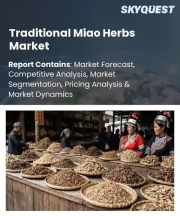
전통 묘족 약초 시장 규모, 점유율 및 성장 분석 : 제품 유형별, 용도별, 제형별, 유통 채널별, 최종사용자별, 지역별 - 업계 예측(2026-2033년)Traditional Miao Herbs Market Size, Share, and Growth Analysis, By Product Type (Herbal Medicines, Herbal Extracts), By Application, By Form, By Distribution Channel, By End User, By Region - Industry Forecast 2026-2033 |
||||||

세계의 전통 묘족 약초 시장 규모는 2024년에 41억 8,000만 달러로 평가되며, 2025년 44억 8,000만 달러에서 2033년까지 77억 5,000만 달러로 확대하며, 예측 기간(2026-2033년)에 CAGR 7.1%로 성장할 것으로 전망되고 있습니다.
묘족 전통 약초 시장은 묘족의 풍부한 문화 유산으로부터 큰 영향을 받고 있으며, 이는 사람들의 호기심과 소비를 모두 촉진하고 있습니다. 가스트로디아 엘라타(Gastrodia elata)나 폴리고눔 멀티플로룸(Polygonum multiflorum)과 같은 주요 생약은 류머티즘이나 소화기 계통의 불편함 등 질환을 치료하는 전통 의학에서 중요한 역할을 하고 있습니다. 시장이 농촌 지역의 거래에서 체계적인 공급망으로 진화함에 따라 천연 건강 솔루션을 찾는 소비자의 수요에 힘입어 묘족의 생약이 영양 기능성 식품 분야에 점점 더 많이 도입되고 있습니다. AI 기술의 도입으로 재배, 품질관리, 공급망의 효율화가 촉진되어 자원 관리 개선과 제품 품질 안정화가 가능해졌습니다. 이러한 데이터베이스 접근 방식으로의 전환은 새로운 투자자를 유치하고 소비자의 신뢰를 높이며, 궁극적으로 아시아와 유럽 전역에서 시장의 추가적인 확장을 위한 길을 열어줄 것입니다.
세계 묘족 전통 허브 시장의 성장 요인
전 세계 묘족 전통 허브 시장의 확대는 자연주의 건강법에 대한 소비자의 관심 증가, 문화유산에 대한 평가, 그리고 허브 요법의 이점에 대한 인식에 힘입어 추진되고 있습니다. 이러한 열기 고조로 인해 소매업체들은 취급 상품의 폭을 넓혀야 하는 압박을 받고 있는 반면, 제조업체들은 고품질 원료 확보와 가공 방법 개선에 주력하고 있습니다. 그 결과, 시장의 인지도가 높아지고 새로운 참여자를 유치하며 선순환을 만들어내고 있습니다. 소비자들은 일상에서 사용할 수 있는 정통적이고 윤리적으로 조달된 허브 제품을 점점 더 많이 찾고 있으며, 지식 공유를 촉진하고 시장내 신뢰를 구축하는 온라인 플랫폼과 커뮤니티 워크숍이 이러한 추세를 지원하고 있습니다.
세계 묘족 전통 허브 시장의 제약 요인
전 세계 묘족 전통 허브 시장은 성장을 저해하는 규제적 제약으로 인해 큰 과제에 직면해 있습니다. 이러한 규제로 인해 엄격한 승인 절차, 까다로운 표시 요건, 포괄적인 안전성 평가가 부과되어 제품을 시장에 출시하기까지의 기간이 길어지고 있습니다. 그 결과, 제조업체는 다양한 국가의 기준을 충족하기 위해 막대한 자원을 투입할 수밖에 없으며, 경우에 따라는 제품 성분 변경이나 특정 시장에서의 철수를 감수해야만 합니다. 이러한 상황은 소규모 생산자의 시장 진입을 방해하는 경우가 많아, 결과적으로 소비자가 선택할 수 있는 묘족 허브 제품의 선택지가 제한되고 있습니다. 결국, 규정 준수 비용의 급증과 예측 불가능한 규제 환경이 시장의 잠재력과 소비자의 접근성을 저해하고 있습니다.
세계 묘족 전통 허브 시장의 동향
세계 묘족 전통 허브 시장에서는 전체론적인 웰니스 접근 방식과 현대적인 라이프스타일의 융합을 특징으로 하는 역동적인 동향이 나타나고 있습니다. 소비자들은 고대의 허브 지혜와 현대적인 건강 습관을 융합한 건강 솔루션을 적극적으로 찾고 있으며, 이에 따라 각 제조사들은 묘족 허브를 기능성 식품, 영양 보충제 및 개별 맞춤형 웰니스 프로그램에 접목하고 있습니다. 이러한 추세에 따라 브랜드와 웰니스 분야 인플루언서 간에 전략적 파트너십이 체결되고 있으며, 스트레스 관리, 면역력 향상, 활력 증진 등의 측면에서 이러한 식물 성분이 가져다주는 시너지 효과에 대한 소비자의 이해가 깊어지고 있습니다. 그 결과 유통 채널이 지속적으로 확대되고 있으며, 기존의 전문점을 넘어 전 세계에서 일반 소매점과 E-Commerce 플랫폼으로까지 그 영역을 넓혀가고 있습니다.
자주 묻는 질문
목차
서론
조사 방법
개요
시장 역학과 전망
주요 시장 인사이트
세계의 전통 묘족 약초 시장 규모 : 제품 유형별
세계의 전통 묘족 약초 시장 규모 : 용도별
세계의 전통 묘족 약초 시장 규모 : 제형별
세계의 전통 묘족 약초 시장 규모 : 유통 채널별
세계의 전통 묘족 약초 시장 규모 : 최종사용자별
세계의 전통 묘족 약초 시장 규모 : 지역별
경쟁 정보
주요 기업 개요
결론과 제안
KSA 26.09.04Global Traditional Miao Herbs Market size was valued at USD 4.18 Billion in 2024 and is poised to grow from USD 4.48 Billion in 2025 to USD 7.75 Billion by 2033, growing at a CAGR of 7.1% during the forecast period (2026-2033).
The Traditional Miao Herbs market is significantly influenced by the rich cultural heritage of the Miao people, driving both curiosity and consumption. Key botanicals such as Gastrodia elata and Polygonum multiflorum play vital roles in traditional medicine, targeting ailments like rheumatism and digestive issues. As the market evolves from rural exchanges to structured supply chains, there is a growing integration of Miao herbs into the nutraceutical sector, fueled by consumer demand for natural health solutions. The adoption of AI technologies is enhancing cultivation, quality control, and supply chain efficiency, allowing for better resource management and product consistency. This shift toward data-driven methods is attracting new investors and boosting consumer confidence, ultimately paving the way for broader market expansion across Asia and Europe.
Top-down and bottom-up approaches were used to estimate and validate the size of the Global Traditional Miao Herbs market and to estimate the size of various other dependent submarkets. The research methodology used to estimate the market size includes the following details: The key players in the market were identified through secondary research, and their market shares in the respective regions were determined through primary and secondary research. This entire procedure includes the study of the annual and financial reports of the top market players and extensive interviews for key insights from industry leaders such as CEOs, VPs, directors, and marketing executives. All percentage shares split, and breakdowns were determined using secondary sources and verified through Primary sources. All possible parameters that affect the markets covered in this research study have been accounted for, viewed in extensive detail, verified through primary research, and analyzed to get the final quantitative and qualitative data.
Global Traditional Miao Herbs Market Segments Analysis
Global traditional miao herbs market is segmented by product type, application, form, distribution channel, end user and region. Based on product type, the market is segmented into Herbal Medicines, Herbal Extracts, Herbal Powders and Herbal Oils. Based on application, the market is segmented into Pain Relief, Skin Care, Digestive Health and Women's Health. Based on form, the market is segmented into Capsules, Tablets, Powder and Liquid. Based on distribution channel, the market is segmented into Traditional Medicine Stores, Pharmacies and Online Retail. Based on end user, the market is segmented into Individual Consumers and Traditional Medicine Practitioners. Based on region, the market is segmented into North America, Europe, Asia Pacific, Latin America and Middle East & Africa.
Driver of the Global Traditional Miao Herbs Market
The expansion of the Global Traditional Miao Herbs market is fueled by a rising consumer interest in natural wellness options, an appreciation for cultural heritage, and the perceived advantages of herbal remedies. This growing enthusiasm compels retailers to broaden their product offerings while manufacturers focus on obtaining high-quality raw materials and enhancing processing methods. As a result, the market becomes more visible, attracting new participants and creating a positive growth cycle. Consumers increasingly seek authentic, ethically sourced herbal products for everyday use, facilitated through online platforms and community workshops that promote knowledge-sharing and build trust within the market.
Restraints in the Global Traditional Miao Herbs Market
The Global Traditional Miao Herbs market faces significant challenges due to regulatory restrictions that hinder its growth. These regulations impose rigorous approval processes, stringent labeling requirements, and comprehensive safety evaluations, which prolong the time needed to bring products to market. As a result, manufacturers are compelled to invest considerable resources in navigating the diverse national standards, sometimes requiring them to reformulate products or withdraw from certain markets. This situation often deters smaller producers from entering the industry, leading to a limited selection of Miao herb products for consumers. Ultimately, heightened compliance costs and unpredictable regulatory conditions stifle market potential and consumer access.
Market Trends of the Global Traditional Miao Herbs Market
The Global Traditional Miao Herbs market is witnessing a dynamic trend characterized by the fusion of holistic wellness approaches with modern lifestyle integrations. Consumers are actively pursuing health solutions that merge ancient herbal wisdom with contemporary health practices, prompting manufacturers to incorporate Miao herbs into functional foods, nutraceuticals, and tailored wellness regimens. This trend has led to strategic partnerships between brands and wellness influencers, enhancing consumer education on the synergistic benefits of these botanicals for stress management, immune enhancement, and vitality. Consequently, there is a growing expansion of distribution channels, transcending traditional specialty stores to embrace mainstream retail and e-commerce platforms on a global scale.
Table of Contents
Introduction
- Objectives of the Study
- Market Definition & Scope
Research Methodology
- Research Process
- Secondary & Primary Data Methods
- Market Size Estimation Methods
Executive Summary
- Global Market Outlook
- Key Market Highlights
- Segmental Overview
- Competition Overview
Market Dynamics & Outlook
- Macro-Economic Indicators
- Drivers & Opportunities
- Restraints & Challenges
- Supply Side Trends
- Demand Side Trends
- Porters Analysis & Impact
- Competitive Rivalry
- Threat of Substitute
- Bargaining Power of Buyers
- Threat of New Entrants
- Bargaining Power of Suppliers
Key Market Insights
- Key Success Factors
- Market Impacting Factors
- Top Investment Pockets
- Ecosystem Mapping
- Market Attractiveness Index 2025
- PESTEL Analysis
- Regulatory Landscape
Global Traditional Miao Herbs Market Size by Product Type & CAGR (2026-2033)
- Market Overview
- Herbal Medicines
- Herbal Extracts
- Herbal Powders
- Herbal Oils
Global Traditional Miao Herbs Market Size by Application & CAGR (2026-2033)
- Market Overview
- Pain Relief
- Skin Care
- Digestive Health
- Women's Health
Global Traditional Miao Herbs Market Size by Form & CAGR (2026-2033)
- Market Overview
- Capsules
- Tablets
- Powder
- Liquid
Global Traditional Miao Herbs Market Size by Distribution Channel & CAGR (2026-2033)
- Market Overview
- Traditional Medicine Stores
- Pharmacies
- Online Retail
Global Traditional Miao Herbs Market Size by End User & CAGR (2026-2033)
- Market Overview
- Individual Consumers
- Traditional Medicine Practitioners
Global Traditional Miao Herbs Market Size & CAGR (2026-2033)
- North America (Product Type, Application, Form, Distribution Channel, End User)
- US
- Canada
- Europe (Product Type, Application, Form, Distribution Channel, End User)
- Germany
- Spain
- France
- UK
- Italy
- Rest of Europe
- Asia Pacific (Product Type, Application, Form, Distribution Channel, End User)
- China
- India
- Japan
- South Korea
- Rest of Asia-Pacific
- Latin America (Product Type, Application, Form, Distribution Channel, End User)
- Mexico
- Brazil
- Rest of Latin America
- Middle East & Africa (Product Type, Application, Form, Distribution Channel, End User)
- GCC Countries
- South Africa
- Rest of Middle East & Africa
Competitive Intelligence
- Top 5 Player Comparison
- Market Positioning of Key Players, 2025
- Strategies Adopted by Key Market Players
- Recent Developments in the Market
- Company Market Share Analysis, 2025
- Company Profiles of All Key Players
- Company Details
- Product Portfolio Analysis
- Company's Segmental Share Analysis
- Revenue Y-O-Y Comparison (2023-2025)
Key Company Profiles
- Tong Ren Tang Technologies Co. Ltd.
- Company Overview
- Business Segment Overview
- Financial Updates
- Key Developments
- Guizhou Bailing Group Pharmaceutical Co., Ltd.
- Company Overview
- Business Segment Overview
- Financial Updates
- Key Developments
- Tasly Holding Group Co., Ltd.
- Company Overview
- Business Segment Overview
- Financial Updates
- Key Developments
- Yunnan Baiyao Group Co., Ltd.
- Company Overview
- Business Segment Overview
- Financial Updates
- Key Developments
- Guangzhou Pharmaceutical Holdings Limited
- Company Overview
- Business Segment Overview
- Financial Updates
- Key Developments
- China Resources Sanjiu Medical & Pharmaceutical Co., Ltd.
- Company Overview
- Business Segment Overview
- Financial Updates
- Key Developments
- Guizhou Xinbang Pharmaceutical Co., Ltd.
- Company Overview
- Business Segment Overview
- Financial Updates
- Key Developments
- KPC Pharmaceuticals, Inc.
- Company Overview
- Business Segment Overview
- Financial Updates
- Key Developments
- Beijing TRT Health Pharmaceutical Group
- Company Overview
- Business Segment Overview
- Financial Updates
- Key Developments
- Xiuzheng Pharmaceutical Group
- Company Overview
- Business Segment Overview
- Financial Updates
- Key Developments
- Tianjin Zhongxin Pharmaceutical Group
- Company Overview
- Business Segment Overview
- Financial Updates
- Key Developments
- Guizhou Sanli Pharmaceutical Co., Ltd.
- Company Overview
- Business Segment Overview
- Financial Updates
- Key Developments
- Guizhou Hanfang Pharmaceutical Co., Ltd.
- Company Overview
- Business Segment Overview
- Financial Updates
- Key Developments
- Guizhou Dechangxiang Pharmaceutical Co., Ltd.
- Company Overview
- Business Segment Overview
- Financial Updates
- Key Developments
- Guizhou Weimen Pharmaceutical Co., Ltd.
- Company Overview
- Business Segment Overview
- Financial Updates
- Key Developments
- Shineway Pharmaceutical Group Ltd.
- Company Overview
- Business Segment Overview
- Financial Updates
- Key Developments
- Jilin Aodong Pharmaceutical Group Co., Ltd.
- Company Overview
- Business Segment Overview
- Financial Updates
- Key Developments
- Buchang Pharmaceuticals Co., Ltd.
- Company Overview
- Business Segment Overview
- Financial Updates
- Key Developments
- Kunming Pharmaceutical Group Co., Ltd.
- Company Overview
- Business Segment Overview
- Financial Updates
- Key Developments
- Guizhou Yibai Pharmaceutical Co., Ltd.
- Company Overview
- Business Segment Overview
- Financial Updates
- Key Developments