|
시장보고서
상품코드
1716675
무글루텐 식품 시장 기회, 성장 촉진요인, 산업 동향 분석 및 예측(2025-2034년)Gluten Free Food Market Opportunity, Growth Drivers, Industry Trend Analysis, and Forecast 2025 - 2034 |
||||||

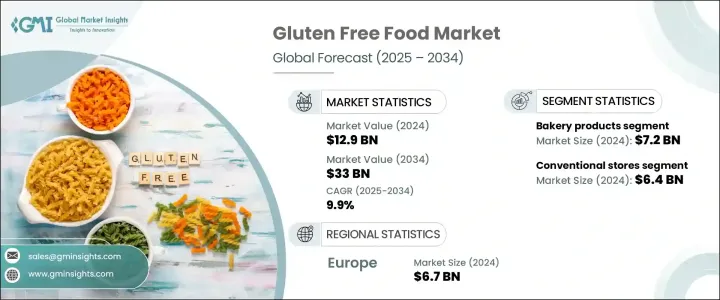
세계의 무글루텐 식품 시장은 2024년에 129억 달러로 평가되었고, 2025년부터 2034년에 걸쳐 CAGR 9.9%를 나타낼 것으로 예측됩니다.
이 현저한 성장은 글루텐 불내증, 세리악병, 무글루텐 식품과 관련된 광범위한 건강상의 이점에 대한 소비자의 의식이 증가함에 따라 소비자의 식생활에 대한 의식이 높아짐에 따라 무글루텐 식품은 더 이상 특정 질병을 가진 사람들을 위한 니트 치제품이 아닌 주류의 건강 트렌드의 일부로 간주되고 있습니다.
세리악병에 걸리지 않은 개인도 소화 촉진, 에너지 레벨 향상, 체중 관리를 위해 무글루텐 제품을 선택하게 되어 있어 시장의 상승 기조를 강화하고 있습니다. 각 브랜드는 혁신적인 제품 시리즈를 투입해, 원재료의 투명성을 중시하는 것으로, 이 수요를 받아들여 있어, 건강 지향의 바이어의 강한 공감을 불러 일으키고 있습니다.
| 시장 범위 | |
|---|---|
| 시작 연도 | 2024년 |
| 예측 연도 | 2025-2034년 |
| 시작 금액 | 129억 달러 |
| 예측 금액 | 330억 달러 |
| CAGR | 9.9% |
시장 성장을 크게 견인하고 있는 것은 무글루텐 제품의 다양화입니다. 처음에는 빵과 페이스트리가 중심이었던 무글루텐 시장은 소비자의 취향의 변화와 편의성에 대한 요구 증가에 대응하고, 스낵 과자, 조리된 식품, 음료, 파스타, 대체 유제품으로 대폭 확대하고 있습니다. 온라인 쇼핑의 붐과 소매점에서의 무글루텐 제품의 구색의 충실도, 소비자가 이러한 식품을 입수하기 쉽게 하고 있습니다.
슈퍼마켓이나 하이퍼마켓에서는 통로 전체가 무글루텐 상품의 매장이 되고 있어 E-Commerce 플랫폼에서는 보다 풍부한 구색을 소비자의 손에 전달하고 있습니다. 클린 라벨이나 유기농으로 단백질이 풍부한 원재료를 요구하는 동향은 아몬드 분말, 코코넛 분말, 키누아 분말 등 천연의 대용품을 탐구하는 제조업체를 촉진해, 무글루텐 제품의 영양가나 매력을 높이고 있습니다. 이러한 혁신은 건강 문제에 대응할 뿐만 아니라 맛과 품질에 대한 소비자의 기대에도 부응하고 있습니다.
무글루텐 식품 시장은 전통적인 소매점, 호텔 레스토랑, 교육 기관, 전자상거래 플랫폼, 전문 서비스, 병원 및 약국으로 구분됩니다. 퍼마켓이 무글루텐 제품의 풍부한 구색으로 주도권을 잡고 있습니다. 신흥 브랜드와 기존 식품 회사 모두가 무글루텐 제품을 보다 저렴한 가격으로 널리 입수할 수 있도록 무글루텐 제품의 라인업을 확대하고 있습니다.
베이커리 부문도 지배적인 카테고리이며, 2024년에는 72억 달러에 달해 무글루텐 빵, 케이크, 쿠키, 패스트리에 대한 수요가 높았습니다. 제조업체는 식감, 풍미, 보존성의 향상에 주력하고 있습니다.
유럽의 무글루텐 식품 시장은 2024년에 67억 달러에 달했지만, 이는 글루텐과 관련된 건강 문제에 대한 의식이 증가하고 균형 잡힌 영양가 있는 식단 옵션으로의 변화가 증가하는 요인입니다.
목차
제1장 조사 방법과 조사 범위
제2장 주요 요약
제3장 업계 인사이트
- 생태계 분석
- 밸류체인에 영향을 주는 요인
- 이익률 분석
- 파괴적 혁신
- 향후 전망
- 제조업체
- 유통업체
- 공급자의 상황
- 이익률 분석
- 주요 뉴스와 대처
- 규제 상황
- 영향요인
- 성장 촉진요인
- 세리악병 증가
- 건강과 웰빙 동향
- 파괴적 혁신과 제품 개발
- 업계의 잠재적 위험 및 과제
- 고비용 구조
- 성장 촉진요인
- 성장 가능성 분석
- Porter's Five Forces 분석
- PESTEL 분석
제4장 경쟁 구도
- 서론
- 기업 점유율 분석
- 경쟁 포지셔닝 매트릭스
- 전략 전망 매트릭스
제5장 시장 추계·예측 : 제품별(2021-2034년)
- 주요 동향
- 베이커리 제품
- 이유식
- 즉석 식사
- 시리얼 및 스낵
- 피자 및 파스타
- 세이보리
- 기타
제6장 시장 추계·예측 : 유통 채널별(2021-2034년)
- 주요 동향
- 기존 점포
- 호텔 및 레스토랑
- 교육기관
- E 리테일러
- 전문 서비스
- 병원 및 약국
제7장 시장 추계·예측 : 지역별(2021-2034년)
- 주요 동향
- 북미
- 미국
- 캐나다
- 유럽
- 독일
- 영국
- 프랑스
- 스페인
- 이탈리아
- 러시아
- 아시아태평양
- 중국
- 인도
- 일본
- 호주
- 한국
- 라틴아메리카
- 브라질
- 멕시코
- 아르헨티나
- 중동 및 아프리카
- 사우디아라비아
- 남아프리카
- 아랍에미리트(UAE)
제8장 기업 프로파일
- Boulder Brands
- Cerealto
- Conagra Brands
- Dr. Schar
- Enjoy Life Foods
- General Mills
- Glutafin
- Hero Group
- Kellogg's Company
- Pinnacle Foods
- Prima Foods
- Seitz Glutenfrei
- Silky Yay Foods
- True Foods
- Wheafree
The Global Gluten Free Food Market was valued at USD 12.9 billion in 2024 and is projected to grow at a CAGR of 9.9% between 2025 and 2034. This remarkable growth stems from rising consumer awareness about gluten intolerance, celiac disease, and the broader health benefits linked to gluten-free diets. As consumers become more conscious of their dietary choices, gluten-free foods are no longer seen as niche products for people with specific medical conditions but as part of a mainstream health trend. People are increasingly recognizing that gluten may contribute to digestive issues, inflammation, and other health concerns, pushing them to choose gluten-free options for overall wellness.
Even individuals without celiac disease are turning to gluten-free products to promote better digestion, energy levels, and weight management, reinforcing the market's upward trajectory. The growing adoption of clean-label products and plant-based diets further supports the demand for gluten-free alternatives, as consumers seek natural and minimally processed food choices. Brands are tapping into this demand by introducing innovative product ranges and focusing on transparency around ingredients, which is resonating strongly with health-conscious buyers. With food sensitivities and dietary preferences driving modern consumption habits, gluten-free foods are rapidly gaining traction worldwide.
| Market Scope | |
|---|---|
| Start Year | 2024 |
| Forecast Year | 2025-2034 |
| Start Value | $12.9 Billion |
| Forecast Value | $33 Billion |
| CAGR | 9.9% |
The market's growth is largely driven by the diversification of gluten-free product offerings that now go far beyond traditional baked goods. Initially focused on bread and pastries, the gluten-free market has significantly expanded to include snacks, ready-to-eat meals, beverages, pasta, and dairy alternatives, catering to evolving consumer tastes and the rising demand for convenience. The boom in online shopping and the broader availability of gluten-free products in retail outlets have also made it easier for consumers to access these foods.
Supermarkets and hypermarkets are dedicating entire aisles to gluten-free items, while e-commerce platforms offer a wider assortment delivered right to consumers' doors. The trend toward clean labels and organic, protein-rich ingredients has prompted manufacturers to explore natural substitutes like almond flour, coconut flour, and quinoa flour, which are enhancing the nutritional value and appeal of gluten-free products. These innovations are not only addressing health concerns but also meeting consumers' expectations for taste and quality.
The gluten free food market is segmented into traditional retail stores, hotels and restaurants, educational institutions, e-commerce platforms, specialty services, and hospitals and drug stores. In 2024, traditional retail stores accounted for USD 6.4 billion, with supermarkets and hypermarkets taking the lead in offering a vast range of gluten-free products. Both emerging brands and established food companies are expanding their gluten-free lines to make these products more affordable and widely available.
The bakery segment also remained a dominant category, generating USD 7.2 billion in 2024, with gluten-free bread, cakes, cookies, and pastries in high demand. Consumers are increasingly seeking healthier and tastier baked goods, prompting manufacturers to focus on improving texture, flavor, and shelf life. Another fast-growing segment is gluten-free baby food, as more parents aim to reduce allergen exposure and improve their children's digestion through gluten-free cereals, purees, and snacks fortified with essential nutrients.
Europe Gluten Free Food Market reached USD 6.7 billion in 2024, driven by greater awareness of gluten-related health issues and an increasing shift toward balanced and nutritious dietary options.
Table of Contents
Chapter 1 Methodology and Scope
- 1.1 Market scope and definition
- 1.2 Base estimates and calculations
- 1.3 Forecast calculation
- 1.4 Data sources
- 1.4.1 Primary
- 1.4.2 Secondary
- 1.4.2.1 Paid sources
- 1.4.2.2 Public sources
- 1.5 Primary research and validation
- 1.5.1 Primary sources
- 1.5.2 Data mining sources
Chapter 2 Executive Summary
- 2.1 Industry synopsis, 2021-2034
Chapter 3 Industry Insights
- 3.1 Industry ecosystem analysis
- 3.1.1 Factor affecting the value chain
- 3.1.2 Profit margin analysis
- 3.1.3 Disruptions
- 3.1.4 Future outlook
- 3.1.5 Manufacturers
- 3.1.6 Distributors
- 3.2 Supplier landscape
- 3.3 Profit margin analysis
- 3.4 Key news and initiatives
- 3.5 Regulatory landscape
- 3.6 Impact forces
- 3.6.1 Growth drivers
- 3.6.1.1 Rising incidence of celiac disease
- 3.6.1.2 Health and wellness trends
- 3.6.1.3 Innovation and product development
- 3.6.2 Industry pitfalls and challenges
- 3.6.2.1 High-cost structure
- 3.6.1 Growth drivers
- 3.7 Growth potential analysis
- 3.8 Porter's analysis
- 3.9 PESTEL analysis
Chapter 4 Competitive Landscape, 2024
- 4.1 Introduction
- 4.2 Company market share analysis
- 4.3 Competitive positioning matrix
- 4.4 Strategic outlook matrix
Chapter 5 Market Estimates and Forecast, By Product, 2021 – 2034 (USD Billion) (Kilo Tons)
- 5.1 Key trends
- 5.2 Bakery products
- 5.3 Baby food
- 5.4 Ready meals
- 5.5 Cereals & snacks
- 5.6 Pizza & pasta
- 5.7 Savories
- 5.8 Others
Chapter 6 Market Estimates and Forecast, By Distribution Channel, 2021 – 2034 (USD Billion) (Kilo Tons)
- 6.1 Key trends
- 6.2 Conventional stores
- 6.3 Hotels & restaurants
- 6.4 Educational institutes
- 6.5 E-retailers
- 6.6 Specialty services
- 6.7 Hospitals & drug stores
Chapter 7 Market Estimates and Forecast, By Region, 2021 – 2034 (USD Billion) (Kilo Tons)
- 7.1 Key trends
- 7.2 North America
- 7.2.1 U.S.
- 7.2.2 Canada
- 7.3 Europe
- 7.3.1 Germany
- 7.3.2 UK
- 7.3.3 France
- 7.3.4 Spain
- 7.3.5 Italy
- 7.3.6 Russia
- 7.4 Asia Pacific
- 7.4.1 China
- 7.4.2 India
- 7.4.3 Japan
- 7.4.4 Australia
- 7.4.5 South Korea
- 7.5 Latin America
- 7.5.1 Brazil
- 7.5.2 Mexico
- 7.5.3 Argentina
- 7.6 Middle East and Africa
- 7.6.1 Saudi Arabia
- 7.6.2 South Africa
- 7.6.3 UAE
Chapter 8 Company Profiles
- 8.1 Boulder Brands
- 8.2 Cerealto
- 8.3 Conagra Brands
- 8.4 Dr. Schar
- 8.5 Enjoy Life Foods
- 8.6 General Mills
- 8.7 Glutafin
- 8.8 Hero Group
- 8.9 Kellogg’s Company
- 8.10 Pinnacle Foods
- 8.11 Prima Foods
- 8.12 Seitz Glutenfrei
- 8.13 Silky Yay Foods
- 8.14 True Foods
- 8.15 Wheafree