|
시장보고서
상품코드
2038740
간흡충 치료 시장 : 시장 기회, 성장요인, 업계 동향 분석 및 예측(2026-2035년)Liver Fluke Treatment Market Opportunity, Growth Drivers, Industry Trend Analysis, and Forecast 2026 - 2035 |
||||||

세계의 간흡충 치료 시장은 2025년에 6억 4,270만 달러로 평가되었고, CAGR 5%로 성장할 전망이며, 2035년까지 10억 달러에 이를 것으로 예측됩니다.
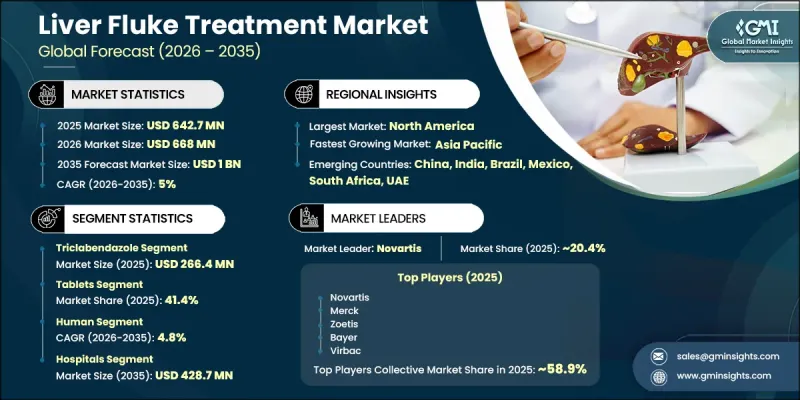
이 시장은 전 세계적으로 인간과 동물 모두에게 영향을 미치는 기생충 감염증의 발생률 증가에 힘입어 꾸준히 성장하고 있습니다. 조기 진단과 치료 성과 향상에 대한 관심이 높아지면서 효과적인 치료 솔루션에 대한 수요도 증가하고 있습니다. 분자 기반 검사법을 포함한 진단 기술의 발전으로 조기 발견 능력이 크게 향상되어 적시에 개입하고 질병 관리를 개선할 수 있게 되었습니다. 또한, 헬스케어 인프라 및 제약 연구 활동에 대한 투자 확대는 첨단 치료법 개발 및 치료 프로토콜 개선을 뒷받침하고 있습니다. 또한, 고위험 지역에서는 예방 의료의 실천도 확산되고 있어 시장 확대에 더욱 기여하고 있습니다. 의약품 개발의 지속적인 혁신, 인식 제고, 수의학과 인간 의료의 통합 강화에 힘입어 업계 전반의 전망은 여전히 밝습니다.
| 시장 범위 | |
|---|---|
| 개시 연도 | 2025년 |
| 예측 기간 | 2026-2035년 |
| 개시 연도 시장 규모 | 6억 4,270만 달러 |
| 예측 시장 규모 | 10억 달러 |
| CAGR | 5% |
간흡충의 치료에는 간 및 관련 장기에 영향을 미치는 흡충에 의한 기생충 감염을 진단하고 박멸하는 것을 목표로 하는 의료 및 수의학적 접근이 포함됩니다. 이러한 감염은 치료하지 않으면 심각한 건강상의 합병증을 유발할 수 있으며, 사람과 가축 모두에게 영향을 미칠 수 있습니다. 치료 전략에는 일반적으로 항기생충제, 지지 요법, 감염 확산을 억제하고 관련 증상을 관리하기 위한 예방 조치가 포함됩니다. 이 시장은 효과적인 치료법 개발 및 치료 옵션에 대한 전 세계 접근성 확대에 주력하는 몇몇 전통 있는 제약사들이 존재한다는 특징이 있습니다.
트리클로벤다졸 부문은 2025년 2억 6,640만 달러의 매출을 기록했습니다. 특히 간흡충증이 널리 퍼져 있는 지역에서 간흡충증 치료에 대한 입증된 효능이 이러한 우위를 뒷받침하고 있습니다. 이 약물의 우수한 안전성 프로파일과 높은 치료 효과는 인간과 수의학 분야 모두에서 광범위하게 채택되는 데 기여했습니다. 특히 의료 자원이 부족한 지역에서 접근성을 더욱 향상시키고, 저렴한 가격으로 인해 대규모 사용에서 선호되는 치료 옵션으로 자리 잡았습니다.
2025년에는 정제 부문이 41.4%의 점유율을 차지했습니다. 이는 실용성과 투여의 용이성이 그 요인으로 작용하고 있습니다. 정제는 안정성, 장기 보존성 및 최소한의 보관 요구 사항으로 인해 널리 선호되고 있으며, 다양한 지역으로의 유통에 적합합니다. 제제 기술의 발전으로 약물의 흡수성과 유효성이 향상되어 치료 결과 향상에 기여하고 있습니다. 여러 지역에서 확립된 규제 프레임워크는 정제 기반 치료제의 승인과 가용성을 더욱 촉진하고 세계 시장에서의 채택을 강화하고 있습니다.
북미의 간흡충 치료 시장은 2025년 2억 6,180만 달러로 평가되었습니다. 이는 탄탄한 의료 및 수의학 시스템을 바탕으로 한 이 지역의 꾸준한 수요를 반영하는 것입니다. 고도로 발달한 축산업의 존재는 생산성과 동물의 건강을 보호하기 위한 효과적인 기생충 방제 조치의 필요성에 크게 기여하고 있습니다. 의약품 연구의 지속적인 발전과 확립된 치료법의 가용성은 시장 성장을 더욱 촉진하고 있습니다. 의료 종사자 및 축산 관리자의 인식 개선은 일상적인 예방 및 치료 개입을 촉진하고 지역 시장의 안정성을 강화하는 데에도 도움이 됩니다.
자주 묻는 질문
목차
제1장 조사 방법 및 범위
제2장 주요 요약
제3장 업계 인사이트
제4장 경쟁 구도
제5장 시장 추산 및 예측 : 약제 유형별(2022-2035년)
제6장 시장 추산 및 예측 : 제제 유형별(2022-2035년)
제7장 시장 추산 및 예측 : 용도별(2022-2035년)
제8장 시장 추산 및 예측 : 최종 용도별(2022-2035년)
제9장 시장 추산 및 예측 : 지역별(2022-2035년)
제10장 기업 개요
AJY 26.06.11The Global Liver Fluke Treatment Market was valued at USD 642.7 million in 2025 and is estimated to grow at a CAGR of 5% to reach USD 1 billion by 2035.
The market is witnessing steady growth driven by the rising incidence of parasitic infections affecting both human and animal populations across various regions. Increasing emphasis on early diagnosis and improved treatment outcomes is strengthening demand for effective therapeutic solutions. Advancements in diagnostic technologies, including molecular-based testing methods, have significantly enhanced early detection capabilities, enabling timely intervention and improved disease management. Additionally, growing investments in healthcare infrastructure and pharmaceutical research activities are supporting the development of advanced treatment options and improved therapeutic protocols. Preventive healthcare practices are also gaining traction in high-risk regions, further contributing to market expansion. The overall industry outlook remains positive, supported by continuous innovation in drug development, increasing awareness, and stronger veterinary and human healthcare integration.
| Market Scope | |
|---|---|
| Start Year | 2025 |
| Forecast Year | 2026-2035 |
| Start Value | $642.7 Million |
| Forecast Value | $1 Billion |
| CAGR | 5% |
Liver fluke treatment involves medical and veterinary approaches aimed at diagnosing and eliminating parasitic infections caused by trematode organisms that affect the liver and associated organs. These infections can lead to significant health complications if left untreated, impacting both humans and livestock. Treatment strategies typically include antiparasitic medications, supportive care, and preventive measures designed to control infection spread and manage associated symptoms. The market is characterized by the presence of several established pharmaceutical companies that focus on developing effective therapeutic solutions and expanding global access to treatment options.
The triclabendazole segment generated USD 266.4 million in 2025. This dominance is supported by its proven effectiveness in treating liver fluke infections, particularly in regions where such conditions are more prevalent. The drug's strong safety profile and high therapeutic efficacy have contributed to its widespread adoption in both human and veterinary applications. Its affordability further enhances accessibility, especially in regions with limited healthcare resources, making it a preferred treatment option for large-scale use.
The tablets segment accounted for 41.4% share in 2025, driven by its practicality and ease of administration. Tablets are widely preferred due to their stability, extended shelf life, and minimal storage requirements, making them suitable for distribution across diverse geographical regions. Improvements in pharmaceutical formulation have enhanced drug absorption and effectiveness, supporting better treatment outcomes. Established regulatory frameworks across multiple regions have further facilitated the approval and availability of tablet-based therapies, strengthening their adoption in global markets.
North America Liver Fluke Treatment Market was valued at USD 261.8 million in 2025, reflecting steady regional demand supported by strong healthcare and veterinary systems. The presence of a well-developed livestock industry significantly contributes to the need for effective parasite control measures to safeguard productivity and animal health. Continuous advancements in pharmaceutical research and the availability of established treatment options further support market growth. Increased awareness among healthcare professionals and livestock managers has also encouraged routine preventive and therapeutic interventions, reinforcing regional market stability.
Key companies operating in the Global Liver Fluke Treatment Market include Merck, Bayer Healthcare, Novartis, Virbac, GlaxoSmithKline, Pfizer, Vetoquinol, AdvaCare Pharma, Lupin Pharma, Schering Corporation, Par Pharmaceutical, and Zoetis. Companies in the Liver Fluke Treatment Market are focusing on research-driven innovation, portfolio expansion, and strategic partnerships to strengthen their market position. Continuous investment in drug development is enabling the introduction of more effective and safer therapeutic solutions. Firms are expanding their geographic reach through strengthened distribution networks to improve product accessibility across both developed and emerging regions. Collaboration with veterinary and healthcare institutions is supporting better awareness and adoption of treatment protocols. Additionally, companies are emphasizing affordability and accessibility to address demand in resource-constrained regions. Ongoing advancements in diagnostic and treatment technologies, combined with targeted marketing strategies, are further enhancing competitive positioning and long-term market sustainability.
Table of Contents
Chapter 1 Methodology and Scope
- 1.1 Market scope and definition
- 1.2 Research approach
- 1.3 Quality commitments
- 1.3.1 GMI AI policy and data integrity commitment
- 1.3.1.1 Source consistency protocol
- 1.3.1 GMI AI policy and data integrity commitment
- 1.4 Research trail and confidence scoring
- 1.4.1 Research trail components
- 1.4.2 Scoring components
- 1.5 Data collection
- 1.5.1 Partial list of primary sources
- 1.6 Data mining sources
- 1.6.1 Paid sources
- 1.6.1.1 Sources, by region
- 1.6.1 Paid sources
- 1.7 Base estimates and calculations
- 1.7.1 Revenue share analysis
- 1.7.2 Base year calculation
- 1.8 Forecast model
- 1.9 Research transparency addendum
- 1.9.1 Source attribution framework
- 1.9.2 Quality assurance metrics
- 1.9.3 Our commitment to trust
Chapter 2 Executive Summary
- 2.1 Industry 360° synopsis
- 2.2 Key market trends
- 2.2.1 Business trends
- 2.2.2 Regional trends
- 2.2.3 Drug type trends
- 2.2.4 Formulation type trends
- 2.2.5 Application trends
- 2.2.6 End use trends
- 2.3 CXO perspectives: Strategic imperatives
Chapter 3 Industry Insights
- 3.1 Industry ecosystem analysis
- 3.2 Industry impact forces
- 3.2.1 Growth drivers
- 3.2.1.1 Increasing prevalence of liver fluke infections
- 3.2.1.2 Advancements in diagnostic techniques
- 3.2.1.3 Growing livestock industry
- 3.2.1.4 Availability of effective therapeutics
- 3.2.2 Industry pitfalls and challenges
- 3.2.2.1 Competition from alternative treatments
- 3.2.2.2 Resistance to commonly used anthelmintic drugs
- 3.2.3 Market opportunities
- 3.2.3.1 Growth in veterinary preventive care and herd management solutions
- 3.2.3.2 Expansion in emerging and underserved markets
- 3.2.1 Growth drivers
- 3.3 Growth potential analysis
- 3.4 Regulatory landscape (Driven by primary research)
- 3.4.1 North America
- 3.4.1.1 U.S.
- 3.4.1.2 Canada
- 3.4.2 Europe
- 3.4.3 Asia Pacific
- 3.4.4 Latin America
- 3.4.5 Middle East and Africa
- 3.4.1 North America
- 3.5 Future market trends
- 3.6 Pricing analysis (Driven by primary research)
- 3.7 Pipeline analysis
- 3.8 Impact of AI and Generative AI on the market
- 3.9 Porter's analysis
- 3.10 PESTEL analysis
Chapter 4 Competitive Landscape, 2025
- 4.1 Introduction
- 4.2 Company market share analysis
- 4.2.1 North America
- 4.2.2 Europe
- 4.2.3 Asia Pacific
- 4.3 Company matrix analysis
- 4.4 Competitive analysis of major market players
- 4.5 Competitive positioning matrix
- 4.6 Key developments
- 4.6.1 Merger and acquisition
- 4.6.2 Partnership and collaboration
- 4.6.3 New product launches
- 4.6.4 Expansion plans
Chapter 5 Market Estimates and Forecast, By Drug Type, 2022 - 2035 ($ Mn)
- 5.1 Key trends
- 5.2 Triclabendazole
- 5.3 Praziquantel
- 5.4 Bithionol
- 5.5 Albendazole
- 5.6 Nitazoxanide
- 5.7 Other drug types
Chapter 6 Market Estimates and Forecast, By Formulation Type, 2022 - 2035 ($ Mn)
- 6.1 Key trends
- 6.2 Tablets
- 6.3 Injections
- 6.4 Oral suspension
Chapter 7 Market Estimates and Forecast, By Application, 2022 - 2035 ($ Mn)
- 7.1 Key trends
- 7.2 Human
- 7.3 Animals
Chapter 8 Market Estimates and Forecast, By End Use, 2022 - 2035 ($ Mn)
- 8.1 Key trends
- 8.2 Hospitals
- 8.3 Clinics
- 8.4 Veterinary facilities
- 8.5 Other end users
Chapter 9 Market Estimates and Forecast, By Region, 2022 - 2035 ($ Mn)
- 9.1 Key trends
- 9.2 North America
- 9.2.1 U.S.
- 9.2.2 Canada
- 9.3 Europe
- 9.3.1 Germany
- 9.3.2 UK
- 9.3.3 France
- 9.3.4 Spain
- 9.3.5 Italy
- 9.3.6 Netherlands
- 9.4 Asia Pacific
- 9.4.1 China
- 9.4.2 India
- 9.4.3 Japan
- 9.4.4 Australia
- 9.4.5 South Korea
- 9.5 Latin America
- 9.5.1 Brazil
- 9.5.2 Mexico
- 9.5.3 Argentina
- 9.6 Middle East and Africa
- 9.6.1 South Africa
- 9.6.2 Saudi Arabia
- 9.6.3 UAE
Chapter 10 Company Profiles
- 10.1 AdvaCare Pharma
- 10.2 Bayer Healthcare
- 10.3 GlaxoSmithKline
- 10.4 Lupin Pharma
- 10.5 Merck
- 10.6 Novartis
- 10.7 Par Pharmaceutical
- 10.8 Pfizer
- 10.9 Schering Corporation
- 10.10 Vetoquinol
- 10.11 Virbac
- 10.12 Zoetis