

|
시장보고서
상품코드
2071370
프리미엄 전기 오토바이 시장 : 기회, 성장요인, 업계 동향 분석 및 예측(2026-2035년)Premium Electric Motorcycle Market Opportunity, Growth Drivers, Industry Trend Analysis, and Forecast 2026 - 2035 |
||||||

세계의 프리미엄 전기 오토바이 시장은 2025년에 4억 8,650만 달러 규모가 되어, 2035년까지 연평균 복합 성장률(CAGR) 18.5%로 성장하여 26억 달러에 이를 것으로 추정되고 있습니다.
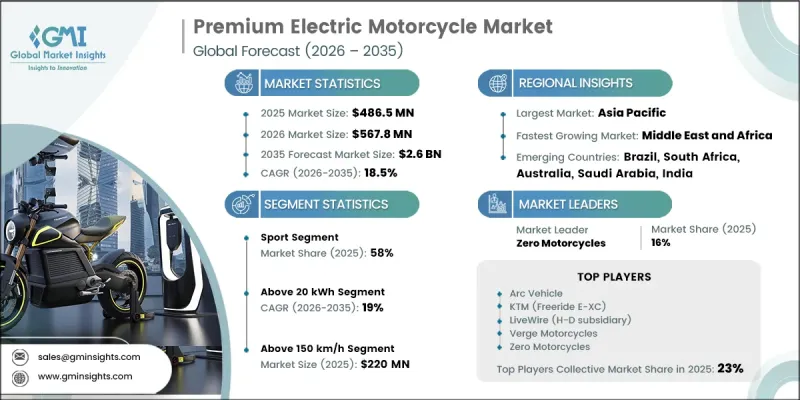
프리미엄 전기 오토바이 시장은 소비자들이 첨단 기술, 뛰어난 성능, 그리고 프리미엄급 라이딩 경험을 모두 갖춘 지속 가능한 모빌리티 솔루션을 점점 더 많이 찾게 됨에 따라 눈부신 성장을 이루고 있습니다. 환경에 대한 인식이 높아지고 온실가스 배출에 대한 우려가 커짐에 따라, 선진국과 신흥국을 막론하고 전기 이동 수단으로의 전환이 가속화되고 있습니다. 친환경 교통수단을 장려하는 정부의 이니셔티브와 배출 규제의 강화가 맞물리면서, 소비자들은 기존의 내연기관 오토바이에서 전기 오토바이로 전환하고 있습니다. 동시에, 끊임없는 기술 발전으로 인해 배터리 성능, 차량 효율, 연결성, 그리고 라이더의 편의성이 향상되면서 프리미엄 전기 오토바이의 매력이 더욱 커지고 있습니다. 첨단 배터리 기술로 주행 거리가 늘어나는 한편, 지능형 소프트웨어 시스템이 더욱 개인화되고 연결성이 강화된 라이딩 경험을 선사하고 있습니다. 프리미엄 전기 오토바이는 지속가능성, 혁신, 그리고 최상급 성능을 모두 갖춘 제품으로 점점 더 널리 인정받고 있으며, 환경에 대한 의식이 높은 소비자뿐만 아니라 기술 지향적인 구매자들도 매료시키고 있습니다. 시장 확대를 뒷받침하는 또 다른 주요 동향은 표준화된 배터리 교체 생태계와 구독형 배터리 소유 모델의 보급이 확대되고 있다는 점입니다. 이러한 혁신은 충전 편의성이나 차량 초기 비용과 같은 주요 장벽을 해소하는 데 기여하고 있으며, 더 폭넓은 고객층이 프리미엄 전기 오토바이를 이용하기 쉽게 만드는 동시에, 소유에 있어 전반적인 유연성을 높이고 있습니다.
| 시장 범위 | |
|---|---|
| 시작 연도 | 2025년 |
| 예측 기간 | 2026-2035년 |
| 시작 연도 시장 규모 | 4억 8,650만 달러 |
| 예측 금액 | 26억 달러 |
| CAGR | 18.5% |
스포츠 부문은 2025년에 58%의 점유율을 차지할 것으로 예상되며, 2026년부터 2035년까지 연평균 성장률(CAGR) 17%로 성장할 것으로 전망됩니다. 이 부문은 뛰어난 가속력, 최고 속도, 그리고 주행 성능을 발휘할 수 있는 고성능 전기 오토바이에 대한 소비자 수요가 증가함에 따라 계속해서 혜택을 보고 있습니다. 전기 구동계 기술의 지속적인 발전과 해당 부문의 활발한 투자 활동이 제품 혁신을 뒷받침하며, 시장 성장 전망을 더욱 공고히 하고 있습니다. 프리미엄 전기 스포츠 자전거에 대한 소비자의 신뢰도가 높아지고 있는 점도 주요 시장 전반의 지속적인 수요에 더욱 기여하고 있습니다.
배터리 용량이 20kWh 이상인 부문은 2025년에 43%의 시장 점유율을 차지하고, 2035년까지 연평균 성장률(CAGR) 19%로 성장할 것으로 전망됩니다. 이 카테고리는 주행 거리를 극대화하고, 일관된 성능을 유지하며, 종합적인 기능 통합을 실현하도록 설계된 프리미엄 전기 오토바이를 의미합니다. 이 부문의 오토바이는 장거리 주행이나 장시간 사용에 적합하기 때문에 기존 오토바이의 실용적인 대안을 찾는 소비자들에게 점점 더 매력적인 선택지가 되고 있습니다. 배터리 기술의 발전과 생산 비용 절감이 지속되는 가운데, 20kWh를 초과하는 카테고리는 프리미엄 전기 오토바이 업계에서 주요 부문으로 부상할 것으로 예측됩니다.
중국의 프리미엄 전기 오토바이 시장은 2025년에 1억 1,650만 달러에 달했습니다. 이 지역 시장에는 성숙한 경제국, 급속히 발전하고 있는 국가들, 그리고 신흥 고성장 시장이 공존하고 있습니다. 도시화의 진전, 가처분 소득 증가, 충전 인프라 확충, 그리고 전기 이동 수단을 지원하는 정책이 이 지역 전체 시장 성장에 유리한 여건을 조성하고 있습니다. 또한, 프리미엄 모빌리티 솔루션과 지속 가능한 교통 수단에 대한 소비자의 관심이 높아지면서 아시아태평양 전체 수요가 더욱 증가하고 있습니다.
자주 묻는 질문
목차
제1장 조사 방법과 범위
제2장 주요 요약
제3장 업계 인사이트
제4장 경쟁 구도
제5장 시장 추산 및 예측 : 제품별, 2022-2035년
제6장 시장 추산 및 예측 : 배터리 용량별, 2022-2035년
제7장 시장 추산 및 예측 : 가격별, 2022-2035년
제8장 시장 추산 및 예측 : 속도별, 2022-2035년
제9장 시장 추산 및 예측 : 배터리별, 2022-2035년
제10장 시장 추산 및 예측 : 지역별, 2022-2035년
제11장 기업 개요
JHS 26.07.01The Global Premium Electric Motorcycle Market was valued at USD 486.5 million in 2025 and is estimated to grow at a CAGR of 18.5% to reach USD 2.6 billion by 2035.
The premium electric motorcycle market is experiencing substantial growth as consumers increasingly seek sustainable mobility solutions that combine advanced technology, superior performance, and premium riding experiences. Rising environmental awareness and growing concerns regarding greenhouse gas emissions are accelerating the transition toward electric mobility across developed and emerging economies. Government initiatives promoting clean transportation, coupled with stricter emission regulations, are encouraging consumers to shift away from conventional internal combustion engine motorcycles toward electric alternatives. At the same time, continuous technological progress is enhancing the appeal of premium electric motorcycles through improvements in battery performance, vehicle efficiency, connectivity, and rider convenience. Advanced battery technologies are delivering longer travel ranges, while intelligent software systems are creating a more personalized and connected riding experience. Premium electric motorcycles are increasingly viewed as a combination of sustainability, innovation, and high-end performance, attracting environmentally conscious consumers as well as technology-oriented buyers. Another major development supporting market expansion is the growing adoption of standardized battery-swapping ecosystems and subscription-based battery ownership models. These innovations are helping address key barriers associated with charging convenience and upfront vehicle costs, making premium electric motorcycles more accessible to a broader customer base while improving overall ownership flexibility.
| Market Scope | |
|---|---|
| Start Year | 2025 |
| Forecast Year | 2026-2035 |
| Start Value | $486.5 Million |
| Forecast Value | $2.6 Billion |
| CAGR | 18.5% |
The sport segment accounted for 58% share in 2025 and is projected to grow at a CAGR of 17% between 2026 and 2035. The segment continues to benefit from rising consumer demand for high-performance electric motorcycles capable of delivering exceptional acceleration, speed, and riding dynamics. Ongoing advancements in electric drivetrain technology and increasing investment activity within the segment are supporting product innovation and strengthening market growth prospects. Growing consumer confidence in premium electric sports motorcycles is further contributing to sustained demand across major markets.
The above 20 kWh battery capacity segment held a 43% share in 2025 and is anticipated to grow at a CAGR of 19% through 2035. This category represents premium electric motorcycles designed to maximize travel range, maintain consistent performance, and offer comprehensive feature integration. Motorcycles within this segment are capable of supporting extended riding distances and long-duration usage, making them increasingly attractive for consumers seeking practical alternatives to traditional motorcycles. As battery technology continues to advance and production economics improve, the above 20 kWh category is expected to emerge as a leading segment within the premium electric motorcycle industry.
China Premium Electric Motorcycle Market reached USD 116.5 million in 2025. The regional market consists of a diverse mix of mature economies, rapidly developing countries, and emerging high-growth markets. Rising urbanization, improving disposable incomes, expanding charging infrastructure, and supportive electric mobility policies are creating favorable conditions for market growth across the region. In addition, increasing consumer interest in premium mobility solutions and sustainable transportation alternatives continues to strengthen demand throughout Asia Pacific.
Major companies operating in the premium electric motorcycle market include Zero Motorcycles, Verge Motorcycles, Arc Vehicle, Energica Motor Company, Harley-Davidson (LiveWire), Damon Motorcycles, Ducati Motor, KTM, and Lightning Motorcycle. Companies operating in the premium electric motorcycle market are implementing a range of strategies to strengthen their market position and expand their competitive footprint. Key initiatives include investing in advanced battery technologies, enhancing vehicle range and performance capabilities, and integrating connected mobility features that improve the overall rider experience. Manufacturers are also focusing on expanding product portfolios to address a wider range of consumer preferences and price points. Strategic collaborations with charging infrastructure providers, battery technology companies, and mobility ecosystem partners are helping accelerate market penetration. In addition, companies are investing in direct-to-consumer sales channels, digital engagement platforms, and premium brand-building initiatives to enhance customer acquisition and retention.
Table of Contents
Chapter 1 Methodology & Scope
- 1.1 Research approach
- 1.2 Quality Commitments
- 1.2.1 GMI AI policy & data integrity commitment
- 1.2.1.1 Source consistency protocol
- 1.2.1 GMI AI policy & data integrity commitment
- 1.3 Research Trail & Confidence Scoring
- 1.3.1 Research Trail Components
- 1.3.2 Scoring Components
- 1.4 Data Collection
- 1.4.1 Partial list of primary sources
- 1.5 Data mining sources
- 1.5.1 Paid sources
- 1.5.1.1 Sources, by region
- 1.5.1 Paid sources
- 1.6 Base estimates and calculations
- 1.6.1 Base year calculation
- 1.7 Forecast model
- 1.7.1 Quantified market impact analysis
- 1.7.1.1 Mathematical impact of growth parameters on forecast
- 1.7.1 Quantified market impact analysis
- 1.8 Research transparency addendum
- 1.8.1 Source attribution framework
- 1.8.2 Quality assurance metrics
- 1.8.3 Our commitment to trust
Chapter 2 Executive Summary
- 2.1 Industry 360° synopsis
- 2.2 Key market trends
- 2.2.1 Product
- 2.2.2 Battery Capacity
- 2.2.3 Price Range
- 2.2.4 Speed
- 2.2.5 Battery
- 2.3 TAM Analysis, 2026-2035
- 2.4 CXO perspectives: Strategic imperatives
Chapter 3 Industry Insights
- 3.1 Industry ecosystem analysis
- 3.1.1 Supplier landscape
- 3.1.1.1 Raw material suppliers
- 3.1.1.2 Component suppliers
- 3.1.1.3 Manufacturers
- 3.1.1.4 Service providers
- 3.1.1.5 Distribution channel
- 3.1.1.6 End Use
- 3.1.2 Cost structure
- 3.1.3 Profit margin
- 3.1.4 Value addition at each stage
- 3.1.5 Vertical integration trends
- 3.1.6 Disruptors
- 3.1.1 Supplier landscape
- 3.2 Impact forces
- 3.2.1 Growth drivers
- 3.2.1.1 Government incentives & promotional policies for electric vehicle adoption
- 3.2.1.2 Growing environmental consciousness & demand for sustainable mobility
- 3.2.1.3 Advancements in battery technology & fast-charging infrastructure
- 3.2.1.4 Rising fuel costs & total costs of ownership advantages
- 3.2.2 Industry pitfalls & challenges
- 3.2.2.1 High upfront costs & price sensitivity in target markets
- 3.2.2.2 Complex R&D requirements & lack of learning spillovers
- 3.2.3 Market opportunities
- 3.2.3.1 Swappable battery ecosystems & battery-as-a-service models
- 3.2.3.2 Expansion into emerging markets with growing middle class
- 3.2.3.3 Fleet & commercial applications
- 3.2.3.4 Digital platform integration & direct-to-consumer sales models
- 3.2.1 Growth drivers
- 3.3 Growth potential analysis
- 3.4 Pricing Analysis (Driven by Primary Research)
- 3.4.1 Historical Price Trend Analysis
- 3.4.2 Pricing Strategy by Player Type (Premium / Value / Cost-plus)
- 3.5 Regulatory landscape
- 3.5.1 North America
- 3.5.1.1 ACT Regulation
- 3.5.1.2 EPA Phase 3
- 3.5.2 Europe
- 3.5.2.1 CO2 Emission Standards
- 3.5.2.2 Euro 6/Next Generation Standards
- 3.5.3 Asia-Pacific
- 3.5.3.1 Emission Reduction Targets
- 3.5.3.2 China-6 Standard
- 3.5.4 Latin America
- 3.5.4.1 Brazil Proconve P8
- 3.5.4.2 Mexico EPA-Aligned Standards
- 3.5.5 MEA
- 3.5.5.1 Saudi Vision 2030 Green Initiatives
- 3.5.5.2 South Africa EV Tax Rebates
- 3.5.1 North America
- 3.6 Technology and Innovation landscape
- 3.6.1 Current technologies
- 3.6.2 Emerging technologies
- 3.7 Porter's analysis
- 3.8 PESTEL analysis
- 3.9 Patent analysis (Driven by Primary Research)
- 3.10 Capacity & production landscape (Driven by Primary Research)
- 3.10.1 Installed capacity by region & key producer
- 3.10.2 Capacity utilization rates & expansion pipelines
- 3.11 Trade data analysis (Driven by Paid Research)
- 3.11.1 Intra Trade Flows - Volume & Value Trends
- 3.11.2 Import/Export Corridor Analysis
- 3.12 Impact of AI & generative AI on the market
- 3.12.1 AI-Driven Disruption of Existing Business Models
- 3.12.2 Automated design optimization
- 3.12.3 Supply chain AI for demand forecasting
- 3.12.4 GenAI use cases & adoption roadmap by segment
- 3.12.5 Risks, Limitations & Regulatory Considerations
- 3.13 Forecast assumptions & scenario analysis (Driven by Primary Research)
- 3.13.1 Base Case - key macro & industry variables driving CAGR
- 3.13.2 Optimistic Scenarios - Favorable Macro and Industry Tailwinds
- 3.13.3 Pessimistic Scenario - Macroeconomic slowdown or industry headwinds
- 3.14 Sustainability and environmental aspects
- 3.14.1 Sustainable practices
- 3.14.2 Waste reduction strategies
- 3.14.3 Energy efficiency in production
- 3.14.4 Eco-friendly Initiatives
- 3.14.5 Carbon footprint considerations
Chapter 4 Competitive Landscape, 2025
- 4.1 Introduction
- 4.2 Company market share analysis
- 4.2.1 North America
- 4.2.2 Europe
- 4.2.3 Asia-Pacific
- 4.2.4 Latin America
- 4.2.5 Middle East & Africa
- 4.3 Competitive positioning matrix
- 4.4 Strategic outlook matrix
- 4.5 Key developments
- 4.5.1 Mergers & acquisitions
- 4.5.2 Partnerships & collaborations
- 4.5.3 New product launches
- 4.5.4 Expansion plans and funding
Chapter 5 Market Estimates & Forecast, By Product, 2022 - 2035 ($Mn, Units)
- 5.1 Key trends
- 5.2 Sport
- 5.3 Off-road
- 5.4 Others
Chapter 6 Market Estimates & Forecast, By Battery Capacity, 2022 - 2035 ($Mn, units)
- 6.1 Key trends
- 6.2 Below 10 kWh
- 6.3 10 - 20 kWh
- 6.4 Above 20 kWh
Chapter 7 Market Estimates & Forecast, By Price Range, 2022 - 2035 ($Mn, Units)
- 7.1 Key trends
- 7.2 Entry-Level Premium ($10,000 - $20,000)
- 7.3 Mid-Premium ($20,000 - $50,000)
- 7.4 High-End Premium (Above $50,000)
Chapter 8 Market Estimates & Forecast, By Speed, 2022 - 2035 ($Mn, Units)
- 8.1 Key trends
- 8.2 Up to 100 km/h
- 8.3 100-150 km/h
- 8.4 Above 150 km/h
Chapter 9 Market Estimates & Forecast, By Battery, 2022 - 2035 ($Mn, Units)
- 9.1 Key trends
- 9.2 Lithium-ion
- 9.3 Solid-State
- 9.4 Others
Chapter 10 Market Estimates & Forecast, By Region, 2022 - 2035 ($Mn, Units)
- 10.1 North America
- 10.1.1 US
- 10.1.2 Canada
- 10.2 Europe
- 10.2.1 UK
- 10.2.2 Germany
- 10.2.3 France
- 10.2.4 Italy
- 10.2.5 Spain
- 10.2.6 Belgium
- 10.2.7 Netherlands
- 10.2.8 Sweden
- 10.2.9 Russia
- 10.3 Asia Pacific
- 10.3.1 China
- 10.3.2 India
- 10.3.3 Japan
- 10.3.4 Australia
- 10.3.5 Singapore
- 10.3.6 South Korea
- 10.3.7 Vietnam
- 10.3.8 Indonesia
- 10.3.9 Thailand
- 10.4 Latin America
- 10.4.1 Brazil
- 10.4.2 Mexico
- 10.4.3 Argentina
- 10.5 MEA
- 10.5.1 South Africa
- 10.5.2 Saudi Arabia
- 10.5.3 UAE
- 10.5.4 Turkey
Chapter 11 Company Profiles
- 11.1 Global players
- 11.1.1 Arc Vehicle
- 11.1.2 BMW Motorrad
- 11.1.3 Damon Motorcycles
- 11.1.4 Ducati Motor
- 11.1.5 Energica Motor Company
- 11.1.6 Harley-Davidson (LiveWire)
- 11.1.7 Husqvarna Motorcycles (KTM Group)
- 11.1.8 KTM
- 11.1.9 Lightning Motorcycle
- 11.1.10 Zero Motorcycles
- 11.1.11 Verge Motorcycles
- 11.1.12 Voxan Motors
- 11.2 Regional players
- 11.2.1 Maeving
- 11.2.2 Savic Motorcycles
- 11.2.3 Ultraviolette Automotive
- 11.2.4 Triumph Motorcycles
- 11.2.5 Kawasaki Heavy Industries
- 11.3 Emerging players
- 11.3.1 Lightyear
- 11.3.2 Evoke Motorcycles
- 11.3.3 Ryvid


