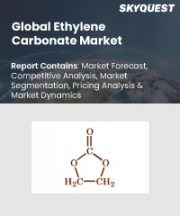
|
시장보고서
상품코드
2008990
에틸렌 카보네이트 시장 보고서 : 형태별, 용도별, 최종 이용 산업별, 지역별(2026-2034년)Ethylene Carbonate Market Report by Form (Solid, Liquid), Application (Lubricants, Surface Coatings, Plasticizers, Lithium Battery Electrolytes, and Others), End Use Industry (Automotive, Oil & Gas, Pharmaceutical, and Others), and Region 2026-2034 |
||||||

2025년, 세계의 에틸렌 카보네이트 시장 규모는 3억 6,090만 달러에 달했습니다. 향후 IMARC Group은 2034년까지 시장 규모가 5억 5,460만 달러에 달하고, 2026년부터 2034년까지 CAGR 4.65%로 성장할 것으로 예측했습니다. 아시아태평양은 빠르게 성장하는 배터리 제조 부문, 탄탄한 화학 산업 인프라, 전자기기 및 전기자동차(EV)에 대한 높은 수요로 인해 현재 시장을 주도하고 있습니다. 풍력 및 태양광발전과 같은 재생에너지에 대한 관심 증가, 자동차 부문의 확대, 코팅 및 접착제 분야의 응용 분야 증가, 화학 제조 공정의 발전 등이 이 지역의 시장 점유율을 높이는 요인으로 작용하고 있습니다.
시장 규모와 예측:
- 2025년 에틸렌 카보네이트 시장 규모는 3억 6,090만 달러였습니다.
- 이 시장은 2026년부터 2034년까지 4.65%의 CAGR로 2034년까지 5억 5,460만 달러에 달할 것으로 예상됩니다.
주요 부문:
- 형태 : 고체 형태는 액체 형태에 비해 안정성이 높고 보관 및 운송이 용이하여 가장 큰 시장 점유율을 차지하고 있습니다. 안정된 상태는 제어된 방출 및 취급이 필수적인 배터리 응용 분야 및 다양한 산업 공정에서 선호되고 있습니다.
- 용도 : 윤활유는 기계에서 마찰, 마모, 발열을 최소화하는 중요한 역할을 하기 때문에 시장을 독점하고 있습니다. 자동차, 제조, 산업기계 등 다양한 분야에서 성능 향상, 장비 수명 연장, 효율성 증대를 위해 가동 신뢰성에 필수적인 존재가 되고 있습니다.
- 최종 이용 산업 : 자동차 산업은 차량의 성능, 안전성, 효율성을 향상시키기 위한 첨단 소재 및 부품에 대한 수요가 높아 가장 큰 비중을 차지하고 있습니다. 지속적인 기술 발전과 전기자동차에 대한 관심이 높아지면서 자동차 전용 제품 및 혁신에 대한 수요가 증가하고 있습니다.
- 지역 : 아시아태평양은 탄탄한 제조 기반, 급속한 산업화, 자동차, 전자, 에너지 분야의 높은 수요로 인해 시장을 주도하고 있습니다. 이 지역은 낮은 생산 비용, 대규모 사용자 기반, 인프라에 대한 막대한 투자라는 이점을 바탕으로 시장의 주요 기업이 되었습니다.
주요 기업:
- 에틸렌 카보네이트 시장의 주요 기업으로는 Empower Materials, FUJIFILM Wako Pure Chemical Corporation, Huntsman International LLC, Merck KGaA, Mitsubishi Chemical Group Corporation, Otto Chemie Pvt. Ltd., Thermo Fisher Scientific Inc., Toagosei Co., Ltd, Tokyo Chemical Industry Co., Ltd., Zhengzhou Meiya Chemical Products Co., Ltd. 등이 있습니다.
시장 성장의 주요 요인:
- 전기자동차(EV) 보급 : 각국이 야심찬 탄소배출 감축 목표를 제시하면서 EV 보급이 확대되고 있으며, 이는 리튬이온 배터리의 수요를 견인하고 있습니다. 이러한 변화에 더해 배터리 기술의 발전과 정부의 지원이 더해져 전해액 구성 성분으로서 에틸렌 카보네이트의 수요가 증가하고 있습니다.
- 재생에너지 저장 수요 : 재생에너지 이용이 확대됨에 따라 효율적인 에너지 저장에 대한 수요가 증가하고 있습니다. 에틸렌 카보네이트는 재생에너지 저장에 사용되는 배터리에서 안정성, 긴 수명 및 높은 에너지 밀도를 제공하는 중요한 역할을 합니다. 청정에너지에 대한 투자가 증가함에 따라 첨단 저장 솔루션과 에틸렌 카보네이트에 대한 수요는 계속 증가하고 있습니다.
- 지속가능성 및 친환경 화학 : 에틸렌 카보네이트 시장은 지속가능성 및 친환경 화학에 의해 주도되고 있습니다. 친환경 소재에 대한 수요가 증가함에 따라 제조업체는 지속가능한 조달과 재생 가능한 자원을 우선시해야 합니다. 업계가 보다 지속가능한 방식을 도입하는 가운데, 환경 규제 강화를 배경으로 바이오 유래 에틸렌 카보네이트 대체품이 확산되고 있습니다.
- 리튬이온 배터리 수요 : 리튬이온 배터리에 대한 수요 확대가 에틸렌 카보네이트 시장을 주도하고 있습니다. 스마트폰, 태블릿, 웨어러블 기기 등 디바이스가 발전함에 따라 더 긴 수명, 더 빠른 충전, 더 높은 에너지 밀도를 갖춘 고성능 배터리에 대한 수요가 증가하면서 배터리 제조에 대한 에틸렌 카보네이트의 수요가 증가하고 있습니다.
- 배터리 기술의 발전 : 에너지 밀도 향상, 급속 충전, 열 안정성 향상 등 배터리 기술의 발전은 전해질에 포함된 에틸렌 카보네이트에 의해 촉진되고 있습니다. 이러한 발전은 전기자동차, 전자기기, 에너지 저장용 차세대 배터리를 강화하여 에틸렌 카보네이트의 수요를 증가시키고 있습니다.
- 고순도 에틸렌 카보네이트의 필요성 : 고순도 에틸렌 카보네이트에 대한 수요 증가는 특히 엄격한 성능 기준이 요구되는 분야에서 시장에 긍정적인 영향을 미치고 있습니다. 전해액의 품질이 성능과 수명에 영향을 미치는 리튬이온 배터리에서 고순도 에틸렌 카보네이트는 필수 불가결한 요소입니다. 에너지 수요가 증가함에 따라 첨단 기술 분야에서 고순도 에틸렌 카보네이트에 대한 수요도 증가하고 있습니다.
향후 전망:
- 견조한 성장 전망 : 에틸렌 카보네이트 시장은 리튬이온 배터리, 전자기기, 자동차 산업에서의 사용 확대에 힘입어 견조한 성장이 예상됩니다. 배터리 기술의 발전과 EV의 보급으로 인해 에틸렌 카보네이트는 미래 에너지 솔루션의 주요 구성요소로 자리매김하고 있습니다.
- 시장 동향 : 에틸렌 카보네이트 시장은 특히 전기자동차 및 재생에너지 저장 분야의 고성능 배터리 수요 증가로 인해 빠르게 진화하고 있습니다. 배터리 기술 혁신과 지속가능한 재료로의 전환이 성장을 뒷받침하고 있으며, 에틸렌 카보네이트는 에너지 솔루션의 중요한 구성요소로 자리매김하고 있습니다.
에틸렌 카보네이트(C3H4O3)는 독성이 낮고, 끓는점이 높으며, 고분자에 대한 용해도가 높은 극성 용매입니다. 무색투명한 결정성 고체이며, 무취이며, 물에 대한 용해도는 극히 미미합니다. 석유 및 가스정에서 발견되는 녹이나 입자와 결합하여 금속 이온과 복합체를 형성하여 수용성 염을 생성합니다. 또한, 산성화 특성으로 인해 탄산염과 점도 강화 화합물을 분해합니다. 리튬 배터리 전해액, 스트립 용제, 섬유 가공제, 커패시터 전해액, 윤활제, 토양 고화제, 유기 용제, 유기 합성 원료 및 의료 제품 등에 널리 사용됩니다.
에틸렌 카보네이트 시장 동향:
전기자동차(EV) 시장 확대
각국이 탄소배출량 감축을 위한 야심찬 목표를 설정하고 지속가능한 교통수단을 추진하는 가운데, 전기자동차 보급이 빠르게 진행되고 있습니다. 국제에너지기구(IEA)는 2024년 세계 전기자동차 판매량이 1,700만 대를 넘어 전년 대비 25% 증가할 것이라고 발표했습니다. EV 판매 증가는 전해질 구성에 에틸렌 카보네이트가 필요한 리튬이온 배터리에 대한 수요와 밀접한 관련이 있습니다. 에틸렌 카보네이트는 이러한 배터리의 안정성, 효율성 및 에너지 밀도를 향상시키기 때문에 EV의 에너지 저장 요구 사항을 충족시키는 데 필수적인 요소입니다. 자동차 제조업체가 사용자 수요와 규제 요건을 충족하기 위해 EV 생산을 확대함에 따라 에틸렌 카보네이트와 같은 신뢰할 수 있고 고품질의 배터리 재료에 대한 수요가 증가하고 있습니다. 이러한 추세는 EV 기술의 지속적인 발전으로 더욱 가속화되고 있으며, 에틸렌 카보네이트는 지속가능한 교통수단으로의 전환을 뒷받침하는 중요한 재료로 자리매김하고 있습니다.
재생에너지 저장 솔루션 보급
풍력 및 태양광을 포함한 재생에너지원의 채택 확대는 효과적인 에너지 저장 솔루션에 대한 수요를 견인하고 있으며, 에틸렌 카보네이트는 이러한 에너지 저장 솔루션에 필수적인 역할을 하고 있습니다. 에틸렌 카보네이트는 재생에너지원에서 생성된 에너지를 저장하는 배터리에서 매우 중요한 요소입니다. 이러한 저장 시스템에는 높은 신뢰성, 긴 수명, 높은 에너지 밀도가 요구되고 있으며, 에틸렌 카보네이트는 배터리 성능 향상에 필수적인 요소로 작용하고 있습니다. 에너지 저장은 재생에너지 발전의 변동성을 관리하여 전력망을 안정화시키는 역할을 합니다. 정부와 기업이 청정에너지 솔루션에 자원을 투입하는 가운데, 에틸렌 카보네이트와 같은 최고 품질의 전해질에 의존하는 첨단 에너지 저장 기술에 대한 수요는 점점 더 높아지고 있습니다. 2025년, Su-vastika Systems는 인도 및 기타 지역에서 청정에너지 및 에너지 저장 기술의 발전을 촉진하기 위해 Rotomag Enertec의 전략적 투자를 발표했습니다. 이번 제휴는 에너지 저장 솔루션에 대한 관심이 높아지고 있음을 보여줍니다. 이러한 제휴는 세계가 청정에너지로 전환하는 과정에서 에틸렌 카보네이트에 대한 수요를 촉진하고 있습니다.
지속가능성과 그린 케미스트리에 대한 관심 증가
업계 전반에 걸쳐 친환경 소재에 대한 관심이 높아지면서 지속가능한 조달 및 생산 방식을 채택한 에틸렌 카보네이트의 개발이 진행되고 있습니다. 각 제조사들은 재생 가능한 원료의 활용을 모색하고, 생산에 따른 탄소발자국을 줄이기 위해 노력하고 있습니다. 이러한 움직임은 석유 유래 화학제품에 대한 의존도를 줄이고 환경에 미치는 영향을 줄이려는 세계적인 흐름과 일치합니다. 화학 산업에서 바이오 기반 대체품에 대한 추진도 환경 친화적인 에틸렌 카보네이트 솔루션의 개발을 촉진하고 있습니다. 규제 당국의 환경 규제가 강화됨에 따라 자동차, 전자제품 등 에틸렌 카보네이트에 의존하는 분야는 보다 지속가능한 소재로 전환하고 있으며, 이에 따라 친환경 에틸렌 카보네이트 제품에 대한 수요가 증가하고 있습니다. 그 결과, 에틸렌 카보네이트의 시장 가격은 지속가능성 추세와 규제 압력에 의해 점점 더 많은 영향을 받고 있습니다.
에틸렌 카보네이트 시장의 성장 요인:
가전제품의 리튬이온 배터리 수요 증가
가전제품의 리튬이온 배터리 수요 증가는 에틸렌 카보네이트 시장의 성장을 주도하는 주요 요인입니다. 스마트폰, 태블릿, 노트북, 노트북, 웨어러블 기기 등 가젯이 발전함에 따라 긴 수명, 빠른 충전, 높은 에너지 밀도를 갖춘 대용량 배터리에 대한 수요가 증가하고 있습니다. 전해액에 에틸렌 카보네이트를 사용하는 리튬이온 배터리는 이러한 요구를 충족시키는 데 필수적입니다. 가전제품의 급속한 발전과 함께 제조업체들은 고해상도 디스플레이, 고속 프로세서, 뛰어난 연결성 등 전력 소모가 많은 기능을 지원하기 위해 배터리 성능 향상을 목표로 하고 있습니다. 이러한 기기들이 일상 생활에 필수적인 요소로 자리 잡으면서 안정적이고 효율적인 배터리에 대한 요구가 증가하고 있습니다. 예를 들어, 인도의 가전제품 시장은 2024년까지 837억 달러에 달할 것으로 예상되며, 이는 이 산업의 성장을 강조하고 있습니다. 이러한 수요 증가는 에틸렌 카보네이트의 필요성을 더욱 증가시켜 고성능 배터리 제조에 필수적인 성분으로 자리매김하고 있습니다.
배터리 기술의 발전
연구자와 제조업체는 에너지 밀도 향상, 고속 충전, 열 안정성 개선 등 주요 혁신을 통해 배터리 효율을 향상시키기 위해 노력하고 있습니다. 이러한 발전은 주로 전해질에 포함된 에틸렌 카보네이트에 의해 촉진되어 리튬이온 배터리의 전반적인 효율과 수명을 향상시켰습니다. 전고체 배터리와 고용량 리튬 이온 시스템을 포함한 차세대 배터리의 발전을 위해서는 최적화된 전해질 배합이 필수적이며, 그 중 에틸렌 카보네이트는 매우 중요한 역할을 하고 있습니다. 2025년, 프랑스 ITEN은 고체 리튬이온 배터리의 획기적인 발전을 발표했습니다. 이는 기존 리튬이온 배터리의 100배에 해당하는 전례 없는 200C의 방전율을 달성한 것입니다. 이러한 발전은 IoT, 웨어러블 기기 및 고출력 사용 사례를 위해 설계된 Powency(TM) 제품군을 주도하고 있습니다. EV, 휴대용 전자기기, 에너지 저장과 같은 새로운 응용 분야에서 보다 진보된 배터리 설계가 요구됨에 따라 최고 성능을 보장하는 데 있어 에틸렌 카보네이트의 중요성이 더욱 분명해지면서 시장 확대를 주도하고 있습니다.
고순도 에틸렌 카보네이트 수요 증가
고순도 에틸렌 카보네이트에 대한 수요 증가는 특히 엄격한 성능 및 안전 기준이 요구되는 분야에서 시장 성장을 촉진하고 있습니다. 고순도 에틸렌 카보네이트는 리튬이온 배터리와 같은 첨단 응용 분야에서 필수적입니다. 이는 전해액의 품질이 배터리의 성능, 수명 및 내열성에 직접적인 영향을 미치기 때문입니다. 기술의 발전과 에너지 수요의 증가에 따라 보다 안정적이고 우수한 성능의 배터리에 대한 수요가 증가하고 있으며, 고순도 에틸렌 카보네이트는 필수적인 구성요소로 자리매김하고 있습니다. 가전제품, 자동차, 재생에너지 저장 등의 산업에서 리튬이온 배터리의 성능은 사용되는 화학제품의 순도와 밀접한 관련이 있습니다. 전기자동차(EV)와 에너지 저장 솔루션으로의 전환이 진행되고 있는 것도 시장 수요를 더욱 촉진하고 있습니다. 이러한 분야는 에너지 밀도 향상과 고장 최소화에 초점을 맞추고 있기 때문에 고순도 에틸렌 카보네이트에 대한 수요가 증가하고 있습니다.
목차
제1장 서문
제2장 조사 범위와 조사 방법
제3장 주요 요약
제4장 소개
제5장 세계의 에틸렌 카보네이트 시장
제6장 시장 내역 : 형태별
제7장 시장 내역 : 용도별
제8장 시장 내역 : 최종 이용 산업별
제9장 시장 내역 : 지역별
제10장 SWOT 분석
제11장 밸류체인 분석
제12장 Porter's Five Forces 분석
제13장 가격 분석
제14장 경쟁 구도
KSM 26.05.04The global ethylene carbonate market size reached USD 360.9 Million in 2025. Looking forward, IMARC Group expects the market to reach USD 554.6 Million by 2034, exhibiting a growth rate (CAGR) of 4.65% during 2026-2034. Asia Pacific currently dominates the market because of its rapidly growing battery manufacturing sector, strong chemical industry infrastructure, and high demand for electronics and electric vehicles (EVs). The rising focus on renewable energy like wind and solar power, expansion of the automotive sector, increasing applications in coating and adhesives, and advancements in chemical manufacturing processes are various factors impelling the top region market share.
MARKET SIZE & FORECASTS:
- Ethylene carbonate market was valued at USD 360.9 Million in 2025.
- The market is projected to reach USD 554.6 Million by 2034, at a CAGR of 4.65% from 2026-2034.
DOMINANT SEGMENTS:
- Form: Solid accounts for the biggest market share because of to its superior stability, convenience in storage, and transport relative to its liquid version. Its stable state is favored in battery uses and various industrial processes where managed release and handling are essential.
- Application: Lubricants dominate the market because of their crucial function in minimizing friction, wear, and heat production in machinery. They boost performance, prolong equipment lifespan, and increase efficiency in multiple sectors, such as automotive, manufacturing, and industrial machinery, rendering them essential for operational dependability.
- End Use Industry: Automotive represent the largest segment owing to the significant need for advanced materials and components to enhance vehicle performance, safety, and efficiency. Ongoing technological progress, combined with an increasing emphasis on EVs, is catalyzing the demand for automotive-specific products and innovations.
- Region: Asia Pacific leads the market due to its strong manufacturing base, rapid industrialization, and high demand for automotive, electronics, and energy sectors. The region benefits from lower production costs, a large user base, and significant investments in infrastructure, making it a prominent player in the market.
KEY PLAYERS:
- The leading companies in ethylene carbonate market include Empower Materials, FUJIFILM Wako Pure Chemical Corporation, Huntsman International LLC, Merck KGaA, Mitsubishi Chemical Group Corporation, Otto Chemie Pvt. Ltd., Thermo Fisher Scientific Inc., Toagosei Co., Ltd, Tokyo Chemical Industry Co., Ltd., and Zhengzhou Meiya Chemical Products Co., Ltd.
KEY DRIVERS OF MARKET GROWTH:
- Growth of Electric Vehicles (EVs): With countries establishing bold carbon reduction targets, there is a higher adoption of EVs, which is driving the need for lithium-ion batteries. This change, along with improvements in battery technology and government support, catalyzing the demand for ethylene carbonate for electrolyte composition.
- Renewable Energy Storage Demand: With the increase in renewable energy usage, the demand for efficient energy storage increases. Ethylene carbonate plays a crucial role in batteries used for storing renewable energy, providing stability, longevity, and elevated energy density. With the rise in clean energy investments, the demand for sophisticated storage solutions and ethylene carbonate continues to grow.
- Sustainability and Green Chemistry: The ethylene carbonate market is being propelled by sustainability and green chemistry. The growing demand for environment-friendly materials is encouraging manufacturers to prioritize sustainable sourcing and renewable resources. With industries embracing more sustainable methods, bio-based ethylene carbonate alternatives are becoming popular, driven by tighter environmental regulations.
- Demand for Lithium-Ion Batteries: The growing demand for lithium-ion batteries in consumer electronics is driving the ethylene carbonate market. As devices like smartphones, tablets, and wearables evolve, the need for high-performance batteries with longer life, faster charging, and higher energy density increases, boosting the demand for ethylene carbonate in battery production.
- Advancements in Battery Technology: Improvements in battery technology, such as increased energy density, quicker charging, and better thermal stability, are facilitated by ethylene carbonate in electrolytes. These advancements enhance next-generation batteries for EVs, electronics, and energy storage, increasing the need for ethylene carbonate.
- Need for High-Purity Ethylene Carbonate: The growing demand for high-purity ethylene carbonate is positively influencing the market, especially in sectors requiring strict performance standards. It is essential for lithium-ion batteries, where electrolyte quality affects performance and lifespan. As energy needs rise, the demand for high-purity ethylene carbonate in advanced technologies increases.
FUTURE OUTLOOK:
- Strong Growth Outlook: The ethylene carbonate market is set for strong growth driven by increasing use in lithium-ion batteries, electronics, and automotive industries. Advancements in battery technologies and the rise of EVs further boost its adoption, positioning ethylene carbonate as a key component in future energy solutions.
- Market Evolution: The ethylene carbonate market is evolving rapidly due to the increasing demand for high-performance batteries, particularly in EVs and renewable energy storage. Innovations in battery technology and a shift toward sustainable materials are supporting growth, positioning ethylene carbonate as a critical component in energy solutions.
Ethylene carbonate (C3H4O3) is a polar solvent with low toxicity and high boiling point and solubility for polymers. It is a clear crystalline solid, which is odorless and only slightly soluble in water. It forms a soluble salt by bonding with rust and particles found in oil and gas wells and complexing the metal ions. In addition, it decomposes the carbonates and viscosity-enhancing compounds due to its attribute of acidification. It is widely used in lithium battery electrolytes, strip solvents, fiber processing agents, capacitor electrolytes, lubricants, soil hardening agents, organic solvents, raw material for organic synthesis, and medical products.
ETHYLENE CARBONATE MARKET TRENDS:
Expansion of the Electric Vehicle (EV) Market
With nations establishing ambitious targets for cutting carbon emissions and encouraging sustainable transport, the adoption of EVs is swiftly rising. The International Energy Agency (IEA) announced that worldwide EV sales exceeded 17 million units in 2024, indicating a 25% increase. The rise in EV sales is closely tied to the need for lithium-ion batteries, which depend on ethylene carbonate in their electrolyte makeup. Ethylene carbonate improves the stability, efficiency, and energy density of these batteries, rendering it an essential element in addressing the energy storage requirements of EVs. With automakers increasing EV production to satisfy user demand and regulatory requirements, the need for dependable and high-quality battery materials, such as ethylene carbonate, is growing. This trend is accelerating further with the ongoing advancements in EV technologies, positioning ethylene carbonate as a key material in supporting the global shift to sustainable transportation.
Adoption of Renewable Energy Storage Solutions
The growing adoption of renewable energy sources, including wind and solar, is driving the demand for effective energy storage options, in which ethylene carbonate is essential. Ethylene carbonate is a crucial element in the batteries that retain energy produced by renewable sources. These storage systems need to be dependable, long-lasting, and able to attain high energy density, which makes ethylene carbonate crucial for enhancing battery performance. Energy storage stabilizes electricity grids by managing the variable nature of renewable energy generation. With governments and businesses pouring resources into clean energy solutions, the need for sophisticated energy storage technologies, dependent on top-notch electrolytes, such as ethylene carbonate, keeps increasing. In 2025, Su-vastika Systems revealed a strategic investment from Rotomag Enertec aimed at boosting clean energy and energy storage advancements in India and other regions. This collaboration emphasizes the increasing emphasis on energy storage options. Such collaborations are catalyzing the demand for ethylene carbonate to align with the worldwide shift towards clean energy.
Increased Focus on Sustainability and Green Chemistry
There is a rise in the preference for eco-friendly materials across industries, which is leading to the creation of ethylene carbonate with sustainable sourcing and production methods. Manufacturers are exploring renewable feedstocks and reducing the carbon footprint associated with its production. This shift aligns with global shift towards reducing reliance on petroleum-based chemicals and mitigating environmental impact. The push for bio-based alternatives in the chemical industry is also encouraging the development of greener ethylene carbonate solutions. With regulatory agencies enforcing tougher environmental regulations, sectors that depend on ethylene carbonate, including automotive and electronics, are shifting towards more sustainable materials, thereby enhancing the demand for eco-friendly ethylene carbonate products. As a result, the ethylene carbonate market price is increasingly influenced by sustainability trends and regulatory pressures.
ETHYLENE CARBONATE MARKET GROWTH DRIVERS:
Increasing Demand for Lithium-Ion Batteries in Consumer Electronics
The rising need for lithium-ion batteries in consumer electronics is a major factor propelling the ethylene carbonate market growth. As gadgets like smartphones, tablets, laptops, and wearables advance, the demand for high-capacity batteries with extended lifespans, quicker charging, and increased energy density rises. Lithium-ion batteries, which use ethylene carbonate in their electrolytes, are essential for fulfilling these needs. With the rapid advancement of consumer electronics, manufacturers aim to improve battery performance to support more power-intensive features, like high-resolution displays, faster processors, and better connectivity. As these devices become integral to daily life, the need for reliable and efficient batteries grows. For example, the consumer electronics market in India is projected to hit USD 83.70 billion by 2024, highlighting the growth of the industry. This increase in demand intensifies the requirement for ethylene carbonate, establishing it as an essential component in manufacturing high-performance batteries.
Technological Advancements in Battery Technology
Researchers and manufacturers are making advancements to enhance battery efficiency, with key innovations including increased energy density, quicker charging, and improved thermal stability. These advancements are primarily facilitated by ethylene carbonate in electrolytes, which boosts the total efficiency and longevity of lithium-ion batteries. Advancements in next-generation batteries, including solid-state and high-capacity lithium-ion systems, necessitate optimized electrolyte formulations, with ethylene carbonate being crucial. In 2025, French firm ITEN revealed a major advancement in solid-state lithium-ion batteries, reaching an unprecedented 200C discharge rate, which is 100 times greater than standard Li-ion batteries. This advancement drives their Powency(TM) product range, tailored for IoT, wearables, and high-power use cases. As new applications such as EVs, portable electronics, and energy storage require more sophisticated battery designs, the importance of ethylene carbonate in ensuring peak performance becomes clearer, driving its market expansion.
Rising Demand for High-Purity Ethylene Carbonate
The increasing need for high-purity ethylene carbonate is bolstering the market growth, especially in sectors that necessitate rigorous performance and safety criteria. High-purity ethylene carbonate is crucial for sophisticated applications like lithium-ion batteries, as the quality of electrolytes directly influences battery performance, lifespan, and thermal resilience. With the progression of technology and the rise in energy requirements, the demand for batteries that are more dependable and deliver superior performance intensifies, positioning high-purity ethylene carbonate as an essential component. In industries, such as consumer electronics, automotive, and renewable energy storage, the effectiveness of lithium-ion batteries is strongly connected to the purity of the utilized chemicals. The growing transition towards EVs and energy storage solutions is further driving the market demand. With these sectors concentrating on enhancing energy density and minimizing failures, the demand for high-purity ethylene carbonate is increase.
KEY MARKET SEGMENTATION:
Breakup by Form:
- Solid
- Liquid
Breakup by Application:
- Lubricants
- Surface Coatings
- Plasticizers
- Lithium Battery Electrolytes
- Others
Breakup by End Use Industry:
- Automotive
- Oil & Gas
- Pharmaceutical
- Others
Breakup by Region:
- North America
- United States
- Canada
- Asia-Pacific
- China
- Japan
- India
- South Korea
- Australia
- Indonesia
- Others
- Europe
- Germany
- France
- United Kingdom
- Italy
- Spain
- Russia
- Others
- Latin America
- Brazil
- Mexico
- Others
- Middle East and Africa
Competitive Landscape:
The report has also provided a comprehensive global ethylene carbonate market analysis of the competitive landscape. Detailed profiles of all major companies have also been provided. Some of the companies covered include:
- Empower Materials
- FUJIFILM Wako Pure Chemical Corporation
- Huntsman International LLC
- Merck KGaA
- Mitsubishi Chemical Group Corporation
- Otto Chemie Pvt. Ltd.
- Thermo Fisher Scientific Inc.
- Toagosei Co., Ltd
- Tokyo Chemical Industry Co., Ltd.
- Zhengzhou Meiya Chemical Products Co., Ltd
KEY QUESTIONS ANSWERED IN THIS REPORT
1. What was the size of the global ethylene carbonate market in 2025?
2. What is the expected growth rate of the global ethylene carbonate market during 2026-2034?
3. What has been the impact of COVID-19 on the global ethylene carbonate market?
4. What are the key factors driving the global ethylene carbonate market?
5. What is the breakup of the global ethylene carbonate market based on the form?
6. What is the breakup of the global ethylene carbonate market based on the application?
7. What is the breakup of the global ethylene carbonate market based on the end use industry?
8. What are the key regions in the global ethylene carbonate market?
9. Who are the key players/companies in the global ethylene carbonate market?
Table of Contents
1 Preface
2 Scope and Methodology
- 2.1 Objectives of the Study
- 2.2 Stakeholders
- 2.3 Data Sources
- 2.3.1 Primary Sources
- 2.3.2 Secondary Sources
- 2.4 Market Estimation
- 2.4.1 Bottom-Up Approach
- 2.4.2 Top-Down Approach
- 2.5 Forecasting Methodology
3 Executive Summary
4 Introduction
- 4.1 Overview
- 4.2 Key Industry Trends
5 Global Ethylene Carbonate Market
- 5.1 Market Overview
- 5.2 Market Performance
- 5.3 Impact of COVID-19
- 5.4 Market Forecast
6 Market Breakup by Form
- 6.1 Solid
- 6.1.1 Market Trends
- 6.1.2 Market Forecast
- 6.2 Liquid
- 6.2.1 Market Trends
- 6.2.2 Market Forecast
7 Market Breakup by Application
- 7.1 Lubricants
- 7.1.1 Market Trends
- 7.1.2 Market Forecast
- 7.2 Surface Coatings
- 7.2.1 Market Trends
- 7.2.2 Market Forecast
- 7.3 Plasticizers
- 7.3.1 Market Trends
- 7.3.2 Market Forecast
- 7.4 Lithium Battery Electrolytes
- 7.4.1 Market Trends
- 7.4.2 Market Forecast
- 7.5 Others
- 7.5.1 Market Trends
- 7.5.2 Market Forecast
8 Market Breakup by End Use Industry
- 8.1 Automotive
- 8.1.1 Market Trends
- 8.1.2 Market Forecast
- 8.2 Oil & Gas
- 8.2.1 Market Trends
- 8.2.2 Market Forecast
- 8.3 Pharmaceutical
- 8.3.1 Market Trends
- 8.3.2 Market Forecast
- 8.4 Others
- 8.4.1 Market Trends
- 8.4.2 Market Forecast
9 Market Breakup by Region
- 9.1 North America
- 9.1.1 United States
- 9.1.1.1 Market Trends
- 9.1.1.2 Market Forecast
- 9.1.2 Canada
- 9.1.2.1 Market Trends
- 9.1.2.2 Market Forecast
- 9.1.1 United States
- 9.2 Asia-Pacific
- 9.2.1 China
- 9.2.1.1 Market Trends
- 9.2.1.2 Market Forecast
- 9.2.2 Japan
- 9.2.2.1 Market Trends
- 9.2.2.2 Market Forecast
- 9.2.3 India
- 9.2.3.1 Market Trends
- 9.2.3.2 Market Forecast
- 9.2.4 South Korea
- 9.2.4.1 Market Trends
- 9.2.4.2 Market Forecast
- 9.2.5 Australia
- 9.2.5.1 Market Trends
- 9.2.5.2 Market Forecast
- 9.2.6 Indonesia
- 9.2.6.1 Market Trends
- 9.2.6.2 Market Forecast
- 9.2.7 Others
- 9.2.7.1 Market Trends
- 9.2.7.2 Market Forecast
- 9.2.1 China
- 9.3 Europe
- 9.3.1 Germany
- 9.3.1.1 Market Trends
- 9.3.1.2 Market Forecast
- 9.3.2 France
- 9.3.2.1 Market Trends
- 9.3.2.2 Market Forecast
- 9.3.3 United Kingdom
- 9.3.3.1 Market Trends
- 9.3.3.2 Market Forecast
- 9.3.4 Italy
- 9.3.4.1 Market Trends
- 9.3.4.2 Market Forecast
- 9.3.5 Spain
- 9.3.5.1 Market Trends
- 9.3.5.2 Market Forecast
- 9.3.6 Russia
- 9.3.6.1 Market Trends
- 9.3.6.2 Market Forecast
- 9.3.7 Others
- 9.3.7.1 Market Trends
- 9.3.7.2 Market Forecast
- 9.3.1 Germany
- 9.4 Latin America
- 9.4.1 Brazil
- 9.4.1.1 Market Trends
- 9.4.1.2 Market Forecast
- 9.4.2 Mexico
- 9.4.2.1 Market Trends
- 9.4.2.2 Market Forecast
- 9.4.3 Others
- 9.4.3.1 Market Trends
- 9.4.3.2 Market Forecast
- 9.4.1 Brazil
- 9.5 Middle East and Africa
- 9.5.1 Market Trends
- 9.5.2 Market Breakup by Country
- 9.5.3 Market Forecast
10 SWOT Analysis
- 10.1 Overview
- 10.2 Strengths
- 10.3 Weaknesses
- 10.4 Opportunities
- 10.5 Threats
11 Value Chain Analysis
12 Porters Five Forces Analysis
- 12.1 Overview
- 12.2 Bargaining Power of Buyers
- 12.3 Bargaining Power of Suppliers
- 12.4 Degree of Competition
- 12.5 Threat of New Entrants
- 12.6 Threat of Substitutes
13 Price Analysis
14 Competitive Landscape
- 14.1 Market Structure
- 14.2 Key Players
- 14.3 Profiles of Key Players
- 14.3.1 Empower Materials
- 14.3.1.1 Company Overview
- 14.3.1.2 Product Portfolio
- 14.3.1.3 Financials
- 14.3.1.4 SWOT Analysis
- 14.3.2 FUJIFILM Wako Pure Chemical Corporation
- 14.3.2.1 Company Overview
- 14.3.2.2 Product Portfolio
- 14.3.3 Huntsman International LLC
- 14.3.3.1 Company Overview
- 14.3.3.2 Product Portfolio
- 14.3.3.3 Financials
- 14.3.3.4 SWOT Analysis
- 14.3.4 Merck KGaA
- 14.3.4.1 Company Overview
- 14.3.4.2 Product Portfolio
- 14.3.4.3 Financials
- 14.3.4.4 SWOT Analysis
- 14.3.5 Mitsubishi Chemical Group Corporation
- 14.3.5.1 Company Overview
- 14.3.5.2 Product Portfolio
- 14.3.5.3 Financials
- 14.3.5.4 SWOT Analysis
- 14.3.6 Otto Chemie Pvt. Ltd.
- 14.3.6.1 Company Overview
- 14.3.6.2 Product Portfolio
- 14.3.7 Thermo Fisher Scientific Inc.
- 14.3.7.1 Company Overview
- 14.3.7.2 Product Portfolio
- 14.3.7.3 Financials
- 14.3.7.4 SWOT Analysis
- 14.3.8 Toagosei Co., Ltd
- 14.3.8.1 Company Overview
- 14.3.8.2 Product Portfolio
- 14.3.8.3 Financials
- 14.3.8.4 SWOT Analysis
- 14.3.9 Tokyo Chemical Industry Co., Ltd.
- 14.3.9.1 Company Overview
- 14.3.9.2 Product Portfolio
- 14.3.10 Zhengzhou Meiya Chemical Products Co., Ltd
- 14.3.10.1 Company Overview
- 14.3.10.2 Product Portfolio
- 14.3.1 Empower Materials