|
시장보고서
상품코드
2025044
야시장비 시장 규모, 점유율, 동향 및 예측 : 디바이스별, 기술별, 최종 사용자별, 지역별(2026-2034년)Night Vision Devices Market Size, Share, Trends and Forecast by Device, Technology, End User, and Region, 2026-2034 |
||||||

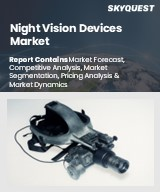
2025년 세계의 야시장비 시장 규모는 119억 달러로 평가되었습니다. 이 시장은 2034년까지 184억 달러에 이를 것으로 예측되며, 2026-2034년 CAGR 4.80%를 나타낼 전망입니다. 시장 성장 요인으로는 국방 분야 투자 증가, 테러 및 국경 간 분쟁으로 인한 군 현대화, 야외 레크리에이션 활동 증가 등을 들 수 있습니다.
시장 인사이트 :
- 현재 북미가 시장을 독점하고 있으며, 2025년 시장 점유율은 39.7%를 차지했습니다.
- 기기별로는 2025년 고글이 시장 점유율의 29.8%를 차지했습니다.
- 기술별로는 이미지 인텐시파이어가 2025년 시장을 주도했습니다.
- 최종 사용자별로 보면, 2025년 군용 부문이 시장 점유율의 65.8%를 차지했습니다.
시장 규모와 예측 :
- 시장 규모(2025년) : 119억 달러
- 시장 규모(2034년) : 184억 달러
- CAGR(2026-2034년) : 4.80%(연평균)
- 북미 : 최대 시장(2025년)
현재 국방, 법 집행 기관 및 보안 기관 수요 증가로 인해 시장이 성장하고 있습니다. 야시장비는 특히 저조도 및 어두운 환경에서 감시, 순찰, 야간 작전을 지원합니다. 군는 전투 임무 중 정확성과 안전성을 높이기 위해 야시장비를 사용합니다. 법 집행 기관은 국경 관리 및 긴급 대응 시 가시성 향상이라는 이점을 누릴 수 있습니다. 여기에 사냥, 야생동물 추적, 캠핑 등 아웃도어 활동 증가로 인해 야시장비 수요가 증가하고 있습니다. 기술의 발전으로 야시장비는 더 저렴하고, 더 가볍고, 더 쉽게 사용할 수 있게 되었습니다. 고급차에는 보다 안전한 야간 운전을 위한 야간 투시 시스템이 장착되어 있습니다. 위협과 범죄 증가에 따른 보안 강화의 필요성도 시장 성장을 뒷받침하고 있습니다. 도시 안전과 국방이 우선시되는 가운데, 다양한 분야에서 야시장비에 대한 수요는 계속 증가하고 있습니다.
미국은 여러 요인으로 인해 야시장비 시장의 주요 지역으로 부상하고 있습니다. 국가 안전을 보장하기 위한 첨단 감시 시스템에 대한 투자 확대는 야시장비 시장에 긍정적인 전망을 가져다주고 있습니다. 야시장비는 저조도 환경에서의 전술 임무, 국경 보안, 긴급 대응을 지원합니다. 법 집행 기관은 순찰 및 범죄 예방을 위해 이러한 도구에 계속 의존하고 있습니다. 공공 안전에 대한 우려 증가와 범죄 활동 증가는 이러한 기술의 도입을 촉진하고 있습니다. 또한, 사냥, 야생동물 관찰, 아웃도어 어드벤처 등의 민간 용도도 시장 성장에 기여하고 있습니다. 업계 보고서에 따르면, 2024년 6세 이상 미국 인구의 55%가 야외 레저 활동에 참여했다고 합니다. 기술 혁신으로 인해 이러한 장비는 더욱 컴팩트하고 효율적이며 접근이 용이해졌습니다. 주요 제조업체의 존재와 강력한 국방 예산이 제품 개발을 뒷받침하고 있습니다.
이 시장은 국방, 법 집행 및 민간용 첨단 감시 및 보안 솔루션에 대한 수요 증가에 크게 영향을 받고 있습니다. 야간 정찰 능력과 상황 인식 능력을 향상시키는 야간 투시 기술이 드론, 자율주행차 등 무인 플랫폼에 통합되고 있는 것은 눈에 띄는 시장 성장 촉진요인으로 작용하고 있습니다. 특히 2024년, Senop Oy는 핀란드 국방군을 위한 첨단 야시장비를 개발하겠다고 발표했습니다. 여기에는 고글, 열화상 쌍안경, 다기능 사격통제시스템이 탑재될 예정이었습니다. 이 장비들은 M20 렌즈와 지역용 열화상 카메라와 같은 첨단 기술을 통합하여 다양한 무기체계의 작전 효과를 향상시킬 수 있도록 했습니다. 그러나 시장은 첨단 장비의 높은 가격과 방위규제에 따른 수출금지 조치로 인해 시장이 억제되고 있습니다. 또한, 가혹한 기상 조건에서 사용 시 조작성의 제한이 사용을 방해하는 요인으로 작용할 수 있습니다. 이러한 장벽에도 불구하고 야생동물 연구, 수색 및 구조 활동, 아웃도어 레저 분야에서 야시장비의 사용 확대를 통해 시장에는 탄탄한 기회가 존재합니다. 기술의 발전은 해상도의 향상, 장비의 경량화, 디지털 기능의 강화에 중점을 두고 있습니다. 이러한 발전은 다양한 최종 사용자 계층의 운영 효율성을 높이고 용도를 확장하는 것을 목표로 하고 있습니다.
야시장비 시장 동향 :
증가하는 국방 및 보안 수요
군과 법 집행 기관은 감시, 정찰, 저조도 환경에서의 작전 효율성 유지와 같은 중요한 임무에서 야간 투시 기술에 크게 의존하고 있습니다. 테러리즘, 국경 간 분쟁, 국내 안보 위협을 배경으로 한 국방비 증가와 군 현대화가 첨단 야시장비에 대한 수요를 촉진하고 있습니다. 예를 들어, 스톡홀름 국제평화연구소(SIPRI)에 따르면 2024년 세계 군사비 지출은 2조 7,180억 달러에 달하고, 2015년부터 2024년까지 37%의 성장률을 보였습니다. 첨단 기술은 상황 인식을 향상시키고 전략적 우위를 가져다주기 때문에 야시장비는 국가 안보에 필수적인 요소로 자리 잡았습니다. 또한, 국경 보안 및 감시 활동에서 야시장비의 사용 확대가 시장에 긍정적인 영향을 미치고 있습니다. 군 관계자들에게 최신 야시장비를 제공하려는 정부의 이니셔티브는 이러한 기술이 안전과 평화를 보장하는 데 있어 매우 중요한 역할을 하고 있음을 강조하고 있습니다.
훈련 및 시뮬레이션 프로그램 강화
국방 및 보안 분야의 훈련 및 시뮬레이션 노력의 향상으로 인해 야간 투시경 시장의 성장이 촉진되고 있습니다. 야시장비는 이러한 프로그램에서 중요한 역할을 하며, 참가자들에게 실질적인 경험을 제공하고 기술 활용 능력을 향상시키는 데 도움을 주고 있습니다. 야시 기술은 시뮬레이션 훈련 중 전술 전략의 평가와 개선을 지원하여 임무 수행 능력을 향상시킬 수 있습니다. 훈련 및 시뮬레이션 프로그램이 발전함에 따라 고급 야시장비의 통합이 점점 더 중요해지고 있습니다. 2024년 7월, Lightforce Group 산하의 Force Ordnance는 Theon Sensors와 제휴하여 호주국방군(ADF)의 '디스마운트 컴뱃 프로그램'을 위한 첨단 쌍안경형 야시장비 120대를 공급하는 계약을 체결하였습니다.
아웃도어 레크리에이션 활동의 부상
캠핑, 야생동물 관찰 등 야외 레저 활동에 대한 관심이 높아지면서 야시장비 시장 수요를 견인하고 있습니다. 예를 들어, Eurostat의 데이터에 따르면, 2023년 유럽연합(EU)의 레크리에이션 및 스포츠 활동에 대한 정부 지출은 676억 유로에 달했으며, 이는 일반 정부 총 지출의 0.8%에 해당합니다. 애호가 및 전문가들은 야간 활동을 안전하고 효율적으로 수행하기 위해 최고급 야시장비가 필요합니다. 각 야시장비 브랜드는 아웃도어 애호가 및 여행자를 위해 특별히 설계된 전문 제품을 도입하여 사용자 경험과 기능을 향상시킴으로써 이러한 수요에 부응하고 있습니다. 야시장비는 어두운 환경에서도 선명한 시야를 제공하고 안전을 보장하기 때문에 이러한 활동에 필수적인 요소로 자리 잡고 있습니다.
목차
제1장 서문
제2장 조사 범위와 조사 방법
제3장 주요 요약
제4장 서론
제5장 세계의 야시장비 시장
제6장 시장 분석 : 디바이스별
제7장 시장 분석 : 기술별
제8장 시장 분석 : 최종 사용자별
제9장 시장 분석 : 지역별
제10장 야시장비 제조 공정
제11장 경쟁 구도
KTH 26.05.15The global night vision devices market size was valued at USD 11.9 Billion in 2025. The market is projected to reach USD 18.4 Billion by 2034, exhibiting a CAGR of 4.80% from 2026-2034. The market growth is attributed to rising investments in defense, modernization of armed forces due to terrorism, cross-border conflicts, and increasing outdoor recreational activities.
MARKET INSIGHTS:
- North America currently dominates the market, holding a market share of 39.7% in 2025.
- On the basis of the device, goggles held 29.8% of the market share in 2025.
- Based on technology, image intensifiers leads the market in 2025.
- On the basis of end user, the military segment accounts for 65.8% of the market share.
MARKET SIZE & FORECAST:
- 2025 Market Size: USD 11.9 Billion
- 2034 Projected Market Size: USD 18.4 Billion
- CAGR (2026-2034): 4.80%
- North America: Largest market in 2025
At present, the market is growing due to the rising demand from defense, law enforcement, and security agencies. Night vision devices aid in surveillance, patrolling, and night-time operations, especially in low-light and dark environments. Military forces are using night vision tools to enhance accuracy and safety during combat missions. Law enforcement is benefiting from better visibility during border control and emergency response. Besides this, increasing outdoor activities like hunting, wildlife tracking, and camping are catalyzing the demand for night vision devices. Technological advancements are making night vision equipment more affordable, lightweight, and user-friendly. High-end vehicles include night vision systems for safer night driving. The need for better security owing to rising threats and crime is also supporting the market growth. As urban safety and national defense are being prioritized, the demand for night vision devices continues to increase across various sectors.
The United States has emerged as a major region in the night vision devices market owing to many factors. The growing investments in advanced surveillance to ensure national safety are offering a favorable night vision devices market outlook. Night vision devices support tactical missions, border security, and emergency response during low-light conditions. Law enforcement agencies continue to rely on these tools for patrolling and crime prevention. Rising concerns about public safety and increasing criminal activities are promoting the adoption of such technology. In addition, civilian uses, such as hunting, wildlife observation, and outdoor adventures, are contributing to the market growth. As per industry reports, 55% of the US population aged 6 and older were engaged in outdoor leisure activities in 2024. Technological innovations make these devices more compact, efficient, and accessible. The presence of key manufacturers and strong defense funding is supporting product development.
The market is significantly influenced by the increased need for sophisticated surveillance and security solutions in defense, law enforcement, and civilian applications. The emerging integration of night vision technologies into unmanned platforms like drones and autonomous vehicles is a stand-out market driver, facilitating greater nighttime reconnaissance and situational awareness. Notably, in 2024, Senop Oy announced intentions to develop high-tech night vision equipment for the Finnish Defence Forces, which was set to feature goggles, thermal binoculars, and a multifunctional fire control system. The devices would integrate advanced technologies like M20 lenses and regional thermal cameras, enhancing operational effectiveness across various weapon systems. However, the market is hindered by high prices of advanced devices and export bans based on defense regulations. Furthermore, usability limitations when used in harsh weather conditions can limit use. In spite of these impediments, the market offers robust opportunities through expansion in the use of night vision devices in wildlife studies, search and rescue missions, and outdoor leisure. Technological advancements are centered on enhanced resolution, lighter-weight devices, and increased digital capabilities. These advancements are targeted to broaden applications while enhancing operational effectiveness in different end-user segments.
NIGHT VISION DEVICES MARKET TRENDS:
Growing Defense and Security Needs
Military and law enforcement groups heavily depend on night vision technology for important duties, such as surveillance, reconnaissance, and maintaining operational efficiency in low-light conditions. An increase in defense spending and modernization of armed forces due to terrorism, cross-border conflicts, and internal security threats is catalyzing the demand for advanced night vision devices. For instance, global expenditure on military hit USD 2,718 Billion in 2024, exhibiting a growth of 37% between 2015 and 2024, according to the Stockholm International Peace Research Institute (SIPRI). Advanced technologies improve the understanding of situations and offer strategic benefits, making night vision devices crucial for national security. Moreover, the growing use of night vision devices for border security and surveillance operations is positively influencing the market. Government efforts to provide military members with modern night vision gear highlight the crucial role of such technologies in ensuring security and peace.
Enhanced Training and Simulation Programs
Improved training and simulation initiatives in the defense and security sectors are propelling the night vision devices market growth. Night vision devices play a significant role in these programs, providing participants with practical experience and enhancing their skills in utilizing the technology. Night vision technology aids in evaluating and improving tactical strategies during simulation exercises, leading to enhanced mission readiness. As training and simulation programs are advancing, the integration of advanced night vision devices is becoming more crucial. In July 2024, Force Ordnance from Lightforce Group, in alliance with Theon Sensors, successfully secured a contract to supply 120 advanced binocular night-vision devices to the Australian Defence Force (ADF) for the Dismounted Combat Program.
Rise of Outdoor Recreational Activities
The increasing appeal of outdoor leisure activities, such as camping and wildlife observation, is driving the night vision devices market demand. For instance, government spending on recreational and sporting activities across the European Union reached €67.6 Billion in 2023, equating to 0.8% of total general government expenditure, according to Eurostat. Hobbyists and experts need top-notch night vision gear to participate in nighttime activities safely and efficiently. Night vision device brands are meeting this demand by introducing specialized products designed especially for outdoor enthusiasts and travelers, improving user experience and functionality. Night vision devices are becoming necessary for these activities since they offer clear visibility and ensure safety in low-light situations.
NIGHT VISION DEVICES INDUSTRY SEGMENTATION:
Analysis by Device:
- Goggles
- Cameras
- Scopes
- Others
Goggles leads the market with around 29.8% of market share in 2025 driven by its functional design, ease of use, and hands-free nature, which render them extremely popular among both military and civilian users. Defense personnel use the devices during nighttime surveillance, navigation, and combat because they enable users to stay aware of their surroundings while keeping their hands free from tools or weapons. The use of night vision goggles (NVGs) is also gaining traction in law enforcement, border patrol, and search and rescue. In the civilian market, their use is on the rise among outdoor recreational users, hunters, and security agencies. The technological developments, including the inclusion of thermal imaging and infrared illumination, have improved the performance and cost-effectiveness of goggles, thereby increasing their application and demand. Their light build and ease of use further increase their popularity, making goggles a central product segment in the night vision device market globally.
Analysis by Technology:
- Image Intensifier
- Thermal Imaging
- Infrared Illumination
Image Intensifier is the central mechanism used in many common night vision systems. The technology functions by amplifying existing ambient light, i.e., moonlight or starlight, to create a discernible image in low-light environments. Image intensifiers are mostly built into night vision goggles, monoculars, and weapon sights and are, therefore, a critical component of military, law enforcement, and surveillance missions. They have the advantage of being lower in power consumption, more portable, and capable of providing real-time imagery with very little latency. The ongoing development of image intensifier tubes, ranging from third-generation to newly developed fourth-generation ones, has improved resolution, sensitivity, and operating life. Even with the advent of competing technologies like thermal imaging, image intensifiers continue to be a preferred option because they are more affordable and perform better in applications involving detailed identification of individuals or objects in near-total blackness.
Analysis by End User :
- Military Segment
- Civil Segment
Military segment accounts for 65.8% of the market share in 2025 driven by the increased demand for greater situational awareness, mobility, and target acquisition during low-light or night-time operations. Military personnel worldwide heavily depend on night vision technology such as goggles, scopes, and binoculars with image intensifiers or thermal imaging to support reconnaissance, surveillance, and combat activities with greater accuracy and safety. The increasing emphasis on defense modernization and arming troops with sophisticated battlefield technologies further drives demand for high-performance night vision equipment. Governments are spending heavily on defense budgets, particularly in countries with active conflict or strategic threats, further driving procurement. Furthermore, the combination of night vision with other technologies, like augmented reality and helmet-mounted displays, facilitates mission efficiency and coordination. Consequently, the military segment continues to be one of the prime drivers of innovation and expansion for the global market.
Regional Analysis:
- Europe
- North America
- Asia-Pacific
- Middle East and Africa
- Latin America
In 2025, North America accounted for the largest market share of over 39.7% due to its superior defense infrastructure, high defense expenditure, and high concentration of established night vision equipment manufacturers. The United States, specifically, plays a major role in driving regional market expansion through ongoing investments in defense modernization initiatives and technological advancements. The military and law enforcement forces of the region make heavy use of night vision devices for observation, combat, and tactical missions, resulting in steady demand. Furthermore, the use of night vision technology is increasing in the civilian world, ranging from outdoor recreational activities to private security and wildlife watching. The presence of such major industry players, strong research and development (R&D) strengths and favorable government contracts and procurement policies reinforce the market environment even more. With continuously improving thermal imaging and digital night vision systems, North America remains the leader in pace-setting innovation and application, continuing to lead the market globally.
KEY REGIONAL TAKEAWAYS:
UNITED STATES NIGHT VISION DEVICES MARKET ANALYSIS
The United States holds 89.60% of the market share in North America. The market is influenced by the growing demand for advanced security and surveillance systems, particularly in military and defense applications. The increasing need for enhanced security solutions, both for government agencies and the private sector, is contributing substantially to industry expansion. The rise in terrorism and border security concerns has also heightened the need for more sophisticated surveillance equipment, boosting the adoption of night vision technologies. For instance, in 2023, 76% of terrorism-related deaths in Western democracies took place in the United States, according to industry reports. Additionally, technological advancements, such as the development of more compact, energy-efficient, and high-resolution night vision devices, are also driving the market forward. The commercial sector, including industries like law enforcement, hunting, and wildlife observation, is witnessing increased utilization of these devices, further expanding the market. Apart from this, defense budgets and investments in modernizing military assets, inculcating equipment for soldiers and surveillance systems, are contributing to the night vision devices market revenue. The incorporation of night vision capabilities into commercial drones for various applications, including infrastructure inspection and search-and-rescue missions, is also positively influencing the market. As night vision technology is becoming more affordable and accessible, its use is expected to continue growing in both military and civilian applications.
EUROPE NIGHT VISION DEVICES MARKET ANALYSIS
The Europe market is experiencing robust growth, fueled by the rise in defense spending across European nations, particularly in response to heightened security concerns stemming from geopolitical tensions. According to the Council of the European Union, from 2021 to 2024, total expenditure on defense by the member nations of the European Union grew by over 30%. Moreover, in 2024, total defense spending hit €326 Billion, equating to approximately 1.9% of the GDP of the European Union. This has resulted in a greater employment of advanced night vision technologies by armed forces, aiming to enhance operational capabilities during nighttime missions. Additionally, law enforcement agencies are adopting these devices to bolster surveillance and public safety efforts in low-light conditions. Technological advancements, including the integration of artificial intelligence (AI), AR, and multispectral imaging, are further propelling industry expansion by improving device performance and expanding application areas. Collaborations between regional businesses and technology firms are also fostering innovations, leading to the development of more sophisticated and user-friendly night vision systems.
ASIA-PACIFIC NIGHT VISION DEVICES MARKET ANALYSIS
The Asia-Pacific market is expanding due to increasing defense modernization and rising military expenditures in countries, such as China, India, Japan, and South Korea, which is leading to heightened demand for advanced night vision technologies. For instance, the Union Budget of India allocated INR 6,81,210.27 Crore for FY 2025-26 for the Ministry of Defence (MoD), as per the Press Information Bureau (PIB). This funding was 9.53% more than the Budgetary Estimate of FY 2024-25 and accounted for 13.45% of the Union Budget, which was the highest among the Ministries. Additionally, law enforcement agencies are employing night vision devices to improve surveillance and public safety in low-light conditions. The growing awareness about security needs in critical infrastructure facilities like airports and power plants is positively influencing the market. According to the night vision devices market forecast report, the increasing popularity of outdoor activities and eco-tourism in countries will continue to strengthen the market.
LATIN AMERICA NIGHT VISION DEVICES MARKET ANALYSIS
In Latin America, the market is significantly influenced by the integration of night vision technology into the automotive industry, especially in advanced driver-assistance systems (ADAS). Additionally, the region's emphasis on wildlife conservation and eco-tourism has led to increased adoption of night vision devices for nocturnal wildlife observation. For instance, in 2024, Brazil contained 15-20% of the global biological diversity, hosting more than 120,000 invertebrate species, around 9,000 vertebrate species, and approximatey 4,000 plant species, according to the United Nations Environment Programme (UNEP). This puts the country at a higher risk of poaching and illegal wildlife trafficking, creating the need for advanced security measures like night vision devices for surveillance. Besides this, technological advancements, such as the miniaturization of devices and the incorporation of digital imaging, have made night vision equipment more accessible and user-friendly.
MIDDLE EAST AND AFRICA NIGHT VISION DEVICES MARKET ANALYSIS
In the Middle East and Africa region, the market is being propelled by the rapid expansion of infrastructure projects, particularly in remote and challenging environments, such as deserts and rugged terrains. As the region is investing in the oil, gas, and mining industries, there is a growing demand for night vision devices for operational safety and surveillance. Additionally, increasing tourism activities in the region, especially for desert safaris and wildlife tours, are catalyzing the demand for user-grade night vision devices. For instance, between January and July 2024, Saudi Arabia received 17.5 Million international tourists, registering a growth of 10% in comparison to January-July 2023, according to the Saudi Press Agency. Besides this, the rising integration of night vision technology into unmanned aerial vehicles (UAVs) for applications like aerial surveillance, inspections, and disaster response is also supporting the market growth.
COMPETITIVE LANDSCAPE:
Key players are introducing advanced technologies that improve image clarity, range, and durability of night vision equipment. These companies focus on miniaturization and integration of features like thermal imaging and augmented reality to meet evolving user demands. Key players are also expanding their worldwide presence through partnerships, acquisitions, and distribution networks. They cater to both defense and commercial sectors, offering customized solutions for military, law enforcement, and civilian applications. Their strong relationships with government agencies help secure large-scale defense contracts. Additionally, key players are investing in marketing, after-sales services, and training programs to enhance user experience. Their continuous innovations and commitment to quality strengthen customer trust and keep the market competitive and growing. For instance, in 2024, Valeo and Teledyne FLIR announced a collaboration to integrate thermal imaging technology into automotive safety systems. Their agreement included a major initiative to enhance night vision capabilities in advanced driver-assistance systems (ADAS), aiming to increase safety for vehicles and roadways, especially when driving at night.
The report provides a comprehensive analysis of the competitive landscape in the night vision devices market with detailed profiles of all major companies, including:
- Teledyne FLIR LLC
- L3Harris Technologies, Inc.
- Elbit Systems of America, LLC
- American Technologies Network Corporation
KEY QUESTIONS ANSWERED IN THIS REPORT
1. How big is the night vision devices market?
2. What is the future outlook of night vision devices market?
3. What are the key factors driving the night vision devices market?
4. Which region accounts for the largest night vision devices market share?
5. Which are the leading companies in the global night vision devices market?
Table of Contents
1 Preface
2 Scope and Methodology
- 2.1 Objectives of the Study
- 2.2 Stakeholders
- 2.3 Data Sources
- 2.3.1 Primary Sources
- 2.3.2 Secondary Sources
- 2.4 Market Estimation
- 2.4.1 Bottom-Up Approach
- 2.4.2 Top-Down Approach
- 2.5 Forecasting Methodology
3 Executive Summary
4 Introduction
- 4.1 Overview
- 4.2 Key Industry Trends
5 Global Night Vision Devices Market
- 5.1 Market Overview
- 5.2 Market Performance
- 5.3 Impact of COVID-19
- 5.4 Market Breakup by Device
- 5.5 Market Breakup by Technology
- 5.6 Market Breakup by End User
- 5.7 Market Breakup by Region
- 5.8 Market Forecast
- 5.9 SWOT Analysis
- 5.9.1 Overview
- 5.9.2 Strengths
- 5.9.3 Weaknesses
- 5.9.4 Opportunities
- 5.9.5 Threats
- 5.10 Value Chain Analysis
- 5.10.1 Overview
- 5.10.2 Research and Development
- 5.10.3 Raw Material Procurement
- 5.10.4 Manufacturing
- 5.10.5 Marketing
- 5.10.6 Distribution
- 5.10.7 End-Use
- 5.11 Porters Five Forces Analysis
- 5.11.1 Overview
- 5.11.2 Bargaining Power of Buyers
- 5.11.3 Bargaining Power of Suppliers
- 5.11.4 Degree of Competition
- 5.11.5 Threat of New Entrants
- 5.11.6 Threat of Substitutes
- 5.12 Price Analysis
- 5.12.1 Key Price Indicators
- 5.12.2 Price Structure
- 5.12.3 Price Trends
6 Market Breakup by Device
- 6.1 Goggles
- 6.1.1 Market Trends
- 6.1.2 Market Forecast
- 6.2 Cameras
- 6.2.1 Market Trends
- 6.2.2 Market Forecast
- 6.3 Scopes
- 6.3.1 Market Trends
- 6.3.2 Market Forecast
- 6.4 Others
- 6.4.1 Market Trends
- 6.4.2 Market Forecast
7 Market Breakup by Technology
- 7.1 Image Intensifier
- 7.1.1 Market Trends
- 7.1.2 Market Forecast
- 7.2 Thermal Imaging
- 7.2.1 Market Trends
- 7.2.2 Market Forecast
- 7.3 Infrared Illumination
- 7.3.1 Market Trends
- 7.3.2 Market Forecast
8 Market Breakup by End User
- 8.1 Military Segment
- 8.1.1 Market Trends
- 8.1.2 Market Forecast
- 8.2 Civil Segment
- 8.2.1 Market Trends
- 8.2.2 Market Forecast
9 Market Breakup by Region
- 9.1 Europe
- 9.1.1 Overview
- 9.1.2 Market Trends
- 9.1.3 Market Segmentation
- 9.1.4 Market Forecast
- 9.2 North America
- 9.2.1 Overview
- 9.2.2 Market Trends
- 9.2.3 Market Segmentation
- 9.2.4 Market Forecast
- 9.3 Asia Pacific
- 9.3.1 Overview
- 9.3.2 Market Trends
- 9.3.3 Market Segmentation
- 9.3.4 Market Forecast
- 9.4 Middle East and Africa
- 9.4.1 Overview
- 9.4.2 Market Trends
- 9.4.3 Market Segmentation
- 9.4.4 Market Forecast
- 9.5 Latin America
- 9.5.1 Overview
- 9.5.2 Market Trends
- 9.5.3 Market Segmentation
- 9.5.4 Market Forecast
10 Night Vision Devices Manufacturing Process
- 10.1 Product Overview
- 10.2 Device Requirements
- 10.3 Manufacturing Process
- 10.4 Key Success and Risk Factors
11 Competitive Landscape
- 11.1 Market Structure
- 11.2 Key Players
- 11.3 Key Player Profiles
- 11.3.1 Teledyne FLIR LLC
- 11.3.2 L3Harris Technologies, Inc.
- 11.3.3 Elbit Systems of America, LLC
- 11.3.4 American Technologies Network Corporation