
|
시장보고서
상품코드
2109565
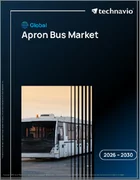
에이프런 버스 시장(2026-2030년)Global Apron Bus Market 2026-2030 |
||||||

세계의 에이프런 버스 시장은 2025-2030년 3억 416만 8,900달러 증가하고, 예측 기간 중 연평균 복합 성장률(CAGR)은 10.7%를 나타낼 전망입니다.
본 보고서에서는 전 세계 에이프런 버스 시장에 대해 종합적인 분석, 시장 규모 및 전망, 동향, 성장 요인, 과제는 물론 약 25개 업체를 대상으로 한 업체 분석을 제공합니다.
본 보고서에서는 현재 시장 상황, 최신 동향 및 성장요인, 그리고 전반적인 시장 환경에 대한 최신 분석을 제공합니다. 이 시장의 성장을 주도하는 요인은 전 세계 항공 여객 수 증가와 원격 주차 공간의 이용 확대, 엄격한 환경 규제와 공항 차량의 전기화, 기술 통합, 그리고 공항 내 자율 주행 모빌리티입니다.
본 조사는 업계 주요 관계자로부터 얻은 정보를 포함한 1차 정보와 2차 정보를 객관적으로 결합하여 수행되었습니다. 본 보고서에는 주요 기업 분석 외에도 종합적인 시장 규모 데이터, 지역별 분석이 포함된 부문별 데이터, 그리고 벤더 현황이 담겨 있습니다. 보고서에는 과거 데이터 및 예측 데이터가 포함되어 있습니다.
| 시장 범위 | |
|---|---|
| 기준연도 | 2025년 |
| 종료연도 | 2030년 |
| 조사 대상 기간 | 2026-2030년 |
| 성장 모멘텀 | 가속 |
| YOY 2026 | 10.1% |
| CAGR | 10.7% |
| 증가액 | 3억 416만 8,900달러 |
본 조사에서는 향후 수년간 전 세계 에이프런 버스 시장의 성장을 견인할 주요 요인 중 하나로 차량의 전동화 및 제로 에미션 대체 동력 시스템의 도입을 꼽고 있습니다. 또한, 스마트 플릿 관리, 텔레매틱스, IoT 솔루션의 통합, 그리고 대용량 와이드바디 설계 및 자율 주행 기술의 도입으로 인해 시장에서 상당한 수요가 예상됩니다.
목차
제1장 주요 요약
제2장 Technavio 분석
제3장 시장 구도
제4장 시장 규모
제5장 시장 규모 실적
제6장 정성 분석
제7장 Five Forces 분석
제8장 시장 세분화 : 추진력별
제9장 시장 세분화 : 최종사용자별
제10장 시장 세분화 : 유형별
제11장 시장 세분화 : 기술별
제12장 고객 현황
제13장 지역별 상황
제14장 성장 촉진요인, 과제 및 기회
제15장 경쟁 구도
제16장 경쟁 분석
제17장 부록
LSH 26.08.18The global apron bus market is forecasted to grow by USD 304168.9 thousand during 2025-2030, accelerating at a CAGR of 10.7% during the forecast period. The report on the global apron bus market provides a holistic analysis, market size and forecast, trends, growth drivers, and challenges, as well as vendor analysis covering around 25 vendors.
The report offers an up-to-date analysis regarding the current market scenario, the latest trends and drivers, and the overall market environment. The market is driven by escalating global air passenger traffic and remote stand utilization, strict environmental regulations and airport fleet electrification, technological integration and autonomous airside mobility.
The study was conducted using an objective combination of primary and secondary information including inputs from key participants in the industry. The report contains a comprehensive market size data, segment with regional analysis and vendor landscape in addition to an analysis of the key companies. Reports have historic and forecast data.
| Market Scope | |
|---|---|
| Base Year | 2025 |
| End Year | 2030 |
| Series Year | 2026-2030 |
| Growth Momentum | Accelerate |
| YOY 2026 | 10.1% |
| CAGR | 10.7% |
| Incremental Value | $304168.9 thousand |
Technavio's global apron bus market is segmented as below:
By Propulsion
- Diesel
- Electric
- CNG or LPG
- Hybrid
By End-User
- Commercial airports
- Airlines
- Ground handling companies
- Military airbases
By Type
- Low-floor apron bus
- Conventional bus
- Articulated bus
- Compact bus
By Technology
- Manual
- Semi-automated
- Autonomous
Geography
- North America
- US
- Canada
- Mexico
- Europe
- Germany
- UK
- France
- Italy
- Spain
- The Netherlands
- APAC
- China
- India
- Japan
- Australia
- South Korea
- Singapore
- South America
- Brazil
- Argentina
- Chile
- Middle East and Africa
- UAE
- South Africa
- Qatar
- Egypt
- Rest of World (ROW)
This study identifies the fleet electrification and adoption of zero-emission alternative power systems as one of the prime reasons driving the global apron bus market growth during the next few years. Also, integration of smart fleet management, telematics, and IoT solutions and deployment of high-capacity wide-body designs and autonomous navigation technologies will lead to sizable demand in the market.
The report on the global apron bus market covers the following areas:
- Global apron bus market sizing
- Global apron bus market forecast
- Global apron bus market industry analysis
The robust vendor analysis is designed to help clients improve their market position, and in line with this, this report provides a detailed analysis of several leading global apron bus market vendors that include Ashok Leyland Ltd., BMC Otomotiv Sanayi ve Ticaret, BYD Co. Ltd., COBUS Industries GmbH, Hino Motors Ltd., Isuzu Motors Ltd., Jiangsu Tianyi Aviation Industry, Karsan Otomotiv Sanayii ve, KIITOKORI OY, Mallaghan GA Inc., MAN Truck and Bus SE, Otokar AS, Solaris Bus and Coach Sp. z o.o., Sutlej Automotives Pvt. Ltd., VDL Bus and Coach BV, Xiamen King Long Motor Co. Ltd., Yutong Bus Co. Ltd.. Also, the global apron bus market analysis report includes information on upcoming trends and challenges that will influence market growth. This is to help companies strategize and leverage all forthcoming growth opportunities.
The publisher presents a detailed picture of the market by the way of study, synthesis, and summation of data from multiple sources by an analysis of key parameters such as profit, pricing, competition, and promotions. It presents various market facets by identifying the key industry influencers. The data presented is comprehensive, reliable, and a result of extensive primary and secondary research. The market research reports provide a complete competitive landscape and an in-depth vendor selection methodology and analysis using qualitative and quantitative research to forecast accurate market growth.
Table of Contents
1 Executive Summary
- 1.1 Market overview
- Executive Summary - Chart on Market Overview
- Executive Summary - Data Table on Market Overview
- Executive Summary - Chart on Global Market Characteristics
- Executive Summary - Chart on Market by Geography
- Executive Summary - Chart on Market Segmentation by Propulsion
- Executive Summary - Chart on Market Segmentation by End-user
- Executive Summary - Chart on Market Segmentation by Type
- Executive Summary - Chart on Market Segmentation by Technology
- Executive Summary - Chart on Incremental Growth
- Executive Summary - Data Table on Incremental Growth
- Executive Summary - Chart on Company Market Positioning
2 Technavio Analysis
- 2.1 Analysis of price sensitivity, lifecycle, customer purchase basket, adoption rates, and purchase criteria
- Analysis of price sensitivity, lifecycle, customer purchase basket, adoption rates, and purchase criteria
- 2.2 Criticality of inputs and Factors of differentiation
- 2.3 Factors of disruption
- 2.4 Impact of drivers and challenges
3 Market Landscape
- 3.1 Market ecosystem
- 3.2 Market characteristics
- 3.3 Value chain analysis
4 Market Sizing
- 4.1 Market definition
- 4.2 Market segment analysis
- Market segments
- 4.3 Market size 2025
- 4.4 Market outlook: Forecast for 2025-2030
5 Historic Market Size
- 5.1 Global Apron Bus Market 2020 - 2024
- Historic Market Size - Data Table on Global Apron Bus Market 2020 - 2024 ($ thousand)
- 5.2 Propulsion segment analysis 2020 - 2024
- Historic Market Size - Propulsion Segment 2020 - 2024 ($ thousand)
- 5.3 End-user segment analysis 2020 - 2024
- Historic Market Size - End-user Segment 2020 - 2024 ($ thousand)
- 5.4 Type segment analysis 2020 - 2024
- Historic Market Size - Type Segment 2020 - 2024 ($ thousand)
- 5.5 Technology segment analysis 2020 - 2024
- Historic Market Size - Technology Segment 2020 - 2024 ($ thousand)
- 5.6 Geography segment analysis 2020 - 2024
- Historic Market Size - Geography Segment 2020 - 2024 ($ thousand)
- 5.7 Country segment analysis 2020 - 2024
- Historic Market Size - Country Segment 2020 - 2024 ($ thousand)
6 Qualitative Analysis
- 6.1 Impact of AI on global apron bus market
- 6.2 Impact of geopolitical conflicts on global apron bus market
7 Five Forces Analysis
- 7.1 Five forces summary
- Five forces analysis - Comparison between 2025 and 2030
- 7.2 Bargaining power of buyers
- Bargaining power of buyers - Impact of key factors 2025 and 2030
- 7.3 Bargaining power of suppliers
- Bargaining power of suppliers - Impact of key factors in 2025 and 2030
- 7.4 Threat of new entrants
- Threat of new entrants - Impact of key factors in 2025 and 2030
- 7.5 Threat of substitutes
- Threat of substitutes - Impact of key factors in 2025 and 2030
- 7.6 Threat of rivalry
- Threat of rivalry - Impact of key factors in 2025 and 2030
- 7.7 Market condition
8 Market Segmentation by Propulsion
- 8.1 Market segments
- 8.2 Comparison by Propulsion
- 8.3 Diesel - Market size and forecast 2025-2030
- 8.4 Electric - Market size and forecast 2025-2030
- 8.5 CNG or LPG - Market size and forecast 2025-2030
- 8.6 Hybrid - Market size and forecast 2025-2030
- 8.7 Market opportunity by Propulsion
- Market opportunity by Propulsion ($ thousand)
9 Market Segmentation by End-user
- 9.1 Market segments
- 9.2 Comparison by End-user
- 9.3 Commercial airports - Market size and forecast 2025-2030
- 9.4 Airlines - Market size and forecast 2025-2030
- 9.5 Ground handling companies - Market size and forecast 2025-2030
- 9.6 Military airbases - Market size and forecast 2025-2030
- 9.7 Market opportunity by End-user
- Market opportunity by End-user ($ thousand)
10 Market Segmentation by Type
- 10.1 Market segments
- 10.2 Comparison by Type
- 10.3 Low-floor apron bus - Market size and forecast 2025-2030
- 10.4 Conventional bus - Market size and forecast 2025-2030
- 10.5 Articulated bus - Market size and forecast 2025-2030
- 10.6 Compact bus - Market size and forecast 2025-2030
- 10.7 Market opportunity by Type
- Market opportunity by Type ($ thousand)
11 Market Segmentation by Technology
- 11.1 Market segments
- 11.2 Comparison by Technology
- 11.3 Manual - Market size and forecast 2025-2030
- 11.4 Semi-automated - Market size and forecast 2025-2030
- 11.5 Autonomous - Market size and forecast 2025-2030
- 11.6 Market opportunity by Technology
- Market opportunity by Technology ($ thousand)
12 Customer Landscape
- 12.1 Customer landscape overview
- Analysis of price sensitivity, lifecycle, customer purchase basket, adoption rates, and purchase criteria
13 Geographic Landscape
- 13.1 Geographic segmentation
- 13.2 Geographic comparison
- 13.3 North America - Market size and forecast 2025-2030
- 13.3.1 US - Market size and forecast 2025-2030
- 13.3.2 Canada - Market size and forecast 2025-2030
- 13.3.3 Mexico - Market size and forecast 2025-2030
- 13.4 Europe - Market size and forecast 2025-2030
- 13.4.1 Germany - Market size and forecast 2025-2030
- 13.4.2 UK - Market size and forecast 2025-2030
- 13.4.3 France - Market size and forecast 2025-2030
- 13.4.4 Italy - Market size and forecast 2025-2030
- 13.4.5 Spain - Market size and forecast 2025-2030
- 13.4.6 The Netherlands - Market size and forecast 2025-2030
- 13.5 APAC - Market size and forecast 2025-2030
- 13.5.1 China - Market size and forecast 2025-2030
- 13.5.2 India - Market size and forecast 2025-2030
- 13.5.3 Japan - Market size and forecast 2025-2030
- 13.5.4 Australia - Market size and forecast 2025-2030
- 13.5.5 South Korea - Market size and forecast 2025-2030
- 13.5.6 Singapore - Market size and forecast 2025-2030
- 13.6 South America - Market size and forecast 2025-2030
- 13.6.1 Brazil - Market size and forecast 2025-2030
- 13.6.2 Argentina - Market size and forecast 2025-2030
- 13.6.3 Chile - Market size and forecast 2025-2030
- 13.7 Middle East and Africa - Market size and forecast 2025-2030
- 13.7.1 Saudi Arabia - Market size and forecast 2025-2030
- 13.7.2 UAE - Market size and forecast 2025-2030
- 13.7.3 South Africa - Market size and forecast 2025-2030
- 13.7.4 Qatar - Market size and forecast 2025-2030
- 13.7.5 Egypt - Market size and forecast 2025-2030
- 13.8 Market opportunity by geography
- Market opportunity by geography ($ thousand)
- Data Tables on Market opportunity by geography ($ thousand)
14 Drivers, Challenges, and Opportunity
- 14.1 Market drivers
- Escalating global air passenger traffic and remote stand utilization
- Strict environmental regulations and airport fleet electrification
- Technological integration and autonomous airside mobility
- 14.2 Market challenges
- High capital expenditure and charging infrastructure limitations
- Operational reliability and complex airside duty cycles
- Regulatory certification and workforce training deficits
- 14.3 Impact of drivers and challenges
- Impact of drivers and challenges in 2025 and 2030
- 14.4 Market opportunities
- Fleet electrification and adoption of zero-emission alternative power systems
- Integration of smart fleet management, telematics, and IoT solutions
- Deployment of high-capacity wide-body designs and autonomous navigation technologies
15 Competitive Landscape
- 15.1 Overview
- 15.2 Competitive Landscape
- Overview on criticality of inputs and factors of differentiation
- 15.3 Landscape disruption
- Overview on factors of disruption
- 15.4 Industry risks
- Impact of key risks on business
16 Competitive Analysis
- 16.1 Companies profiled
- Companies covered
- 16.2 Company ranking index
- Company ranking index
- 16.3 Market positioning of companies
- Matrix on companies position and classification
- 16.4 Ashok Leyland Ltd.
- Ashok Leyland Ltd. - Overview
- Ashok Leyland Ltd. - Product / Service
- Ashok Leyland Ltd. - Key offerings
- SWOT
- 16.5 BMC Otomotiv Sanayi ve Ticaret
- BMC Otomotiv Sanayi ve Ticaret - Overview
- BMC Otomotiv Sanayi ve Ticaret - Product / Service
- BMC Otomotiv Sanayi ve Ticaret - Key offerings
- SWOT
- 16.6 BYD Co. Ltd.
- BYD Co. Ltd. - Overview
- BYD Co. Ltd. - Business segments
- BYD Co. Ltd. - Key news
- BYD Co. Ltd. - Key offerings
- BYD Co. Ltd. - Segment focus
- SWOT
- 16.7 COBUS Industries GmbH
- COBUS Industries GmbH - Overview
- COBUS Industries GmbH - Product / Service
- COBUS Industries GmbH - Key offerings
- SWOT
- 16.8 Hino Motors Ltd.
- Hino Motors Ltd. - Overview
- Hino Motors Ltd. - Product / Service
- Hino Motors Ltd. - Key offerings
- SWOT
- 16.9 Isuzu Motors Ltd.
- Isuzu Motors Ltd. - Overview
- Isuzu Motors Ltd. - Business segments
- Isuzu Motors Ltd. - Key offerings
- Isuzu Motors Ltd. - Segment focus
- SWOT
- 16.10 Jiangsu Tianyi Aviation Industry
- Jiangsu Tianyi Aviation Industry - Overview
- Jiangsu Tianyi Aviation Industry - Product / Service
- Jiangsu Tianyi Aviation Industry - Key offerings
- SWOT
- 16.11 Karsan Otomotiv Sanayii ve
- Karsan Otomotiv Sanayii ve - Overview
- Karsan Otomotiv Sanayii ve - Product / Service
- Karsan Otomotiv Sanayii ve - Key offerings
- SWOT
- 16.12 Mallaghan GA Inc.
- Mallaghan GA Inc. - Overview
- Mallaghan GA Inc. - Product / Service
- Mallaghan GA Inc. - Key offerings
- SWOT
- 16.13 MAN Truck and Bus SE
- MAN Truck and Bus SE - Overview
- MAN Truck and Bus SE - Product / Service
- MAN Truck and Bus SE - Key offerings
- SWOT
- 16.14 Otokar AS
- Otokar AS - Overview
- Otokar AS - Business segments
- Otokar AS - Key offerings
- Otokar AS - Segment focus
- SWOT
- 16.15 Solaris Bus and Coach Sp. z o.o.
- Solaris Bus and Coach Sp. z o.o. - Overview
- Solaris Bus and Coach Sp. z o.o. - Product / Service
- Solaris Bus and Coach Sp. z o.o. - Key offerings
- SWOT
- 16.16 VDL Bus and Coach BV
- VDL Bus and Coach BV - Overview
- VDL Bus and Coach BV - Product / Service
- VDL Bus and Coach BV - Key offerings
- SWOT
- 16.17 Xiamen King Long Motor Co. Ltd.
- Xiamen King Long Motor Co. Ltd. - Overview
- Xiamen King Long Motor Co. Ltd. - Product / Service
- Xiamen King Long Motor Co. Ltd. - Key offerings
- SWOT
- 16.18 Yutong Bus Co. Ltd.
- Yutong Bus Co. Ltd. - Overview
- Yutong Bus Co. Ltd. - Product / Service
- Yutong Bus Co. Ltd. - Key offerings
- SWOT
17 Appendix
- 17.1 Scope of the report
- Market definition
- Objectives
- Notes and caveats
- 17.2 Inclusions and exclusions checklist
- Inclusions checklist
- Exclusions checklist
- 17.3 Currency conversion rates for US$
- Currency conversion rates for US$
- 17.4 Research methodology
- Research methodology
- 17.5 Data procurement
- Information sources
- 17.6 Data validation
- Data validation
- 17.7 Validation techniques employed for market sizing
- Validation techniques employed for market sizing
- 17.8 Data synthesis
- Data synthesis
- 17.9 360 degree market analysis
- 360 degree market analysis
- 17.10 List of abbreviations
- List of abbreviations


