

|
시장보고서
상품코드
1934642
베트남의 석유 및 가스 : 시장 점유율 분석, 업계 동향과 통계, 성장 예측(2026-2031년)Vietnam Oil And Gas - Market Share Analysis, Industry Trends & Statistics, Growth Forecasts (2026 - 2031) |
||||||
 Mordor Intelligence
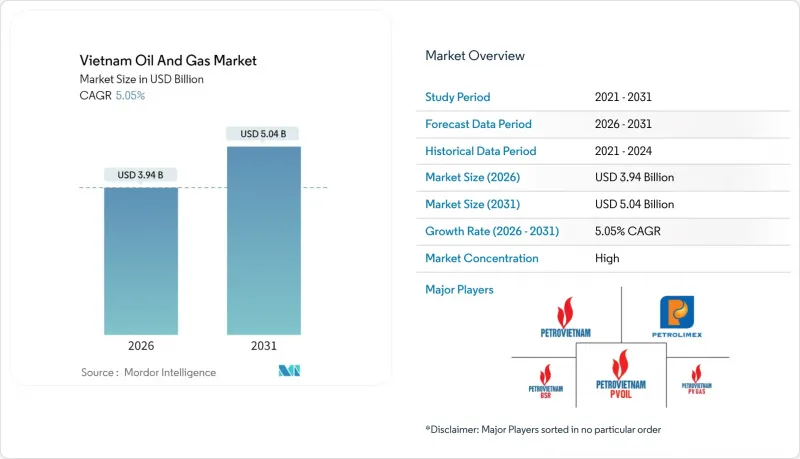
베트남의 석유 및 가스 시장 규모는 2026년에 39억 4,000만 달러로 추정되고 있으며, 2025년 37억 5,000만 달러에서 성장이 전망됩니다.
2031년에는 50억 4,000만 달러에 달할 것으로 예상되며, 2026년부터 2031년까지 연평균 복합 성장률(CAGR) 5.05%로 확대될 것으로 전망됩니다.
이러한 성장 궤적은 국내 생산량 감소와 국가 전력 개발 계획 VIII에 따른 LNG 발전 투자 가속화에 따라 베트남이 의도적으로 에너지 안보로 전환하고 있는 데 기인합니다. 회수 가능한 가스량이 1,700억 입방미터가 넘는 B-O Mon 블록 개발로 대표되는 대규모 업스트림부문에 대한 투자는 신규 가스화력 발전의 연료 유연성을 확보하기 위한 수입 제휴의 확대와 조화를 이루고 있습니다. 해양 탐사 성공, 더 깊은 저류층 목표, 국산 리그 제조의 발전과 함께 설비 투자 모멘텀이 강화되고 있습니다. 동시에 다운스트림 부문의 디지털화, 강화되는 ESG 규제, 외국간접투자(FDI) 단지의 산업용 가스 고객 기반 확대는 중하류 부문의 현금 흐름을 확대하는 동시에 사업자를 고수익의 유지보수 및 턴어라운드 서비스로 이끌고 있습니다. 이러한 요인들이 복합적으로 작용하여 순수 신규 개발 역량보다는 자산 최적화를 중심으로 한 중기적 기회 창출을 촉진하고 있습니다.
베트남의 석유 및 가스 시장 동향과 인사이트
PDP-8 기반 LNG 발전 추진
베트남 전력개발계획 VIII(PDP-8)은 2030년까지 22,524MW의 LNG 화력발전 용량을 규정하고 있으며, 이는 국내 발전설비의 약 10%에 해당합니다. 국내 가스 생산량은 2013년 이후 연간 약 5%의 속도로 감소하는 추세이지만, 가스 수요는 2020년 130억 입방미터에서 2030년까지 340억 입방미터를 넘어설 것으로 전망되고 있습니다. 2025년 3월 티바이 터미널이 하루 700만 입방미터로 확장되는 등 신규 공급 능력 증가가 이러한 전환을 뒷받침하고 있습니다. PV가스와 엑셀러레이트 에너지는 2026년 이후 미국산 액화천연가스 공급에 관한 양해각서를 체결하고, 베트남 최초의 완전 통합형 LNG 발전 체인인 논 트랙 3, 4호기의 원료 다변화를 강화하고 있습니다. 이러한 획기적인 노력으로 액화천연가스는 전력 부문의 탈탄소화를 위한 기반으로서 확고한 입지를 구축하고 있습니다.
국내 생산량 감소는 E&P 지출을 자극합니다.
Bach Ho와 White Tiger와 같은 성숙한 유전은 수분 증가와 압력 감소에 직면하고 있으며, 사업자들은 국내 공급을 안정화하기 위해 새로운 저류층 탐사를 진행하고 있습니다. 머피 오일은 2025년까지 1억 1,000만 달러(전 세계 예산의 9%)를 투자하여 Lac Da Vang 시추와 Hai Su Vang 평가에 투자하기로 결정하였습니다. Hai Su Vang의 경우, 1X 유정은 2개의 저류층에서 370피트의 순생산량을 기록하고 있습니다. PetroVietnam은 Dai Hung 3단계를 예정보다 20일 앞당겨 완공하여 생산량 감소에 대응하기 위한 충진 계획을 신속하게 추진할 수 있는 국내 역량을 보여주었습니다. 15-1/05 및 15-2/17 블록에서 예정된 팜아웃은 생산 분배 조건과 검증된 서비스 인프라를 결합하여 더 많은 위험 자본을 유치하는 것을 목표로 하고 있습니다. 이러한 프로그램은 단기적인 현금흐름을 영향력이 큰 유정에 할당하는 동시에 회수율 향상을 통해 유전의 수명을 연장하는 프로그램입니다.
성숙한 유전과 높은 물 균열 비용
백호 등 역사가 깊은 생산유전에서는 현재 80%가 넘는 고분배율을 기록하고 있어 분리처리 비용 증가와 수익률 압박을 초래하고 있습니다. 기술적 개선으로 잭업 수리 주기가 5일로 단축되었지만, 저류층 감쇠로 인해 생산량이 감소하고 폐로 부채가 계속 증가하고 있습니다. 자본 집약적인 생산량 증가 기술은 생산량 감소를 부분적으로 보완하는 데 그쳐 새로운 탐사의 필요성을 강조하고 있습니다.
부문 분석
업스트림 부문은 2025년 베트남의 석유 및 가스 시장의 74.25%를 차지할 것으로 예상되며, B-O Mon 블록 및 Murphy Oil의 Lac Da Vang 프로그램과 같은 심해 프로젝트에 대한 지출에 힘입어 2031년까지 연평균 5.38% 성장할 것으로 예측됩니다. 이러한 지출 증가는 1억 배럴 이상의 석유환산량(boe)을 목표로 하는 평가 시추를 보장하고, 베트남의 석유 및 가스 시장에서 탐사 및 생산 분야의 선도적 지위를 확고히 하고 있습니다. 화이트 타이거와 다이펀 3단계의 지속적인 저류층 관리는 1차 회수에서 2차 기술로의 전환을 예시하고 있으며, 이는 유전의 수명을 연장하고 과세 대상 생산량을 유지하는 데 도움이 됩니다.
중류 해저 파이프라인과 LNG 수용시설은 해상 공급원과 도시 수요 센터를 연결하고, 하류의 Nghi Son과 Dung Quat의 정제시설은 연간 650만 톤에서 거의 750만 톤으로 생산 능력을 향상시키고 있습니다. 디지털 트윈과 AI를 통한 수율 최적화로 에너지 소비가 감소하고 비규격 제품의 양이 감소하여 2020년 환경보호법에 따른 환경 규제 강화에도 불구하고 배럴당 이익이 증가하고 있습니다.
기타 특전:
- 엑셀 형식 시장 예측(ME) 시트
- 애널리스트의 3개월 지원
자주 묻는 질문
목차
제1장 서론
제2장 조사 방법
제3장 주요 요약
제4장 시장 구도
제5장 시장 규모와 성장 예측
제6장 경쟁 구도
제7장 시장 기회와 향후 전망
LSH 26.03.05Vietnam Oil And Gas Market size in 2026 is estimated at USD 3.94 billion, growing from 2025 value of USD 3.75 billion with 2031 projections showing USD 5.04 billion, growing at 5.05% CAGR over 2026-2031.
This trajectory is rooted in Vietnam's deliberate shift toward energy security as domestic production declines and LNG-to-power investment accelerates under the National Power Development Plan VIII. Substantial upstream commitments-exemplified by the Block B - O Mon development with recoverable gas exceeding 170 billion m3-harmonize with rising import alliances that secure fuel flexibility for new gas-fired generation. Offshore exploration success, deeper reservoir targets, and indigenous rig fabrication collectively reinforce capital expenditure momentum. At the same time, downstream digitalization, stricter ESG rules, and a widening industrial gas customer base in foreign direct investment (FDI) parks are expanding mid- and downstream cash flows while nudging operators toward higher-margin maintenance and turnaround services. Together, these forces cultivate a medium-term opportunity set centered on asset optimization rather than pure greenfield capacity.
Vietnam Oil And Gas Market Trends and Insights
LNG-to-Power Push Under PDP-8
Vietnam's Power Development Plan VIII stipulates 22,524 MW of LNG-fired capacity by 2030, equal to roughly 10% of the national fleet.VN. Domestic gas output has been declining at a rate of approximately 5% annually since 2013, yet gas demand is forecast to increase from 13 billion m3 in 2020 to exceed 34 billion m3 by 2030. Capacity additions such as the Thi Vai terminal expansion to 7 million m3 per day in March 2025 underpin that pivot. PV Gas and Excelerate Energy have signed supply memoranda that lock in U.S. cargoes from 2026, bolstering feedstock diversity for Nhon Trach 3 and 4-the country's first fully integrated LNG-to-power chain. Together, these milestones embed LNG as a cornerstone of power-sector decarbonization.
Declining Domestic Output Spurs E&P Spend
Mature fields, such as Bach Ho and White Tiger, face rising water cuts and falling pressure, prompting operators to explore new reservoirs to stabilize the national supply. Murphy Oil committed USD 110 million for 2025-9% of its global budget-to drill Lac Da Vang and appraise Hai Su Vang, where the 1X well logged 370 ft of net pay over two reservoirs. PetroVietnam delivered Dai Hung Phase 3 twenty days ahead of schedule, demonstrating its domestic capacity to fast-track infill plans that counteract decline. Upcoming farm-outs in Blocks 15-1/05 and 15-2/17 aim to attract more risk capital by pairing production sharing terms with proven service infrastructure. Together, these programs allocate near-term cash flow to high-impact wells while extending field life through enhanced recovery.
Mature Fields & High Water-Cut Costs
Historic producers like Bach Ho now record water-cut levels above 80%, inflating separation expenses and squeezing margins. Engineering tweaks have trimmed jack-up repair cycles to five days, yet reservoir decline continues to erode volumes and elevate decommissioning liabilities. Capital-intensive enhanced recovery only partially offsets drop-offs, underscoring the need for new exploration.
Other drivers and restraints analyzed in the detailed report include:
- Gas-Fired Industrial Growth in FDI Parks
- Surge in Rigs for Block B & Blue Whale
- Price-Capped LNG-Power Tariffs
For complete list of drivers and restraints, kindly check the Table Of Contents.
Segment Analysis
The upstream segment accounted for 74.25% of Vietnam's oil and gas market in 2025 and is forecast to compound at a 5.38% CAGR to 2031, driven by deepwater spending on projects such as Block B - O Mon and Murphy Oil's Lac Da Vang program. This spending surge underwrites appraisal drilling that targets recoverable volumes exceeding 100 million barrels of oil equivalent (boe) and consolidates Vietnam's lead in the oil and gas market for exploration and production. Ongoing reservoir management at White Tiger and Phase 3 of Dai Hung exemplify the shift from primary recovery to secondary techniques, which prolong field life and sustain taxable output.
While midstream subsea pipelines and LNG reception facilities link offshore flows to urban demand centers, downstream refiners at Nghi Son and Dung Quat add capacity headroom from 6.5 million t/y to nearly 7.5 million t/y. Digital twins and AI-driven yield optimization reduce energy intensity and curtail off-spec volumes, thereby increasing profit per barrel despite stricter environmental regulations under the 2020 Environmental Protection Law.
The Vietnam Oil and Gas Market Report is Segmented by Sector (Upstream, Midstream, and Downstream), Location (Onshore and Offshore), and Service (Construction, Maintenance and Turn-Around, and Decommissioning). The Market Sizes and Forecasts are Provided in Terms of Value (USD).
List of Companies Covered in this Report:
- Vietnam Oil & Gas Group (PetroVietnam)
- Petrolimex Group
- PetroVietnam Gas (JSC)
- Binh Son Refining & Petrochemical (BSR)
- PetroVietnam Oil (PVOIL)
- PetroVietnam Power (PV Power)
- PetroVietnam Exploration & Production (PVEP)
- PetroVietnam Drilling (PVD)
- PetroVietnam Technical Services (PTSC)
- PetroVietnam Transportation (PV Trans)
- ExxonMobil Corp.
- TotalEnergies SE
- Chevron Corp.
- Idemitsu Kosan Co. Ltd
- Mitsui Oil Exploration
- Excelerate Energy Inc.
- Jadestone Energy plc
- Rosneft PJSC
- Japan Drilling Co. Ltd
- KS Energy Services Ltd
Additional Benefits:
- The market estimate (ME) sheet in Excel format
- 3 months of analyst support
TABLE OF CONTENTS
1 Introduction
- 1.1 Study Assumptions & Market Definition
- 1.2 Scope of the Study
2 Research Methodology
3 Executive Summary
4 Market Landscape
- 4.1 Market Overview
- 4.2 Market Drivers
- 4.2.1 LNG-to-Power Push Under PDP-8
- 4.2.2 Declining Domestic Output Spurs E&P Spend
- 4.2.3 Gas-Fired Industrial Growth in FDI Parks
- 4.2.4 Surge in Rigs for Block B & Blue Whale
- 4.2.5 Rapid Fuel-Retail Digitisation (PVOIL Easy)
- 4.2.6 U.S.-Vietnam LNG Supply Alliances
- 4.3 Market Restraints
- 4.3.1 Mature Fields & High Water-Cut Costs
- 4.3.2 Price-Capped LNG-Power Tariffs
- 4.3.3 Slow PSC & LNG Terminal Approvals
- 4.3.4 South China Sea Geopolitical Risk
- 4.4 Supply-Chain Analysis
- 4.5 Regulatory Landscape
- 4.6 Technological Outlook
- 4.7 Crude-Oil Production & Consumption Outlook
- 4.8 Natural-Gas Production & Consumption Outlook
- 4.9 Installed Pipeline Capacity Analysis
- 4.10 Unconventional Resources CAPEX Outlook (tight oil, oil sands, deep-water)
- 4.11 Porter's Five Forces
- 4.11.1 Threat of New Entrants
- 4.11.2 Bargaining Power of Suppliers
- 4.11.3 Bargaining Power of Buyers
- 4.11.4 Threat of Substitutes
- 4.11.5 Competitive Rivalry
- 4.12 PESTLE Analysis
5 Market Size & Growth Forecasts
- 5.1 By Sector
- 5.1.1 Upstream
- 5.1.2 Midstream
- 5.1.3 Downstream
- 5.2 By Location
- 5.2.1 Onshore
- 5.2.2 Offshore
- 5.3 By Service
- 5.3.1 Construction
- 5.3.2 Maintenance and Turn-around
- 5.3.3 Decommissioning
6 Competitive Landscape
- 6.1 Market Concentration
- 6.2 Strategic Moves (M&A, Partnerships, PPAs)
- 6.3 Market Share Analysis (Market Rank/Share for key companies)
- 6.4 Company Profiles (includes Global level Overview, Market level overview, Core Segments, Financials as available, Strategic Information, Products & Services, and Recent Developments)
- 6.4.1 Vietnam Oil & Gas Group (PetroVietnam)
- 6.4.2 Petrolimex Group
- 6.4.3 PetroVietnam Gas (JSC)
- 6.4.4 Binh Son Refining & Petrochemical (BSR)
- 6.4.5 PetroVietnam Oil (PVOIL)
- 6.4.6 PetroVietnam Power (PV Power)
- 6.4.7 PetroVietnam Exploration & Production (PVEP)
- 6.4.8 PetroVietnam Drilling (PVD)
- 6.4.9 PetroVietnam Technical Services (PTSC)
- 6.4.10 PetroVietnam Transportation (PV Trans)
- 6.4.11 ExxonMobil Corp.
- 6.4.12 TotalEnergies SE
- 6.4.13 Chevron Corp.
- 6.4.14 Idemitsu Kosan Co. Ltd
- 6.4.15 Mitsui Oil Exploration
- 6.4.16 Excelerate Energy Inc.
- 6.4.17 Jadestone Energy plc
- 6.4.18 Rosneft PJSC
- 6.4.19 Japan Drilling Co. Ltd
- 6.4.20 KS Energy Services Ltd
7 Market Opportunities & Future Outlook
- 7.1 White-Space & Unmet-Need Assessment


