|
시장보고서
상품코드
1939591
미국의 화물 및 물류 : 시장 점유율 분석, 업계 동향과 통계, 성장 예측(2026-2031년)United States Freight And Logistics - Market Share Analysis, Industry Trends & Statistics, Growth Forecasts (2026 - 2031) |
||||||
 Mordor Intelligence
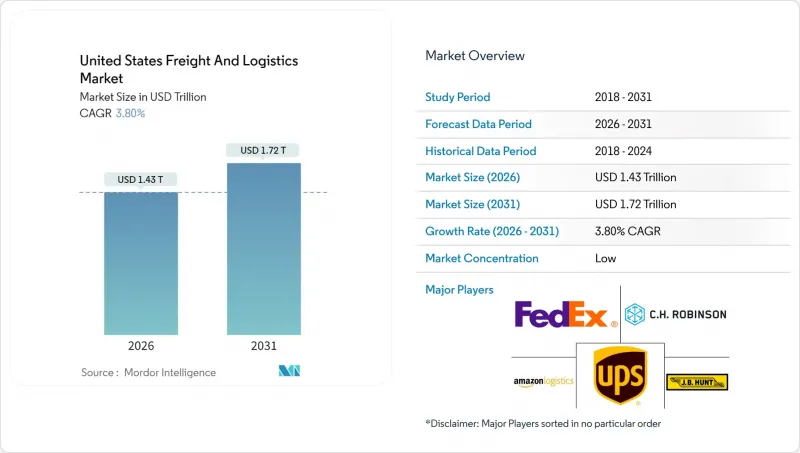
미국의 화물 및 물류 시장은 2025년 1조 3,810억 9,000만 달러에서 2026년에는 1조 4,335억 8,000만 달러로 성장하며, 2026-2031년에 CAGR 3.8%로 추이하며, 2031년에는 1조 7,246억 달러에 달할 것으로 예측되고 있습니다.
이러한 완만한 성장 궤적은 E-Commerce 풀필먼트, 니어쇼어링이 주도하는 제조 흐름, 빠른 기술 도입으로 형성된 성숙하면서도 탄력적인 상황을 반영합니다. 화주들은 자산 집약형에서 디지털로 조정된 네트워크로 전환하고 있으며, 운송 모드 전반에 걸쳐 용량 최적화와 실시간 가시성을 확보하고 있습니다. 연방 인프라 투자 및 고용법(IIJA)에 따른 도로, 철도, 항만에 대한 자금 지원은 장기적인 네트워크 신뢰성을 지원하고, 무공해 트럭의 시범 운영은 지속가능한 운송으로의 전환을 가속화하고 있습니다. 대규모 합병으로 세계 포워딩 역량이 재편되는 한편, 지역 전문 업체들이 라스트마일 배송과 온도 관리 서비스에서 틈새 시장을 확보하면서 경쟁이 치열해지고 있습니다.
미국 화물 및 물류 시장 동향과 인사이트
폭발적으로 증가하는 B2C E-Commerce 소포 물량
2024년 국내 소포 운송량이 증가하여 고빈도 및 단거리 운송에 대한 수요가 증가했습니다. 2025년 2월 아마존이 페덱스와 대형화물 배송을 위해 제휴를 맺은 것은 소매업체와 운송업체의 경계를 모호하게 하는 분산형 풀필먼트 모델을 강화하는 것입니다. 소비자는 당일 및 익일 배송을 기대하고 있으며, 사업자에게는 비수기에 대비한 예비 수송능력 확보가 요구되고 있습니다. 지역 배송업체와 라스트마일 전문업체들의 점유율이 확대되는 반면, 기존 대형 업체들은 기존 프리미엄이었던 항공운송의 지상화로 인한 이익률 압박에 직면하고 있습니다. 소비자 직접 판매 채널로의 전환으로 화물 운송은 팔레트 운송에서 소량 배송으로 전환되어 운송 경로의 밀도와 자산 활용 요구 사항이 재구성되고 있습니다.
리쇼어링이 주도하는 국내 제조 화물 흐름
CHIPS법 및 인플레이션 억제법에 따른 총 2,800억 달러 규모의 특혜를 배경으로 공급망 현지화가 가속화되고 있습니다. 반도체, 자동차, 의약품 프로젝트로 인해 5대호 지역과 남동부 회랑에 화물 수요가 집중됨. 국내 운송거리가 단축됨에 따라 정시성 부품의 운송은 트럭 운송에 대한 의존도가 높아지는 반면, 한정된 장거리 운송 능력을 둘러싼 경쟁이 심화되고 있습니다. 철도 및 항만 확장에도 불구하고 리쇼어링으로 인한 물동량 증가가 기존 네트워크에 부담을 주기 때문에 제조업이 집중된 운송 노선에서는 운임 프리미엄이 발생합니다. 주정부 차원의 인센티브는 지역 화물 거점 강화를 촉진하고 멀티모달 연결의 중요성을 더욱 높이고 있습니다.
심화되는 장거리 운전기사 부족과 임금 인상
2024년에도 대형 운송업체들은 높은 이직률과의 싸움을 계속하고 있습니다. 고령화되는 노동력과 라이프스타일에 대한 우려가 신규 진입을 가로막고 있기 때문입니다. 채용시 보너스, 재택근무 시간 개선, 복리후생 확대 등으로 임금 패키지가 상승했습니다. 전자기록장치(ELD) 장착 의무화 및 운행시간 제한으로 인해 차량이 가용한 경우에도 실효 수송능력은 감소하고 있습니다. 여성과 청년층의 노동 참여율이 여전히 낮아 노동력 부족 현상이 지속되고 있습니다. 견습제도와 차량 시설의 현대화로 채용 환경이 개선되고 있지만, 아직 부족한 부분을 채우지 못하고 있습니다.
부문 분석
제조업은 2025년 미국 화물 및 물류 시장 규모의 28.54%를 차지했습니다. 리쇼어링(역직구) 특혜로 부품 유입과 완제품 유통이 증가했기 때문입니다. 이 부문은 비용과 사이클 타임의 균형을 맞춘 멀티모달 솔루션을 선호하며, 고부가가치 전자제품과 의약품은 긴급 배송 서비스에 의존하고 있습니다. 도매 및 소매업은 규모는 작지만, 옴니채널 소매업이 마이크로 풀필먼트 거점 및 소규모 배송 밀도를 확대하는 가운데 2026-2031년 4.05%의 가장 빠른 CAGR을 나타낼 것으로 예측됩니다. 건설물류는 공공 인프라 지출로 안정세를 유지하는 반면, 석유-가스-광업-채석업은 원자재 가격 및 에너지 정책 전환에 따른 변동성을 보이고 있습니다.
농업, 어업, 임업은 벌크화물과 냉장화물의 안정적인 기반을 유지하지만, 계절적 변동으로 인해 유연한 운송 능력이 요구됩니다. 신흥 분야인 재생에너지 부품, 의료기기, 데이터센터 장비는 전문적인 취급과 규제 준수를 필요로 하는 분야로, 업계 지식을 갖춘 사업자에 대한 수요가 증가하고 있습니다. 모든 산업에서 공급망의 지역화가 진행되어 지역 트럭 운송 노선의 물동량이 증가함. 성장 지역에서는 운전자 및 창고 작업자 확보 경쟁이 치열해지고 있습니다.
2025년 기준 화물 운송은 미국 화물 및 물류 시장 점유율의 62.85%를 차지할 것으로 예상되며, 벌크 상품 및 제조업 공급망을 지원하는 트럭 운송, 철도 및 복합 운송 네트워크가 핵심을 형성하고 있습니다. CEP(소량화물 배송)는 규모는 작지만 대도시 지역의 풀필먼트 거점 주변에 집중된 EC 소포 밀도에 힘입어 2026-2031년 4.38%의 가장 높은 CAGR을 나타낼 것으로 예측됩니다. 국내 CEP 서비스는 76.05%의 점유율을 유지했으나, 간소화된 통관 규정이 지원하는 국경 간 EC 수요로 인해 국제 소량 소포의 유통량은 증가 추세에 있습니다. 창고-보관 수요는 견고하여 2025년 기준 시설용량의 92.05%를 비온도관리시설이 차지하고 있으며, 의약품 및 신선식품 물류를 배경으로 온도관리시설의 면적 확대 속도가 빨라지고 있습니다.
사업자들은 기능의 경계를 모호하게 하고, 운송, 창고, 부가가치 서비스를 통합적으로 제공함으로써 더 깊은 지갑 점유율을 확보하고 있습니다. 디지털 오케스트레이션 플랫폼을 통해 시설 네트워크 전체에서 실시간 운송 모드 선택 및 재고 조정이 가능합니다. CEP 사업자는 인력 부족을 보완하기 위해 자동 분류 시스템과 AI를 통한 경로 최적화를 도입합니다. 화물 운송 분야에서는 무공해 트럭의 시험 도입과 IIJA 자금으로 이루어진 회랑 정비로 차량 구성과 지역 효율성을 변화시킬 것입니다. 서비스 융합을 통해 풀스택 프로바이더는 구조적 변화를 포착하고, 틈새 전문업체는 속도, 컴플라이언스, 제품 무결성에 특화하여 성공을 거둘 수 있습니다.
기타 특전:
- 엑셀 형식 시장 예측(ME) 시트
- 애널리스트 지원(3개월)
자주 묻는 질문
목차
제1장 서론
제2장 조사 방법
제3장 개요
제4장 시장 구도
제5장 시장 규모와 성장 예측
제6장 경쟁 구도
제7장 시장 기회와 향후 전망
KSA 26.03.06The United States freight and logistics market is expected to grow from USD 1,381.09 billion in 2025 to USD 1,433.58 billion in 2026 and is forecast to reach USD 1,724.6 billion by 2031 at 3.8% CAGR over 2026-2031.
This moderate trajectory reflects a maturing yet resilient landscape shaped by e-commerce fulfillment, nearshoring-driven manufacturing flows, and rapid technology adoption. Shippers shift from asset-heavy to digitally orchestrated networks, unlocking capacity optimization and real-time visibility across modes. Federal Infrastructure Investment and Jobs Act (IIJA) funds earmarked for roads, rail, and ports underpin long-term network reliability, while zero-emission truck pilots signal an accelerating transition toward sustainable transport. Competitive intensity tightens as large mergers reshape global forwarding capabilities, even as regional specialists carve niche positions around last-mile and temperature-controlled services.
United States Freight And Logistics Market Trends and Insights
Explosive B2C E-Commerce Parcel Volumes
Domestic parcel shipments increased in 2024, intensifying demand for high-frequency, short-haul movements. Amazon's February 2025 collaboration with FedEx on large packages reinforces distributed fulfillment models that blur lines between retailers and carriers. Consumers expect same-day and next-day delivery, compelling providers to hold reserve capacity during off-peak periods. Regional carriers and last-mile specialists gain share as incumbents manage margin pressure from the groundification of formerly premium air services. The shift toward direct-to-consumer channels reroutes freight from palletized to parcel flows, reshaping lane density and asset utilization requirements.
Reshoring-Driven Domestic Manufacturing Freight Flows
Supply-chain localization accelerates, supported by the CHIPS Act and the Inflation Reduction Act incentives totaling USD 280 billion. Semiconductor, automotive, and pharmaceutical projects concentrate freight demand in the Great Lakes and Southeast corridors. Shorter domestic routes increase reliance on trucking for time-critical components while competing for limited long-haul capacity. Rate premiums emerge on dense manufacturing lanes as reshored volumes stress existing networks, despite ongoing rail and port expansions. State-level incentives amplify regional freight nodes, reinforcing multimodal connectivity priorities.
Acute Long-Haul Driver Shortage and Wage Inflation
Large carriers continued battling elevated turnover in 2024 as an aging workforce and lifestyle concerns deter new entrants. Wage packages climbed as fleets offered signing bonuses, improved home time, and benefit enhancements. Electronic Logging Device mandates and hours-of-service limits reduce effective capacity even when equipment is available. Female and younger worker participation remains low, keeping the labor pool tight. Apprenticeship programs and modernized fleet amenities improve recruitment optics but have yet to close the gap.
Other drivers and restraints analyzed in the detailed report include:
- Expansion of 3PL/4PL Outsourcing Across Mid-Market Shippers
- Infrastructure Investment and Jobs Act (IIJA) Funding
- Port, Rail-Ramp and Urban Congestion Bottlenecks
For complete list of drivers and restraints, kindly check the Table Of Contents.
Segment Analysis
Manufacturing contributed 28.54% to the United States freight and logistics market size in 2025 as component inflows and finished-goods distribution multiplied with reshoring incentives. The sector favors multimodal solutions that balance cost and cycle-time, with high-value electronics and pharmaceuticals leaning on expedited services. Wholesale and retail trade, though smaller, posts the fastest 4.05% CAGR (2026-2031) as omnichannel retailing scales micro-fulfillment nodes and parcel density. Construction logistics remain steady on public infrastructure outlays, while oil, gas, mining, and quarrying see volatility tied to commodity pricing and energy policy transitions.
Agriculture, fishing, and forestry maintain a stable baseline of bulk and refrigerated moves, though seasonal variability drives flexible capacity requirements. Emerging verticals, renewable energy components, healthcare devices, and data-center equipment demand specialized handling and regulatory compliance, favoring providers with sector expertise. Across industries, supply-chain localization shifts more volume onto regional trucking lanes, intensifying competition for drivers and warehouse labor in growth corridors.
Freight transport captured 62.85% of the United States freight and logistics market share in 2025, anchored by trucking, rail, and intermodal networks that serve bulk commodities and manufacturing supply chains. CEP, while smaller, posted the strongest 4.38% CAGR (2026-2031) outlook, fueled by e-commerce parcel density clustering around metropolitan fulfillment hubs. Domestic CEP services held 76.05% share, though international small-parcel flows rise on Cross-Border e-commerce demand, supported by simplified de minimis clearance rules. Warehousing and storage demand remains robust, with non-temperature facilities comprising 92.05% of capacity in 2025, yet temperature-controlled square footage expands faster on pharmaceuticals and fresh-food logistics.
Providers blur functional lines as integrated offerings combine transportation, warehousing, and value-added services to capture deeper wallet share. Digital orchestration platforms enable real-time mode selection and inventory balancing across facility networks. CEP operators deploy automated sortation and AI-driven route optimization to offset labor constraints. In freight transport, zero-emission truck pilots and IIJA-funded corridor upgrades will alter fleet mix and regional efficiencies. The convergence of services positions full-stack providers to capitalize on secular shifts while niche specialists succeed by focusing on speed, compliance, or product integrity.
The United States Freight and Logistics Market Report is Segmented by End User Industry (Agriculture, Fishing, and Forestry, Construction, Manufacturing, Oil and Gas, Mining and Quarrying, Wholesale and Retail Trade, and Others) and by Logistics Function (Courier, Express, and Parcel (CEP), Freight Forwarding, Freight Transport, Warehousing and Storage, and Other Services). The Market Forecasts are Provided in Terms of Value (USD).
List of Companies Covered in this Report:
- Amazon Logistics
- C.H. Robinson
- DHL Group
- DSV A/S (Including DB Schenker)
- Expeditors International of Washington, Inc.
- FedEx
- GXO Logistics, Inc.
- J.B. Hunt Transport, Inc.
- Kuehne+Nagel
- Landstar System, Inc.
- Lineage, Inc.
- A.P. Moller - Maersk
- NFI Industries
- Old Dominion Freight Line
- Penske Corporation, Inc.
- Ryder System, Inc.
- Schneider National, Inc.
- SEKO Logistics
- United Parcel Service of America, Inc. (UPS)
- XPO, Inc.
Additional Benefits:
- The market estimate (ME) sheet in Excel format
- 3 months of analyst support
TABLE OF CONTENTS
1 Introduction
- 1.1 Study Assumptions and Market Definition
- 1.2 Scope of the Study
2 Research Methodology
3 Executive Summary
4 Market Landscape
- 4.1 Market Overview
- 4.2 Demographics
- 4.3 GDP Distribution by Economic Activity
- 4.4 GDP Growth by Economic Activity
- 4.5 Inflation
- 4.6 Economic Performance and Profile
- 4.6.1 Trends in E-Commerce Industry
- 4.6.2 Trends in Manufacturing Industry
- 4.7 Transport and Storage Sector GDP
- 4.8 Export Trends
- 4.9 Import Trends
- 4.10 Fuel Price
- 4.11 Trucking Operational Costs
- 4.12 Trucking Fleet Size by Type
- 4.13 Major Truck Suppliers
- 4.14 Logistics Performance
- 4.15 Modal Share
- 4.16 Maritime Fleet Load Carrying Capacity
- 4.17 Liner Shipping Connectivity
- 4.18 Port Calls and Performance
- 4.19 Freight Pricing Trends
- 4.20 Freight Tonnage Trends
- 4.21 Infrastructure
- 4.22 Regulatory Framework (Road and Rail)
- 4.23 Regulatory Framework (Sea and Air)
- 4.24 Value Chain and Distribution Channel Analysis
- 4.25 Market Drivers
- 4.25.1 Explosive B2C E-Commerce Parcel Volumes
- 4.25.2 Reshoring-Driven Domestic Manufacturing Freight Flows
- 4.25.3 Expansion of 3PL/4PL Outsourcing Across Mid-Market Shippers
- 4.25.4 Federal Infrastructure Investment and Jobs Act (IIJA) Funding
- 4.25.5 Digital Freight Marketplaces and API-Based Capacity Aggregation
- 4.25.6 Zero-Emission Truck Corridor Pilots (Hydrogen / BEV)
- 4.26 Market Restraints
- 4.26.1 Acute Long-Haul Driver Shortage and Wage Inflation
- 4.26.2 Port, Rail-Ramp and Urban Congestion Bottlenecks
- 4.26.3 Escalating Cyber-Risk Insurance and Compliance Costs
- 4.26.4 "Nuclear" Jury Verdicts Driving Motor-Carrier Insurance Spikes
- 4.27 Technology Innovations in the Market
- 4.28 Porter's Five Forces Analysis
- 4.28.1 Threat of New Entrants
- 4.28.2 Threat of Substitutes
- 4.28.3 Bargaining Power of Suppliers
- 4.28.4 Bargaining Power of Buyers
- 4.28.5 Competitive Rivalry
5 Market Size and Growth Forecasts (Value, USD)
- 5.1 End User Industry
- 5.1.1 Agriculture, Fishing, and Forestry
- 5.1.2 Construction
- 5.1.3 Manufacturing
- 5.1.4 Oil and Gas, Mining and Quarrying
- 5.1.5 Wholesale and Retail Trade
- 5.1.6 Others
- 5.2 Logistics Function
- 5.2.1 Courier, Express, and Parcel (CEP)
- 5.2.1.1 By Destination Type
- 5.2.1.1.1 Domestic
- 5.2.1.1.2 International
- 5.2.1.1 By Destination Type
- 5.2.2 Freight Forwarding
- 5.2.2.1 By Mode of Transport
- 5.2.2.1.1 Air
- 5.2.2.1.2 Sea and Inland Waterways
- 5.2.2.1.3 Others
- 5.2.2.1 By Mode of Transport
- 5.2.3 Freight Transport
- 5.2.3.1 By Mode of Transport
- 5.2.3.1.1 Air
- 5.2.3.1.2 Pipelines
- 5.2.3.1.3 Rail
- 5.2.3.1.4 Road
- 5.2.3.1.5 Sea and Inland Waterways
- 5.2.3.1 By Mode of Transport
- 5.2.4 Warehousing and Storage
- 5.2.4.1 By Temperature Control
- 5.2.4.1.1 Non-Temperature Controlled
- 5.2.4.1.2 Temperature Controlled
- 5.2.4.1 By Temperature Control
- 5.2.5 Other Services
- 5.2.1 Courier, Express, and Parcel (CEP)
6 Competitive Landscape
- 6.1 Market Concentration
- 6.2 Key Strategic Moves
- 6.3 Market Share Analysis
- 6.4 Company Profiles (Includes Global Level Overview, Market Level Overview, Core Segments, Financials as Available, Strategic Information, Market Rank/Share for Key Companies, Products and Services, and Recent Developments)
- 6.4.1 Amazon Logistics
- 6.4.2 C.H. Robinson
- 6.4.3 DHL Group
- 6.4.4 DSV A/S (Including DB Schenker)
- 6.4.5 Expeditors International of Washington, Inc.
- 6.4.6 FedEx
- 6.4.7 GXO Logistics, Inc.
- 6.4.8 J.B. Hunt Transport, Inc.
- 6.4.9 Kuehne+Nagel
- 6.4.10 Landstar System, Inc.
- 6.4.11 Lineage, Inc.
- 6.4.12 A.P. Moller - Maersk
- 6.4.13 NFI Industries
- 6.4.14 Old Dominion Freight Line
- 6.4.15 Penske Corporation, Inc.
- 6.4.16 Ryder System, Inc.
- 6.4.17 Schneider National, Inc.
- 6.4.18 SEKO Logistics
- 6.4.19 United Parcel Service of America, Inc. (UPS)
- 6.4.20 XPO, Inc.
7 Market Opportunities and Future Outlook
- 7.1 White-Space and Unmet-Need Assessment