

|
시장보고서
상품코드
2063619
인도의 위험 화학제품 물류 시장 : 시장 점유율 분석, 업계 동향 및 통계, 성장 예측(2026-2031년)India Hazardous Chemical Logistics - Market Share Analysis, Industry Trends & Statistics, Growth Forecasts (2026 - 2031) |
||||||
 Mordor Intelligence
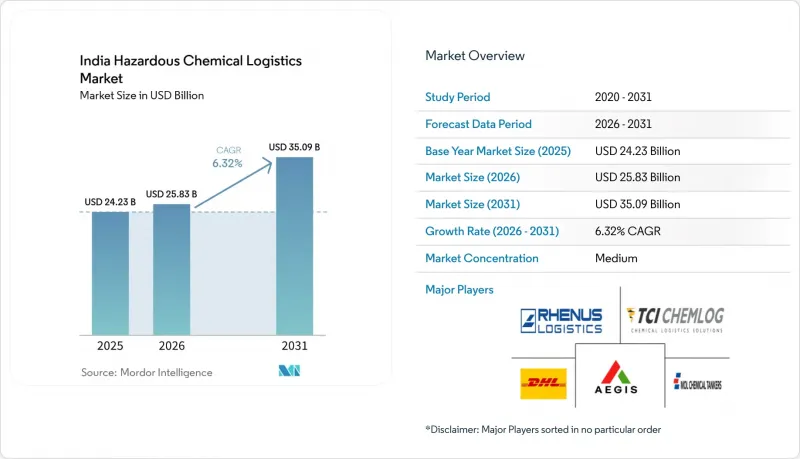
인도의 위험 화학제품 물류 시장 규모는 2025년 242억 3,000만 달러로 평가되었고, 2026년에는 258억 3,000만 달러로 추정되고, 2031년까지 350억 9,000만 달러에 이를 것으로 예상되며, 2026-2031년 CAGR 6.32%로 성장할 전망입니다.
이러한 성장 추세는 연안 지역의 새로운 석유화학 플랜트 가동, 규정 준수 업무의 외부 위탁 수요 증가, 그리고 벌크 화물을 도로에서 파이프라인, 철도, 내륙 수로로 전환하기 위한 복합 운송 방식에 대한 투자가 복합적으로 작용하여 나타난 것입니다. 본 보고서는 서비스 유형별(운송, 기타), 위험 화학제품 분류별(인화성 액체, 압축 가스, 부식성 물질, 기타), 최종 사용자 산업별(석유화학제품 및 벌크 화학제품, 기타), 그리고 지역별(북인도, 남인도, 서인도, 동인도, 중부 인도)로 분류되어 있습니다. 시장 전망은 금액(달러) 기준으로 제시되어 있습니다.
인도의 위험 화학제품 물류 시장 동향 및 인사이트
인도의 화학제품 총생산량(대량 및 기초 화학제품) 증가
인도의 화학제품 생산액은 2025년에 2,200억 달러를 넘어섰으며, 라자스탄주와 오디샤주의 신규 크래커 시설이 생산 능력을 확대함에 따라 앞으로도 계속 증가할 것으로 예측됩니다. 가성소다, 염소, 메탄올은 1톤이 증가할 때마다 PESO 인증 탱커, ISO 컨테이너 또는 철도 탱크차로 운송해야 하기 때문에 규정을 준수하는 물류 서비스에 대한 수요가 지속적으로 증가하고 있습니다. 인디언 오일(Indian Oil)의 파라딥-할디아 간 파이프라인만으로도 연간 약 1만 대의 트럭 운송을 대체할 것으로 예상되며, 이를 통해 특수 화물을 위한 도로 운송 용량이 확보될 것입니다. Aegis Logistics가 추진 중인 이와 유사한 파이프라인 및 탱크 팜 확장 사업은 업스트림 생산 확대에 따라 저장 및 운송 시설이 단계적으로 확장되고 있음을 보여줍니다. 인도의 1인당 석유화학제품 소비량이 세계 평균의 3분의 1 수준에 그치고 있기 때문에 장기적으로 운송량이 증가하는 추세는 지속될 것으로 보입니다.
규정 준수가 필요한 특수·의약·화학제품의 생산 급증
특수 화학제품 및 의약품 화학제품은 소량 생산, 더욱 엄격한 온도 관리, 그리고 실시간 추적 가능성이 필요합니다. 우나와 비샤카파트남에 신설되는 의약품 원료(API) 단지에 더해, 구자라트주와 타밀나두주에서의 불소화학물물질에 대한 투자는 온도 조절 트럭 운송, 재포장 및 비상 대응 계획을 위한 고수익 사업 분야를 창출하고 있습니다. 스노우맨 로지스틱스와 퀴네 앤 나겔은 5년간의 아웃소싱 계약을 수주하기 위해, 가스 감지 기능과 로트 단위 바코드 관리 시스템을 갖춘 15-25℃의 창고를 이미 가동하고 있습니다. 가동된 공장이 24-36개월에 걸쳐 시험 생산에서 상업 생산으로 전환됨에 따라, 중기적인 성장은 견조한 추세를 보일 것으로 전망됩니다.
위험물 대응 차량 및 창고에 드는 막대한 설비 투자 및 규정 준수 비용
PESO의 ‘2016년 고정식·이동식 압력 용기 규정’을 준수한 스테인리스 스틸 화학제품 탱커의 가격은 6만-8만 5,000달러로, 일반적인 연료 탱커의 약 2배에 달할 전망입니다. 연간 인증, 전문 보험, 운전자 교육 비용이 차량 1대당 추가로 6,000-1만 달러가 소요되기 때문에 소규모 사업자에게 차량 교체는 자본 집약적인 작업이 됩니다. 창고 자동화 역시 비용이 많이 듭니다. 뭄바이에 위치한 고드레이 사의 새로운 120피트 규모의 랙식 창고에서는 로봇 셔틀과 방폭 배선이 필요했으며, 투자액은 1제곱피트당 500달러를 초과했습니다. 단기적으로는 높은 진입 비용이 신규 공급 능력을 억제하여, 수요 급증에 대한 대응을 늦추고 있습니다.
부문별 분석
2025년, 인도의 위험 화학제품 물류 시장 점유율 중 64.51%를 운송 부문이 차지했으며, 이는 라스트 마일 배송에서 인도가 도로 탱크로리에 의존하고 있는 현실을 반영하고 있습니다. AVG 로지스틱스의 ISO 탱크 열차가 단위 비용을 25% 절감하고, 운전기사 부족 문제를 해결할 수 있기 때문에 철도 부문은 시장 점유율을 회복하고 있습니다. 해상 및 내륙 수로는 명백한 비용 우위를 가지고 있음에도 불구하고, 여전히 보급이 진전되지 않고 있습니다. 국가수로 4호 및 5호의 선저 깊이 제한으로 인해 바지선의 규모는 여전히 작은 임베디드니다. 2026-2031년 제약 및 특수 화물 운송 업체들이 규정 준수 관련 과제를 외부에 위탁함에 따라, 혼합, 재라벨링, 비상 대응 계획을 중심으로 한 부가가치 서비스가 연평균 성장률(CAGR) 9.52%라는 가장 높은 성장률을 나타낼 것으로 전망됩니다. 타밀나두 주에 신설된 스노우맨의 5만 제곱피트 규모 위험물·냉장 창고와, 퀴네 앤 나겔이 확장한 45만 제곱미터 규모의 계약 물류 거점 등은 사업자들이 운임 변동 위험을 완화할 수 있는 고수익 부대 사업으로 전환하고 있음을 보여줍니다.
PESO가 창고 규정을 강화하는 가운데, 인도의 위험 화학제품 물류 시장에서 부가가치 서비스의 규모는 꾸준히 확대될 것으로 전망됩니다. AIS-140 텔레매틱스를 통해 지오펜싱, 예측 유지보수, 로트 단위의 감사 추적 기록이 가능해졌으며, 이로 인해 교체 비용이 증가하고 있습니다. 대기업들은 자체 개발한 기술 스택을 활용해 운송과 창고 업무를 통합함으로써, 고객 유지율과 화물당 이익률을 높이고 있습니다. 발포재 적재 랙이나 배터리 구동 지게차에 대한 투자는 소규모 지역 운송업체들에게 극복하기 어려운 진입 장벽이 되고 있으며, 이는 업계의 통합이 진행되고 있음을 시사합니다.
기타 혜택 :
- 엑셀 형식 시장 예측(ME) 시트
- 3개월간의 애널리스트 지원
자주 묻는 질문
목차
제1장 서론
제2장 조사 방법
제3장 주요 요약
제4장 시장 구도
제5장 시장 규모 및 성장 예측
제6장 경쟁 구도
제7장 시장 기회 및 향후 전망
AJY 26.06.26According to Mordor Intelligence, india hazardous chemical logistics market size is expected to increase from USD 24.23 billion in 2025 to USD 25.83 billion in 2026 and reach USD 35.09 billion by 2031, growing at a CAGR of 6.32% over 2026-2031.
This trajectory reflects a blend of new petrochemical capacity along the coastline, rising demand for outsourced compliance services, and multimodal investments that shift bulk cargo from roads to pipelines, rail, and inland waterways. This report is Segmented by Service Type (Transportation, and Others), by Hazardous Chemical Class (Flammable Liquids, Compressed Gases, Corrosive Substances, and Others), by End-User Industry (Petrochemicals and Bulk Chemicals, and Others), and by Geography (North India, South India, West India, East India, and Central India). Market Forecasts are Provided in Terms of Value (USD).
India Hazardous Chemical Logistics Market Trends and Insights
Expansion of India's Overall Chemical Output (Bulk & Basic)
India's chemicals output reached more than USD 220 billion in 2025 and is pegged to keep rising as new crackers in Rajasthan and Odisha ramp up capacity. Each additional tonne of caustic soda, chlorine, or methanol must move in PESO-certified tankers, ISO containers, or rail rakes, driving sustained demand for compliant logistics services. Indian Oil's Paradip-Haldia pipeline alone is expected to displace roughly 10,000 annual truck trips, freeing road bandwidth for specialty cargoes. Similar pipeline and tank-farm expansions by Aegis Logistics show how storage and evacuation assets scale line by line with upstream production. The long-term volume uplift persists because India's per capita petrochemical consumption is one-third the world average.
Surge in Specialty & Pharma-Chemical Production Requiring Compliant Logistics
Specialty and pharmaceutical chemicals entail smaller lot sizes, stricter temperature bands, and real-time traceability. New active pharmaceutical ingredient (API) parks in Una and Vizag, plus fluorochemical investments in Gujarat and Tamil Nadu, create high-margin lanes for temperature-controlled trucking, repackaging, and emergency response planning. Snowman Logistics and Kuehne + Nagel are already commissioning 15-25 °C warehouses with gas detection and batch-level barcoding to win five-year outsourcing contracts. Mid-term growth remains solid as commissioned plants ramp from trial to commercial output over 24-36 months.
High CAPEX and Compliance Costs for Hazmat-Graded Fleets & Warehouses
A stainless-steel chemical tanker that meets PESO's Static & Mobile Pressure Vessels Rules 2016 costs USD 60,000-85,000, roughly double a standard fuel tanker. Annual certifications, specialized insurance, and driver training add another USD 6,000-10,000 per vehicle, making fleet renewal a capital-intensive exercise for small operators. Warehouse automation is equally pricey: Godrej's new 120-foot rack-clad store in Mumbai required robotic shuttles and explosion-proof wiring, pushing investment past USD 500 per square foot. In the short run, high entry costs curb fresh capacity and slow response to demand spikes.
Other drivers and restraints analyzed in the detailed report include:
- Expansion of Petrochemical and Refining Capacity Across Coastal Clusters
- Stricter Hazardous-Materials Rules (PESO, IMDG, DG Shipping) Raising Outsourcing Demand
- Acute Shortage of HAZMAT-Certified Drivers and Handlers
For complete list of drivers and restraints, kindly check the Table Of Contents.
Segment Analysis
Transportation accounted for 64.51% of the India hazardous chemical logistics market share in 2025, reflecting the country's reliance on road tankers for last-mile delivery. Rail is regaining ground as AVG Logistics' ISO-tank trains cut unit costs by 25% and bypass driver shortages. Sea and inland waterways remain underpenetrated despite clear cost advantages; draft limits on National Waterways 4 and 5 keep barge sizes small. Over 2026-2031, value-added services, led by blending, relabeling, and emergency-response planning, will post the fastest 9.52% CAGR as pharma and specialty shippers outsource compliance headaches. Snowman's new 50,000 sq ft hazmat-cold store in Tamil Nadu and Kuehne+Nagel's expanded 450,000 m2 contract-logistics footprint show providers pivoting toward high-margin ancillary work that cushions rate volatility.
The India hazardous chemical logistics market size for value-added services is forecast to advance steadily as PESO tightens warehouse rules. AIS-140 telematics unlock geo-fencing, predictive maintenance, and batch-level audit trails, thereby raising switching costs. Bigger players leverage captive tech stacks to bundle transport with warehousing, thus improving retention and margin per load. Investments in foam-suppressed racks and battery-powered forklifts set entry barriers that small regional carriers struggle to cross, signaling ongoing consolidation.
List of Companies Covered in this Report:
- Aegis Logistics Ltd
- TCI Chemlog (Transport Corporation of India)
- Allcargo Logistics Ltd
- DHL Supply Chain India
- DSV A/S (including DB Schenker)
- Kuehne+Nagel
- Rhenus Logistics
- Snowman Logistics Ltd
- CMA CGM (Including CEVA Logistics)
- GEODIS
- Den Hartogh Logistics India
- BDP International India
- Hellmann Worldwide Logistics India
- MOL Chemical Tankers India
- Seashell Logistics Pvt. Ltd.
- Bertschi India
- TVS Supply Chain Solutions
- Hazchem Logistics Management LLP
- AWL INDIA
- Milkyway Chem Logistics India
Additional Benefits:
- The market estimate (ME) sheet in Excel format
- 3 months of analyst support
TABLE OF CONTENTS
1 Introduction
- 1.1 Study Assumptions and Market Definition
- 1.2 Scope of the Study
2 Research Methodology
3 Executive Summary
4 Market Landscape
- 4.1 Market Overview
- 4.2 Market Drivers
- 4.2.1 Expansion of India's Overall Chemical Output (Bulk and Basic)
- 4.2.2 Surge in Specialty and Pharma-Chemical Production Requiring Compliant Logistics
- 4.2.3 Expansion of Petrochemical and Refining Capacity Across Coastal Clusters
- 4.2.4 Stricter Hazardous-Materials Rules (PESO, IMDG, DG Shipping) Raising Outsourcing Demand
- 4.2.5 Development of Petroleum, Chemicals and Petrochemicals Investment Regions (PCPIRs)
- 4.2.6 Inland-Waterway Corridors (NW-1, 4, 5) Opening Low-Cost Chemical Routes
- 4.3 Market Restraints
- 4.3.1 High CAPEX and Compliance Costs for Hazmat-Graded Fleets and Warehouses
- 4.3.2 Acute Shortage of HAZMAT-Certified Drivers and Handlers
- 4.3.3 State-Wise Regulatory Fragmentation Slowing Multimodal Transfers
- 4.3.4 CRZ Clearance Delays for New Coastal Chemical Terminals
- 4.4 Value / Supply-Chain Analysis
- 4.5 Regulatory Landscape
- 4.6 Technological Outlook
- 4.7 Porter's Five Forces
- 4.7.1 Threat of New Entrants
- 4.7.2 Bargaining Power of Suppliers
- 4.7.3 Bargaining Power of Buyers
- 4.7.4 Threat of Substitutes
- 4.7.5 Competitive Rivalry
- 4.8 Impact of Geo-Political Events
5 Market Size and Growth Forecasts (Value)
- 5.1 Segmentation by Service Type
- 5.1.1 Transportation
- 5.1.1.1 Road
- 5.1.1.2 Rail
- 5.1.1.3 Sea / Coastal and Inland Waterways
- 5.1.1.4 Air
- 5.1.2 Storage, Warehousing and Distribution
- 5.1.3 Value Added Services
- 5.1.1 Transportation
- 5.2 Segmentation by Hazardous Chemical Class
- 5.2.1 Flammable Liquids
- 5.2.2 Compressed Gases
- 5.2.3 Corrosive Substances
- 5.2.4 Toxic Substances
- 5.2.5 Oxidizing Substances
- 5.2.6 Radioactive Materials
- 5.2.7 Other Chemicals
- 5.3 Segmentation by End-User Industry
- 5.3.1 Petrochemicals and Bulk Chemicals
- 5.3.2 Specialty Chemicals
- 5.3.3 Pharmaceuticals and Life Sciences
- 5.3.4 Agrochemicals and Fertilizers
- 5.3.5 Batteries, Electronics and EV Materials
- 5.3.6 Other Industries
- 5.4 Segmentation by Region
- 5.4.1 North India
- 5.4.2 South India
- 5.4.3 West India
- 5.4.4 East India
- 5.4.5 Central India
6 Competitive Landscape
- 6.1 Market Concentration
- 6.2 Strategic Moves
- 6.3 Market Share Analysis
- 6.4 Company Profiles (includes Global level Overview, Market level overview, Core Segments, Financials as available, Strategic Information, Market Rank/Share for Key Companies, Products & Services, and Recent Developments)
- 6.4.1 Aegis Logistics Ltd
- 6.4.2 TCI Chemlog (Transport Corporation of India)
- 6.4.3 Allcargo Logistics Ltd
- 6.4.4 DHL Supply Chain India
- 6.4.5 DSV A/S (including DB Schenker)
- 6.4.6 Kuehne+Nagel
- 6.4.7 Rhenus Logistics
- 6.4.8 Snowman Logistics Ltd
- 6.4.9 CMA CGM (Including CEVA Logistics)
- 6.4.10 GEODIS
- 6.4.11 Den Hartogh Logistics India
- 6.4.12 BDP International India
- 6.4.13 Hellmann Worldwide Logistics India
- 6.4.14 MOL Chemical Tankers India
- 6.4.15 Seashell Logistics Pvt. Ltd.
- 6.4.16 Bertschi India
- 6.4.17 TVS Supply Chain Solutions
- 6.4.18 Hazchem Logistics Management LLP
- 6.4.19 AWL INDIA
- 6.4.20 Milkyway Chem Logistics India
7 Market Opportunities and Future Outlook
- 7.1 White-space and Unmet-Need Assessment


