

|
시장보고서
상품코드
2064423
미국의 전풍 치료제 시장 : 시장 점유율 분석, 산업 동향 및 통계 데이터, 성장 예측(2026-2031년)United States Tinea Versicolor Treatment - Market Share Analysis, Industry Trends & Statistics, Growth Forecasts (2026 - 2031) |
||||||
 Mordor Intelligence
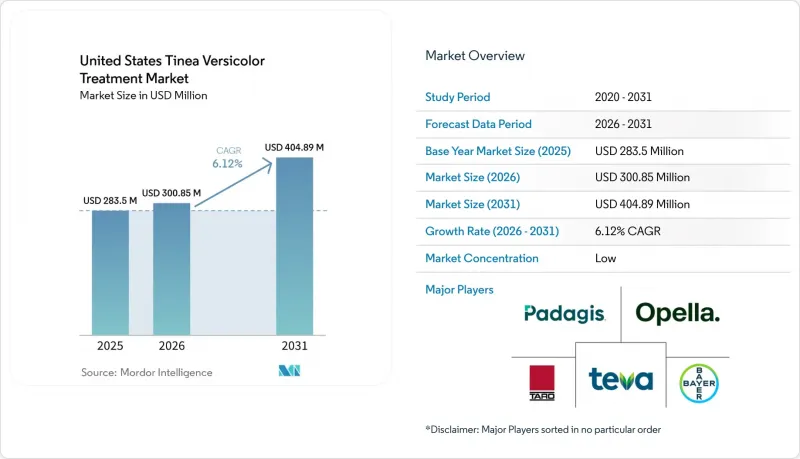
Mordor Intelligence에 의하면, 미국의 전풍(Tinea Versicolor) 치료제 시장 규모는 2025년에 2억 8,350만 달러로 평가되었고, 2026년 3억 85만 달러로 추정되고, 2031년까지 4억 489만 달러에 이를 것으로 예측되며, 예측 기간(2026-2031년)에 6.12%의 연평균 복합 성장률(CAGR)로 성장할 전망입니다.
본 보고서는 치료제 유형별(외용 항진균제, 경구용 항진균제, 예방·유지용 세정제), 약물 분류별(아졸계, 셀레늄 황화물, 피리티온 아연, 기타), 유통 채널별(소매 약국, 온라인 약국, 병원 및 진료소 약국, 기타 유통 채널)로 분류되어 있습니다. 시장 전망은 금액(달러) 기준으로 제시되어 있습니다.
미국의 전풍 치료제 시장 동향 및 인사이트
높은 재발률과 예방용 세정제에 대한 수요
재발은 미국 전풍 치료제 시장에서 가장 강력한 구조적 요인 중 하나입니다. 왜냐하면, 1차 치료가 성공하더라도 치료 주기가 끝나지 않는 경우가 많기 때문입니다. 임상 문헌에 따르면, 재발이 빈번하게 발생하며, 특히 따뜻하고 습도가 높은 환경에서는 재발 가능성을 줄이기 위해월1회 외용 항진균제 사용과 피리티온 아연 함유 세정제의 정기적인 사용이 권장됩니다. StatPearls에서는 셀레늄 황화물 2.5% 또는 케토코나졸 2%가 함유된 샴푸를 한 달에 한 번 예방 차원에서 사용하는 것에 대해서도 언급하고 있으며, 이는 일회성 급성 치료가 아니라 유지 요법 제품에 대한 지속적인 구매 패턴을 뒷받침하고 있습니다. 이 세정제의 지속적인 사용 주기는 유지 요법 수요의 상당 부분이 일반의약품(OTC) 유통 채널에 집중되어 있기 때문에 상업적으로 중요합니다. 즉, 재진료나 새로운 처방전이 없어도 지속적인 지출이 가능하기 때문입니다. 미국의 전풍 치료제 시장에서 이러한 점 덕분에 예방적 세정은 가장 안정적인 재구매 수요원 중 하나가 되고 있습니다. 특히 재발 위험이 높고, 계절적 변화로 인해 환자들의 경계심이 높아지기 쉬운 습한 지역에서는 이러한 현상이 두드러집니다. 또한, 보험사의 규제가 강화되더라도 환자들이 소매점이나 온라인 채널을 통해 유지용 샴푸나 세정제를 계속 구매할 수 있기 때문에 판매량을 유지하는 데 있어서도 이러한 패턴이 도움이 됩니다.
OTC에서 처방약으로 이어지는 치료 단계가 지출 확대를 이끌어내다.
미국의 전풍 치료제 시장은 일반의약품(OTC) 샴푸 및 세정제로 시작해, 처방전이 필요한 외용제로 전환되고, 중증 사례에 한해 경구 요법으로 이어지는 명확한 치료 단계 체계의 혜택을 받고 있습니다. 미국피부과학회(AAD)는 일반적인 외용 치료제로 셀레늄 황화물, 케토코나졸, 피리티온 아연을 꼽고 있으며, 경구용 항진균제는 더 광범위하거나 두꺼운 병변, 또는 자주 재발하는 증례로 제한됩니다. 머크사와 StatPearls 역시 마찬가지로, 외용 요법을 1단계로 삼고, 광범위한 병변이나 난치성 사례에만 경구약의 사용을 제한하고 있습니다. 이는 환자가 단일 구매 범주에 머무르지 않고, 재구매 주기를 거치며 여러 가격대를 오갈 수 있음을 의미합니다. 이 구조는 눈에 띄는 회복이 불완전하거나 기초 곰팡이 부하가 이미 감소한 경우에도 환자가 치료를 계속하는 기간을 연장함으로써 지출의 포착 범위를 확대합니다. 미국의 전풍 치료제 시장에서 색소 변화의 잔류는 상업적으로 중요한 의미를 지닙니다. 왜냐하면, 환자에게는 치료가 실패한 것처럼 보일 수 있으며, 다른 일반의약품(OTC)을 구매하거나 처방약으로 전환하도록 유도할 가능성이 있기 때문입니다. 이 패턴은 질병 부담 자체에 큰 변화를 요구하지 않으면서도, 저비용의 일반용 제품과 고부가가치의 처방 치료법을 모두 뒷받침하고 있습니다.
‘무해한 화장품’이라는 인식이 처방약의 채택을 억제하고 있습니다.
미국 전풍 치료제 시장의 큰 걸림돌은 많은 환자들이 여전히 이 질환을 체계적인 치료나 재발 예방이 필요한 임상적 질환이 아니라, 단순한 미용상의 문제로 인식하고 있다는 점입니다. 미국의 대규모 민간 보험 분석에 따르면, 환자의 44.9%는 피부과 전문의를, 21.9%는 일반 개업의를, 15.4%는 전문 간호사나 의사 보조원의 진료를 받고 있는 것으로 나타났으며, 이는 상당수의 환자가 전문의의 진료를 전혀 받지 않고 있음을 보여줍니다. 이러한 경향은 처방전 발급을 제한하고 있습니다. 왜냐하면 많은 환자들이 의사의 지시에 따른 치료로 전환하는 대신, 장기간에 걸친 일반의약품(OTC)을 통한 자가 관리를 선택하기 때문입니다. 병변은 대개 통증을 동반하기보다는 육안으로 확인할 수 있는 것이기 때문에 치료가 지연되어도 증상이 동반되는 염증성 질환에서 볼 수 있는 것과 같은 일상적인 부담을 초래하지 않는다는 사실이 이러한 비응급성을 더욱 강화시키고 있습니다. 미국의 전풍 치료제 시장에서 이러한 인식은 의료 접근성의 격차와도 상호작용을 일으키고 있습니다. 왜냐하면, 피부색이 어두운 환자의 경우 눈에 띄는 대비의 변화로 인해 진료를 받으려는 의지가 높아질 가능성이 있는 반면, 같은 집단 내에서는 여전히 진단 및 의료 접근과 관련된 장벽이 존재하며, 이것이 치료 수요로 이어지는 것을 방해하고 있기 때문입니다. 그 결과, 인지도 제고와 인식 제고 활동은 여전히 중요하지만, 질환의 존재와 처방 수용 사이의 격차를 완전히 해소하기에는 아직 충분하지 않습니다.
부문별 분석
외용 항진균제 시장은 2031년까지 연평균 성장률(CAGR) 6.9%로 확대될 것으로 예상되며, 이에 따라 미국 전풍 치료제 시장에서 핵심적인 위치를 계속 차지할 전망입니다. 미국 전풍 치료제 업계에서 외용 요법은 1차 치료법으로 권장하는 임상 지침에 부합하고, 전신적 위험이 낮으며, 처방약 및 OTC(일반의약품) 형태로 모두 구할 수 있기 때문에 여전히 표준 치료의 출발점으로 자리 잡고 있습니다. 이러한 듀얼 채널 구조 덕분에 이 부문은 특히 주목할 만한 깊이를 지니고 있습니다. 의사 처방 의약품이 광범위한 증상이나 난치성 사례에 대응하는 반면, 일반의약품은 초기 자가 관리 및 재발 방지를 위한 유지 관리를 뒷받침하고 있기 때문입니다. StatPearls의 보고에 따르면, 케토코나졸 2% 샴푸는 1일 투여 및 3일 투여 요법 모두에서 환자의 약 80%에게 진균학적 치유를 가져왔으며, 이것이 외용제가 치료 과정에서 여전히 지배적인 위치를 차지하고 있는 이유 중 하나입니다. 곰팡이가 제거된 후에도 눈에 띄는 색소 변화가 몇 달 동안 지속될 수 있으므로, 환자의 만족도가 반드시 같은 속도로 향상되는 것은 아닙니다. 따라서 외용약의 사용은 감염증 자체가 이미 호전된 시점을 지나서도 계속되는 경우가 많습니다.
이 부문에서 가장 빠르게 성장하고 있는 정기 구매 패턴은 예방 및 유지용 세정제 하위 카테고리이며, 이는 급성기가 활동하지 않는 경우에도 미국 전풍 치료제 시장에 지속성을 부여하고 있습니다. 한 달에 한 번 셀렌 설파이드 또는 케토코나졸 샴푸를 사용하는 방법은 임상 문헌에 명확히 기술되어 있으며, 미국 피부과학회도 따뜻하고 습도가 높은 시기의 재발 방지를 위해 한 달에 한 번 또는 두 번 약용 세정제를 사용할 것을 권장하고 있습니다. 이러한 유지 요법의 접근 방식은 상업적으로 큰 효과를 발휘합니다. 왜냐하면 매월 세정제를 사용하는 환자는 장기간에 걸쳐 지속적으로 제품을 구매하는 반면, 급성기 치료의 경우 일반적으로 증상이 악화되었을 때 몇 번 정도만 구매하는 데 그치기 때문입니다. 또한, 이러한 제품의 상당수는 별도의 병원 방문 없이 소매점이나 디지털 채널을 통해 직접 구매할 수 있기 때문에 수요의 상당 부분이 보험사의 관리 범위를 벗어나게 됩니다. 대조적으로, 경구용 항진균제는 미국 전풍 치료제 시장에서 여전히 가장 규모가 작은 치료 분야로 남아 있습니다. 그 역할은 주로 약물 내성이 있는 사례, 광범위하게 퍼진 사례, 또는 빈번하게 재발하는 사례로 한정되어 있으며, 그러한 경우에도 더 안전한 외용제를 이용한 치료법이 이용 가능한 경우가 많기 때문에 처방 의사는 신중한 태도를 유지하고 있습니다.
기타 혜택 :
- Excel 형식 시장 예측(ME) 시트
- 3개월간의 애널리스트 지원
자주 묻는 질문
목차
제1장 서론
제2장 분석 방법
제3장 주요 요약
제4장 시장 구도
제5장 시장 규모 및 성장률 예측
제6장 경쟁 구도
제7장 시장 기회 및 향후 전망
AJY 26.06.26According to Mordor Intelligence, the united states tinea versicolor treatment market size was valued at USD 283.5 million in 2025 and is estimated to grow from USD 300.85 million in 2026 to reach USD 404.89 million by 2031, at a CAGR of 6.12% during the forecast period (2026-2031).
This report is Segmented by Treatment Type (Topical Antifungals, Oral Antifungals, and Prophylactic/Maintenance Cleansers), Drug Class (Azoles, Selenium Sulfide, Zinc Pyrithione, and Others), and Distribution Channel (Retail Pharmacies, Online Pharmacies, Hospital and Clinic Pharmacies, and Other Distribution Channels). The Market Forecasts are Provided in Terms of Value (USD).
United States Tinea Versicolor Treatment Market Trends and Insights
High Recurrence and Prophylactic Cleanser Demand
Recurrence is one of the strongest structural supports for the United States tinea versicolor treatment market because successful first-line treatment often does not end the care cycle. Clinical references note that recurrence is frequent, and both monthly topical antifungal use and regular use of pyrithione zinc cleansers are recommended to reduce the chance of return, especially in warm and humid settings. StatPearls also describes preventive use of selenium sulfide 2.5% or ketoconazole 2% shampoo once per month, which supports a recurring purchase pattern for maintenance products rather than a single acute treatment event. This recurring cleanser loop matters commercially because a large part of maintenance demand sits in OTC channels, so continued spending can happen without a repeat office visit or a new prescription. In the United States tinea versicolor treatment market, that makes prophylactic cleansing one of the most stable sources of repeat demand, particularly in humid regions where relapse pressure is higher and seasonal visibility tends to increase patient vigilance. The same pattern also protects volume when insurer controls become tighter, because patients can keep buying maintenance shampoos and washes through retail and online channels.
OTC-to-Rx Treatment Ladder Broadens Spend Capture
The United States tinea versicolor treatment market benefits from a clear treatment ladder that begins with OTC shampoos and cleansers, then moves to prescription topicals, and only later reaches oral therapy for more difficult cases. The American Academy of Dermatology lists selenium sulfide, ketoconazole, and pyrithione zinc among common topical treatment options, while oral antifungal pills are reserved for more extensive, thick, or frequently recurring presentations. Merck and StatPearls similarly place topical therapy first and keep oral use for extensive disease or resistant cases, which means a patient can move across several price points over one recurrence cycle rather than staying within a single purchase category. This structure widens spend capture because incomplete visible recovery often keeps patients engaged longer, even when the underlying fungal burden has already fallen. In the United States tinea versicolor treatment market, lingering pigment changes matter commercially because they can look like treatment failure to patients and can trigger another OTC purchase or a step-up into the prescription channel. That pattern supports both low-cost mass products and higher-value prescribed therapies without requiring a major change in the disease burden itself.
Benign Cosmetic Perception Suppresses Prescription Uptake
A major brake on the United States tinea versicolor treatment market is that many patients still view the condition as a cosmetic issue rather than a clinical condition that deserves structured treatment and recurrence prevention. In the large U.S. commercial insurance analysis, 44.9% of patients saw a dermatologist, 21.9% saw a general practitioner, and 15.4% were seen by nurse practitioners or physician assistants, which shows that a meaningful share of affected people never enters specialist care at all. That behavior limits prescription capture because many patients choose prolonged OTC self-management instead of moving to a clinician-guided regimen. The low sense of urgency is reinforced by the fact that lesions are usually more visible than painful, so treatment delay does not carry the same everyday burden seen in symptomatic inflammatory disorders. In the United States tinea versicolor treatment market, this perception also interacts with access disparities, because patients with darker skin may be more motivated to seek care due to visible contrast changes, yet the same populations still show signs of diagnosis and access barriers that can interrupt conversion into treated demand. As a result, awareness and education remain important, but they are not yet strong enough to fully close the gap between disease presence and prescription uptake.
Other drivers and restraints analyzed in the detailed report include:
- Broad Ketoconazole Generic Availability Improves Access
- Teledermatology Accelerates Mild-Case Diagnosis and Refill Cycles
- Oral Azole Interaction and Hepatotoxicity Concerns Limit Escalation
For complete list of drivers and restraints, kindly check the Table Of Contents.
Segment Analysis
Topical antifungals are projected to expand at 6.9% CAGR through 2031, which keeps them at the center of the United States tinea versicolor treatment market. Within the United States tinea versicolor treatment industry, topical therapy remains the default starting point because it matches first-line clinical guidance, carries low systemic risk, and is available through both prescription and OTC formats. This dual-channel structure gives the segment unusual depth, since physician-prescribed products handle broader or stubborn cases while OTC products support early self-care and recurring maintenance. StatPearls reports that ketoconazole 2% shampoo produced mycologic cure in around 80% of patients under both single-day and three-day regimens, which helps explain why topical options continue to dominate treatment pathways. Even after fungal clearance, patient satisfaction does not always improve at the same pace because visible pigment changes can persist for months, so topical use often extends beyond the point where the infection itself has already responded.
The fastest-moving recurring purchase pattern inside this segment is the prophylactic and maintenance cleanser subcategory, which adds continuity to the United States tinea versicolor treatment market even when acute episodes are not active. Monthly selenium sulfide or ketoconazole shampoo protocols are explicitly described in clinical references, and the American Academy of Dermatology also recommends once- or twice-monthly medicated cleanser use to help prevent recurrence during warm and humid periods. That maintenance logic is commercially powerful because a patient using a cleanser every month can create a long run of recurring purchases, while acute therapy usually produces only a few purchase events around a flare. It also leaves a meaningful part of demand outside insurer management because many of these products can be bought directly at retail or through digital channels without a new office visit. By contrast, oral antifungals remain the smallest treatment segment in the United States tinea versicolor treatment market because their role is largely limited to resistant, widespread, or frequently recurring cases, and even there prescribers stay cautious because safer topical pathways often remain available.
List of Companies Covered in this Report:
- Alembic Pharmaceuticals, Inc.
- Amneal Pharmaceuticals
- Ascend Laboratories, LLC
- Bayer
- Dr. Reddy's Laboratories
- Encube Ethicals, Inc.
- Janssen
- Lupin
- Morton Grove Pharmaceuticals, Inc.
- NorthStar Rx LLC
- Opella Healthcare Group SAS
- Padagis US LLC
- Par Pharmaceutical, Inc.
- Perrigo Company
- Rising Pharma Holdings, Inc.
- Taro Pharmaceuticals U.S.A., Inc.
- Teva Pharmaceutical Industries
- Procter & Gamble
Additional Benefits:
- The market estimate (ME) sheet in Excel format
- 3 months of analyst support
TABLE OF CONTENTS
1 Introduction
- 1.1 Study Assumptions & Market Definition
- 1.2 Scope of the Study
2 Research Methodology
3 Executive Summary
4 Market Landscape
- 4.1 Market Overview
- 4.2 Market Drivers
- 4.2.1 High Recurrence and Prophylactic Cleanser Demand
- 4.2.2 OTC-To-Rx Treatment Ladder Broadens Spend Capture
- 4.2.3 Broad Ketoconazole Generic Availability Improves Access
- 4.2.4 Teledermatology Accelerates Mild-Case Diagnosis and Refill Cycles
- 4.2.5 Pigment-First Care Seeking Lifts Conversion in Skin-Of-Color Patients
- 4.2.6 Summer-Season Visibility and Humid Microclimates Sustain Demand
- 4.3 Market Restraints
- 4.3.1 Benign Cosmetic Perception Suppresses Prescription Uptake
- 4.3.2 Oral Azole Interaction and Hepatotoxicity Concerns Limit Escalation
- 4.3.3 Low Diagnostic Confirmation Rates Increase Misdiagnosis Risk
- 4.3.4 Persistent Dyspigmentation After Cure Reduces Perceived Efficacy
- 4.4 Supply-Chain Analysis
- 4.5 Regulatory Landscape
- 4.6 Technological Outlook
- 4.7 Porter's Five Forces
- 4.7.1 Threat of New Entrants
- 4.7.2 Bargaining Power of Suppliers
- 4.7.3 Bargaining Power of Buyers
- 4.7.4 Threat of Substitutes
- 4.7.5 Intensity of Competitive Rivalry
5 Market Size & Growth Forecasts (Value, USD)
- 5.1 By Treatment Type
- 5.1.1 Topical Antifungals
- 5.1.2 Oral Antifungals
- 5.1.3 Prophylactic / Maintenance Cleansers
- 5.2 By Drug Class
- 5.2.1 Azoles
- 5.2.2 Selenium Sulfide
- 5.2.3 Zinc Pyrithione
- 5.2.4 Other Topical Antifungals
- 5.3 By Distribution Channel
- 5.3.1 Retail Pharmacies
- 5.3.2 Online Pharmacies
- 5.3.3 Hospital and Clinic Pharmacies
- 5.3.4 Other Distribution Channels
6 Competitive Landscape
- 6.1 Market Concentration
- 6.2 Market Share Analysis
- 6.3 Company Profiles {(includes Global level Overview, Market level overview, Core Segments, Financials as available, Strategic Information, Market Rank/Share for key companies, Products & Services, and Recent Developments)}
- 6.3.1 Alembic Pharmaceuticals, Inc.
- 6.3.2 Amneal Pharmaceuticals LLC
- 6.3.3 Ascend Laboratories, LLC
- 6.3.4 Bayer AG
- 6.3.5 Dr. Reddy's Laboratories Ltd.
- 6.3.6 Encube Ethicals, Inc.
- 6.3.7 Janssen Pharmaceuticals, Inc.
- 6.3.8 Lupin Pharmaceuticals, Inc.
- 6.3.9 Morton Grove Pharmaceuticals, Inc.
- 6.3.10 NorthStar Rx LLC
- 6.3.11 Opella Healthcare Group SAS
- 6.3.12 Padagis US LLC
- 6.3.13 Par Pharmaceutical, Inc.
- 6.3.14 Perrigo Company plc
- 6.3.15 Rising Pharma Holdings, Inc.
- 6.3.16 Taro Pharmaceuticals U.S.A., Inc.
- 6.3.17 Teva Pharmaceuticals USA, Inc.
- 6.3.18 The Procter & Gamble Company
7 Market Opportunities & Future Outlook
- 7.1 White-space & unmet-need assessment


