

|
시장보고서
상품코드
2066505
구강관리 시장 : 시장 점유율 분석, 업계 동향 및 통계, 성장 예측(2026-2031년)Oral Care - Market Share Analysis, Industry Trends & Statistics, Growth Forecasts (2026 - 2031) |
||||||
 Mordor Intelligence
Mordor Intelligence에 의하면, 구강관리 시장은 2026년에 590억 6,000만 달러 규모로 추정되고, 2031년까지 800억 1,000만 달러에 이를 것으로 예측되며, CAGR 6.26%로 성장할 전망입니다.
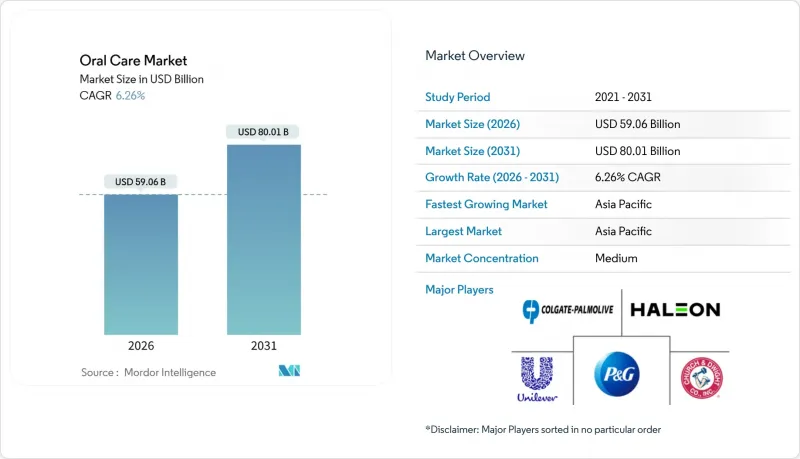
본 보고서는 제품 유형별(치약, 구강청결제 등), 성분별(기존, 천연 및 유기농), 최종 사용자별(어린이 및 성인), 유통 채널별(슈퍼마켓 및 하이퍼마켓, 드럭스토어 및 약국 등), 지역별(북미, 유럽, 아시아태평양, 남미, 중동 및 아프리카)로 분류되어 있습니다. 시장 전망은 금액(달러) 기준으로 제시되어 있습니다.
세계의 구강 관리 시장 동향 및 인사이트
건강과 위생에 대한 인식의 제고
건강과 위생에 대한 인식이 높아짐에 따라, 이는 전 세계 구강 관리 시장을 견인하는 중요한 요인이 되고 있습니다. 이는 소비자들이 구강 건강을 전반적인 웰빙의 중요한 한 측면으로 인식하기 시작했기 때문입니다. 구강 위생의 소홀함과 심혈관 질환, 당뇨병, 감염증 등 전신 질환과의 연관성에 대한 이해가 깊어짐에 따라, 구강 관리는 단순한 기본 위생 습관에서 예방 의학의 우선 과제로 그 위상이 변화하고 있습니다. 치과의사회, 공중보건 기관 및 각 브랜드가 진행하는 구강 관리 업계의 계몽 활동에서는 정기적인 양치질, 치실 사용, 구강 청결제 등 보조 제품의 사용 중요성을 강조하고 있습니다. 그 결과, 구강 관리 제품의 사용 빈도가 높아지면서 보급이 확대되고 있습니다. 현재 소비자들은 치아 문제가 발생한 후에 대처하기보다는 예방에 중점을 두는 경향이 있으며, 충치, 치주질환, 치태 관리, 치아 과민증, 구취를 대상으로 한 기능성 및 치료적 구강 관리 솔루션에 대한 수요가 증가하고 있습니다. 구강 관리 시장에서 이러한 인식의 확산은 다단계 구강 관리 루틴의 보급을 촉진하는 동시에, 개인의 건강 지향성에 맞춘 첨단적이고 전문적이며 천연 유래 성분을 함유한 제품을 시도해 보려는 움직임도 뒷받침하고 있습니다.
구강 질환으로 인한 부담 증가
구강 질환 유병률 증가는 전 세계 구강 관리 시장에 있어 중요한 성장 동력이 되고 있습니다. 이는 치과 질환이 끊임없이 발생함에 따라 구강 위생이 ‘선택적 습관’에서 ‘의료적 필요성’으로 변화했기 때문입니다. 어린이부터 성인까지 충치, 치주병, 치주질환이 널리 퍼져 있는 상황이, 충치 예방 치약, 약용 구강청결제, 잇몸 관리 제품 등 예방 및 치료용 구강 관리 제품에 대한 수요를 뒷받침하고 있습니다. 구강 관리 시장에서 치료되지 않은 구강 질환이 초래하는 임상적 및 경제적 영향으로 인해 정부, 의료 제공업체, 그리고 소비자들은 조기 개입과 일상적인 구강 위생을 우선시하도록 권장받고 있습니다. 예를 들어, 보건부 보고서에 따르면 2025년 사우디아라비아의 충치 유병률은 현저히 높았으며, 6세 아동의 96%, 12세 아동의 93.7%가 충치의 영향을 받고 있어, 공중보건상의 과제가 얼마나 심각한지를 여실히 보여주고 있습니다. 또한, 치과 치료비는 의료비 총액의 약 5%를 차지하고 있어, 예방 가능한 구강 질환이 초래하는 경제적 부담이 얼마나 큰지 여실히 드러나고 있습니다. 구강 관리 시장의 이러한 통계는 예방적 구강 관리 습관의 중요성을 강조할 뿐만 아니라, 임상 치료를 대체할 수 있는 비용 대비 효과가 높은 대안으로서 일상적으로 사용하는 제품에 대한 의존도가 높아지고 있음을 보여줍니다.
제품 안전성에 대한 우려와 리콜
제품 안전성에 대한 우려나 리콜은 소비자의 신뢰를 훼손하고, 브랜드의 평판을 실추시키며, 새로운 제형이나 기술의 도입을 지연시킴으로써 전 세계 구강 관리 시장에 큰 제약 요인으로 작용하고 있습니다. 구강 관리 제품은 매일 사용되며 민감한 구강 조직과 직접 접촉하기 때문에 소비자와 규제 당국 모두로부터 높은 안전성이 요구되고 있습니다. 부작용, 오염, 과도한 연마력, 또는 전동 칫솔의 배터리 관련 문제 등 기기 결함에 대한 보고는 리콜이나 언론의 부정적 보도, 규제 당국의 감시 강화로 이어질 수 있습니다. 또한, 구강 관리 시장의 기업들은 더욱 엄격해진 시험 프로토콜, 처방 재검토 요구, 승인 절차의 장기화에 직면하게 되므로, 이러한 안전상의 우려는 제품 출시 지연으로 이어질 수도 있습니다. 또한, 리콜이나 안전 문제는 기업에 재정적 손실, 법적 책임, 그리고 장기적인 평판 저하로 이어질 수 있습니다. 신뢰와 전문가의 추천이 매우 중요한 시장에서 리콜은 소비자들이 익숙한 제품이나 기존 제품으로 되돌아가게 할 우려가 있으며, 그 결과 해당 카테고리의 성장과 혁신의 가능성이 제한될 수 있습니다.
부문별 분석
2025년 구강 관리 시장 점유율의 49.76%라는 압도적인 점유율을 차지한 치약은 일상적인 구강 위생에 있어 필수적인 역할을 수행하며 모든 연령층에서 폭넓은 지지를 받고 있어, 앞으로도 세계 구강 관리 시장을 주도하는 주요 요인으로 자리매김하고 있습니다. 가장 필수적인 구강 관리 제품으로 인식되는 치약은 일상 생활에 자리 잡은 구매 빈도가 높고 재구매가 이루어지는 상품입니다. 구강 관리 시장에서 이 제품의 경쟁력은 충치 예방, 잇몸 관리, 치아 과민증 완화, 미백, 법랑질 복원, 구취 예방 등 다양한 구강 건강 요구에 부응하는 처방의 지속적인 혁신을 통해 더욱 강화되고 있습니다. 이러한 발전 덕분에 각 브랜드는 예방, 치료, 미용 등 다양한 요구를 동시에 충족시킬 수 있게 되었습니다. 또한, 치과의사들의 강력한 지지와 하루 두 번 양치질을 권장하는 공중보건 지침 덕분에, 구강 관리의 실천을 뒷받침하는 양치질 습관이 확고하게 자리 잡고 있습니다.
2031년까지 연평균 성장률(CAGR) 6.76%를 나타낼 것으로 예측되는 구강청결제 및 가글은 전 세계 구강 관리 시장에서 가장 빠르게 성장하는 제품 카테고리 중 하나로 부상하고 있습니다. 이러한 보급이 확대되고 있는 배경에는 종합적인 구강 위생 습관 속에서 보완적이면서도 필수적인 요소로 자리매김하고 있다는 점이 꼽힙니다. 소비자들 사이에서는 구취, 치태 축적, 치은염, 닿기 어려운 부위의 세균 억제 등의 문제를 해결하기 위해서는 양치질만으로는 불충분하다는 인식이 높아지고 있습니다. 이러한 인식이 높아짐에 따라, 일상적인 예방책으로서 구강청결제 사용이 확대되고 있습니다. 또한, 치과의사의 권고와 치료 후 구강 관리에 관한 지침에 따라 약용 및 치료용 구강청결제 사용이 장려되고 있으며, 그 용도는 미용적인 구취 관리에 그치지 않고 임상적·예방적 목적으로도 확대되고 있습니다.
2025년 세계 구강 관리 시장 점유율의 91.38%를 차지하며 압도적인 입지를 확립했던 기존 제형은 확립된 임상적 신뢰성과 기능적 확실성, 그리고 일상적인 구강 위생 습관에서의 광범위한 사용을 바탕으로 세계 구강 관리 시장을 주도하고 있습니다. 이러한 처방은 불소나 항균제 등 과학적으로 입증된 성분을 기반으로 하며, 충치 예방, 치태 관리, 잇몸 건강 유지와 같은 일반적인 구강 건강 문제에 효과적으로 대처합니다. 이 때문에 소비자와 치과 전문가 모두에게 선호되는 선택지가 되고 있습니다. 또한, 이러한 제품에 대한 소비자의 친근감과 신뢰 덕분에 도입 장벽이 최소화되었으며, 프리미엄 제품이나 틈새 대체품이 시장에서 세를 넓혀가고 있는 상황에서도 구강 관리 루틴에서 그 입지는 여전히 확고하게 자리 잡고 있습니다.
2031년까지 연평균 성장률(CAGR) 7.12%를 나타낼 것으로 예측되는 유기농 제품은 소비자의 선호도가 ‘클린 라벨’과 성분 투명성, 전체론적 웰빙으로 전환되는 가운데, 전 세계 구강 관리 시장의 점진적인 성장에 기여하고 있습니다. 이러한 성장은 합성 화학 물질에 대한 장기적인 노출에 대한 우려가 커짐에 따라 가속화되고 있으며, 소비자들은 일상적인 사용에 있어 더 순하고 안전하다고 인식되는 식물성, 허브, 천연 유래 대체품을 선택하고 있습니다. 유기농 구강 관리 제품은 자극이 강한 첨가물을 피하고, 식물 추출물, 에센셜 오일, 미네랄 유래 유효 성분에 중점을 두고 있어, 건강에 관심이 많은 소비자, 보호자 및 민감성 피부를 가진 분들로부터 큰 지지를 받고 있습니다. 또한, 이 부문은 구강 관리가 웰니스 및 예방 의료의 동향과 폭넓게 연계되어 있다는 점에서도 혜택을 보고 있으며, 구강 위생은 전반적인 건강에 없어서는 안 될 부분으로 점점 더 인식되고 있습니다.
지역별 분석
아시아태평양은 2025년 전 세계 구강 관리 시장 규모의 29.91%라는 큰 비중을 차지했으며, 2031년까지 연평균 성장률(CAGR) 7.83%의 견조한 성장이 예상되어 가장 빠르게 성장하는 지역 시장이 될 전망입니다. 이러한 성장은 구강 위생에 대한 인식 제고, 예방 관리 실천의 향상, 그리고 도시 및 준도시 지역 주민들 사이에서 현대적인 구강 위생 습관이 정착됨에 따라 주도되고 있습니다. 방대한 인구 규모, 일상적인 구강 관리 습관에 대한 관심 증가, 체계화된 소매업 및 전자상거래 플랫폼의 확대와 같은 요인들이 제품의 보급을 가속화하고 있습니다. 중국과 인도 같은 국가들은 정부 주도의 구강 보건 이니셔티브, 학교를 거점으로 한 위생 프로그램, 그리고 치아 과민증 대책, 잇몸 관리, 허브 성분이 함유된 제품 등 기능성 제품에 대한 수용도가 높아진 데 힘입어 이러한 성장의 중심적인 역할을 하고 있습니다. 구강 관리 시장에서 기존 제품과 천연 유래 제품 모두에 대한 해당 지역의 수용성은 장기적인 성장의 원동력으로서의 역할을 더욱 공고히 하고 있습니다.
북미와 유럽은 구강 위생에 대한 높은 인식, 치과의사의 강력한 영향력, 그리고 확립된 예방 치과 치료의 실천에 힘입어 꾸준한 성장을 이어가고 있는 성숙한 구강 관리 시장으로 자리매김하고 있습니다. 이 지역들의 성장은 주로 제품 혁신, 프리미엄화, 그리고 미백, 법랑질 복원, 잇몸 보호, 무알코올 또는 치료용 구강청결제와 같은 전문적인 구강 관리 솔루션에 대한 수요에 힘입어 이루어지고 있습니다. 이 시장의 소비자들은 높은 브랜드 충성도를 보이는 한편, 첨단 처방, 스마트 구강 관리 기기, 유기농 제품을 채택하려는 의지도 보이고 있습니다. 규제의 명확성, 치과 의료 서비스에 대한 폭넓은 접근성, 그리고 견고한 소매 및 온라인 유통 네트워크는 시장 전체가 성숙기에 접어들었음에도 불구하고 안정적인 시장 확대에 더욱 기여하고 있습니다.
남미, 중동 및 아프리카는 구강 관리 시장에서 여전히 보급률이 비교적 낮은 지역이며, 가격에 대한 민감도, 전문적인 치과 진료에 대한 접근성이 제한적이라는 점, 그리고 칫솔대, 허브 가루, 가정 요법 등 전통적인 양치 습관이 여전히 널리 행해지고 있다는 점이 성장을 저해하고 있습니다. 이 지역 내의 많은 곳에서는 구강 관리가 여전히 예방 의료의 우선순위라기보다는 기본적인 위생 활동으로 인식되고 있어, 전문 제품이나 프리미엄 제품의 보급을 제한하고 있습니다. 게다가, 현대적인 구강 관리의 이점에 대한 인식이 낮은 점과 소매 인프라의 불균형도 시장 성장을 더욱 둔화시키고 있습니다. 그러나 교육, 도시화, 공중보건 인식 제고 활동의 점진적인 개선을 통해 장기적인 성장 기회가 창출될 것으로 예상되며, 이러한 지역들은 새로운 성장의 전초기지로 자리매김할 것입니다.
기타 혜택 :
- 엑셀 형식 시장 예측(ME) 시트
- 3개월간의 애널리스트 지원
자주 묻는 질문
목차
제1장 서론
제2장 조사 방법
제3장 주요 요약
제4장 시장 구도
제5장 시장 규모 및 성장 예측
제6장 경쟁 구도
제7장 시장 기회 및 향후 전망
AJY 26.06.24According to Mordor Intelligence, the oral care market, valued at USD 59.06 billion in 2026 and projected to reach USD 80.01 billion by 2031, is expected to grow at a CAGR of 6.26%.
This report is Segmented by Product Type (Toothpaste, Mouthwash/Rinses, and More), Ingredient (Conventional and Natural/Organic), End User (Kids/Children and Adult), Distribution Channel (Supermarkets/Hypermarkets, Drug Stores/Pharmacies, and More), and Geography (North America, Europe, Asia-Pacific, South America, and Middle East and Africa). The Market Forecasts are Provided in Terms of Value (USD).
Global Oral Care Market Trends and Insights
Growing health and hygiene awareness
Increasing awareness of health and hygiene is a significant factor driving the global oral care market, as consumers increasingly view oral health as a critical aspect of overall well-being. The growing understanding of the connection between poor oral hygiene and systemic conditions, such as cardiovascular disease, diabetes, and infections, has shifted oral care from a basic hygiene practice to a preventive healthcare priority. Educational initiatives in the oral care industry by dental associations, public health organizations, and brands have emphasized the importance of regular brushing, flossing, and the use of complementary products like mouthwashes. This has resulted in higher usage frequency and greater adoption of oral care products. Consumers are now more focused on preventing dental problems rather than addressing them after they occur, fueling demand for functional and therapeutic oral care solutions targeting cavities, gum disease, plaque control, sensitivity, and bad breath. This increased awareness in the oral care market is also driving the adoption of multi-step oral care routines and encouraging experimentation with advanced, specialized, and natural formulations that align with individual health preferences.
Rising burden of oral diseases
The rising prevalence of oral diseases is a significant driver for the global oral care market, as the persistent occurrence of dental conditions has shifted oral hygiene from a discretionary practice to a healthcare necessity. The widespread incidence of tooth decay, cavities, gum disease, and periodontal disorders among both children and adults is fueling demand for preventive and therapeutic oral care products, such as anti-cavity toothpaste, medicated mouthwashes, and gum-care solutions. The clinical and financial implications of untreated oral diseases in the oral care market are encouraging governments, healthcare providers, and consumers to prioritize early intervention and daily oral hygiene. For example, according to the Ministry of Health, in 2025, the prevalence of tooth decay in Saudi Arabia was notably high, affecting 96% of children aged 6 years and 93.7% of children aged 12 years, illustrating the scale of the public health challenge . Furthermore, dental treatments account for approximately 5% of total health spending, highlighting the economic burden of preventable oral conditions. These statistics in the oral care market emphasize the importance of preventive oral care routines and the growing reliance on daily-use products as a cost-effective alternative to clinical treatments.
Product safety concerns and recalls
Product safety concerns and recalls pose a significant restraint on the global oral care market by undermining consumer trust, damaging brand credibility, and slowing the adoption of new formulations and technologies. Oral care products are used daily and come into direct contact with sensitive oral tissues, leading to high safety expectations from both consumers and regulatory authorities. Reports of adverse reactions, contamination, excessive abrasiveness, or malfunctioning devices, such as battery-related issues in electric toothbrushes, can prompt recalls, negative media coverage, and increased regulatory scrutiny. These safety concerns can also delay product launches as companies in the oral care market face stricter testing protocols, reformulation requirements, and extended approval timelines. Additionally, recalls and safety issues can result in financial losses, legal liabilities, and long-term reputational damage for companies. In markets where trust and professional endorsements are crucial, recalls may drive consumers back to familiar or traditional products, thereby limiting category growth and innovation potential.
Other drivers and restraints analyzed in the detailed report include:
- Innovations in product formulations and technology
- Aging population and geriatric oral needs
- Prevalence of traditional way of tooth cleaning
For complete list of drivers and restraints, kindly check the Table Of Contents.
Segment Analysis
Toothpaste, which held a dominant 49.76% of the oral care market share in 2025, remains a key driver of the global oral care market due to its essential role in daily oral hygiene and its universal appeal across all age groups. Recognized as the most indispensable oral care product, toothpaste is a high-frequency, repeat-purchase item integrated into daily routines. Its dominance in the oral care market is further bolstered by ongoing innovations in formulations that address diverse oral health needs, including cavity protection, gum care, sensitivity relief, whitening, enamel repair, and fresh breath. These advancements enable brands to meet preventive, therapeutic, and cosmetic demands simultaneously. Additionally, strong endorsements from dentists and public health recommendations emphasizing twice-daily brushing with toothpaste reinforce its habitual use as a cornerstone of oral care practices.
Mouthwash and rinses, anticipated to grow at a CAGR of 6.76% through 2031, are emerging as one of the fastest-growing product categories in the global oral care market. Their increasing adoption is driven by their positioning as a complementary yet essential component of comprehensive oral hygiene routines. Consumers are becoming more aware that brushing alone is insufficient to address issues such as bad breath, plaque buildup, gum inflammation, and bacterial control in hard-to-reach areas. This awareness is accelerating the use of mouthwashes as a daily preventive solution. Furthermore, dentist recommendations and post-procedure oral care guidance are promoting the use of medicated and therapeutic mouth rinses, expanding their application beyond cosmetic breath freshening to include clinical and preventive purposes.
Conventional formulations, which held a dominant 91.38% of the global oral care market share in 2025, are driving the global oral care market due to their established clinical credibility, functional reliability, and widespread use in daily oral hygiene practices. These formulations are based on scientifically validated ingredients, including fluoride and antibacterial agents, which effectively address common oral health concerns such as cavity prevention, plaque control, and gum health. This makes them the preferred choice for both consumers and dental professionals. Additionally, consumer familiarity and trust in these products minimize adoption barriers, ensuring their continued prominence in oral care routines, even as premium and niche alternatives gain market traction.
Organic variants, expected to grow at a CAGR of 7.12% through 2031, are contributing to incremental growth in the global oral care market as consumer preferences shift toward cleaner labels, ingredient transparency, and holistic wellness. This growth is driven by increasing concerns over long-term exposure to synthetic chemicals, prompting consumers to opt for plant-based, herbal, and naturally derived alternatives perceived as gentler and safer for daily use. Organic oral care products appeal strongly to health-conscious consumers, parents, and individuals with sensitivities, as they focus on botanical extracts, essential oils, and mineral-based actives while avoiding harsh additives. The segment is also benefiting from the broader alignment of oral care with wellness and preventive health trends, where oral hygiene is increasingly viewed as an integral part of overall health.
Geography Analysis
The Asia-Pacific region accounted for a significant 29.91% of the global oral care market value in 2025 and is projected to grow at a robust CAGR of 7.83% through 2031, making it the fastest-growing regional market. This growth is driven by increasing oral health awareness, improved preventive care practices, and the adoption of modern oral hygiene routines across urban and semi-urban populations. Factors such as large population bases, a growing emphasis on daily oral care habits, and the expansion of organized retail and e-commerce platforms are accelerating product penetration. Countries like China and India are central to this growth, supported by government-led oral health initiatives, school-based hygiene programs, and the rising acceptance of functional products, including sensitivity, gum care, and herbal formulations. The region's receptiveness in the oral care market to both conventional and natural oral care solutions further solidifies its role as a long-term growth driver.
North America and Europe remain mature regions in the oral care market with steady growth, supported by high oral hygiene awareness, strong dentist influence, and well-established preventive dental care practices. Growth in these regions is primarily driven by product innovation, premiumization, and demand for specialized oral care solutions such as whitening, enamel repair, gum protection, and alcohol-free or therapeutic mouthwashes. Consumers in these markets exhibit high brand loyalty while also showing a willingness to adopt advanced formulations, smart oral care devices, and organic variants. Regulatory clarity, widespread access to dental care services, and robust retail and online distribution networks further contribute to stable market expansion despite the overall maturity of these markets.
South America and the Middle East and Africa remain relatively under-penetrated regions in the oral care market, with growth hindered by price sensitivity, limited access to professional dental care, and the continued prevalence of traditional tooth-cleaning practices such as chewing sticks, herbal powders, or home remedies. In many areas within these regions, oral care is still perceived as a basic hygiene activity rather than a preventive health priority, limiting the adoption of specialized or premium products. Additionally, low awareness of the benefits of modern oral care and uneven retail infrastructure further slow market growth. However, gradual improvements in education, urbanization, and public health outreach are expected to create long-term opportunities, positioning these regions as emerging growth frontiers.
- Colgate-Palmolive Company
- The Procter & Gamble Company
- Unilever PLC
- Haleon plc
- Church & Dwight Co., Inc.
- Kenvue Inc.
- Henkel AG & Co. KGaA
- LG Household & Health Care Ltd.
- Lion Corporation
- Sunstar Suisse SA
- Koninklijke Philips N.V.
- Panasonic Corporation
- Water Pik, Inc.
- Dabur India Ltd.
- Himalaya Global Holdings Ltd
- Patanjali Ayurved Limited
- Perrigo Company plc
- Dr. Fresh LLC
- The Humble Co.
- Marico Limited
Additional Benefits:
- The market estimate (ME) sheet in Excel format
- 3 months of analyst support
TABLE OF CONTENTS
1 INTRODUCTION
- 1.1 Study Assumptions and Market Definition
- 1.2 Scope of the Study
2 RESEARCH METHODOLOGY
3 EXECUTIVE SUMMARY
4 MARKET LANDSCAPE
- 4.1 Market Overview
- 4.2 Market Drivers
- 4.2.1 Growing health and hygiene awareness
- 4.2.2 Rising burden of oral diseases
- 4.2.3 Innovations in product formulations and technology
- 4.2.4 Aging population and geriatric oral needs
- 4.2.5 Shift toward natural, herbal and eco-friendly products
- 4.2.6 Aggressive marketing and brand building
- 4.3 Market Restraints
- 4.3.1 Product safety concerns and recalls
- 4.3.2 Prevalence of traditional way of tooth cleaning
- 4.3.3 Regulatory and compliance challenges
- 4.3.4 Limited awareness in underserved regions
- 4.4 Consumer Behaviour Analysis
- 4.5 Regulatory Landscape
- 4.6 Technological Outlook
- 4.7 Porter's Five Forces Analysis
- 4.7.1 Threat of New Entrants
- 4.7.2 Bargaining Power of Buyers
- 4.7.3 Bargaining Power of Suppliers
- 4.7.4 Threat of Substitutes
- 4.7.5 Intensity of Competitive Rivalry
5 MARKET SIZE AND GROWTH FORECASTS (VALUE)
- 5.1 By Product Type
- 5.1.1 Toothpaste
- 5.1.2 Mouthwash/Rinses
- 5.1.3 Toothbrush
- 5.1.4 Other Product Types
- 5.2 By Ingredient
- 5.2.1 Conventional
- 5.2.2 Natural/Organic
- 5.3 By End User
- 5.3.1 Kids/Children
- 5.3.2 Adult
- 5.4 By Distribution Channel
- 5.4.1 Supermarkets/Hypermarkets
- 5.4.2 Drug Stores/Pharmacies
- 5.4.3 Online Retail Stores
- 5.4.4 Others Distribution Channel
- 5.5 By Geography
- 5.5.1 North America
- 5.5.1.1 United States
- 5.5.1.2 Canada
- 5.5.1.3 Mexico
- 5.5.1.4 Rest of North America
- 5.5.2 Europe
- 5.5.2.1 Germany
- 5.5.2.2 United Kingdom
- 5.5.2.3 Italy
- 5.5.2.4 France
- 5.5.2.5 Spain
- 5.5.2.6 Netherlands
- 5.5.2.7 Poland
- 5.5.2.8 Belgium
- 5.5.2.9 Sweden
- 5.5.2.10 Rest of Europe
- 5.5.3 Asia-Pacific
- 5.5.3.1 China
- 5.5.3.2 India
- 5.5.3.3 Japan
- 5.5.3.4 Australia
- 5.5.3.5 Indonesia
- 5.5.3.6 South Korea
- 5.5.3.7 Thailand
- 5.5.3.8 Singapore
- 5.5.3.9 Rest of Asia-Pacific
- 5.5.4 South America
- 5.5.4.1 Brazil
- 5.5.4.2 Argentina
- 5.5.4.3 Colombia
- 5.5.4.4 Chile
- 5.5.4.5 Peru
- 5.5.4.6 Rest of South America
- 5.5.5 Middle East and Africa
- 5.5.5.1 South Africa
- 5.5.5.2 Saudi Arabia
- 5.5.5.3 United Arab Emirates
- 5.5.5.4 Nigeria
- 5.5.5.5 Egypt
- 5.5.5.6 Morocco
- 5.5.5.7 Turkey
- 5.5.5.8 Rest of Middle East and Africa
- 5.5.1 North America
6 COMPETITIVE LANDSCAPE
- 6.1 Market Concentration
- 6.2 Strategic Moves
- 6.3 Market Positioning Analysis
- 6.4 Company Profiles (includes Global level Overview, Market level overview, Core Segments, Financials as available, Strategic Information, Market Rank/Share for key companies, Products and Services, and Recent Developments)
- 6.4.1 Colgate-Palmolive Company
- 6.4.2 The Procter & Gamble Company
- 6.4.3 Unilever PLC
- 6.4.4 Haleon plc
- 6.4.5 Church & Dwight Co., Inc.
- 6.4.6 Kenvue Inc.
- 6.4.7 Henkel AG & Co. KGaA
- 6.4.8 LG Household & Health Care Ltd.
- 6.4.9 Lion Corporation
- 6.4.10 Sunstar Suisse SA
- 6.4.11 Koninklijke Philips N.V.
- 6.4.12 Panasonic Corporation
- 6.4.13 Water Pik, Inc.
- 6.4.14 Dabur India Ltd.
- 6.4.15 Himalaya Global Holdings Ltd
- 6.4.16 Patanjali Ayurved Limited
- 6.4.17 Perrigo Company plc
- 6.4.18 Dr. Fresh LLC
- 6.4.19 The Humble Co.
- 6.4.20 Marico Limited


