

|
시장보고서
상품코드
2097348
영국의 비파괴 검사(NDT) 시장 : 시장 점유율 분석, 산업 동향 및 통계 데이터, 성장 예측(2025-2030년)UK NDT - Market Share Analysis, Industry Trends & Statistics, Growth Forecasts (2025 - 2030) |
||||||
 Mordor Intelligence
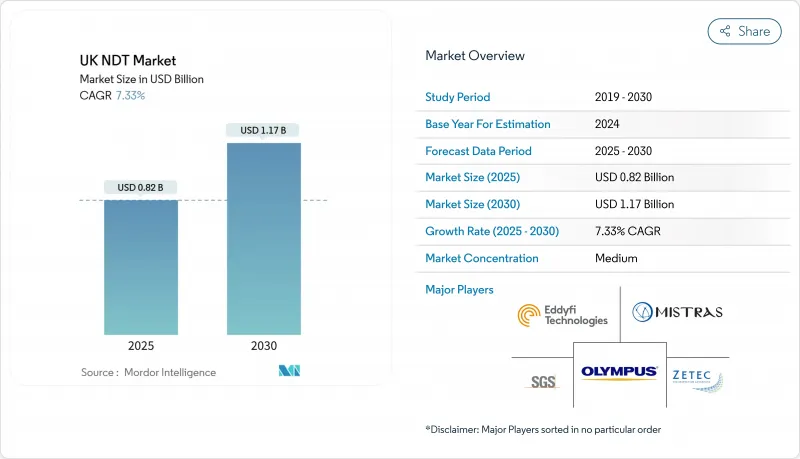
Mordor Intelligence에 의하면, 현재 추산에서는 2025년 영국의 비파괴 검사(NDT) 시장 규모는 8억 2,000만 달러로 평가되었고, 이 시장은 2030년까지 11억 7,000만 달러에 이를 것으로 예측됩니다.
이는 해당 기간 동안 연평균 성장률(CAGR)이 7.33%에 이를 전망입니다.
본 보고서는 컴포넌트별(장비, 소프트웨어, 서비스 등), 검사 방법별(초음파 검사, 방사선 검사 등), 기술별(기존 및 기존 방식, AI 지원), 최종 사용자 산업별(석유 및 가스, 발전, 항공우주, 방위, 자동차 및 운송 기계, 해양 및 조선 등)로 분류되어 있습니다. 시장 전망은 금액(달러) 기준으로 제시되어 있습니다.
영국의 비파괴 검사(NDT) 시장 동향 및 인사이트
위상 배열 초음파 검사 시스템의 도입 확대
위상 배열 초음파 검사(PAUT)의 보급 확대에 따라, 영국의 비파괴 검사(NDT) 시장은 고해상도 검사로 나아가고 있습니다. 항공우주 제조업체들은 복합재료 부품에 대해 PAUT 채택을 점점 더 의무화하고 있는 반면, 석유 및 가스 사업자들은 복잡한 용접 형상의 검사에 PAUT를 채택하고 있습니다. 하나의 PAUT 프로브로 여러 개의 기존 트랜스듀서를 대체할 수 있어, 검사 범위를 손상시키지 않으면서 검사 시간을 최대 50% 단축할 수 있습니다. 압력 기기에 관한 규정의 최근 개정에 따라, PAUT는 방사선 검사법의 대체 수단으로 인정받게 되었습니다. 이를 통해 규제상의 장벽이 제거되었으며, 안전성이 극히 중요한 다른 분야로의 도입도 촉진되고 있습니다. 각 서비스 제공업체는 직원의 기술 향상에 주력하는 한편, 검사 결과를 건전성 대시보드로 변환하는 실시간 데이터 분석 플랫폼과 PAUT를 결합하여 비즈니스 기회를 활용하고 있습니다.
재생에너지 인프라의 확대
해당 국가가 2030년까지 해상 풍력 발전 용량 50 GW 달성을 목표로 하고 있어, 풍력 터빈 건설이 급증하고 있습니다. 비파괴 검사(NDT) 수요는 블레이드 제조, 기초 용접부, 해저 케이블에 이르기까지 다양하며, 연안 지역에서 수년에 걸친 서비스 프로젝트 파이프라인을 창출하고 있습니다. 타워 검사에서는 드론 탑재 열화상 카메라와 로봇 크롤러가 로프 접근 방식을 대체하여 작업자의 안전성과 검사의 재현성이 향상되고 있습니다. ScotWind의 해저 임대 사업만 해도 25GW를 초과하는 신규 프로젝트가 추가되었으며, 이들은 수명 주기 전반에 걸친 검사 체계를 필요로 합니다. 이에 따라 비파괴 검사(NDT)는 단순한 규정 준수 기능에서 풍력 발전소 운영 사업자에게 있어 전략적인 차별화 요인으로 변화하고 있습니다. 블레이드 모니터링, 부식 매핑, 디지털 기록 관리를 통합한 턴키 검사 패키지를 제공하는 공급업체는 이러한 신규 계약을 수주하는 데 유리한 입장에 있습니다.
첨단 방사선 검사 장비의 높은 자본 비용
산업용 컴퓨터 단층촬영(CT) 플랫폼의 가격은 종종 50만 파운드(62만 5,000달러)를 초과하여, 중소 서비스 기업들은 업그레이드를 연기하거나 임대 컨소시엄을 구성할 수밖에 없는 실정입니다. X선 검사 베이의 규정 준수를 위해서는 고가의 차폐 조치나 라이선스가 필요하며, 그 결과 총 소유 비용은 장비의 정가를 훨씬 초과하게 됩니다. 브렉시트로 인한 공급망 지연으로 리드타임이 연장되고, 벤더 간의 경쟁이 줄어들고 있습니다. 이로 인해 단기 투자를 억제할 수 있는 자금 조달 리스크가 가중되고 있습니다. 그 결과, 일부 사업자는 예산 제약을 관리하기 위해 PAUT(비파괴 검사)와 같은 대체 기법으로 전환하고 있지만, 특정 복잡한 형상의 경우 여전히 방사선 검사를 대체할 수 있는 방법은 없습니다.
부문 분석
영국의 비파괴 검사(NDT) 시장에서는 서비스가 계속해서 주도적인 위치를 차지하고 있으며, 2024년 매출의 78.6%를 차지했습니다. 특히 원자력 및 항공우주 분야에서 레벨 III 전문 지식이 심각하게 부족한 가운데, 아웃소싱은 자산 소유자가 엄격한 규정 준수를 확보하는 데 도움이 되고 있습니다. 검사 계약에서는 데이터 분석, 위험 기반 검사 계획, 규제 당국에 대한 보고가 다년간의 프레임워크에 포함되는 사례가 증가하고 있습니다. 소프트웨어는 2024년 매출의 불과 7%를 차지할 뿐이지만, 클라우드 포털이 원시 검사 데이터를 수집하여 고장 모드를 예측하는 AI 모델에 공급됨에 따라 연평균 성장률(CAGR) 11.1%를 기록하며 가장 빠르게 성장하는 분야입니다. 노후된 아날로그 장비가 디지털 X선 검사, 위상 배열 초음파 검사, 소형 크롤러로 대체됨에 따라 장비 판매는 교체 주기를 통해 꾸준히 증가하고 있습니다. 초음파 커플링, 침투 탐상제, 자분 탐상제 등의 소모품은 지속적인 애프터마켓 수익을 창출하여 공급업체의 현금 흐름 안정화에 기여하고 있습니다.
향후 전망을 살펴보면, 서비스 기업들은 사내 레벨 III 역량 강화를 위해 교육 기관을 확충하고 있는 반면, OEM 업체들은 하드웨어 패키지에 구독형 소프트웨어 라이선스를 포함시키고 있습니다. 영국 비파괴 검사 협회(British Institute of Non-Destructive Testing)의 보고서에 따르면, 2024년 레벨 III 인증 신청 건수는 23% 증가했습니다. 이러한 인재 유입으로 2027년까지 인력 부족은 다소 완화될 전망이지만, 첨단 기술의 복잡성으로 인해 고도의 전문 지식을 갖춘 인력은 여전히 부족하여 영국 NDT 시장 전반에서 전문 서비스 제공업체에 대한 수요가 증가하고 있습니다.
초음파 검사(UT)는 2024년 영국 NDT 시장에서 27.3%의 점유율을 유지했습니다. 비방사선 검사라는 점, 휴대성, 그리고 광범위한 검사 범위 덕분에 UT는 파이프라인 용접부, 풍력 발전 타워의 플랜지, 항공기 복합재료 분야에서 필수적인 존재가 되었습니다. PAUT(초음파 자동 검사) 및 풀 매트릭스 캡처의 급속한 보급으로 3D 시각화가 가능해졌고, 결함 크기 측정 정밀도가 향상됨에 따라 UT의 가치는 더욱 높아지고 있습니다. 와전류 검사는 가장 빠른 성장세를 보이며, 전기차(EV) OEM 및 항공우주 업계의 주요 기업들이 알루미늄 외판과 탄소섬유 적층재를 검사함에 따라 연평균 성장률(CAGR) 7.9%로 확대되고 있습니다. 디지털 방사선 검사는 고밀도 부품 분야에서 여전히 틈새 시장의 우위를 유지하고 있지만, 안전 프로토콜 및 설비 투자 장벽이 성장을 저해하고 있습니다. 자분 탐상법 및 침투 탐상법은 주조·단조 공장에서 표면 결함 감지에 여전히 주류를 이루고 있는 반면, 열화상 검사는 회전 기계의 예측 유지보수 분야에서 주목을 받고 있습니다.
초음파 검사(UT) 업체들은 듀얼 매트릭스 프로브와 AI 분류 기능을 결합한 통합 시스템의 제공을 확대하고 있으며, 이를 통해 실시간 화면에서 균열과 같은 이상을 즉시 식별할 수 있게 되었습니다. 2024년, 영국 보건안전청(HSE)은 압력 기기에 관한 지침을 확대하여 초음파 검사(UT)의 대체 기법을 인정하게 되었으며, 이에 따라 현장에서의 도입이 더욱 확산되었습니다. 그 결과, 현재는 용접 부위에는 위상 배열 초음파 검사(Phased Array)를, 열영향부에는 와전류 배열을 결합한 하이브리드 검사 패키지가 제공되고 있으며, 통합된 소프트웨어 환경 하에서 운영자에게 원스톱 솔루션을 제공합니다.
기타 혜택 :
- Excel 형식 시장 예측(ME) 시트
- 3개월간의 애널리스트 지원
자주 묻는 질문
목차
제1장 서론
제2장 분석 방법
제3장 주요 요약
제4장 시장 구도
제5장 시장 규모 및 성장률 예측
제6장 경쟁 구도
제7장 시장 기회 및 향후 전망
AJY 26.08.07According to Mordor Intelligence, current estimates place the UK NDT market size at USD 0.82 billion in 2025, and the sector is forecast to reach USD 1.17 billion by 2030, translating into a 7.33% CAGR over the period.
This report is Segmented by Component (Equipment, Software, Services, and More), Testing Method (Ultrasonic Testing, Radiographic Testing, and More), Technique (Traditional/Conventional, and AI-Enabled), and End-User Industry (Oil and Gas, Power Generation, Aerospace, Defense, Automotive and Transportation, Marine and Ship Building, and More). The Market Forecasts are Provided in Terms of Value (USD).
UK NDT Market Trends and Insights
Growing Adoption of Phased-Array Ultrasonic Systems
The wider adoption of phased-array ultrasonic testing (PAUT) is driving the UK NDT market toward higher-resolution inspections. Aerospace manufacturers are increasingly mandating PAUT for composite components, while oil and gas operators are adopting it for complex weld geometries. One PAUT probe can replace multiple conventional transducers, cutting inspection time by as much as 50% without compromising volumetric coverage. Recent updates to pressure equipment regulations list PAUT as an acceptable alternative to radiographic methods, erasing regulatory obstacles and supporting adoption across other safety-critical sectors. Service providers are capitalizing on upskilling personnel and by bundling PAUT with real-time data analytics platforms that translate inspection results into integrity dashboards.
Expansion of Renewable-Energy Infrastructure
Wind turbine construction is surging as the country aims to reach 50 GW of offshore wind capacity by 2030. NDT demand spans blade manufacturing, foundation welds, and subsea cables, creating multi-year service pipelines in coastal regions. Drone-borne thermography and robotic crawlers are replacing rope access for tower inspections, improving worker safety and inspection repeatability. ScotWind seabed leasing alone adds more than 25 GW of new projects that will require lifetime inspection regimes, turning NDT from a compliance function into a strategic differentiator for wind-farm operators. Vendors offering turnkey inspection packages that integrate blade monitoring, corrosion mapping, and digital record-keeping are well-positioned to capture these new contracts.
High Capital Cost of Advanced Radiographic Equipment
Industrial computed tomography platforms often exceed GBP 500,000 (USD 625,000), pushing smaller service companies to delay upgrades or form rental consortia. Compliance in radiographic bays demands costly shielding and licensing, driving total ownership far above headline equipment prices. Supply chain delays following Brexit have extended lead times and reduced vendor competition, adding financing risk that can dampen near-term investment. Consequently, some operators switch to alternative methods such as PAUT to manage budget constraints, although radiography remains irreplaceable for certain complex geometries.
Other drivers and restraints analyzed in the detailed report include:
- Mandatory Inspection Cycles for the Aging Nuclear Fleet
- Government Incentives for Industry 4.0 Digital Inspection Solutions
- Limited Standardization for AI-Enabled Defect Characterization
For complete list of drivers and restraints, kindly check the Table Of Contents.
Segment Analysis
Services continue to dominate the UK NDT market, accounting for 78.6% of revenue in 2024. Outsourcing helps asset owners secure disciplined compliance amid acute shortages of Level III expertise, especially in nuclear and aerospace settings. Inspection contracts are increasingly bundling data analytics, risk-based inspection planning, and regulatory reporting into multi-year frameworks. Software, although accounting for just 7% of 2024 revenue, is the fastest-growing component, with a 11.1% CAGR, as cloud portals ingest raw inspection data and feed AI models that predict failure modes. Equipment sales grow steadily through replacement cycles, as aging analog devices are swapped for digital radiography, phased-array ultrasonics, and miniature crawlers. Consumables-such as ultrasonic couplants, penetrant dyes, and magnetic particles-generate recurring aftermarket revenue, helping to stabilize vendor cash flows.
Looking ahead, services firms are expanding their training academies to boost internal Level III capacity, while OEMs are embedding subscription-based software licenses within hardware packages. The British Institute of Non-Destructive Testing reported a 23% increase in Level III certification applications in 2024. This talent influx should marginally ease labor constraints by 2027, yet the complexity of advanced techniques keeps high-end expertise in short supply, reinforcing the premium placed on specialist service providers across the UK NDT market.
Ultrasonic testing (UT) retained a 27.3% share of the UK NDT market in 2024. Its non-radiographic nature, portability, and volumetric coverage make UT indispensable for pipeline welds, wind-tower flanges, and aircraft composites. The rapid adoption of PAUT and full-matrix capture enhances UT's value by adding 3D visualization and improving defect sizing accuracy. Eddy-current testing posted the quickest gains, expanding at 7.9% CAGR as electric-vehicle OEMs and aerospace primes inspect aluminum skins and carbon-fiber laminates. Digital radiography still holds a niche advantage for dense components, though safety protocols and capex barriers cap growth. Magnetic particle and liquid penetrant techniques remain staples for surface defect detection in casting and forging plants, while thermography gains traction in predictive maintenance for rotating machinery.
UT vendors are increasingly supplying integrated systems that pair dual-matrix probes with AI classification, which flags crack-like indications in live displays. In 2024, the Health and Safety Executive broadened pressure-equipment guidelines to accept UT alternatives, spurring wider field adoption. Consequently, hybrid inspection packages now combine phased-array UT for weld bodies with eddy-current arrays for heat-affected zones, giving operators a one-stop solution under a consolidated software environment.
Complete Report Scope:
- By Component
- Equipment
- Software
- Services
- Consumables
- By Testing Method
- Ultrasonic Testing
- Radiographic Testing
- Magnetic Particle Testing
- Liquid Penetrant Testing
- Visual Inspection Testing
- Eddy-Current Testing
- Acoustic Emission Testing
- Thermography / Infrared Testing
- Computed Tomography Testing
- By Technique
- Traditional / Conventional
- AI-enabled
- By End-user Industry
- Oil and Gas
- Power Generation
- Aerospace
- Defense
- Automotive and Transportation
- Manufacturing and Heavy Engineering
- Construction and Infrastructure
- Chemical and Petrochemical
- Marine and Ship Building
- Electronics and semiconductor
- Mining
- Medical Devices
- Others
List of Companies Covered in this Report:
- Mistras Group Ltd
- Eddyfi UK
- Olympus Europa Holding GmbH (UK branch)
- Zetec Inc (UK)
- Sonatest Ltd
- Magnaflux UK
- Ashtead Technology Ltd
- Applus UK Ltd
- Bureau Veritas UK
- Intertek Group plc
- SGS United Kingdom Ltd
- TWI Ltd
- Element Materials Technology
- ROSEN (UK) Ltd
- JME Ltd
- Phoenix Inspection Systems Ltd
- Silverwing UK
- Nexxis UK
- Eddyfi Technologies UK
- IMechE Engineering Training Solutions
- SKF Condition Monitoring
- Cygnus Instruments Ltd
- Acuren (UK operations)
- Sandvik Inspection Robotics
- G-Technologies Ultrasonic Systems
Additional Benefits:
- The market estimate (ME) sheet in Excel format
- 3 months of analyst support
TABLE OF CONTENTS
1 INTRODUCTION
- 1.1 Study Assumptions and Market Definition
- 1.2 Scope of the Study
2 RESEARCH METHODOLOGY
3 EXECUTIVE SUMMARY
4 MARKET LANDSCAPE
- 4.1 Market Overview
- 4.2 Market Drivers
- 4.2.1 Growing adoption of phased-array ultrasonic systems
- 4.2.2 Expansion of renewable-energy infrastructure (wind-turbine inspection demand)
- 4.2.3 Mandatory inspection cycles for aging UK nuclear fleet
- 4.2.4 Government incentives for Industry 4.0 digital inspection solutions
- 4.2.5 Rising skill-gap outsourcing to specialist service providers
- 4.2.6 Under-reported: Drive to certify hydrogen-pipeline integrity
- 4.3 Market Restraints
- 4.3.1 High capital cost of advanced radiographic equipment
- 4.3.2 Limited standardisation for AI-enabled defect characterisation
- 4.3.3 Shortage of level-III certified inspectors in niche techniques
- 4.3.4 Under-reported: Environmental concerns over industrial radiography isotopes
- 4.4 Industry Value Chain Analysis
- 4.5 Impact of Macroeconomic Factors
- 4.6 Regulatory Landscape
- 4.7 Technological Outlook
- 4.8 Porter's Five Forces Analysis
- 4.8.1 Bargaining Power of Buyers
- 4.8.2 Bargaining Power of Suppliers
- 4.8.3 Threat of New Entrants
- 4.8.4 Threat of Substitutes
- 4.8.5 Competitive Rivalry
5 MARKET SIZE AND GROWTH FORECASTS (VALUE)
- 5.1 By Component
- 5.1.1 Equipment
- 5.1.2 Software
- 5.1.3 Services
- 5.1.4 Consumables
- 5.2 By Testing Method
- 5.2.1 Ultrasonic Testing
- 5.2.2 Radiographic Testing
- 5.2.3 Magnetic Particle Testing
- 5.2.4 Liquid Penetrant Testing
- 5.2.5 Visual Inspection Testing
- 5.2.6 Eddy-Current Testing
- 5.2.7 Acoustic Emission Testing
- 5.2.8 Thermography / Infrared Testing
- 5.2.9 Computed Tomography Testing
- 5.3 By Technique
- 5.3.1 Traditional / Conventional
- 5.3.2 AI-enabled
- 5.4 By End-user Industry
- 5.4.1 Oil and Gas
- 5.4.2 Power Generation
- 5.4.3 Aerospace
- 5.4.4 Defense
- 5.4.5 Automotive and Transportation
- 5.4.6 Manufacturing and Heavy Engineering
- 5.4.7 Construction and Infrastructure
- 5.4.8 Chemical and Petrochemical
- 5.4.9 Marine and Ship Building
- 5.4.10 Electronics and semiconductor
- 5.4.11 Mining
- 5.4.12 Medical Devices
- 5.4.13 Others
6 COMPETITIVE LANDSCAPE
- 6.1 Market Concentration
- 6.2 Strategic Moves
- 6.3 Market Share Analysis
- 6.4 Company Profiles {(includes Global level Overview, Market level overview, Core Segments, Financials as available, Strategic Information, Market Rank/Share for key companies, Products and Services, and Recent Developments)}
- 6.4.1 Mistras Group Ltd
- 6.4.2 Eddyfi UK
- 6.4.3 Olympus Europa Holding GmbH (UK branch)
- 6.4.4 Zetec Inc (UK)
- 6.4.5 Sonatest Ltd
- 6.4.6 Magnaflux UK
- 6.4.7 Ashtead Technology Ltd
- 6.4.8 Applus UK Ltd
- 6.4.9 Bureau Veritas UK
- 6.4.10 Intertek Group plc
- 6.4.11 SGS United Kingdom Ltd
- 6.4.12 TWI Ltd
- 6.4.13 Element Materials Technology
- 6.4.14 ROSEN (UK) Ltd
- 6.4.15 JME Ltd
- 6.4.16 Phoenix Inspection Systems Ltd
- 6.4.17 Silverwing UK
- 6.4.18 Nexxis UK
- 6.4.19 Eddyfi Technologies UK
- 6.4.20 IMechE Engineering Training Solutions
- 6.4.21 SKF Condition Monitoring
- 6.4.22 Cygnus Instruments Ltd
- 6.4.23 Acuren (UK operations)
- 6.4.24 Sandvik Inspection Robotics
- 6.4.25 G-Technologies Ultrasonic Systems
7 MARKET OPPORTUNITIES AND FUTURE OUTLOOK
- 7.1 White-space and Unmet-need Assessment


