

|
시장보고서
상품코드
2099766
중국의 터닝 머신 및 장비 : 시장 점유율 분석, 업계 동향 및 통계, 성장 예측(2026-2031년)China Turning Machine and Equipment - Market Share Analysis, Industry Trends & Statistics, Growth Forecasts (2026 - 2031) |
||||||
 Mordor Intelligence
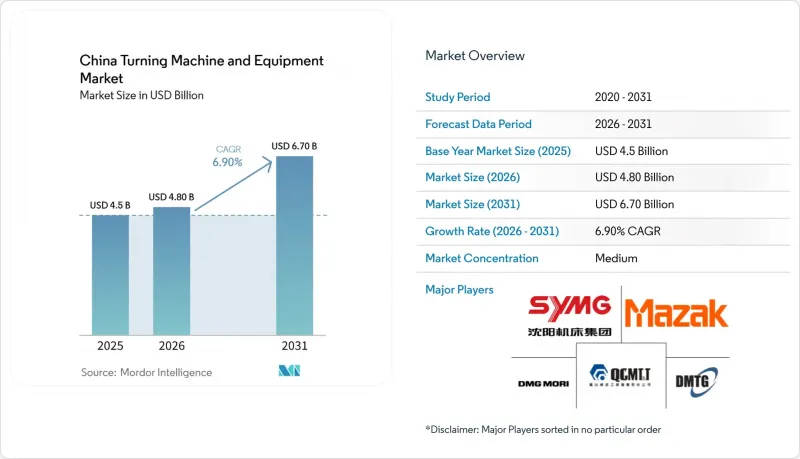
Mordor Intelligence에 의하면, 중국의 터닝 머신 및 장비 시장 규모는 2025년 45억 달러로 평가되었습니다. 2026년에는 48억 달러로 확대되어 2026년부터 2031년에 걸쳐 CAGR 6.90%로 성장을 지속하여, 2031년에는 67억 달러에 이를 것으로 예측됩니다.
본 보고서는 제품 유형별(수평형, 수직형, 기존 등), 자동화 유형별(수동, 반자동, 완전 자동 CNC), 최종 사용자 산업별(자동차·상용차, 항공우주 및 방위, 의료기기·수술 기구, 석유 및 가스·에너지 등)로 분류되어 있습니다. 시장 전망은 금액(달러) 및 수량(대)으로 제시되어 있습니다.
중국의 터닝 머신 및 장비 시장 동향과 인사이트
전기차 생산 확대가 첨단 선반 설비 수요를 견인
중국 내 전동 모빌리티로의 전환에 따라, 중국의 선반·장비 시장에서는 과거 자동차 산업 사이클과는 다른 수요 패턴이 나타나고 있습니다. 중국 공업정보화부(MIIT) 보고서에 따르면, 2026년 5월 신에너지차 생산 대수는 전년 동월 대비 22.4% 증가한 155만 4,000대를 기록했으며, 1월부터 5월까지의 누적 생산 대수는 584만 1,000대에 달했습니다. 전기차 파워트레인으로 인해 가공 수요는 모터 샤프트, 감속기 부품, 배터리 열관리 부품, 경량 구조 부품 등 고정밀 부품으로 이동하고 있습니다. 공정 수준에서 이러한 설비 수요의 변화는 공급업체들이 보다 광범위한 핵심 부품에 대해 재현성이 높은 CNC 선반 가공 능력을 필요로 하고 있기 때문입니다. 또한 이는 많은 전기차 생산 프로그램에서 전기 구동계 및 관련 부품을 위한 정밀 가공에 대한 추가 투자가 필요함을 의미합니다. 그 결과, 자동차 공급망 전반에 걸쳐 중국의 터닝 머신 및 장비 시장에 대한 수주 기반은 더욱 안정적이고 구조적인 양상을 띠고 있습니다.
'중국 제조 2025(MIC2025)' 정책과 후속 프로그램
이전의 MIC2025 프레임워크는 현재 중국의 터닝 머신 및 장비 시장에 직접적인 영향을 미치는 더 구속력 있는 산업 정책 프레임워크로 전환되고 있습니다. 2026년부터 2030년까지의 중국 제15차 5개년 계획에서는 ‘산업용 마더 머신’이라 불리는 산업용 공작기계가 국가 역량 구축의 전략적 핵심 기술 분야로 자리매김하고 있습니다. 이 정책 방향이 중요한 이유는 공작기계를 설비의 자립, 첨단 제조의 회복력, 그리고 심화된 현지 공급망과 같은 보다 광범위한 목표와 연계하고 있기 때문입니다. 또한, 이 방침에 따라 국내 구매자들에게는 구형 설비를 새로운 정책 및 기술 기준에 부합하는 고정밀 CNC 시스템으로 교체해야 할 더 강력한 이유가 생깁니다. 이와 같은 움직임은 국내 부품 조달을 촉진하고, 표준 용도에서 수입 서브시스템에 계속 의존해야 할 장기적인 근거를 약화시킵니다. 이로 인해 중국의 선반 및 공작기계 시장에서 일반적인 설비 투자 주기보다 예측하기 쉬운 수요 하한선이 형성됩니다.
첨단 선반 설비의 높은 자본 비용
표준 시스템과 첨단 시스템 간의 비용 격차는 여전히 중국 선반 및 공작기계 시장이 가치 곡선을 얼마나 빠르게 올라갈 수 있는지를 제한하고 있습니다. 엔트리 레벨 CNC 선반은 훨씬 저렴한 가격에 조달할 수 있지만, 항공우주 및 전기차(EV) 프로그램에서 사용되는 5축 선삭·밀링 복합 가공 센터는 대당 8만 달러에서 20만 달러 이상이 일반적이며, 완전한 생산 셀의 경우 50만 달러를 초과하기도 합니다. 2025년 업계 평균 이익률이 불과 7.3%에 불과했다는 점을 고려할 때, 많은 2차 및 3차 공급업체에게 이 수준의 지출을 감당하기는 어렵습니다. 해안 지역에 비해 서비스 체계, 예비 부품의 확보 가능성, 용도 지원이 부족한 내륙 지역에서는 그 부담이 더욱 커집니다. 보조금이나 금융 지원은 대기업에는 도움이 되지만, 중소 구매 기업들은 여전히 설비 구입 및 운전 자금 수요와 고객의 가격 압박 사이에서 균형을 고려해야 합니다. 이 때문에 수요 환경이 양호하더라도 중국 선반·공작기계 시장의 일부에서는 업그레이드 속도가 여전히 더딘 상태입니다.
부문 분석
2025년, 중국의 선반·공작기계 시장에서 수평형 부문은 63%의 점유율을 차지했습니다. 이는 자동차, 일반 기계, 에너지 장비 각 분야 및 수출 지향적 공급망에서 표준 구성으로 자리 잡고 있음을 반영합니다. 이 부문이 우위를 유지하는 이유는 도입 대수가 많고, 서비스 지원이 널리 이용 가능하며, 작업자가 이미 해당 형식에 익숙하기 때문입니다. 이러한 요인들이 복합적으로 작용하여, 구매자가 신규 프로젝트 선정에 더욱 신중을 기하게 되더라도 교체 수요를 뒷받침하고 있습니다. 수직형 부문은 베어링 링, 풍력 터빈 허브, 대형 선박용 또는 압축기용 하우징 등, 공작물의 크기와 칩 처리가 극히 중요한 대형 부품 분야에서 여전히 중요한 위치를 차지하고 있습니다. 스위스형 부문은 도입 대수가 적음에도 불구하고, 극히 엄격한 공차와 안정적인 재현성이 요구되는 의료기기 및 반도체 장비 클러스터에서는 여전히 필수적인 존재입니다.
멀티태스크 부문은 가장 빠르게 성장하고 있는 제품 카테고리이며, 이 부문의 중국 선반·장비 시장은 2026년부터 2031년까지 연평균 성장률(CAGR) 8.4%를 나타낼 것으로 예측됩니다. 구매자들이 이러한 시스템으로 전환하고 있는 이유는 한 번의 셋업으로 선삭 및 밀링 공정을 결합할 수 있어 취급 작업을 줄이고, 복잡한 부품의 치수 오차 위험을 낮출 수 있기 때문입니다. 이는 전기차용 모터 하우징이나 항공우주 구조물, 기타 더 높은 정밀도와 짧은 사이클 타임이 요구되는 부품에서 특히 유용합니다. 기존 부문은 여전히 소규모 내륙 작업장이나 저사양 용도에 대응하고 있습니다. 그러나 구매자가 더 엄격한 품질 요건에 직면하고, 현대화 프로그램에 따른 교체 압력이 높아짐에 따라 그 시장 점유율은 축소되고 있습니다. 중국의 터닝 머신 및 장비 업계에서 제품 구성은 단순한 동급 제품 대체에서 더 적은 공정으로 복잡한 가공을 지원하는 장비로 전환되고 있습니다.
기타 혜택 :
- 엑셀 형식 시장 예측(ME) 시트
- 3개월간의 애널리스트 지원
자주 묻는 질문
목차
제1장 서론
제2장 조사 방법
제3장 주요 요약
제4장 시장 구도
제5장 시장 규모 및 성장 예측
제6장 경쟁 구도
제7장 시장 기회 및 향후 전망
KTH 26.08.10According to Mordor Intelligence, the China turning machine and Equipment Market size is expected to grow from USD 4.5 billion in 2025 to USD 4.80 billion in 2026 and is forecast to reach USD 6.70 billion by 2031 at 6.90% CAGR over 2026-2031.
This report is Segmented by Product Type (Horizontal, Vertical, Conventional, and More), by Automation Type (Manual, Semi-Automatic, and Fully Automatic CNC), and by End-User Industry (Automotive & Commercial Vehicles, Aerospace & Defense, Medical Devices & Surgical Instruments, Oil, Gas, & Energy, and More). The Market Forecasts are Provided in Terms of Value (USD) and Volume (Units).
China Turning Machine and Equipment Market Trends and Insights
Growth in Electric Vehicle Production Fueling Demand for Advanced Turning Equipment
China's shift toward electric mobility is creating a different demand pattern for the China turning machine and equipment market than in earlier automotive cycles. MIIT reported new energy vehicle production of 1.554 million units in May 2026, up 22.4% year over year, while cumulative output for January through May reached 5.841 million units. Electric vehicle powertrains are shifting machining demand toward high-precision components, including motor shafts, reduction gear components, battery thermal management parts, and lightweight structural components. These changes in equipment demand at the process level are driven by suppliers' need for repeatable CNC turning capability across a broader set of critical parts. It also means that many EV production programs require additional investment in precision machining for the electric drivetrain and associated components. The result is a steadier, more structural base order for the China turning machine and equipment market across automotive supply chains.
Made in China 2025 / MIC2025 Policy and Successor Programs
The earlier MIC2025 framework has now moved into more binding industrial policy channels that matter directly for the China turning machine and equipment market. China's 15th Five-Year Plan for 2026 to 2030 identifies industrial machine tools, described as industrial mother machines, as a strategic core technology area for national capability building. That policy direction matters because it links machine tools to broader goals of equipment independence, advanced manufacturing resilience, and deep local supply chains. It also gives domestic buyers stronger reasons to replace older equipment with higher-precision CNC systems that fit newer policy and technical standards. The same push supports domestic component sourcing and reduces the long-term case for relying on imported subsystems in standard applications. In the China turning machine and equipment market, this creates a more predictable demand floor than a typical capital-spending cycle would.
High Capital Cost of Advanced Turning Equipment
The cost gap between standard and advanced systems still limits how fast China's turning machine and equipment market can move up the value curve. Entry-level CNC lathes can be sourced at much lower prices, but 5-axis turn-mill compound centers used in aerospace and EV programs often range from USD 80,000 to more than USD 200,000 per unit, and a full production cell can exceed USD 500,000. That spending level is difficult for many Tier-2 and Tier-3 suppliers to absorb, given that average industry profit margins were only 7.3% in 2025. The burden is heavier in inland provinces where service depth, spare part availability, and application support are thinner than in the coastal belt. Subsidies and lending support help larger enterprises, but smaller buyers still have to weigh equipment purchases against working capital needs and customer price pressure. This keeps part of the China turning machine and equipment market on a slower upgrade path even when demand conditions are favorable.
Other drivers and restraints analyzed in the detailed report include:
- Growth of Industrial Automation and Smart Factories
- Expansion of High-Precision Aerospace Manufacturing
- Skilled CNC Programmer and Machinist Shortages
For complete list of drivers and restraints, kindly check the Table Of Contents.
Segment Analysis
The horizontal segment held 63% of the China turning machine and equipment market in 2025, reflecting its role as the standard configuration across automotive, general machinery, and energy equipment, as well as in export-oriented supplier networks. The segment keeps its lead because the installed base is large, service support is widely available, and operators are already familiar with the format. That combination supports replacement demand even when buyers become more selective of new projects. The vertical segment remains important for heavy parts such as bearing rings, wind turbine hubs, and large marine or compressor housings, where workpiece size and chip handling are critical. Swiss-type segment serves a smaller installed base, but it stays critical in medical device and semiconductor equipment clusters where very tight tolerances and stable repeatability are required.
The multi-tasking segment is the fastest-growing product category, with the China turning machine and equipment market for this segment expected to grow at an 8.4% CAGR from 2026 to 2031. Buyers are shifting toward these systems because a single setup can combine turning and milling steps, reduce handling, and cut the risk of dimensional error on complex parts. This is especially useful for EV motor housings, aerospace structures, and other components that need higher precision and shorter cycle times. Conventional segment still serves smaller inland workshops and lower-spec applications. Still, it is losing ground as buyers face tighter quality requirements and greater pressure to replace from modernization programs. Within the China turning machine and equipment industry, the product mix is moving away from simple like-for-like replacements toward equipment that supports more complex machining in fewer steps.
Complete Report Scope:
- By Product Type
- Horizontal Turning Equipment
- Vertical Turning Equipment
- Swiss-Type Turning Equipment
- Multi-Tasking Turning Equipment
- Conventional Turning Equipment
- By Automation Type
- Manual
- Semi-Automatic
- Fully Automatic CNC
- By End-User Industry
- Automotive & Commercial Vehicles
- Aerospace & Defense
- Medical Devices & Surgical Instruments
- Oil, Gas, & Energy
- Electrical, Electronics & Semiconductor Equipment
- General Industrial Machinery
- Others (Consumer Goods, Defense Ordnance)
List of Companies Covered in this Report:
- Shenyang Machine Tool Co., Ltd.
- Mazak Corporation
- DMG MORI
- Dalian Machine Tool Group Corporation
- Qinchuan Machine Tool & Tool Group Co., Ltd.
- Okuma Corporation
- DN Solutions
- Ningbo Haitian Precision Machinery Co., Ltd.
- Baoji Machine Tool Group Co., Ltd.
- Hyundai WIA Corporation
- Guangzhou CNC Equipment Co., Ltd.
- INDEX-Werke GmbH
- EMAG GmbH & Co. KG
- JIER Machine Tool Group Co., Ltd.
- Zhejiang Headman Machinery Co., Ltd.
- Wuhan Heavy Duty Machine Tool Group Co., Ltd.
- Citizen Machinery Co., Ltd.
- Tsugami Corporation
- Zhejiang Kaida Machine Tool Co., Ltd.
- Nakamura-Tome Precision Industry Co., Ltd.
Additional Benefits:
- The market estimate (ME) sheet in Excel format
- 3 months of analyst support
TABLE OF CONTENTS
1 Introduction
- 1.1 Study Assumptions & Market Definition
- 1.2 Scope of the Study
2 Research Methodology
3 Executive Summary
4 Market Landscape
- 4.1 Market Overview
- 4.2 Market Drivers
- 4.2.1 Growth in Electric Vehicle Production Fueling Demand for Advanced Turning Equipment
- 4.2.2 Made in China 2025 / MIC2025 policy and successor programs
- 4.2.3 Growth of Industrial Automation and Smart Factories
- 4.2.4 Expansion of High-Precision Aerospace Manufacturing
- 4.2.5 Increasing Localization of Precision Component Production
- 4.2.6 Growth in High-Mix, Low-Volume Manufacturing
- 4.3 Market Restraints
- 4.3.1 High Capital Cost of Advanced Turning Equipment
- 4.3.2 Skilled CNC Programmer and Machinist Shortages
- 4.3.3 Intense Price Competition Among Domestic Machine Tool Manufacturers
- 4.3.4 Cyclical Industrial Investment Patterns
- 4.4 Value / Supply-Chain Analysis
- 4.4.1 Raw Material & Component Suppliers
- 4.4.2 Turning Machine & Equipment Manufacturers & System Integrators
- 4.4.3 Distribution & Sales Channels
- 4.4.4 End Users & Industry Applications
- 4.4.5 Aftermarket & Lifecycle Services
- 4.5 Regulatory Landscape
- 4.6 Technological Outlook & Innovation Investment Landscape
- 4.6.1 Automation & Smart Manufacturing Integration
- 4.6.2 Advanced CNC Control & AI-Enabled Process Optimization
- 4.7 Pricing Analysis
- 4.7.1 Average Selling Price (ASP) Benchmarking of Key Market Participants
- 4.7.2 Average Selling Price (ASP) Analysis, by Product Type
- 4.7.3 Average Selling Price (ASP) Analysis, by Automation
- 4.8 Buying Criteria & Procurement Analysis
- 4.9 Emerging Growth Hotspots for Turning Machine & Equipment
- 4.10 Porter's Five Forces Analysis - Industry Attractiveness Scoring
- 4.10.1 Threat of New Entrants
- 4.10.2 Bargaining Power of Suppliers
- 4.10.3 Bargaining Power of Buyers
- 4.10.4 Threat of Substitutes
- 4.10.5 Industry Rivalry
- 4.11 Impact of Geopolitical Events on the Market
5 Market Size & Growth Forecasts
- 5.1 By Product Type
- 5.1.1 Horizontal Turning Equipment
- 5.1.2 Vertical Turning Equipment
- 5.1.3 Swiss-Type Turning Equipment
- 5.1.4 Multi-Tasking Turning Equipment
- 5.1.5 Conventional Turning Equipment
- 5.2 By Automation Type
- 5.2.1 Manual
- 5.2.2 Semi-Automatic
- 5.2.3 Fully Automatic CNC
- 5.3 By End-User Industry
- 5.3.1 Automotive & Commercial Vehicles
- 5.3.2 Aerospace & Defense
- 5.3.3 Medical Devices & Surgical Instruments
- 5.3.4 Oil, Gas, & Energy
- 5.3.5 Electrical, Electronics & Semiconductor Equipment
- 5.3.6 General Industrial Machinery
- 5.3.7 Others (Consumer Goods, Defense Ordnance)
6 Competitive Landscape
- 6.1 Market Concentration
- 6.2 Strategic Moves
- 6.3 Market Share Analysis
- 6.4 Competitive Benchmarking Analysis
- 6.5 Company Profiles (Includes Global Level Overview, Market Level Overview, Core Segments, Financials as Available, Strategic Information, Products & Services, and Recent Developments)
- 6.5.1 Shenyang Machine Tool Co., Ltd.
- 6.5.2 Mazak Corporation
- 6.5.3 DMG MORI
- 6.5.4 Dalian Machine Tool Group Corporation
- 6.5.5 Qinchuan Machine Tool & Tool Group Co., Ltd.
- 6.5.6 Okuma Corporation
- 6.5.7 DN Solutions
- 6.5.8 Ningbo Haitian Precision Machinery Co., Ltd.
- 6.5.9 Baoji Machine Tool Group Co., Ltd.
- 6.5.10 Hyundai WIA Corporation
- 6.5.11 Guangzhou CNC Equipment Co., Ltd.
- 6.5.12 INDEX-Werke GmbH
- 6.5.13 EMAG GmbH & Co. KG
- 6.5.14 JIER Machine Tool Group Co., Ltd.
- 6.5.15 Zhejiang Headman Machinery Co., Ltd.
- 6.5.16 Wuhan Heavy Duty Machine Tool Group Co., Ltd.
- 6.5.17 Citizen Machinery Co., Ltd.
- 6.5.18 Tsugami Corporation
- 6.5.19 Zhejiang Kaida Machine Tool Co., Ltd.
- 6.5.20 Nakamura-Tome Precision Industry Co., Ltd.
7 Market Opportunities & Future Outlook
- 7.1 White-Space & Unmet-Need Assessment


