

|
시장보고서
상품코드
2099776
독일의 터닝 머신 및 장비 : 시장 점유율 분석, 업계 동향 및 통계, 성장 예측(2026-2031년)Germany Turning Machine and Equipment - Market Share Analysis, Industry Trends & Statistics, Growth Forecasts (2026 - 2031) |
||||||
 Mordor Intelligence
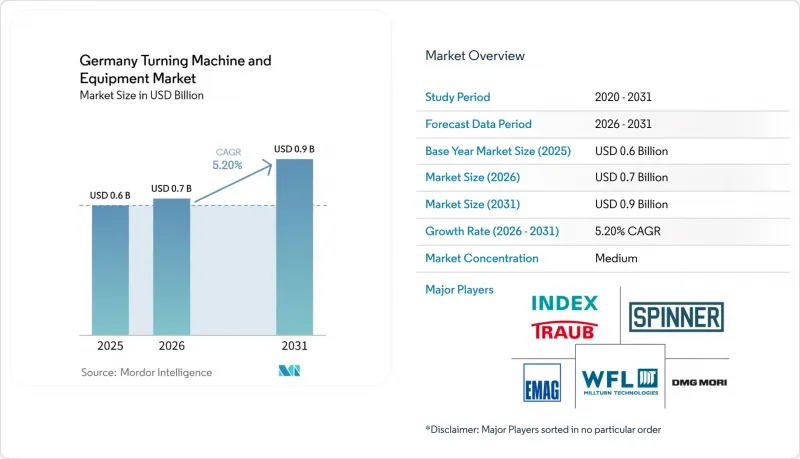
Mordor Intelligence에 의하면, 독일의 터닝 머신 및 장비 시장 규모는 2025년 6억 달러로 평가되었습니다. 2026년에는 7억 달러로 확대되어 2026년부터 2031년에 걸쳐 CAGR 5.20%로 성장을 지속하여, 2031년까지 9억 달러에 이를 것으로 예측됩니다.
본 보고서는 제품 유형별(수평형, 수직형, 스위스형 등), 자동화 유형별(수동, 반자동, 완전 자동 CNC), 최종 사용자 산업별(자동차·상용차, 항공우주 및 방위, 의료기기·수술 기구, 석유 및 가스·에너지 등)로 분류되어 있습니다. 시장 전망은 금액(달러) 및 수량(대수)으로 제시되어 있습니다.
독일의 터닝 머신 및 장비 시장 동향과 인사이트
독일의 강력한 공작기계 제조거점
독일은 세계에서 가장 선진적이고 통합된 정밀 공학 생태계 중 하나를 유지하고 있으며, 이러한 기반이 선반·장비 시장에서 독일에 지속적인 구조적 우위를 제공합니다. 독일은 기계 연구 개발 및 혁신 생태계에 대한 막대한 투자를 바탕으로 강력한 국내 엔지니어링 역량을 유지하고 있습니다. 항공우주, 의료 기술, 방위 분야의 구매자들은 현지 제조업체가 멀리 떨어진 공급업체보다 더 짧은 대응 시간 내에 용도 엔지니어링, 공동 개발 및 인증된 공정 통합을 제공할 수 있기 때문에 여전히 국내 조달을 중시하고 있습니다. 바덴뷔르템베르크주와 바이에른주에는 OEM, 공구 전문 제조업체, 자동화 공급업체, 교육 기관이 집중되어 있어, 이를 통해 제조업체는 공정상의 문제를 더 신속하게 해결하고 생산 라인 업그레이드를 업무 차질을 최소화하며 수행할 수 있으므로 지속적인 투자도 촉진되고 있습니다. 이러한 클러스터 효과는 설비 투자 전반이 더욱 선택적으로 이루어지는 상황 속에서도 독일의 터닝 머신 및 장비 시장 내 수요를 유지하는 데 기여하고 있습니다.
인더스트리 4.0에 따른 기계 갱신
독일의 선반 및 설비 시장에서 디지털화를 통한 현대화는 더 이상 시험 단계의 개념이 아니라 현실적인 구매 과제가 되었습니다. Bitkom은 2025년 보고서에서 독일 제조 기업의 80%가 인더스트리 4.0에 대한 지출을 유지하거나 늘릴 계획이라고 밝혔으며, 공정 모니터링, 자동화, 기계 연결성이 우선 분야로 꼽혔습니다. 기계의 상태나 업그레이드 범위에 따라 다르지만, 레트로핏에 대한 투자는 신규 기계 구매 비용의 상당 부분을 차지할 수 있습니다. 또한 VDW는 EMO 2025에서 사용자들이 기계적 수명이 아직 남아 있는 기계에 대해서도 연결성과 데이터 가시성을 요구하고 있기 때문에 개조 활동이 더욱 전략적인 역할을 맡게 되었다고 밝혔습니다. 따라서 독일 국내에 도입된 구형 CNC 선반은 독일의 터닝 머신 및 장비 시장에서 신규 기계 구매와 모듈식 업그레이드 패키지 모두에 대한 수요를 배경으로, 향후 수년에 걸친 갱신 수요 파이프라인을 창출하고 있습니다. 고객들이 통합 위험의 저감과 생산성 향상의 명확한 효과를 요구하는 가운데, 새로운 플랫폼을 자동화 셀, 연결성 소프트웨어 및 개조 지원과 결합할 수 있는 제조업체들이 우위를 점하고 있습니다.
첨단 선반 시스템의 높은 비용
첨단 CNC 선반 시스템의 비용은 독일 터닝 머신 및 장비 시장, 특히 중소규모 제조업체에서 여전히 보급 확대의 장벽으로 작용하고 있습니다. VDW 보고서에 따르면, 2025년에 많은 독일 제조업체들이 새로운 공작기계 투자를 보류한 주된 이유는 높은 비용과 계획의 불확실성이었습니다. 구매자가 에너지 비용, 물류상의 압박, 이익률 하락까지 해결해야 하는 경우, 이러한 부담은 더욱 커지며, 그 결과 교체 주기가 기술적으로 최적의 시기를 훨씬 넘어서게 됩니다. 이 문제는 항공우주 분야의 시제품 제작이나 특수 방위 관련 업무 등 생산량이 적은 환경에서 더욱 심각합니다. 이러한 분야에서는 기계의 가동률이 충분히 높지 않아 신속한 투자 회수를 기대하기 어려운 경우가 있습니다. CE 적합성이나 품질 관리 요건 등의 규정 준수 요건은 총 소유 비용의 부담을 가중시켜, 생산 수요가 명확하더라도 프로젝트 지연을 초래할 가능성이 있습니다. 그 결과, 독일의 선반·장비 시장에서는 고객이 완전한 턴키 투자가 아닌 단계적 개조, 부분적 자동화, 혹은 구매 연기를 선택하는 사례가 종종 나타납니다.
부문 분석
2025년 독일의 터닝 머신 및 장비 시장에서 수평형 선반은 47.8%의 점유율을 차지하며, 자동차, 에너지, 일반 산업 분야의 샤프트, 슬리브, 디스크 가공 분야에서 여전히 최대 제품 카테고리로서의 지위를 유지했습니다. 이러한 규모는 광범위한 가공 범위, 확립된 공구 생태계, 그리고 팔레트 핸들링 및 로봇 로딩 시스템과의 손쉬운 통합을 반영합니다. 기존 부문은 소량 생산을 하는 위탁 가공 업체나 교육 환경에서 계속 사용되고 있지만, CNC 도입이 진행됨에 따라 그 역할은 점차 축소되고 있습니다. 수직형 부문은 바닥 면적의 효율화와 안정적인 공작물 지지력이 필수적인 대구경·중량 공작물 가공에서 여전히 중요한 역할을 수행하고 있습니다. 스위스형 선반은 의료기기, 전자 커넥터, 방위 관련 용도를 위한 소형 정밀 부품 생산에 계속해서 활용되고 있습니다.
멀티태스크 터닝 센터는 2026년부터 2031년에 걸쳐 연평균 성장률(CAGR) 6.5%로 가장 높은 성장률을 나타낼 것으로 예측됩니다. 이러한 성장은 선삭, 밀링, 드릴링, 연삭을 결합한 원셋업 가공과 밀접한 관련이 있으며, 사이클 타임 단축, 핸들링 공정 간소화, 그리고 지그로 인한 오차 감소에 기여하고 있습니다. 독일의 각 공급업체들은 신제품 출시 및 자동화 시스템과의 호환성 확대를 통해 이 분야의 강화에 적극적으로 나서고 있습니다. 또한, 여러 대의 개별 기계를 추가하지 않고도 종합적인 가공 능력을 원하는 제조업체들 수요 역시 이 분야의 성장을 뒷받침하고 있습니다. 이에 따라 예측 기간 동안 멀티태스크 시스템의 추가적인 보급이 예상됩니다.
기타 혜택 :
- 엑셀 형식 시장 예측(ME) 시트
- 3개월간의 애널리스트 지원
자주 묻는 질문
목차
제1장 서론
제2장 조사 방법
제3장 주요 요약
제4장 시장 구도
제5장 시장 규모 및 성장 예측
제6장 경쟁 구도
제7장 시장 기회 및 향후 전망
KTH 26.08.10According to Mordor Intelligence, the Germany turning machine and Equipment Market size is expected to grow from USD 0.6 billion in 2025 to USD 0.7 billion in 2026 and is forecast to reach USD 0.9 billion by 2031 at 5.20% CAGR over 2026-2031.
This report is Segmented by Product Type (Horizontal, Vertical, Swiss-Type, and More), by Automation Type (Manual, Semi-Automatic, and Fully Automatic CNC), and by End-User Industry (Automotive & Commercial Vehicles, Aerospace & Defense, Medical Devices & Surgical Instruments, Oil, Gas, & Energy, and More). The Market Forecasts are Provided in Terms of Value (USD) and Volume (Units).
Germany Turning Machine and Equipment Market Trends and Insights
Germany's Strong Machine Tool Manufacturing Base
Germany maintains one of the world's most advanced and integrated precision-engineering ecosystems, and that foundation continues to give Germany a structural advantage in the turning machine and equipment market. Germany maintains strong domestic engineering capabilities, supported by significant investment in machinery R&D and innovation ecosystems. Buyers in aerospace, medical technology, and defense continue to value domestic sourcing because local builders can provide application engineering, co-development, and certified process integration with shorter response times than distant suppliers. The concentration of OEMs, tooling specialists, automation suppliers, and training institutions in Baden-Wurttemberg and Bavaria also supports repeat investment, as manufacturers can resolve process issues more quickly and upgrade production lines with less disruption. That cluster effect helps sustain demand in the Germany turning machine and equipment market even as broader capital spending becomes more selective.
Industry 4.0-Driven Machine Replacement
Digital modernization is now a practical purchasing issue rather than a pilot-stage concept in the Germany turning machine and equipment market. Bitkom reported in 2025 that 80% of German manufacturing companies planned to maintain or increase their Industry 4.0 spending, with process monitoring, automation, and machine connectivity named as priority areas. Depending on the machine condition and the scope of upgrades, retrofit investments can account for a significant share of the cost of a new machine. The VDW also stated during EMO 2025 that retrofit activity had moved into a more strategic role because users want connectivity and data visibility on machines that still have usable mechanical life. Germany's installed base of older CNC lathes, therefore, creates a multi-year renewal pipeline for the Germany turning machine and equipment market, with demand coming from both new machine purchases and modular upgrade packages. Builders that can pair new platforms with automation cells, connectivity software, and retrofit support are gaining an edge, as customers seek lower integration risk and clearer productivity gains.
High Cost of Advanced Turning Systems
The cost of advanced CNC turning systems continues to limit broader adoption in the Germany turning machine and equipment market, especially among small and medium-sized manufacturers. VDW reported that high costs and weak planning security were the main reasons many German manufacturers did not invest in new machine tools during 2025. This burden rises further when buyers also have to manage energy costs, logistics pressure, and tighter margins, which extends replacement cycles well beyond the technical optimum. The problem is more acute in lower-volume environments, such as aerospace prototyping or specialized defense work, where machine utilization may not be high enough to support rapid payback. Compliance demands such as CE conformity and quality management requirements add to the total ownership burden and can delay projects even when production needs are clear. As a result, the Germany turning machine and equipment market often sees customers choose staged retrofits, partial automation, or delayed purchases rather than full turnkey investments.
Other drivers and restraints analyzed in the detailed report include:
- Strong Demand from Industrial Machinery Manufacturing
- Export-Oriented Manufacturing Competitiveness
- Shortage of Skilled CNC Workforce
For complete list of drivers and restraints, kindly check the Table Of Contents.
Segment Analysis
The horizontal segment held 47.8% of the Germany turning machine and equipment market in 2025, which kept them as the largest product category across shaft, sleeve, and disc machining in automotive, energy, and general industrial applications. Their scale reflects a broad machining range, an established tooling ecosystem, and easier integration with pallet handling and robotic loading systems. The conventional segment continues to serve low-volume job shops and training environments, though its role is narrowing as CNC adoption deepens. The vertical segment remains relevant for large-diameter and heavy workpieces, where floor space efficiency and stable workpiece support are critical. Swiss-type machines continue to serve the production of small precision parts for medical devices, electronic connectors, and defense-related applications.
Multi-tasking turning centers are projected to record the fastest growth at a 6.5% CAGR from 2026 to 2031. Their expansion is tied to single-setup machining that combines turning, milling, drilling, and grinding, helping reduce cycle time, handling steps, and fixturing errors. German suppliers are actively strengthening this category through new product launches and broader compatibility with automation systems. The category is also gaining from demand among manufacturers that want complete machining capability without adding multiple standalone machines. This keeps multitasking systems well-positioned for further adoption through the forecast period.
Complete Report Scope:
- By Product Type
- Horizontal
- Vertical
- Swiss-Type
- Multi-Tasking
- Conventional
- By Automation Type
- Manual
- Semi-Automatic
- Fully Automatic CNC
- By End-User Industry
- Automotive & Commercial Vehicles
- Aerospace & Defense
- Medical Devices & Surgical Instruments
- Oil, Gas, & Energy
- Electrical, Electronics & Semiconductor Equipment
- General Industrial Machinery
- Others (Consumer Goods, Defense Ordnance)
List of Companies Covered in this Report:
- DMG MORI
- INDEX-Werke
- EMAG GmbH & Co. KG
- Spinner
- WFL Millturn
- Mazak Corporation
- Okuma Corporation
- DN Solutions
- Citizen Machinery
- Tsugami Corporation
- Star Micronics Co., Ltd.
- Nakamura-Tome Precision Industry Co., Ltd
- Hyundai WIA
- Haas Automation
- Tornos Group
- Takisawa Machine Tool
- CMZ Machine Tool Manufacturer
- Biglia S.p.A.
- Hwacheon Machinery
- SMEC Co., Ltd.
Additional Benefits:
- The market estimate (ME) sheet in Excel format
- 3 months of analyst support
TABLE OF CONTENTS
1 Introduction
- 1.1 Study Assumptions & Market Definition
- 1.2 Scope of the Study
2 Research Methodology
3 Executive Summary
4 Market Landscape
- 4.1 Market Overview
- 4.2 Market Drivers
- 4.2.1 Germany's Strong Machine Tool Manufacturing Base
- 4.2.2 Industry 4.0-Driven Machine Replacement
- 4.2.3 Strong Demand from Industrial Machinery Manufacturing
- 4.2.4 Export-Oriented Manufacturing Competitiveness
- 4.2.5 European Supply Chain Regionalization Supporting Domestic Machining Capacity Expansion
- 4.2.6 Growth in Medical Technology Manufacturing
- 4.3 Market Restraints
- 4.3.1 High Cost of Advanced Turning Systems
- 4.3.2 Shortage of Skilled CNC Workforce
- 4.3.3 Competition from Asian Machine Tool Suppliers
- 4.3.4 Cyclical Nature of Manufacturing Capital Expenditure
- 4.4 Value / Supply-Chain Analysis
- 4.4.1 Raw Material & Component Suppliers
- 4.4.2 Turning Machine & Equipment Manufacturers & System Integrators
- 4.4.3 Distribution & Sales Channels
- 4.4.4 End Users & Industry Applications
- 4.4.5 Aftermarket & Lifecycle Services
- 4.5 Regulatory Landscape
- 4.6 Technological Outlook & Innovation Investment Landscape
- 4.6.1 Automation & Smart Manufacturing Integration
- 4.6.2 Advanced CNC Control & AI-Enabled Process Optimization
- 4.7 Pricing Analysis
- 4.7.1 Average Selling Price (ASP) Benchmarking of Key Market Participants
- 4.7.2 Average Selling Price (ASP) Analysis, by Product Type
- 4.7.3 Average Selling Price (ASP) Analysis, by Automation
- 4.8 Buying Criteria & Procurement Analysis
- 4.9 Emerging Growth Hotspots for Turning Machine & Equipment
- 4.10 Porter's Five Forces Analysis - Industry Attractiveness Scoring
- 4.10.1 Threat of New Entrants
- 4.10.2 Bargaining Power of Suppliers
- 4.10.3 Bargaining Power of Buyers
- 4.10.4 Threat of Substitutes
- 4.10.5 Industry Rivalry
- 4.11 Impact of Geopolitical Events on the Market
5 Market Size & Growth Forecasts
- 5.1 By Product Type
- 5.1.1 Horizontal
- 5.1.2 Vertical
- 5.1.3 Swiss-Type
- 5.1.4 Multi-Tasking
- 5.1.5 Conventional
- 5.2 By Automation Type
- 5.2.1 Manual
- 5.2.2 Semi-Automatic
- 5.2.3 Fully Automatic CNC
- 5.3 By End-User Industry
- 5.3.1 Automotive & Commercial Vehicles
- 5.3.2 Aerospace & Defense
- 5.3.3 Medical Devices & Surgical Instruments
- 5.3.4 Oil, Gas, & Energy
- 5.3.5 Electrical, Electronics & Semiconductor Equipment
- 5.3.6 General Industrial Machinery
- 5.3.7 Others (Consumer Goods, Defense Ordnance)
6 Competitive Landscape
- 6.1 Market Concentration
- 6.2 Strategic Moves
- 6.3 Market Share Analysis
- 6.4 Competitive Benchmarking Analysis
- 6.5 Company Profiles (Includes Global Level Overview, Market Level Overview, Core Segments, Financials as Available, Strategic Information, Products & Services, and Recent Developments)
- 6.5.1 DMG MORI
- 6.5.2 INDEX-Werke
- 6.5.3 EMAG GmbH & Co. KG
- 6.5.4 Spinner
- 6.5.5 WFL Millturn
- 6.5.6 Mazak Corporation
- 6.5.7 Okuma Corporation
- 6.5.8 DN Solutions
- 6.5.9 Citizen Machinery
- 6.5.10 Tsugami Corporation
- 6.5.11 Star Micronics Co., Ltd.
- 6.5.12 Nakamura-Tome Precision Industry Co., Ltd
- 6.5.13 Hyundai WIA
- 6.5.14 Haas Automation
- 6.5.15 Tornos Group
- 6.5.16 Takisawa Machine Tool
- 6.5.17 CMZ Machine Tool Manufacturer
- 6.5.18 Biglia S.p.A.
- 6.5.19 Hwacheon Machinery
- 6.5.20 SMEC Co., Ltd.
7 Market Opportunities & Future Outlook
- 7.1 White-Space & Unmet-Need Assessment


