

|
시장보고서
상품코드
2099885
ReRAM 크로스바 인메모리 컴퓨팅 시장 : 시장 점유율 분석, 업계 동향 및 통계, 성장 예측(2026-2031년)ReRAM Crossbar In-Memory Computing - Market Share Analysis, Industry Trends & Statistics, Growth Forecasts (2026 - 2031) |
||||||
 Mordor Intelligence
Mordor Intelligence에 의하면, ReRAM 크로스바 인메모리 컴퓨팅 시장 규모는 2025년 9,260만 달러로 평가되었고, 2026년 1억 2,380만 달러에서 2031년까지 6억 7,850만 달러로 확대될 것으로 예측되며, 2026-2031년 연평균 복합 성장률(CAGR)은 40.70%를 나타낼 전망입니다.
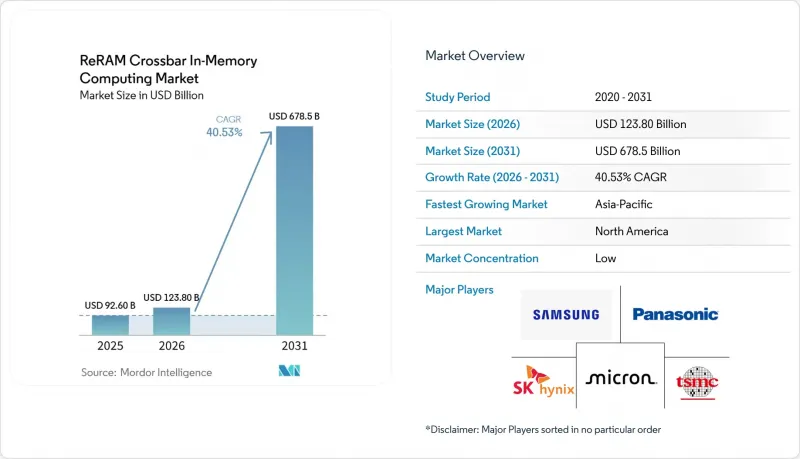
본 보고서는 ReRAM 기술 유형별(전도성 브리지형 RAM 및 산화물계 ReRAM), 통합 형태별(임베디드형 및 독립형), 컴퓨팅 아키텍처별(디지털 인메모리 컴퓨팅, 하이브리드 컴퓨팅 등), 용도별(AI 추론, AI 훈련 등), 최종 사용자별(데이터센터 및 HPC 등), 지역별로 분류되어 있습니다. 시장 전망은 금액(달러) 기준으로 제시되어 있습니다.
세계의 ReRAM 크로스바 인메모리 컴퓨팅 시장 동향 및 인사이트
엣지 AI 및 온디바이스 추론 워크로드 증가
스마트폰, 카메라, 산업용 센서, 자율 시스템 등에 AI 추론이 보급됨에 따라, 디바이스 에지에서 기존의 메모리 계층 구조는 전력 소비와 지연 시간의 한계에 다다르고 있습니다. ReRAM 크로스바 인메모리 컴퓨팅 시장은 이러한 압박에 대응하고 있습니다. 그 이유는 이 아키텍처가 어레이 내부에서 곱셈-합산 연산을 수행하여 메모리와 로직 간의 데이터 반복 이동을 줄이기 때문입니다. 2026년에 확인된 Weebit Nano와 텍사스 기기 간의 라이선싱 계약(여러 파운드리 노드에서 작동하는 실리콘이 검증됨)은 주요 임베디드 프로세싱 공급업체들이 28nm 이하 공정에서 ReRAM을 실용적인 임베디드 비휘발성 메모리 옵션으로 인식하고 있음을 보여줍니다. 이 한 걸음은 단일 고객에 그치지 않고 중요한 의미를 지닙니다. 왜냐하면 초기 파운드리 및 디바이스 인증은 후발 기업이 따라잡기 어려운 공정 관련 노하우를 축적하는 경향이 있기 때문입니다. 또한, 프로토타입에서 임베디드 제품 설계로 가는 과정을 단축하고, ReRAM 크로스바 인메모리 컴퓨팅 시장에서의 상업적 보급을 가속화하는 데에도 기여할 것입니다. 따라서 전력 소비에 민감한 엣지 디바이스는 이 기술에 있어 가장 명확한 초기 수요원 중 하나로 부상하고 있습니다.
컴퓨팅 시스템 내 데이터 마이그레이션 에너지 절감에 대한 수요 증가
주요 기술 기업들이 AI 인프라 및 데이터센터에 대한 투자를 지속적으로 확대함에 따라, 컴퓨팅 스택 전반에 걸친 데이터 마이그레이션 비용은 설계상의 핵심 과제로 대두되고 있습니다. 국제에너지기구(IEA)에 따르면, 데이터센터의 전력 소비량은 2025년에 17% 증가할 것이며, 2030년까지는 수요가 더욱 크게 증가할 것으로 예상되어 메모리 트래픽을 줄이는 아키텍처에 대한 필요성이 더욱 높아지고 있습니다. ReRAM 크로스바 인메모리 컴퓨팅 시장은 크로스바 어레이가 가중치를 메모리와 프로세서 사이로 오가게 하는 대신 데이터가 존재하는 위치에서 직접 연산을 수행하기 때문에 직접적인 혜택을 받고 있습니다. 또한, 메모리스트형 인메모리 연산 엔진에 관한 과학적 연구에 따르면, 임계값 부근의 인메모리 설계가 엣지 인텔리전스 작업에서 실용적인 처리량을 유지하면서 높은 에너지 효율을 실현할 수 있는 것으로 나타났습니다. 모델의 매개변수 수가 증가함에 따라 메모리 이동으로 인한 오버헤드는 더욱 급속히 증가하므로, 인메모리 아키텍처의 가치는 시간이 지남에 따라 정체되기는커녕 오히려 높아지게 될 것입니다. 이러한 추세로 인해 클라우드 및 엣지 시스템 설계자 모두로부터 ReRAM 크로스바 인메모리 컴퓨팅 시장에 대한 관심이 계속해서 높아지고 있습니다.
양산 노드에서의 제조 성숙도 한계
ReRAM 크로스바형 인메모리 컴퓨팅 시장은 여전히 공급 측면의 제약에 직면해 있습니다. 이는 여러 제조 공정 노드에서 작동하는 실리콘이 자동으로 안정적이고 대량 생산으로 이어지는 것은 아니기 때문입니다. 제품 프로그램은 완전한 인증 프로세스가 완료되기 전에 테이프아웃이나 기능 프로토타입 단계에 도달하는 경우가 있어, 기술적 검증과 신뢰성 높은 양산 출하 사이에 격차가 발생하게 됩니다. Weebit Nano는 2026년 5월, 테이프아웃이 완료된 고객 제품의 양산 인증에는 테이프아웃 후 12-18개월이 소요된다고 밝혔으며, 이는 실리콘이 사용 가능해졌음에도 상용화가 이행 단계에 머무르는 기간이 얼마나 길어질지를 보여줍니다. 이러한 시차 문제가 중요한 이유는 팹리스 AI 및 임베디드 칩 설계자들이 단순히 이용 가능한 수준에 그치지 않고, 수율, 유지 성능, 내구성에 대해 완전히 검증된 파운드리 생산 능력을 확보해야 하기 때문입니다. 인증이 소수의 제조 공정에 집중되어 있는 경우, 수요가 신뢰할 수 있는 공급량을 초과하는 속도로 증가할 가능성이 있습니다. 그 결과, 구매자의 관심이 여전히 높은 상황에서도 ReRAM 크로스바 인메모리 컴퓨팅 시장에서 프로그램 일정이 지연되는 원인이 되는 단기적인 병목 현상이 발생할 수 있습니다.
부문 분석
2025년에는 산화물계 ReRAM이 매출의 84.12%를 차지한 것으로 평가되었으며, 예측 기간 시작 시점에서 이 소재 계열은 ReRAM 크로스바 인메모리 컴퓨팅 시장에서 가장 큰 기여 요인이 되었습니다. 이러한 우위는 HfO₂ 및 TaOx 스택의 상용화 성숙도에 기인하며, 이들은 프런트엔드 트랜지스터 변경 없이 백엔드 오브 라인(BEOL) CMOS 통합에 적합합니다. IBM Research의 전도성 금속 산화물 및 HfOx 플랫폼은 온칩 훈련과 추론을 모두 갖춘 올인원 아날로그 AI 하드웨어를 입증하고 있으며, 이는 산화물 기반 디바이스가 단기적으로 상업적 기반을 계속 유지할 것이라는 견해를 뒷받침합니다. 이 실증에서는 부동 소수점 연산의 기준치인 98.3%에 비해 아날로그 학습 정확도 96.9%를 달성했으며, 이는 산화물 기반 시스템이 여전히 실용적인 제품 로드맵을 주도하고 있는 이유를 뒷받침합니다. ReRAM 크로스바 인메모리 컴퓨팅 시장에서 공정 호환성과 시스템 수준의 검증이 결합됨에 따라, 산화물 기반 화학 기술은 보다 광범위한 확장을 위한 현재 시점에서 가장 신뢰할 수 있는 경로가 되고 있습니다.
전도성 브리지형 RAM(CBRAM)은 2031년까지 연평균 성장률(CAGR) 41.29%를 나타낼 것으로 예측되며, 규모는 작지만 가장 빠르게 확대될 유형이 될 전망입니다. IEEE IEDM 2025에서 발표된 연구에 따르면, 109회 이상의 내구성 사이클, 셀당 3비트의 저장 용량, 실온에서 10년간의 유지 성능을 갖춘 3D 적층이 가능한 FTJ 및 CBRAM 하이브리드 메모리 소자가 소개되었습니다. 이러한 결과는 크로스바 컴퓨팅 용도에서 CBRAM에 대한 가장 뿌리 깊은 우려 사항이었던 ‘내구성’과 ‘보존 성능’이라는 두 가지 측면에서 중요한 의미를 지닙니다. 그 밖의 변형 제품들은 여전히 틈새 시장에서 활용되고 있으며, 그 예로 4DS Memory사가 인피니온(Infineon) 및 imec 등의 파트너와 공동으로 첨단 테스트 칩을 위해 추구하고 있는 인터페이스 전환 방식을 들 수 있습니다. 또한, 4DS사는 2025년에 쓰기 속도 4.7ns라는 이정표를 달성했다고 보고했는데, 이는 비록 상용화 수준이 산화물 기반 제품 라인보다 아직 낮더라도 새로운 디바이스 접근 방식이 계속해서 성능 향상을 주도하고 있음을 보여줍니다.
2025년에는 임베디드 통합이 66.83%의 점유율을 차지했으며, 제공된 데이터에 따르면 2031년까지 연평균 성장률(CAGR)이 41.08%로 추정되고, 단기적으로는 가장 강력한 성장이 예상됩니다. ReRAM을 동일한 다이 상의 로직 근처에 배치함으로써 오프칩 트래픽을 줄이고, 엣지 추론 및 제어 작업을 위한 저전력 아키텍처를 구현할 수 있기 때문에 임베디드 부문은 여전히 중심적인 위치를 차지하고 있습니다. Weebit Nano와 텍사스 기기 간의 라이선싱 및 기술 이전 프로그램을 통해, 주요 임베디드 프로세서 공급업체들이 ReRAM을 단순한 실험실 수준의 기능으로 취급하지 않고, 실질적인 인증 및 제품 계획 과정에 통합하고 있음이 확인되었습니다. 이 회사는 2026년 5월, 두 고객사가 이미 자사의 모듈을 사용하여 칩 설계 테이프아웃을 완료했으며, 그중 한 곳은 작동하는 프로토타입 실리콘을 확보했다고 발표했습니다. ReRAM 크로스바형 인메모리 컴퓨팅 시장에서 이러한 진전은 임베디드 분야에서의 도입이 더 이상 초기 타당성 검증 단계에 머물지 않음을 보여줍니다.
모델 크기나 메모리 점유량이 단일 임베디드 다이가 효율적으로 저장할 수 있는 용량을 초과할 가능성이 있기 때문에 독립형 통합은 여전히 주목을 받고 있습니다. 메모리 중심형 및 대규모 모델용 가속 아키텍처에 대한 연구는 대역폭에 가해지는 부하를 경감시키는 니어 메모리 및 멀티 다이 컴퓨팅 레이아웃이 더 광범위한 역할을 수행할 것임을 시사하고 있습니다. 이러한 변화로 인해, 비록 현재로서는 임베디드 제품이 주요 상용 경로로 남아 있더라도, 프로세서 칩렛 근처에 배치된 독립형 ReRAM 타일에는 실용적인 틈새 시장이 형성되고 있습니다. 따라서 ReRAM 크로스바를 활용한 인메모리 컴퓨팅 업계에는 두 가지 병행되는 통합 경로가 존재합니다. 하나는 단기적인 임베디드 제어 및 엣지 추론을 지원하는 것이고, 다른 하나는 더 대규모의 메모리 중심 컴퓨팅 시스템을 지원하는 것입니다. 인증 범위가 확대됨에 따라, 이 두 경로의 균형은 디바이스의 순수한 신규성보다는 패키지 수준의 경제성, 메모리 규모, 그리고 시스템 아키텍처 선택에 좌우될 가능성이 있습니다. 이러한 상황이 바로 임베디드형이 여전히 주도적인 위치를 차지하고 있음에도 불구하고, 스탠드얼론형이 더 소규모 기반에서 계속해서 성장세를 보이고 있는 이유를 설명해 줍니다.
지역별 분석
2025년, 북미는 49.07%의 점유율을 차지하며 ReRAM 크로스바 인메모리 컴퓨팅 시장에서 가장 규모가 큰 지역 점유율을 기록했습니다. 이 지역은 AI 칩 설계 활동, 라이선싱 제휴, 그리고 하이퍼스케일러의 인프라 투자가 밀접하게 얽혀 있어, 그 혜택을 바탕으로 에너지 효율이 뛰어난 메모리 아키텍처가 지속적으로 높이 평가받고 있습니다. CMOS 호환 어레이에서의 14nm 전이 학습을 포함한 IBM Research의 아날로그 ReRAM 하드웨어에 대한 지속적인 노력은 첨단 시스템 수준 검증에서 북미의 주요 역할을 뒷받침하고 있습니다. 또한, Weebit Nano와 텍사스 기기 간의 라이선싱 계약 진전도 임베디드 처리 및 상용화 과정에서 이 지역의 입지를 강화하고 있습니다. 이러한 요인들이 결합되어 북미는 현재 수요 형성 및 제품 계획에서 중심적인 위치를 계속 차지하고 있습니다.
아시아태평양은 2031년까지 연평균 성장률(CAGR) 41.61%로 확대될 것으로 예측되며, 이는 제시된 데이터 중 가장 빠르게 성장하는 지역 블록으로, 예측 기간 동안 ReRAM 크로스바 인메모리 컴퓨팅 시장 규모 확대를 견인하는 주요 요인이 될 것입니다. 한국의 국가 아날로그 컴퓨트-인-메모리(Compute-in-Memory) 프로그램은 200 TOPS/W라는 목표를 중심으로 정부 자금, 대학, 공공 연구 기관, 제조 파트너를 연결하고 있다는 점에서 이 지역의 중요한 지표가 되고 있습니다. 또한 일본에서도 도쿄대학과 Nuvoton Technology Japan이 수행한 10년간의 유지 성능을 갖춘 멀티레벨 셀(MLC) ReRAM 컴퓨트-인-메모리에 관한 연구를 통해 디바이스 수준에서 중요한 진전이 나타나고 있습니다. 이러한 진전은 동일 지역 내에서 성능 측면의 목표와 신뢰성에 관한 장벽을 모두 해결하고 있다는 점에서 중요합니다. 또한, 공공 지원, 제조 역량, 실용적인 디바이스 연구가 서로를 보완하는 지역으로서 아시아태평양의 위상을 강화하는 것입니다.
유럽은 자동차용 전자기기 수요와 저전력 컴퓨팅 하드웨어에 대한 자금 지원을 지속하는 공공 연구 기반을 모두 갖추고 있어, 여전히 중요한 제3의 지역으로서의 위상을 유지하고 있습니다. 유럽의 ECSEL-JU 프레임워크 하에서 지원되는 2025년형 임베디드 아날로그 컴퓨팅 인 메모리 코어는 유럽이 학술적 모델링에 그치지 않고 여전히 실용적인 실리콘 실증을 추진하고 있음을 보여줍니다. 또한, 해당 지역의 자동차 및 산업 분야에서의 입지는 미래 ReRAM 도입을 뒷받침할 고신뢰성이라는 강점과도 잘 부합합니다. 남미, 중동 및 아프리카는 여전히 초기 단계에 있는 지역이며, 이 지역에서의 도입은 현지 제조업 주도의 방식보다는 산업용 자동화나 통신 장비를 통해 진행될 가능성이 높다고 볼 수 있습니다.
기타 혜택 :
- 엑셀 형식 시장 예측(ME) 시트
- 3개월간의 애널리스트 지원
자주 묻는 질문
목차
제1장 서론
제2장 조사 방법
제3장 주요 요약
제4장 시장 구도
제5장 시장 규모 및 성장 예측
제6장 경쟁 구도
제7장 시장 기회 및 향후 전망
AJY 26.08.11According to Mordor Intelligence, the reRAM crossbar in-memory computing market size is projected to expand from USD 92.60 million in 2025 and USD 123.80 million in 2026 to USD 678.50 million by 2031, registering a CAGR of 40.70% between 2026 to 2031.
This report is Segmented by ReRAM Technology Type (Conductive Bridging RAM, and Oxide-Based ReRAM), Integration (Embedded, and Standalone), Computing Architecture (Digital In-Memory Computing, Hybrid Computing, and More), Application (AI Inference, AI Training, and More), End User (Data Centers and HPC, and More), and Geography. The Market Forecasts are Provided in Terms of Value (USD).
Global ReRAM Crossbar In-Memory Computing Market Trends and Insights
Rising Edge AI And On-Device Inference Workloads
The spread of AI inference across smartphones, cameras, industrial sensors, and autonomous systems is pushing conventional memory hierarchies closer to their power and latency limits at the device edge. The ReRAM crossbar in-memory computing market is responding to that pressure because the architecture performs multiply-accumulate work inside the array and reduces repeated movement of data between memory and logic. Weebit Nano's licensing agreement with Texas Instruments, confirmed in 2026 with working silicon across multiple foundry nodes, showed that a major embedded processing supplier now sees ReRAM as a practical embedded non-volatile memory option below 28nm. That step matters beyond one customer because early foundry and device qualification tends to build process knowledge that later entrants struggle to match. It also shortens the path from prototype to embedded product design, which supports faster commercial uptake in the ReRAM crossbar in-memory computing market. Power-sensitive edge devices are therefore becoming one of the clearest early demand pools for this technology.
Growing Need To Reduce Data-Movement Energy In Compute Systems
The cost of moving data through the compute stack has become a central design issue as large technology companies continue to increase spending on AI infrastructure and data centers. The International Energy Agency stated that data center electricity consumption rose 17% in 2025 and remains on a path toward much higher demand by 2030, further strengthening the case for architectures that reduce memory traffic. The ReRAM crossbar in-memory computing market benefits directly because crossbar arrays place computation where data resides instead of moving weights back and forth between memory and processors. Scientific work on memristive compute-in-memory engines has also shown that near-threshold in-memory designs can deliver strong energy efficiency while sustaining useful throughput for edge intelligence tasks. As models grow in parameter count, the penalty from memory movement increases faster, making the value of in-memory architectures stronger rather than flatter over time. That pattern supports continued interest in the ReRAM crossbar in-memory computing market from both cloud and edge system designers.
Limited Manufacturing Maturity At Volume Production Nodes
The ReRAM crossbar in-memory computing market still faces a supply-side constraint because working silicon across several nodes does not automatically translate into stable, high-volume manufacturing. Product programs can reach tape-out and functional prototypes before the full qualification process is complete, leaving a gap between technical proof and reliable shipment scale. Weebit Nano stated in May 2026 that mass-production qualification for taped-out customer products is expected to take 12 to 18 months from tape-out, indicating how long commercialization can remain in transition even after silicon is available. That lag matters because fabless AI and embedded chip designers must secure foundry capacity that is not only available, but also fully validated for yield, retention, and endurance. When qualification remains concentrated in a small number of manufacturing paths, demand can rise faster than reliable supply. The result is a near-term bottleneck that can slow program timing in the ReRAM crossbar in-memory computing market even when buyer interest remains strong.
Other drivers and restraints analyzed in the detailed report include:
- Expansion Of Neuromorphic And In-Memory Computing Prototypes
- Scaling Pressure From Advanced Driver Assistance And Industrial Embedded Compute
- Reliability Drift, Variability, And Endurance Qualification Complexity
For complete list of drivers and restraints, kindly check the Table Of Contents.
Segment Analysis
Oxide-based ReRAM accounted for 84.12% of revenue in 2025, making this material family the largest contributor to the ReRAM crossbar in-memory computing market at the start of the forecast period. Its lead comes from the commercial maturity of HfO2 and TaOx stacks, which fit back-end-of-line CMOS integration without requiring front-end transistor changes. IBM Research's conductive-metal-oxide and HfOx platform demonstrated all-in-one analog AI hardware with both on-chip training and inference, which supports the view that oxide-based devices remain the near-term commercial anchor. That demonstration achieved 96.9% analog training accuracy against a 98.3% floating-point baseline, underscoring why oxide systems still dominate practical product roadmaps. In the ReRAM crossbar in-memory computing market, that combination of process compatibility and system-level validation makes oxide-based chemistry the most dependable current path for broader rollout.
Conductive bridging RAM is projected to grow at a 41.29% CAGR through 2031, making it the fastest-expanding type despite its smaller base. Research presented at IEEE IEDM 2025 described a 3D-stackable FTJ and CBRAM hybrid memory device with more than 109 endurance cycles, 3-bit storage per cell, and 10-year retention at room temperature. Those results matter because endurance and retention have been the two most persistent objections to CBRAM in crossbar compute uses. Other variants still serve narrower niches, including interface-switching approaches pursued by 4DS Memory with partners such as Infineon and imec for advanced test chips. 4DS also reported a 4.7ns write speed milestone in 2025, which shows that newer device approaches continue to push performance even if their commercial footprint is still smaller than oxide-based lines.
Embedded integration held 66.83% share in 2025 and, based on the provided input, also carries the strongest near-term growth profile at a 41.08% CAGR through 2031. The embedded route remains central because placing ReRAM close to logic on the same die reduces off-chip traffic and supports a low-power architecture for edge inference and control tasks. Weebit Nano's licensing and technology transfer program with Texas Instruments confirmed that major embedded processing suppliers are putting ReRAM into practical qualification and product planning flows rather than treating it as a lab feature. The same company stated in May 2026 that 2 product customers had already taped out chip designs using its module, and 1 of them had functional prototype silicon in hand. In the ReRAM crossbar in-memory computing market, those developments show that embedded deployment is no longer limited to early feasibility work.
Standalone integration is still gaining attention because model sizes and memory footprints can exceed what a single embedded die can efficiently store. Work on memory-centric and large-model acceleration architectures has pointed toward a broader role for near-memory and multi-die compute layouts that reduce bandwidth pressure. That shift creates a practical niche for standalone ReRAM tiles placed close to processor chiplets, even if embedded products remain the main commercial route today. The ReRAM crossbar in-memory computing industry therefore has 2 parallel integration paths, one serving near-term embedded control and edge inference, and another supporting larger memory-centric compute systems. As qualification broadens, the balance between these paths may depend less on raw device novelty and more on package-level economics, memory scale, and system architecture choices. Those conditions explain why embedded still leads while standalone keeps building momentum from a smaller base.
Complete Report Scope:
- By ReRAM Technology Type
- Conductive Bridging RAM
- Oxide-Based ReRAM
- Other ReRAM Technology Type
- By Integration
- Embedded
- Standalone
- By Computing Architecture
- Analog In-Memory Computing
- Digital In-Memory Computing
- Hybrid Computing
- By Application
- AI Inference
- AI Training
- Neuromorphic Computing
- Logic Computing
- Edge Intelligence
- By End User
- Data Centers and HPC
- Consumer Electronics
- Automotive
- Industrial Automation
- Telecommunications
- Healthcare
- Aerospace and Defense
- Other End-Users
- By Geography
- North America
- United States
- Canada
- Mexico
- Europe
- Germany
- United Kingdom
- France
- Italy
- Rest of Europe
- Asia-Pacific
- China
- Japan
- South Korea
- Taiwan
- India
- Rest of Asia-Pacific
- South America
- Middle East and Africa
- North America
Geography Analysis
North America held 49.07% share in 2025, which gave it the largest regional position in the ReRAM crossbar in-memory computing market. The region benefits from a dense mix of AI chip design activity, licensing relationships, and hyperscaler infrastructure spending that keeps energy-efficient memory architectures in active evaluation. IBM Research's continued work on analog ReRAM hardware, including 14nm transfer learning on CMOS-compatible arrays, supports North America's role as a major source of advanced system-level validation. Weebit Nano's licensing progress with Texas Instruments also reinforces the region's position in embedded processing and commercialization pathways. Together, those factors keep North America at the center of current demand formation and product planning.
Asia-Pacific is projected to expand at a 41.61% CAGR through 2031, which makes it the fastest-growing regional block in the provided input and a major driver of the ReRAM crossbar in-memory computing market size over the forecast period. South Korea's national analog compute-in-memory program is a key regional signal because it links government funding, universities, public research institutes, and manufacturing partners around a 200 TOPS/W target. Japan is also contributing important device-level progress through the University of Tokyo and Nuvoton Technology Japan work on multi-level cell ReRAM compute-in-memory with 10-year retention. These advances matter because they address both performance ambition and reliability barriers within the same region. They also strengthen Asia-Pacific's position as a place where public support, manufacturing capability, and practical device research can reinforce one another.
Europe remains a meaningful third regional position because the region combines automotive electronics demand with a public research base that continues to fund low-power compute hardware. A 2025 embedded analog compute-in-memory core supported under a European ECSEL-JU framework shows that Europe is still building practical silicon demonstrations rather than limiting activity to academic modeling. The region's automotive and industrial profile also aligns well with the high-reliability strengths that support future ReRAM adoption. South America and the Middle East and Africa remain earlier-stage areas, where adoption is more likely to come through industrial automation and communications equipment than through local manufacturing leadership.
- Samsung Electronics Co., Ltd.
- Taiwan Semiconductor Manufacturing Company Limited
- Panasonic Holdings Corporation
- International Business Machines Corporation
- SK hynix Inc.
- Micron Technology, Inc.
- Hewlett Packard Enterprise Company
- Fujitsu Limited
- Toshiba Corporation
- Texas Instruments Incorporated
- Western Digital Corporation
- NXP Semiconductors N.V.
- United Microelectronics Corporation
- Macronix International Co., Ltd.
- GigaDevice Semiconductor Inc.
- Rambus Inc.
- Weebit Nano Ltd.
- Crossbar, Inc.
- 4DS Memory Limited
- Renesas Electronics Corporation
Additional Benefits:
- The market estimate (ME) sheet in Excel format
- 3 months of analyst support
TABLE OF CONTENTS
1 INTRODUCTION
- 1.1 Study Assumptions and Market Definition
- 1.2 Scope of the Study
2 RESEARCH METHODOLOGY
3 EXECUTIVE SUMMARY
4 MARKET LANDSCAPE
- 4.1 Market Overview
- 4.2 Market Drivers
- 4.2.1 Rising Edge AI and On-Device Inference Workloads
- 4.2.2 Growing Need to Reduce Data-Movement Energy in Compute Systems
- 4.2.3 Expansion of Neuromorphic and In-Memory Computing Prototypes
- 4.2.4 Scaling Pressure From Advanced Driver Assistance and Industrial Embedded Compute
- 4.2.5 ReRAM Crossbar Adoption in Analog Matrix Multiplication for AI Accelerators
- 4.2.6 Qualification Momentum in High-Reliability Embedded Memory Platforms
- 4.3 Market Restraints
- 4.3.1 Limited Manufacturing Maturity at Volume Production Nodes
- 4.3.2 Reliability Drift, Variability, and Endurance Qualification Complexity
- 4.3.3 Fragmented IP Landscape and Licensing Friction
- 4.3.4 Weak Standardization Across Interfaces, Test Methods, and Qualification Criteria
- 4.4 Industry Value Chain Analysis
- 4.5 Technology Outlook
- 4.6 Regulatory Landscape
- 4.7 Porter's Five Forces Analysis
- 4.7.1 Threat of New Entrants
- 4.7.2 Bargaining Power of Suppliers
- 4.7.3 Bargaining Power of Buyers
- 4.7.4 Threat of Substitutes
- 4.7.5 Intensity of Competitive Rivalry
- 4.8 Impact of Macroeconomic Factors on the Market
5 MARKET SIZE AND GROWTH FORECASTS (VALUE)
- 5.1 By ReRAM Technology Type
- 5.1.1 Conductive Bridging RAM
- 5.1.2 Oxide-Based ReRAM
- 5.1.3 Other ReRAM Technology Type
- 5.2 By Integration
- 5.2.1 Embedded
- 5.2.2 Standalone
- 5.3 By Computing Architecture
- 5.3.1 Analog In-Memory Computing
- 5.3.2 Digital In-Memory Computing
- 5.3.3 Hybrid Computing
- 5.4 By Application
- 5.4.1 AI Inference
- 5.4.2 AI Training
- 5.4.3 Neuromorphic Computing
- 5.4.4 Logic Computing
- 5.4.5 Edge Intelligence
- 5.5 By End User
- 5.5.1 Data Centers and HPC
- 5.5.2 Consumer Electronics
- 5.5.3 Automotive
- 5.5.4 Industrial Automation
- 5.5.5 Telecommunications
- 5.5.6 Healthcare
- 5.5.7 Aerospace and Defense
- 5.5.8 Other End-Users
- 5.6 By Geography
- 5.6.1 North America
- 5.6.1.1 United States
- 5.6.1.2 Canada
- 5.6.1.3 Mexico
- 5.6.2 Europe
- 5.6.2.1 Germany
- 5.6.2.2 United Kingdom
- 5.6.2.3 France
- 5.6.2.4 Italy
- 5.6.2.5 Rest of Europe
- 5.6.3 Asia-Pacific
- 5.6.3.1 China
- 5.6.3.2 Japan
- 5.6.3.3 South Korea
- 5.6.3.4 Taiwan
- 5.6.3.5 India
- 5.6.3.6 Rest of Asia-Pacific
- 5.6.4 South America
- 5.6.5 Middle East and Africa
- 5.6.1 North America
6 COMPETITIVE LANDSCAPE
- 6.1 Market Concentration
- 6.2 Strategic Moves
- 6.3 Market Share Analysis
- 6.4 Company Profiles (includes Global Level Overview, Market Level Overview, Core Segments, Financials as available, Strategic Information, Market Rank/Share, Products and Services, Recent Developments)
- 6.4.1 Samsung Electronics Co., Ltd.
- 6.4.2 Taiwan Semiconductor Manufacturing Company Limited
- 6.4.3 Panasonic Holdings Corporation
- 6.4.4 International Business Machines Corporation
- 6.4.5 SK hynix Inc.
- 6.4.6 Micron Technology, Inc.
- 6.4.7 Hewlett Packard Enterprise Company
- 6.4.8 Fujitsu Limited
- 6.4.9 Toshiba Corporation
- 6.4.10 Texas Instruments Incorporated
- 6.4.11 Western Digital Corporation
- 6.4.12 NXP Semiconductors N.V.
- 6.4.13 United Microelectronics Corporation
- 6.4.14 Macronix International Co., Ltd.
- 6.4.15 GigaDevice Semiconductor Inc.
- 6.4.16 Rambus Inc.
- 6.4.17 Weebit Nano Ltd.
- 6.4.18 Crossbar, Inc.
- 6.4.19 4DS Memory Limited
- 6.4.20 Renesas Electronics Corporation
7 MARKET OPPORTUNITIES AND FUTURE OUTLOOK
- 7.1 White-Space and Unmet-Need Assessment


