

|
시장보고서
상품코드
2099939
포렌식 분석 소프트웨어 시장 : 점유율 분석, 업계 동향 및 통계, 성장 예측(2026-2031년)Forensic Analytics Software - Market Share Analysis, Industry Trends & Statistics, Growth Forecasts (2026 - 2031) |
||||||
 Mordor Intelligence
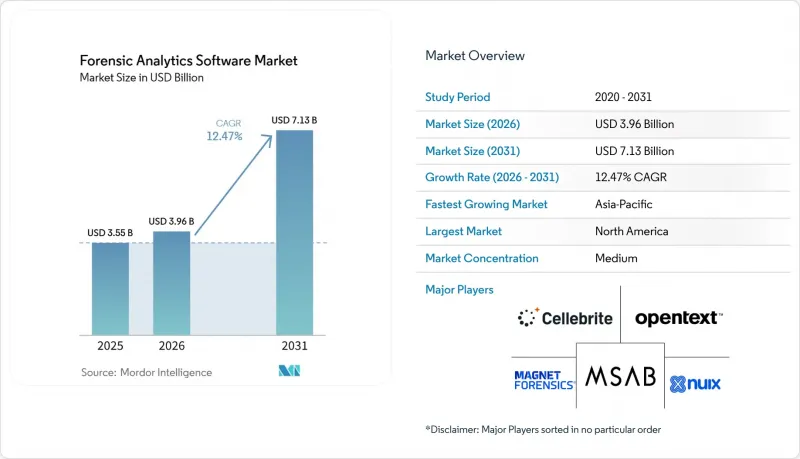
Mordor Intelligence에 의하면, 포렌식 분석 소프트웨어 시장은 2025년 35억 5,000만 달러에서 2026년에는 39억 6,000만 달러로 확대되어 2031년까지 71억 3,000만 달러에 이를 것으로 예상되고 있어 2026년부터 2031년까지 CAGR 12.47%로 성장할 전망입니다.
본 보고서는 구성 요소(소프트웨어, 서비스), 도입 형태(클라우드 기반, On-Premise형), 용도(의료 사기 감지 및 보험금 청구 분석, 임상 데이터 포렌식 및 감사 추적 분석, 기타), 최종 사용자(병원 및 의료 제공업체, 기타), 지역(북미, 유럽, 아시아태평양, 기타)별로 분류되어 있습니다. 시장 전망은 금액(달러)으로 제시되어 있습니다.
세계 포렌식 분석 소프트웨어 시장 동향 및 인사이트
기업 및 공공 부문의 전체 워크플로우에서 증가하는 사이버 범죄 조사
2024년과 2025년에도 의료 업계는 사이버 사고의 표적이 되는 가장 빈번한 부문 중 하나로 남아 있으며, 그 영향으로 병원, 보험사, 제약 기업에서 조사 건수는 높은 수준을 유지했습니다. 미국 보건복지부(HHS) 보고서에 따르면, 2024년에는 대규모 의료 정보 유출이 사상 최대를 기록하여 1억 6,700만 건 이상의 기록이 영향을 받았습니다. 이에 따라 로그, 통신 기록, 임상 기록을 신속하게 처리할 수 있는 검토 도구에 대한 필요성이 높아졌습니다. 확인된 정보 유출 사례마다 증거 보존, 관련 주체 특정, 문서화, 법적 검토와 같은 일련의 작업이 필요하며, 이로 인해 일회성 수작업 조사가 아닌 라이선스 기반의 분석 플랫폼에 대한 수요가 직접적으로 증가하고 있습니다. 또한, 정보 유출 사건 이후의 민사 소송도 포렌식 분석 소프트웨어 시장 수요를 뒷받침하고 있습니다. 이는 의료 분야의 피고 측이 법정이나 규제 당국의 심사를 견딜 수 있고, 정당성을 입증할 수 있는 소프트웨어의 출력 결과를 점점 더 필요로 하고 있기 때문입니다. Cellebrite사의 2025년 조사에 따르면, 조사 담당자의 68%가 사건 데이터를 철저히 검토할 충분한 시간을 확보하지 못하고 있는 것으로 나타났습니다. 이는 일시적인 업무량 급증이라기보다는 구조적인 처리 능력 부족을 시사합니다. 이러한 격차로 인해 포렌식 분석 소프트웨어 시장에서는 감사의 엄격성을 훼손하지 않으면서도 팀이 증거 처리 지연을 해소할 수 있는 자동화 기능에 대한 수요가 높아지고 있습니다.
규제상 보존 및 e-디스커버리 요건
전자 기록에 대한 규제 당국의 감시가 확대됨에 따라, 보존, 추적 가능성 및 법적으로 입증 가능한 검색 기능이 조달 결정에서 더욱 중요한 요소로 부상하고 있습니다. 의료 기관은 현재 감사 추적을 보존하고, 증거의 무결성을 유지하며, 증거의 보관 체인 관리를 훼손하지 않으면서도 임상, 법무, 규정 준수 각 팀의 검토를 지원할 수 있는 소프트웨어를 필요로 하고 있습니다. 병원과 제약 기업은 변조 방지 기능이 있고 검토 가능한 형식으로 전자 기록을 관리할 것을 요구받고 있으므로, 포렌식 분석 소프트웨어 시장은 이러한 변화의 혜택을 받고 있습니다. 국경을 넘는 사건은 복잡성을 더욱 가중시키는 요인이 됩니다. 법적 요구 사항, 개인정보 보호 규정, 증거 보존 의무가 종종 중복되어 다국적 의료 시스템에서 업무상의 마찰을 야기하기 때문입니다. 2026년 국경을 넘는 클라우드 포렌식에 관한 조사에서는 CLOUD 법과 GDPR(EU 개인정보보호규정)로 인해, 제공업체가 여러 관할 구역에 걸쳐 데이터 제출을 요구받을 때 상충되는 법적 의무가 발생할 수 있다고 지적하고 있습니다. 이러한 긴장 관계는 포렌식 분석 소프트웨어 시장을 견인하고 있습니다. 구매자들이 서로 다른 법적 환경에서 저장, 검토, 접근 권한을 분리할 수 있는 플랫폼을 점점 더 선호하고 있기 때문입니다.
고급 포렌식 플랫폼의 높은 총 소유 비용
디지털 조사 예산이 제한적인 중규모 서비스 제공업체 그룹, 지역 보험사 및 의료 시스템의 경우, 높은 총 소유 비용은 여전히 실질적인 장벽으로 작용하고 있습니다. 포렌식 분석 소프트웨어 시장은 여전히 엔터프라이즈급 도입에 치우쳐 있어, 대규모 정보 유출이나 규정 준수 문제가 발생하기 전까지는 고급 플랫폼 도입을 정당화하기 어렵습니다. 비용 측면의 압박은 라이선스 비용에만 그치지 않고, 스토리지, 도입, 워크플로우 재설계, 전문 인력 배치 등도 최종 의사 결정에 영향을 미칩니다. 따라서 예방적 모니터링의 운영상 이점이 분명하더라도, 가격에 민감한 고객들의 도입 속도는 둔화되고 있습니다. 이러한 제약 요인은 서비스가 충분히 제공되지 않는 중견 시장에서 가장 두드러지며, 이 시장의 구매자들은 소규모 도입, 제한적인 이용 사례, 또는 구매 결정의 연기를 선호하는 경향이 있습니다. 그 결과, 포렌식 분석 소프트웨어 시장에서는 도입을 간소화하고, 가치 실현까지의 시간을 단축하며, 막대한 초기 투자 없이 의료 업계용 워크플로우를 패키지화할 수 있는 벤더가 우위를 점하고 있습니다.
부문 분석
2025년에는 소프트웨어가 매출의 64.20%를 차지하며, 2031년까지 연평균 성장률(CAGR) 13.81%로 가장 빠르게 성장하는 구성 요소가 될 것으로 예측됩니다. 이러한 상황은 부정 심사, 규정 준수 모니터링, 임상 증거 분석 관리 분야에서 구매자들이 프로젝트 의존도가 높은 서비스보다 재현성이 높은 플랫폼을 점점 더 선호하고 있음을 보여줍니다. 포렌식 분석 소프트웨어 시장은 단일 운영 계층에서 경보, 감사 검토, 문서 보관, 사례 관리를 처리할 수 있는 구성 가능한 엔진으로 전환되고 있습니다. 이러한 경향은 규제 변경마다 워크플로를 재구축할 필요 없이 정기적인 업데이트나 정책 변경을 원하는 병원 시스템 및 보험사 조직에서 특히 두드러집니다.
소프트웨어 주도적인 추세는 기존 벤더들의 제품 투자에 의해서도 뒷받침되고 있습니다. 복잡한 다중 관할 구역에 걸친 배포의 경우, 특히 제약 기업의 거점이나 의료 시스템이 맞춤형 운영 모델을 필요로 할 때 서비스는 여전히 중요한 역할을 수행합니다. 그렇긴 하지만, AI를 활용한 분류, 검색, 기록 연계 기능 등이 별도의 서비스 업무가 아닌 기본 기능으로 제공되는 사례가 늘어나고 있어, 현재는 내장형 소프트웨어 기능이 가치 제안의 더 큰 부분을 차지하게 되었습니다. NIST가 2025년에 발표한 포렌식 분야의 검증에 관한 지침 또한 소프트웨어 기법에 대한 기대를 높였습니다. 이는 성능이나 증거로서의 적합성을 보다 엄격하게 문서화할 수 있는 벤더를 뒷받침하는 것입니다.
2025년에는 클라우드 기반 도입이 66.50%의 점유율을 차지하며, 2031년까지 클라우드는 연평균 13.41%의 속도로 확대될 것으로 전망됩니다. 이러한 선두 추세는 사고나 감사 요청 이후 증거량이 급증했을 때, 구매자들이 탄력적인 스토리지, 중앙 집중식 접근 제어, 신속한 프로비저닝을 얼마나 중요하게 여기는지를 보여줍니다. 포렌식 분석 소프트웨어 시장에서는 전용 인프라를 구축하지 않고도 엔터프라이즈급 기능을 원하는 지불 기관 및 중규모 제공업체들 사이에서 클라우드 도입이 가장 빠르게 진행되고 있습니다. 이 모델은 진료소, 건강보험사, 규정 준수 팀, 법무 심사 담당자가 공유 사례에 대한 접근을 관리해야 하는 분산형 네트워크에도 적합합니다.
클라우드의 성장은 여러 시설 및 데이터 소스에 걸친 신속한 협업에 대한 수요에 힘입고 있습니다. 사용자 보고에 따르면, SaaS형 규정 준수 도구를 통해 일부 병원 고객사는 업무 부담을 최대 50%까지 줄일 수 있었습니다고 합니다. 이는 업데이트 관리의 용이성 및 신속한 도입 주기라는 이점과 부합합니다. 포렌식 분석 소프트웨어 시장에서는 여전히 On-Premise 환경이 중요한 기반을 차지하고 있습니다. 이는 일부 의료 및 제약 업계 구매자가 기밀성이 높은 기록을 국경을 넘어 또는 외부 환경으로 자유롭게 이동시킬 수 없기 때문입니다. 실제로 확장성과 속도 측면에서는 클라우드가 우위에 있지만, 관할 구역, 임상시험 데이터 또는 환자 기록 관리가 더 엄격한 곳에서는 On-Premise 및 하이브리드형 설계가 여전히 필요합니다.
지역별 분석
2025년, 북미는 포렌식 분석 소프트웨어 시장 규모의 41.78%를 차지하며 해당 지역이 1위를 유지했습니다. 이 지위의 대부분은 미국이 주도하고 있으며, 그 배경으로는 미국의 의료 제도에서 엄격한 정보 유출 보고 규정, 적극적인 부정 행위 단속, 그리고 보험사 무결성 프로그램의 광범위한 도입 기반이 결합되어 있다는 점을 들 수 있습니다. 북미 포렌식 분석 소프트웨어 시장은 AI를 활용한 검토 도구의 도입이 급속히 진행되고 있는 점도 호재로 작용하고 있으며, 셀레브라이트(Cellebrite)사는 2026년 6월, 북미의 주 및 지방 자치단체 고객을 대상으로 ‘제네시스(Genesis)’를 가장 먼저 일반에 제공하기 시작했습니다. 캐나다와 멕시코 시장 규모는 여전히 작지만, 해당 지역의 부정 방지 노력이 미국의 운영 모델에 가까워짐에 따라 도입 상황은 점차 개선되고 있습니다.
유럽은 매출액 기준 2위를 차지하고 있으며, 독일, 영국, 프랑스가 핵심 시장을 형성하고 있습니다. 유럽 수요는 단순히 시장 규모가 크기 때문이라기보다는 개인정보 보호, 증거 관리, 그리고 지역 특성에 맞춘 데이터 처리와 밀접하게 연관되어 있습니다. 따라서 유럽의 포렌식 분석 소프트웨어 시장에서는 보다 엄격한 법적 환경과 세분화된 관할 규정 하에서 처리 과정의 정당성을 입증할 수 있는 벤더가 우위를 점하고 있습니다. 서유럽은 여전히 가장 강력한 하위 지역 시장인 반면, 중·동유럽에서는 의료의 디지털화와 상호 운용성 의무가 확대됨에 따라 수요가 증가하고 있습니다.
아시아태평양은 2031년까지 13.75%라는 가장 높은 연평균 성장률(CAGR)을 보일 것으로 예측되며, 포렌식 분석 소프트웨어 시장에서 가장 두드러진 성장을 보이는 지역입니다. 이러한 성장은 중국, 일본, 인도, 한국의 각국 의료 디지털화 프로그램에 의해 주도되고 있으며, 이들 국가에서는 향후 포렌식 검토가 필요할 가능성이 있는 임상 데이터 및 운영 데이터의 양이 확대되고 있습니다. 일본에서는 후지타 의과대학 병원이 광범위한 디지털 보안 혁신의 일환으로 Microsoft Sentinel을 도입하고 있으며, 이는 대규모 의료 기관들이 로그 저장 및 위협 분석 역량을 강화하고 있는 현실을 반영하고 있습니다. 중동 및 아프리카 및 남미는 여전히 시장 점유율이 낮은 편이지만, 의료 현대화 노력, 부정 청구 회수 프로그램, 그리고 클라우드 주도형 도입에 힘입어 저비용 도입을 위한 꾸준한 장기적 수요가 예상됩니다.
기타 혜택:
- 엑셀 형식 시장 예측(ME) 시트
- 3개월간의 애널리스트 지원
자주 묻는 질문
목차
제1장 서론
제2장 조사 방법
제3장 주요 요약
제4장 시장 구도
제5장 시장 규모와 성장 예측
제6장 경쟁 구도
제7장 시장 기회와 향후 전망
JHS 26.08.11According to Mordor Intelligence, the forensic analytics software market is expected to increase from USD 3.55 billion in 2025 to USD 3.96 billion in 2026 and reach USD 7.13 billion by 2031, growing at a CAGR of 12.47% over 2026 to 2031.
This report is Segmented by Component (Software, Services), Deployment (Cloud-Based, On-Premises), Application (Healthcare Fraud Detection and Claims Analytics, Clinical Data Forensics and Audit Trail Analysis, and Others), End-User (Hospitals and Healthcare Providers, and Others), and Geography (North America, Europe, Asia-Pacific, and Others). The Market Forecasts are Provided in Value (USD).
Global Forensic Analytics Software Market Trends and Insights
Rising Cybercrime Investigations Across Enterprise and Public-Sector Workflows
Healthcare remained one of the most targeted sectors for cyber incidents in 2024 and 2025, and that pressure kept investigation volumes high across hospitals, insurers, and pharmaceutical operations. HHS reported a record level of large healthcare breaches in 2024, with incidents affecting more than 167 million records, which expanded the need for review tools that can process logs, communications, and clinical records at speed. Each confirmed breach creates follow-on work across evidence preservation, entity resolution, documentation, and legal review, and that directly lifts demand for licensed analytics platforms instead of one-time manual examination. The forensic analytics software market is also being supported by civil litigation after breach events, because healthcare defendants increasingly need defensible software outputs that can stand up in court and in regulatory review. Cellebrite's 2025 survey showed that 68% of investigators did not have enough time to fully review case data, which points to a structural capacity gap rather than a temporary surge in workload. That gap is pushing the forensic analytics software market toward automation features that help teams clear evidence backlogs without weakening audit rigor.
Regulatory Preservation and eDiscovery Requirements
Regulatory oversight of electronic records is widening, and that is making preservation, traceability, and defensible search more central to procurement decisions. Healthcare organizations now need software that can preserve audit trails, maintain evidentiary integrity, and support reviews across clinical, legal, and compliance teams without losing chain-of-custody control. The forensic analytics software market is gaining from this shift because hospitals and pharmaceutical firms are under pressure to manage electronic records in a tamper-evident and reviewable format. Cross-border matters add another layer of complexity, since legal requests, privacy rules, and evidence retention duties often overlap and create operational friction for multinational health systems. Research on cross-border cloud forensics in 2026 noted that the CLOUD Act and GDPR can create conflicting legal duties when providers are asked to produce data across jurisdictions. That tension supports the forensic analytics software market because buyers increasingly favor platforms that can separate preservation, review, and access rights across different legal environments.
High Total Cost of Ownership for Advanced Forensic Platforms
High ownership cost remains a real barrier for mid-sized provider groups, regional insurers, and health systems with limited digital investigation budgets. The forensic analytics software market still leans toward enterprise-grade deployments, and that makes advanced platforms harder to justify before a major breach or compliance event occurs. Cost pressure is not only tied to licensing, because storage, implementation, workflow redesign, and specialist staffing also affect the total decision. That slows conversion in price-sensitive accounts even when the operational case for proactive monitoring is clear. The restraint matters most in the underserved mid-market, where buyers often prefer smaller rollouts, narrower use cases, or delayed purchasing decisions. As a result, the forensic analytics software market gives an edge to vendors that can simplify deployment, shorten time to value, and package healthcare-ready workflows without large up-front commitments.
Other drivers and restraints analyzed in the detailed report include:
- Expansion of Mobile, Cloud, and Multi-Source Evidence Volumes
- AI-Assisted Triage, Entity Resolution, and Link Analysis Adoption
- Shortage of Court-Certified and Tool-Certified Examiners
For complete list of drivers and restraints, kindly check the Table Of Contents.
Segment Analysis
Software held 64.20% of revenue in 2025, and it is also expected to be the fastest-growing component with a 13.81% CAGR through 2031. That position shows that buyers increasingly prefer repeatable platforms over project-heavy services when managing fraud review, compliance monitoring, and clinical evidence analysis. The forensic analytics software market has moved toward configurable engines that can handle alerting, audit review, document preservation, and case management in a single operating layer. This preference is strongest in hospital systems and payer organizations that want recurring updates and policy changes without rebuilding workflows each time regulations shift.
The software lead is also reinforced by product investment from established vendors. Services still matter for complex multi-jurisdiction rollouts, especially when pharmaceutical sites or health systems need tailored operating models. Even so, embedded software capabilities now carry more of the value story, because AI triage, search, and record linking are increasingly sold as native functions rather than separate service work. NIST's 2025 guidance on validation in forensic science also raised expectations for software methods, which supports vendors that can document performance and evidentiary fit with greater discipline.
Cloud-based deployment held 66.50% share in 2025, and cloud is also projected to expand at 13.41% through 2031. That lead shows how strongly buyers value elastic storage, centralized access control, and faster provisioning when evidence volumes spike after an incident or audit request. The forensic analytics software market is seeing cloud adoption rise first among payers and mid-sized providers that want enterprise functionality without building dedicated infrastructure. The model also fits distributed networks, where clinics, health plans, compliance teams, and legal reviewers need controlled access to shared cases.
Cloud growth is supported by the need for faster collaboration across multiple facilities and data sources. User-supplied content noted that SaaS compliance tools have helped some hospital clients reduce workload by as much as 50%, which aligns with the appeal of managed updates and faster deployment cycles. The forensic analytics software market still retains a meaningful on-premises base because some healthcare and pharmaceutical buyers cannot move sensitive records freely across borders or into external environments. In practice, cloud wins on scalability and speed, while on-premises and hybrid designs remain necessary wherever jurisdiction, trial data, or patient record controls are stricter.
Complete Report Scope:
- By Component
- Software
- Services
- By Deployment
- Cloud-Based
- On-Premises
- By Application
- Healthcare Fraud Detection and Claims Analytics
- Clinical Data Forensics and Audit Trail Analysis
- Electronic Health Record (EHR) Misuse and Access Investigation
- Pharmaceutical Compliance and Clinical Trial Data Forensics
- Patient Safety Incident Investigation and Root Cause Analysis
- Other Applications
- By End-User
- Hospitals and Healthcare Providers
- Healthcare Payers
- Pharmaceutical and Biotechnology Companies
- Other End-Users
- By Geography
- North America
- United States
- Canada
- Mexico
- Europe
- Germany
- United Kingdom
- France
- Italy
- Spain
- Rest of Europe
- Asia-Pacific
- China
- Japan
- India
- Australia
- South Korea
- Rest of Asia-Pacific
- Middle East and Africa
- GCC
- South Africa
- Rest of Middle East and Africa
- South America
- Brazil
- Argentina
- Rest of South America
- North America
Geography Analysis
North America held 41.78% of the forensic analytics software market size in 2025, keeping the region in the lead. The United States drives most of that position because its healthcare system combines strong breach reporting rules, active fraud enforcement, and a broad installed base of payer integrity programs. The forensic analytics software market in North America also benefits from faster adoption of AI-assisted review tools, and Cellebrite made Genesis generally available first to North American state and local government customers in June 2026. Canada and Mexico remain smaller contributors, but their adoption path is improving as regional integrity efforts move closer to U.S. operating models.
Europe held the second-largest revenue position, with Germany, the United Kingdom, and France forming the core markets. Demand in Europe remains closely tied to privacy, evidentiary control, and localized data handling rather than to pure scale alone. The forensic analytics software market in Europe therefore favors vendors that can support defensible processing within stricter legal environments and under more fragmented jurisdictional rules. Western Europe remains the strongest subregional base, while Central and Eastern European systems are adding demand as health digitization and interoperability obligations expand.
Asia-Pacific is forecasted to record the fastest CAGR at 13.75% through 2031, which makes it the strongest growth geography in the forensic analytics software market. Growth is being driven by national health digitization programs across China, Japan, India, and South Korea, all of which are expanding the volume of clinical and operational data that may later require forensic review. In Japan, Fujita Medical University Hospital used Microsoft Sentinel in a broader digital security transformation, reflecting how large institutions are strengthening log preservation and threat analysis capabilities. Middle East and Africa and South America still represent smaller shares, but health modernization efforts, fraud recovery programs, and cloud-led adoption create a steady long-term pipeline for lower-cost deployments.
- AccessData Group, Inc.
- Cado Security Ltd.
- Cellebrite (Public Safety Solutions)
- Cellebrite DI Ltd.
- Cyleron
- Exterro (FTK and Forensic Toolkit)
- Exterro, Inc.
- Guidance Software, Inc.
- IBM
- Kroll, LLC
- LogRhythm, Inc.
- Magnet Forensics (Axiom)
- Magnet Forensics Inc.
- MSAB (Micro Systemation AB)
- Nuix (Investigations and Analytics)
- Nuix Limited
- OpenText (EnCase)
- OpenText
- Oxygen Forensics, Inc.
- Paraben Corporation
Additional Benefits:
- The market estimate (ME) sheet in Excel format
- 3 months of analyst support
TABLE OF CONTENTS
1 Introduction
- 1.1 Study Assumptions and Market Definition
- 1.2 Scope of the Study
2 Research Methodology
3 Executive Summary
4 Market Landscape
- 4.1 Market Overview
- 4.2 Market Drivers
- 4.2.1 Rising Cybercrime Investigations Across Enterprise and Public-Sector Workflows
- 4.2.2 Regulatory Preservation and eDiscovery Requirements
- 4.2.3 Expansion of Mobile, Cloud, and Multi-Source Evidence Volumes
- 4.2.4 AI-Assisted Triage, Entity Resolution, and Link Analysis Adoption
- 4.2.5 Encryption by Default Increasing Forensic Complexity and Specialized Tool Demand
- 4.2.6 Cross-Border Data Residency Constraints Favoring Localized Forensic Workflows
- 4.3 Market Restraints
- 4.3.1 High Total Cost of Ownership for Advanced Forensic Platforms
- 4.3.2 Shortage of Court-Certified and Tool-Certified Examiners
- 4.3.3 Interoperability Gaps Across Evidence Sources and Vendor Ecosystems
- 4.3.4 Lengthy Validation Cycles for AI-Driven Findings in Legal Proceedings
- 4.4 Supply/Value Chain Analysis
- 4.5 Regulatory Landscape
- 4.6 Technological Outlook
- 4.7 Porter's Five Forces Analysis
- 4.7.1 Threat of New Entrants
- 4.7.2 Bargaining Power of Suppliers
- 4.7.3 Bargaining Power of Buyers
- 4.7.4 Threat of Substitutes
- 4.7.5 Competitive Rivalry
5 Market Size & Growth Forecasts (Value, USD)
- 5.1 By Component
- 5.1.1 Software
- 5.1.2 Services
- 5.2 By Deployment
- 5.2.1 Cloud-Based
- 5.2.2 On-Premises
- 5.3 By Application
- 5.3.1 Healthcare Fraud Detection and Claims Analytics
- 5.3.2 Clinical Data Forensics and Audit Trail Analysis
- 5.3.3 Electronic Health Record (EHR) Misuse and Access Investigation
- 5.3.4 Pharmaceutical Compliance and Clinical Trial Data Forensics
- 5.3.5 Patient Safety Incident Investigation and Root Cause Analysis
- 5.3.6 Other Applications
- 5.4 By End-User
- 5.4.1 Hospitals and Healthcare Providers
- 5.4.2 Healthcare Payers
- 5.4.3 Pharmaceutical and Biotechnology Companies
- 5.4.4 Other End-Users
- 5.5 By Geography
- 5.5.1 North America
- 5.5.1.1 United States
- 5.5.1.2 Canada
- 5.5.1.3 Mexico
- 5.5.2 Europe
- 5.5.2.1 Germany
- 5.5.2.2 United Kingdom
- 5.5.2.3 France
- 5.5.2.4 Italy
- 5.5.2.5 Spain
- 5.5.2.6 Rest of Europe
- 5.5.3 Asia-Pacific
- 5.5.3.1 China
- 5.5.3.2 Japan
- 5.5.3.3 India
- 5.5.3.4 Australia
- 5.5.3.5 South Korea
- 5.5.3.6 Rest of Asia-Pacific
- 5.5.4 Middle East and Africa
- 5.5.4.1 GCC
- 5.5.4.2 South Africa
- 5.5.4.3 Rest of Middle East and Africa
- 5.5.5 South America
- 5.5.5.1 Brazil
- 5.5.5.2 Argentina
- 5.5.5.3 Rest of South America
- 5.5.1 North America
6 Competitive Landscape
- 6.1 Market Concentration
- 6.2 Market Share Analysis
- 6.3 Company Profiles (includes Global level Overview, Market level overview, Core Segments, Financials as available, Strategic Information, Market Rank/Share for key companies, Products & Services, Recent Developments)
- 6.3.1 AccessData Group, Inc.
- 6.3.2 Cado Security Ltd.
- 6.3.3 Cellebrite (Public Safety Solutions)
- 6.3.4 Cellebrite DI Ltd.
- 6.3.5 Cyleron
- 6.3.6 Exterro (FTK and Forensic Toolkit)
- 6.3.7 Exterro, Inc.
- 6.3.8 Guidance Software, Inc.
- 6.3.9 IBM Corporation
- 6.3.10 Kroll, LLC
- 6.3.11 LogRhythm, Inc.
- 6.3.12 Magnet Forensics (Axiom)
- 6.3.13 Magnet Forensics Inc.
- 6.3.14 MSAB (Micro Systemation AB)
- 6.3.15 Nuix (Investigations and Analytics)
- 6.3.16 Nuix Limited
- 6.3.17 OpenText (EnCase)
- 6.3.18 OpenText Corporation
- 6.3.19 Oxygen Forensics, Inc.
- 6.3.20 Paraben Corporation
7 Market Opportunities & Future Outlook
- 7.1 White-space & Unmet-need Assessment


