

|
시장보고서
상품코드
2100535
피임 기구 시장 : 점유율 분석, 업계 동향 및 통계, 성장 예측(2026-2031년)Contraceptive Devices - Market Share Analysis, Industry Trends & Statistics, Growth Forecasts (2026 - 2031) |
||||||
 Mordor Intelligence
Mordor Intelligence에 의하면, 피임 기구 시장 규모는 2025년에 192억 달러로 평가되었고 2026년 203억 8,000만 달러에서 2031년까지 274억 7,000만 달러에 이를 것으로 예측되며, 예측 기간(2026-2031년) CAGR은 6.15%를 나타낼 전망입니다.
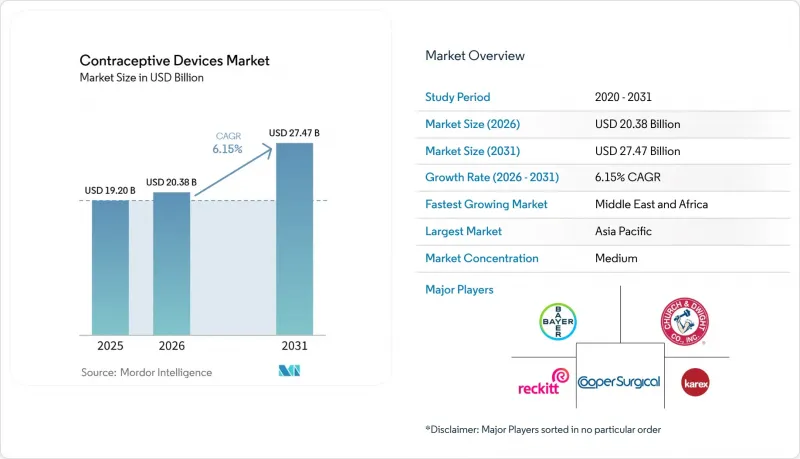
본 보고서는 유형(남성용 콘돔, 여성용 콘돔, 자궁 내 피임 기구, 피임용 임플란트 등), 성별(남성·여성), 소재(라텍스·비라텍스), 유통 채널(병원 및 전문 클리닉, 소매 약국 및 드럭스토어 등), 지역(북미, 유럽, 아시아태평양 등)별로 분류되어 있습니다. 시장 전망은 금액(달러) 기준으로 제시되어 있습니다.
세계 피임기구 시장 동향과 인사이트
장기 작용형 가역 피임법(LARC)에 대한 지지 확대
미국 내 LARC 이용률은 2002년 2%에서 2019년 16%로 상승했으며, 그 뛰어난 유효성과 편의성을 반영하여 2025년까지도 계속 상승하고 있습니다. 간호사가 1회의 진료만으로 임플란트나 IUD 삽입을 수행할 수 있도록 하는 의료 제도적 노력 덕분에 이용 장벽이 제거되었으며, 의도파관 않은 임신에 따른 비용이 절감되고 있습니다. 37개 주에서 메디케이드(Medicaid) 보상 제도 개혁을 통해 당일 삽입 시술이 보험 적용 대상이 됨에 따라, 저소득층 이용자가 부담하던 고액의 초기 비용이 경감되고 있습니다. 상담 및 삽입 기술에 관한 교육 과정이 현재 65%의 의과대학에서 도입되어, 의료 종사자들의 지식 격차가 점차 줄어들고 있습니다. 경제학적 조사에 따르면, 단기간 작용형 피임법에서 LARC로의 전환이 1퍼센트 포인트 증가할 때마다, 비용이 많이 드는 예상치 못한 출산을 방지함으로써 측정 가능한 비용 절감 효과를 얻을 수 있는 것으로 나타났습니다. 이러한 요인들이 LARC의 보급률을 높이고, 나아가 피임 기구 시장의 수익 확대 기반이 되고 있습니다.
성병의 심각한 부담과 높아지는 인식
뉴욕시의 감시 자료에 따르면, 2023년에는 클라미디아 및 임질 사례 수가 증가했으며, 특히 흑인 및 라틴계 젊은 층에서 이러한 경향이 두드러졌습니다. 이러한 역학적 추세로 인해, 하나의 기기로 감염과 임신을 모두 예방할 수 있는 다목적 예방 기술에 대한 관심이 높아지고 있습니다. 그 시제품 사례로는 항균제가 함유된 여성용 콘돔, 호르몬과 함께 항바이러스 화합물을 방출하는 질 내 링 등이 있으며, 이들은 현재 WHO(who.int)의 조정 하에 임상시험이 진행되고 있습니다. 이중 보호 효과에 초점을 맞춘 공중보건 캠페인으로 인해 콘돔 및 장벽법 제품의 판매가 증가하는 한편, 연구 보조금은 살균 코팅을 개발하는 역동적인 스타트업 기업들을 뒷받침하고 있습니다. 이처럼 위험에 대한 인식이 높아지면서 수요가 가속화되고, 이는 피임기구 시장의 확대로 이어지고 있습니다.
불임 방지용 장벽법에 대한 문화적·종교적 반대
사우디아라비아의 현대적 피임법 보급률은 2023년에 46%에 달했으나, 여전히 지역 사회의 규범으로 인해 기혼 여성의 장벽법 사용이 꺼려지고 있어 콘돔이나 페서리의 보급이 제한되고 있습니다. 18세 미만의 결혼을 금지하는 최근의 법 개정은 인식의 점진적인 변화를 시사하고 있지만, 중동 및 아프리카의 일부 지역에서는 오랜 세월 이어져 온 신념이 여전히 보급을 가로막고 있습니다. 종교 단체가 생식 관련 선택에 종종 영향력을 행사하고 있기 때문에 인식을 바꾸기 위해서는 문화에 부합하는 계몽 활동이 필요합니다. 이러한 노력이 없다면 사용률 격차는 해소되지 않을 것이며, 피임 기구 시장에서 인구가 많은 이 지역들의 성장 전망을 둔화시킬 것입니다.
부문 분석
남성용 콘돔은 합리적인 가격, 접근성, 이중 보호 기능 덕분에 2025년 피임 기구 시장 점유율의 40.45%를 차지했습니다. 올바르게 사용하면 98%의 유효성을 기대할 수 있지만, 불규칙한 사용이나 잘못된 사용법으로 인해 실제 유효성은 87%까지 떨어집니다. 그럼에도 불구하고 라텍스 알레르기에 대한 인식 제고, 감각 향상에 대한 관심, 온라인 주문의 편의성 덕분에 판매량은 견조한 추세를 보이고 있습니다. 이와 동시에, 임플란트 판매는 2031년까지 연평균 성장률(CAGR) 9.34%로 증가하며, 장기 작용형 피임법으로 피임 기구 시장 규모에서 상당한 비중을 차지하고 있습니다. 무선 기능이 탑재된 임플란트와 생분해성 유형은 병원 방문 횟수를 줄이고, 첫 사용을 촉진하며, 제거에 대한 장벽을 낮춤으로써 성장세를 더욱 강화하고 있습니다.
개발 파이프라인은 선택지의 확대를 뒷받침하고 있습니다. 호르몬 함유 IUD는 월경량 감소와 같은 피임 이외의 이점을 제공하여, 그동안 기구 사용을 꺼리던 여성들 사이에서 보급을 촉진하고 있습니다. 2024년에 출시된 한 손으로 삽입 가능한 기구는 삽입 절차를 간소화하고 시술 시간과 통증을 줄여줍니다. 질 내 링은 호르몬 함유형과 비호르몬 함유형 모두 임상시험이 진행 중이며,월1회 사용 방식의 임상시험 단계에 있는 ‘오바프렌(Ovaprene)’ 링은 성교 후 운동성 정자의 수를 대폭 감소시키는 것으로 나타났습니다. 이러한 다양한 혁신은 피임법의 선택지를 다양화하며, 피임 기구 시장 전체의 수익원을 안정시키고 있습니다.
2025년 매출액 중 남성용 제품이 53.68%를 차지했으나, 최신 WHO 조사에 따르면 유럽 청소년의 콘돔 사용률은 61%로 하락하여 보급률이 정체 상태에 접어들었음을 시사하고 있습니다. 한편, 여성용 부문은 의사결정 자율성 향상, 눈에 띄지 않는 선택지, 기기의 개인 맞춤화를 반영하여 연평균 성장률(CAGR) 7.18%로 남성용 부문을 상회하는 성장이 예상됩니다. 복용량 추적 앱과 연동되는 스마트 링, 장기적인 계획을 가진 사람들에게 지지를 받는 생분해성 임플란트 등이 피임법의 선택지를 넓히고 있습니다. 임신 방지 및 항균 보호 기능을 겸비한 다목적 예방 기기는 종합적인 성 건강을 중시하는 여성들로부터 지지를 얻고 있으며, 여성용 제품 중 피임 기기 시장 규모를 확대시키고 있습니다.
신흥 FemTech 솔루션은 자가 관리와 실시간 데이터 수집을 가능하게 하여, 보험사가 보험 적용 판단 시 환자가 생성한 지표를 반영하도록 유도하고 있습니다. 도시화와 노동력 참여율이 상승함에 따라 관리가 간편한 피임법의 편의성이 높아지고 있으며, 이는 피임 기구 시장 내 여성용 부문의 매출을 더욱 끌어올리고 있습니다.
지역별 분석
아시아태평양은 가임 연령층의 대규모 인구, 출산 의향 감소, 공중보건 예산 확충에 힘입어 2025년에는 매출의 31.55%를 차지했습니다. 중국, 인도, 인도네시아의 각국 프로그램에서는 산후 장기 작용형 피임법(LARC) 도입, 농촌 지역 지원 활동, 디지털 교육 캠페인이 전개되면서 도시와 농촌 간의 이용 격차가 줄어들고 있습니다. 그러나 청소년 및 사회적 취약 계층 사이에는 여전히 격차가 남아 있으며, 충족되지 않은 수요가 존재하는 대상 영역이 형성되어 있어 피임 기구 시장의 성장 여지가 확대되고 있습니다.
중동 및 아프리카는 2031년까지 연평균 성장률(CAGR) 8.44%를 나타낼 것으로 예측됩니다. 사우디아라비아에서는 교육 및 청소년 역량 강화에 대한 투자를 통해 청소년 출생률이 2009년 1,000명당 8.65명에서 2021년에는 8.28명으로 감소했습니다. 바이엘(Bayer)과 유엔인구기금(UNFPA) 이집트 사무소의 파트너십은 2028년까지 81만 명의 여성에게 최신 피임 기구를 제공하는 것을 목표로 하고 있으며, 이는 다자간 자금 지원이 도입을 어떻게 가속화할 수 있는지를 보여주고 있습니다. 문화적 제약이 있기는 하지만, 여성의 문해율과 취업률 향상은 피임 기구 시장에 유리한 배경을 형성하고 있습니다.
북미와 유럽에서는 피임법의 유형가 다양하고 보험 환급 제도가 잘 갖춰져 있어, 혁신적인 피임 기구의 보급이 급속히 진행되고 있습니다. 한 손으로 조작 가능한 IUD(자궁 내 피임 기구) 삽입 기구의 FDA 승인 및 ‘저렴한 의료법(Affordable Care Act)’에 따른 보조금의 지속적인 확충으로 접근성이 향상되고 있습니다. 라틴아메리카에서는 연간 153억 달러로 추정되는 사춘기 임신에 따른 비용이 여전히 과제로 남아 있어, 각국 보건부가 10대 청소년을 대상으로 한 LARC(장기 작용형 피임법) 이용 촉진에 힘쓰고 있습니다. IUD와 임플란트의 유효성이 99% 이상임을 강조하는 지역 차원의 캠페인은 의도파관 않은 출산을 억제하는 것을 목적으로 하며, 피임 기구 시장을 뒷받침하고 있습니다.
기타 혜택:
- 엑셀 형식 시장 예측(ME) 시트
- 3개월간의 애널리스트 지원
자주 묻는 질문
목차
제1장 서론
제2장 조사 방법
제3장 주요 요약
제4장 시장 구도
제5장 시장 규모와 성장 예측
제6장 경쟁 구도
제7장 시장 기회와 향후 전망
JHS 26.08.11According to Mordor Intelligence, the contraceptive devices market size was valued at USD 19.20 billion in 2025 and is estimated to grow from USD 20.38 billion in 2026 to reach USD 27.47 billion by 2031, at a CAGR of 6.15% during the forecast period (2026-2031).
This report is Segmented by Type (Male Condoms, Female Condoms, Intra-Uterine Device, Contraceptive Implants, and More), Gender (Male and Female), Material (Latex and Non-Latex), Distribution Channel (Hospital and Specialty Clinics, Retail Pharmacies and Drug Stores, and More), and Geography (North America, Europe, Asia-Pacific, and More). The Market Forecasts are Provided in Terms of Value (USD).
Global Contraceptive Devices Market Trends and Insights
Growing Preference for Long-Acting Reversible Contraceptives (LARC)
LARC usage in the United States climbed from 2% in 2002 to 16% by 2019 and continues to rise through 2025, reflecting superior efficacy and convenience. Health-system initiatives that authorize nurses to place implants and IUDs in single-visit encounters remove access frictions and lower unintended pregnancy costs. Medicaid reimbursement reforms in 37 states cover same-day insertions, reducing high upfront outlays for low-income users. Training curricula covering counseling and insertion techniques now appear in 65% of medical schools, narrowing provider knowledge gaps. Economic studies suggest that every percentage-point shift from short-acting methods to LARCs yields measurable savings by preventing costly unplanned births. These factors elevate LARC penetration, thereby underpinning revenue expansion within the contraceptive devices market.
High Burden of Sexually Transmitted Disease and Rising Awareness
Surveillance in New York City showed upticks in chlamydia and gonorrhea cases in 2023, most pronounced among Black and Latina youth.The epidemiological pattern drives interest in multipurpose prevention technologies that block infection and pregnancy in one device. Prototypes include female condoms imbued with antimicrobial agents and vaginal rings releasing antiviral compounds alongside hormones, now progressing through trials under WHO coordination who.int. Public-health campaigns that spotlight dual-protection benefits boost condom and barrier sales, while research grants stimulate agile startups developing microbicidal coatings. Heightened risk perception therefore accelerates demand, enlarging the contraceptive devices market.
Cultural and Religious Opposition to Sterile Barrier Methods
Modern contraceptive uptake in Saudi Arabia reached 46% in 2023, yet community norms still discourage barrier methods for married women, limiting condom and diaphragm penetration.Recent legal reforms that prohibit marriage under 18 signal gradual attitudinal shifts, but long-standing beliefs continue to impede adoption across parts of the Middle East & Africa. Faith-based organizations often wield influence over reproductive choices, necessitating culturally tailored advocacy to recalibrate perceptions. Without such engagement, usage gaps persist, tempering growth prospects in these high-population markets within the contraceptive devices market.
Other drivers and restraints analyzed in the detailed report include:
- Technological Advancements and Product Innovation
- Rapid Adoption of Telemedicine & Subscription-Based Direct-to-Consumer Platforms
- Lower Physician Confidence for Certain Contraceptive Options
For complete list of drivers and restraints, kindly check the Table Of Contents.
Segment Analysis
Male condoms captured 40.45% of the contraceptive devices market share in 2025 thanks to affordability, accessibility, and dual-protection features. Perfect use offers 98% efficacy, but real-world effectiveness drops to 87% due to inconsistent or incorrect application. Nevertheless, rising latex-allergy awareness, interest in enhanced sensation, and digital ordering conveniences sustain steady volume. In parallel, implant sales climb at a 9.34% CAGR to 2031, underpinning a notable slice of the contraceptive devices market size for long-acting methods. Wireless-enabled implants and biodegradable variants reduce clinic visits, encourage first-time adoption, and mitigate removal barriers, reinforcing their growth momentum.
Development pipelines underscore broadening choices. Hormonal IUDs deliver non-contraceptive benefits such as lighter bleeding, bolstering uptake among women who previously avoided device-based options. Single-handed inserters launched in 2024 streamline placement, decreasing procedure time and pain signals. Vaginal rings advance through trials with both hormonal and non-hormonal compositions; the investigational monthly Ovaprene ring demonstrated strong post-coital reductions in motile sperm. Each innovation diversifies method mix, cushioning revenue streams across the contraceptive devices market.
The male cohort accounted for 53.68% of 2025 sales, yet condom usage among European adolescents slipped to 61% in the latest WHO survey, hinting at plateauing penetration.The female segment is forecast to outpace at a 7.18% CAGR, reflecting greater decision autonomy, discreet options, and device personalization. Smart rings that pair with apps for dosage tracking and biodegradable implants, appealing to long-term planners, broaden method portfolios. Multipurpose prevention devices that marry pregnancy avoidance with antimicrobial protections resonate with women prioritizing holistic sexual health, enlarging the contraceptive devices market size for female-targeted products.
Emergent FemTech solutions enable self-administration and real-time data capture, compelling insurers to recognize patient-generated metrics in coverage decisions. As urbanization and workforce participation rates climb, the convenience value of low-maintenance methods rises, further lifting female segment revenues within the contraceptive devices market.
Complete Report Scope:
- Non-Latex (Polyurethane, Poly-isoprene and others)
- Female Condoms
- Intra-Uterine Devices (IUD)
- Hormonal IUD
- Copper IUD
- Contraceptive Implants
- Vaginal Rings
- Diaphragms and Cervical Caps
- Contraceptive Sponges
- By Gender
- Male
- Female
- By Material
- Latex
- Non-Latex
- By Distribution Channel
- Hospital and Specialty Clinics
- Retail Pharmacies and Drug Stores
- Online Pharmacies and D2C Platforms
- NGO and Government Programmes
- Geography
- North America
- United States
- Canada
- Mexico
- Europe
- Germany
- United Kingdom
- France
- Italy
- Spain
- Rest of Europe
- Asia-Pacific
- China
- Japan
- India
- Australia
- South Korea
- Rest of Asia-Pacific
- Middle East and Africa
- GCC
- South Africa
- Rest of Middle East and Africa
- South America
- Brazil
- Argentina
- Rest of South America
- North America
Geography Analysis
Asia-Pacific generated 31.55% of revenues in 2025, propelled by large reproductive-age populations, declining fertility intentions, and strengthened public health budgets. Country programs in China, India, and Indonesia deploy postpartum LARC initiatives, rural outreach, and digital education campaigns, narrowing urban-rural usage gaps. However, disparities linger among adolescents and marginalized groups, creating addressable pockets of unmet need that extend runway for the contraceptive devices market.
The Middle East and Africa region is forecast to grow at an 8.44% CAGR through 2031. Saudi Arabia's adolescent birth rate fell from 8.65 per 1,000 in 2009 to 8.28 in 2021 after education and youth empowerment investments. Partnerships such as Bayer and UNFPA Egypt target 810,000 women by 2028 with modern devices, illustrating how multilateral funding accelerates adoption. Despite cultural constraints, improving female literacy and employment weave a supportive backdrop for the contraceptive devices market.
North America and Europe exhibit high method diversity, favorable reimbursement, and rapid uptake of innovative devices. FDA approvals of single-handed IUD inserters and ongoing subsidy expansions under the Affordable Care Act elevate accessibility. Latin America faces persistent adolescent pregnancy costs estimated at USD 15.3 billion per year, catalyzing national health ministries to promote LARC usage among teenagers. Region-wide campaigns that highlight over-99% efficacy of IUDs and implants aim to curb unintended births, bolstering the contraceptive devices market.
- AbbVie plc (Allergan)
- Bayer
- The Cooper Companies
- Viatris
- Amneal Pharmaceuticals
- DKT International
- Pregna International Ltd.
- Reckitt Benckiser Group
- Karex Berhad
- Church & Dwight
- Okamoto Industries Inc.
- HLL Lifecare Ltd.
- KESSEL medintim GmbH
- Mithra Pharmaceuticals SA
- Mayer Laboratories
- LifeStyles Healthcare Pte Ltd.
- KESSEL medintim GmbH
- Femcap Inc.
Additional Benefits:
- The market estimate (ME) sheet in Excel format
- 3 months of analyst support
TABLE OF CONTENTS
1 Introduction
- 1.1 Study Assumptions and Market Definition
- 1.2 Scope of the Study
2 Research Methodology
3 Executive Summary
4 Market Landscape
- 4.1 Market Overview
- 4.2 Market Drivers
- 4.2.1 Growing Preference for Long-Acting Reversible Contraceptives (LARC)
- 4.2.2 High Burden of Sexually Transmitted Disease (STD) and Rising Awareness About STD
- 4.2.3 Initiatives Taken By Government and Private Firms
- 4.2.4 Technological Advancements and Product Innovation
- 4.2.5 High Rate of Unintended Pregnancies and Delayed Family Planning
- 4.2.6 Rapid Adoption of Telemedicine & Subscription-Based Direct-to-Consumer Platforms
- 4.3 Market Restraints
- 4.3.1 Cultural & Religious Opposition to Sterile Barrier Methods
- 4.3.2 Lower Physician Confidence for Certain Contraceptive Options
- 4.3.3 Product Litigation Issues
- 4.3.4 Stringent Regulatory Scenario
- 4.4 Value / Supply-Chain Analysis
- 4.5 Regulatory and Technological Outlook
- 4.6 Porter's Five Forces Analysis
- 4.6.1 Bargaining Power of Suppliers
- 4.6.2 Bargaining Power of Buyers
- 4.6.3 Threat of New Entrants
- 4.6.4 Threat of Substitutes
- 4.6.5 Intensity of Competitive Rivalry
5 Market Size and Growth Forecasts (Value-USD)
- 5.1 Non-Latex (Polyurethane, Poly-isoprene and others)
- 5.1.1 Female Condoms
- 5.1.2 Intra-Uterine Devices (IUD)
- 5.1.2.1 Hormonal IUD
- 5.1.2.2 Copper IUD
- 5.1.3 Contraceptive Implants
- 5.1.4 Vaginal Rings
- 5.1.5 Diaphragms and Cervical Caps
- 5.1.6 Contraceptive Sponges
- 5.2 By Gender
- 5.2.1 Male
- 5.2.2 Female
- 5.3 By Material
- 5.3.1 Latex
- 5.3.2 Non-Latex
- 5.4 By Distribution Channel
- 5.4.1 Hospital and Specialty Clinics
- 5.4.2 Retail Pharmacies and Drug Stores
- 5.4.3 Online Pharmacies and D2C Platforms
- 5.4.4 NGO and Government Programmes
- 5.5 Geography
- 5.5.1 North America
- 5.5.1.1 United States
- 5.5.1.2 Canada
- 5.5.1.3 Mexico
- 5.5.2 Europe
- 5.5.2.1 Germany
- 5.5.2.2 United Kingdom
- 5.5.2.3 France
- 5.5.2.4 Italy
- 5.5.2.5 Spain
- 5.5.2.6 Rest of Europe
- 5.5.3 Asia-Pacific
- 5.5.3.1 China
- 5.5.3.2 Japan
- 5.5.3.3 India
- 5.5.3.4 Australia
- 5.5.3.5 South Korea
- 5.5.3.6 Rest of Asia-Pacific
- 5.5.4 Middle East and Africa
- 5.5.4.1 GCC
- 5.5.4.2 South Africa
- 5.5.4.3 Rest of Middle East and Africa
- 5.5.5 South America
- 5.5.5.1 Brazil
- 5.5.5.2 Argentina
- 5.5.5.3 Rest of South America
- 5.5.1 North America
6 Competitive Landscape
- 6.1 Market Concentration
- 6.2 Strategic Moves
- 6.3 Market Share Analysis
- 6.4 Company profiles (includes Global level Overview, Market level overview, Core Segments, Financials as available, Strategic Information, Market Rank/Share for key companies, Products and Services, and Recent Developments)
- 6.4.1 AbbVie plc (Allergan)
- 6.4.2 Bayer AG
- 6.4.3 Cooper Surgical Inc.
- 6.4.4 Viatris Inc.
- 6.4.5 Amneal Pharmaceuticals LLC
- 6.4.6 DKT International
- 6.4.7 Pregna International Ltd.
- 6.4.8 Reckitt Benckiser Group plc
- 6.4.9 Karex Berhad
- 6.4.10 Church & Dwight Co. Inc.
- 6.4.11 Okamoto Industries Inc.
- 6.4.12 HLL Lifecare Ltd.
- 6.4.13 KESSEL medintim GmbH
- 6.4.14 Mithra Pharmaceuticals SA
- 6.4.15 Mayer Laboratories Inc.
- 6.4.16 LifeStyles Healthcare Pte Ltd.
- 6.4.17 KESSEL medintim GmbH
- 6.4.18 Femcap Inc.
7 Market Opportunities and Future Outlook
- 7.1 White-Space and Unmet-Need Assessment


