|
시장보고서
상품코드
2113478
태국의 풍력에너지 : 시장 점유율 분석, 업계 동향과 통계, 성장 예측(2026-2031년)Thailand Wind Energy - Market Share Analysis, Industry Trends & Statistics, Growth Forecasts (2026 - 2031) |
||||||
 Mordor Intelligence
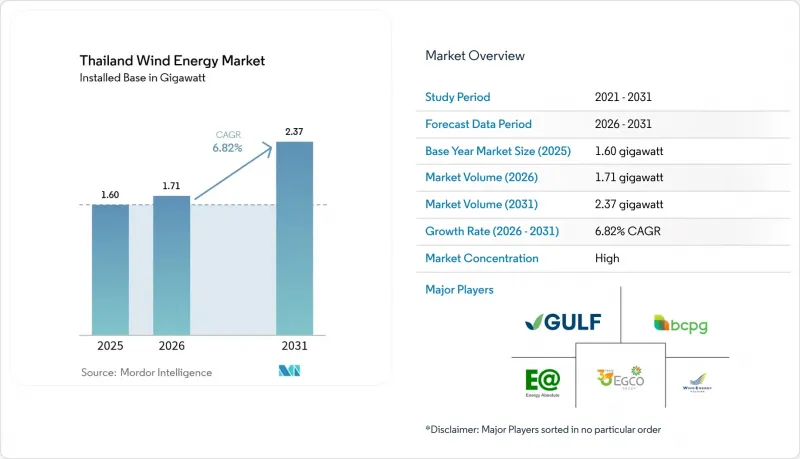
Mordor Intelligence에 따르면 태국의 풍력에너지 시장 규모는 2025년 1.60기가와트에서 2026년에는 1.71기가와트로 확대되고, 2026년부터 2031년까지 CAGR 6.82%를 기록하며 2031년까지 2.37기가와트에 달할 것으로 예측됩니다.
본 보고서는 입지(육상 및 해상), 터빈 출력(3MW 미만, 3-6MW, 6MW 이상), 용도(유틸리티 규모, 상업·산업용, 커뮤니티 프로젝트)별로 분류되어 있습니다. 시장 규모 및 전망은 설치 용량(GW) 단위로 표시되어 있습니다.
태국 풍력에너지 시장의 동향 및 인사이트
2036년까지 정부의 재생에너지 발전 용량 목표
‘2024년 전력 개발 계획’에 따르면, 2037년까지 누적 5.345 GW의 풍력발전 용량 증설이 의무화되어 있으며, 이에 따라 현재 설비 용량이 3배로 증가하여 풍력발전은 태양광발전에 이어 전력 계통에서 두 번째로 큰 재생에너지원이 될 전망입니다. 수입 액화천연가스(LNG)에 대한 의존도를 낮추는 것이 이 정책의 근간이지만, 허브 높이 10m에서의 평균 풍속이 2.8-4.0 m/s이므로 높은 터빈이 필요하며, 이는 설비 투자(CAPEX) 증가로 이어집니다. 2030년까지 3.10바트의 매입 가격을 유지함으로써 수익이 확보되고 있으며, 2024년 9월 입찰에서는 600MW의 할당량에 대해 12개사가 입찰에 참여했습니다. 이는 설비 가동률이 30% 미만에 그치고 있음에도 불구하고 시장에 대한 신뢰도가 높음을 입증하고 있습니다. 또한, 90 MW 이하 프로젝트의 경우 환경 심사가 12개월 이내에 완료되도록 절차가 간소화되어, 개발사는 착공까지의 기간을 절반으로 단축할 수 있게 되었습니다. 국제에너지기구(IEA)는 주로 풍력발전 공급 전망의 개선을 이유로 2024년 태국의 재생에너지 전망치를 26% 상향 조정했습니다.
경쟁력 있는 고정가격매입제도(FIT)/입찰 제도가 IPP의 자본을 유치하고 있습니다
10MW 미만의 발전소에 대한 고정가격매입제도(FIT)와 그 이상의 규모의 풍력발전소를 대상으로 한 경매라는 두 가지 인센티브 덕분에, 2022년 이후 풍력발전에 대한 확정 투자액은 800억 바트에 달했습니다. 25년간의 매입 가격은 도매 가격보다 40% 높으며, 이를 통해 IPP는 저비용의 다자간 융자를 확보할 수 있게 되었습니다. 예를 들어, 2024년 11월 아시아개발은행(ADB)은 걸프 에너지(Gulf Energy)에 8억 2,000만 달러 규모의 신디케이트 대출을 제공했습니다. 90MW라는 경매 상한선으로 인해 시장 독점은 억제되고 있지만, 2025년 9월에 발표된 걸프 에너지와 알파 에너지의 208MW 합작 사업이 보여주듯이, 합작 사업을 통해 규모 확대가 가능합니다. 비확약 발전 조항에 따라 낮 시간대 태양광발전 피크 시점에 실현되는 매입 가격이 억제되어 지급액이 15% 가까이 삭감됩니다. 입찰 평가에 관한 분쟁이 지속되고 있는 것은 투명한 감독 체제에 대한 투자자들의 민감성을 보여줍니다.
육상 풍력발전의 평균 풍속이 낮은 지역
10m 높이에서 전국 평균 풍속이 2.8-4.0 m/s이므로, 대부분의 입지 조건이 풍력 등급 1로 분류되어 허브 높이를 100m로 설정할 수밖에 없으며, 베트남의 등급 3 입지 조건과 비교하여 설비 투자액이 18% 가까이 증가하고 있습니다. 2024년 평균 설비 가동률은 28%로, 세계 평균보다 약 1,400 풀로드 시간 낮습니다. 그 결과, 태국의 풍력에너지 시장은 10-11%의 자기자본이익률(ROE)을 달성하기 위해 타국보다 30% 높은 매입 가격에 의존하고 있습니다. 중부 및 남부 지역에서는 높이 80m 지점에서도 풍속이 5m/s 미만이므로, 프로젝트의 85%가 북동부에 집중되어 있는 이유입니다. Ember사의 2024년 리뷰에 따르면, 태국의 조건 하에서 풍력발전의 LCOE는 여전히 태양광발전보다 최소 25% 낮습니다.
부문별 분석
2025년 현재, 태국의 풍력에너지 시장 규모 1.60 GW 전부를 육상 풍력발전이 차지하고 있으며, 600 MW 규모의 2단계 입찰에 따라 2031년까지 육상 풍력발전의 신규 도입량은 연평균 성장률(CAGR) 6.85%로 확대될 전망입니다. 해상 풍력 자원 조사에 따르면, 수심 50-80m 해역에서 풍속 5.5-6.0m/s가 관측되고 있으나, 손익분기점이 되는 매입 가격은 1kWh당 5.00바트를 초과하여 현재의 정책 지원액을 크게 상회하고 있습니다. 북동부 육상 발전소는 115kV 송전선로 근처에 위치해 있어 계통연계 비용은 1MW당 800만 바트로 억제되고 있습니다. 반면, 해저 케이블의 경우 1MW당 2,500만 바트가 소요됩니다. 아키오나 에너지아(Akiona Energia)사의 436 MW 규모 투자 약정은 허브 높이 80 m에서 LCOE가 0.070 달러/kWh 미만을 기록하는 육상 프로젝트에 대해 개발사들이 여전히 강한 관심을 보이고 있음을 입증합니다.
각 개발사는 2027년에 200 MW 규모의 해상 시범 사업이 시작될 것으로 예상하고 있지만, 부유식 기초로 인해 1 MW당 120만 달러의 추가 비용이 발생하므로 상업적 규모의 확장은 예측 기간보다 지연될 가능성이 높습니다. 그 결과, 2031년까지 태국 풍력에너지 시장 점유율의 최소 94.75%는 육상 발전이 계속 차지할 것으로 예상되지만, 해상 발전은 여전히 정책적 목표에 그칠 것입니다.
기타 혜택:
- 엑셀 형식의 시장 예측(ME) 시트
- 3개월간의 애널리스트 지원
자주 묻는 질문
목차
제1장 소개
제2장 조사 방법
제3장 주요 요약
제4장 시장 구도
제5장 시장 규모와 성장 예측
제6장 경쟁 구도
제7장 시장 기회와 향후 전망
KSM 26.08.25According to Mordor Intelligence, the Thailand wind energy market size is expected to grow from 1.60 gigawatt in 2025 to 1.71 gigawatt in 2026 and is forecast to reach 2.37 gigawatt by 2031 at 6.82% CAGR over 2026-2031.
This report is Segmented by Location (Onshore and Offshore), Turbine Capacity (Less Than 3 MW, 3 To 6 MW, and Above 6 MW), and Application (Utility-Scale, Commercial and Industrial, and Community Projects). The Market Size and Forecasts are Provided in Terms of Installed Capacity (GW).
Thailand Wind Energy Market Trends and Insights
Government Renewable Capacity Targets to 2036
The Power Development Plan 2024 mandates 5.345 GW of cumulative wind additions by 2037, tripling the present fleet and positioning wind behind solar as the grid's second-largest renewable source. Reducing dependence on imported liquefied natural gas underpins the policy, yet average site wind speeds of 2.8-4.0 m/s at 10 m hub heights demand tall turbines, inflating capex. Maintaining the THB 3.10 tariff through 2030 shields returns, and the September 2024 auction drew 12 bidders chasing 600 MW, underscoring confidence despite sub-30% capacity factors. Streamlined environmental reviews now close within 12 months for <=90 MW projects, helping developers halve pre-construction time. The International Energy Agency lifted Thailand's renewable forecast by 26% in 2024, chiefly on stronger wind delivery signals.
Competitive FiT / Auction Schemes Attracting IPP Capital
A two-track incentive, feed-in tariffs for sub-10 MW plants and auctions for larger arrays, mobilized THB 80 billion in committed wind outlays since 2022. The 25-year tariff stands 40% above wholesale prices, enabling IPPs to secure low-cost multilateral debt; for instance, the Asian Development Bank syndicated USD 820 million to Gulf Energy in November 2024. Auction caps of 90 MW curb market dominance, yet joint ventures allow scale, as shown by Gulf's 208 MW tie-up with Alpha Energy announced in September 2025. Non-firm dispatch clauses clip realized tariffs during solar midday peaks, trimming payouts by nearly 15 %. Ongoing litigation over bid scoring indicates investor sensitivity to transparent oversight.
Low Average On-Shore Wind Speed Zones
National mean winds of 2.8-4.0 m/s at 10 m classify most sites as Wind Class 1, forcing 100 m hub heights and lifting capex by nearly 18% versus Class 3 sites in Vietnam. Capacity factors averaged 28 % in 2024, roughly 1,400 full-load hours below the global norm; hence, the Thailand wind energy market relies on tariffs 30 % above peers to attain 10-11 % equity returns. Central and southern zones exhibit sub-5 m/s winds even at 80 m, explaining why 85 % of projects cluster in the northeast. Ember's 2024 review noted wind's LCOE still trails solar's by at least 25 % under Thai conditions.
Other drivers and restraints analyzed in the detailed report include:
- Falling LCOE from Larger Turbines & Supply-Chain Scale
- Corporate REC Demand & Green-PPA Boom
- Rural Grid Bottlenecks & Curtailment Risk
For complete list of drivers and restraints, kindly check the Table Of Contents.
Segment Analysis
Onshore assets represented the entire Thailand wind energy market size of 1.60 GW in 2025, and onshore additions are slated to grow 6.85% CAGR to 2031 under the 600 MW second-phase auction. Offshore resource studies show 5.5-6.0 m/s winds in 50-80 m waters, but breakeven tariffs exceed THB 5.00 /kWh, well above current policy support. Northeastern onshore sites lie near 115 kV lines, keeping grid-tie costs at THB 8 million /MW compared with THB 25 million /MW for subsea cables. Acciona Energia's 436 MW commitment underscores sustained developer preference for land-based projects that clear USD 0.070 /kWh LCOE at 80 m hub heights.
Developers anticipate a 200 MW offshore pilot in 2027, yet commercial deployment will likely trail the forecast window because floating foundations add USD 1.2 million /MW. Consequently, onshore capacity should still control at least a 94.75% Thailand wind energy market share by 2031 while offshore remains a policy aspiration.
Complete Report Scope:
- By Location
- Onshore
- Offshore
- By Turbine Capacity
- Up to 3 MW
- 3 to 6 MW
- Above 6 MW
- By Application
- Utility-scale
- Commercial and Industrial
- Community Projects
- By Component (Qualitative Analysis)
- Nacelle/Turbine
- Blade
- Tower
- Generator and Gearbox
- Balance-of-System
List of Companies Covered in this Report:
- Energy Absolute PCL
- Wind Energy Holding Co Ltd
- Electricity Generating PCL (EGCO)
- Gulf Energy Development PCL
- BCPG PCL
- PTT Public Co Ltd (PTT Renewables)
- Siam Wind Energy Co Ltd
- Impact Energy Asia Development
- Siemens Gamesa Renewable Energy SA
- Vestas Wind Systems A/S
- Goldwind Science & Technology Co Ltd
- GE Vernova
- Ming Yang Smart Energy
- Envision Energy
- Acciona Energia
- Ratch Group PCL
- B.Grimm Power PCL
- Banpu NEXT
- TruWind Co Ltd
- WHA Utilities & Power PCL
Additional Benefits:
- The market estimate (ME) sheet in Excel format
- 3 months of analyst support
TABLE OF CONTENTS
1 Introduction
- 1.1 Study Assumptions & Market Definition
- 1.2 Scope of the Study
2 Research Methodology
3 Executive Summary
4 Market Landscape
- 4.1 Market Overview
- 4.2 Market Drivers
- 4.2.1 Government renewable capacity targets to 2036
- 4.2.2 Competitive FiT/auction schemes attracting IPP capital
- 4.2.3 Falling LCOE from larger turbines & supply-chain scale
- 4.2.4 Corporate REC demand & green-PPA boom
- 4.2.5 Offshore wind resource mapping in Gulf of Thailand
- 4.2.6 EGAT wind-hydrogen hybrid pilots proving grid value
- 4.3 Market Restraints
- 4.3.1 Low average on-shore wind speed zones
- 4.3.2 Rural grid bottlenecks & curtailment risk
- 4.3.3 Community land-use opposition delaying permits
- 4.3.4 Thin local component manufacturing base
- 4.4 Supply-Chain Analysis
- 4.5 Regulatory Landscape
- 4.6 Technological Outlook
- 4.7 Porter's Five Forces
- 4.7.1 Threat of New Entrants
- 4.7.2 Bargaining Power of Suppliers
- 4.7.3 Bargaining Power of Buyers
- 4.7.4 Threat of Substitutes
- 4.7.5 Competitive Rivalry
- 4.8 PESTLE Analysis
- 4.9 Key Projects Information
5 Market Size & Growth Forecasts
- 5.1 By Location
- 5.1.1 Onshore
- 5.1.2 Offshore
- 5.2 By Turbine Capacity
- 5.2.1 Up to 3 MW
- 5.2.2 3 to 6 MW
- 5.2.3 Above 6 MW
- 5.3 By Application
- 5.3.1 Utility-scale
- 5.3.2 Commercial and Industrial
- 5.3.3 Community Projects
- 5.4 By Component (Qualitative Analysis)
- 5.4.1 Nacelle/Turbine
- 5.4.2 Blade
- 5.4.3 Tower
- 5.4.4 Generator and Gearbox
- 5.4.5 Balance-of-System
6 Competitive Landscape
- 6.1 Market Concentration
- 6.2 Strategic Moves (M&A, Partnerships, PPAs)
- 6.3 Market Share Analysis (Market Rank/Share for key companies)
- 6.4 Company Profiles (includes Global level Overview, Market level overview, Core Segments, Financials as available, Strategic Information, Products & Services, and Recent Developments)
- 6.4.1 Energy Absolute PCL
- 6.4.2 Wind Energy Holding Co Ltd
- 6.4.3 Electricity Generating PCL (EGCO)
- 6.4.4 Gulf Energy Development PCL
- 6.4.5 BCPG PCL
- 6.4.6 PTT Public Co Ltd (PTT Renewables)
- 6.4.7 Siam Wind Energy Co Ltd
- 6.4.8 Impact Energy Asia Development
- 6.4.9 Siemens Gamesa Renewable Energy SA
- 6.4.10 Vestas Wind Systems A/S
- 6.4.11 Goldwind Science & Technology Co Ltd
- 6.4.12 GE Vernova
- 6.4.13 Ming Yang Smart Energy
- 6.4.14 Envision Energy
- 6.4.15 Acciona Energia
- 6.4.16 Ratch Group PCL
- 6.4.17 B.Grimm Power PCL
- 6.4.18 Banpu NEXT
- 6.4.19 TruWind Co Ltd
- 6.4.20 WHA Utilities & Power PCL
7 Market Opportunities & Future Outlook
- 7.1 White-space & Unmet-Need Assessment