|
시장보고서
상품코드
2113702
남미의 배합사료 : 시장 점유율 분석, 산업 동향·통계 데이터, 성장 예측(2026-2031년)South America Compound Feed - Market Share Analysis, Industry Trends & Statistics, Growth Forecasts (2026 - 2031) |
||||||
 Mordor Intelligence
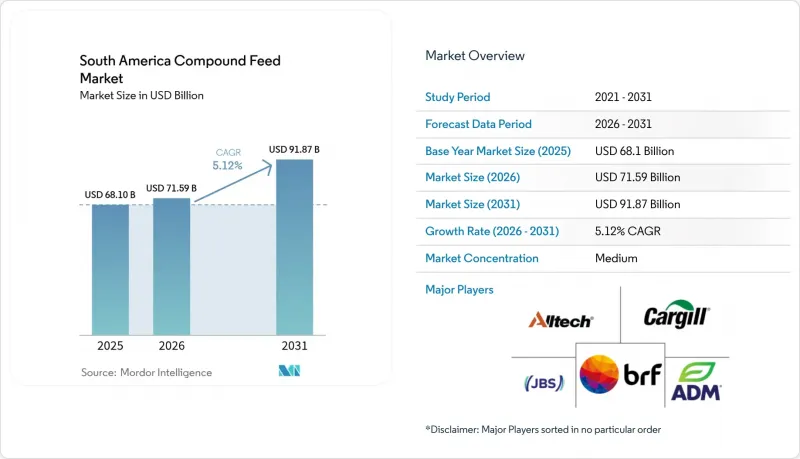
Mordor Intelligence에 따르면 2026년 남미에서 배합사료 시장의 규모는 715억 9,000만 달러로 추정되고 있으며, 2025년 681억 달러에서 확대하며, 2031년에는 918억 7,000만 달러에 달할 것으로 예측됩니다.
2026-2031년의 연평균 성장률(CAGR)은 5.12%에 달할 것으로 전망됩니다.
이 보고서에서는 시장을 동물 유형별(반추동물, 가금류, 돼지, 수산양식, 기타 동물 유형), ‘원재료별’(곡물, 케이크·밀, 부산물, 보충제), 지역별(브라질, 아르헨티나, 기타 남미)로 분류하고 있습니다.
남미 사료 시장의 동향 및 인사이트
가축 생산 증가와 수출 수요 확대
브라질은 2024년에 490만 메트릭톤의 닭고기를 수출하며 세계 최대 수출국으로서의 위상을 공고히 하는 동시에, 고성능 육계용 사료에 대한 구조적인 수요를 창출하고 있습니다. 이러한 수출 활성화로 인해 통합형 축산 기업은 사료 전환율을 1.60 미만으로 최적화해야 하며, 이 기준치를 달성하기 위해서는 아미노산과 효소의 정확한 배합이 필수적입니다. 아르헨티나의 중국向け 돼지고기 수출은 아프리카 돼지열병으로 인한 혼란이 완화됨에 따라 2024년에 회복되었습니다. 이에 따라 현지 사료 제조업체들은 합성 리신 및 트레오닌 블렌드를 활용한 돼지 사료 라인업을 확충하기 시작했습니다. 수출 경쟁력과 사료 품질 간의 피드백 루프로 인해 원료 공급이나 배합의 일관성에 어떤 지장이 생기면, 농장 차원의 이익률이 즉시 훼손됩니다. 브라질 중서부 지역의 축산업은 더욱 집약화되고 있으며, 비육장에서의 비육이 현재 도축 두수의 30% 이상을 차지하고 있습니다. 이러한 변화로 인해 방목에서 농축 사료로의 전환이 진행되면서 고에너지 펠릿에 대한 수요가 확대되고 있습니다.
영양 보조제 및 특수 사료첨가제의 도입
2024년, 브라질 남부 주들의 가금 사료에 대한 효소 첨가율은 85%를 넘는 보급률을 기록했습니다. 이는 식물 유래 원료에서 인과 에너지를 방출하는 피타아제와 자일라나아제의 조합으로의 전략적 전환을 반영한 것입니다. 이러한 동향으로 인해 세계 비료 시장과 연동된 가격 변동의 영향을 받기 쉬운 무기 인산염 보충제에 대한 의존도가 낮아지고 있습니다. 바실러스 서브틸리스(Bacillus subtilis)나 락토바실러스 아시도필루스(Lactobacillus acidophilus)와 같은 프로바이오틱스 균주는 현장 시험을 통해 이유 자돈의 장내 환경 개선과 사망률 감소 효과가 입증됨에 따라 돼지 사료 분야에서 보급이 확대되었습니다. 브라질의 신규 첨가물 규제 절차는 농림부 지침에 따라 국내 시험을 통한 유효성 데이터 제출을 요구합니다. 이러한 장벽은 확립된 연구 인프라를 갖춘 다국적 원료 공급업체에 유리하게 작용하고 있습니다.
상품 및 사료 원료 가격 변동
2024년, 시카고 상품 거래소(CBOT)의 옥수수 선물 가격은 부셸당 4.20달러에서 5.80달러 사이에서 거래되었으며, 38%에 달하는 변동폭이 발생함에 따라 사료 제조업체들은 목표 이익률을 유지하기 위해 매주 배합을 조정할 수밖에 없었습니다. 브라질 국내 시장의 대두박 가격은 리우그란데두술주의 가뭄으로 인해 압착량이 18% 감소함에 따라 2024년 중반에 1메트릭톤당 2,400레알(1메트릭톤당 480달러)까지 급등했습니다. 가축의 계약 가격은 납품 몇 달 전에 고정되는 경우가 많기 때문에 이러한 가격 변동은 사료의 이익률을 압박하고, 사료 제조업체는 그에 상응하는 수익 조정이 이루어지지 않은 채 투입 비용 상승에 직면하게 됩니다. 이러한 재정적 압박이 가장 심각한 곳은 독립 농가를 고객으로 둔 상업용 사료 제조업체입니다. 이 고객들은 사료 가격의 급격한 상승을 흡수할 재정적 여유가 없어, 발주를 미루거나 가축의 생산성을 저해할 가능성이 있는 저가 사료로 전환할 우려가 있기 때문입니다. 통합형 생산자는 선물 계약을 통해 곡물 구매를 헤지함으로써 이 위험을 부분적으로 경감하고 있지만, 이 전략에는 재무 관리에 대한 전문 지식과 자본 준비금이 필요하며, 소규모 사업자에게는 종종 그러한 여력이 없습니다.
부문 분석
2025년 남미 혼합 사료 시장에서 가금용 사료는 42.55%를 차지했습니다. 이러한 우위는 브라질의 육계 수출 체제와 아르헨티나의 계란 생산 회복에 기인합니다. 육계 통합 생산업체들은 사료 전환율 1.60 미만을 요구하고 있으며, 이 목표를 달성하려면 대사 에너지와 소화 가능 아미노산의 정밀한 균형 조정이 필요하므로 제분업체들은 실시간 원료 분석을 위해 근적외선 분광법을 도입해야 하는 상황에 처해 있습니다. 가금 사료 부문은 성숙기에 접어들었기 때문에 성장은 판매량 확대가 아닌 효율의 점진적인 향상을 통해 이루어질 것입니다. 이러한 추세는 범용 곡물 거래업체보다 새로운 효소나 장 건강 유지용 첨가제를 제공하는 원료 공급업체에 유리하게 작용할 것입니다. 돼지 사료는 아르헨티나의 중국에 대한 돼지고기 수출 재개로 혜택을 보고 있으며, 배합은 합성 라이신 및 조단백질 함량이 낮은 사료로 전환되고 있습니다. 이는 질소 배출을 줄이고 새로 제정되고 있는 환경 기준을 준수하기 위함입니다.
수산물 양식용 사료 시장은 2031년까지 연평균 성장률(CAGR) 7.42%로 확대될 것으로 예상됩니다. 이는 브라질 저수지에서의 틸라피아 케이지 양식 확대 및 에콰도르 연안 주에서의 새우 생산 집약화 등, 동물 유형별로는 가장 빠른 성장이 예상된다는 점이 원동력이 되고 있습니다. 수산양식 부문의 뛰어난 실적은 구조적인 차익 거래를 반영하고 있습니다. 어류는 육상 가축보다 사료를 체중으로 더 효율적으로 전환할 수 있으며, 틸라피아의 사료 전환율은 약 1.20인 반면, 육계는 1.60, 소는 2.80입니다. 이러한 효율성의 우위 덕분에 수산양식은 특히 수자원이 풍부하고 집약적인 생산이 가능한 지역에서 저비용 단백질 공급원으로서의 입지를 확고히 하고 있습니다. 규제 체계도 점차 정비되고 있으며, 브라질 수산부는 2024년에 수산 사료 표시와 관련된 새로운 지침을 발표했습니다. 여기에는 어분 및 어유 함량 공개가 의무화되어 있으며, 지속가능성에 대한 우려를 해소하기 위한 투명성 제고 조치로 작용하고 있습니다.
기타 혜택:
- Excel 형식의 시장 예측(ME) 시트
- 3개월간의 애널리스트 지원
자주 묻는 질문
목차
제1장 서론
제2장 분석 방법
제3장 개요
제4장 시장 구도
제5장 시장 규모·성장률 예측
제6장 경쟁 구도
제7장 시장 기회와 향후 전망
KSA 26.08.25According to Mordor Intelligence, South America compound feed market size in 2026 is estimated at USD 71.59 billion, growing from 2025 value of USD 68.1 billion with 2031 projections showing USD 91.87 billion, growing at 5.12% CAGR over 2026-2031.
This report Segments the Industry Into Animal Type (Ruminants, Poultry, Swine, Aquaculture, Other Animal Types), Ingredient (Cereals, Cakes & Meals, By-Products, Supplements), and Geography (Brazil, Argentina, Rest of South America).
South America Compound Feed Market Trends and Insights
Rising Livestock Production and Export Demand
Brazil exported 4.9 million metric tons of chicken meat in 2024, solidifying its position as the world's leading exporter and creating a structural demand for high-performance broiler feed . This export intensity compels integrators to optimize feed conversion ratios below 1.60, a threshold that necessitates the precise formulation of amino acids and enzymes. Argentina's pork shipments to China rebounded in 2024 after disruptions from African swine fever eased, prompting local millers to expand their swine-feed lines with synthetic lysine and threonine blends. The feedback loop between export competitiveness and feed quality means that any disruption in ingredient supply or formulation consistency immediately erodes margin at the farm gate. Cattle ranching in Brazil's Center-West continues to intensify, with feedlot finishing now accounting for over 30% of the slaughter volume. This shift replaces pasture grazing with concentrated rations, driving demand for high-energy pellets.
Adoption of Nutritional and Specialty Feed Additives
Enzyme inclusion rates in poultry feed exceeded 85% penetration in Brazil's southern states in 2024, reflecting a strategic shift toward phytase and xylanase combinations that unlock phosphorus and energy from plant-based ingredients. This trend reduces reliance on inorganic phosphate supplements, which are subject to price volatility tied to global fertilizer markets. Probiotic strains, such as Bacillus subtilis and Lactobacillus acidophilus, gained traction in swine rations after field trials demonstrated improved gut health and reduced mortality in weanling pigs. The regulatory pathway for novel additives in Brazil follows Ministry of Agriculture guidelines that require efficacy data from local trials, a barrier that favors multinational ingredient suppliers with established research infrastructure.
Volatility in Commodity and Feed Ingredient Prices
Corn futures on the Chicago Board of Trade traded in a USD 4.20 to USD 5.80 per bushel range during 2024, a 38% swing that forced feed millers to adjust formulations weekly to maintain target margins. Soybean meal prices in Brazil's domestic market surged to BRL 2,400 per metric ton (USD 480 per metric ton) in mid-2024, following a drought in Rio Grande do Sul that reduced crushing volumes by 18%. This price volatility compresses feed margins because livestock contracts are often locked in months ahead of delivery, leaving millers exposed to input-cost inflation without a corresponding revenue adjustment. The financial strain is most acute for commercial mills serving independent farmers, as these customers lack the balance-sheet flexibility to absorb sudden feed-price increases and may delay orders or switch to lower-cost rations that compromise animal performance. Integrated producers partially mitigate this risk by hedging their grain purchases through futures contracts, but this strategy requires treasury expertise and capital reserves that smaller players often cannot afford.
Other drivers and restraints analyzed in the detailed report include:
- Government Programs That Incentivize Animal Protein Supply Chains
- Expansion of Integrated Feed Milling Capacity
- Stringent Environmental and Land-Use Regulations
For complete list of drivers and restraints, kindly check the Table Of Contents.
Segment Analysis
Poultry feed captured 42.55% of South America's 2025 compound feed market, a dominance rooted in Brazil's broiler export machine and Argentina's resurgence in egg production. Broiler integrators demand feed-conversion ratios below 1.60, a target that requires precision balancing of metabolizable energy and digestible amino acids, pushing millers to adopt near-infrared spectroscopy for real-time ingredient analysis. The poultry segment's maturity means growth will come from incremental efficiency gains rather than volume expansion, a dynamic that favors ingredient suppliers offering novel enzymes or gut-health additives over commodity grain traders. Swine feed benefits from Argentina's renewed pork exports to China, with formulations shifting toward synthetic lysine and low-crude-protein diets that reduce nitrogen excretion and comply with emerging environmental standards.
Aquaculture feed is expected to expand at a 7.42% CAGR through 2031, driven by the fastest growth among animal types, as tilapia cage farming scales up in Brazil's reservoirs and shrimp production intensifies in Ecuador's coastal provinces. The aquaculture segment's outperformance reflects a structural arbitrage: fish convert feed into body mass more efficiently than terrestrial livestock, with tilapia achieving feed-conversion ratios of nearly 1.20 compared to 1.60 for broilers and 2.80 for cattle. This efficiency advantage positions aquaculture as a lower-cost protein source, particularly in regions where water resources are abundant and support intensive production. Regulatory frameworks are catching up, with Brazil's Ministry of Fisheries issuing new guidelines in 2024 for aquafeed labeling that mandate disclosure of fishmeal and fish-oil content, a transparency measure aimed at addressing sustainability concerns .
Complete Report Scope:
- By Animal Type
- Ruminants
- Poultry
- Swine
- Aquaculture
- Other Animal Types
- By Ingredient
- Cereals
- Cakes and Meals
- By-products
- Supplements
- Vitamins
- Amino Acids
- Enzymes
- Prebiotics and Probiotics
- Acidifiers
- Other Supplements
- By Geography
- Brazil
- Argentina
- Rest of South America
List of Companies Covered in this Report:
- Cargill, Incorporated
- ADM
- JBS S.A.
- BRF S.A
- Alltech, Inc.
- Kemin Industries, Inc.
- Nutreco N.V.
- Royal De Heus Group B.V.
- Evonik Industries AG
- Phibro Animal Health Corporation
- Adisseo France S.A.S.
- Vitapro S.A
- Italcol S.A.
- Aurora Alimentos Cooperativa Central
- DSM-Firmenich AG
Additional Benefits:
- The market estimate (ME) sheet in Excel format
- 3 months of analyst support
TABLE OF CONTENTS
1 INTRODUCTION
- 1.1 Study Assumptions and Market Definition
- 1.2 Scope of the Study
2 RESEARCH METHODOLOGY
3 EXECUTIVE SUMMARY
4 MARKET LANDSCAPE
- 4.1 Market Overview
- 4.2 Market Drivers
- 4.2.1 Rising livestock production and export demand
- 4.2.2 Adoption of nutritional and specialty feed additives
- 4.2.3 Government programs that incentivize animal protein supply chains
- 4.2.4 Expansion of integrated feed milling capacity
- 4.2.5 Aquaculture boom in Amazon basin and coastal fisheries
- 4.2.6 Carbon-credit linked sustainable feed initiatives
- 4.3 Market Restraints
- 4.3.1 Volatility in commodity and feed ingredient prices
- 4.3.2 Stringent environmental and land-use regulations
- 4.3.3 Logistics bottlenecks and port congestion
- 4.3.4 Consumer shift toward plant-based protein
- 4.4 Regulatory Landscape
- 4.5 Technological Outlook
- 4.6 Porter's Five Forces Analysis
- 4.6.1 Bargaining Power of Suppliers
- 4.6.2 Bargaining Power of Buyers
- 4.6.3 Threat of New Entrants
- 4.6.4 Threat of Substitutes
- 4.6.5 Intensity of Competitive Rivalry
5 MARKET SIZE AND GROWTH FORECASTS (VALUE)
- 5.1 By Animal Type
- 5.1.1 Ruminants
- 5.1.2 Poultry
- 5.1.3 Swine
- 5.1.4 Aquaculture
- 5.1.5 Other Animal Types
- 5.2 By Ingredient
- 5.2.1 Cereals
- 5.2.2 Cakes and Meals
- 5.2.3 By-products
- 5.2.4 Supplements
- 5.2.4.1 Vitamins
- 5.2.4.2 Amino Acids
- 5.2.4.3 Enzymes
- 5.2.4.4 Prebiotics and Probiotics
- 5.2.4.5 Acidifiers
- 5.2.4.6 Other Supplements
- 5.2.5 By Geography
- 5.2.5.1 Brazil
- 5.2.5.2 Argentina
- 5.2.5.3 Rest of South America
6 COMPETITIVE LANDSCAPE
- 6.1 Strategic Moves
- 6.2 Market Share Analysis
- 6.3 Company Profiles (Includes Global level Overview, Market level Overview, Core Segments, Financials as available, Strategic Information, Market Rank/Share, Products and Services, Recent Developments)
- 6.3.1 Cargill, Incorporated
- 6.3.2 ADM
- 6.3.3 JBS S.A.
- 6.3.4 BRF S.A
- 6.3.5 Alltech, Inc.
- 6.3.6 Kemin Industries, Inc.
- 6.3.7 Nutreco N.V.
- 6.3.8 Royal De Heus Group B.V.
- 6.3.9 Evonik Industries AG
- 6.3.10 Phibro Animal Health Corporation
- 6.3.11 Adisseo France S.A.S.
- 6.3.12 Vitapro S.A
- 6.3.13 Italcol S.A.
- 6.3.14 Aurora Alimentos Cooperativa Central
- 6.3.15 DSM-Firmenich AG