

|
시장보고서
상품코드
2114370
외용 진통제 시장 : 시장 점유율 분석, 업계 동향 및 통계, 성장 예측(2026-2031년)Topical Analgesic - Market Share Analysis, Industry Trends & Statistics, Growth Forecasts (2026 - 2031) |
||||||
 Mordor Intelligence
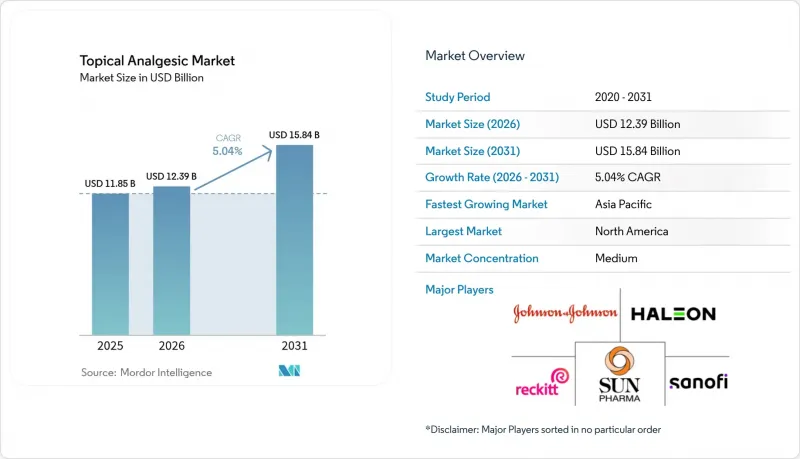
Mordor Intelligence에 의하면, 외용 진통제 시장 규모는 2025년 118억 5,000만 달러로 평가되었고, 2026년에는 123억 9,000만 달러로 추정되고, 2031년까지 158억 4,000만 달러에 이를 것으로 예측되며, 2026-2031년 CAGR 5.04%로 성장할 전망입니다.
본 보고서는 치료 분류별(비오피오이드, 오피오이드), 제형별(크림·젤, 패치, 스프레이·에어로졸, 롤온·스틱, 기타), 유형별(처방약, 일반의약품), 유통 채널별(병원 약국, 소매 약국 및 드럭스토어 등), 지역별(북미, 유럽, 아시아태평양, 중동 및 아프리카, 남미)로 분류되어 있습니다. 시장 예측은 금액(달러) 기준으로 제시되어 있습니다.
세계의 외용 진통제 시장 동향 및 인사이트
고령화와 관절염 유병률
세계 퇴행성 관절염 환자 수는 2050년까지 10억 명을 넘어설 것으로 예측되며, 특히 아시아태평양에서는 평균 수명 증가가 정형외과 의료 수용 능력을 상회하고 있어 가장 급격한 증가가 예상됩니다. 일본에서는 이미 65세 이상 인구가 전체 인구의 29.1%를 차지하고 있어, 경구용 NSAID의 부작용을 피할 수 있는 디클로페낙 젤이나 캡사이신 패치에 대한 지속적인 수요가 발생하고 있습니다. 한국에서는 외래에서 근골격계 질환 진료를 억제하기 위해 2024년에 고용량 리도카인 패치의 승인을 신속히 처리했습니다. 미국에서는 3,250만 명의 성인이 퇴행성 관절염 진단을 받았으며, 그 중 절반은 고령자로, 다제 병용을 피하기 위해 외용 요법을 선호하고 있습니다. 포장 측면에서는 고령자의 손재주 제한에 적합한 1회 투여용 소포장, 사용 편의성을 중시한 펌프식 용기가 중요시되고 있습니다.
비오피오이드를 통한 통증 관리 선호
2025년에 발표된 FDA 지침에 따르면, 전신 투여 약물로 승인되기 전에 오피오이드와의 비교 임상시험이 의무화되었으며, 이로 인해 국소 통증에 대한 1차 선택 약제로서 외용 NSAID 및 마취 패치의 위상이 사실상 높아졌습니다. CMS는 현재 외래 진료 시설이 오피오이드를 사용하지 않고 환자를 퇴원시킨 경우, 더 높은 시설 지급금을 제공하고 있으며, 이 정책으로 인해 리도카인 패치의 이용률은 전년 대비 2배로 증가한 것으로 알려져 있습니다. EMA 및 MHRA도 유사한 입장을 보이고 있어, 새로운 경피 흡수 제제의 국경을 초월한 접근이 원활해지고 있습니다. 제약 기업의 연구개발 예산은 이러한 비오피오이드 요건을 충족하는 고분자, 투과 촉진제 및 마이크로니들로 이동하고 있습니다.
임상적 유효성의 편차와 통증 깊이에 따른 제한
메타분석에 따르면, 외용 NSAID는 표층 근육 타박상에서는 통증을 30-50% 경감시키지만, 고관절 퇴행성 관절염에서는 위약보다 뛰어난 효과를 얻지 못해 적응증이 제한되어 있습니다. 미세투석 연구에 따르면, 약물의 확산이 1.5cm를 초과하는 경우는 드물 것으로 확인되어, 비만 환자의 심부 관절 치료에는 여전히 과제가 남아 있습니다. 캡사이신 패치는 15-20%의 투여 중단률을 초래할 정도로 심한 작열감을 유발하기 때문에 신경병성 통증 치료에서의 반복 사용이 제한되고 있습니다. 독일과 영국의 보험사는 오피오이드 패치의 보험 적용을 암성 통증으로만 제한하고 있어, 더 광범위한 보급을 저해하고 있습니다. 현재 각 개발사는 복합제제(NSAID+리도카인)에 대한 임상시험을 진행 중이지만, 규제 당국의 승인을 얻기 위해서는 시너지 효과를 입증해야 하므로 외용 진통제 시장에서의 개발 기간이 장기화되고 있습니다.
부문 분석
2025년에는 제네릭 디클로페낙, 이부프로펜 젤, 멘톨계 도포제를 주력으로 하여 비오피오이드계 제품이 매출의 86.42%를 차지했습니다. 그러나 오피오이드 패치는 7.06%의 연평균 성장률(CAGR)을 달성할 것으로 예측되며, 이는 비오피오이드 계열의 성장률보다 약 50% 빠른 속도입니다. 이는 위조 방지 매트릭스를 통해 부정 사용 위험을 줄이는 부프레노르핀 및 펜타닐 제제가 주도하고 있기 때문입니다. 부프레노르핀은 2024년에 만성 통증 치료제로 승인되었으며, 호흡 억제 발생률이 낮다는 이유로 현재 호스피스 프로토콜에서 경구용 모르핀의 대체제로 사용되고 있습니다. 펜타닐은 블랙박스 경고가 붙어 있음에도 불구하고, 종양학 분야에서는 여전히 표준 치료제로 자리 잡고 있으며, 새로운 기피제 설계가 규제 당국의 요건을 충족하여 병원 처방약 목록에 계속 포함되어 있습니다. 비오피오이드 계열에서는 NSAID가 주류를 이루고 있지만, 상품화가 진행되고 있어 각 브랜드는 침투성 향상 폴리머를 활용해 차별화를 꾀할 수밖에 없는 상황입니다. 캡사이신은 신경병성 통증 관리 분야에서 규모는 작지만 수익성이 높은 틈새 시장을 차지하고 있으며, 고용량 감독 하 사용 패치의 매출액은 1억 8,000만 달러를 초과합니다. 스포츠 의학용 OTC 키트에서는 자극 완화제가 여전히 자리 잡고 있지만, 아스피린 과민증에 대한 우려로 인해 살리실산염 계열 약물의 존재감은 점차 약해지고 있습니다.
적응증을 확대하기 위해 파이프라인의 관심은 NSAID와 마취제의 조합, 혹은 오피오이드와 투과 촉진제의 조합과 같은 복합 패치로 옮겨가고 있습니다. 그러나 규제 당국은 명확한 가산 효과를 요구하고 있어, 이로 인해 3상 임상시험 비용이 증가하고 있습니다.
크림과 젤은 소비자에게 친숙하고 작용 발현이 빠르기 때문에 2025년 매출의 45.71%를 차지한 것으로 평가되었으며, 패치는 72시간의 투여 간격이라는 편의성 덕분에 9.03%라는 가장 높은 연평균 성장률(CAGR)을 보일 것으로 보입니다. 매트릭스형 패치는 투여량이 급격히 방출될 위험이 낮고 제조가 용이하여 리저버형을 앞지르고 있습니다. 출시를 앞둔 마이크로니들 시제품은 더 빠른 작용 발현을 약속하고 있으며, 이러한 특성으로 인해 급성 통증 이용 사례에서 젤 시장 점유율을 빼앗을 것으로 예측됩니다. 스프레이나 에어로졸은 등이나 햄스트링에 손을 더럽히지 않고 도포하고자 하는 사용자에게 매력적이지만, 유럽의 추진제 규제와 같은 역풍에 직면해 있습니다. 폼이나 연고는 여전히 시장 점유율이 작지만, 밀폐 상태가 침투를 돕는 병원 상처 관리 현장에서는 호조를 보이고 있습니다.
지속 방출형 폴리머나 상변화 운반체를 사용함으로써, 패치는 경구 투여에 필적하는 안정적인 혈장 농도를 유지하면서 위장 노출을 피할 수 있습니다. 배경층에 블루투스 센서를 내장한 제조업체는 이용 빈도가 높은 환자 집단에 대한 복약 순응도 데이터를 요구하는 보험사에 부가가치를 제공합니다.
지역별 분석
북미는 2025년 매출의 38.11%를 차지한 것으로 평가되었으며, 이는 높은 1인당 지출액과 오피오이드 남용을 억제하기 위해 외용 요법을 권장하는 지불 기관의 지침에 힘입은 것입니다. 6,500만 명에 달하는 미국의 고령자들은 관절염에는 디클로페낙 젤을, 신경병성 통증에는 5% 리도카인 패치를 의지하고 있는 반면, 캐나다의 공적 의약품 목록에는 2024년에 고용량 디클로페낙이 추가되었습니다. 멕시코에서는 2025년 1% 디클로페낙의 ‘약국 판매 한정’ 규제가 완화되어, 비공식 소매 채널에서의 위조품 우려에도 불구하고 OTC(일반의약품) 판매량이 증가했습니다.
아시아태평양은 일본이 정부의 80억 엔 보조금을 활용하여 파스에서 전자기기 탑재형 패스로의 전환을 추진함에 따라 연평균 성장률(CAGR) 6.07%로 확대될 것으로 예측됩니다. 중국은 2025년에 18종의 국산 외용제 SKU를 승인하고, 수입 브랜드보다 최대 60% 저렴한 가격으로 제공함으로써 지방 도시로 시장 침투를 추진했습니다. 인도에서는 강황과 유칼립투스에 최신 침투 촉진제를 배합한 아유르베다에서 영감을 얻은 젤이 성장의 견인차 역할을 하여, 2031년까지 연평균 성장률(CAGR) 8.3%가 예상됩니다. 호주와 한국에서는 패치와 원격 물리치료를 결합한 ‘텔레재활’ 패키지가 선구적으로 도입되어, 지방 지역의 복약 순응도 향상에 기여하고 있습니다.
독일에서는 외용 NSAIDs의 보험 급여가 전신 요법이 효과를 보이지 않는 증례로 한정되어 있는 반면, 영국의 NHS는 2024년에 여러 브랜드 젤을 보험 적용 대상에서 제외하여 수요를 OTC 제네릭 의약품으로 전환시켰습니다. 프랑스와 이탈리아에서는 맞춤형 처방을 제공하는 조제 문화가 정착되어 있지만, 규제 당국의 감독 체계에는 편차가 있습니다. 각 지역에서 전자상거래는 격차를 해소하는 역할을 수행하고 있으며, 2선 도시의 소비자들에게도 수도권 시장과 동일한 브랜드에 대한 접근성을 제공함으로써 전 세계 외용 진통제 시장의 통합을 더욱 촉진하고 있습니다.
기타 혜택 :
- 엑셀 형식 시장 예측(ME) 시트
- 3개월간의 애널리스트 지원
자주 묻는 질문
목차
제1장 서론
제2장 조사 방법
제3장 주요 요약
제4장 시장 구도
제5장 시장 규모 및 성장 예측
제6장 경쟁 구도
제7장 시장 기회 및 향후 전망
AJY 26.08.26According to Mordor Intelligence, the topical analgesic market size is expected to increase from USD 11.85 billion in 2025 to USD 12.39 billion in 2026 and reach USD 15.84 billion by 2031, growing at a CAGR of 5.04% over 2026-2031.
This report is Segmented by Therapeutic Class (Non-Opioids, Opioids), Formulation (Cream & Gel, Patch, Spray/Aerosol, Roll-On & Stick, Others), Type (Prescription, OTC), Distribution Channel (Hospital Pharmacies, Retail Pharmacies & Drug Stores, and More), and Geography (North America, Europe, Asia-Pacific, Middle East & Africa, South America). The Market Forecasts are Provided in Terms of Value (USD).
Global Topical Analgesic Market Trends and Insights
Aging Population & Arthritis Prevalence
Global osteoarthritis cases are projected to top 1 billion by 2050, with the steepest gains in Asia-Pacific where life expectancy growth outpaces orthopedic capacity. Japan already reports 29.1% of its citizens aged 65+, creating sustained demand for diclofenac gels and capsaicin patches that avoid the side effects of oral NSAIDs. South Korea fast-tracked high-dose lidocaine patches in 2024 to curb outpatient musculoskeletal visits. In the United States, 32.5 million adults carry an osteoarthritis diagnosis, half of whom are seniors who favor topical therapy to limit polypharmacy. Packaging now emphasizes single-dose sachets and ergonomic pumps suited to dexterity limits in older hands.
Preference for Non-Opioid Pain Management
FDA guidance issued in 2025 requires comparative trials versus opioids before systemic approval, effectively elevating topical NSAIDs and anesthetic patches to first-line status for localized pain. CMS now offers higher facility payments when ambulatory centers achieve opioid-free discharge, a policy credited with doubling lidocaine-patch utilization year over year. EMA and MHRA have echoed the stance, smoothing cross-border access for novel transdermals. Pharmaceutical R&D budgets are shifting toward polymers, permeation enhancers, and microneedles that meet these non-opioid mandates.
Variable Clinical Efficacy & Depth-Of-Pain Limits
Meta-analyses show topical NSAIDs cut pain 30-50% in superficial strains but fail to outperform placebo in hip osteoarthritis, limiting indications. Microdialysis studies confirm drug diffusion rarely exceeds 1.5 cm, challenging the treatment of deep joints in obese patients. Capsaicin patches cause burning severe enough for 15-20% drop-out rates, curbing repeat usage in neuropathic care. German and UK payers reimburse opioid patches only for oncology pain, restricting broader adoption. Developers now test combo formulas (NSAID + lidocaine) but must prove synergy to satisfy regulators, elongating timelines in the topical analgesic market.
Other drivers and restraints analyzed in the detailed report include:
- Transdermal & Formulation Technology Advances
- OTC & E-Commerce Channel Expansion
- Skin Irritation / Unpleasant Sensory Attributes
For complete list of drivers and restraints, kindly check the Table Of Contents.
Segment Analysis
Non-opioids captured 86.42% revenue in 2025, anchored by generic diclofenac, ibuprofen gels, and menthol rubs. Yet opioid patches are projected to deliver a 7.06% CAGR, nearly 50% faster than non-opioid growth, propelled by buprenorphine and fentanyl systems that limit diversion risk with tamper-evident matrices. Buprenorphine received chronic-pain approval in 2024, and hospice protocols now use it to replace oral morphine, citing lower respiratory-depression rates. Fentanyl remains oncologic standard despite black-box labeling; new aversive-agent designs satisfy regulators and sustain hospital formularies. NSAIDs dominate non-opioids, but commoditization is pressuring brands to differentiate via penetration-enhancement polymers. Capsaicin serves a small yet profitable niche in neuropathic management; high-dose supervised patches exceed USD 180 million in sales. Counterirritants persist in sports-medicine OTC kits, while salicylates fade amid concerns about aspirin sensitivity.
Pipeline attention is turning toward combo patches, NSAID plus anesthetic or opioid plus permeation enhancer, to broaden indications. Yet regulators demand clear additive benefit, raising Phase III costs.
Creams and gels delivered 45.71% of 2025 revenue owing to consumer familiarity and rapid onset, but patches will log the highest 9.03% CAGR thanks to 72-hour dosing convenience. Matrix patches outstrip reservoir formats due to lower dose-dump risk and easier manufacturing. Microneedle prototypes nearing launch promise quicker onset, a feature expected to pull market share from gels in acute-pain use cases. Sprays and aerosols appeal to users wanting hands-free coverage on backs or hamstrings, yet face headwinds from propellant restrictions in Europe. Foams and ointments remain marginal but thrive in hospital wound-care settings where occlusion aids penetration.
Continuous-release polymers and phase-change carriers allow patches to deliver steady plasma levels competitive with oral dosing while avoiding gastrointestinal exposures. Manufacturers integrating Bluetooth sensors into backing layers create value-add for payers seeking adherence data in high-utilization cohorts.
Complete Report Scope:
- By Therapeutic Class
- Non-Opioids
- NSAIDs
- Local Anesthetics
- Capsaicinoids
- Counterirritants
- Salicylates
- Opioids
- Buprenorphine Patch
- Fentanyl Patch
- Tramadol Topical/Formulations
- Morphine Gel/Compound
- Dihydrocodeine Topical Preparations
- Non-Opioids
- By Formulation
- Cream & Gel
- Patch
- Spray / Aerosol
- Roll-on & Stick
- Others (Foam, Ointment)
- By Type
- Prescription
- OTC
- By Distribution Channel
- Hospital Pharmacies
- Retail Pharmacies & Drug Stores
- Online Pharmacies
- Other End Users
- By Geography
- North America
- United States
- Canada
- Mexico
- Europe
- Germany
- United Kingdom
- France
- Italy
- Spain
- Rest of Europe
- Asia-Pacific
- China
- Japan
- India
- Australia
- South Korea
- Rest of Asia-Pacific
- Middle East & Africa
- GCC
- South Africa
- Rest of Middle East & Africa
- South America
- Brazil
- Argentina
- Rest of South America
- North America
Geography Analysis
North America generated 38.11% of 2025 revenue, underpinned by high per-capita spend and payer mandates that favor topical approaches to curb opioid misuse. U.S. seniors, numbering 65 million, rely on diclofenac gels for arthritis and 5% lidocaine patches for neuropathic pain, while Canada's public formularies added high-strength diclofenac in 2024. Mexico liberalized pharmacy-only status for 1% diclofenac in 2025, lifting OTC volume despite counterfeit concerns in informal retail channels.
Asia-Pacific is forecast to expand at 6.07% CAGR as Japan shifts from poultice plasters to electronics-enabled patches funded by JPY 8 billion in government grants. China approved 18 domestic topical SKUs in 2025, undercutting imported brands by up to 60% and extending reach into lower-tier cities. India sees 8.3% CAGR through 2031, led by Ayurvedic-inspired gels that blend turmeric and eucalyptus with modern permeation enhancers. Australia and South Korea are pioneering tele-rehab bundles that pair patches with remote physiotherapy, increasing adherence in rural areas.
Germany limits reimbursement for topical NSAIDs to systemic-failure cases, while the UK NHS delisted several branded gels in 2024, redirecting demand to OTC generics. France and Italy nurture a culture of compounding that offers bespoke formulations, yet regulatory oversight varies. Across regions, E-commerce is the equalizer, giving consumers in tier-two cities access to the same brands as capital markets, further integrating the global topical analgesic market.
- Amneal Pharmaceuticals
- Biofreeze
- Church & Dwight
- Endo International
- GlaxoSmithKline
- Grunenthal GmbH
- Haleon plc
- Haw Par Corporation Ltd.
- Hisamitsu Pharmaceutical
- Johnson & Johnson
- Kenvue Inc.
- Novartis
- Perrigo Company
- Performance Health Holding Inc.
- Reckitt Benckiser Group
- Rohto Pharmaceutical Co., Ltd.
- Sun Pharmaceuticals Industries
- Sanofi
- Teva Pharmaceutical Industries
- Viatris
Additional Benefits:
- The market estimate (ME) sheet in Excel format
- 3 months of analyst support
TABLE OF CONTENTS
1 Introduction
- 1.1 Study Assumptions & Market Definition
- 1.2 Scope of the Study
2 Research Methodology
3 Executive Summary
4 Market Landscape
- 4.1 Market Overview
- 4.2 Market Drivers
- 4.2.1 Aging Population & Arthritis Prevalence
- 4.2.2 Preference for Non-Opioid Pain Management
- 4.2.3 Transdermal & Formulation Technology Advances
- 4.2.4 OTC & E-Commerce Channel Expansion
- 4.2.5 Smart-Patch Integration with Sports-Tech
- 4.2.6 Regulatory Fast-Track for Localized Analgesics
- 4.3 Market Restraints
- 4.3.1 Variable Clinical Efficacy & Depth-Of-Pain Limits
- 4.3.2 Skin Irritation / Unpleasant Sensory Attributes
- 4.3.3 Stringent Global Quality & Approval Standards
- 4.3.4 Volatile Menthol & Capsaicin Supply
- 4.4 Regulatory Landscape
- 4.5 Technological Outlook
- 4.6 Porter's Five Forces Analysis
- 4.6.1 Threat of New Entrants
- 4.6.2 Bargaining Power of Buyers
- 4.6.3 Bargaining Power of Suppliers
- 4.6.4 Threat of Substitute Products
- 4.6.5 Intensity of Competitive Rivalry
5 Market Size & Growth Forecasts
- 5.1 By Therapeutic Class
- 5.1.1 Non-Opioids
- 5.1.1.1 NSAIDs
- 5.1.1.2 Local Anesthetics
- 5.1.1.3 Capsaicinoids
- 5.1.1.4 Counterirritants
- 5.1.1.5 Salicylates
- 5.1.2 Opioids
- 5.1.2.1 Buprenorphine Patch
- 5.1.2.2 Fentanyl Patch
- 5.1.2.3 Tramadol Topical/Formulations
- 5.1.2.4 Morphine Gel/Compound
- 5.1.2.5 Dihydrocodeine Topical Preparations
- 5.1.1 Non-Opioids
- 5.2 By Formulation
- 5.2.1 Cream & Gel
- 5.2.2 Patch
- 5.2.3 Spray / Aerosol
- 5.2.4 Roll-on & Stick
- 5.2.5 Others (Foam, Ointment)
- 5.3 By Type
- 5.3.1 Prescription
- 5.3.2 OTC
- 5.4 By Distribution Channel
- 5.4.1 Hospital Pharmacies
- 5.4.2 Retail Pharmacies & Drug Stores
- 5.4.3 Online Pharmacies
- 5.4.4 Other End Users
- 5.5 By Geography
- 5.5.1 North America
- 5.5.1.1 United States
- 5.5.1.2 Canada
- 5.5.1.3 Mexico
- 5.5.2 Europe
- 5.5.2.1 Germany
- 5.5.2.2 United Kingdom
- 5.5.2.3 France
- 5.5.2.4 Italy
- 5.5.2.5 Spain
- 5.5.2.6 Rest of Europe
- 5.5.3 Asia-Pacific
- 5.5.3.1 China
- 5.5.3.2 Japan
- 5.5.3.3 India
- 5.5.3.4 Australia
- 5.5.3.5 South Korea
- 5.5.3.6 Rest of Asia-Pacific
- 5.5.4 Middle East & Africa
- 5.5.4.1 GCC
- 5.5.4.2 South Africa
- 5.5.4.3 Rest of Middle East & Africa
- 5.5.5 South America
- 5.5.5.1 Brazil
- 5.5.5.2 Argentina
- 5.5.5.3 Rest of South America
- 5.5.1 North America
6 Competitive Landscape
- 6.1 Market Concentration
- 6.2 Market Share Analysis
- 6.3 Company Profiles (includes Global Level Overview, Market Level Overview, Core Segments, Financials as Available, Strategic Information, Market Rank/Share for Key Companies, Products & Services, and Recent Developments)
- 6.3.1 Amneal Pharmaceuticals Inc.
- 6.3.2 Biofreeze
- 6.3.3 Church & Dwight Co., Inc.
- 6.3.4 Endo International plc
- 6.3.5 GlaxoSmithKline plc
- 6.3.6 Grunenthal GmbH
- 6.3.7 Haleon plc
- 6.3.8 Haw Par Corporation Ltd.
- 6.3.9 Hisamitsu Pharmaceutical Co., Inc.
- 6.3.10 Johnson & Johnson
- 6.3.11 Kenvue Inc.
- 6.3.12 Novartis AG
- 6.3.13 Perrigo Company plc
- 6.3.14 Performance Health Holding Inc.
- 6.3.15 Reckitt Benckiser Group plc
- 6.3.16 Rohto Pharmaceutical Co., Ltd.
- 6.3.17 Sun Pharmaceutical Industries Ltd
- 6.3.18 Sanofi
- 6.3.19 Teva Pharmaceutical Industries Ltd.
- 6.3.20 Viatris Inc.
7 Market Opportunities & Future Outlook
- 7.1 White-space & Unmet-Need Assessment


