|
시장보고서
상품코드
2116345
인도의 도시 내 물류 : 시장 점유율 분석, 업계 동향 및 통계, 성장 예측(2026-2031년)India Intra-city Logistics - Market Share Analysis, Industry Trends & Statistics, Growth Forecasts (2026 - 2031) |
||||||
 Mordor Intelligence
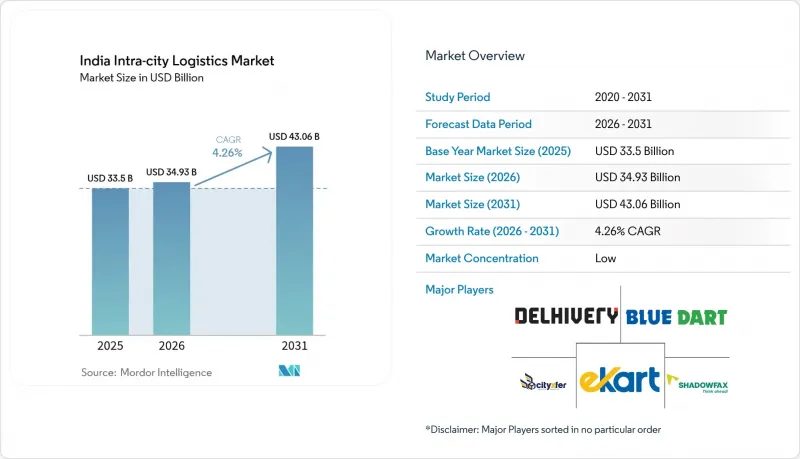
Mordor Intelligence에 의하면, 2026년 인도의 도시 내 물류 시장 규모는 349억 3,000만 달러로 추정되고 2025년 335억 달러에서 확대해, 2031년에는 430억 6,000만 달러에 이를 것으로 예측됩니다.
2026년부터 2031년에 걸쳐 연평균 성장률(CAGR)은 4.26%를 나타낼 것으로 전망됩니다.
본 보고서는 서비스별(운송, 창고·유통, 기타), 비즈니스 모델별(B2B, B2C, C2C),배송 속도별(당일 배송, 익일 배송), 최종 사용자 산업별(전자상거래 소매, 패션·라이프스타일, 미용·퍼스널케어, 주택 및 가구, 가전, 헬스케어 및 의료용품, 기타), 그리고 도시 등급별로 분류되어 있습니다. 시장 전망은 금액(미 달러) 기준으로 제시되어 있습니다.
인도의 도시 내 물류 시장 동향 및 인사이트
전자상거래 소포의 폭발적인 성장
2024년에는 당일 배송이 배송 속도 부문의 54.0%를 차지하며, 소비자의 즉각성에 대한 기대를 여실히 드러내는 동시에 인도의 도시 내 물류 시장을 주도했습니다. Zepto 및 Blinkit과 같은 퀵 커머스 기업들은 A급 창고를 임대하고 있으며, 2025년까지 전국적인 수요를 3억 평방피트 이상으로 끌어올렸습니다. 마이크로 풀필먼트 센터의 급증으로 라스트 마일 배송 경로가 재정의되고 이동 거리가 단축됨에 따라, 실시간 가시화가 업무상 필수 요건으로 그 중요성이 커지고 있습니다. 물류 사업자들은 AI를 활용한 배차 도구를 도입하여 차량 이용률을 최적화하는 동시에 30분 이내의 배송 시간 확보를 도모하고 있습니다. 전자상거래가 최종 사용자 점유율의 47.0%를 차지하고 있는 것으로 보아, 도시 지역 배송에 대한 투자에서 매우 중요한 성장 동력이 되고 있음이 분명합니다.
국가 물류 정책 및 PM-Gati Shakti 시행
정부의 프로그램을 통해 다모달 인프라와 디지털 거버넌스의 현대화가 추진되고 있습니다. 2024년 12월에 체결된 3억 5,000만 달러 규모의 SMILE 대출은 인도의 도시 내 물류 시장에서 배송 지연을 줄이는 스마트 시스템과 표준화된 창고 프레임워크에 자금을 지원하는 데 사용되고 있습니다. ULIP는 2025년 3월 API 호출 횟수가 10억 건을 돌파하며, 행정 절차를 줄이고 차량 통관 절차를 신속하게 처리하는 빠른 데이터 상호 운용성을 입증했습니다. PM-가티 샤크티(PM-Gati Shakti)의 일환으로 조성되는 복합 물류 단지는 도시 유통 네트워크를 철도 및 고속도로와 연결하여 퍼스트 마일에서 라스트 마일까지의 운송 시간을 단축하고 있습니다. 이러한 구조적 개선을 통해 해당 부문은 물류 비용을 GDP 대비 14%에서 8%로 낮추겠다는 ‘국가 물류 정책’의 목표 달성을 향해 나아가고 있으며, 도시 지역 화물 운송에서 가격 경쟁력을 확보할 여지를 마련하고 있습니다.
심각한 도시 교통 정체와 주차 공간 부족
뭄바이와 벵갈루루의 출퇴근 시간대에는 배송 밴의 평균 속도가 시속 15km 미만으로 떨어지며, 이로 인해 차량 생산성이 저하되고 연료비가 증가하고 있습니다. 2024년에는 23개 도시에서 토지 거래 면적이 2,335에이커에 달하고, 환산 가격이 에이커당 17카롤 루피(2,030만 달러)까지 치솟으면서 터미널 개발이 복잡해지고 있습니다. 적재 공간 부족으로 인해 이중 주차가 불가피하게 되어 벌금 부과 대상이 될 뿐만 아니라, 배송 주기 시간이 길어지고 있습니다. 대규모 인프라 프로젝트를 통해 상황 개선이 약속되고 있지만, 그 가동 일정은 당면한 사업 계획의 범위를 넘어선 상태이며, 운송업체들은 교통 체증을 피하기 위해 동적 경로 설정 소프트웨어 도입이나 야간 배송 시간대 활용을 강요받고 있습니다.
부문별 분석
2025년, 인도의 도시 내 물류 시장에서 운송 부문은 70.35%의 점유율을 유지했습니다. 이는 도시 지역에서의 화물 운송이 필수적인 수요라는 점에 기인합니다. 전자상거래 처리량이 증가하고 대도시 및 2선 도시에서 식품 배달 서비스가 확대됨에 따라 성장은 지속되고 있습니다. 마이크로 풀필먼트의 중계 거점 역할을 하는 도시 지역의 집약 센터에 힘입어, 창고 및 유통 서비스는 꾸준히 확대되고 있습니다. 부가가치 서비스 부문은 현재 규모는 작지만, 고객들의 역물류, 실시간 추적, 화이트 글러브 서비스에 대한 수요가 증가함에 따라 연평균 성장률(CAGR) 3.67%로 성장을 지속하고 있습니다.
디지털화는 서비스의 경제성을 재구성하고 있습니다. AI를 활용한 경로 최적화를 통해 차량 이용률이 향상되는 한편, 청구서 자동화를 통해 중견 사업자의 백오피스 업무 주기가 단축되고 있습니다. 인도의 도시 내 물류 업계에서는 운송과 재고 관리를 통합하는 경향이 강해지고 있으며, 화주들은 통합된 워크플로우를 외부에 위탁할 수 있게 되었습니다. 환경 규제 준수도 또 다른 촉진요인입니다. 화주들은 차량을 BS6 기준에 부합시키고 전기 밴을 도입한 파트너를 중시하고 있으며, 계약 입찰에서 부가가치 서비스가 차별화 요인으로 작용하고 있습니다.
2025년에는 B2C 모델이 인도 시내 물류 시장을 독점하며 매출의 58.30%를 차지했습니다. 이는 전자상거래의 가속화와 소비자들이 문 앞 배송을 선호하는 경향의 직접적인 결과입니다. 아마존과 인도 철도의 제휴는 120개 이상의 도시 간 노선으로 확대되고 있으며, 대규모 플랫폼이 전국 간선 노선과 도시 내 배송을 어떻게 통합하고 있는지를 보여줍니다. B2B 화물 운송은 특히 FMCG(일용소비재) 및 의약품 분야에서 여전히 중요한 위치를 차지하고 있지만, 그 성장률은 소매 소포에 비해 완만합니다.
C2C 배송은 현재 점유율이 한 자릿수에 그치고 있지만, ONDC의 개방형 물류 계층이 진입 장벽을 낮춘 덕분에 3.38%의 속도로 확대되고 있습니다. 소셜 미디어를 통해 판매를 하는 개인은 현재 기업용 요금에 가까운 가격으로 표준 소포 네트워크를 이용할 수 있게 되어, 개인 간(P2P) 배송량이 확대되고 있습니다. 물류 기업에게 C2C는 이용률 향상을 위한 새로운 수단이 되어, 귀로 운송의 여유 용량을 채우는 동시에 성수기의 업무 부하를 평준화하는 역할을 하고 있습니다.
기타 혜택 :
- 엑셀 형식 시장 예측(ME) 시트
- 3개월간의 애널리스트 지원
자주 묻는 질문
목차
제1장 서론
제2장 조사 방법
제3장 개요
제4장 시장 구도
제5장 시장 규모 및 성장 예측
제6장 경쟁 구도
제7장 시장 기회 및 향후 전망
KTH 26.08.31According to Mordor Intelligence, the India intra-city logistics market size in 2026 is estimated at USD 34.93 billion, growing from 2025 value of USD 33.5 billion with 2031 projections showing USD 43.06 billion, growing at 4.26% CAGR over 2026-2031.
This report is Segmented by Service (Transportation, Warehousing & Distribution, and More), Business Model (B2B, B2C, C2C), Delivery Speed (Same-Day, Next-Day), End-User Industry (E-Commerce Retail, Fashion & Lifestyle, Beauty & Personal Care, Home & Furniture, Consumer Electronics, Healthcare & Medical Supplies, Others), and City Tier. Market Forecasts are Provided in Terms of Value (USD).
India Intra-city Logistics Market Trends and Insights
Explosive E-commerce Parcel Growth
Same-day delivery seized 54.0% of the delivery-speed segment in 2024, underscoring consumer expectations for immediacy and fueling the India intra-city logistics market. Quick-commerce firms such as Zepto and Blinkit are leasing Grade A warehouses, pushing nationwide demand beyond 300 million sq ft by 2025. The proliferation of micro-fulfillment centers is redefining last-mile routing, shrinking travel distances, and elevating real-time visibility as an operational imperative. Logistics providers are deploying AI-enabled dispatch tools to optimize fleet utilization and ensure turn-around times under thirty minutes. E-commerce's 47.0% end-user share establishes it as the pivotal growth catalyst for urban delivery investments.
National Logistics Policy and PM-Gati Shakti Implementation
Government programs are modernizing multimodal infrastructure and digital governance. The USD 350 million SMILE loan signed in December 2024 is financing smart systems and standard warehousing frameworks that reduce hand-off delays in the India intra-city logistics market. ULIP surpassed 100 crore API calls in March 2025, evidencing rapid data interoperability that cuts paperwork and accelerates vehicle clearances. Multi-modal logistics parks under PM-Gati Shakti link city distribution networks with rail and expressways, trimming first-mile to last-mile transit times. These structural upgrades help the sector move toward the National Logistics Policy target of lowering logistics cost from 14% to 8% of GDP, creating headroom for price competitiveness in urban freight.
Severe Urban Traffic Congestion and Curb Scarcity
Delivery vans face average speeds below 15 km/h in Mumbai and Bengaluru rush hours, eroding fleet productivity and inflating fuel bills. Land transactions climbed to 2,335 acres across 23 cities in 2024, with prices escalating to INR 17 crore per acre USD 20.3 million after conversion complicating terminal development. Scarce loading bays force double-parking that attracts fines and escalates turnaround times. While infrastructure mega-projects pledge relief, their commissioning schedules stretch beyond immediate operational horizons, compelling carriers to overlay dynamic routing software and night-time delivery slots to navigate congestion.
Other drivers and restraints analyzed in the detailed report include:
- Urban Consolidation Centers Mandated in City-Freight Plans
- Tier-2/3 City Retail Digitalization Wave
- Pending Gig-Worker Safety / Social-Security Mandates
For complete list of drivers and restraints, kindly check the Table Of Contents.
Segment Analysis
Transportation retained 70.35% of the India intra-city logistics market share in 2025, driven by the non-discretionary need for urban freight movement. Growth continues as e-commerce volumes climb and food delivery scales across metros and Tier-2 towns. Warehousing and distribution services are expanding steadily, supported by urban consolidation centers that act as staging points for micro-fulfillment. The value-added segment, while smaller today, is registering a 3.67% CAGR as customers demand reverse logistics, real-time tracking, and white-glove services.
Digitization is reshaping service economics. AI-enabled route optimization lifts vehicle utilization, while automated invoicing reduces back-office cycles for mid-tier operators. The India intra-city logistics industry increasingly bundles transport with inventory management, enabling shippers to outsource integrated workflows. Environmental compliance is another catalyst: shippers value partners that certify fleets to BS6 norms and deploy electric vans, positioning value-added services as a differentiator in contract bids.
The B2C model dominated the India intra-city logistics market with 58.30% revenue contribution in 2025, a direct result of e-commerce acceleration and consumer preference for doorstep delivery. Amazon's partnership with Indian Railways, scaling to 120+ intercity routes, illustrates how large platforms integrate national trunk routes with city distribution. B2B shipments remain significant, especially for FMCG and pharma, but their growth is slower relative to retail parcels.
C2C deliveries, although only a single-digit share today, are accelerating at 3.38% as ONDC's open logistics layer levels entry barriers. Individuals selling on social media can now tap standard parcel networks at near enterprise rates, expanding peer-to-peer shipment volumes. For logistics companies, C2C represents an incremental utilization lever, filling backhaul capacity and smoothing peak workloads.
Complete Report Scope:
- By Service
- Transportation
- Warehousing and Distribution
- Value-added Services
- By Business Model
- B2B
- B2C
- C2C
- By Delivery Speed
- Same-day (<24 h)
- Next-day (24-48 h)
- By End-user Industry
- E-commerce Retail
- Fashion and Lifestyle
- Beauty, Wellness and Personal Care
- Home and Furniture
- Consumer Electronics and Appliances
- Healthcare and Medical Supplies
- Others
- By City Tier
- Tier-1 Metros
- Tier-2 Cities
- Tier-3 and Below
List of Companies Covered in this Report:
- Delhivery
- Blue Dart Express
- Shadowfax
- Ekart Logistics
- CityXfer
- COGOS Technologies
- Loadshare Networks
- TruckGuru
- DHL Express India
- TCI (Transport Corporation of India)
- LetsTransport
- Blowhorn
- DTDC
- XpressBees
- FM Logistic India
- Good Move Logistics and Transport
- JustDeliveries
- Logistica India
- SafeExpress
- Om Logistics
Additional Benefits:
- The market estimate (ME) sheet in Excel format
- 3 months of analyst support
TABLE OF CONTENTS
1 Introduction
- 1.1 Study Assumptions and Market Definition
- 1.2 Scope of the Study
2 Research Methodology
3 Executive Summary
4 Market Landscape
- 4.1 Market Overview
- 4.2 Market Drivers
- 4.2.1 Explosive e-commerce parcel growth
- 4.2.2 National Logistics Policy and PM-Gati Shakti implementation
- 4.2.3 Urban consolidation centres mandated in city-freight master plans
- 4.2.4 Tier-2/3 city retail digitalisation wave
- 4.2.5 Rapid electrification of last-mile fleets
- 4.2.6 ONDC-driven open logistics interoperability
- 4.3 Market Restraints
- 4.3.1 Severe urban traffic congestion and curb scarcity
- 4.3.2 Hyper-fragmented small-fleet operator base
- 4.3.3 Rising land and compliance costs for micro-fulfilment sites
- 4.3.4 Pending gig-worker safety / social-security mandates
- 4.4 Value / Supply-Chain Analysis
- 4.5 Regulatory Landscape
- 4.6 Technological Outlook
- 4.7 Porter's Five Forces
- 4.7.1 Bargaining Power of Suppliers
- 4.7.2 Bargaining Power of Buyers
- 4.7.3 Threat of New Entrants
- 4.7.4 Threat of Substitutes
- 4.7.5 Intensity of Competitive Rivalry
- 4.8 Impact of COVID-19 on Market and Economy
5 Market Size and Growth Forecasts (Value)
- 5.1 By Service
- 5.1.1 Transportation
- 5.1.2 Warehousing and Distribution
- 5.1.3 Value-added Services
- 5.2 By Business Model
- 5.2.1 B2B
- 5.2.2 B2C
- 5.2.3 C2C
- 5.3 By Delivery Speed
- 5.3.1 Same-day (<24 h)
- 5.3.2 Next-day (24-48 h)
- 5.4 By End-user Industry
- 5.4.1 E-commerce Retail
- 5.4.2 Fashion and Lifestyle
- 5.4.3 Beauty, Wellness and Personal Care
- 5.4.4 Home and Furniture
- 5.4.5 Consumer Electronics and Appliances
- 5.4.6 Healthcare and Medical Supplies
- 5.4.7 Others
- 5.5 By City Tier
- 5.5.1 Tier-1 Metros
- 5.5.2 Tier-2 Cities
- 5.5.3 Tier-3 and Below
6 Competitive Landscape
- 6.1 Market Concentration
- 6.2 Strategic Moves
- 6.3 Market Share Analysis
- 6.4 Company Profiles (includes Global-level Overview, Market-level Overview, Core Segments, Financials as available, Strategic Information, Market Rank/Share, Products and Services, Recent Developments)
- 6.4.1 Delhivery
- 6.4.2 Blue Dart Express
- 6.4.3 Shadowfax
- 6.4.4 Ekart Logistics
- 6.4.5 CityXfer
- 6.4.6 COGOS Technologies
- 6.4.7 Loadshare Networks
- 6.4.8 TruckGuru
- 6.4.9 DHL Express India
- 6.4.10 TCI (Transport Corporation of India)
- 6.4.11 LetsTransport
- 6.4.12 Blowhorn
- 6.4.13 DTDC
- 6.4.14 XpressBees
- 6.4.15 FM Logistic India
- 6.4.16 Good Move Logistics and Transport
- 6.4.17 JustDeliveries
- 6.4.18 Logistica India
- 6.4.19 SafeExpress
- 6.4.20 Om Logistics
7 Market Opportunities and Future Outlook
- 7.1 White-space and Unmet-need Assessment