

|
시장보고서
상품코드
2116775
북미의 목재 펠릿 시장 : 점유율 분석, 업계 동향과 통계, 성장 예측(2026-2031년)North America Wood Pellet - Market Share Analysis, Industry Trends & Statistics, Growth Forecasts (2026 - 2031) |
||||||
 Mordor Intelligence
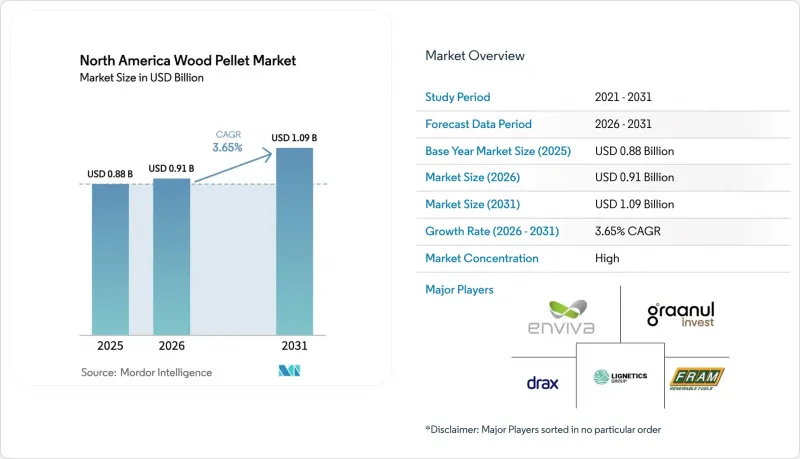
Mordor Intelligence에 의하면, 북미 목재 펠릿 시장 규모는 2025년 8억 8,000만 달러에서 2026년에는 9억 1,000만 달러로 확대되어 2031년까지 10억 9,000만 달러에 이를 것으로 예상되고 있어 2026년부터 2031년까지 CAGR 3.65%로 성장할 전망입니다.
본 보고서는 원료(산림·목재 잔재물, 농업 잔재물, 에너지 작물과 톱밥의 혼합물), 등급(유틸리티 등급, 프리미엄 등급,스탠다드 등급, 토레파이드 블랙 펠릿), 용도(난방, 발전 및 열병합 발전), 최종 사용자(주거용, 상업용, 산업·유틸리티용 및 동물용 깔짚), 지역(미국, 캐나다, 멕시코)별로 분류되어 있습니다.
북미 목질 펠릿 시장 동향 및 인사이트
연방 및 주 정부의 재생에너지 목표가 전력 회사 수요를 견인
각 주의 재생에너지 포트폴리오 기준(RPS) 및 강화된 연방 정부의 청정 에너지 장려책은 전력 사업자의 조달 전략의 기반이 되고 있습니다. Drax사는 2030년까지 미국에 새로운 바이오매스 발전소를 건설하기 위해 125억 달러를 투자하겠다고 약속했으며, 각 프로젝트는 프리미엄 45Q 크레딧을 획득할 자격을 얻기 위해 탄소 포집 시스템을 갖추도록 설계되었습니다. 마찬가지로, 조지아 파워(Georgia Power)도 조절 가능한 발전량을 확보하고 가스 가격 변동 위험을 헤지하기 위해 30년 이상의 계약을 바탕으로 80MW 규모의 바이오매스 발전 용량을 제안했습니다. 규제 당국은 이러한 접근 방식을 지지하고 있으며, 2024년 3월 미시간주 유틸리티위원회는 조절 가능한 바이오매스 발전이 전력 공급의 안정성을 위해 여전히 필수적이라는 판단을 내리고 계약의 조기 해지를 기각했습니다. 이러한 결정들은 목재 펠릿이 송전망의 신뢰성을 유지하면서 단기적인 탈탄소화 목표를 달성할 수 있는 ‘과도기적 연료’라는 관점을 뒷받침합니다.
화석 연료 가격 변동이 펠릿의 경쟁력을 높이다.
2025년부터 2026년 겨울에 걸쳐 프로판 가스와 난방용 석유 가격이 급등하면서 펠릿과의 비용 격차가 줄어들었고, 난로 및 보일러 교체 시 투자 회수 기간이 단축되었습니다. 헨리 허브 천연가스의 평균 가격은 1 MMBtu당 4.30달러였으나, 지방 가구가 지불한 프로판 가스 가격은 1 MMBtu당 27.50달러에 달한 반면, 배송된 프리미엄 펠릿의 가격은 1 MMBtu당 약 15달러였습니다. 이러한 가격 차이로 인한 이점은 북동부,어퍼 미드웨스트, 캐나다 대서양 연안의 파이프라인 미설치 지역에서 가장 두드러지지만, 인플레이션 억제법에 따른 2,000달러의 연방 히트펌프 세액 공제에 더해 최대 8,000달러에 달하는 주 정부 리베이트도 주택 소유자의 전기화를 뒷받침하고 있습니다. 따라서 주택용 펠릿 공급업체는 경쟁을 피하기 위해 예측 가능한 연료 비용과 지역 조달을 강조해야 합니다. 특히, 전력 회사가 야간 히트펌프 가동을 우대하는 시간대별 요금제를 도입하고 있는 상황에서는 더욱 그렇습니다.
물류 비용 급등이 펠릿의 이익률을 압박
2025년에는 철도 운임 인상과 트럭 운송비 급등으로 인해 펠릿 납품 가격이 상승했습니다. 중서부 지역 전력 회사에 공급하는 남동부 제재소의 경우, 특히 사바나나 모빌 등의 항구에서 혼잡이 발생하여 체선료가 부과되면 철도 운송비가 납품 비용의 최대 40%를 차지할 수 있습니다. 열분해 라인을 보유한 생산자는 톤당 에너지 출하량을 늘림으로써 이러한 비용을 부분적으로 상쇄하고 있지만, 5,000만-1억 달러의 설비 투자가 필요하기 때문에 소규모 사업자는 시장 진입이 어렵습니다. 소매용 제재소 역시 단거리 트럭 운송 요금이 난로용 펠릿 가격보다 빠르게 상승하고 있어 독자적인 압박에 직면하고 있으며, 일부 기업은 통합이나 폐쇄를 강요당하고 있습니다.
부문 분석
2025년, 북미 목재 펠릿 시장 점유율의 66.6%를 임업 및 목재 잔재물이 차지하고 있으며, 이는 통합형 목재 사업에서 조달되는 톱밥, 칩, 간벌재의 우위를 반영합니다. 그러나 2024년부터 2025년까지 목재 공급을 제약했던 제재소의 생산 축소에 대응하여, 생산자들이 위험을 헤지하기 위해 농업 잔여물 유래 펠릿은 2031년까지 연평균 성장률(CAGR) 4.8%를 나타낼 것으로 예측됩니다. 옥수수 줄기와 잎, 밀짚 등의 농업계 원료는 이론상 연간 2억-3억 드라이톤을 공급할 수 있지만, 계절적 수확에 따른 물류상의 과제, 수분 함량의 변동, 그리고 3-6%에 달하는 높은 회분 함량이 생산 규모 확대를 어렵게 하고 있습니다. 전처리 및 회분 저감 기술을 습득한 생산자는 순도가 낮은 연료를 처리할 수 있는 보일러를 확보할 수만 있다면, 산업용 및 전력 회사용 수요를 확보할 수 있습니다.
이 10년이 끝날 무렵에는 하이브리드 포플러나 버드나무 등의 단기 순환 재배 목본 작물이 전용 조림지에 대한 투자를 마다하지 않는 특정 제재소에 공급되게 되어, 생산성이 낮은 토지에서도 예측 가능한 수확량을 얻을 수 있게 될 가능성이 있습니다. 이러한 에너지 작물은 현재로서는 틈새 시장이지만, 그 전략적 가치는 안정적인 가격 책정과 ESG를 중시하는 구매자에게 어필하는 탄소 고정 이점에 있습니다. 따라서 원료 동향은 양극화되고 있습니다. 주택용 스토브용 범용 화이트 펠릿은 여전히 목재 잔재물이 주류를 이루는 반면, 산업용 및 전력 회사 구매자들은 공급량 확보와 탄소 크레딧 취득 자격을 얻기 위해 다양한 혼합물을 점점 더 수용하고 있습니다.
2025년 매출의 58.2%를 차지하는 것은 다년간의 인수 계약에 따라 발전소에 공급되는 ‘유틸리티 등급’ 화이트 펠릿입니다. 수분 8% 미만, 회분 0.5% 미만이라는 특징을 가진 ‘프리미엄 등급’ 펠릿은 유지보수 부담을 최소화하고자 하는 주거 및 상업용 사용자들에게 지지를 받고 있습니다. 스탠다드 등급 제품은 불순물이 다소 많아도 허용되는 소규모 산업용 보일러를 대상으로 중간 시장층을 채우고 있습니다. 한편, 열처리된 블랙 펠릿은 20-22 GJ/t의 에너지 밀도와 발수성을 강점으로 삼아, 2031년까지 연평균 성장률(CAGR) 8.4%를 나타낼 것으로 예측됩니다.
ANDRITZ사의 2025년 상업용 생산 라인은 질량 수율 85% 이상, 에너지 수율 95% 이상을 달성할 수 있음을 입증했습니다. 한편, Drax사의 앨라배마주 파일럿 사업은 미국이 규모 확대에 본격적으로 나서고 있음을 보여줍니다. 열처리된 펠릿은 지붕이 있는 저장 시설의 필요성을 없애고, 태평양 횡단 운송 중 습기로 인한 열화를 최소화하기 때문에 기존에는 화이트 펠릿에 있어 위험이 높았던 아시아 및 중동 시장 진출을 가능하게 합니다. 전력 회사들은 고가의 보일러 출력 저하 없이 높은 비율로 혼소할 수 있다는 점을 높이 평가하고 있으며, 생산에 드는 설비 투자 비용이 높음에도 불구하고 프리미엄 가격 책정의 가능성을 뒷받침하고 있습니다. 따라서 제품 등급 구성은 난방용의 합리적인 가격의 화이트 펠릿과, 물류 비용 절감 및 탄소 전략을 중시하는 전력 회사 및 산업용 구매자를 위한 프리미엄 블랙 펠릿이라는 이중 체제로 전환될 것으로 예측됩니다.
기타 혜택:
- 엑셀 형식 시장 예측(ME) 시트
- 3개월간의 애널리스트 지원
자주 묻는 질문
목차
제1장 서론
제2장 조사 방법
제3장 주요 요약
제4장 시장 구도
제5장 시장 규모와 성장 예측
제6장 경쟁 구도
제7장 시장 기회와 향후 전망
JHS 26.08.28According to Mordor Intelligence, the North America wood pellet market size is expected to increase from USD 0.88 billion in 2025 to USD 0.91 billion in 2026 and reach USD 1.09 billion by 2031, growing at a CAGR of 3.65% over 2026-2031.
This report is Segmented by Feedstock (Forest/Wood Residue, Agricultural Residue, and Energy-Crop and Sawdust Mix), Grade (Utility-Grade, Premium-Grade, Standard-Grade, and Torrefied Black Pellets), Application (Heating, Power Generation, and Combined Heat and Power), End-User (Residential, Commercial, Industrial and Utility, and Animal Bedding), and Geography (United States, Canada, and Mexico).
North America Wood Pellet Market Trends and Insights
Federal and State Renewable Targets Drive Utility Demand
State renewable portfolio standards and enhanced federal clean-energy incentives continue to anchor the offtake strategies of electric utilities. Drax committed USD 12.5 billion to build new U.S. biomass power plants by 2030, and each project is being designed with carbon-capture systems to qualify for premium 45Q credits. Georgia Power likewise proposed 80 MW of biomass capacity under contracts exceeding 30 years to lock in dispatchable generation and hedge gas-price volatility. Regulators are validating this approach; in March 2024, the Michigan Public Service Commission ruled that dispatchable biomass remains vital for resource adequacy, rejecting early contract terminations. These decisions reinforce the view that wood pellets are a bridge fuel capable of meeting near-term decarbonization targets while preserving grid reliability.
Volatile Fossil-Fuel Prices Enhance Pellet Competitiveness
Propane and heating-oil price spikes during the 2025-26 winter narrowed the cost gap with pellets, improving payback periods for stove and boiler upgrades. Henry Hub natural gas averaged USD 4.30 per MMBtu, yet rural households paid the propane equivalent of USD 27.50 per MMBtu, while delivered premium pellets cost roughly USD 15 per MMBtu. The arbitrage is most compelling in off-pipeline regions of the Northeast, Upper Midwest, and Atlantic Canada, although the Inflation Reduction Act's USD 2,000 federal heat-pump tax credit, alongside state rebates up to USD 8,000, is incentivizing homeowners to electrify. Residential pellet suppliers must therefore emphasize predictable fuel costs and local sourcing to remain competitive, particularly as utilities introduce time-of-use tariffs that favor overnight heat-pump operation.
Logistics Inflation Squeezes Pellet Margins
Railroad tariff increases and trucking cost inflation pushed delivered pellet prices higher in 2025. For Southeast mills serving Midwest utilities, rail can account for up to 40% of delivered cost, especially when ports such as Savannah and Mobile experience congestion that triggers demurrage fees. Producers with torrefaction lines partially offset these costs by shipping more energy per tonne, yet the USD 50-100 million capex requirement sidelines smaller operators. Retail-oriented mills face their own pressure as short-haul trucking rates rise faster than stove-grade pellet prices, forcing some to consolidate or close.
Other drivers and restraints analyzed in the detailed report include:
- Clean Fuel Standard Credits in Canada Stimulate Uptake
- Torrefied-Pellet Technology Boosts Energy Density and Lowers Logistics Cost
- Sawmill Curtailments Tighten Fiber Supply
For complete list of drivers and restraints, kindly check the Table Of Contents.
Segment Analysis
Forest and wood residues commanded 66.6% of the North America wood pellet market share in 2025, reflecting the dominance of sawdust, chips, and forest thinnings sourced from integrated timber operations. Agricultural residue pellets, however, are projected to register a 4.8% CAGR to 2031 as producers hedge against sawmill curtailments that constrained fiber supply during 2024-25. Agricultural feedstocks such as corn stover and wheat straw can theoretically provide 200-300 million dry tonnes annually, but seasonal collection logistics, variable moisture, and higher ash contents of 3-6% complicate scale-up. Producers that master preprocessing and ash-mitigation technologies can capture industrial and utility demand, provided they secure boilers capable of handling less-pure fuels.
Toward the end of the decade, short-rotation woody crops like hybrid poplar and willow may supply select mills willing to invest in dedicated plantations, enabling predictable yields on marginal land. Although these energy crops remain a niche today, their strategic value lies in stable pricing and carbon-sequestration benefits that appeal to ESG-minded buyers. The feedstock landscape is therefore bifurcating: commodity white pellets destined for residential stoves remain wood-residue dominant, while industrial and utility buyers increasingly accept diversified blends to secure volume and carbon-credit eligibility.
Utility-grade white pellets accounted for 58.2% of 2025 revenues, serving power plants under multi-year offtake agreements. Premium-grade pellets, distinguished by moisture below 8% and ash under 0.5%, capture residential and commercial users who prioritize low maintenance. Standard-grade material fills the middle tier for small industrial boilers that tolerate slightly higher impurities. Torrefied black pellets, however, are forecast to grow at an 8.4% CAGR through 2031, fueled by their 20-22 GJ/t energy density and hydrophobic properties.
ANDRITZ's 2025 commercial line proved that mass and energy yields above 85% and 95% are attainable, while Drax's Alabama pilot signals U.S. commitment to scale. Torrefied pellets eliminate the need for covered storage and minimize moisture-linked degradation during trans-Pacific shipments, opening Asian and Middle Eastern markets that were previously risky for white pellets. Utilities value the ability to co-fire at higher rates without costly boiler derates, reinforcing the premium pricing potential despite higher production capex. The grade mix is therefore expected to evolve toward a dual-track system: affordable white pellets for heating and premium black pellets for utility and industrial buyers focused on logistics savings and carbon strategy.
Complete Report Scope:
- By Feedstock
- Forest/Wood Residue
- Agricultural Residue
- Energy-Crop and Sawdust Mix
- By Grade
- Utility-Grade (White)
- Premium-Grade
- Standard-Grade
- Torrefied "Black" Pellets
- By Application
- Heating
- Power Generation
- Combined Heat and Power (CHP)
- By End-user
- Residential
- Commercial
- Industrial and Utility
- Animal Bedding
- By Geography
- United States
- Canada
- Mexico
List of Companies Covered in this Report:
- Enviva Inc.
- Drax Group plc (incl. Pinnacle Renewable Energy)
- Lignetics, Inc.
- Highland Pellets LLC
- Fram Renewable Fuels LLC
- Fiber Energy Products
- Curran Renewable Energy LLC
- Westervelt Renewable Energy (LaSalle BioEnergy)
- Pacific BioEnergy Corp.
- AS Graanul Invest
- Energy Pellets of America LLC
- Biopower Sustainable Energy Corp.
- Green Circle Bio Energy (Enviva)
- Rentech Inc.
- Maine Energy Systems
- Energex Pellet Fuel, Inc.
- Great Northern Timber Group
- Viridis Energy Inc.
- Lost Creek Holdings
- Georgia Biomass (Enviva-Jesup Plant)
Additional Benefits:
- The market estimate (ME) sheet in Excel format
- 3 months of analyst support
TABLE OF CONTENTS
1 Introduction
- 1.1 Study Assumptions & Market Definition
- 1.2 Scope of the Study
2 Research Methodology
3 Executive Summary
4 Market Landscape
- 4.1 Market Overview
- 4.2 Market Drivers
- 4.2.1 Federal & state renewable targets drive utility demand
- 4.2.2 Volatile fossil-fuel prices enhance pellet competitiveness
- 4.2.3 Clean Fuel Standard credits in Canada stimulate uptake
- 4.2.4 Carbon-neutral corporate thermal certificates emerge
- 4.2.5 Torrefied-pellet tech boosts energy density & lowers cost
- 4.3 Market Restraints
- 4.3.1 Logistics inflation squeezes pellet margins
- 4.3.2 Sawmill curtailments tighten fiber supply
- 4.3.3 ESG scrutiny on forest biomass dampens investment
- 4.3.4 Rapid heat-pump adoption in cold-climate states
- 4.4 Supply-Chain Analysis
- 4.5 Regulatory Landscape
- 4.6 Technological Outlook
- 4.7 Porter's Five Forces
- 4.7.1 Bargaining Power of Suppliers
- 4.7.2 Bargaining Power of Consumers
- 4.7.3 Threat of New Entrants
- 4.7.4 Threat of Substitutes
- 4.7.5 Intensity of Competitive Rivalry
5 Market Size & Growth Forecasts
- 5.1 By Feedstock
- 5.1.1 Forest/Wood Residue
- 5.1.2 Agricultural Residue
- 5.1.3 Energy-Crop and Sawdust Mix
- 5.2 By Grade
- 5.2.1 Utility-Grade (White)
- 5.2.2 Premium-Grade
- 5.2.3 Standard-Grade
- 5.2.4 Torrefied "Black" Pellets
- 5.3 By Application
- 5.3.1 Heating
- 5.3.2 Power Generation
- 5.3.3 Combined Heat and Power (CHP)
- 5.4 By End-user
- 5.4.1 Residential
- 5.4.2 Commercial
- 5.4.3 Industrial and Utility
- 5.4.4 Animal Bedding
- 5.5 By Geography
- 5.5.1 United States
- 5.5.2 Canada
- 5.5.3 Mexico
6 Competitive Landscape
- 6.1 Market Concentration
- 6.2 Strategic Moves (M&A, Partnerships, PPAs)
- 6.3 Market Share Analysis (Market Rank/Share for key companies)
- 6.4 Company Profiles (includes Global level Overview, Market level overview, Core Segments, Financials as available, Strategic Information, Products & Services, and Recent Developments)
- 6.4.1 Enviva Inc.
- 6.4.2 Drax Group plc (incl. Pinnacle Renewable Energy)
- 6.4.3 Lignetics, Inc.
- 6.4.4 Highland Pellets LLC
- 6.4.5 Fram Renewable Fuels LLC
- 6.4.6 Fiber Energy Products
- 6.4.7 Curran Renewable Energy LLC
- 6.4.8 Westervelt Renewable Energy (LaSalle BioEnergy)
- 6.4.9 Pacific BioEnergy Corp.
- 6.4.10 AS Graanul Invest
- 6.4.11 Energy Pellets of America LLC
- 6.4.12 Biopower Sustainable Energy Corp.
- 6.4.13 Green Circle Bio Energy (Enviva)
- 6.4.14 Rentech Inc.
- 6.4.15 Maine Energy Systems
- 6.4.16 Energex Pellet Fuel, Inc.
- 6.4.17 Great Northern Timber Group
- 6.4.18 Viridis Energy Inc.
- 6.4.19 Lost Creek Holdings
- 6.4.20 Georgia Biomass (Enviva-Jesup Plant)
7 Market Opportunities & Future Outlook
- 7.1 White-space & Unmet-Need Assessment


