

|
시장보고서
상품코드
2116850
영국의 통신 MNO 시장 : 시장 점유율 분석, 업계 동향 및 통계, 성장 예측(2026-2031년)UK Telecom MNO - Market Share Analysis, Industry Trends & Statistics, Growth Forecasts (2026 - 2031) |
||||||
 Mordor Intelligence
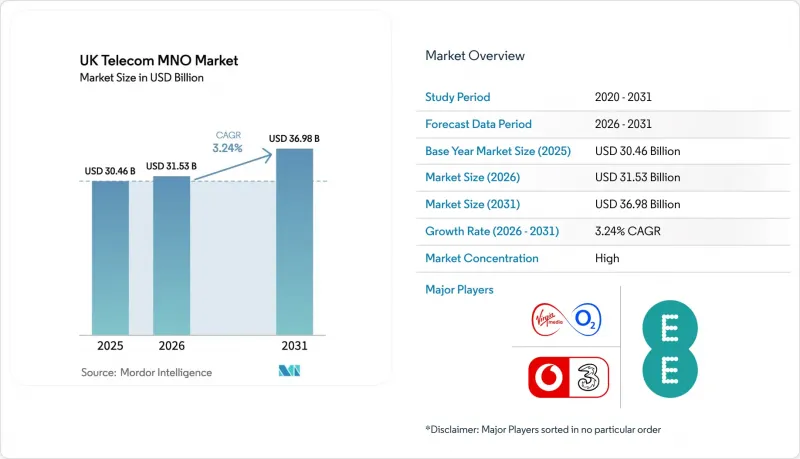
영국의 통신 MNO 시장 규모는 2025년 304억 6,000만 달러로 평가되었고, 2026년에는 315억 3,000만 달러로 추정되고, 2026-2031년 CAGR 3.24%로 성장을 지속할 전망이며, 2031년에는 369억 8,000만 달러에 이를 것으로 예측됩니다.
본 보고서는 서비스 유형별(음성 서비스, 데이터·인터넷 서비스, 메시징 서비스, IoT·M2M 서비스, OTT·유료 TV 서비스, 기타 서비스) 및 최종 사용자별(기업 및 일반 소비자)로 분류되어 있습니다. 시장 전망은 금액(달러) 및 수량(가입자 수)의 관점에서 제시되어 있습니다.
영국의 통신 MNO 시장 동향 및 인사이트
5G 독립형(SA) 방식의 확산이 가속화되어 프리미엄 ARPU 상승을 견인
2025년에 스탠드얼론 아키텍처가 전국적으로 상용화되고 4G 앵커가 제거됨에 따라, 대상 기업의 워크로드에서 엔드투엔드 지연 시간이 10밀리초 미만으로 단축되었습니다. EE사는 현재 일반 소비자 대상 후불제 ARPU의 3-5배 가격대에서 성능이 보장된 슬라이스 패키지를 판매하고 있습니다. 한편, 버진 미디어 O2와 합병한 보다폰 스리는 향후 10년간 총 110억 파운드(147억 4,000만 달러)를 네트워크 고밀도화에 투자할 예정입니다. 제조, 물류, 의료 분야의 조기 도입 기업들은 확정된 성능에 대해 대가를 지불할 의사가 있음을 보여주고 있으며, 이는 사용자 1인당 복합 수익의 구조적 상승을 예고하고 있습니다. 3.4-3.8GHz 대역의 광범위한 주파수 대역에 더해, 새로 할당된 26GHz 대역 블록을 통해 통신 사업자는 간섭을 최소화하면서 트래픽을 분리할 수 있게 되며, 이를 통해 서비스 품질에 대한 고객의 인식과 고객 유지율이 향상될 것입니다. Release-17 펌웨어가 탑재된 단말기의 출하량이 증가함에 따라, 프리미엄 요금제가 신규 계약 점유율을 확대할 것으로 예상되며, 소매 가격 상한 규제에도 불구하고 영국 통신 MNO 시장 전체의 수익성을 끌어올릴 것으로 전망됩니다.
유선·모바일 통합 번들, 해지율 감소 촉진
통신 사업자들은 기가비트 광대역, 5G 데이터 통신, 스트리밍 혜택을 하나의 청구서로 통합하여, 단일 요금제와 비교했을 때 가구당 해지율을 최대 30%까지 줄이고 있습니다. 버진 미디어 O2의 ‘Volt’ 요금제 가입자는 이미 이 회사의 가정용 고객 중 약 4분의 1을 차지하고 있으며, 모바일 전용 사용자에 비해 월간 수익이 평균 40-50% 더 높습니다. BT는 Openreach의 광섬유를 활용하여 EE 가입자들을 장기 계약으로 유도하고 있으며, 이를 통해 고객 확보 비용을 절감하고 단말기 금융의 유연성을 높이고 있습니다. 서비스가 통합된 가정에서는 유선 회선과 모바일 단말기 모두에서 데이터 소비량이 증가하고 있어, 이익률을 훼손하지 않으면서 이용량 증가를 가속화하고 있습니다. Ofcom이 유선 접속에는 도매 규정을 적용하고 있지만 케이블 회선에는 적용하지 않기 때문에 통합형 사업자는 모바일 전문 경쟁사가 재현하기 어려운 경제적 우위를 유지하고 있습니다.
주파수 대역과 에너지 비용이 EBITDA 마진을 압박
2025년 mm파 주파수 경매로 인해 라이선스 비용이 3억 4,300만 파운드(4억 6,000만 달러) 증가하였으며, 통신 사업자 1곳당 연간 주파수 사용료는 약 2억 파운드가 되었습니다. 동시에 무선 기지국의 전력 가격이 15-20% 상승하고, 트래픽량이 급증하는 바로 그 시점에 네트워크 영업 비용이 증가하고 있습니다. 기존의 구리선 회선을 보유한 통신 사업자는 광섬유 중심의 경쟁사에 비해 1기가바이트당 전력 소비량이 많아 경쟁 우위가 약화되고 있습니다. EE와 보다폰은 이용이 집중되지 않는 시간대에 기지국의 전원을 동적으로 차단하는 AI 기반 에너지 관리 소프트웨어를 시범 도입하고 있지만, 그 효과를 본격적으로 확대하기까지는 수년이 소요될 전망입니다. 그동안 서비스 비용 상승으로 인해 이익 마진이 줄어들고, 지방 지역의 통신망 밀도 향상을 위한 재량적 투자가 지연될 가능성이 있습니다.
부문별 분석
2025년, 데이터 및 인터넷 서비스는 영국 통신 MNO 시장 점유율의 55.87%를 차지했습니다. 이는 가정과 기업의 업무 부하가 모바일 광대역으로 이동하고 있으며, 광섬유 인프라가 미비한 지역에서 유선 회선의 대체가 진행되고 있음을 반영합니다. 2025년 3분기 모바일 트래픽은 1,257 페타바이트에 달했으며, 멀티 기가바이트급 데이터 통신량을 필요로 하는 고해상도 동영상, 클라우드 게임, 원격 근무용 용도에 힘입어 전년 동기 대비 18% 증가했습니다. 한편, IoT 및 M2M 연결은 2026-2031년 연평균 성장률(CAGR) 4.42%로 확대될 것으로 예측되며, 영국 통신 사업자(MNO) 시장 규모에서 다른 모든 서비스 분야를 능가하는 성장률을 보일 전망입니다. 협대역 IoT 및 LTE-M을 활용한 스마트 계량기 도입은 기기당월1-3파운드(1.27-3.81달러)의 가격 책정을 통해 예측 가능한 지속적인 수익을 창출하며, 트래픽 부하 증가도 최소화합니다. 반면, OTT 앱이 기존의 통화 및 문자 메시지를 대체함에 따라 음성 통화 및 SMS는 장기적인 감소 추세를 보이고 있으며, 이는 단독 수익원이라기보다는 무제한 데이터 요금제에 묶여 있는 고객 유지 기능으로 변화하고 있습니다.
메시징 수익도 비슷한 압박에 직면해 있지만, OTT 및 유료 TV와의 제휴를 통해 통신 사업자가 추가 비용을 거의 들이지 않고도 인지 가치를 높이는 스트리밍 시청권 번들을 제공함으로써 부가적인 수익을 창출하고 있습니다. 유선 통신과 모바일 통신을 결합한 하이브리드 번들 서비스는 해지율을 20-30% 낮추고, 가구당 지출을 40-50% 증가시킴으로써 지갑 점유율을 확대하고, 융합형 서비스로의 구조적 전환을 뒷받침하고 있습니다. IoT의 성장세는 2025년까지 전국에 5,300만 대의 스마트 계량기를 도입하라는 정부의 의무화 조치와, 자동차 제조업체들이 무선 소프트웨어 업데이트(OTA)를 위해 셀룰러 모뎀을 탑재하고 있다는 점에서도 혜택을 받고 있습니다. 기업 고객은 가동 시간 보장 및 전담 지원을 받기 위해 일반 소비자용 요금의 2-3배를 지불하고 있으며, 이는 2031년에 걸쳐 IoT가 영국 이동통신사(MNO) 시장 점유율에서 점점 더 큰 비중을 차지하게 될 이유를 뒷받침합니다. 5G Release-17 지원 모듈의 보급이 확대됨에 따라 연결 기기 수는 비약적으로 증가할 것이며, 제조, 의료, 물류 분야의 각 워크플로우에 셀룰러 연결이 통합될 전망입니다.
기타 혜택 :
- 엑셀 형식 시장 예측(ME) 시트
- 3개월간의 애널리스트 지원
자주 묻는 질문
목차
제1장 서론
제2장 조사 방법
제3장 개요
제4장 시장 구도
제5장 시장 규모 및 성장 예측
제6장 경쟁 구도
제7장 시장 기회 및 향후 전망
AJY 26.09.01According to Mordor Intelligence, the UK telecom MNO market size is expected to grow from USD 30.46 billion in 2025 to USD 31.53 billion in 2026 and is forecast to reach USD 36.98 billion by 2031 at 3.24% CAGR over 2026-2031.
This report is Segmented by Service Type (Voice Services, Data and Internet Services, Messaging Services, Iot and M2M Services, OTT and PayTV Services, and Other Services), and End User (Enterprises and Consumer). The Market Forecasts are Provided in Terms of Value (USD) and Volume (Subscribers).
UK Telecom MNO Market Trends and Insights
5G Stand-Alone Roll-Out Accelerates Premium ARPU Uplift
Standalone architecture went live nationwide in 2025, removing 4G anchors and cutting end-to-end latency below 10 milliseconds for eligible enterprise workloads. EE now markets guaranteed-slice packages at three to five times consumer postpaid ARPU, while Virgin Media O2 and the merged Vodafone-Three entity funnel a combined GBP 11 billion (USD 14.74 billion) into densification over the next decade. Manufacturing, logistics, and healthcare early adopters validate willingness to pay for deterministic performance, signaling a structural uplift in blended revenue per user. Spectrum depth across 3.4-3.8 GHz plus fresh 26 GHz blocks enables operators to isolate traffic with minimal interference, which raises perceived service quality and stickiness. As more devices ship with Release-17 firmware, premium tiers are expected to capture a rising share of new activations, pushing overall UK Telecom MNO Market yields higher despite retail-price caps.
Fixed-Mobile Convergence Bundles Deepen Churn Reduction
Operators bundle gigabit broadband, 5G data, and streaming perks into a single invoice, cutting household churn by up to 30% against single-play tariffs. Virgin Media O2's Volt base already accounts for roughly one-quarter of its residential customers, averaging 40-50% more monthly revenue than mobile-only users. BT exploits Openreach fiber to pull EE subscribers into long-term contracts, which reduces acquisition cost and unlocks handset financing flexibility. Converged homes consume more data across fixed and mobile screens, accelerating volume growth without cannibalizing margins. Because Ofcom enforces wholesaling rules on fixed access but not on cable, integrated players retain an economic edge that is difficult for pure-play mobile rivals to replicate.
Spectrum and Energy Costs Squeeze EBITDA Margins
The 2025 millimeter-wave auction added GBP 343 million (USD USD 460 million) in license fees, bringing annual spectrum charges to roughly GBP 200 million per operator. Simultaneously, electricity prices for radio sites rose 15-20%, inflating network opex just as traffic volumes accelerate. Operators with legacy copper incur higher watts-per-gigabyte than fiber-centric rivals, eroding competitive leverage. EE and Vodafone are testing AI-based energy-management software that dynamically powers down carriers during off-peak windows, but savings will take several years to scale. Until then, elevated cost of service narrows margin headroom and may delay discretionary investments in rural densification.
Other drivers and restraints analyzed in the detailed report include:
- Shared Rural Network Expands Coverage into New Demand Pockets
- Network-Slicing Guarantees for MEC-Based Verticals Unlock New Revenue Streams
- MVNO Migration Dilutes Headline ARPU in Cost-of-Living Crisis
For complete list of drivers and restraints, kindly check the Table Of Contents.
Segment Analysis
Data and internet services controlled 55.87% of UK Telecom MNO market share in 2025, reflecting the migration of household and enterprise workloads to mobile broadband as well as the substitution of fixed lines in fiber-poor areas. Quarterly mobile traffic hit 1,257 petabytes in Q3 2025, an 18% year-on-year jump fueled by high-definition video, cloud gaming, and remote-work applications that require multi-gigabyte allowances. Yet IoT and M2M connections are projected to expand at a 4.42% CAGR from 2026 to 2031, outpacing every other service line inside the UK Telecom MNO market size. Narrowband IoT and LTE-M smart-meter roll-outs priced at GBP 1-3 (USD 1.27-3.81) per device per month offer predictable recurring revenue and minimal incremental traffic load. Voice and SMS continue a secular decline as over-the-top apps displace traditional calls and texts, turning both into retention features bundled with unlimited data rather than standalone cash generators.
Messaging revenue faces identical pressure, while OTT and PayTV partnerships add ancillary income through bundled streaming rights that raise perceived value with little extra cost to carriers. Hybrid fixed-mobile bundles deepen wallet share by lowering churn 20-30% and lifting household spend 40-50%, reinforcing the structural tilt toward converged propositions. IoT momentum benefits from the government mandate to fit 53 million smart meters nationwide by 2025 and from automakers embedding cellular modems for over-the-air software updates. Industrial clients pay two to three times consumer rates for guaranteed uptime and dedicated support, underscoring why IoT will capture a growing slice of UK Telecom MNO market share through 2031. As 5G Release-17 modules gain scale, connected-device volumes are set to multiply, embedding cellular connectivity across manufacturing, healthcare, and logistics workflows.
Complete Report Scope:
- Overall Telecom Revenue and ARPU
- Service Type
- Voice Services
- Data and Internet Services
- Messaging Services
- IoT and M2M Services
- OTT and PayTV Services
- Other Services (VAS, Roaming and International, Enterprise and Wholesale, etc.)
- End-User
- Enterprises
- Consumer
List of Companies Covered in this Report:
- EE Limited (BT Group)
- Virgin Media O2
- Vodafone
Additional Benefits:
- The market estimate (ME) sheet in Excel format
- 3 months of analyst support
TABLE OF CONTENTS
1 INTRODUCTION
- 1.1 Study Assumptions and Market Definition
- 1.2 Scope of the Study
2 RESEARCH METHODOLOGY
3 EXECUTIVE SUMMARY
4 MARKET LANDSCAPE
- 4.1 Market Overview
- 4.2 Regulatory and Policy Framework
- 4.3 Spectrum Landscape and Competitive Holdings
- 4.4 Telecom Industry Ecosystem
- 4.5 Impact of Macroeconomic Factors on the Market
- 4.6 Industry Value Chain Analysis
- 4.7 Technological Outlook
- 4.8 Porter's Five Forces Analysis
- 4.8.1 Competitive Rivalry
- 4.8.2 Threat of New Entrants
- 4.8.3 Bargaining Power of Suppliers
- 4.8.4 Bargaining Power of Buyers
- 4.8.5 Threat of Substitutes
- 4.9 Market Drivers
- 4.9.1 5G Stand-Alone Roll-Out Accelerates Premium ARPU Uplift
- 4.9.2 Fixed-Mobile Convergence Bundles Deepen Churn Reduction
- 4.9.3 Shared Rural Network Expands Coverage into New Demand Pockets
- 4.9.4 CPI+3.9% Annual Tariff Indexing Protects Top-Line Growth
- 4.9.5 Network-Slicing Guarantees for MEC-Based Vertical Applications Unlock New Revenue Streams
- 4.9.6 Ofcom's OpenRAN Vendor Diversity Requirements Shorten 5G Small-Cell Deployment Permitting Times
- 4.10 Market Restraints
- 4.10.1 Spectrum and Energy Costs Squeeze EBITDA Margins
- 4.10.2 MVNO Migration Dilutes Headline ARPU in Cost-of-Living Crisis
- 4.10.3 Net-Zero Targets Front-Load Capex for Greener Networks
- 4.10.4 Net Neutrality and Environmental Levies Limit Differential Pricing for High-ARPU 5G Use Cases
- 4.11 Key MNO KPIs (2020-2025)
- 4.11.1 Unique Mobile Subscribers and Penetration Rate
- 4.11.2 Mobile Internet Users and Penetration Rate
- 4.11.3 SIM Connections by Access Technology and Penetration
- 4.11.4 Cellular IoT / M2M Connections
- 4.11.5 Broadband Connections (Mobile and Fixed)
- 4.11.6 ARPU (Average Revenue Per Unit)
- 4.11.7 Average Data Usage per Subscription (GB/Month)
- 4.12 Pricing Analysis
- 4.13 Analysis of Key Business Models in Telecom Sector
5 MARKET SIZE AND GROWTH FORECASTS (VALUE AND VOLUME)
- 5.1 Overall Telecom Revenue and ARPU
- 5.2 Service Type
- 5.2.1 Voice Services
- 5.2.2 Data and Internet Services
- 5.2.3 Messaging Services
- 5.2.4 IoT and M2M Services
- 5.2.5 OTT and PayTV Services
- 5.2.6 Other Services (VAS, Roaming and International, Enterprise and Wholesale, etc.)
- 5.3 End-User
- 5.3.1 Enterprises
- 5.3.2 Consumer
6 COMPETITIVE LANDSCAPE
- 6.1 Market Concentration
- 6.2 Strategic Moves and Investments, 2024-2026
- 6.3 Market Share Analysis for MNOs, 2025
- 6.4 Product Benchmarking Analysis for Mobile Network Services
- 6.5 MNO Snapshot (Subscribers, Churn Rate, ARPU, etc.)
- 6.6 Company Profiles of MNOs (Includes Business Overview | Service Portfolio | Financials | Business Strategy and Recent Developments | SWOT Analysis)
- 6.6.1 EE Limited (BT Group)
- 6.6.2 Virgin Media O2
- 6.6.3 Vodafone
7 MARKET OPPORTUNITIES AND FUTURE OUTLOOK
- 7.1 White-Space and Unmet-Need Assessment


