

|
시장보고서
상품코드
2100737
인도네시아의 통신 MNO 시장 : 점유율 분석, 업계 동향 및 통계, 성장 예측(2026-2031년)Indonesia Telecom MNO - Market Share Analysis, Industry Trends & Statistics, Growth Forecasts (2026 - 2031) |
||||||
 Mordor Intelligence
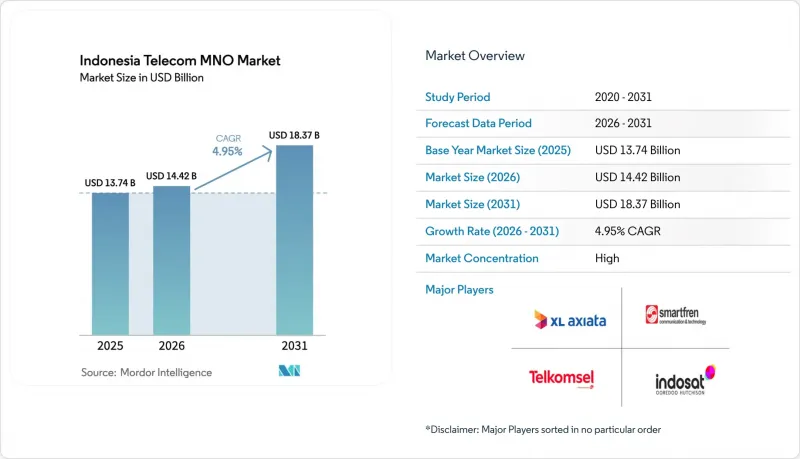
Mordor Intelligence에 의하면, 인도네시아 통신 MNO 시장 규모는 2025년에 137억 4,000만 달러로 평가되었고 2026년 144억 2,000만 달러에서 2031년까지 183억 7,000만 달러에 이를 것으로 예측되며, 예측 기간(2026-2031년) CAGR은 4.95%를 나타낼 전망입니다.
본 보고서는 서비스별(음성 서비스, 데이터·메시징 서비스, OTT 및 유료 TV 서비스)로 분류되어 있습니다. 시장 전망은 금액(미 달러) 및 규모(가입자 수)로 제시되어 있습니다.
인도네시아 통신 MNO 시장 동향 및 인사이트
동영상 및 게임 앱에 힘입은 모바일 데이터 소비량의 폭발적인 증가
텔콤 인도네시아는 2023년에 1억 2,710만 명의 모바일 광대역 사용자를 기록했으며, 데이터 트래픽은 1,790만 TB에 달했습니다. 이는 동영상 중심의 이용 습관이 현재 수익 창출의 기반이 되고 있음을 뒷받침합니다. Disney+Hotstar는 유료 스트리밍 계약의 70%를, Netflix는 46%를 차지하고 있으며, 이로 인해 평균적인 스마트폰 사용자는 4G 및 새롭게 등장한 5G 네트워크를 통해 고화질 컨텐츠를 소비하고 있습니다. XL Axiata는 휴가 성수기에 트래픽이 19% 급증했으며, 동 롬복에서는 34%, 말리보로 관광 지역에서는 115% 증가를 기록했습니다. 통신 사업자들은 현재 네트워크 혼잡을 방지하고 40밀리초 미만의 지연 시간이 필요한 게임 앱을 지원하기 위해 통신 용량 확충을 최우선 과제로 삼고 있습니다. 인도네시아 통신 MNO 시장에서는 풍부한 데이터 용량과 낮은 지연을 보장하는 프리미엄 번들 제공을 통해 데이터 수익화가 지속되고 있으며, 가격에 민감한 선불 사용자층에서도 업셀링 가능성이 대두되고 있습니다.
전국적인 4G 및 5G 구축이 외딴 섬 지역으로 확대
텔콤셀은 이미 247,472개의 기지국을 통해 인구의 97%를 커버하고 있으며, 5G 통신 속도는 64.3 Mbps에 달하고, 4G 속도의 약 4배를 실현하고 있습니다. 정부는 2025년까지 29개 도시에서 5G 상용화를 의무화하고 있으며, 백홀 병목 현상을 완화하는 ‘파라파 링’ 광섬유 백본이 이를 뒷받침하고 있습니다. 중파 대역의 주파수 대역 확대로 인해 통신 사업자들은 술라웨시 섬과 칼리만탄 섬에서 스마트 항만, 광업 자동화, 물류 회랑을 위한 엔터프라이즈급 서비스를 제공할 수 있게 될 것입니다. 프라이빗 LTE 및 5G 네트워크 시장 규모는 2027년까지 전 세계적으로 74억 달러에 달할 것으로 예상되며, 인도네시아 통신 사업자들은 유선 연결이 여전히 현실적이지 않은 공장이나 석유 시추 시설을 대상으로 전용 슬라이스 제공을 목표로 하고 있습니다. 네트워크 품질 향상은 고객 경험 점수 향상으로 이어져, 상위 요금제 이용 의향을 높이는 데 기여합니다.
ARPU를 끌어내리는 뿌리 깊은 경쟁
인도네시아의 선불 요금제 사용자들은 여전히 저렴한 가격을 중시하고 있으며, 데이터 사용량이 증가하고 있음에도 불구하고 종합 ARPU는 아시아태평양 평균인 10.5달러보다 훨씬 낮습니다. 2023년의 요금 경쟁으로 인해 트래픽이 증가했음에도 실질 수익률이 하락했고, Smartfren은 이익률을 회복하기 위해 데이터 요금을 10% 인상할 수밖에 없었지만, 경쟁사들은 이러한 움직임에 부분적으로만 동참했습니다. 현재 진행 중인 XL Axiata와 Smartfren의 합병은 시장 규율을 강화할 것으로 보이며, 연간 3억-4억 달러의 비용 절감이 예상되어, 이것이 수익에 대한 압박을 상쇄할 것으로 기대됩니다. 하지만 기업용 메시징 요금을 최대 97% 인하한 WhatsApp 등의 OTT(Over-The-Top) 사업자들은 기존의 음성 통화 및 SMS를 통한 수익을 계속해서 잠식하고 있습니다. 프로모션 경쟁이 치열해짐에 따라, 인도네시아 통신 MNO 시장에서는 당분간 가격 인상보다 판매량 확대를 우선시하는 상황이 지속될 것입니다.
부문 분석
2025년, 데이터 및 인터넷 서비스는 인도네시아 통신 MNO 시장 수익의 53.92%를 차지하며, 기존 음성 회선에서 구조적인 전환이 이루어지고 있음을 여실히 보여줍니다. 음성 서비스는 여전히 20.62%를 차지하고 있으며, VoLTE 도입에 힘입어 연평균 성장률(CAGR) 5.11%로 성장을 지속하고, 있습니다. 이는 OTT의 압박 속에서도 캐리어급 통화 품질이 여전히 매력적임을 보여줍니다. IoT 및 M2M은 5.75%의 점유율을 차지하고 있으며, 자동차, 은행, 유틸리티 등의 차량이 XL Axiata의 'IoT Connectivity+' 플랫폼에 연결됨에 따라 통신 사업자들은 2028년까지 기기 수가 3자리 수의 성장을 보일 것으로 예상하고 있습니다. OTT 및 유료 TV(PayTV) 서비스는 5.43%를 차지하고 있으며, Disney+Hotstar가 70%의 점유율을 차지하고 있는 것으로 보아 직접 스트리밍의 성장세가 두드러지고 있습니다. 나머지 14.28%는 도매, 로밍 및 다양한 디지털 서비스에서 비롯된 것으로, 이들은 연평균 성장률(CAGR) 25%로 확대되어 2023년에는 8억 달러에 달할 것으로 예상되는 클라우드 시장의 혜택을 받고 있습니다.
투자 우선순위로는 모바일 게임 및 산업 자동화를 위해 지연 시간을 20밀리초 미만으로 억제하는 패킷 코어 업그레이드와 엣지 컴퓨팅 노드가 중시되고 있습니다. 항만 및 광산에서의 프라이빗 LTE 시범 사업은 5G의 광범위한 수익화에 앞서 투자 회수 가능성을 검증하는 데 기여하고 있습니다. 수익 다각화는 인도네시아의 데이터 주권법을 준수하는 기업을 위해 설계된 사이버 보안 번들 및 데이터센터 코로케이션에서 비롯되고 있습니다. 유선과 모바일의 융합이 가속화되는 가운데, 통신 사업자들은 광섬유와 무제한 모바일 데이터, 스트리밍 컨텐츠를 번들로 제공함으로써 인도네시아 MNO 시장에서 가구 가입 유지율을 높이고 해지율을 낮추고 있습니다.
기타 혜택:
- 엑셀 형식 시장 예측(ME) 시트
- 3개월간의 애널리스트 지원
자주 묻는 질문
목차
제1장 서론
제2장 조사 방법
제3장 주요 요약
제4장 시장 구도
제5장 시장 규모와 성장 예측
제6장 경쟁 구도
제7장 시장 기회와 향후 전망
JHS 26.08.07According to Mordor Intelligence, the Indonesia telecom MNO market size was valued at USD 13.74 billion in 2025 and estimated to grow from USD 14.42 billion in 2026 to reach USD 18.37 billion by 2031, at a CAGR of 4.95% during the forecast period (2026-2031).
This report is Segmented by Services (Voice Services, Data and Messaging Services, and OTT and Pay TV Services). The Market Forecasts are Provided in Terms of Value (USD) and Volume (Subscribers).
Indonesia Telecom MNO Market Trends and Insights
Explosive mobile data consumption fueled by video and gaming apps
Telkom Indonesia recorded 127.1 million mobile broadband users in 2023 with data traffic of 17.9 million TB, confirming that video-centric habits now anchor revenue decisions. Disney+ Hotstar captured 70% of paid streaming subscriptions, while Netflix held 46%, pushing average smartphone users to consume high-definition content on 4G and emerging 5G networks. XL Axiata logged 19% traffic spikes during peak holidays, with East Lombok surging 34% and Malioboro tourism zones up 115%. Operators now prioritize capacity upgrades to avoid congestion and to support gaming applications that demand latency below 40 ms. The Indonesia telecom MNO market sees sustained data monetization as premium bundles pair generous quotas with low-latency assurance, creating upsell potential even in a price-sensitive prepaid base.
Nationwide 4G and 5G rollout reaching outer islands
Telkomsel already covers 97% of the population through 247,472 base stations, and its 5G speeds reach 64.3 Mbps, almost four times faster than 4G. The government mandates commercial 5G presence in 29 cities by 2025, supported by the Palapa Ring fiber backbone that reduces backhaul bottlenecks. Expanded mid-band spectrum will enable operators to deliver enterprise-grade service for smart ports, mining automation, and logistics corridors in Sulawesi and Kalimantan. With private LTE and 5G networks forecast to reach USD 7.4 billion globally by 2027, Indonesian carriers target dedicated slices for factories and oil rigs where wired links remain impractical. Improved network quality translates into stronger customer experience scores, reinforcing willingness to pay for elevated tiers.
Persistent price competition suppressing ARPU
Indonesian prepaid users still focus on affordability, keeping blended ARPU well below the Asia-Pacific average of USD 10.5 despite heavier data usage. Tariff wars in 2023 shaved effective yields even as traffic grew, compelling Smartfren to hike data prices by 10% to restore margins, a move only partly matched by rivals. The pending XL Axiata-Smartfren merger should raise market discipline, promising USD 300-400 million in annual cost savings that offset revenue pressure. Nevertheless, over-the-top players such as WhatsApp, which cut business messaging fees by up to 97%, continue to erode legacy voice and SMS income. Sustained promotional intensity will keep the Indonesia telecom MNO market chasing volume over price increases in the near term.
Other drivers and restraints analyzed in the detailed report include:
- Fixed-mobile convergence bundles lifting household ARPU
- Government-led Palapa Ring and Nusantara fiber backbone projects
- Fragmented spectrum and high reserve prices
For complete list of drivers and restraints, kindly check the Table Of Contents.
Segment Analysis
Data and Internet Services accounted for 53.92% of Indonesia telecom MNO market revenue in 2025, underscoring a structural pivot from legacy voice lines. Voice still holds 20.62% with a 5.11% CAGR through VoLTE adoption, proving carrier-grade call quality has residual appeal even under OTT pressure. IoT and M2M claim 5.75% share, and operators expect triple-digit device growth by 2028 as automotive, banking, and utilities fleets connect to XL Axiata's IoT Connectivity+ platform. OTT and PayTV services sit at 5.43%, with Disney+ Hotstar's 70% slice highlighting direct streaming traction. The remainder 14.28% comes from wholesale, roaming, and varied digital services that ride a cloud market expanding at 25% CAGR to USD 0.8 billion in 2023.
Investment priorities favor packet-core upgrades and edge computing nodes that keep latency below 20 ms for mobile gaming and industrial automation. Private LTE pilots in ports and mining sites help validate returns ahead of broad 5G monetization. Revenue diversification flows from cybersecurity bundles and data-center colocation designed for enterprises complying with Indonesia's data-sovereignty law. With fixed-mobile convergence gaining momentum, operators bundle fiber with unlimited mobile data and streaming content, reinforcing household stickiness and reducing churn within the Indonesia telecom MNO market.
Complete Report Scope:
- Overall Telecom Revenue and ARPU
- Service Type
- Voice Services
- Data and Internet Services
- Messaging Services
- IoT and M2M Services
- OTT and PayTV Services
- Other Services (VAS, Roaming And International Services, Enterprise And Wholesale Services, etc.)
- End-user
- Enterprises
- Consumer
List of Companies Covered in this Report:
- Telkomsel
- Indosat Ooredoo Hutchison
- XL Axiata
- Smartfren
Additional Benefits:
- The market estimate (ME) sheet in Excel format
- 3 months of analyst support
TABLE OF CONTENTS
1 INTRODUCTION
- 1.1 Study Assumptions and Market Definition
- 1.2 Scope of the Study
2 RESEARCH METHODOLOGY
3 EXECUTIVE SUMMARY
4 Market Landscape
- 4.1 Market Overview
- 4.2 Regulatory And Policy Framework
- 4.3 Spectrum Landscape And Competitive Holdings
- 4.4 Telecom Industry Ecosystem
- 4.5 Macroeconomic And External Drivers
- 4.6 Porter's Five Forces
- 4.6.1 Competitive Rivalry
- 4.6.2 Threat of New Entrants
- 4.6.3 Bargaining Power of Suppliers
- 4.6.4 Bargaining Power of Buyers
- 4.6.5 Threat of Substitutes
- 4.7 Key MNO KPIs (2020-2025)
- 4.7.1 Unique Mobile Subscribers And Penetration Rate
- 4.7.2 Mobile Internet Users And Penetration Rate
- 4.7.3 SIM Connections by Access Technology And Penetration
- 4.7.4 Cellular IoT / M2M Connections
- 4.7.5 Broadband Connections (Mobile And Fixed)
- 4.7.6 ARPU (Average Revenue Per User)
- 4.7.7 Average Data Usage per Subscription (GB/month)
- 4.8 Market Drivers
- 4.8.1 Explosive mobile data consumption fuelled by video And gaming apps
- 4.8.2 Nationwide 4G/5G rollout reaching outer islands
- 4.8.3 Fixed-mobile convergence bundles lifting household ARPU
- 4.8.4 Government-led Palapa Ring And Nusantara fiber backbone projects
- 4.8.5 Hyperscale data-centre interconnect demand under Indonesia PDP law
- 4.8.6 LEO-satellite backhaul enabling remote-area enterprise IoT
- 4.9 Market Restraints
- 4.9.1 Persistent price competition suppressing ARPU
- 4.9.2 Fragmented spectrum And high reserve prices
- 4.9.3 Right-of-way permit delays slowing fiber rollout
- 4.9.4 Shortage of 5G RF planning talent outside Java
- 4.10 Technological Outlook
- 4.11 Analysis of key business models in Telecom
- 4.12 Analysis of Pricing Models and Pricing
5 MARKET SIZE AND GROWTH FORECASTS (VALUE)
- 5.1 Overall Telecom Revenue and ARPU
- 5.2 Service Type
- 5.2.1 Voice Services
- 5.2.2 Data and Internet Services
- 5.2.3 Messaging Services
- 5.2.4 IoT and M2M Services
- 5.2.5 OTT and PayTV Services
- 5.2.6 Other Services (VAS, Roaming And International Services, Enterprise And Wholesale Services, etc.)
- 5.3 End-user
- 5.3.1 Enterprises
- 5.3.2 Consumer
6 COMPETITIVE LANDSCAPE
- 6.1 Market Concentration
- 6.2 Strategic Moves and Investments by key vendors, 2023-2025
- 6.3 Market share analysis for MNOs, 2024
- 6.4 MNO snapshot (subscribers, churn rate, ARPU, etc.)
- 6.5 Company Profiles* of MNOs (Includes Business Overview | Service Portfolio | Financials | Business Strategy and Recent Developments | SWOT Analysis)
- 6.5.1 Telkomsel
- 6.5.2 Indosat Ooredoo Hutchison
- 6.5.3 XL Axiata
- 6.5.4 Smartfren
7 MARKET OPPORTUNITIES AND FUTURE OUTLOOK
- 7.1 White-space And Unmet-Need Assessment


