

|
시장보고서
상품코드
2118870
불화 알루미늄 : 시장 점유율 분석, 업계 동향 및 통계, 성장 예측(2026-2031년)Aluminum Fluoride - Market Share Analysis, Industry Trends & Statistics, Growth Forecasts (2026 - 2031) |
||||||
 Mordor Intelligence
Mordor Intelligence에 의하면, 불화 알루미늄 시장은 2025년에 23억 9,000만 달러 규모로 평가되었습니다. 2026년 25억 3,000만 달러에서 2031년까지 33억 3,000만 달러에 이를 것으로 예상되며, 예측 기간(2026-2031년) 연평균 복합 성장률(CAGR)은 5.65%를 나타낼 전망입니다.
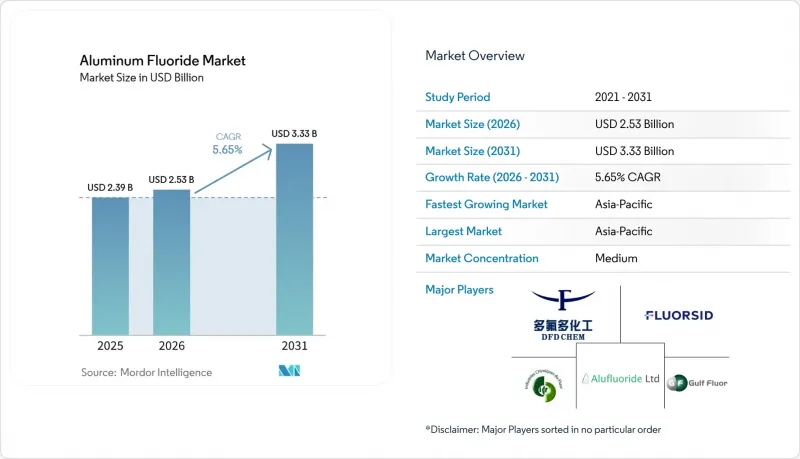
본 보고서는 제조 공정(건식, 습식), 형태(분말, 과립), 용도(전해액 첨가제, 플럭스제, 촉매·촉매 지지체 등), 최종 이용 산업(알루미늄 제련, 화학 등),및 지역(아시아태평양, 북미, 유럽, 남미, 중동 및 아프리카)별로 분류되어 있습니다. 시장 예측은 금액(미화) 기준으로 제시되어 있습니다.
세계의 불화 알루미늄 시장 동향 및 인사이트
전기차 및 운송 분야에서의 경량 알루미늄 수요 증가
2024년 전 세계 전기차 판매 대수는 1,700만 대를 넘어 전년 대비 25% 증가했습니다. 이러한 성장은 차체 구조 및 배터리 시스템에서 경량 소재에 대한 수요를 뒷받침하고 있습니다. 자동차 제조업체들은 이러한 용도에서 경량 소재의 사용을 확대하고 있으며, 알루미늄 생산량 증가에 따라 전해액 첨가제에 대한 수요가 높아짐에 따라 불화 알루미늄 시장을 견인하고 있습니다. 또한, 최신 제련소 설계에서는 용융욕의 조성을 보다 엄격하게 제어해야 하므로 화학적 품질의 일관성이 점점 더 중요해지고 있습니다. 이러한 관계는 수요 증가를 뒷받침하고 있으며, 엄격한 공정 사양을 충족하는 공급업체에 유리하게 작용할 가능성이 있습니다.
고순도 불화 알루미늄과 제련 공정에서의 전해액 성능 향상
제련소 운영자들은 불화 알루미늄 투입 관리를 단순한 일상적인 조달 결정이 아닌, 에너지 관리의 일환으로 수행하는 경향이 강해지고 있습니다. ICSOBA 회의록에 따르면, 500 kA 셀에서 전해액 조성 관리를 개선한 결과, 알루미늄 1톤당 628 kWh의 직류 에너지 사용량을 절감할 수 있었다고 보고되었습니다. 전류 효율을 향상시킴으로써 안정적인 전해액 상태를 유지하면서 에너지 소비를 줄일 수 있습니다. 후드 설치 및 가스 처리를 개선함으로써 배기가스에서 더 많은 불화수소를 회수할 수 있게 되어, 개별 공장의 순수 공급량을 실질적으로 줄일 수 있을 가능성이 있습니다. 그럼에도 불구하고, 전체 가동 과정에서 신뢰성 높은 첨가가 필요한 더 대규모의 고효율 전해조 라인이 계속해서 불화 알루미늄 시장을 지탱하고 있습니다. 따라서 구매자들은 순도, 재현성 및 기술 지원을 더욱 중요하게 여기게 되었습니다.
불소 배출 및 폐기물 관리에 관한 환경 규제
환경 규제를 준수하는 것은 불화 알루미늄 생산 업체 및 제련소에 있어 설비 투자 비용 및 운영 비용 증가로 이어집니다. 불화 알루미늄 생산 하위 범주에 관한 미국의 규정은 30일 평균 불소 배출량의 상한을 제품 1kg당 0.63kg으로 정하고 있습니다. 제출된 조사 보고서에는 인도의 2025년 개정 규정도 언급되어 있으며, 이 규정은 전해조실에서의 총 불소 배출량을 알루미늄 1톤당 0.8kg, 불화 알루미늄 사용량을 알루미늄 1톤당 20kg으로 규정하고 있습니다. 이러한 요건으로 인해 정확한 투여와 고품질 제품에 대한 수요가 높아질 가능성이 있습니다. 더 강력한 가스 처리 시스템이나 전해조 후드를 설치한 시설에서는 배기가스에서 더 많은 불화수소를 회수할 수 있습니다. 이러한 회수를 통해 안정적인 가동을 유지하는 공장의 교체 수요를 줄일 수 있는 반면, 규제 기준이 강화됨에 따라 소규모 공급업체 시장 진입은 더욱 어려워질 수 있습니다.
부문별 분석
2025년 시점에서 불화 알루미늄 시장의 72.81%를 건식 공정이 차지했습니다. 이는 기존 제련소가 무수 불화수소와 수산화 알루미늄을 기반으로 한 검증된 제조 공정을 채택하고 있기 때문입니다. 이 공정은 안정적인 공급량, 일관된 제품 특성 및 기존 취급 시스템과의 호환성을 중시하는 대규모 제련소 고객의 요구를 충족시킵니다. 건식 제조는 불화수소와 황산을 일괄적으로 조달할 수 있는 지역에서 확고한 기반을 구축하고 있습니다. 또한, 기존 제련소의 사양에 부합하는 등급의 제품을 공급하는 것도 가능합니다. 그러나 건식 공정의 경제성은 여전히 산성 등급 형석의 확보 가능성과 비용에 크게 좌우되는 상황입니다. 이러한 압박으로 인해 생산자들은 대체 원료 공급 경로를 모색해야 하는 상황에 놓여 있습니다.
습식 공정은 2031년까지 연평균 성장률(CAGR) 6.12%로 확대될 것으로 예측됩니다. 이 공정에서는 인산비료 생산 과정에서 회수된 플루오로규산을 수산화알루미늄과 반응시키기 때문에 형석 공급망에 대한 의존도를 낮출 수 있습니다. 2025년 연구에서는 인 화학제품 제조 중 하나인 플루오로규산를 이용한 습식 합성이 검토되었으며, 순도와 반응 수율의 향상이 보고되었습니다. 인도의 제조업체들은 인근에 위치한 인산 제조 시설을 플루오로규산공급원으로 활용해 왔습니다. 또한, 습식 처리는 건식 처리에 비해 불화수소 가스 배출량을 줄일 가능성이 있습니다.
제품의 밀도나 입자 특성은 건식 공법으로 제조된 제품과 다를 수 있으므로, 제련소에서는 전환 전에 투입 설정을 조정해야 할 수도 있습니다. 이러한 운영상의 변경은 습식 공법의 경제성이 유리하더라도 전환 비용을 발생시킵니다. 따라서 제련소가 이미 익숙한 등급에 맞추어 원료 취급, 보관 및 용해조 제어 관행을 조정한 경우, 건식 공정이 계속해서 중요할 가능성이 높습니다. 이 결정은 화학 물질 구매 가격에만 국한되는 것이 아닙니다. 입자의 거동, 공급 속도 및 일상적인 전해조 제어에 미치는 영향을 확인하기 위해 필요한 작업도 고려해야 합니다.
습식 공정을 채택하는 생산자는 인근 인산염 사업장에서 실리콘 불화물을 안정적으로 조달할 수 있는 경우, 그 입지를 강화할 수 있습니다. 이러한 협력을 통해 비료 제품을 예측 가능한 산업용 원료로 전환하고, 광업과 관련된 공급 제한의 영향을 완화할 수 있습니다. 또한, 입수 가능한 조사에 따르면 이 공정은 불화수소 배기가스 부하를 줄이는 데에도 기여하는 것으로 알려져 있어, 배출 규제가 엄격한 지역에서는 중요한 요소가 될 수 있습니다. 그러나 연속 제련에서는 장기간의 가동 중단을 허용할 수 없기 때문에 고객은 여전히 건식 공정공급을 적합한 대안으로 유지할 가능성이 있습니다. 이러한 상황으로 인해 불화 알루미늄 시장에서는 여러 제조 공정이 공존할 여지가 생겨나고 있습니다.
따라서 생산자들은 기초 원료 비용뿐만 아니라 공급 안정성과 제품의 균일성 측면에서도 경쟁하게 될 것입니다. 습식 공정의 확대가 모든 공장이 한꺼번에 조달처를 변경한다는 것을 의미하지는 않습니다. 습식 공정은 신규 시설 중 제품 특성에 맞추어 수취 및 투입 시스템을 설계할 수 있는 곳에서 우선 시장 점유율을 확대할 가능성이 높습니다. 기존 공장의 경우, 적합성 평가 및 운전 시험 결과에 따라 도입 속도가 결정될 것입니다. 이러한 상황은 건식 공정의 생산량을 갑작스럽게 대체하기보다는 단계적인 전환을 촉진하는 요인이 될 것입니다.
2025년 시점에서 분말은 불화 알루미늄 시장 규모의 62.33%를 차지했습니다. 이러한 주도적인 지위는 가동 중인 제련소에 확립된 저장, 공기 이송 및 투여 시스템을 반영합니다. 공장 직원들은 분말 제품에 익숙하며, 이러한 제품은 기존 조달 사양에 부합합니다. 많은 구형 시설에서는 분말 등급에 맞추어 설계된 설비가 가동되고 있습니다. 또한 생산자는 확립된 포장 및 물류 네트워크를 통해 분말을 운송할 수도 있습니다. 이러한 요인들이 이 형태의 광범위한 도입 기반을 뒷받침하고 있습니다.
과립은 현대적인 전해조실에 자동 자재 이송 시스템이 도입됨에 따라 2031년까지 연평균 성장률(CAGR) 5.93%를 나타낼 것으로 예측됩니다. 과립 형태의 소재는 취급 시 발생하는 분진을 줄이고, 계량 장치에서의 유동 제어를 개선할 수 있습니다. ICSOBA가 발표한 조사에서는 저부피밀도 및 고부피밀도의 불화 알루미늄을 비교하여, 제품 특성이 제련 과정의 유동성에 어떻게 영향을 미치는지 논의했습니다. 인도 및 중동의 신규 프로젝트에서는 구형 설비를 개조하는 대신, 설계 단계에서 과립형 취급 시스템을 지정할 수 있습니다. 과립상 제품은 세척 및 유지보수 부담을 줄일 수 있으므로, 가격 측면에서 프리미엄이 책정될 가능성이 있습니다. 또한, 건식 스크러빙으로 회수된 미세한 불화 알루미늄은 알루미나가 농축된 상태로 용액에 재투입될 수 있으므로, 금속 1톤당 순교환 수요를 억제하는 요인이 될 수 있습니다.
따라서 형태 선택은 포장 형태뿐만 아니라 운영 관행에 따라 달라집니다. 기존 플랜트에서는 오랜 기간에 걸쳐 분말 사용법이 정교해졌기 때문에 기존 시스템에서는 분말이 여전히 실용적입니다. 또한, 분말은 널리 구할 수 있으므로 구매자가 공급업체 간의 제안을 비교하기 쉽습니다. 프로젝트가 수작업 개입을 최소화하면서 자재 흐름을 제어하는 것을 목표로 할 경우, 과립 형태가 더 매력적일 수 있습니다. 취급 시 분진 발생량이 적기 때문에 작업장의 청결을 유지하고 이송 설비에 가해지는 부담을 줄일 수 있습니다. 이러한 장점은 시설이 처음부터 자동 투여를 전제로 설계된 경우에 특히 중요합니다.
신설 플랜트의 경우 시운전 전에 과립용 저장 및 공급 설비를 선정할 수 있지만, 노후화된 플랜트에서는 기존 시스템을 개조하는 데 드는 비용을 평가해야 할 수도 있습니다. 바로 이러한 차이가 불화 알루미늄 시장에서 두 형태에 대한 수요가 지속되고 있는 이유를 설명해 줍니다. 과립 등급은 제어되고 재현성 있는 첨가가 요구되는 고전류 제련로에서 실용적인 이점을 제공합니다. 반면, 현행 시스템이 안정적으로 가동되고 있어 전환을 통해 충분한 이점을 기대하기 어려운 플랜트의 경우, 분말이 여전히 적절한 선택지가 됩니다. 따라서 생산자는 각 고객의 가동 조건에 맞추어 형태, 밀도, 포장, 물류를 조정해야 합니다. 형태별 부문은 제련소의 연식, 자동화 수준 및 회수 재료 관리 정책에 따라 형성됩니다. 이러한 요인으로 인해 분말에 대한 수요는 지속될 것으로 보이지만, 예측 기간 동안 과립에 대한 수요는 더 빠르게 확대될 것으로 예측됩니다.
지역별 분석
아시아태평양은 2025년에 불화 알루미늄 시장의 49.82%를 차지했으며, 2031년까지 연평균 성장률(CAGR) 6.18%를 나타낼 것으로 전망됩니다. 중국은 제련 기지가 국내 생산량의 상당 부분을 흡수하고 있어 이 지역 최대의 생산 및 소비 거점으로 자리매김하고 있습니다. 또한, 이 지역은 전 세계 불화 알루미늄 생산량의 60% 이상을 공급하고 있습니다. 인도와 중동에서는 알루미늄 생산 능력 확대 프로젝트를 통해 상호 보완적인 수요가 발생하고 있습니다. 일본과 한국에서는 광학용 및 전자기기용 소재와 같은 소규모 프리미엄 부문이 시장을 지탱하고 있습니다. 이들 국가의 반도체 및 정밀 광학 기기 공급망에서는 일반적인 제련 용도보다 더 엄격한 순도 인증이 요구됩니다.
북미 및 유럽 수요는 성숙한 제련 자산과 높은 규정 준수 요건에 의해 뒷받침되고 있습니다. 미국은 2025년 산용 불화칼슘의 100%를 수입에 의존했으며, 그 내역은 멕시코가 64%, 베트남이 12%, 중국이 10%를 차지했습니다. 이러한 높은 의존도로 인해 지역 생산자들은 물류 및 원료 공급 차질에 대한 위험에 노출되어 있습니다. 유럽 역시 불소화학물제품의 비용 상승으로 인한 유사한 압박에 직면해 있지만, 현지 공급업체들은 리드타임 단축, 규정 준수 지원, 공급 보장을 통해 고객을 유지할 수 있습니다. Alcoa가 2025년 4월 IGNIS Equity Holdings와 체결한 거래는 스페인의 San Ciprian 알루미늄 복합 단지를 안정화하고, 중요한 현지 소비 기반을 유지하는 것을 목적으로 했습니다.
남미, 중동 및 아프리카는 여전히 소규모 시장이지만, 지역 공급 체계에서 전략적으로 중요한 위치를 차지하고 있습니다. 브라질의 수력 발전 기반은 알루미늄 제련 수요를 뒷받침하고 있으며, 아르헨티나는 틈새 소비 시장으로서 기여하고 있습니다. 남미에서는 현지 형석 자원과 인산염 제품군이 원료 공급 측면에서 일정한 우위를 가져다줄 가능성이 있습니다. 걸프 지역에서는 불화 알루미늄 생산을 통해 아시아나 유럽에서 수입하는 것보다 더 짧은 납기로 제련소에 공급할 수 있습니다. 걸프 지역의 생산 능력은 저비용 전력을 활용하여 알루미늄 밸류체인을 발전시키려는 더 광범위한 계획과 밀접하게 관련되어 있습니다. 새로운 제련 프로젝트가 시작될 때마다 불화 알루미늄에 대한 지속적인 구매 수요가 발생하여, 불화 알루미늄 시장에 장기적인 지역 수요 기반을 마련해 줄 것입니다.
이 지역의 상황은 생산 거점이 고객에게 왜 중요한지를 여실히 보여줍니다. 제련소에서는 불화 알루미늄을 지속적으로 사용하기 때문에 납품 지연은 운영상의 우려 요인이 될 수 있습니다. 생산 능력이 확대되고 있는 지역 근처에 위치한 생산자는 운송 시간을 단축하고 더 신속한 서비스를 제공할 수 있습니다. 이러한 지리적 근접성은 구매자가 생산 일정이나 유지보수 요건에 따라 주문을 조정해야 할 때 중요해집니다. 남미에서는 수력 발전과 1차 알루미늄 간의 연계가 가동 중인 제련소 수요를 뒷받침하고 있습니다. 현지 원료 공급이라는 강점은 경쟁력을 높이는 데 도움이 되지만, 신뢰할 수 있는 가공 및 운송의 필요성을 배제하지는 않습니다.
중동 및 아프리카에서는 알루미늄 밸류체인에 대한 투자를 통해 지역 공급업체들이 신규 생산 능력이 가동되기 시작할 때 이를 지원할 기회를 얻고 있습니다. 걸프 지역의 입지는 그렇지 않으면 더 긴 공급 경로에 의존할 수밖에 없는 고객에게 서비스를 제공하는 데 특히 유용합니다. 이러한 지역적 동향은 불화 알루미늄 시장에서 아시아태평양의 주도적인 역할을 바꾸지는 않습니다. 그러나 이러한 움직임은 중국 이외의 지역에 새로운 수요를 창출하고, 더 폭넓은 공급업체 기반을 뒷받침하는 결과로 이어집니다. 이러한 추세로 인해 공급 계약, 현지 재고, 그리고 각 고객의 가동 시스템에 적합한 제품 등급의 중요성도 높아지고 있습니다. 따라서 지역적 요인은 공급 비용과 구매자가 요구할 가능성이 있는 제품 유형 모두에 영향을 미칩니다.
기타 혜택 :
- 엑셀 형식 시장 예측(ME) 시트
- 3개월간의 애널리스트 지원
자주 묻는 질문
목차
제1장 서론
제2장 조사 방법
제3장 주요 요약
제4장 시장 구도
제5장 시장 규모 및 성장 예측
제6장 경쟁 구도
제7장 시장 기회 및 향후 전망
KTH 26.09.04According to Mordor Intelligence, the aluminum fluoride market was valued at USD 2.39 billion in 2025 and is estimated to grow from USD 2.53 billion in 2026 to reach USD 3.33 billion by 2031, at a CAGR of 5.65% during the forecast period (2026-2031).
This report is Segmented by Production Process (Dry Process, Wet Process), Form (Powder, Granules), Application (Electrolyte Additive, Flux Agent, Catalyst & Catalyst Support, and More), End-Use Industry (Aluminum Smelting, Chemicals, and More), and Geography (Asia-Pacific, North America, Europe, South America, Middle East and Africa). The Market Forecasts are Provided in Terms of Value (USD).
Global Aluminum Fluoride Market Trends and Insights
Growing Demand for Lightweight Aluminum in Electric Vehicles and Transportation Applications
Global electric vehicle sales exceeded 17 million units in 2024, increasing by 25% from the previous year. This growth supports demand for lightweight materials in vehicle structures and battery systems. Vehicle manufacturers are increasing their use of lightweight materials across these applications, which supports the aluminum fluoride market as higher aluminum output requires more electrolyte additives. Newer smelter designs also require tighter control of bath composition, increasing the importance of consistent chemical quality. This relationship supports volume demand and may favor suppliers that meet stringent process specifications.
High-Purity Aluminum Fluoride and Enhanced Electrolyte Performance in Smelting
Smelter operators increasingly manage aluminum fluoride dosing as part of energy management rather than as a routine purchasing decision. Proceedings from ICSOBA reported that improved electrolyte composition management in 500 kA cells reduced direct-current energy use by 628 kWh per tonne of aluminum. Improved current efficiency can reduce energy consumption while maintaining stable bath conditions. Better hooding and gas treatment can recover more hydrogen fluoride from exhaust streams, which may reduce net make-up requirements at individual plants. Even so, larger and more efficient potlines that require reliable additions throughout operation continue to support the aluminum fluoride market. Buyers are therefore placing greater value on purity, repeatability, and technical support.
Environmental Rules for Fluoride Emissions and Waste Management
Environmental compliance increases capital and operating costs for aluminum fluoride producers and smelters. The US rule for the aluminum fluoride production subcategory sets a 30-day average fluoride effluent limit of 0.63 kg/kkg of product. The supplied research also cited India's revised 2025 rules, which set a total fluoride limit of 0.8 kg per tonne of aluminum from electrolytic pot rooms and an aluminum fluoride use limit of 20 kg per tonne of aluminum. These requirements can increase demand for accurate dosing and high-quality products. Facilities that install stronger gas treatment systems and pot hooding can recover more hydrogen fluoride from exhaust. This recovery can lower replacement needs at mature plants, while higher compliance standards can make market entry more difficult for smaller suppliers.
Other drivers and restraints analyzed in the detailed report include:
- Investment in Aluminum Production Capacity
- Supply Chain Integration and Raw Material Availability
- Fluorspar and Hydrogen Fluoride Volatility and Specialty Quality Requirements
For complete list of drivers and restraints, kindly check the Table Of Contents.
Segment Analysis
The dry process held 72.81% of the aluminum fluoride market share in 2025, as established plants use a proven route based on anhydrous hydrogen fluoride and aluminum hydroxide. This process serves large smelter customers that prioritize reliable volumes, consistent product properties, and compatibility with existing handling systems. Dry production has an established base in regions with integrated access to hydrogen fluoride and sulfuric acid. It can also deliver grades that align with conventional smelter specifications. However, dry-route economics remain sensitive to the availability and cost of acid-grade fluorspar. These pressures encourage producers to assess alternative feedstock routes.
The wet process is forecast to expand at a 6.12% CAGR through 2031. It reacts fluorosilicic acid recovered from phosphate fertilizer production with aluminum hydroxide, reducing dependence on the fluorspar supply chain. A 2025 study examined wet synthesis from the fluorosilicic acid byproduct of phosphorus chemical production and reported improvements in purity and reaction yield. Indian manufacturers have used nearby phosphoric acid operations as a source of fluorosilicic acid. Wet processing can also generate less hydrogen fluoride off-gas than dry processing.
Product density and particle characteristics may differ from dry-route output, so smelters may need to adjust dosing settings before switching. These operational changes create switching costs, even when wet-process economics are favorable. For this reason, the dry route is likely to remain important where smelters have already calibrated material handling, storage, and bath-control practices around a familiar grade. The decision is not limited to the chemical's purchase price. It also includes the work required to confirm particle behavior, feeding rates, and the impact on routine potline control.
A wet-route producer can strengthen its position when it has dependable access to fluorosilicic acid from nearby phosphate operations. That connection can convert a fertilizer byproduct into a predictable industrial input and reduce exposure to mining-related supply restrictions. Available research also links this route to a lower hydrogen fluoride off-gas burden, which can be important in locations with stricter emission requirements. However, customers may still retain dry-route supply as a qualified alternative because continuous smelting does not allow extended interruptions. This dynamic creates room for more than one process route in the aluminum fluoride market.
Producers therefore compete on supply security and product consistency, as well as on the cost of the underlying feedstock. Wet-route expansion does not mean all plants will change their sourcing at once. The wet process is more likely to gain share first where new facilities can design receiving and dosing systems around its product characteristics. In established plants, qualification and operating trials can determine the pace of adoption. This mix supports a gradual shift rather than a sudden replacement of dry-process output.
Powder accounted for 62.33% of the aluminum fluoride market size in 2025. Its leading position reflects the established storage, pneumatic conveying, and dosing systems used at operating smelters. Plant personnel are familiar with powder products, and these products align with existing procurement specifications. Many older facilities operate equipment designed around powder grades. Producers can also transport powder through established packaging and logistics networks. These factors sustain a large installed base for this form.
Granules are projected to grow at a CAGR of 5.93% through 2031 as modern pot rooms adopt automated material handling systems. Granular material can reduce dust during handling and improve flow control in dosing equipment. Research presented by ICSOBA compared low-bulk-density and high-bulk-density aluminum fluoride and discussed how product characteristics affect flowability in smelting. New projects in India and the Middle East can specify granular handling systems during the design phase instead of adapting older equipment. Granules may command a price premium because they can reduce cleaning and maintenance requirements. Fine aluminum fluoride captured during dry scrubbing can also return to the bath with enriched alumina, which can constrain net replacement demand per tonne of metal.
Form selection, therefore, depends on operating practices rather than packaging alone. Powder remains practical for existing systems because conventional plants have refined its use over many years. Its broad availability also helps purchasers compare offers across suppliers. Granules can be more attractive when a project aims to control material flow with fewer manual interventions. Lower dust levels during handling can support cleaner work areas and reduce the burden on conveying equipment. This advantage is especially relevant when a facility is designed around automated dosing from the outset.
A new plant can select storage and feed equipment for granules before commissioning, while an older plant may need to evaluate the cost of modifying established systems. This difference explains why the aluminum fluoride market continues to demand both forms. Granular grades can offer practical benefits in high-amperage smelters that require controlled and repeatable additions. Powder remains an appropriate option when current systems operate reliably and a plant does not identify sufficient benefits from conversion. Producers must therefore align form, density, packaging, and logistics with each customer's operating conditions. The form segment is shaped by the age of the smelter, its level of automation, and its approach to recovered material management. These factors support continued demand for powder while allowing granules to grow faster through the forecast period.
Complete Report Scope:
- By Production Process
- Dry Process
- Wet Process
- By Form
- Powder
- Granules
- By Application
- Electrolyte Additive
- Flux Agent
- Catalyst & Catalyst Support
- Optical Coatings
- By End-Use Industry
- Aluminum Smelting
- Chemicals
- Ceramics & Glass
- Electronics & Optics
- Other End-use Industry
- By Geography
- Asia-Pacific
- China
- India
- Japan
- South Korea
- Rest of Asia-Pacific
- North America
- United States
- Canada
- Mexico
- Europe
- Germany
- United Kingdom
- France
- Italy
- Russia
- Rest of Europe
- South America
- Brazil
- Argentina
- Rest of South America
- Middle-East and Africa
- Saudi Arabia
- South Africa
- Rest of Middle-East and Africa
- Asia-Pacific
Geography Analysis
Asia Pacific accounted for 49.82% of the aluminum fluoride market in 2025 and is projected to register a CAGR of 6.18% through 2031. China represents the largest regional production and consumption center, as its smelting base absorbs much of its domestic output. The region also supplied more than 60% of global aluminum fluoride output. India and the Middle East are adding complementary demand through aluminum capacity projects. Japan and South Korea support a smaller premium segment for optical-grade and electronics-grade materials. Their semiconductor and precision optics supply chains require more stringent purity certifications than bulk smelter applications.
North America and Europe's demand is supported by mature smelting assets and high compliance requirements. The United States obtained 100% of its acid-grade fluorspar from imports in 2025, including 64% from Mexico, 12% from Vietnam, and 10% from China. This dependence increases regional producers' exposure to logistics and feedstock disruptions. Europe faces similar pressure from higher fluorochemical costs, although local suppliers can retain customers through shorter lead times, compliance support, and supply assurance. Alcoa's April 2025 transaction with IGNIS Equity Holdings was intended to stabilize the San Ciprian aluminum complex in Spain, preserving an important local consumption base.
South America and the Middle East and Africa remain smaller markets but hold strategic importance for regional supply. Brazil's hydroelectric power base supports aluminum smelting demand, while Argentina contributes niche consumption. Local fluorspar sources and phosphate byproduct streams can provide some feedstock advantages in South America. In the Gulf, aluminum fluoride production can serve smelters with shorter delivery times than imports from Asia or Europe. Gulf capacity is tied to broader plans to use lower-cost power for aluminum value-chain development. Each new smelting project can create a lasting offtake requirement for aluminum fluoride, giving the aluminum fluoride market a long-term regional demand base.
The regional landscape also highlights why production location matters to customers. Smelters use aluminum fluoride continuously, so delivery disruptions can create operational concerns. Producers located near growing capacity can reduce transit times and provide more responsive service. This proximity can be important when buyers need to adjust orders in response to production schedules or maintenance requirements. In South America, the link between hydroelectric power and primary aluminum helps sustain demand from operating smelters. A local feedstock advantage can support competitiveness, but it does not eliminate the need for reliable processing and transportation.
In the Middle East and Africa, investment in the aluminum value chain gives regional suppliers an opportunity to support new capacity as it is commissioned. The Gulf location can be particularly useful for serving customers that would otherwise depend on longer supply routes. These regional developments do not change Asia Pacific's leading role in the aluminum fluoride market. However, they create additional demand points outside China and can support a broader supplier base. This trend also increases the importance of supply contracts, local inventories, and product grades suited to each customer's operating system. Geography, therefore, affects both supply costs and the types of products buyers are likely to request.
- AB LIFOSA
- Alufluor
- Alufluoride Limited
- Aluminum Corporation of China Limited
- Asian Metal Ltd
- Do-Fluoride Chemicals Co., Ltd.
- Fluorsid
- Gulf Fluor
- Henan Weilai Aluminum Co., Ltd.
- Hunan Nonferrous Metals Corporation Limited
- Industries Chimiques du Fluor
- Koura Global
- Orbia Fluor and Energy Materials
- PhosAgro Group
- Tanfac Industries Limited
Additional Benefits:
- The market estimate (ME) sheet in Excel format
- 3 months of analyst support
TABLE OF CONTENTS
1 Introduction
- 1.1 Study Assumptions and Market Definition
- 1.2 Scope of the Study
2 Research Methodology
3 Executive Summary
4 Market Landscape
- 4.1 Market Overview
- 4.2 Market Drivers
- 4.2.1 Growing Demand for Lightweight Aluminum in Electric Vehicles and Transportation Applications
- 4.2.2 Increasing Adoption of High-Purity Aluminum Fluoride in Modern Energy-Efficient Smelting Operations
- 4.2.3 Rising Investments in Aluminum Production Capacity to Meet Infrastructure and Industrial Demand
- 4.2.4 Improving Supply Chain Integration and Trade Policies Supporting Stable Raw Material Availability
- 4.2.5 Growing Focus on Energy-Efficient Aluminum Smelting Through Enhanced Electrolyte Performance
- 4.3 Market Restraints
- 4.3.1 Stringent Environmental Regulations Governing Fluoride Emissions and Waste Management
- 4.3.2 Volatility in Fluorspar and Hydrogen Fluoride Feedstock Supply and Prices
- 4.3.3 Stringent Quality and Purity Requirements for High-Performance and Specialty Applications
- 4.4 Value Chain Analysis
- 4.5 Porter's Five Forces Analysis
- 4.5.1 Threat of New Entrants
- 4.5.2 Bargaining Power of Suppliers
- 4.5.3 Bargaining Power of Buyers
- 4.5.4 Threat of Substitutes
- 4.5.5 Competitive Rivalry
5 Market Size and Growth Forecasts (Value)
- 5.1 By Production Process
- 5.1.1 Dry Process
- 5.1.2 Wet Process
- 5.2 By Form
- 5.2.1 Powder
- 5.2.2 Granules
- 5.3 By Application
- 5.3.1 Electrolyte Additive
- 5.3.2 Flux Agent
- 5.3.3 Catalyst & Catalyst Support
- 5.3.4 Optical Coatings
- 5.4 By End-Use Industry
- 5.4.1 Aluminum Smelting
- 5.4.2 Chemicals
- 5.4.3 Ceramics & Glass
- 5.4.4 Electronics & Optics
- 5.4.5 Other End-use Industry
- 5.5 By Geography
- 5.5.1 Asia-Pacific
- 5.5.1.1 China
- 5.5.1.2 India
- 5.5.1.3 Japan
- 5.5.1.4 South Korea
- 5.5.1.5 Rest of Asia-Pacific
- 5.5.2 North America
- 5.5.2.1 United States
- 5.5.2.2 Canada
- 5.5.2.3 Mexico
- 5.5.3 Europe
- 5.5.3.1 Germany
- 5.5.3.2 United Kingdom
- 5.5.3.3 France
- 5.5.3.4 Italy
- 5.5.3.5 Russia
- 5.5.3.6 Rest of Europe
- 5.5.4 South America
- 5.5.4.1 Brazil
- 5.5.4.2 Argentina
- 5.5.4.3 Rest of South America
- 5.5.5 Middle-East and Africa
- 5.5.5.1 Saudi Arabia
- 5.5.5.2 South Africa
- 5.5.5.3 Rest of Middle-East and Africa
- 5.5.1 Asia-Pacific
6 Competitive Landscape
- 6.1 Market Concentration
- 6.2 Strategic Moves
- 6.3 Market Share (%)/Ranking Analysis
- 6.4 Company Profiles (includes Global Overview, Market Overview, Core Segments, Financials as available, Strategic Information, Products and Services, and Recent Developments)
- 6.4.1 AB LIFOSA
- 6.4.2 Alufluor
- 6.4.3 Alufluoride Limited
- 6.4.4 Aluminum Corporation of China Limited
- 6.4.5 Asian Metal Ltd
- 6.4.6 Do-Fluoride Chemicals Co., Ltd.
- 6.4.7 Fluorsid
- 6.4.8 Gulf Fluor
- 6.4.9 Henan Weilai Aluminum Co., Ltd.
- 6.4.10 Hunan Nonferrous Metals Corporation Limited
- 6.4.11 Industries Chimiques du Fluor
- 6.4.12 Koura Global
- 6.4.13 Orbia Fluor and Energy Materials
- 6.4.14 PhosAgro Group
- 6.4.15 Tanfac Industries Limited
7 Market Opportunities and Future Outlook
- 7.1 White-Space and Unmet-Need Assessment


