|
시장보고서
상품코드
2122893
자전거 : 시장 점유율 분석, 업계 동향 및 통계, 성장 예측(2026-2031년)Bicycle - Market Share Analysis, Industry Trends & Statistics, Growth Forecasts (2026 - 2031) |
||||||
 Mordor Intelligence
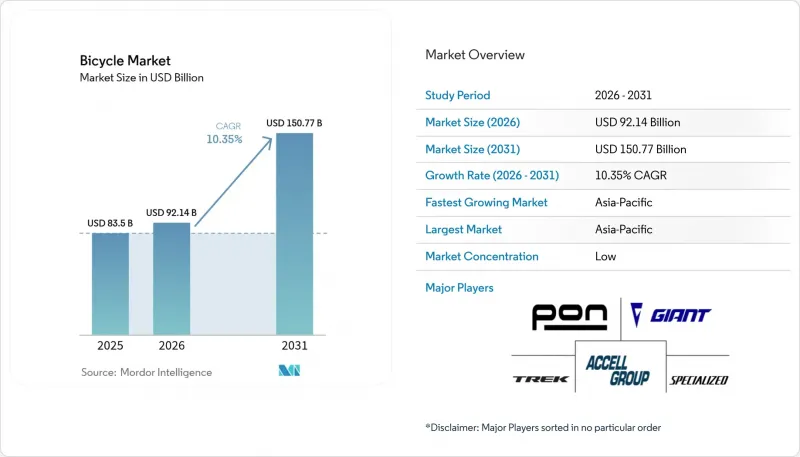
Mordor Intelligence에 의하면, 자전거 시장 규모는 2025년 835억 달러로 평가되었습니다. 2026년 921억 달러에서 2031년까지 1,508억 달러로 확대되며 2026-2031년까지 연평균 복합 성장률(CAGR)은 10.35%를 나타낼 전망입니다.

본 보고서는 자전거 유형(전동 자전거, 일반 자전거), 디자인(일반형, 접이식), 활동 유형(로드·시티, MTB, 하이브리드, 기타),가격대(대중 시장·저가형, 프리미엄·럭셔리), 최종 사용자(성인, 유아), 유통 채널(온라인 채널, 오프라인 채널), 지역(북미, 유럽, 아시아태평양, 남미, 중동 및 아프리카)별로 분류되어 있습니다. 예측치는 금액(달러)으로 표시되어 있습니다.
세계의 자전거 시장 동향 및 인사이트
도시 지역의 교통 체증과 능동적 이동성 정책이 맞물려 수요 구조를 재편
도시 지역의 교통 정체로 인해 전 세계 자전거 시장에서 일상적인 통근 수단으로서 자전거의 중요성이 점점 더 커지고 있습니다. Cycling UK가 의뢰한 2026년 3월 조사에 따르면, 영국 운전자의 28%는 이미 자동차 이용을 줄이고 도보나 자전거 이동을 늘리고 있으며, 추가로 15%가 이러한 전환을 고려하고 있는 것으로 나타났습니다. 아일랜드는 2026 회계연도 ‘액티브 트래블’ 및 ‘그린웨이’ 자본 자금으로 3억 6,000만 유로(3억 9,000만 달러 상당)를 배정하여 1,000건의 자전거·보행자용 프로젝트를 지원하고 있습니다. 이러한 노력을 통해 경로와 안전한 연결성이 개선되어 자전거 이용이 더욱 실용적으로 될 가능성이 있습니다. 전동 보조 자전거는 통근자들이 장거리 자동차 이동을 대체할 때 가장 큰 혜택을 볼 가능성이 높습니다. 전동 보조 기능 덕분에 주행 거리나 체력에 대한 우려를 덜 수 있기 때문입니다. 이러한 이동 수단의 전환으로 인해, 기존 자전거는 계속해서 단거리 도시 이동에 이용되는 한편, 전동 보조 자전거의 평균 판매 가격은 상승할 가능성이 있습니다.
건강 및 피트니스 과학이 장기적인 자전거 수요를 뒷받침
건강과 피트니스에 대한 관심은 출퇴근이나 여가 활동을 불문하고 자전거 이용을 촉진하고 있습니다. 제시된 조사에서는 『Frontiers in Sports and Active Living』지에 게재된 2026년 총설이 인용되었는데, 이 총설에서는 19개국에 걸친 87건의 연구를 검증하여 기분, 인지 기능, 주의력, 사회적 유대감 측면에서 일관된 효과가 보고되었습니다. 또한 2025년 메타분석도 인용되었는데, 주 3회 30분간 자전거를 타는 것이 모든 원인에 의한 사망 위험을 24% 낮추는 것과 관련이 있는 것으로 나타났습니다. 영국의 CWIS3에 따르면, 활동적인 이동 수단의 이용이 증가하면 매년 170만 건의 일반의 진료 예약을 줄일 수 있다고 합니다. 이러한 증거는 고용주의 웰니스 계획과 학교 통학 지원 프로그램을 뒷받침하는 것입니다. 또한 자전거의 역할을 단순한 선택적 여가 활동의 범위를 넘어 확장시켜, 건강과 이동성을 모두 중시하는 가정의 자전거 구매를 촉진할 가능성이 있습니다.
부문별 분석
2025년에는 전동 자전거가 전 세계 자전거 시장 규모의 50.74%를 차지했으며, 이 시점에서 전동 모델이 시장 규모의 최대 원천이 될 전망입니다. 이 카테고리는 배터리 시스템 및 전자 부품의 통합을 통해 평균 구매 단가를 끌어올리며, 전 세계 자전거 산업의 양상을 새롭게 바꾸고 있습니다. 소비자 이용 확대, 제품 라인업 확충, 유통 채널 확대가 선진국과 신흥 지역 시장 성장을 뒷받침하고 있습니다. 한편, 기존 자전거는 특히 가격에 민감한 시장에서 합리적인 가격, 접근성, 유지보수의 용이성이 여전히 중요한 구매 결정 기준으로 작용하는 가운데, 폭넓은 소비자 수요에 지속적으로 부응하고 있습니다.
전동 자전거는 2026년부터 2031년까지 연평균 성장률(CAGR) 12.52%를 나타낼 것으로 예측되며, 전 세계 자전거 시장 전체를 상회하는 성장이 예상됩니다. 편의성이 높은 이동 수단에 대한 수요 증가, 통근 거리 연장, 고품질의 사이클링 경험에 대한 선호가 이러한 성장을 견인하고 있습니다. 일부 성숙 시장에서는 단기적인 재고 조정이나 가격 압박이 나타나고 있지만, 가격대의 하락은 접근성을 높여 소비자들의 추가적인 확산을 촉진할 가능성이 있습니다. 시장 상황이 안정됨에 따라 제조업체와 소매업체는 지속되는 도시 모빌리티 동향, 지속가능성 노력, 전기 자전거 기술의 끊임없는 혁신에 힘입어 수요 회복의 혜택을 누릴 것으로 예측됩니다.
2025년에는 일반 프레임 자전거가 전 세계 자전거 시장 점유율의 85.12%를 차지했습니다. 이러한 확고한 입지는 레크리에이션, 도로 자전거, 산악 자전거, 피트니스, 일상적인 통근 등 폭넓은 용도로의 보급을 반영합니다. 일반 프레임 모델은 수납 공간 제약이 적은 지역에서 특히 인기가 높으며, 이러한 지역에서는 이용자들이 휴대성보다 성능, 편안함, 내구성을 더 중요시합니다. 성숙한 자전거 시장에서는 이러한 자전거에 대한 수요가 지속적으로 뒷받침되는 한편, 고급 자전거 용품에 대한 소비자 지출 증가로 인해 고성능 로드 자전거 및 산악 자전거 부문의 매력이 높아지고 있습니다.
접이식 자전거 시장은 2026년부터 2031년까지 연평균 성장률(CAGR) 11.22%로 확대될 것으로 예측됩니다. 자전거와 대중교통을 결합하여 유연한 이동 수단을 추구하는 도시 지역 통근자들 수요 증가가 이러한 성장을 주도하고 있습니다. 컴팩트한 디자인 덕분에 집이나 사무실 등 수납 공간이 제한된 환경에도 최적입니다. 또한, 접이식 전동 자전거의 보급이 확대됨에 따라 휴대성과 전동 보조 기능을 결합하여 더 높은 부가가치를 창출하고 소비자들의 폭넓은 수용을 뒷받침하는 프리미엄 제품이 등장하면서 이 카테고리의 매력이 높아지고 있습니다.
지역별 분석
아시아태평양은 2025년에 전 세계 자전거 시장 점유율의 47.68%를 차지하며 최대 지역 시장이 되었습니다. 이 지역은 대규모 제조 체계와 국내 수요 증가라는 혜택을 누리고 있습니다. 중국의 전동 자전거 생산 확대와 교체 지원 프로그램이 시장 성장을 뒷받침할 것으로 예상되는 반면, 인도에서는 교통 체증과 연료 가격 급등이 자전거 이용을 촉진하며 강력한 수요 잠재력을 보여주고 있습니다. 그러나 인증을 받지 않은 수입품에 의한 가격 경쟁이 현지 제조업체들에게 계속해서 과제가 될 가능성이 있습니다.
또한, 아시아태평양은 2026년부터 2031년에 걸쳐 13.08%라는 가장 높은 연평균 성장률(CAGR)을 나타낼 전망입니다. 일본과 한국은 여전히 성숙한 시장이며, 성인의 피트니스 및 투어링 추세가 1대당 지출 증가를 뒷받침하고 있습니다. 인도네시아, 태국, 베트남을 포함한 동남아시아 국가들에서는 생활 필수품으로서의 자전거 소유에서 더 폭넓은 소비자 선택지로 전환되고 있습니다. 이러한 전환에 따라 전동 자전거나 하이브리드 제품이 선호될 것으로 예측됩니다. 해당 지역의 제조 역량을 통해 공급이 확보되는 한편, 도시 지역의 인구 기반이 계속해서 수요를 견인하고 있습니다. 생산 규모와 변화하는 소비자 행동이 맞물려, 아시아태평양은 세계 자전거 시장의 중심적인 위치를 차지하고 있습니다.
유럽은 여전히 2위의 규모를 자랑하는 지역으로, 정책 지원, 프리미엄 가격 책정, 성숙한 자전거 인프라가 특징입니다. 영국과 아일랜드의 액티브 트래블(Active Travel)에 대한 투자는 자전거 인프라를 강화하고 전기 자전거의 보급을 촉진할 것으로 예측됩니다. 독일의 전동 자전거 시장에서는 소비자의 높은 관심이 지속되고 있으나, 재고 부족이 단기적인 판매 실적에 영향을 미칠 가능성이 있습니다. 북미는 수요 기반이 크지만, 자전거 인프라는 유럽에 비해 미비한 실정입니다. 미국에서는 전기 자전거 수입 및 연방 정부의 잠재적 조치로 인해 부품 비용이 낮아져, 통근 용도로의 보급이 촉진될 가능성이 있습니다. 남미, 중동 및 아프리카는 여전히 초기 단계 시장이며, 도시화, 연료비, 인프라 제약, 소득 수준 등이 보급의 향방을 좌우할 것으로 예측됩니다.
기타 혜택
- 엑셀 형식 시장 예측(ME) 시트
- 3개월간의 애널리스트 지원
자주 묻는 질문
목차
제1장 서론
제2장 조사 방법
제3장 주요 요약
제4장 시장 구도
제5장 시장 규모 및 성장 예측(금액)
제6장 경쟁 구도
제7장 시장 기회 및 향후 전망
KTH 26.09.08According to Mordor Intelligence, the bicycle market size is projected to expand from USD 83.5 billion in 2025 and USD 92.1 billion in 2026 to USD 150.8 billion by 2031, registering a CAGR of 10.35% between 2026 and 2031.
This report is Segmented by Bicycle Type (E-Bikes, Conventional Bicycles), Design (Regular, Foldable), Activity (Road/City, MTB, Hybrid, Others), Price Range (Mass/Budget, Premium/Luxury), End User (Adults, Kids), Distribution Channel (Online, Offline), and Geography (North America, Europe, Asia-Pacific, South America, Middle East and Africa). Forecasts are in Value (USD).
Global Bicycle Market Trends and Insights
Urban Congestion and Active Mobility Policy Converge to Reshape Demand
Urban congestion is increasing the relevance of bicycles for regular commuting in the global bicycle market. A March 2026 survey commissioned by Cycling UK indicated that 28% of UK drivers were already walking or cycling more instead of driving, while another 15% were considering the shift. Ireland allocated EUR 360 million, equivalent to USD 390 million, to Active Travel and Greenways capital funding for 2026 to support 1,000 cycling and walking projects. These commitments can make cycling more practical by improving routes and safer connections. E-bikes may benefit the most when commuters replace longer car trips, as electric assistance can reduce concerns about range and effort. This mix shift can increase average selling prices, even as conventional bicycles continue to serve shorter urban journeys.
Health and Fitness Science Reinforces Long-Term Cycling Demand
Health and fitness considerations support cycling participation across commuter and recreational uses. The supplied research cites a 2026 review in Frontiers in Sports and Active Living that reviewed 87 studies across 19 countries and reported consistent benefits for mood, cognitive function, attention, and social connection. It also cites a 2025 meta-analysis that associated cycling for 30 minutes three times a week with a 24% lower risk of all-cause mortality. The United Kingdom's CWIS3 stated that increased active travel could free up 1.7 million general practitioner appointments each year. This evidence can support employer wellness plans and school transport programs. It also expands the role of bicycles beyond discretionary recreation and may support purchases among households that value both health and mobility.
Other drivers and restraints analyzed in the detailed report include:
- Government Infrastructure and Subsidy Programs Structurally Lift Demand
- Rising Fuel Prices Accelerate the Cost-Parity Calculation for Cycling
- Competing Mobility Modes and Subpar Infrastructure Create Structural Demand Ceiling
- Counterfeit Products and E-Bike Cost Constrain Market Scalability
For complete list of drivers and restraints, kindly check the Table Of Contents.
Segment Analysis
E-bikes are projected to account for 50.74% of the global bicycle market size in 2025, marking the point at which electrified models become the largest source of market value. The category is reshaping the global bicycle industry by increasing average purchase value through the integration of battery systems and electronic components. Growing consumer adoption, expanding product availability, and wider distribution channels are supporting market expansion across developed and emerging regions. Meanwhile, conventional bicycles continue to address broad consumer demand, particularly in price-sensitive markets where affordability, accessibility, and ease of maintenance remain key purchasing considerations.
E-bikes are forecast to register a CAGR of 12.52% during 2026-2031, outpacing the overall global bicycle market. Rising demand for convenient mobility solutions, longer commuting distances, and premium cycling experiences is driving growth. Although some mature markets are experiencing short-term inventory adjustments and pricing pressures, lower price points may improve accessibility and support broader consumer adoption. As market conditions stabilize, manufacturers and retailers are expected to benefit from renewed demand, supported by ongoing urban mobility trends, sustainability initiatives, and continued innovation in e-bike technology.
Regular-frame bicycles are expected to account for 85.12% of the global bicycle market share in 2025. Their strong position reflects widespread adoption across recreation, road cycling, mountain biking, fitness, and daily commuting applications. Regular-frame models remain particularly popular in regions with fewer storage constraints, where riders prioritize performance, comfort, and durability over portability. Mature cycling markets continue to support demand for these bicycles, while rising consumer spending on premium cycling equipment strengthens the appeal of high-performance road and mountain bike segments.
Foldable bicycles are projected to expand at a CAGR of 11.22% during 2026-2031. Increasing demand from urban commuters who combine cycling with public transportation and require flexible mobility solutions is driving growth. Their compact design makes them well-suited for homes, offices, and other environments with limited storage space. In addition, the growing popularity of foldable electric bicycles is enhancing the category's attractiveness by combining portability with motorized assistance, creating premium offerings that support higher value generation and broader consumer adoption.
Complete Report Scope:
- By Bicycle Type
- E-Bikes
- Conventional/Traditional Bicycles
- By Design
- Regular
- Foldable
- By Activity
- Road/ City
- Mountain Terrain (MTB)
- Hybrid
- Others
- By Price Range
- Mass/Budget
- Premium/Luxury
- By End User
- Adults
- Kids
- By Distribution Channel
- Online Channels
- Offline Channels
- By Geography
- North America
- United States
- Canada
- Mexico
- Rest of North America
- Europe
- Germany
- United Kingdom
- Italy
- France
- Spain
- Netherlands
- Poland
- Belgium
- Sweden
- Rest of Europe
- Asia-Pacific
- China
- India
- Japan
- Australia
- Indonesia
- South Korea
- Thailand
- Singapore
- Rest of Asia-Pacific
- South America
- Brazil
- Argentina
- Colombia
- Chile
- Peru
- Rest of South America
- Middle East and Africa
- South Africa
- Saudi Arabia
- United Arab Emirates
- Nigeria
- Egypt
- Morocco
- Turkey
- Rest of Middle East and Africa
- North America
Geography Analysis
Asia-Pacific accounted for 47.68% of the global bicycle market share in 2025, making it the largest regional market. The region benefits from large-scale manufacturing and rising domestic demand. China's expanding electric bicycle production and replacement programs are expected to support market growth, while India presents strong demand potential as congestion and fuel prices encourage bicycle use. However, price competition from non-certified imports may continue to challenge local producers.
Asia-Pacific is also projected to grow at the fastest CAGR of 13.08% during 2026-2031. Japan and South Korea remain mature markets, with adult fitness and touring trends supporting higher spending per unit. Southeast Asian countries, including Indonesia, Thailand, and Vietnam, are shifting from necessity-based bicycle ownership toward broader consumer choice. This transition is expected to favor e-bikes and hybrid products. The region's manufacturing strength supports supply availability, while its urban population base continues to drive demand. Together, production scale and changing consumer behavior position Asia-Pacific at the center of the global bicycles market.
Europe remains the second-largest region and is defined by policy support, premium pricing, and mature cycling infrastructure. Active-travel investments in the United Kingdom and Ireland are expected to strengthen cycling infrastructure and support adoption. Germany's e-bike market continues to reflect strong consumer interest, although inventory pressures may affect near-term sales performance. North America has a large demand base but less developed cycling infrastructure than Europe. In the United States, e-bike imports and potential federal measures may reduce component costs and support commuting adoption. South America and the Middle East and Africa remain earlier-stage markets, where urbanization, fuel costs, infrastructure limitations, and income levels are expected to shape adoption.
- Accell Group NV
- Trek Bicycle Corporation
- Pon Holdings BV
- Giant Manufacturing Co. Ltd
- Specialized Bicycle Components Inc.
- Shimano Inc.
- Scott Sports SA
- Merida Industry Co. Ltd
- Stryder Cycle Private Limited
- Cycles Devinci inc.
- Pending System GmbH & Co. KG
- Brompton Bicycle Ltd
- Decathlon SA
- Rad Power Bikes Inc.
- Riese and Muller GmbH
- Bulls Bikes GmbH
- Yadea Group Holdings Ltd
- Canyon Bicycles GmbH
- Hero Cycles Limited
- Ribble Cycles
Additional Benefits:
- The market estimate (ME) sheet in Excel format
- 3 months of analyst support
TABLE OF CONTENTS
1 INTRODUCTION
- 1.1 Study Assumptions and Market Definition
- 1.2 Scope of the Study
2 RESEARCH METHODOLOGY
3 EXECUTIVE SUMMARY
4 MARKET LANDSCAPE
- 4.1 Market Overview
- 4.2 Market Drivers
- 4.2.1 Urban congestion boosts bicycle usage for daily commute
- 4.2.2 Fitness trends increase popularity of cycling activities
- 4.2.3 Government support encourages eco-friendly transportation methods
- 4.2.4 Environmental awareness and sustainability drives bicycle usage among consumers
- 4.2.5 Workplace wellness programs encourage employee bicycle usage
- 4.2.6 Rising fuel prices make bicycles cost-effective alternatives
- 4.3 Market Restraints
- 4.3.1 Availability of substitute like bikes, and other faster transport modes discourages the use of bicycle
- 4.3.2 Presence of counterfeit bicycles hinders market growth
- 4.3.3 High e-bike cost restricts wider adoption globally
- 4.3.4 Poor road conditions in rural areas hinder smooth bicycle experience
- 4.4 Consumer Behavior Analysis
- 4.5 Regulatory Outlook
- 4.6 Technological Outlook
- 4.7 Porter's Five Forces Analysis
- 4.7.1 Threat of New Entrants
- 4.7.2 Bargaining Power of Buyers
- 4.7.3 Bargaining Power of Suppliers
- 4.7.4 Threat of Substitutes
- 4.7.5 Competitive Rivalry
5 MARKET SIZE AND GROWTH FORECASTS (VALUE )
- 5.1 By Bicycle Type
- 5.1.1 E-Bikes
- 5.1.2 Conventional/Traditional Bicycles
- 5.2 By Design
- 5.2.1 Regular
- 5.2.2 Foldable
- 5.3 By Activity
- 5.3.1 Road/ City
- 5.3.2 Mountain Terrain (MTB)
- 5.3.3 Hybrid
- 5.3.4 Others
- 5.4 By Price Range
- 5.4.1 Mass/Budget
- 5.4.2 Premium/Luxury
- 5.5 By End User
- 5.5.1 Adults
- 5.5.2 Kids
- 5.6 By Distribution Channel
- 5.6.1 Online Channels
- 5.6.2 Offline Channels
- 5.7 By Geography
- 5.7.1 North America
- 5.7.1.1 United States
- 5.7.1.2 Canada
- 5.7.1.3 Mexico
- 5.7.1.4 Rest of North America
- 5.7.2 Europe
- 5.7.2.1 Germany
- 5.7.2.2 United Kingdom
- 5.7.2.3 Italy
- 5.7.2.4 France
- 5.7.2.5 Spain
- 5.7.2.6 Netherlands
- 5.7.2.7 Poland
- 5.7.2.8 Belgium
- 5.7.2.9 Sweden
- 5.7.2.10 Rest of Europe
- 5.7.3 Asia-Pacific
- 5.7.3.1 China
- 5.7.3.2 India
- 5.7.3.3 Japan
- 5.7.3.4 Australia
- 5.7.3.5 Indonesia
- 5.7.3.6 South Korea
- 5.7.3.7 Thailand
- 5.7.3.8 Singapore
- 5.7.3.9 Rest of Asia-Pacific
- 5.7.4 South America
- 5.7.4.1 Brazil
- 5.7.4.2 Argentina
- 5.7.4.3 Colombia
- 5.7.4.4 Chile
- 5.7.4.5 Peru
- 5.7.4.6 Rest of South America
- 5.7.5 Middle East and Africa
- 5.7.5.1 South Africa
- 5.7.5.2 Saudi Arabia
- 5.7.5.3 United Arab Emirates
- 5.7.5.4 Nigeria
- 5.7.5.5 Egypt
- 5.7.5.6 Morocco
- 5.7.5.7 Turkey
- 5.7.5.8 Rest of Middle East and Africa
- 5.7.1 North America
6 COMPETITIVE LANDSCAPE
- 6.1 Market Concentration
- 6.2 Strategic Moves
- 6.3 Market Share Analysis
- 6.4 Company Profiles {(includes Global level Overview, Market level overview, Core Segments, Financials as available, Strategic Information, Market Rank/Share for key companies, Products and Services, and Recent Developments)}
- 6.4.1 Accell Group NV
- 6.4.2 Trek Bicycle Corporation
- 6.4.3 Pon Holdings BV
- 6.4.4 Giant Manufacturing Co. Ltd
- 6.4.5 Specialized Bicycle Components Inc.
- 6.4.6 Shimano Inc.
- 6.4.7 Scott Sports SA
- 6.4.8 Merida Industry Co. Ltd
- 6.4.9 Stryder Cycle Private Limited
- 6.4.10 Cycles Devinci inc.
- 6.4.11 Pending System GmbH & Co. KG
- 6.4.12 Brompton Bicycle Ltd
- 6.4.13 Decathlon SA
- 6.4.14 Rad Power Bikes Inc.
- 6.4.15 Riese and Muller GmbH
- 6.4.16 Bulls Bikes GmbH
- 6.4.17 Yadea Group Holdings Ltd
- 6.4.18 Canyon Bicycles GmbH
- 6.4.19 Hero Cycles Limited
- 6.4.20 Ribble Cycles