

|
시장보고서
상품코드
2123382
당뇨망막병증 시장 : 점유율 분석, 업계 동향과 통계, 성장 예측(2026-2031년)Global Diabetic Retinopathy - Market Share Analysis, Industry Trends & Statistics, Growth Forecasts (2026 - 2031) |
||||||
 Mordor Intelligence
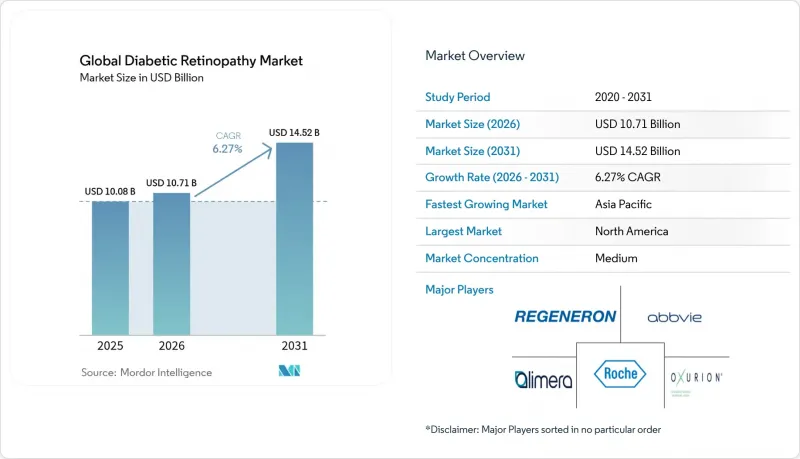
Mordor Intelligence에 의하면, 당뇨망막병증 시장 규모는 2025년 1,008만 달러에서 2026년에는 1,071만 달러로 확대되어 2026년부터 2031년까지 CAGR 6.27%로 성장을 지속하여, 2031년에는 1,452만 달러에 이를 것으로 예측됩니다.
본 보고서는 유형(증식성 당뇨망막병증, 비증식성 망막병증), 치료법(항-VEGF 제제, 안구 내 스테로이드 주사, 레이저 수술, 유리체 절제술), 최종 사용자(병원, 안과 클리닉 등) 및 지역별로 분류되어 있습니다. 상기 각 부문의 수치는 백만 달러 단위로 표기되어 있습니다.
전 세계 당뇨망막병증 시장 동향 및 인사이트
전 세계 당뇨병 유병률 증가 및 조기 검진
국제당뇨병연맹(FIDD)의 데이터에 따르면, 2045년까지 전 세계 성인의 12%가 당뇨병을 앓을 것으로 예측되며, 이에 따라 당뇨망막병증 시장의 치료 대상층이 확대될 전망입니다. 메타 분석에 따르면, 여러 선별 검사 프로그램에서 질환 유병률이 22% 이상인 것으로 확인되어, 지역을 불문하고 일관된 질병 부담이 존재함이 부각되고 있습니다. 현재 92-93%의 민감도를 가진 AI 도구를 활용함으로써 일상적인 1차 진료 시 미세동맥류를 검출할 수 있게 되어, 진단이 더 조기 단계이자 치료 가능한 시점으로 이동하고 있습니다. 칠레의 전국 원격 안과 네트워크에서는 의료 제공 범위를 유지하면서도 전문의 의뢰율을 15%로 줄였으며, 이는 자원이 제한된 환경에서도 확장 가능한 조기 발견이 가능함을 보여줍니다.
고령화에 따라 시력을 위협하는 사례가 증가
당뇨병 병력이 10년을 넘는 환자는 망막증을 발병할 위험이 4.36배 높으며, 그 대부분은 60세 이상입니다. 중국에서는 유병률이 24.7%에서 43.1%로 보고되고 있어, 이 지역의 고령화와 질환 보유 기간 간의 연관성이 부각되고 있습니다. 여성 환자에서 실명 증가 폭이 더 큰 것으로 나타나, 성별에 따른 치료 전략의 필요성이 시사되고 있습니다. 유리체 절제술에 대한 수요도 이러한 추세를 반영하고 있으며, 고령 환자가 복잡한 증식성 망막증을 보일수록 연간 8.14%의 속도로 증가하고 있습니다.
신흥 시장의 망막 전문의 부족
미국에서는 2035년까지 안과 의사 공급이 12% 감소하는 반면, 수요는 24% 증가할 것으로 예측되며, 지방 카운티에서는 인력 수요의 불과 26-29%만 충족할 수 있을 가능성이 있습니다. 아시아태평양에서는 당뇨병 유병률이 전문의 양성 속도를 앞지르는 속도로 증가하고 있어 그 격차가 더욱 심각하며, 각국 정부는 의료 서비스의 접근성을 확대하기 위해 원격 의료 허브 및 AI를 활용한 트라이아지에 대한 자금 지원을 추진하고 있습니다. 아칸소주에서는 도시 지역의 망막 센터와 연계한 주 전역에 걸친 원격 망막 검진을 통해 의료 서비스 제공 범위를 확대할 수 있음을 입증했으며, 이러한 접근 방식은 현재 라틴아메리카와 남아시아에서도 채택되고 있습니다.
부문 분석
2025년에는 비증식성 당뇨망막병증이 당뇨망막병증 시장 점유율의 62.74%를 차지하여, 병변을 더 조기에 발견할 수 있게 된 선별 검사의 효과가 부각되었습니다. 미세한 미세동맥류를 감지하는 AI 시스템 덕분에 더 많은 환자가 진행된 단계에서 수술을 받는 대신 예방적 치료 경로로 유도되고 있습니다. 증식성 사례는 규모는 작지만, 고령화와 장기화된 질환 기간이 병세를 악화시키기 때문에 연평균 성장률(CAGR) 7.12%로 증가하여 수술 및 재생 의학에 대한 수요를 확대할 것으로 보입니다.
임상 관리 방식은 크게 다릅니다. 비증식성 환자의 경우 페노피브레이트와 같은 전신 약물이 효과적이며, 임상시험에서 병세 진행을 27% 억제하는 것으로 나타났습니다. 증식성 질환의 경우, 유리체 절제술이 점점 더 많이 시행되고 있으며, 이는 연평균 성장률(CAGR) 7.88%로 가장 빠르게 성장하고 있는 치료법입니다. 유전자 치료의 초기 데이터에 따르면, 치료를 받은 비증식성 환자의 20%에서 DRSS가 2단계 개선되었으며, 향후 질병의 병기에 따른 치료 요법이 확립될 것으로 시사됩니다. 증식성 중재를 대상으로 하는 당뇨망막병증 시장 규모는 현재 기반은 작지만, 전체 시장의 성장률을 상회할 것으로 예측됩니다.
지역별 분석
북미는 2025년에 당뇨망막병증 시장의 42.98% 점유율을 차지했습니다. 이는 FDA 승인을 받은 AI 기기의 조기 도입, 바이오시밀러의 급속한 보급, 그리고 종합적인 보험 적용에 힘입은 결과입니다. 이 지역은 2012년부터 2021년까지 전 세계 당뇨병성 안과 질환 관련 연구 논문의 71.15%를 차지하며, 혁신 분야에서 리더십을 강화하고 있습니다. 2035년까지 안과 의사 공급이 30% 부족할 것이라는 우려가, 특히 지방 지역의 성장을 둔화시키고 원격 망막 진단 솔루션에 대한 수요를 촉진하고 있습니다.
아시아태평양은 당뇨병 유병률과 방대한 인구를 배경으로 2031년까지 연평균 성장률(CAGR) 7.95%를 나타낼 것으로 예측되며, 이는 모든 지역 중 가장 높은 수치입니다. 중국에서는 당뇨병 환자의 최대 43.1%가 당뇨망막병증을 앓고 있어, 이 지역의 미충족 수요가 두드러지게 나타나고 있습니다. 인도가 AI가 탑재된 휴대용 카메라를 사용하여 10억 명의 안과 검진을 실시할 계획인 것은 디지털 헬스의 대규모 도입을 잘 보여줍니다. 정부의 보험 적용 범위 확대와 의료 관광 증가도 추가적인 성장을 뒷받침하고 있습니다.
유럽에서는 견고한 국민건강보험 제도와 바이오시밀러의 신속한 도입을 배경으로 꾸준한 성장이 나타나고 있습니다. 라틴아메리카에서는 원격 안과 진료가 활용되고 있으며, 그 예로 칠레의 네트워크에서는 검진을 받은 당뇨병 환자의 22%에서 망막증을 발견하는 동시에 불필요한 의뢰를 줄이고 있습니다. 중동 및 아프리카은 여전히 발전 단계에 있지만, 걸프 국가들의 높은 당뇨병 유병률과 전문 의료 인프라에 대한 투자 확대로 인해 매력적인 시장으로 부상하고 있습니다.
기타 혜택:
- 엑셀 형식 시장 예측(ME) 시트
- 3개월간의 애널리스트 지원
자주 묻는 질문
목차
제1장 서론
제2장 조사 방법
제3장 주요 요약
제4장 시장 구도
제5장 시장 규모와 성장 예측
제6장 경쟁 구도
제7장 시장 기회와 향후 전망
JHS 26.09.09According to Mordor Intelligence, the diabetic retinopathy market size is expected to grow from USD 10.08 million in 2025 to USD 10.71 million in 2026 and is forecast to reach USD 14.52 million by 2031 at 6.27% CAGR over 2026-2031.
This report is Segmented by Type (Proliferative Diabetic Retinopathy, Non-Proliferative Retinopathy), Management Approach (Anti-VEGF Drug, Intraocular Steroid Injection, Laser Surgery, and Vitrectomy), End User (Hospitals, Ophthalmology Clinics, and More), and Geography. The Values are Provided in Terms of USD Million for Above Segments.
Global Diabetic Retinopathy Market Trends and Insights
Rising Global Diabetes Prevalence & Earlier Screening
International Federation of Diabetes data foresee 12% of the world's adults living with diabetes by 2045, enlarging the treatable pool for the diabetic retinopathy market . Meta-analyses confirm disease rates above 22% in multiple screening programs, underlining a consistent burden across regions. AI tools that deliver 92-93% sensitivity now detect micro-aneurysms at routine primary-care visits, shifting diagnosis to earlier, more treatable stages. Chile's national tele-ophthalmology network cut specialist referrals to 15% while preserving coverage, showing scalable early detection in lower-resource settings.
Aging Population Increasing Vision-Threatening Cases
Patients with more than 10 years of diabetes carry 4.36-fold higher odds of retinopathy, and most are over 60 years old. China reports prevalence between 24.7% and 43.1%, highlighting the aging-duration nexus in the region. Female patients have shown bigger increases in blindness, suggesting the need for gender-specific care strategies. Vitrectomy demand mirrors these trends, expanding 8.14% annually as elderly patients present with complex proliferative disease.
Shortage of Retinal Specialists in Emerging Markets
The United States is projected to face a 12% fall in ophthalmologist supply versus a 24% rise in demand by 2035, and rural counties may meet only 26-29% of their staffing need . Asia-Pacific shows even sharper gaps as diabetic prevalence climbs faster than specialist training, prompting governments to fund telemedicine hubs and AI triage to extend reach. Arkansas illustrated scalable coverage using statewide teleretinal screening linked to urban retina centers, an approach now copied in Latin America and South Asia.
Other drivers and restraints analyzed in the detailed report include:
- Expanding Indications & Reimbursement for Long-Acting Anti-VEGF Biologics
- AI-Enabled Retinal Screening Adoption in Primary-Care Clinics
- High Treatment Burden & Poor Adherence to Injection Regimens
For complete list of drivers and restraints, kindly check the Table Of Contents.
Segment Analysis
Non-proliferative disease accounted for 62.74% diabetic retinopathy market share in 2025, underscoring the impact of screening that now captures pathology earlier. AI systems detecting subtle micro-aneurysms push more patients into preventive care pathways rather than late-stage surgery. Proliferative cases, although smaller, will rise at 7.12% CAGR as aging and disease duration fuel advanced pathology, expanding demand for surgery and regenerative therapies.
Clinical management differs sharply. Non-proliferative patients benefit from systemic agents such as fenofibrate, which cut progression by 27% in trials. Proliferative disease increasingly involves vitrectomy, the fastest-growing modality at 7.88% CAGR. Early gene therapy data show 2-step DRSS improvement in 20% of treated non-proliferative patients, suggesting future disease-stage-specific regimens. The diabetic retinopathy market size for proliferative interventions is projected to outpace overall growth despite the segment's current smaller base.
Complete Report Scope:
- By Type
- Proliferative Diabetic Retinopathy
- Non-proliferative Retinopathy
- By Management Approach
- Anti-VEGF Drug
- Intraocular Steroid Injection
- Laser Surgery
- Vitrectomy
- By End-user
- Hospitals
- Ophthalmology Clinics
- Ambulatory Surgical Centers
- Others
- By Geography
- North America
- United States
- Canada
- Mexico
- Europe
- Germany
- United Kingdom
- France
- Italy
- Spain
- Rest of Europe
- Asia-Pacific
- China
- Japan
- India
- Australia
- South Korea
- Rest of Asia-Pacific
- Middle East & Africa
- GCC
- South Africa
- Rest of Middle East & Africa
- South America
- Brazil
- Argentina
- Rest of South America
- North America
Geography Analysis
North America captured 42.98% of diabetic retinopathy market share in 2025, supported by early adoption of FDA-cleared AI devices, fast biosimilar uptake, and generous payer coverage. The region hosts 71.15% of global diabetic eye research publications from 2012-2021, reinforcing its innovation leadership. A looming 30% shortfall in ophthalmologist supply by 2035 tempers growth, particularly in rural areas, and fuels demand for tele-retina solutions.
Asia-Pacific is expected to grow at 7.95% CAGR through 2031, the highest of all regions, propelled by diabetes incidence and large population bases. China's diabetic retinopathy prevalence up to 43.1% among diabetics underscores the region's unmet need. India's plan to screen 1 billion eyes with AI-enabled handheld cameras highlights large-scale digital health adoption. Government reimbursement expansion and rising medical tourism further spur growth.
Europe demonstrates steady growth on the strength of robust universal health systems and swift biosimilar integration. Latin America leverages tele-ophthalmology, exemplified by Chile's network that detects retinopathy in 22% of screened diabetics while cutting unnecessary referrals. The Middle East and Africa remain nascent but attractive due to high diabetes prevalence in Gulf states and incremental investment in specialty care infrastructure.
- Abbvie
- Alimera Sciences
- BCN Peptides
- Bausch + Lomb Corp
- Carl Zeiss
- Roche
- Glycadia Pharmaceuticals
- Johnson & Johnson
- Novartis
- Ocuphire Pharma
- Oxurion
- Regeneron Pharmaceuticals
- Samsung Bioepis
- Viatris
- Bayer
- Adverum Biotechnologies
- Kodiak Sciences Inc.
- Annexon Biosciences
- Kubota Vision Inc.
- Clearside Biomedical
- Aerie Pharmaceutical
- Ocular Therapeutix Inc.
- Regenxbio Inc.
- Chengdu Kanghong Pharmaceuticals
Additional Benefits:
- The market estimate (ME) sheet in Excel format
- 3 months of analyst support
TABLE OF CONTENTS
1 Introduction
- 1.1 Study Assumptions & Market Definition
- 1.2 Scope of the Study
2 Research Methodology
3 Executive Summary
4 Market Landscape
- 4.1 Market Overview
- 4.2 Market Drivers
- 4.2.1 Rising Global Diabetes Prevalence & Earlier Screening
- 4.2.2 Aging Population Increasing Vision-Threatening Cases
- 4.2.3 Expanding Indications & Reimbursement For Long-Acting Anti-VEGF Biologics
- 4.2.4 Ai-Enabled Retinal Screening Adoption In Primary Care Clinics
- 4.2.5 Growth Of Tele-Ophthalmology Programs In Low-Resource Regions
- 4.2.6 Venture Funding In Regenerative Cell & Gene Therapies For Dr
- 4.3 Market Restraints
- 4.3.1 Shortage Of Retinal Specialists In Emerging Markets
- 4.3.2 High Treatment Burden & Poor Adherence To Injection Regimens
- 4.3.3 Delayed Regulatory Pathways For First-In-Class Biosimilars
- 4.3.4 Limited Real-World Evidence For Novel Combination Therapies
- 4.4 Value / Supply-Chain Analysis
- 4.5 Technological Outlook
- 4.6 Regulatory Landscape
- 4.7 Porter's Five Forces
- 4.7.1 Threat of New Entrants
- 4.7.2 Bargaining Power of Buyers/Consumers
- 4.7.3 Bargaining Power of Suppliers
- 4.7.4 Threat of Substitute Products
- 4.7.5 Intensity of Competitive Rivalry
5 Market Size & Growth Forecasts (Value, USD million)
- 5.1 By Type
- 5.1.1 Proliferative Diabetic Retinopathy
- 5.1.2 Non-proliferative Retinopathy
- 5.2 By Management Approach
- 5.2.1 Anti-VEGF Drug
- 5.2.2 Intraocular Steroid Injection
- 5.2.3 Laser Surgery
- 5.2.4 Vitrectomy
- 5.3 By End-user
- 5.3.1 Hospitals
- 5.3.2 Ophthalmology Clinics
- 5.3.3 Ambulatory Surgical Centers
- 5.3.4 Others
- 5.4 By Geography
- 5.4.1 North America
- 5.4.1.1 United States
- 5.4.1.2 Canada
- 5.4.1.3 Mexico
- 5.4.2 Europe
- 5.4.2.1 Germany
- 5.4.2.2 United Kingdom
- 5.4.2.3 France
- 5.4.2.4 Italy
- 5.4.2.5 Spain
- 5.4.2.6 Rest of Europe
- 5.4.3 Asia-Pacific
- 5.4.3.1 China
- 5.4.3.2 Japan
- 5.4.3.3 India
- 5.4.3.4 Australia
- 5.4.3.5 South Korea
- 5.4.3.6 Rest of Asia-Pacific
- 5.4.4 Middle East & Africa
- 5.4.4.1 GCC
- 5.4.4.2 South Africa
- 5.4.4.3 Rest of Middle East & Africa
- 5.4.5 South America
- 5.4.5.1 Brazil
- 5.4.5.2 Argentina
- 5.4.5.3 Rest of South America
- 5.4.1 North America
6 Competitive Landscape
- 6.1 Market Concentration
- 6.2 Company Profiles (includes Global level Overview, Market level overview, Core Segments, Financials as available, Strategic Information, Market Rank/Share for key companies, Products & Services, and Recent Developments)
- 6.2.1 AbbVie Inc. (Allergan)
- 6.2.2 Alimera Sciences
- 6.2.3 BCN Peptides
- 6.2.4 Bausch + Lomb Corp
- 6.2.5 Carl Zeiss Meditec AG
- 6.2.6 F. Hoffmann-La Roche Ltd (Genentech)
- 6.2.7 Glycadia Pharmaceuticals
- 6.2.8 Johnson & Johnson Vision
- 6.2.9 Novartis AG
- 6.2.10 Ocuphire Pharma
- 6.2.11 Oxurion NV
- 6.2.12 Regeneron Pharmaceuticals Inc
- 6.2.13 Samsung Bioepis
- 6.2.14 Viatris Inc.
- 6.2.15 Bayer AG
- 6.2.16 Adverum Biotechnologies
- 6.2.17 Kodiak Sciences Inc.
- 6.2.18 Annexon Biosciences
- 6.2.19 Kubota Vision Inc.
- 6.2.20 Clearside Biomedical
- 6.2.21 Aerie Pharmaceuticals
- 6.2.22 Ocular Therapeutix Inc.
- 6.2.23 Regenxbio Inc.
- 6.2.24 Chengdu Kanghong Pharmaceuticals
7 Market Opportunities & Future Outlook
- 7.1 White-space & Unmet-need Assessment


