

|
시장보고서
상품코드
2124434
아시아태평양의 압축기 시장 : 점유율 분석, 업계 동향과 통계, 성장 예측(2026-2031년)Asia-Pacific Compressor - Market Share Analysis, Industry Trends & Statistics, Growth Forecasts (2026 - 2031) |
||||||
 Mordor Intelligence
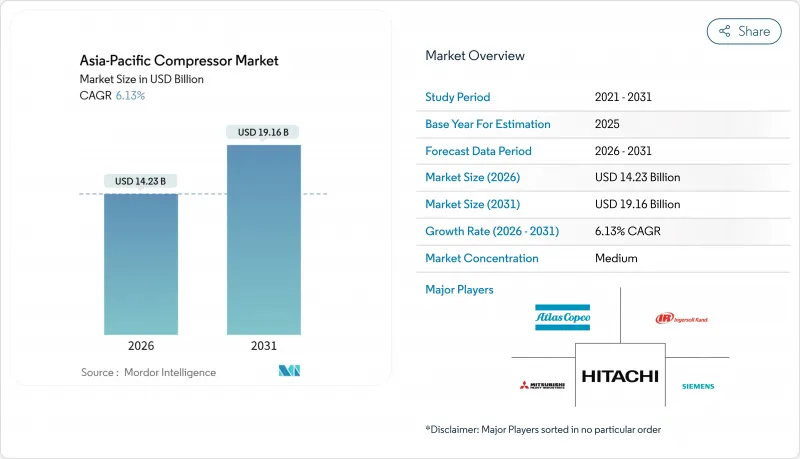
Mordor Intelligence에 의하면, 아시아태평양 압축기 시장 규모는 2026년에 142억 3,000만 달러로 추정되며, 예측 기간(2026-2031년)에서 CAGR 6.13%로 확대되어 2031년에는 191억 6,000만 달러에 이를 전망입니다.
본 보고서는 유형별(용적식·동적), 휴대성별(고정형·이동형), 정격 압력별(저압, 중압, 고압, 초고압), 최종 사용자별(석유 및 가스,제조·산업, HVAC-R·빌딩 서비스, 자동차 및 운송, 기타), 지역(중국, 인도, 일본, 한국, 아세안(ASEAN) 국가, 호주 및 뉴질랜드, 기타 아시아태평양)
아시아태평양 압축기 시장 동향과 인사이트
급속한 산업화와 제조업의 확대
2025년, 중국은 전 세계 제조업 부가가치의 약 30%를 차지했습니다. 한편, 인도의 생산 연계형 인센티브 프로그램에서는 에어컨 및 LED 생산 라인을 위해 6,940 크롤(8억 3,000만 달러)이 배정되어 로터리 스크류식 및 왕복식 압축기의 수주를 뒷받침했습니다. 아세안(ASEAN) 국가들은 2024년에 2,240억 달러의 외국인 직접 투자를 유치했으며, 베트남과 태국에서는 압축 공기 네트워크가 필요한 새로운 전자기기 및 자동차 산업 단지가 가동을 시작했습니다. 인도의 델리·뭄바이·첸나이·벵갈루루 회랑에서는 가변 속도 구동(VSD) 규격이 채택되어 고정 속도 기기의 교체 주기를 촉진하고 있습니다. 고적층 제조업, 반도체, 전기차(EV) 배터리, 바이오의약품 분야에서는 더욱 엄격한 공차를 충족하는 오일프리 원심식 설계가 요구되고 있습니다. 인도네시아와 인도에서는 철강 생산량이 안정적인 반면, 알루미늄 및 구리 제련량이 증가하고 있어, 이에 따라 수 메가와트급 원심식 압축기에 대한 수요가 더욱 높아지고 있습니다.
엄격한 에너지 효율 규제가 로터리 스크류식·VSD 유닛을 뒷받침
싱가포르는 2024년에 산업용 압축기에 대한 ‘최저 에너지 성능 기준(MEP)’을 시행하여 에너지 효율 라벨 표시를 의무화하고, 저성능 모델의 단계적 폐지를 추진하고 있습니다. 베트남에서는 2025년 건축기준법 개정에 따라 VSD 압축기를 핵심으로 하는 열회수형 HVAC 시스템의 도입이 의무화됩니다. 호주의 ‘세이프가드 메커니즘’은 배출량이 많은 시설에 벌금을 부과하는 제도로, 이로 인해 전력 소비를 20-30% 절감하는 로터리 스크류식 압축기로의 교체가 가속화되고 있습니다. 일본의 ‘탑러너’ 프로그램과 한국의 ‘그린 뉴딜’에서는 기준이 지속적으로 강화되고 있는 반면, 말레이시아의 에너지 효율화 계획에서는 2030년까지 산업 부문의 에너지 집약도를 10% 감축하는 것을 목표로 하고 있습니다. 아시아태평양 전체 압축기 시장에서 VSD로 개조할 경우 투자 회수 기간이 18-24개월에 불과하기 때문에 중소기업의 도입이 촉진되고 있습니다.
오일프리·VSD 압축기의 높은 초기 비용
오일프리 로터리 스크류식 압축기는 윤활식 압축기에 비해 40-60% 비싸고, VSD 패키지 또한 15-25% 더 비싸기 때문에 인도, 인도네시아, 베트남의 중소기업 도입을 저해하고 있습니다. 오염에 민감한 환경에서는 총 소유 비용의 관점에서 고급 기종이 유리하지만, 많은 사용자는 고장이 발생할 때까지 업그레이드를 미루고 있습니다. 킬로스카 뉴매틱(Kirloskar Pneumatic)사의 보고에 따르면, 오일프리 압축기에 대한 문의의 60%는 예산 제약을 이유로 12개월 이내에 계약으로 이어지지 않았다고 합니다. 엔트리 레벨 오일프리 50마력 스크류 압축기의 정가는 2만 5,000달러인 반면, 윤활식 동급 기종은 1만 5,000달러로, 많은 소규모 공방들이 이 가격 차이를 정당화하는 데 어려움을 겪고 있습니다. ‘Air-as-a-service’라고 불리는 리스 방식은 설비 투자 부담을 줄여주지만, 아시아태평양 전체 압축기 시장에서 이 방식의 보급률은 여전히 10% 미만에 그치고 있습니다.
부문 분석
2025년, 아시아태평양의 압축기 시장에서는 공장 현장 및 가스 집적 필드에서의 로터리 스크류식·왕복동식 채택 확대에 힘입어 용적식 압축기가 시장의 67.8%를 차지했습니다. 원심식을 필두로 하는 동적 압축기는 석유화학 및 LNG에 대한 투자가 확대됨에 따라 연평균 성장률(CAGR) 6.5%를 나타낼 것으로 예측됩니다. 아시아태평양의 압축기 시장에서 동적식 유닛 시장 규모는 수 메가와트급 원심식 트레인이 선호되는 에틸렌 크래커 및 암모니아 루프의 확장에 따라 확대될 것으로 예측됩니다. 미쓰비시 중공업과 지멘스의 자기 베어링 시스템은 20년 동안 운영 비용을 최대 40% 절감합니다. 가변속 스크류식 압축기는 다이내믹식과의 효율 격차를 좁히고 있는 반면, 로터리 베인식 압축기는 ISO 8573-1 클래스 0의 청정도가 필수로 요구되는 클린룸이라는 틈새 시장에서 채택되고 있습니다.
디지털 트윈의 도입으로 왕복동식 모델의 점검 주기가 연장되고 있으며, 또한 센서가 내장된 히타치의 하이브리드 스크류 압축기는 자동차 도장 공장의 에너지 소비를 15% 절감하고 있습니다. 이러한 혁신 기술들은 전반적으로 아시아태평양의 압축기 시장에서 용적식과 동적식 사이의 기존 경계가 점점 더 모호해지고 있음을 여실히 보여주고 있습니다.
2025년 수요의 74.1%를 고정식 장비가 차지하고 있으며, 이들은 공장이나 정유시설의 중앙 집중형 네트워크에 통합되어 있습니다. 한편, 휴대용 유닛은 인도, 베트남,호주 전역의 고속도로, 철도, 광산 현장에서 수요에 힘입어 연평균 성장률(CAGR) 7.2%로 확대되고 있습니다. 도급업체들은 자본 지출(CAPEX)을 피하기 위해 압축기 대여를 늘리고 있으며, 이로 인해 대여 업체의 장비 교체 주기가 가속화되면서 서비스 및 부품 매출이 증가하고 있습니다. 아시아태평양의 압축기 시장에서 고정형 유닛의 점유율은 여전히 지배적이지만, 도시 지역의 소음 및 배기가스 규제에 대응하는 배터리 구동식 휴대용 모델이 점유율을 서서히 확대되고 있습니다. 2024년에 출시된 카이저(Kaeser)사의 리튬이온 모델은 4-6시간의 가동 시간을 특징으로 하며, 싱가포르와 홍콩의 CBD(중앙 비즈니스 지구) 프로젝트를 주요 타겟으로 하고 있습니다.
기타 혜택:
- 엑셀 형식 시장 예측(ME) 시트
- 3개월간의 애널리스트 지원
자주 묻는 질문
목차
제1장 서론
제2장 조사 방법
제3장 주요 요약
제4장 시장 구도
제5장 시장 규모와 성장 예측
제6장 경쟁 구도
제7장 시장 기회와 향후 전망
JHS 26.09.11According to Mordor Intelligence, the Asia-Pacific compressor market size is estimated at USD 14.23 billion in 2026, and is expected to reach USD 19.16 billion by 2031, at a CAGR of 6.13% during the forecast period (2026-2031).
This report is Segmented by Type (Positive Displacement and Dynamic), Portability (Stationary and Portable), Pressure Rating (Low, Medium, High, and Ultra-High), End-User (Oil and Gas, Manufacturing and Industrial, HVAC-R and Building Services, Automotive and Transportation, and More), and Geography (China, India, Japan, South Korea, ASEAN Countries, Australia and New Zealand, and Rest of Asia-Pacific)
Asia-Pacific Compressor Market Trends and Insights
Rapid Industrialization & Manufacturing Expansion
China delivered about 30% of global manufacturing value-added in 2025, while India's production-linked incentive program earmarked INR 6,940 crore (USD 830 million) for air-conditioner and LED lines, spurring orders for rotary-screw and reciprocating units. ASEAN economies attracted USD 224 billion in foreign direct investment in 2024, with Vietnam and Thailand commissioning new electronics and automotive parks that require compressed-air networks. India's Delhi-Mumbai and Chennai-Bengaluru corridors embed VSD standards that trigger a replacement cycle away from fixed-speed machines. Higher-value manufacturing, semiconductors, EV batteries, and biologics demand oil-free and centrifugal designs with tighter tolerances. Stabilizing steel output but rising aluminum and copper smelting in Indonesia and India further lift multi-megawatt centrifugal demand.
Stringent Energy-Efficiency Regulations Favouring Rotary-Screw & VSD Units
Singapore enforced Minimum Energy Performance Standards for industrial compressors in 2024, mandating efficiency labels and phasing out low-performance models. Vietnam's 2025 building-code revision requires heat-recovery HVAC systems built around VSD compressors. Australia's Safeguard Mechanism penalizes high-emission facilities, accelerating rotary-screw upgrades that cut electricity use 20-30%. Japan's Top Runner program and South Korea's Green New Deal keep tightening benchmarks, while Malaysia's energy-efficiency plan targets a 10% cut in industrial intensity by 2030. Across the Asia-Pacific compressor market, payback periods of 18-24 months for VSD retrofits are catalyzing small- and mid-size enterprise adoption.
High Upfront Cost of Oil-Free & VSD Compressors
Oil-free rotary-screw machines command a 40-60% premium over lubricated alternatives, while VSD packages add 15-25%, deterring small enterprises in India, Indonesia, and Vietnam. Total cost of ownership favors premium units in contamination-sensitive settings, yet many users defer upgrades until failures occur. Kirloskar Pneumatic reported that 60% of oil-free inquiries did not convert within 12 months, citing budget constraints. Entry-level oil-free 50-hp screws list at USD 25,000 against USD 15,000 for lubricated peers, a delta many small workshops struggle to justify. "Air-as-a-service" leasing softens capex but remains under 10% penetration across the Asia-Pacific compressor market.
Other drivers and restraints analyzed in the detailed report include:
- LNG & Gas-Pipeline Build-Out Boosting High-Pressure Gas Compressors
- Hydrogen Infrastructure Roll-Out Requiring Specialty H2 Compressors
- Raw-Material Price Volatility Squeezing OEM Margins
For complete list of drivers and restraints, kindly check the Table Of Contents.
Segment Analysis
Positive displacement machines controlled 67.8% of the Asia-Pacific compressor market in 2025, buoyed by rotary-screw and reciprocating uptake across factory floors and gas-gathering fields. Dynamic compressors, led by centrifugal designs, are forecast to grow at a 6.5% CAGR as petrochemical and LNG investments proliferate. The Asia-Pacific compressor market size for dynamic units is projected to widen alongside ethylene crackers and ammonia loops that favor multi-megawatt centrifugal trains. Magnetic-bearing systems from Mitsubishi Heavy Industries and Siemens trim operating costs up to 40% over two decades. Variable-speed screws are narrowing the efficiency gap with dynamics, while rotary-vane machines find cleanroom niches where ISO 8573-1 Class 0 purity is mandatory.
Digital twins lengthen service intervals for reciprocating models, and Hitachi's hybrid screw with embedded sensors cuts automotive paint-shop energy by 15%. Collectively, these innovations underscore how the Asia-Pacific compressor market continues to blur traditional boundaries between displacement and dynamic classes.
Stationary equipment represented 74.1% of 2025 demand, integrated into centralized factory and refinery grids. Portable units, however, are expanding at a 7.2% CAGR, leveraged by expressways, rail, and mining sites across India, Vietnam, and Australia. Contractors increasingly rent compressors to avoid capex, accelerating fleet turnover at rental houses and lifting service-parts revenue. The Asia-Pacific compressor market share for stationary units will remain dominant, yet incremental gains accrue to battery-electric portables, which address urban noise and emission curbs. Kaeser's lithium-ion model, launched in 2024, targets CBD projects in Singapore and Hong Kong with 4-6 hours of runtime.
Complete Report Scope:
- By Type
- Positive Displacement
- Reciprocating
- Rotary Screw
- Rotary Vane
- Dynamic
- Centrifugal
- Axial
- Positive Displacement
- By Portability
- Stationary
- Portable
- By Pressure Rating
- Low (Up to 20 bar)
- Medium (20 to 100 bar)
- High (100 to 300 bar)
- Ultra-High (Above 300 bar)
- By End-User
- Oil and Gas
- Power Generation
- Manufacturing and Industrial
- Chemicals and Petrochemicals
- HVAC-R and Building Services
- Automotive and Transportation
- Food and Beverage
- Healthcare and Pharmaceuticals
- By Geography
- China
- India
- Japan
- South Korea
- ASEAN Countries
- Australia and New Zealand
- Rest of Asia-Pacific
List of Companies Covered in this Report:
- Atlas Copco AB
- Ingersoll Rand Inc.
- Mitsubishi Heavy Industries Ltd
- Siemens AG
- Hitachi Industrial Equipment Systems Co Ltd
- Kobelco Compressors (Kobe Steel Ltd)
- Gardner Denver Holdings
- Kaeser Kompressoren SE
- ELGi Equipments Ltd
- Kirloskar Pneumatic Co Ltd
- Baker Hughes Co
- Ariel Corporation
- Doosan Corporation
- Trane Technologies plc
- Aerzener Maschinenfabrik GmbH
- Sullair LLC
- Howden Group
- Burckhardt Compression AG
- Fusheng Group
- Kaishan Compressor Co Ltd
Additional Benefits:
- The market estimate (ME) sheet in Excel format
- 3 months of analyst support
TABLE OF CONTENTS
1 Introduction
- 1.1 Study Assumptions & Market Definition
- 1.2 Scope of the Study
2 Research Methodology
3 Executive Summary
4 Market Landscape
- 4.1 Market Overview
- 4.2 Market Drivers
- 4.2.1 Rapid industrialisation & manufacturing expansion
- 4.2.2 Stringent energy-efficiency regulations favouring rotary-screw & VSD units
- 4.2.3 LNG & gas-pipeline build-out boosting high-pressure gas compressors
- 4.2.4 Hydrogen infrastructure roll-out requiring specialty H2 compressors
- 4.2.5 Digital service contracts & predictive-maintenance platforms
- 4.2.6 Surging HVAC & cold-chain demand among APAC middle class
- 4.3 Market Restraints
- 4.3.1 High upfront cost of oil-free & VSD compressors
- 4.3.2 Raw-material price volatility squeezing OEM margins
- 4.3.3 Shortage of skilled technicians for advanced systems
- 4.3.4 Rising rental penetration dampening new-unit sales
- 4.4 Supply-Chain Analysis
- 4.5 Regulatory Landscape
- 4.6 Technological Outlook
- 4.7 Porter's Five Forces
- 4.7.1 Bargaining Power of Suppliers
- 4.7.2 Bargaining Power of Consumers
- 4.7.3 Threat of New Entrants
- 4.7.4 Threat of Substitutes
- 4.7.5 Intensity of Rivalry
5 Market Size & Growth Forecasts
- 5.1 By Type
- 5.1.1 Positive Displacement
- 5.1.1.1 Reciprocating
- 5.1.1.2 Rotary Screw
- 5.1.1.3 Rotary Vane
- 5.1.2 Dynamic
- 5.1.2.1 Centrifugal
- 5.1.2.2 Axial
- 5.1.1 Positive Displacement
- 5.2 By Portability
- 5.2.1 Stationary
- 5.2.2 Portable
- 5.3 By Pressure Rating
- 5.3.1 Low (Up to 20 bar)
- 5.3.2 Medium (20 to 100 bar)
- 5.3.3 High (100 to 300 bar)
- 5.3.4 Ultra-High (Above 300 bar)
- 5.4 By End-User
- 5.4.1 Oil and Gas
- 5.4.2 Power Generation
- 5.4.3 Manufacturing and Industrial
- 5.4.4 Chemicals and Petrochemicals
- 5.4.5 HVAC-R and Building Services
- 5.4.6 Automotive and Transportation
- 5.4.7 Food and Beverage
- 5.4.8 Healthcare and Pharmaceuticals
- 5.5 By Geography
- 5.5.1 China
- 5.5.2 India
- 5.5.3 Japan
- 5.5.4 South Korea
- 5.5.5 ASEAN Countries
- 5.5.6 Australia and New Zealand
- 5.5.7 Rest of Asia-Pacific
6 Competitive Landscape
- 6.1 Market Concentration
- 6.2 Strategic Moves (M&A, Partnerships, PPAs)
- 6.3 Market Share Analysis (Market Rank/Share for key companies)
- 6.4 Company Profiles (includes Global level Overview, Market level overview, Core Segments, Financials as available, Strategic Information, Products & Services, and Recent Developments)
- 6.4.1 Atlas Copco AB
- 6.4.2 Ingersoll Rand Inc.
- 6.4.3 Mitsubishi Heavy Industries Ltd
- 6.4.4 Siemens AG
- 6.4.5 Hitachi Industrial Equipment Systems Co Ltd
- 6.4.6 Kobelco Compressors (Kobe Steel Ltd)
- 6.4.7 Gardner Denver Holdings
- 6.4.8 Kaeser Kompressoren SE
- 6.4.9 ELGi Equipments Ltd
- 6.4.10 Kirloskar Pneumatic Co Ltd
- 6.4.11 Baker Hughes Co
- 6.4.12 Ariel Corporation
- 6.4.13 Doosan Corporation
- 6.4.14 Trane Technologies plc
- 6.4.15 Aerzener Maschinenfabrik GmbH
- 6.4.16 Sullair LLC
- 6.4.17 Howden Group
- 6.4.18 Burckhardt Compression AG
- 6.4.19 Fusheng Group
- 6.4.20 Kaishan Compressor Co Ltd
7 Market Opportunities & Future Outlook
- 7.1 White-space & Unmet-need Assessment


